
Siddharth Singh
App and website designer
Ready for work
Siddharth is ready for their next project!


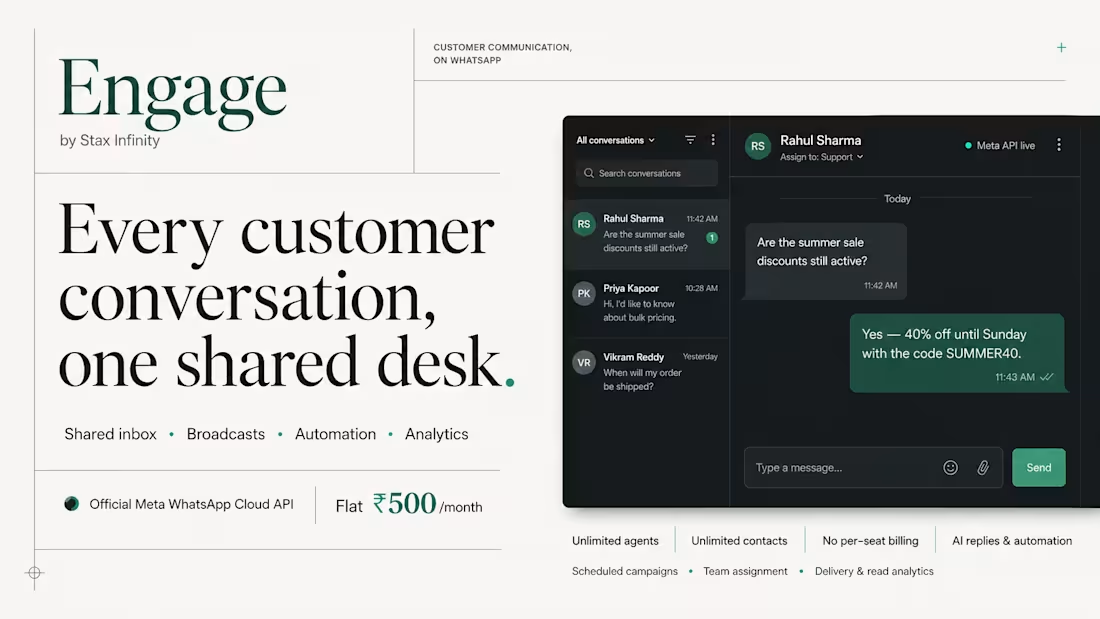
WhatsApp is great for talking to customers.
But once a team starts handling those conversations, things get messy fast.
Who’s replying?
Who owns the conversation?
What did the customer ask last time?
Did someone already follow up?
That was the problem behind Engage by Stax Infinity — a shared WhatsApp inbox built for customer teams.
I worked on turning that operational mess into a product experience that feels simple, clear and easy to navigate.
The focus was on making conversations easier to manage, improving visibility across the team, and helping people move from “another WhatsApp chat” to an actual customer workflow.
The interesting part for me wasn't just making it look good.
It was figuring out how a team should work together around a conversation.
You can check out the product here: https://engage.staxinfinity.com/
Always love working on products where UX has to solve a real operational problem.
Need help turning a complex product into a simple experience? Let’s talk.
1
102
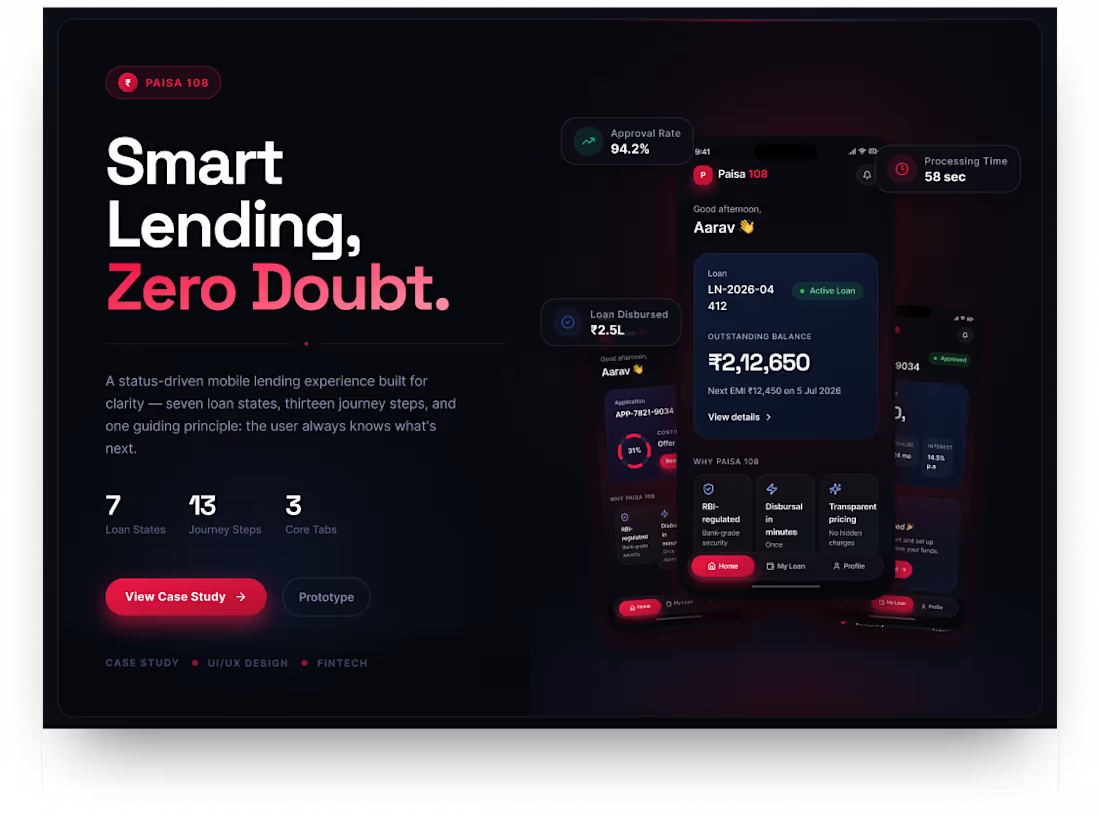
Most loan apps make you feel like you’re signing a contract in a dark room with a flickering tube light.
They have a massive trust problem.
Not because the interest rates are bad, but because the interface induces anxiety.
Loans are deeply emotional. They involve urgency, vulnerability, and high stakes. Yet, most fintech apps are built like cold, confusing databases.
I set out to fix this with a new mobile design concept: Paisa 108.
The goal? A digital lending experience that tells users exactly where they stand—without the "processing black hole."
Here is the design system that solves it:
1. Fixed-State Architecture
Instead of changing the navigation layout for different users, the app relies on three permanent tabs: Home, My Loan, and Profile. The UI acts as a state machine—dynamically transforming its data density whether a user has a $0$ balance, a pending verification, or an overdue loan.
2. Clarity Before Complexity
Fintech interfaces can become overwhelming fast. By applying progressive disclosure, the interface surfaces the single most critical action first (e.g., "Step 4 of 13: Upload Bank Statement"). Details are hidden until the exact moment they are needed.
3. Emotional Color Psychology
Built on a premium, dark-mode visual canvas, the system relies on intentional contrast and soft glassmorphic surfaces using three strategic emotional anchors:
🔴 Primary Red (#ED1846): Reserved strictly for urgent actions and critical attention.
🔵 Primary Blue (#2E4AA0): Used to anchor stability, long-term tracking, and systemic trust.
🟢 Success Green: Deployed exclusively for positive milestones like verification and approval.
💼 The Business Bottom Line
In fintech, clarity isn't decorative. Clarity is conversion. By designing for the real-world edge cases—the waiting loops, the document rejections, and the "what now?" moments—this system directly combats application drop-offs.
It answers the user’s ultimate question: "Can I trust this app with my money?" before they ever have to contact support.
Building a fintech MVP, SaaS dashboard, or scaling a complex mobile workflow? I design interfaces that look premium and behave responsibly. Let’s build something your users can actually understand and trust.
https://www.behance.net/gallery/250643097/Paisa-108
📩 Drop a DM to chat about your product.
5
355
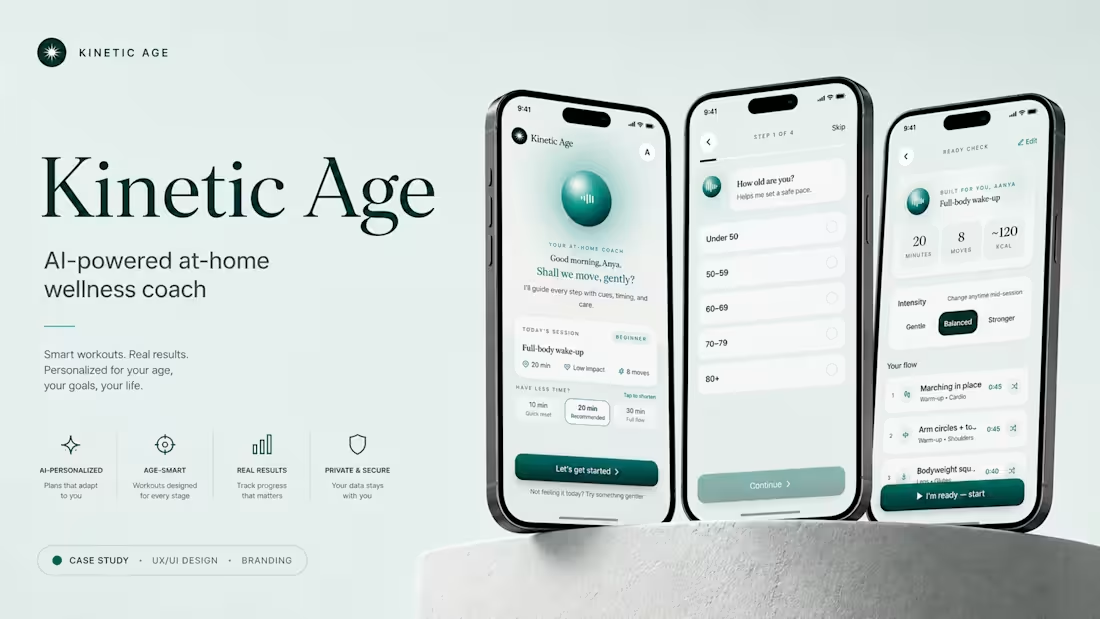
Some projects start with a clean brief.
This one started with:
“Let’s make it simple.”
And then immediately became a full journey of layout experiments, font debates, color decisions, tiny UI tweaks, and me staring at the screen like the design owed me an explanation.
But after all the overthinking, iterations, and dramatic creative moments…
✨ Kinetic Age is live.
Kinetic Age is an AI-powered at-home wellness coach concept built around one goal: making fitness feel more personal, gentle, and human.
For this case study, I focused on creating a visual experience that felt calm but energetic, polished but warm, and structured without feeling boring.
The fun part?
Some of the best details came from ideas that felt completely random at first.
That’s the magic of design. You keep moving pieces around until suddenly everything clicks.
I’d love to hear what you think.
What stands out the most to you: the UI screens, visual style, color palette, typography, or overall presentation?
Project link: https://lnkd.in/gWVr2YvR
Currently pretending to be relaxed while absolutely checking the views like it’s a live sports score.
1
3
306
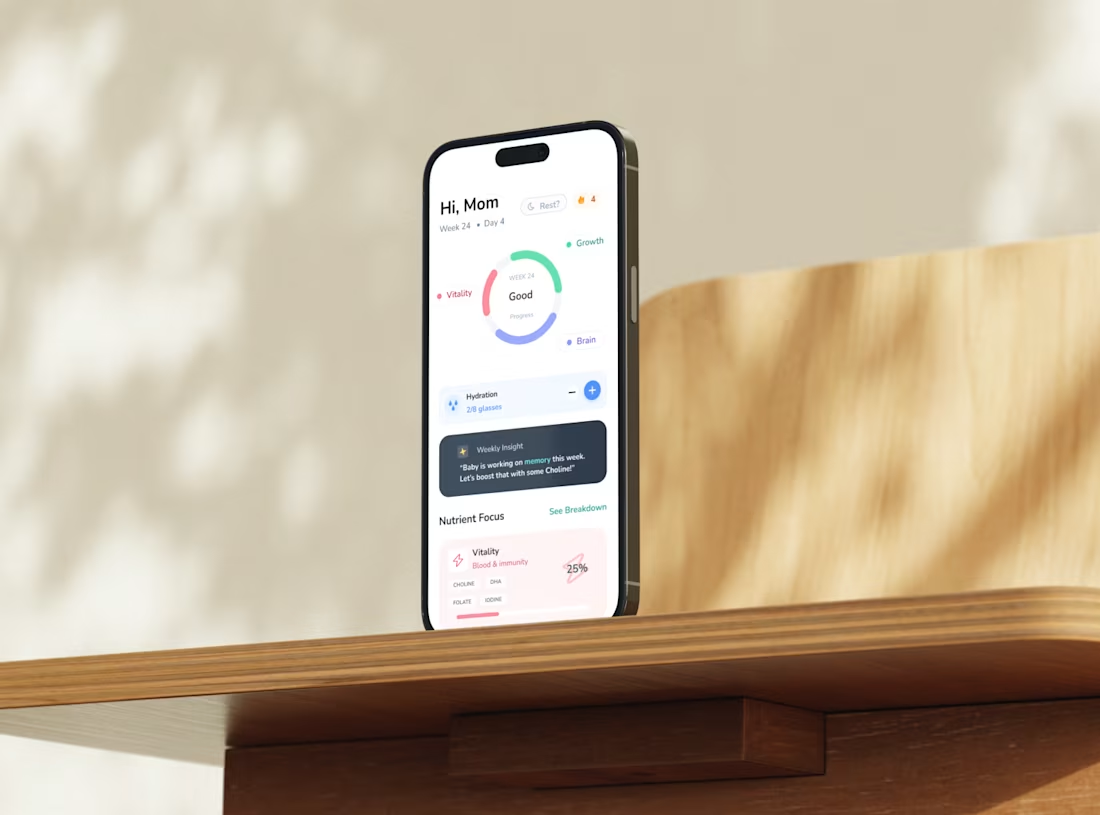
Designing the ONI Nutrition Flow for Expecting Mothers
1
9