Better Trucks

Gulay Inceoglu


Better Trucks
Route optimization for a logistic startup
Role: Product Designer
Timeline: Oct - Nov 2021 (4 weeks)
Tools: Figma, Maze, Miro
Overview
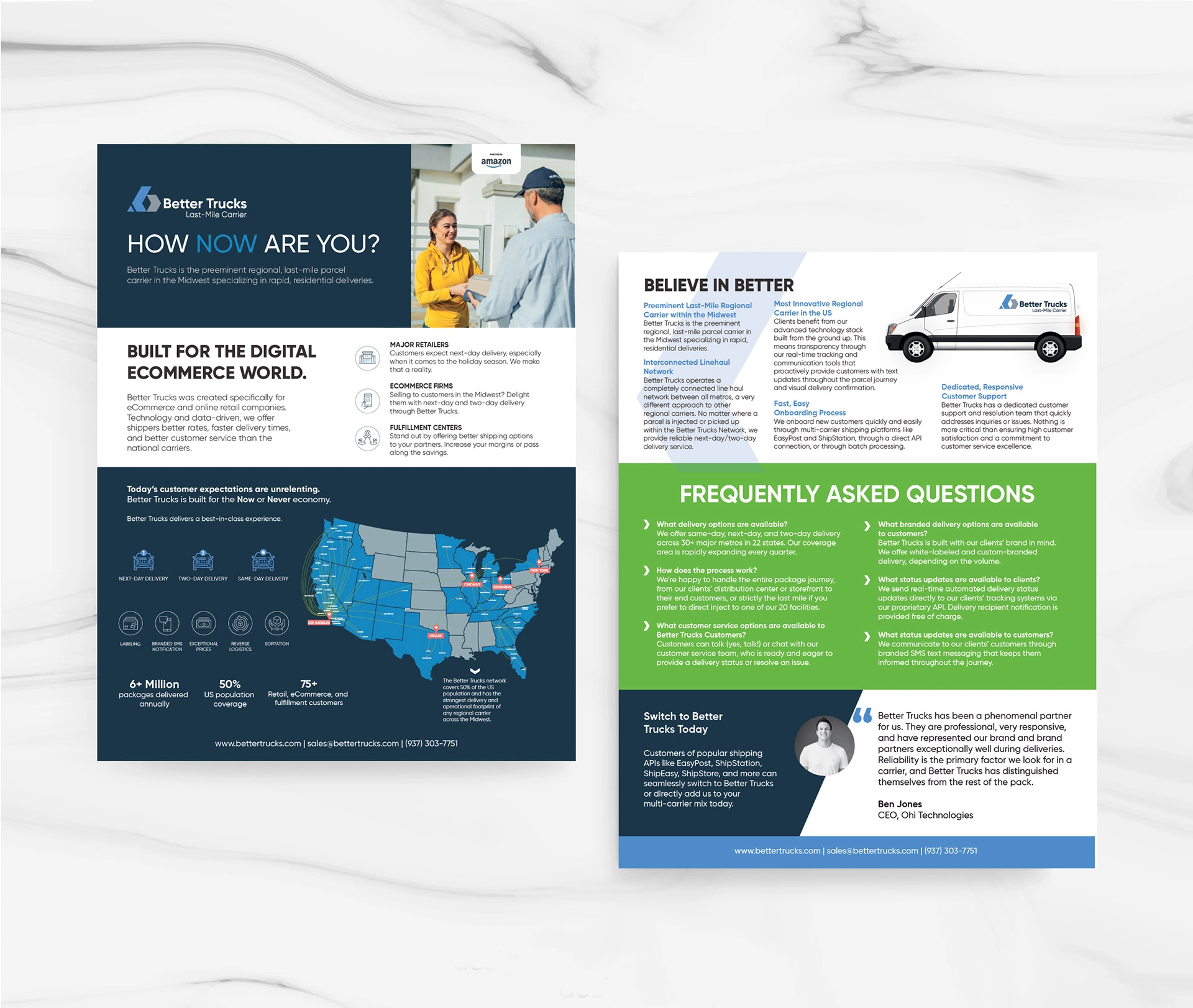
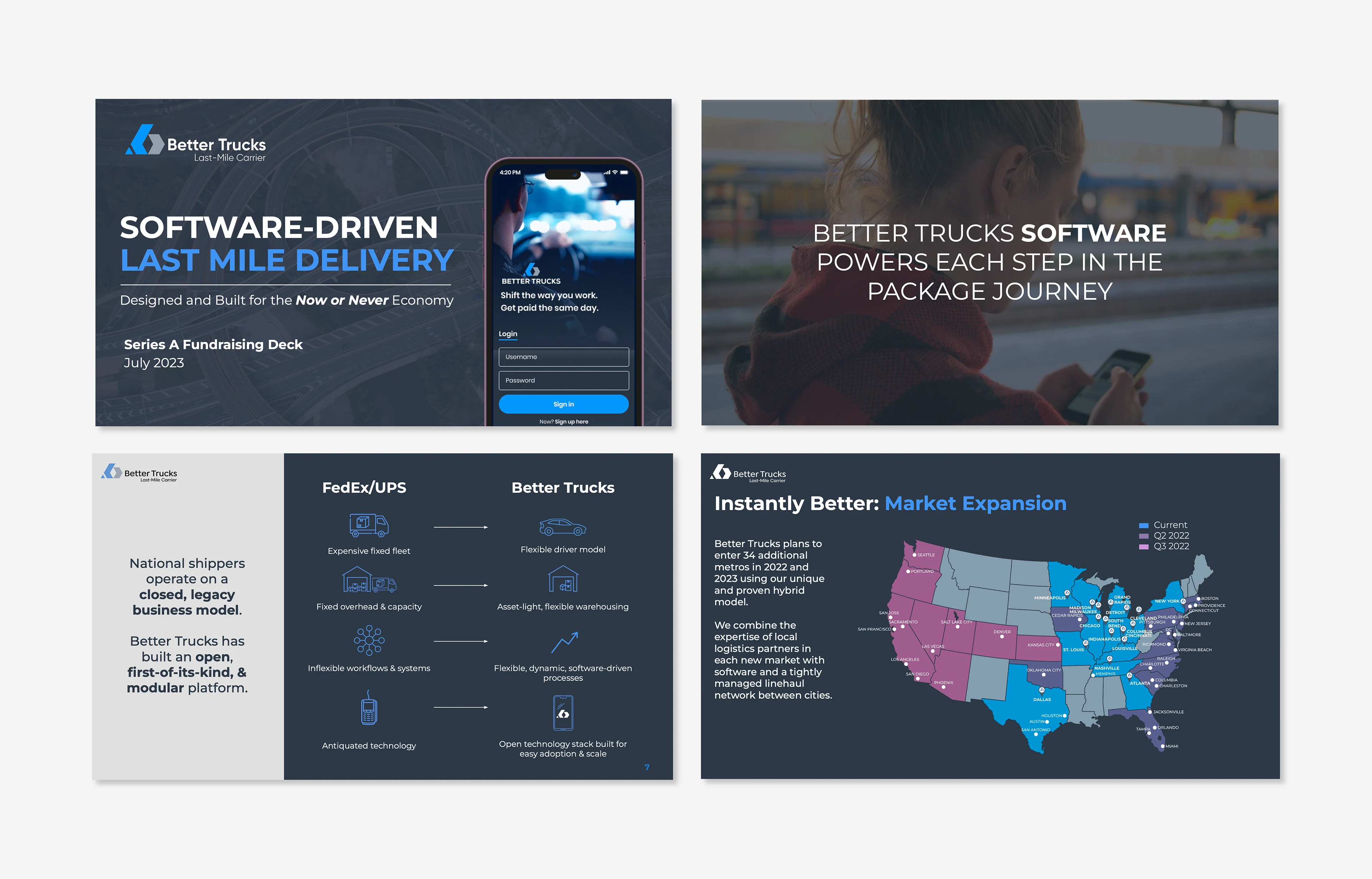
Better Trucks is a last-mile delivery startup that focuses on shipping for e-commerce. Their mission is to create a better shipping experience for everyone involved in the delivery process.
The Problem
The current route optimization process is manual and time-consuming. Dispatchers spend hours every day planning routes for hundreds of drivers, which often leads to errors and delays.
The Goal
Design a more efficient and automated route optimization tool that helps dispatchers plan routes faster and more accurately, while also providing drivers with a better navigation experience.
UNDERSTANDING THE PROBLEM
Stakeholder Interviews
I started by interviewing the main stakeholders to understand their pain points and goals for the project. I also conducted a competitive analysis to see how other companies are solving similar problems.
Key Insights:
Dispatchers spend 2-3 hours every morning manually planning routes.
Routes are often inefficient, leading to late deliveries and high fuel costs.
Drivers struggle with the current navigation app, which is not integrated with the route planning tool.
User Persona
I created a user persona for the dispatcher to better understand their needs and challenges.
Mike, the Dispatcher
Age: 34
Goals: Plan routes quickly and accurately. Reduce delivery delays and fuel costs. Improve communication with drivers.
Pain Points: Manual route planning is tedious and prone to errors. Lack of real-time visibility into driver locations. Difficult to handle last-minute changes to routes.
THE SOLUTION
Automated Route Optimization: The new tool uses an algorithm to automatically generate the most efficient routes based on delivery locations, driver availability, and vehicle capacity.
Real-time Tracking: Dispatchers can now track drivers in real-time on a map, allowing them to see their progress and make adjustments as needed.
Integrated Driver App: The new driver app is fully integrated with the route optimization tool, providing drivers with turn-by-turn navigation and real-time updates.
DESIGN PROCESS
User Flow: I mapped out the user flow for both the dispatcher and the driver to ensure a seamless experience.
Wireframes: I created low-fidelity wireframes to test the layout and functionality of the new tool.
Prototyping: I built an interactive prototype in Figma to test the user flow and gather feedback from stakeholders.
Usability Testing: I conducted usability testing with dispatchers to identify any pain points or areas for improvement.
FINAL DESIGN
Dashboard: The dispatcher dashboard provides a clear overview of all routes, drivers, and deliveries.
Mobile App: The driver app provides clear navigation and delivery instructions.
OUTCOME & LESSONS LEARNED
Outcome: The new route optimization tool reduced the time dispatchers spend planning routes by 75%. It also improved delivery efficiency and reduced fuel costs.
Lessons Learned: I learned the importance of understanding the user's workflow and pain points before designing a solution. I also learned how to collaborate effectively with stakeholders and developers.
Like this project
Posted Mar 31, 2026
Route optimization for a logistic startup focusing on automating dispatcher workflows and improving driver navigation for last-mile delivery.
Likes
0
Views
4