CHROMA

LaVar Taylor

CHROMA
noun — A self-reflection system that transforms personal responses into unique, dual-sided OKLCH Color artifacts
*OKLCH is a modern, "perceptually uniform" color format that improves upon traditional models like HSL by having consistent perceived lightness, chroma (color intensity), and hue*
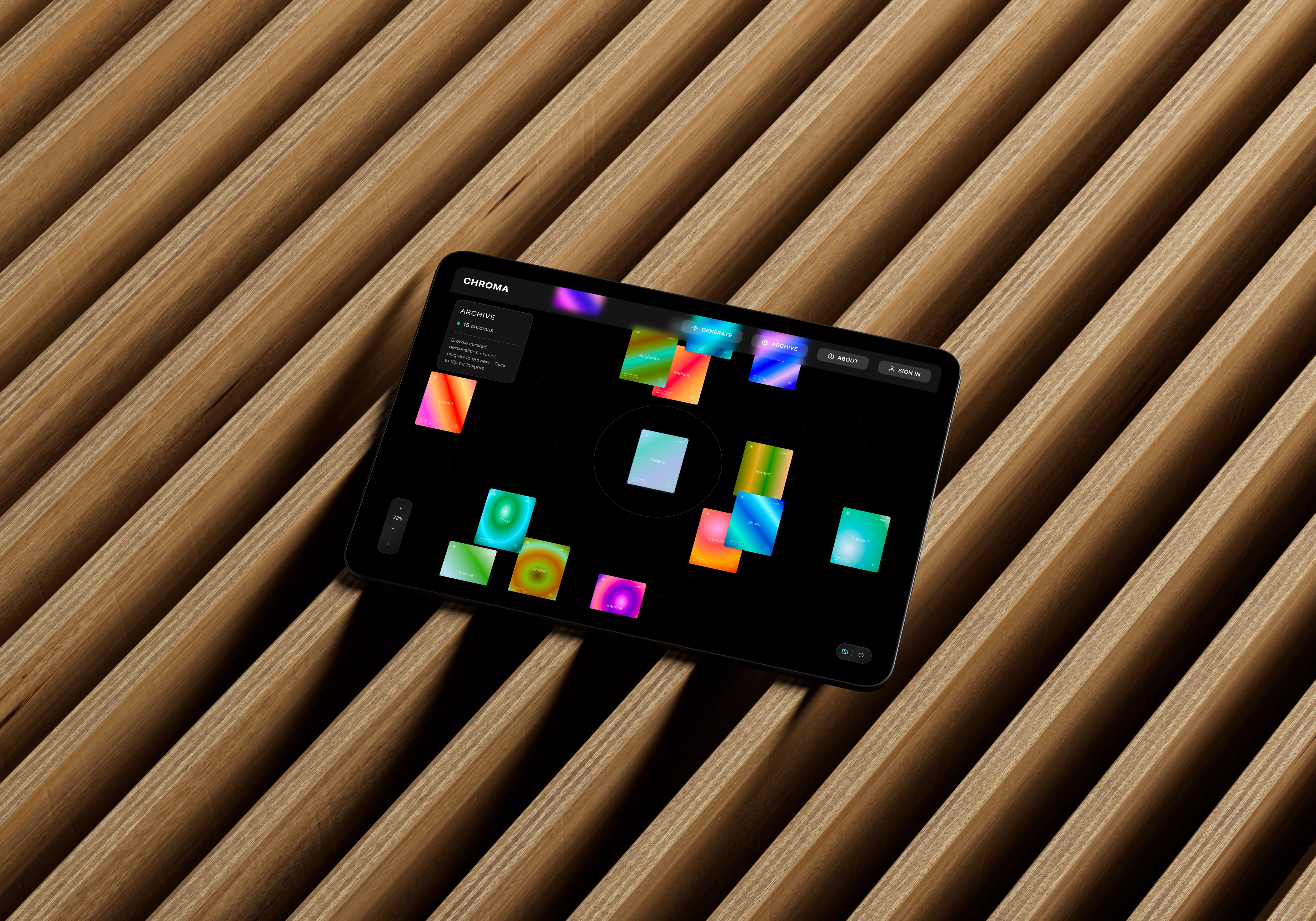
ARCHIVE
For me, Chroma is both a design experiment and a proof of concept showing how new generative tools like Figma Make can turn abstract ideas into structured, scalable systems that balance logic with visual generation.
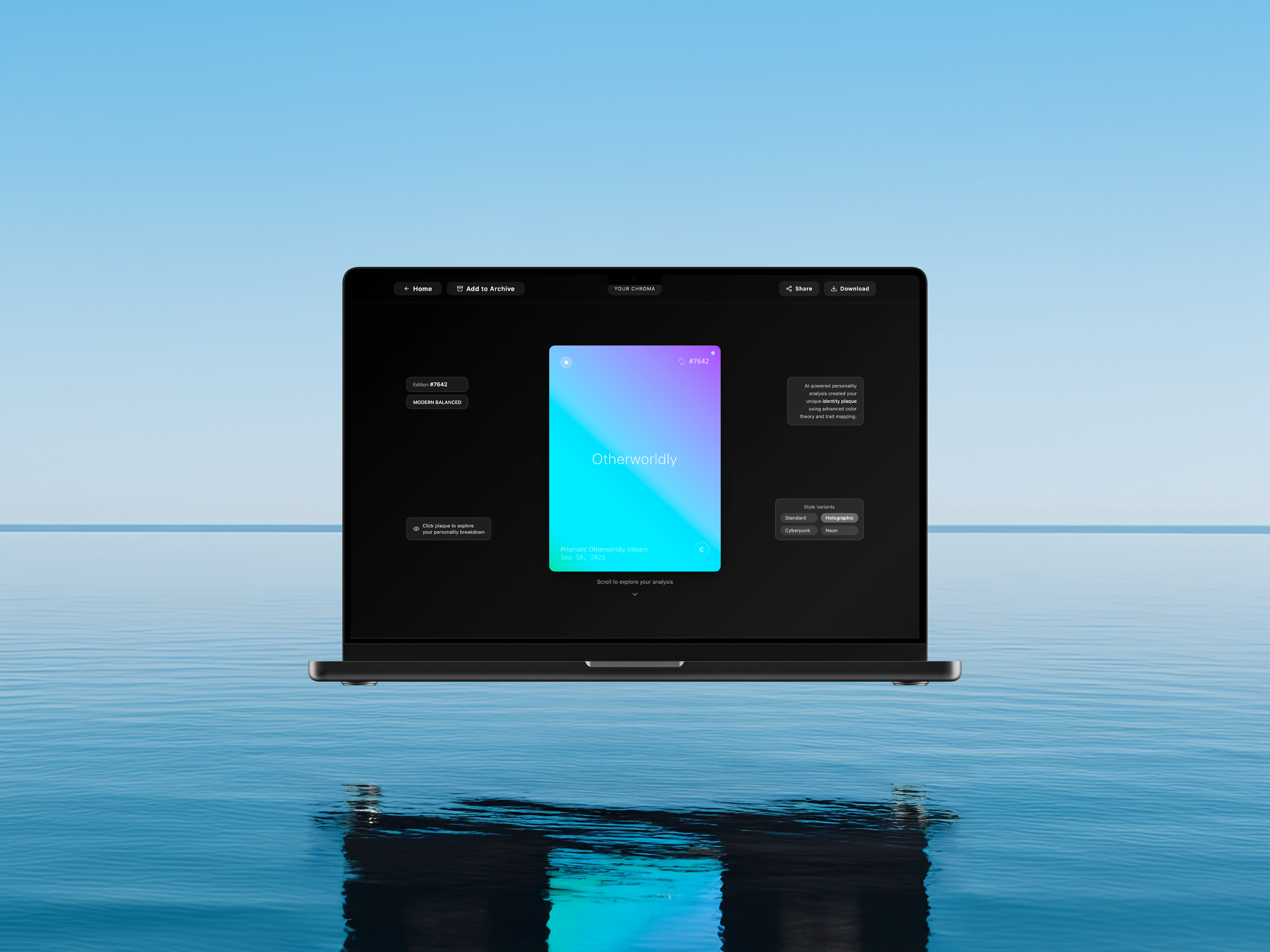
CHROMA CREATION PAGE
Building a Personality-to-CHROMA Generator....
When I set out to build CHROMA, I wanted to create more than just a visual experience. My goal was to design an object that connects personality and self-reflection to color, then transform that data into a system of unique, collectible digital artifacts (or just a cool new gradient phone wallpaper lol).
Every Chroma is both personal and communal it reflects the individual who creates it, yet also lives inside a shared archive where similar creations cluster together.
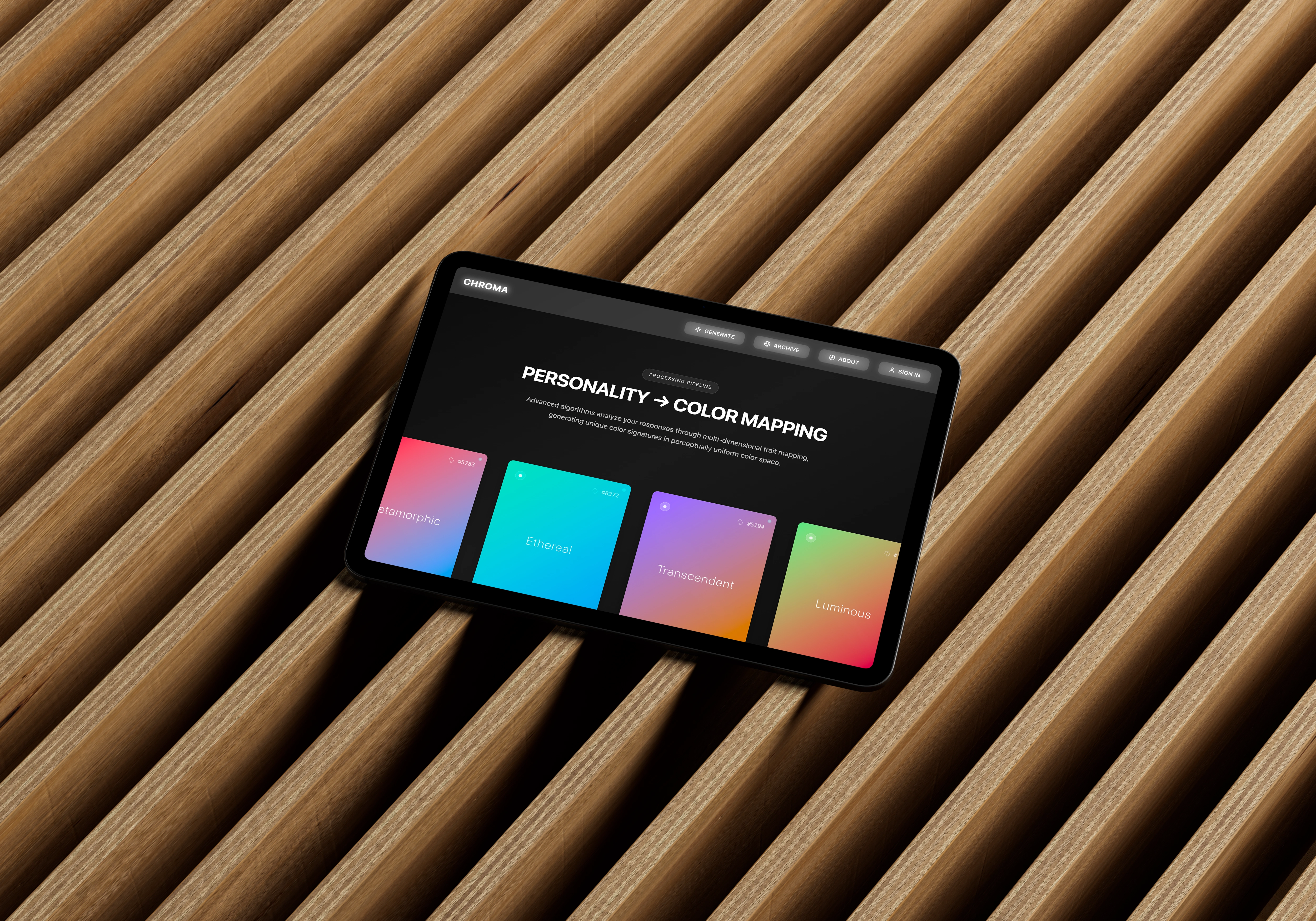
PERSONALITY → COLOR MAPPING = CHROMA
What if self-reflection could be turned into art?
I mapped out how responses to a short quiz could generate both language (a defining word) and visuals (a color gradient). My challenge was to make these outputs systematic, scalable, and visually coherent while still feeling unique to each person.
Using Figma Make I began experimenting with prompt-driven generative logic. My early focus was just proving the system could work: input answers, generate outputs, and render them as visual compositions.
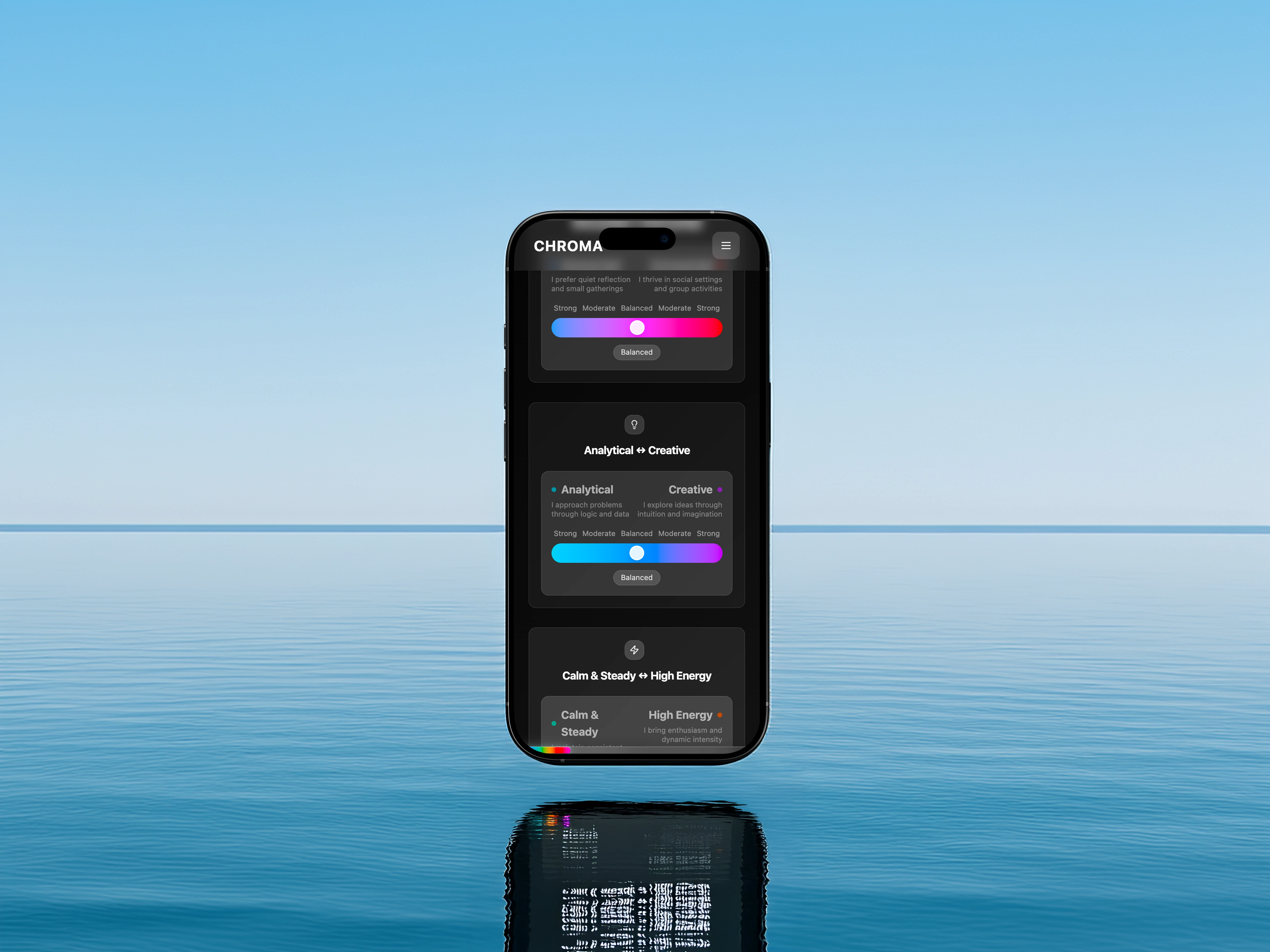
I broke the project into layered systems:
1. Questionnaire logic – A small set of reflective prompts that capture emotional tone, preferences, or personal states.
2. Word assignment – Each response funnels through logic trees that map toward a curated pool of adjectives. These become the “essence words” of each Chroma.
3. Color generation – Responses are seeded into an OKLCH color space to generate gradients. This ensures outputs remain balanced, vibrant, and distinct, while avoiding randomness that could break the aesthetic.
4. Two-sided object – Every Chroma is designed with duality: the front side displays the essence word and gradient, the backside displays more in depth analysis as to the coloring and defining words.
This layering allowed me to control complexity while still making the system feel infinite in possibility.
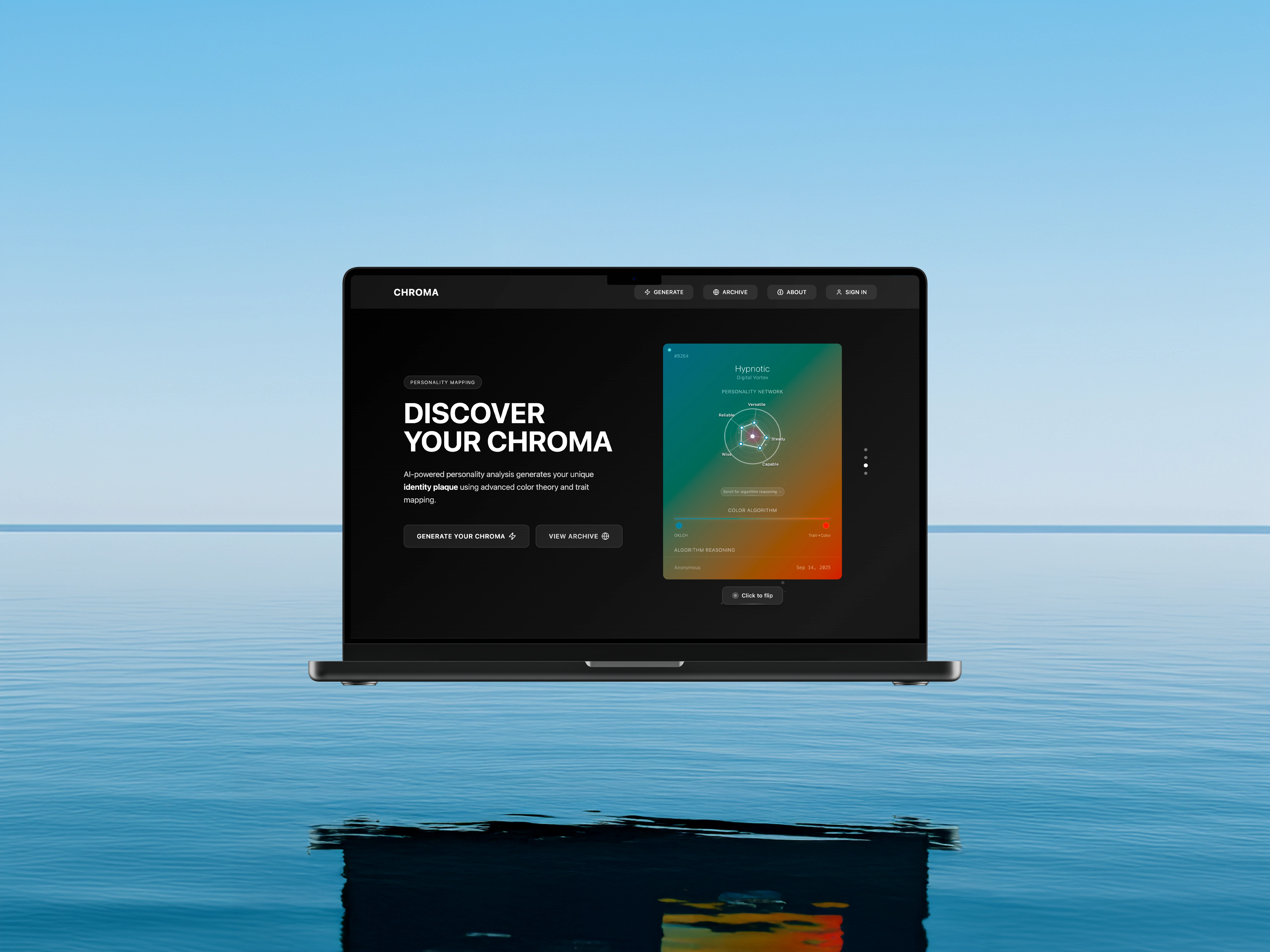
The real turning point was using Figma Make’s generative prompt system. Since it’s a tool designed for modular automation, I built the Chroma workflow as a chain of conditional prompts:
Input handling – Make receives quiz answers and parses them into variables.
Logic branching – Those variables get routed into both the word-pairing logic and the color-seeding system.
Visual composition – Using Figma’s design environment, I structured templates for the two-sided card. Make dynamically populates these with the generated gradient, word, and identifying details.
Archiving – Each finished Chroma is pushed into a shared archive page. Here, Figma Make’s automation let me cluster similar gradients and words with overlapping values so the archive feels like an evolving, living gallery.
The system was designed to be modular, so I could tweak logic in one layer without breaking the whole. This iterative setup was key to scaling complexity without losing control.
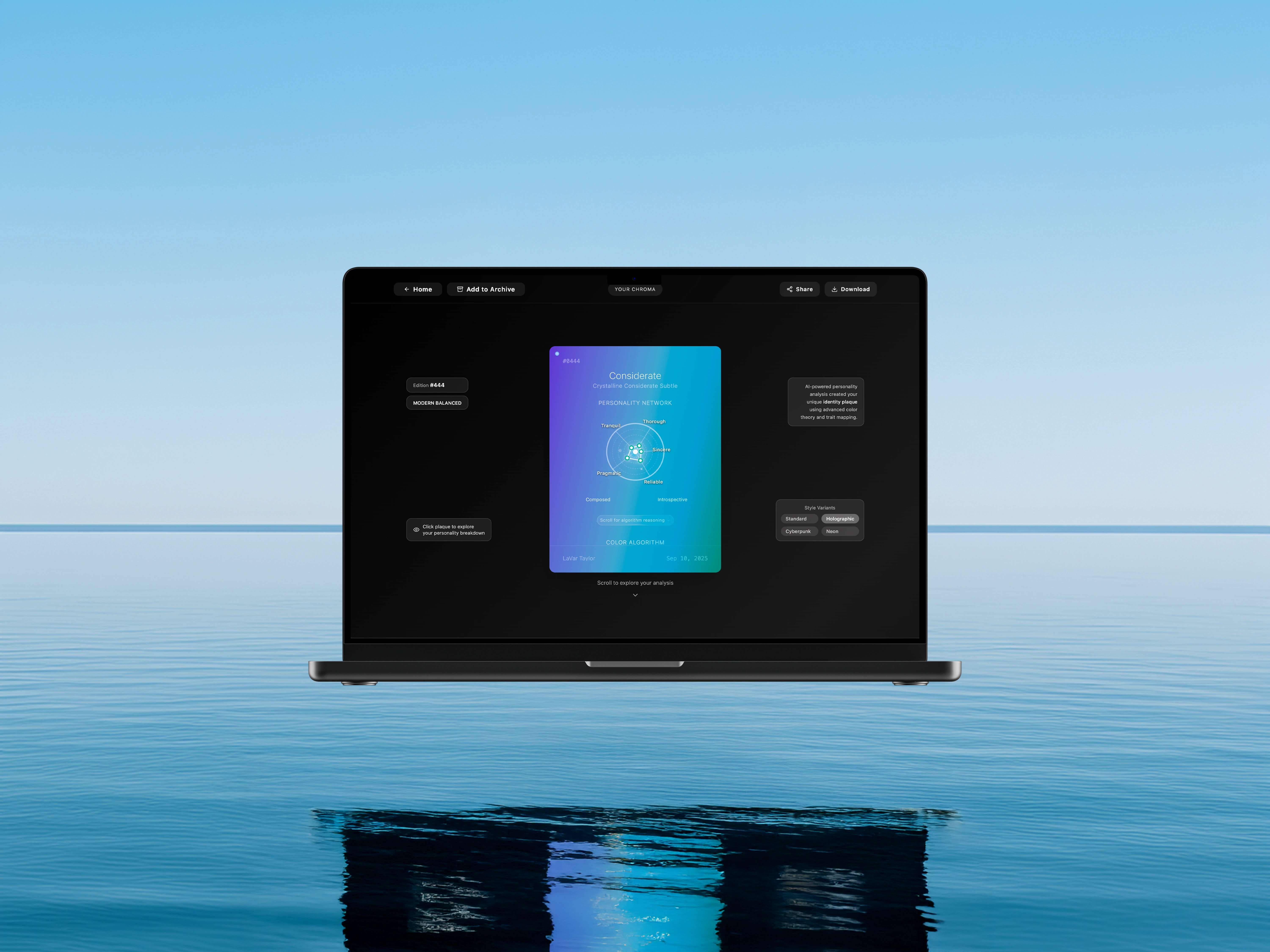
After just three days of intense building, I had a functioning prototype that felt both simple and incredibly deep. What started as a small experiment turned into a system where:
Every user creates a personal artifact through self-reflection.
Each artifact is systematically unique yet visually harmonious.
All outputs live together in a collective archive, clustering naturally into constellations of shared human experience.
For me, CHROMA is both a design experiment and a proof of concept showing how new generative tools like Figma Make can turn abstract ideas into structured, scalable systems that balance logic with visual generation.
Like this project
Posted Sep 10, 2025
CHROMA turns self-reflection into art...each response creates a unique gradient and word, stored in an archive that clusters similar creations.
Likes
1
Views
8
Timeline
Sep 6, 2025 - Sep 10, 2025