The Workflow Didn't Exist. We Built It.

Space Cowboy Design

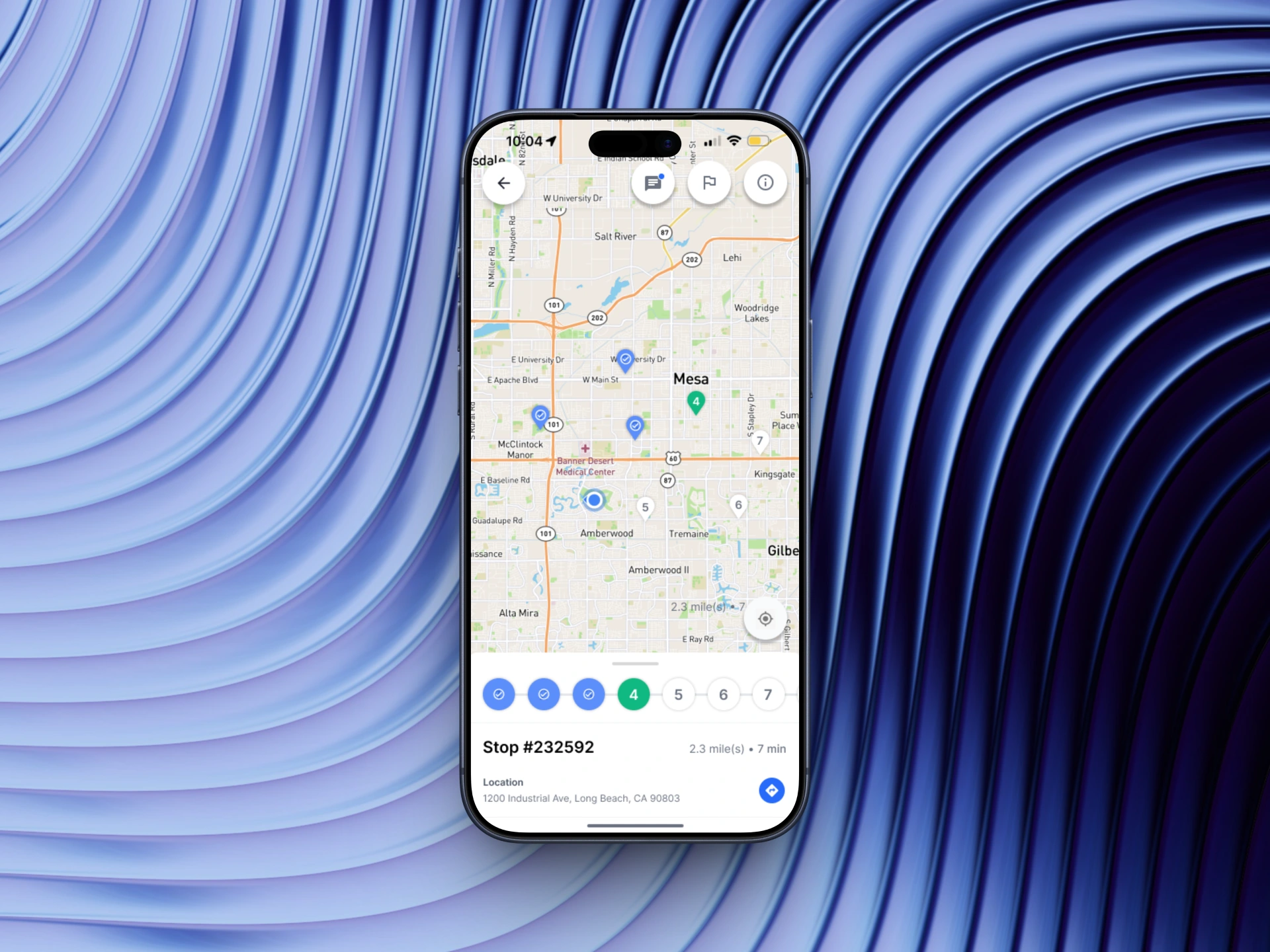
Coolfire Core: Delivery Workflow
There was no delivery workflow. Customers were improvising with tools built for something else.
Introduction
Coolfire Core is work management software built for fast-moving field operations. Teams across logistics, telecommunications, field service, and government use it to coordinate tasks, workflows, and real-time communication across HQ and the field. Delivery Workflow was built to give those teams a dedicated end-to-end routing experience. One that didn't exist before.
The Problem
Coolfire Core didn't have a structured delivery workflow. Customers who needed one were repurposing sessions and tasks. Attaching location data manually, cobbling together delivery processes from features built for something else entirely. It worked, barely. But behind the scenes, developers were maintaining custom workarounds to make it function, and Customer Success was manually intervening to help clients set up and manage delivery operations that the product was never designed to support.
The strain was felt across the whole organization. Customers needed a dedicated delivery route type, something purpose-built for dispatchers planning routes at HQ and drivers executing them in the field. Forcing existing features to adapt wasn't a long-term solution for anyone.
The workaround had become the workflow. That wasn't good enough.
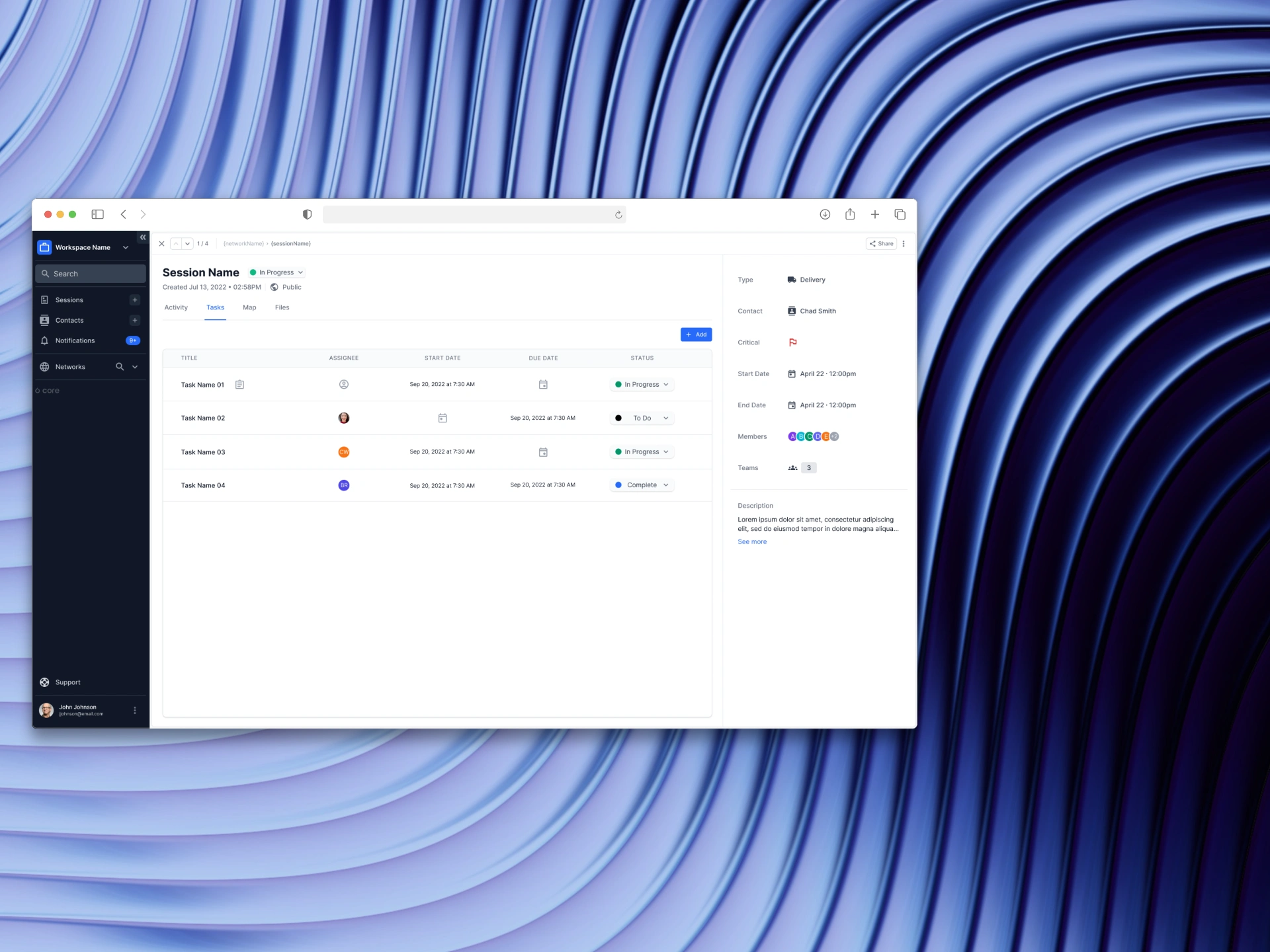
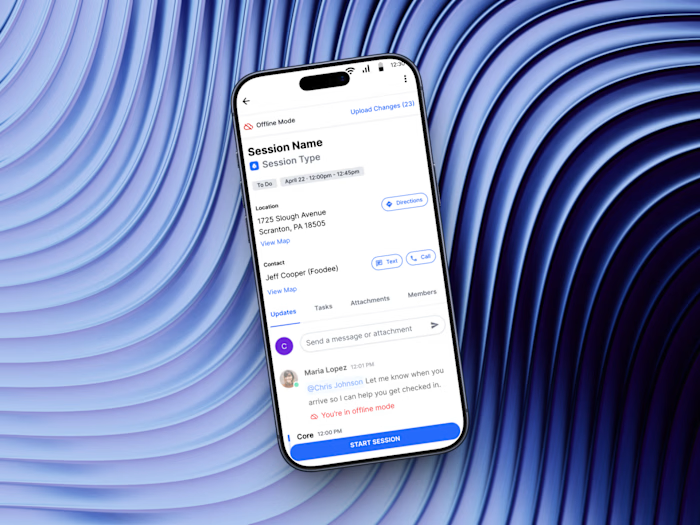
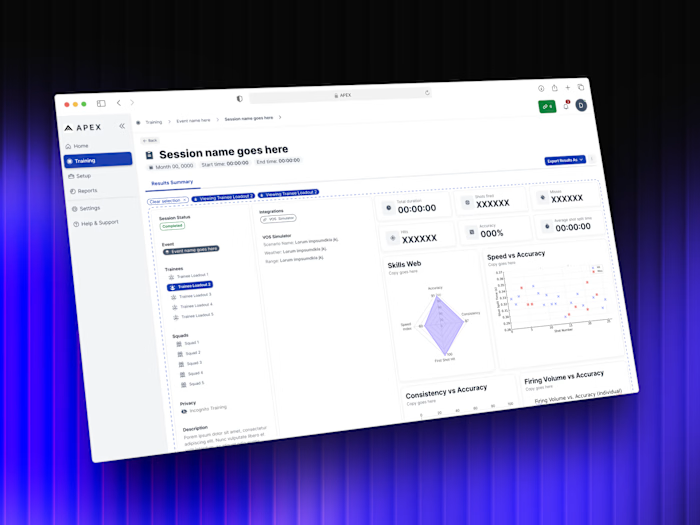
Dispatcher dashboard showing the session-based workaround customers were using before Delivery Workflow existed.
My Role
I was one of two designers on this project, working closely across both platforms. My focus leaned toward the desktop dispatcher experience. The route builder, stop management, and the HQ-side of the workflow, while collaborating closely on the mobile driver experience to ensure the two platforms felt like one connected system. The work also included route settings and configuration, giving users control over how the delivery workflow behaved before a single route was built.
The work required alignment across product, engineering, and customer success from the start. The delivery workflow touched existing product architecture in ways that needed careful coordination. We weren't just designing new screens, we were introducing a new route type that had implications across the entire platform.
Every decision on desktop had a downstream effect on mobile. Keeping both experiences in sync meant constant communication between design, dev, and the people who understood how customers were actually trying to use the product.
Two platforms. Two users. One workflow that had to feel seamless across both.
2 UX/UI Designers
3 Months Concept to Beta Release
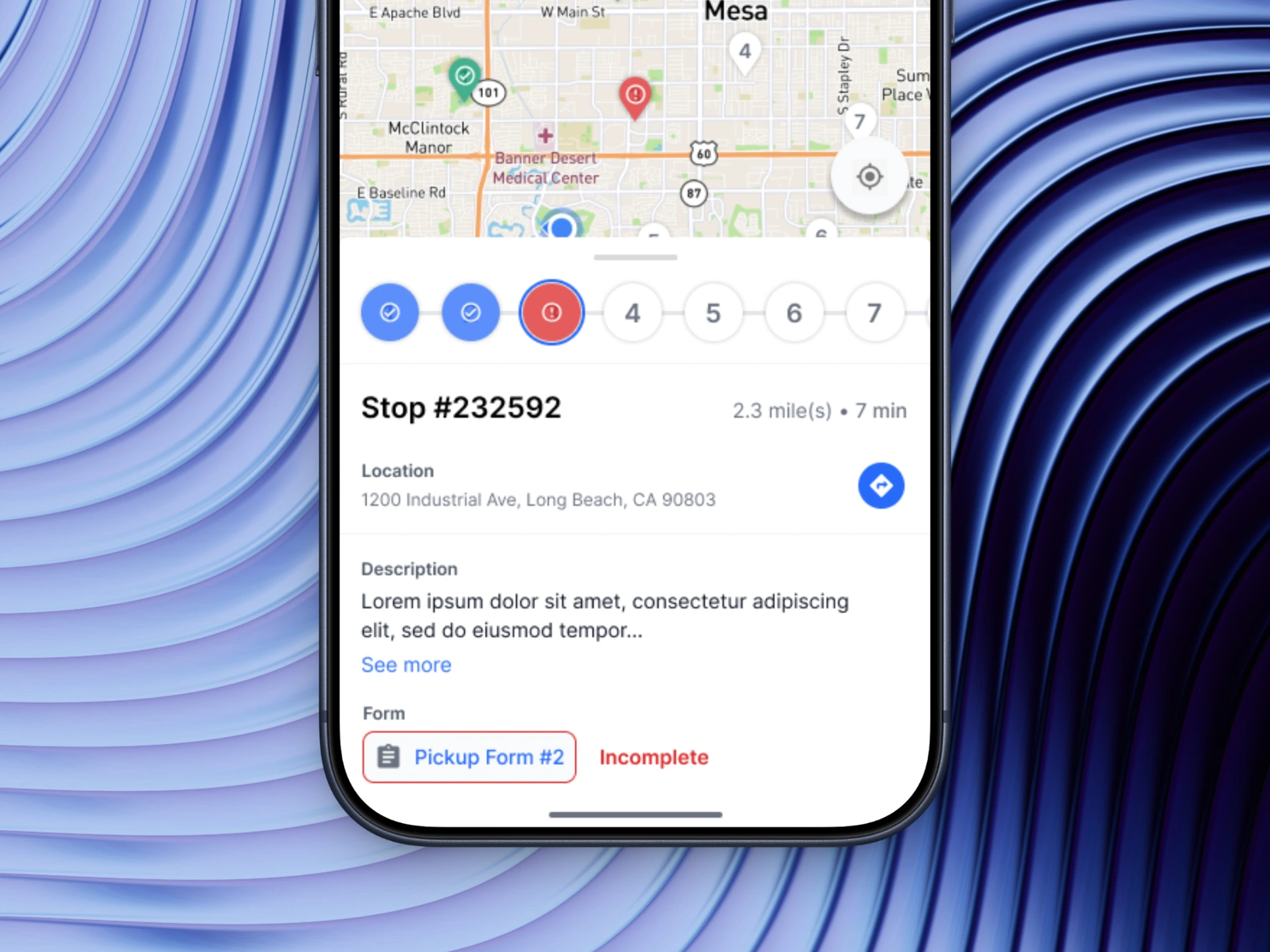
Mobile stop view showing route progression and an incomplete form.
Collaborators
Delivery Workflow touched every part of the product. Getting it right meant staying close to the people who understood the technology, the customers, and the work itself.
Designer
Engineering Team
Customer Success
Product Manager
Approach
Good design doesn't start with screens. It starts with understanding the problem well enough that the right solution becomes obvious.
Order from Chaos — Two users, two platforms, one product that had to make sense of all of it.
Before designing a single screen, the full scope of the workflow had to be mapped. What dispatchers needed to build a route, what drivers needed to execute one, and how decisions on one platform affected the other. Edge cases surfaced early that shaped the system. Like how to handle a driver skipping a stop mid-route without breaking the sequence or losing the data tied to it. Structure had to come before interface.
No Wasted Pixels — A driver on a delivery route doesn't have time to hunt for information. Neither does a dispatcher building one.
The desktop route builder had to surface stop management, optimization suggestions, and configuration without overwhelming the dispatcher. The mobile experience was designed around clarity under time pressure. Stop details, delivery instructions, and form completion immediately accessible without digging. On both platforms, if it wasn't essential at that moment, it lived deeper.
Built to Last — A new route type designed to scale beyond delivery.
The delivery workflow wasn't built as a one-off feature. Introducing a dedicated route type, with its own desktop builder and mobile execution flow. It created a foundation that could support other operational use cases down the line without requiring the same workarounds that made delivery so painful in the first place.
Earned Trust — Designed around how dispatchers and drivers actually work, not how we assumed they did.
Customer Success provided direct insight into how customers were improvising with existing tools. That understanding shaped every decision, from how routes were built on desktop to how stops were sequenced and completed on mobile.
The Solution
A purpose-built workflow for every step of the delivery. From route planning to the final stop.
The solution introduced a dedicated delivery route type to Coolfire Core. Replacing improvised workarounds with a workflow designed specifically for how dispatchers and drivers actually operate. Two platforms, two distinct experiences, one connected system.
Building a Route
Dispatchers start by creating a delivery route. A new dedicated route type built specifically for this workflow. Stop management, sequencing, and delivery details are all handled in the desktop builder before a driver ever touches their phone. An optimized stop order suggestion takes the guesswork out of sequencing, and route settings give dispatchers control over how the workflow behaves. Everything a driver needs is defined and organized at HQ before the route goes live.
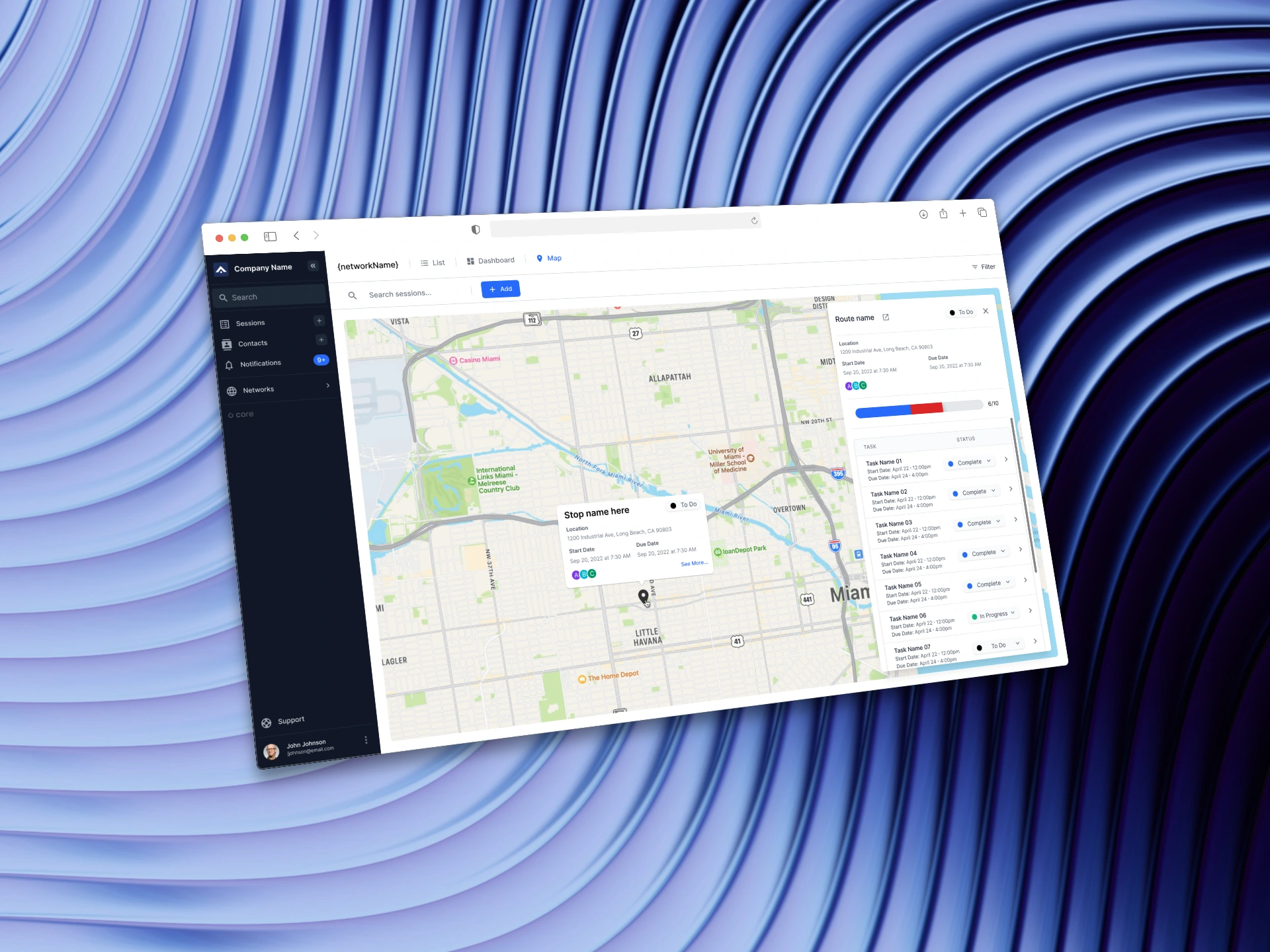
Route builder with stops plotted and optimized sequencing suggested.
Executing a Route
On mobile, drivers get a clear, step-based experience built around the reality of being behind the wheel. A stop card layered over the map surfaces the most critical information first, location, delivery details, distance, and time, with deeper content accessible without cluttering the primary view. Form completion, photo capture, and signature collection are embedded inline at each stop. If a stop needs to be skipped, the workflow handles it cleanly without breaking the sequence or losing any associated data.
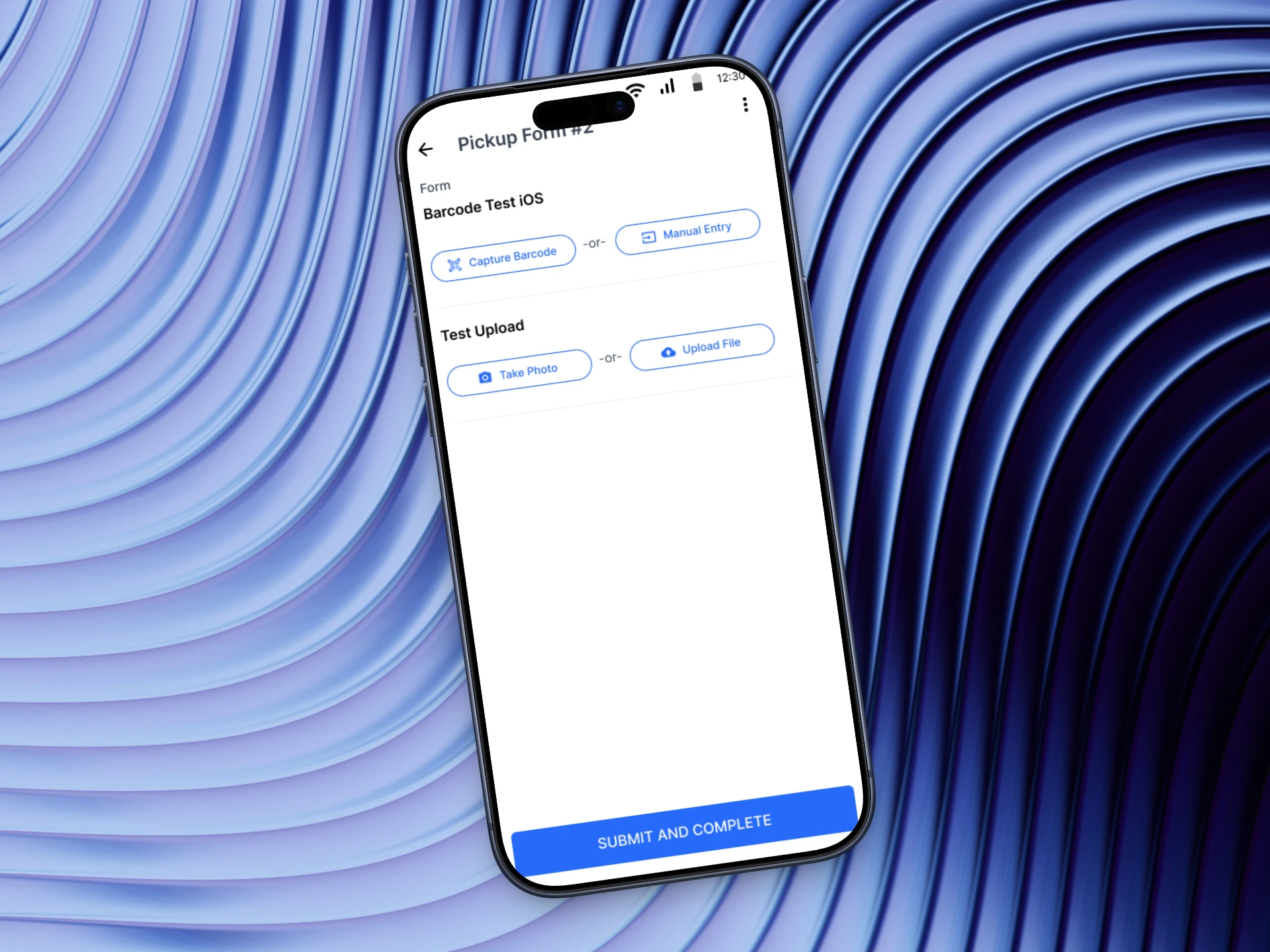
Form completion with photo capture and signature collection at stop level.
Outcomes
Delivery Workflow enabled an entirely new customer segment focused on delivery operations. Something Coolfire Core couldn't credibly serve before. By introducing a dedicated route type rather than patching existing features, the product expanded its market without adding complexity to what already existed.
Within weeks of launch, a food delivery client in San Francisco was using the feature in production. Their feedback on the mobile driver experience was strong, a direct contrast to the workarounds they had been asked to use before. It was the clearest possible signal that the workflow had solved a real problem.
Internally the impact was immediate too. Developer workarounds were eliminated and Customer Success no longer needed to manually intervene to help clients set up delivery operations.
A new workflow. A new customer segment. Built once. Designed to scale.
Like this project
Posted Apr 14, 2026
Coolfire's field teams had no structured delivery process. I designed one from scratch, giving operators a clear, reliable workflow for every session.
Likes
0
Views
2
Timeline
Sep 15, 2023 - Dec 22, 2023
Clients
Coolfire