GLA Referrals and Rewards Program Redesign

Meenakshi Bose


As part of my work with the product and design team at GLA, I was tasked with redesigning the Referrals and Rewards program to improve user engagement and increase the utilization of the referral feature. The goal of the project was to identify user pain points and emotions while interacting with the existing interface, and to create a more user-friendly design that would encourage users to refer new users to the platform.
To achieve this goal, I developed a two-phase plan. In phase one, I conducted three sets of experiments that included UX surveys to understand users point of view, increasing the visibility of the referral program on GLA App, and adding clear action points on the Referrals and Rewards page. These experiments helped us gain insights into user behavior and preferences, which informed the design decisions in phase two.
In phase two, I used the insights gained from the experiments to redesign the Referrals and Rewards program. The new design focused on making the referral feature more prominent and providing clear instructions for users to refer others. The design also highlighted the benefits of the referral program to encourage users to take action.
The redesigned page was tested with a group of users, and the results showed a significant increase in the utilization of the referral feature and overall traffic to the Referrals and Rewards program. This project was a great opportunity to combine my skills in user research, UX design, and testing to create a solution that addressed a real business need.
Business Goal
The business goal of this project is to increase the utilization of GLA’s referral feature and improve the overall traffic on the Referrals and Rewards program. This can ultimately lead to an increase in the number of new users joining the platform, which can translate into higher revenue for the company.
Problem Statement
The current design of GLA’s Referrals and Rewards program is not effectively driving user engagement and utilization of the referral feature. Users are not fully aware of the benefits of the program, and the interface may not be clear enough to encourage users to take action. Therefore, the goal of the redesign project is to identify and address the pain points and emotions of users while interacting with the interface, and to create a more user-friendly design that will increase the usage of the referral feature and ultimately drive more traffic to the page.
Design Process
Phase 1: User Research and Analysis
The first phase of the redesign project involved identifying pain points in the existing Referral and Rewards program and laying out a plan to measure the right design steps for phase 2. To achieve this, I followed a design process that included the following steps:
Analysis of the current program: I started by analyzing the current Referral and Rewards program to identify pain points and areas for improvement. This involved a thorough examination of the existing interface, user feedback, and usage data.
Detailed discussion with project managers: I then had a detailed discussion with the project managers to understand their vision for the program and to align on the goals of the redesign project.
Improvement plan: Based on my analysis and discussion with the project managers, I laid out an improvement plan that would help us measure the right design steps for phase 2. The plan included the following three experiments:
I ran two surveys, one for users who have used the referral feature and one for those who have landed on the page but left without referring someone. The goal was to understand their emotions and feelings while interacting with our interface, along with the reasons why they did or did not utilize the referral feature.
The majority of users are dissatisfied with the rewards offered in GLA’s referral program. One hypothesis could be that the information regarding premium courses is not highlighted well, making it difficult for users to measure their true value. However, I recommended keeping premium courses as part of our reward system as they are valuable for users who want to opt for something low-budget.
Phase 2: Action
Originally, the program was not easily visible to non-logged users, and for logged-in users, it can only be accessed through the hamburger menu. To improve visibility and sign-up rates, I conducted an experiment by adding a “Refer a friend” option to the navigation bar and a banner on the GLA App & website, visible to both logged-in and non-logged users.
Moreover, on the referral landing page, the premium courses were not clearly visible, with only two broad categories shown and no additional information provided about the courses. I suggested to display all premium courses in a list format to enhance visibility and increase the chances of users referring a friend. Plus, this approach gave the users a better understanding of the various available courses.
I added a call-to-action (CTA) on the referral card to emphasize the action or task the user had to perform on the page. The goal was to improve the click-through rate (CTR) of the page and to understand the value the rewards add to our users’ lives.
These experiments helped us gain insights into user behavior and preferences, which informed the design decisions in phase 2. Overall, this phase was critical in laying the foundation for a successful redesign project and ensuring that the design decisions were driven by user needs and business goals.
Phase 3: Prototype
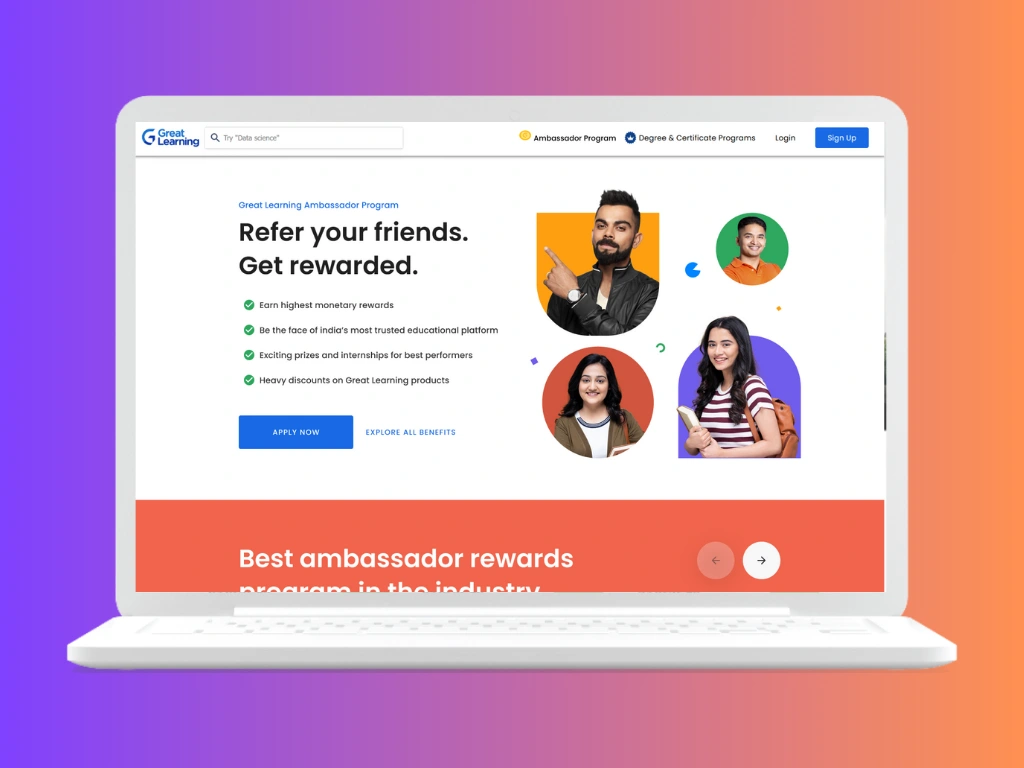
After conducting these experiments for six weeks, I collaborated with our product team to examine the outcomes and ideate on the subsequent phase of the project. As a result, the product team opted to revamp the program as the “Ambassador Program” and introduce more enticing rewards for the users.
As the lead designer, I undertook the task of revamping the referral and rewards page. Starting with low-fidelity wireframes, I finalized the page flow and content structure before incorporating design elements that aligned with our updated Design library. The objective was to create an engaging and enjoyable page that would incentivize our users to share the program with their friends even more.
The redesign of our Referral and Rewards program has been a great success. Through a combination of user research, experiments, and iterative design, we were able to significantly improve the visibility and impact of the program.
The introduction of the Ambassador Program and more lucrative incentives has motivated our users to refer more friends, resulting in a noticeable increase in sign-up rates. Moreover, by introduction new content structure and exciting design elements has made the page fun and engaging, encouraging users to share it with their friends even more.
We will continue to monitor and optimize the program to ensure its continued success and effectiveness. Overall, this project has demonstrated the importance of user-centered design and the value of continuous improvement in achieving business goals.
Like this project
Posted Sep 18, 2025
Redesigned GLA's Referrals and Rewards program to boost user engagement and feature utilization.
Likes
0
Views
1