Built with Framer
Planning Potential from PDFs to a living platform

Andrey Kichigin
Verified
1 collaborator

Planning Potential – 100+ pages in six weeks for an established UK planning consultancy
Industry: UK real estate & architectural planning consultancy
Engagement: Full Framer website rebuild + projects/people CMS + AI–generated hero video + technical SEO & AI–search optimization
Timeline: 100+ pages in under six weeks
Context: 20+ years in the industry, thousands of employees, impressive portfolio – and a digital presence that carried none of it
Where Planning Potential started
Planning Potential is exactly the kind of firm that has already won. Twenty-plus years in the industry, a deep bench of specialists, and a portfolio of projects any competitor would envy. None of that was legible online. The case studies lived in PDF files and on an aging website, the people behind the work were hard to find, and the expertise that wins tenders was impossible for a stranger to browse.
The core challenge was not decoration. It was consolidation: bringing case studies, people, and expertise into one clear, easy-to-navigate digital experience – at the scale of a company with hundreds of potential pages, not a five-page brochure.
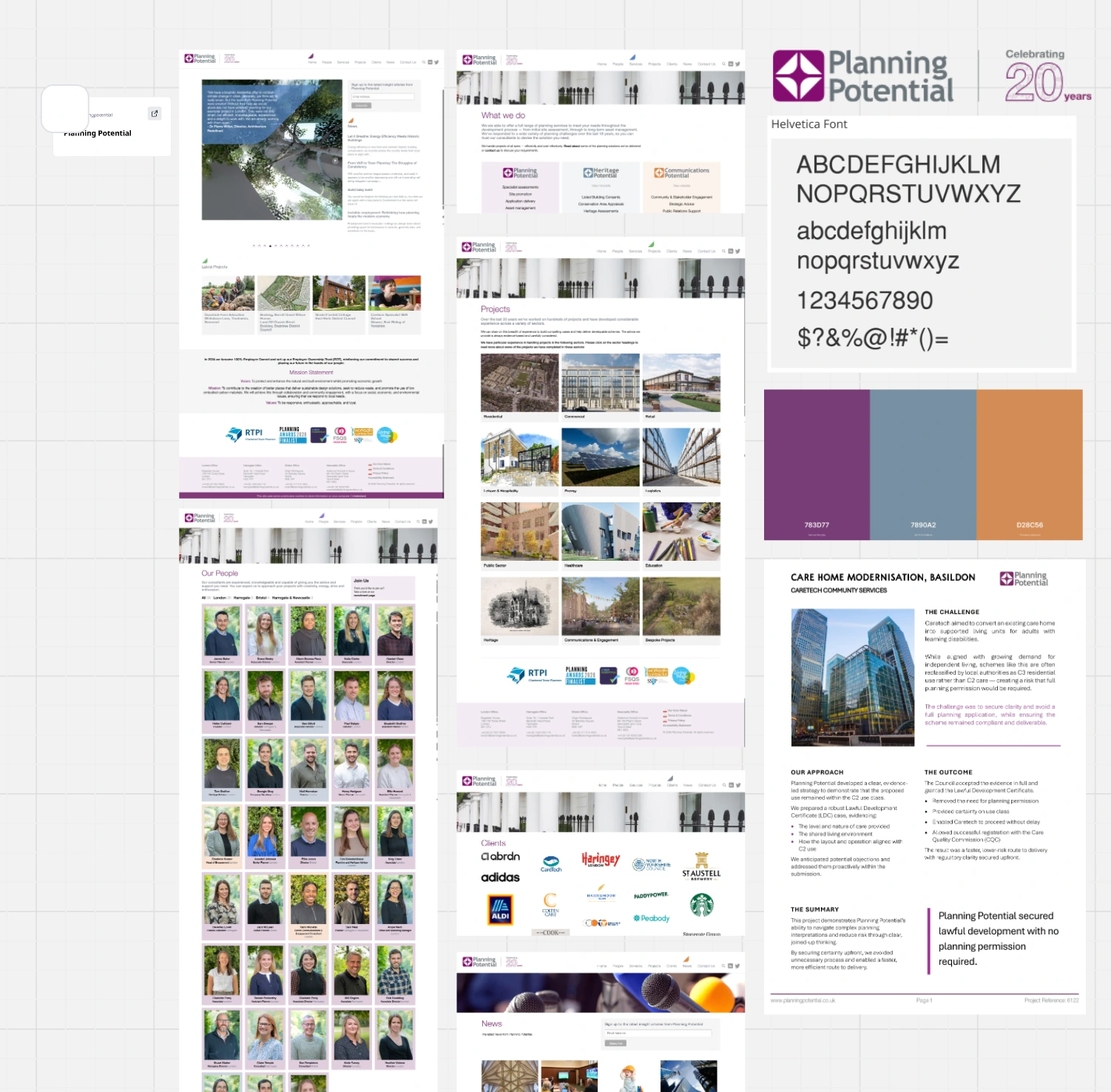
Old website
The business decisions
A few deliberate calls shaped the whole project before a single pixel moved.
Keep the brand, spend the budget on structure. The client was proud of an identity that already worked in their market. A rebrand would have burned weeks and political capital for no commercial gain. We kept the signature purple and the minimalist Helvetica + Inter combination and put every hour into architecture, content, and the CMS instead. Design direction was aligned almost immediately, with no pivots.
Partner instead of gatekeeping. Site structure, copywriting, and naming conventions were developed in collaboration with our partners at Growth Age. Strategy, content, and build ran as one workstream instead of three vendors passing documents around.
Build for self-sufficiency, not retainers. The deliverable was never just a website. It was a system the internal team could run without us – which is why the training program was scoped as a first-class deliverable, not a courtesy call at the end.
Treat AI search as part of the product. Beyond classic technical SEO, the site was optimized for AI-driven search from day one, on the thesis that the next generation of "can we trust this firm" checks happens inside ChatGPT and Gemini, not just Google.
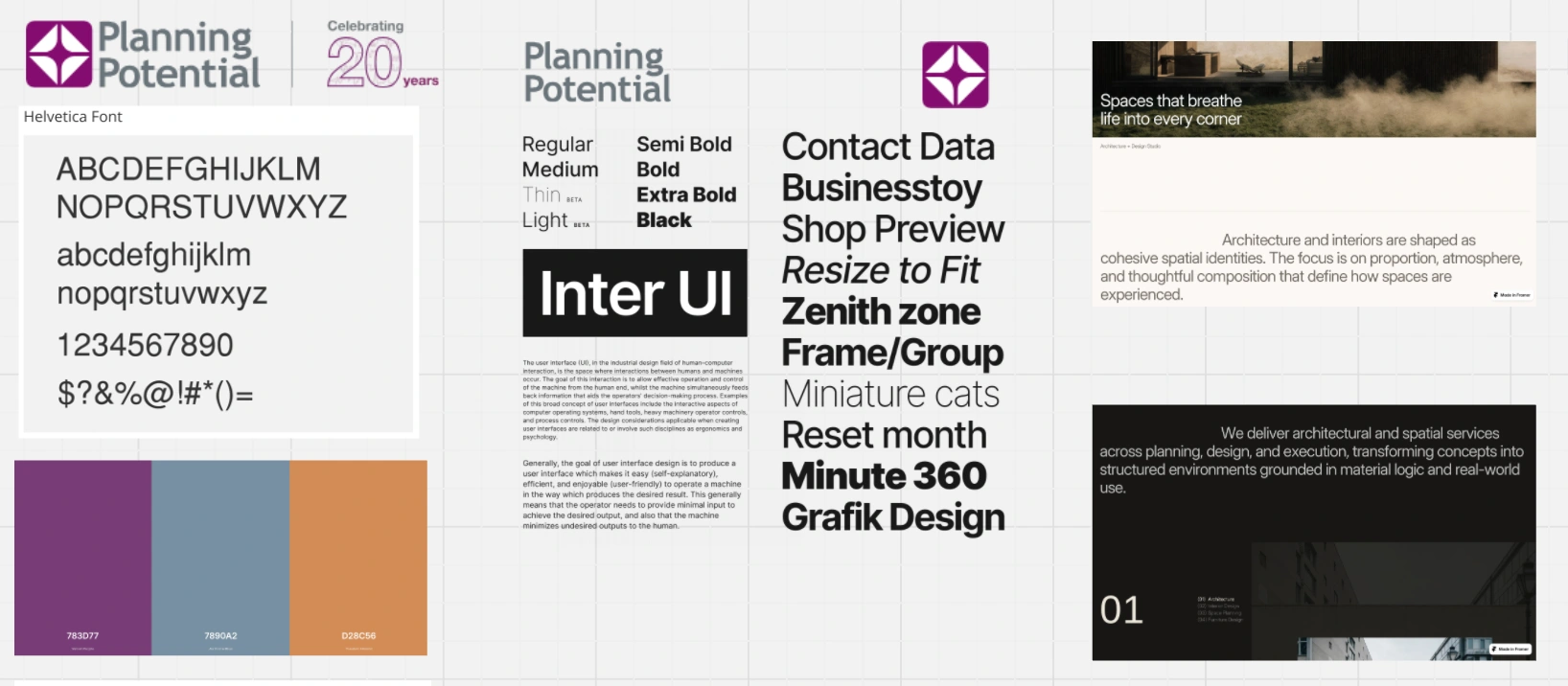
Design exploration
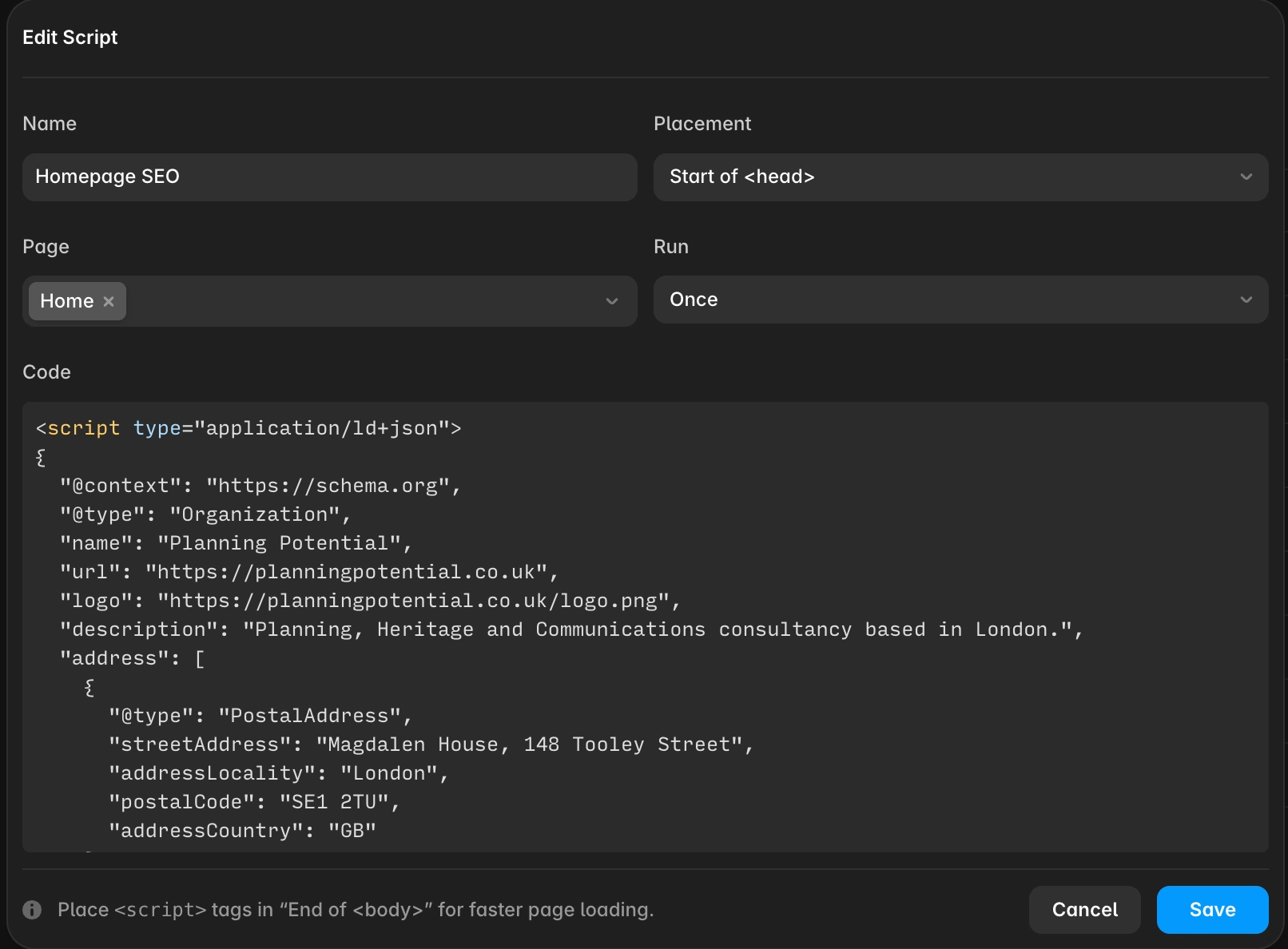
Back-end code and SEO optimization
The design decisions
With the brand locked, design became a question of restraint and hierarchy.
The identity as a constraint, not a canvas. The purple and the Helvetica/Inter pairing were treated as fixed tokens. The design work was making 100+ pages feel calm, consistent, and unmistakably Planning Potential – from the homepage to the deepest project page.
Navigation as the product. With this much content, the real UX problem is wayfinding. Projects, people, and expertise had to interlink so a visitor can move from a case study to the team behind it to the service it demonstrates without ever feeling lost.
Layout systems over layouts. We explored different layout systems and settled on repeatable templates for project and people pages, so page 90 holds the same quality bar as page 9.
A hero that says the whole brand in 15 seconds. The homepage opens with an AI-generated video: an architectural drawing that grows into a real building, alive inside a real community. Drawing to building – planning to potential. One image, the entire positioning.
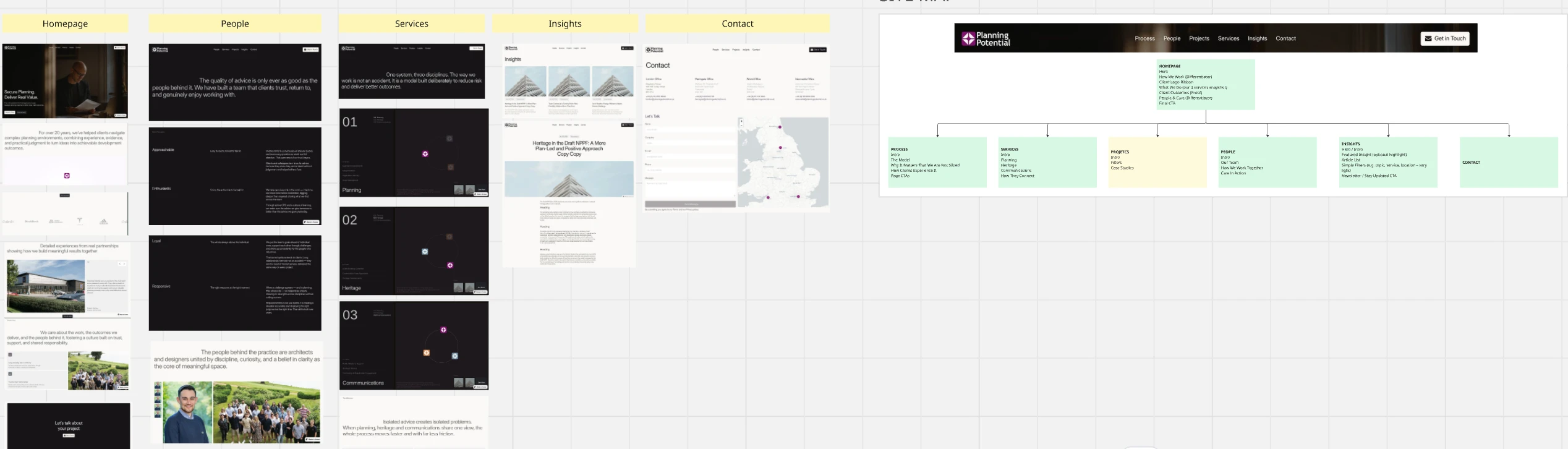
Building up the structure of the website
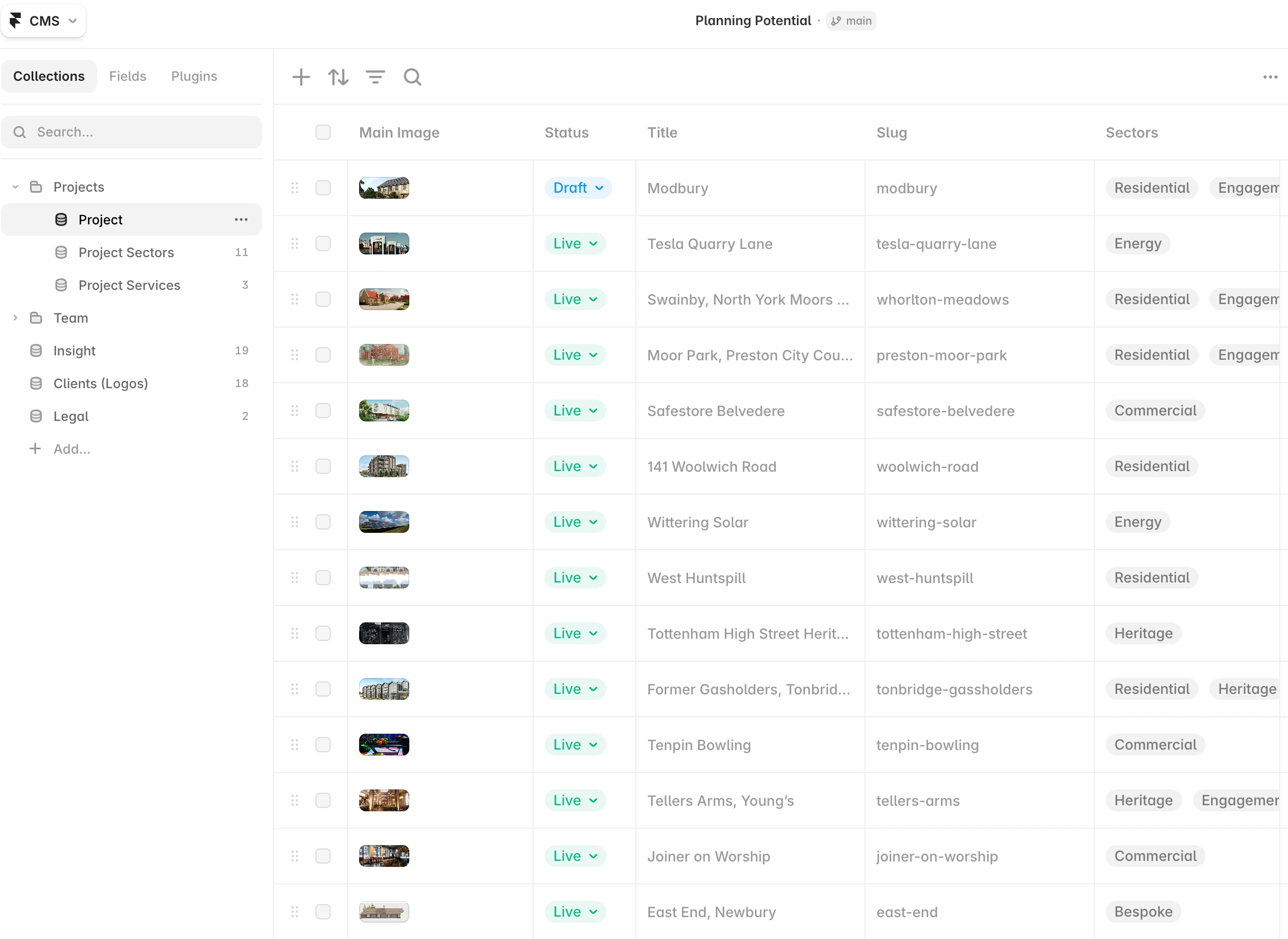
Website backend structure using CMS in Framer project
The management decisions
A hundred-plus pages in under six weeks does not happen by working harder. It happens by removing ambiguity early and keeping the whole project in one place.
Structure first, pixels second. The first weeks went into outlining the full sitemap, naming conventions, and content model with Growth Age. Once we knew what every page had to carry, the visual build moved fast because nothing had to be renegotiated mid-flight.
Content migration as a workstream, not a footnote. The existing project library – mostly PDFs and old website pages – was processed with a clear filter: detailed analysis of what to keep, what to restructure, and what to eliminate. Population of the CMS started early instead of waiting for a "final" design.
Calibration cycles with the client. After the first working version, the project moved in feedback loops: polish the site, tune the backend, iterate. No big-bang reveal at the end, no surprises.
The hero video as an iteration exercise. The final phase was the hardest: we tested multiple video generation models and tools, going back and forth with the client until the 15-second concept landed exactly right. The discipline was treating AI generation like any other design process – briefs, rounds, decisions – instead of a slot machine.
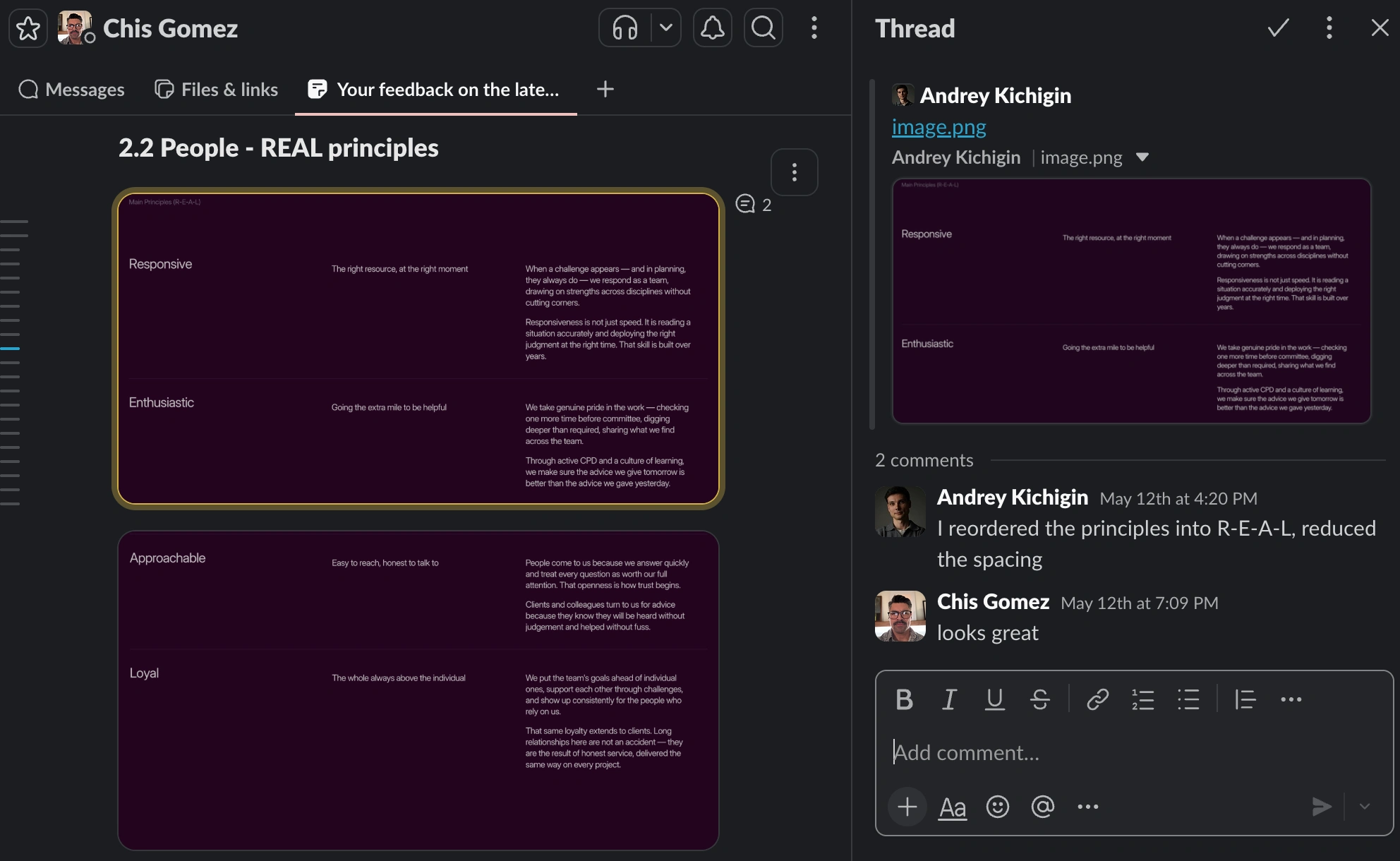
Real client collaboration is easy and organized in Slack, ensuring smooth communication
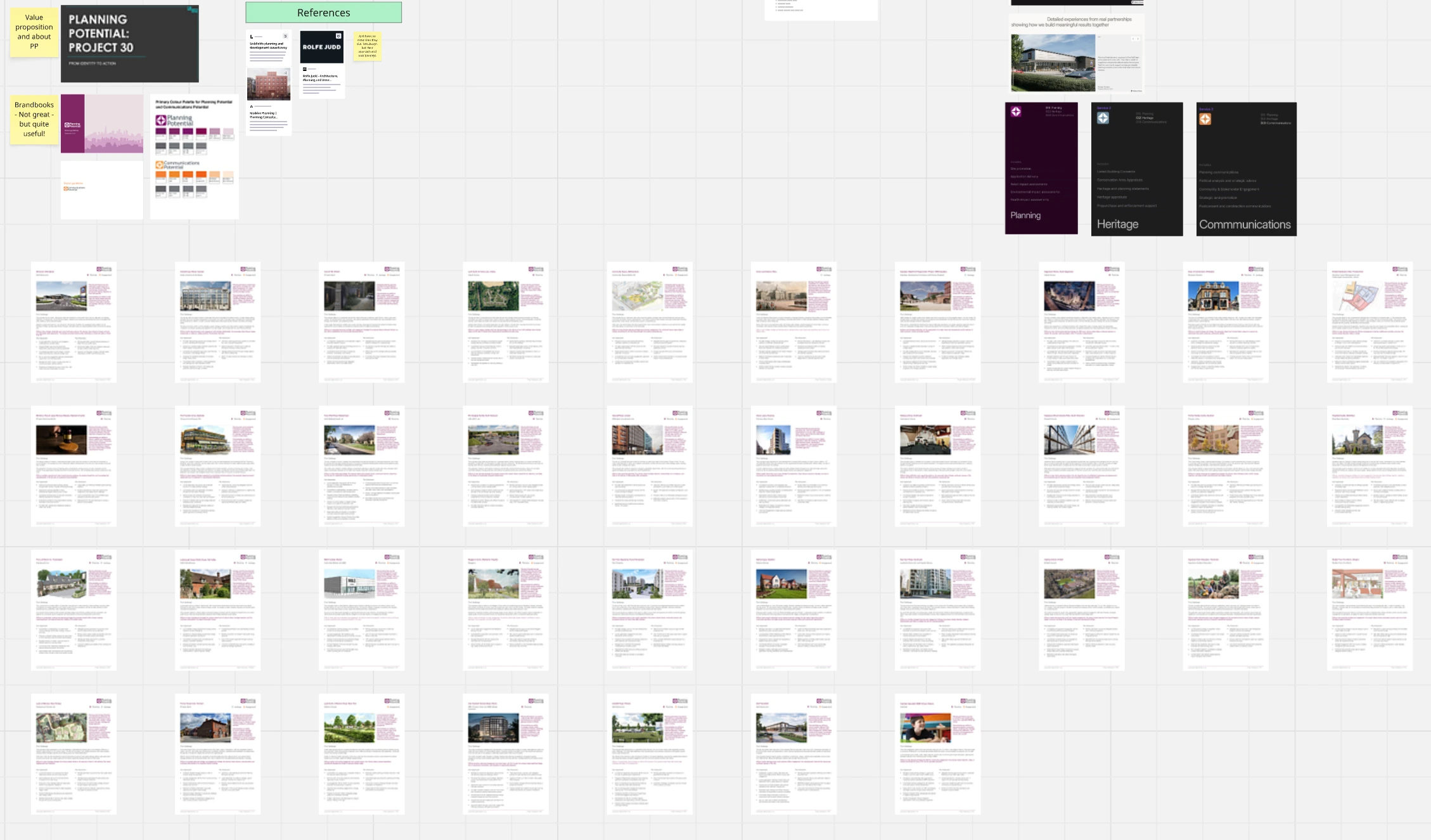
The case studies in PDF are ready to be added to the new Content Management System
What we built
A full multi-page Framer website – homepage, projects, people, and expertise – 100+ pages delivered in under six weeks
A powerful CMS carrying three engines: project case studies, team/people pages, and an articles/blog setup ready for future publishing
A migrated and restructured project library, converted from PDFs and legacy pages into filterable, browsable CMS entries
The AI-generated 15-second hero video, used on the homepage and in marketing materials
Full technical SEO on the backend plus AI-search (GEO) optimization
A complete training system – videos and written instructions – so the internal team can maintain and grow the CMS without us
New website
Where the craft showed up
CMS at real scale. Populating a hundred-plus pages only works if a single new entry takes minutes and looks identical in quality to the launch set. The collections were modeled around how the team will actually publish on a Tuesday afternoon, not around how they demo.
Brand fidelity across the system. Signature purple, Helvetica and Inter, spacing and type scale wired through shared styles – so the identity the client is proud of cannot be fractured by a careless edit.
An AI deliverable held to design standards. The hero video shipped only when it communicated the brand idea precisely – the drawing-to-building transformation inside a living community – not when the tool produced something merely impressive.
Search as engineering. Technical SEO was built in during the build, not retrofitted. The AI-search optimization placed the site in the top 15% of websites globally, before crawlers have even finished doing their work.
What changed for Planning Potential
The firm's digital presence finally matches its actual standing: two decades of work, browsable by a stranger in minutes instead of buried in PDFs. The internal team is already maintaining and populating the CMS themselves, using the training system we handed over. The site is fully optimized on the backend, and the only remaining step requires no one's effort: giving search engines and AI models time to index the new site.
Both sides consider the project a clear success – and the client is proud of what now sits on their domain.
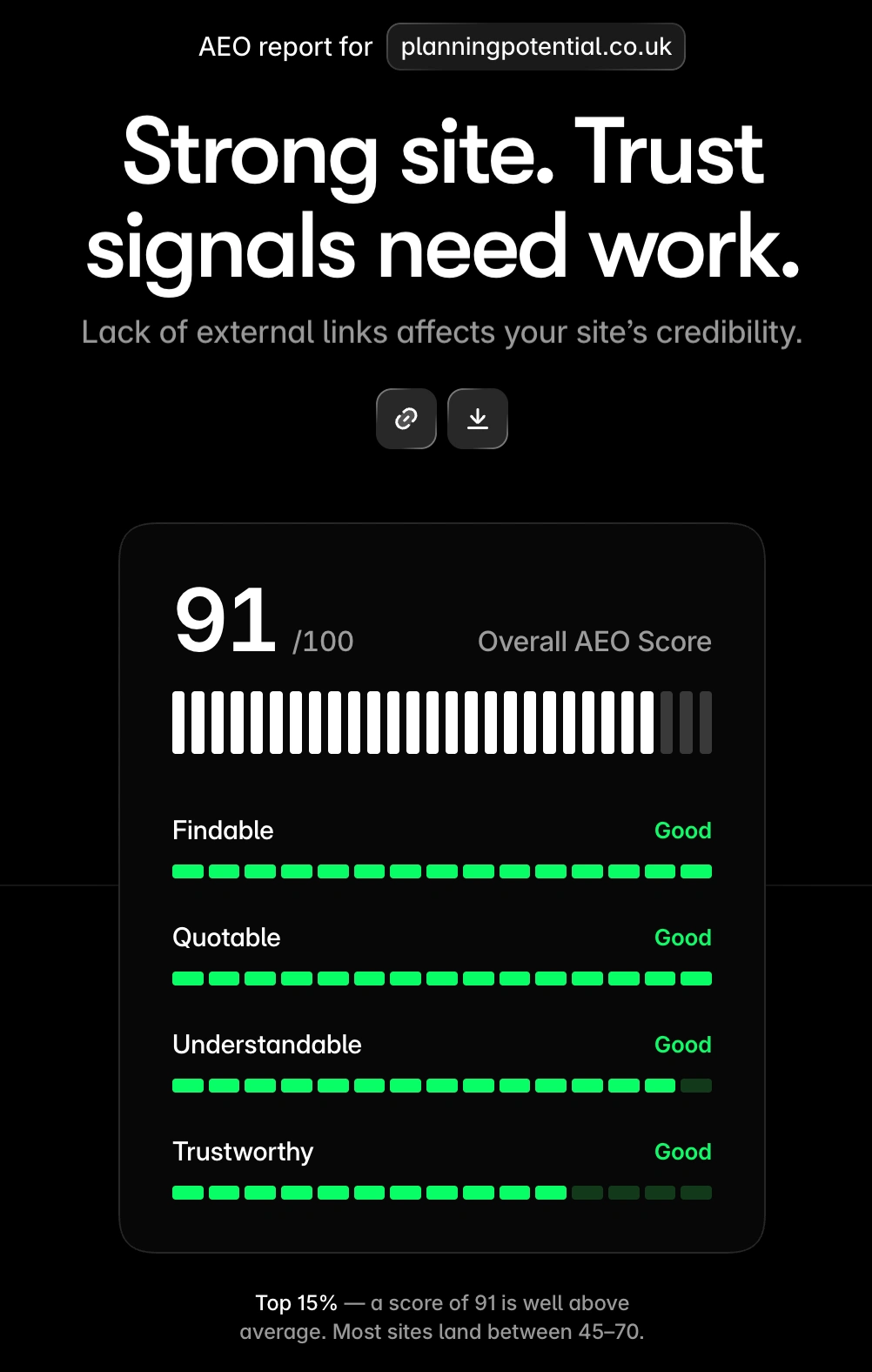
AEO optimization

Delivered right on time before the big reveal
Why this case is representative
This is the pattern Kichigin Studio is built for: an established firm with real credibility, a content library that exists but is not organized, and a digital surface years behind the business.
A CMS-led build shaped around how the firm actually wins work – case studies, people, expertise
Serious scale absorbed by structure-first management: 100+ pages, six weeks, no quality drop
Smart budget allocation: keep the brand that works, invest where the leverage is
A clean handover with training, so the asset grows without us in the loop
Like this project
Posted Jul 15, 2026
100+ pages in six weeks for a UK planning consultancy. Case studies, people and expertise finally in one place, run without an agency.
Likes
2
Views
40
Timeline
Mar 20, 2026 - Ongoing
Clients
The Growth Edge
Collaborators