Built with Framer
Conway Real Estate Digital Presence Launch

Andrey Kichigin
Verified

Website creation case study - Conway Real Estate (London)
Conway Real Estate – first real digital presence for a word-of-mouth UK advisory
Industry: UK commercial real estate advisory
Engagement: First Framer website + CMS + content ops handover
Timeline: ~1 month build, plus structured handover
Context: Established advisory with strong reputation but no proper digital presence
Where Conway started
Conway is the kind of firm that does not need to advertise. Decades of deals, a strong network, and a reputation that travels through introductions. That model has worked for years, but it has a ceiling. The moment a referral wants to vet the firm, the conversation moves to a search bar, and a search bar is not friendly to businesses that exist mostly in people's heads.
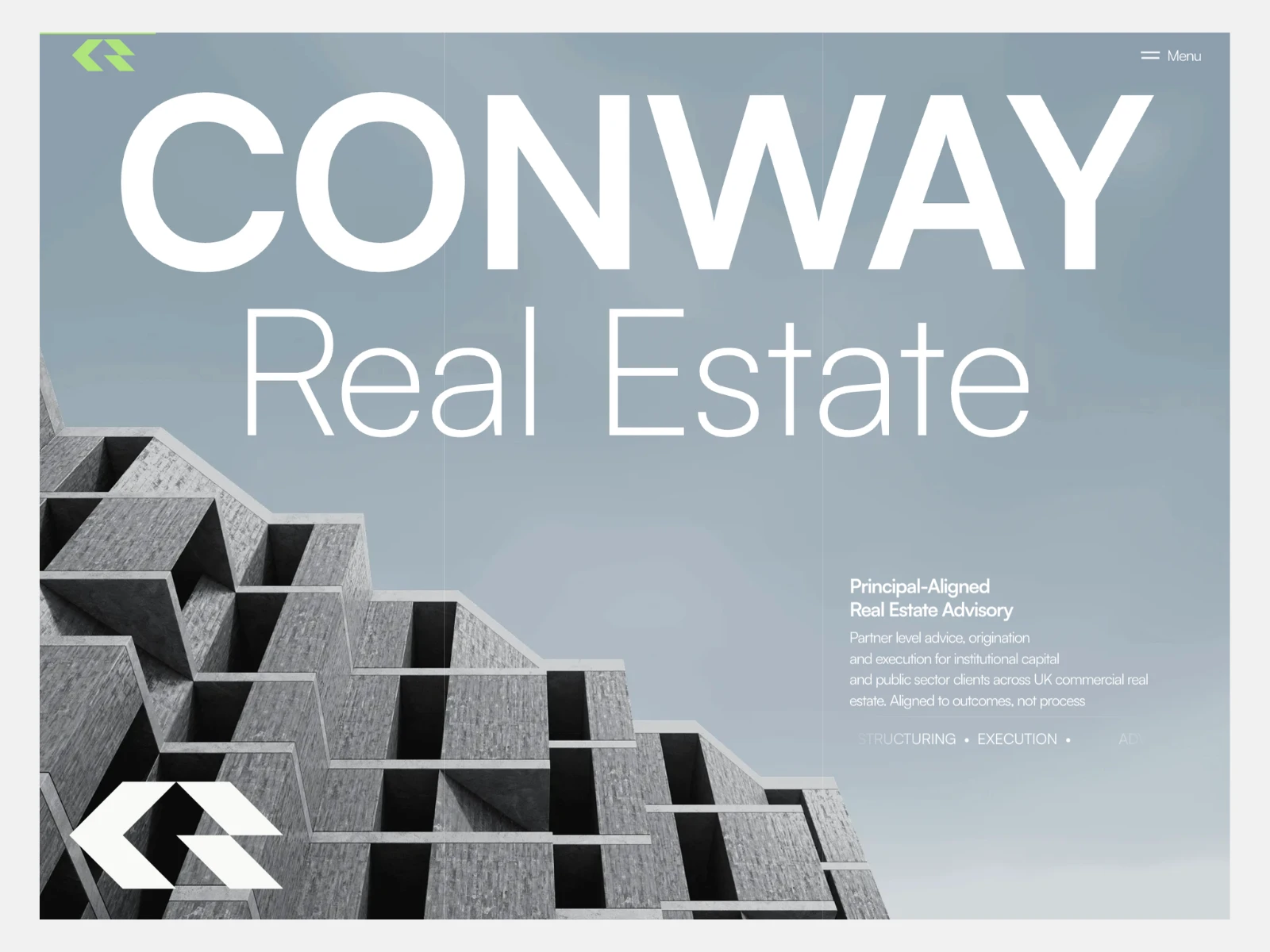
When we came in, the goal was not to "make the site nicer." There was no site to make nicer. The goal was to take a real, established advisory and give it a digital version of itself, one that a senior buyer, a co-broker, or a journalist could land on and immediately read as legitimate, established, and worth a meeting.
What made this specific
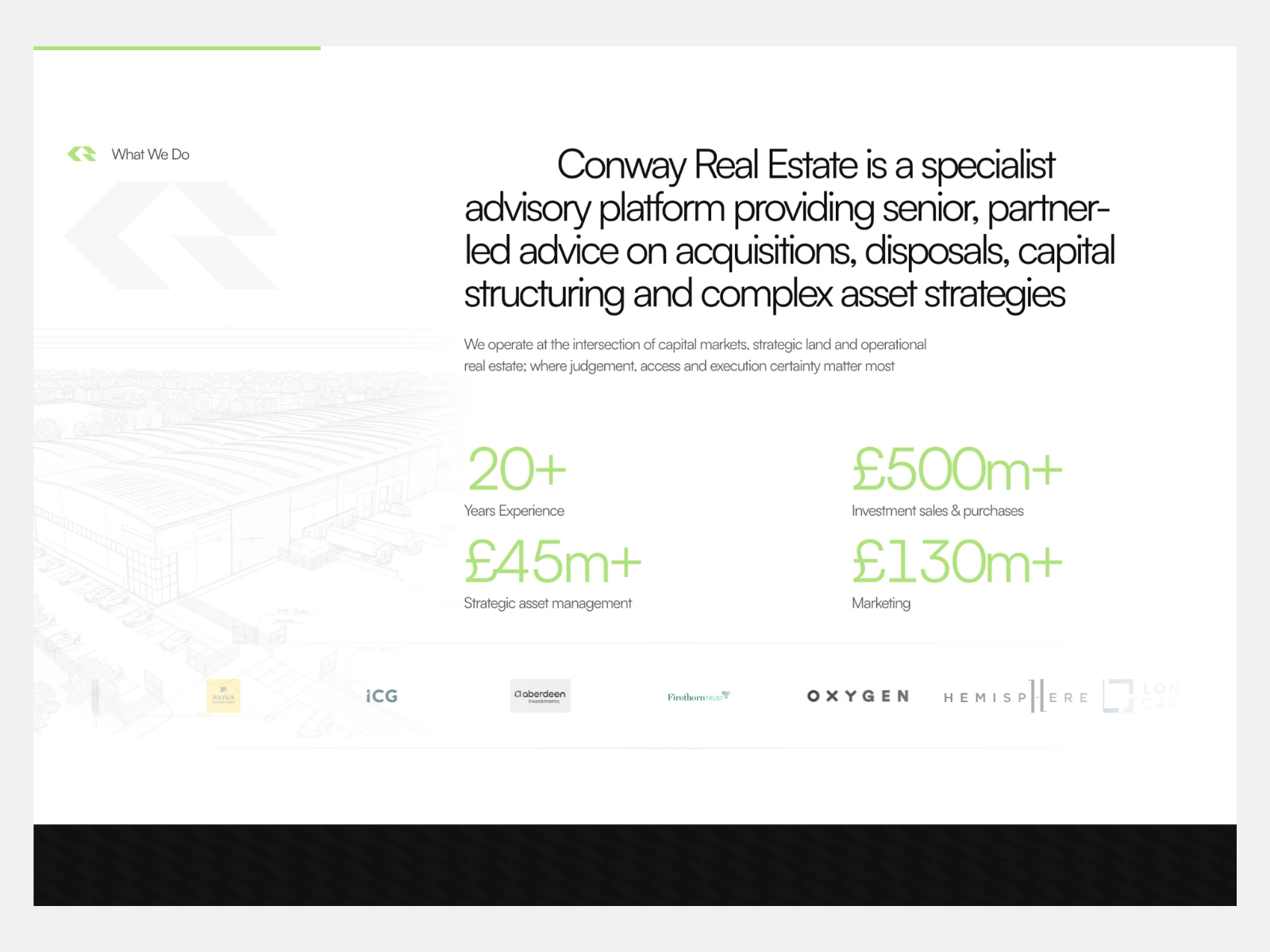
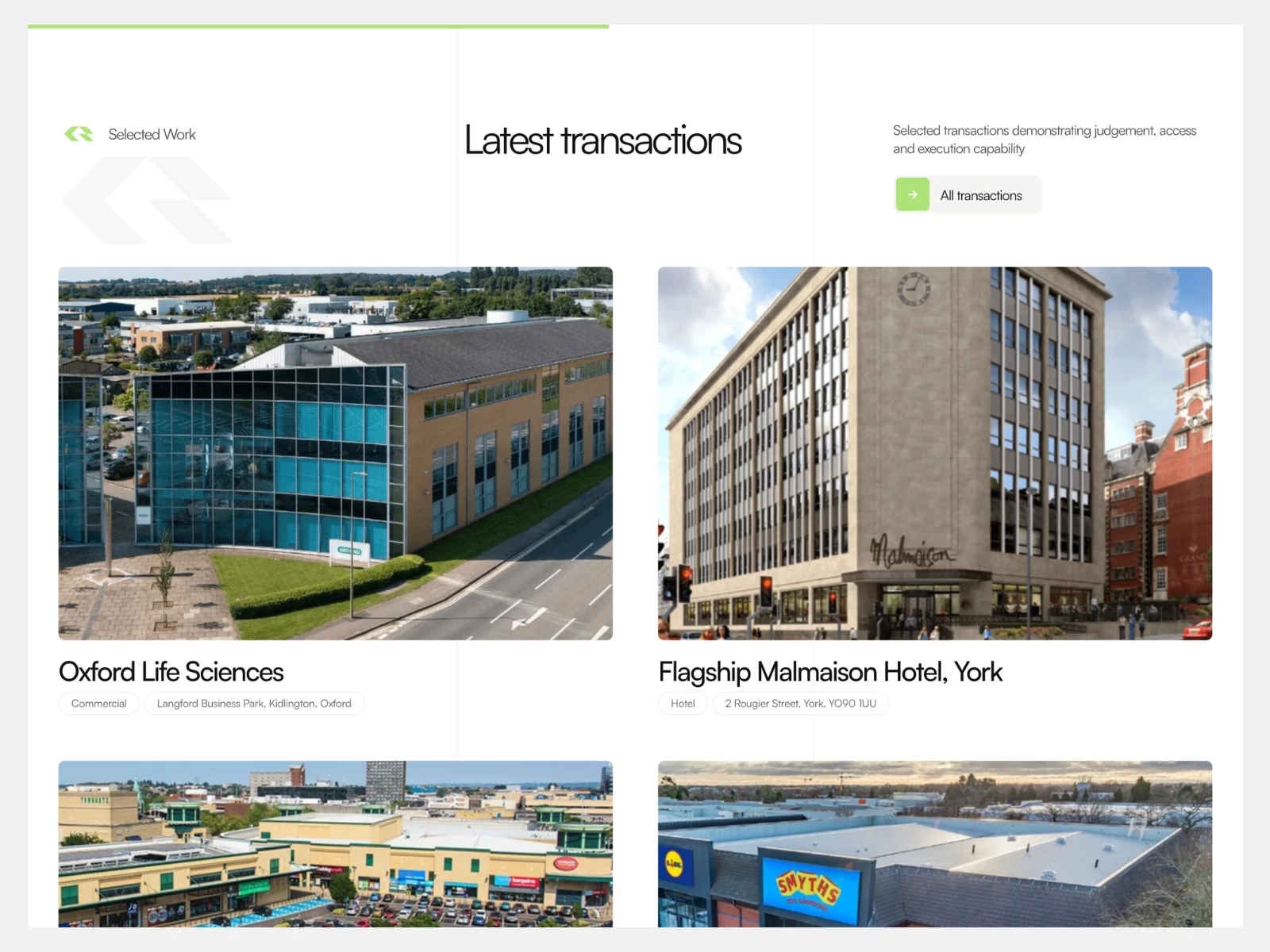
In commercial real estate, the audience is sophisticated and skeptical. They are not impressed by gradients or buzzwords. What moves them is track record presented well: transactions, clients, and case studies that show the size, the sectors, and the outcomes. The website had to behave less like a brochure and more like a filterable proof library.
A few things shaped every decision:
The firm has more material than it realized. Years of deals, clients, and stories that had never been organized for the public. The site had to give that material a home and a structure.
The team is small and not technical. The platform had to be something they could run, edit, and grow themselves, without a permanent dependency on us.
The visual register had to land between two extremes. Most large UK property firms still ship corporate, dense, dated websites. Most small advisories ship a one-page business card. Conway needed to read like neither.
The handover was part of the deliverable, not an afterthought. The firm needed to walk away owning the site, the domain, and the workflow.
How the project was shaped
Instead of starting from layouts, we started from the content engine. The first decisions were structural: what objects the site had to hold (transactions, case studies, clients, legal), how those objects would relate to each other, and how the team would actually update them on a Tuesday afternoon. Once that was honest, the visual work fell into place quickly because we already knew what every page had to carry.
From there the build moved in tight cycles. A directional draft to anchor the look. Iteration on the components that do the most lifting (hero, transactions stats, case study cards, client logos). Mobile and tablet shaped alongside desktop, not after. Then a polish pass focused on the small things that separate a serious site from a competent one: rhythm, type weights, hover states, motion that supports the eye instead of distracting it.
The site itself
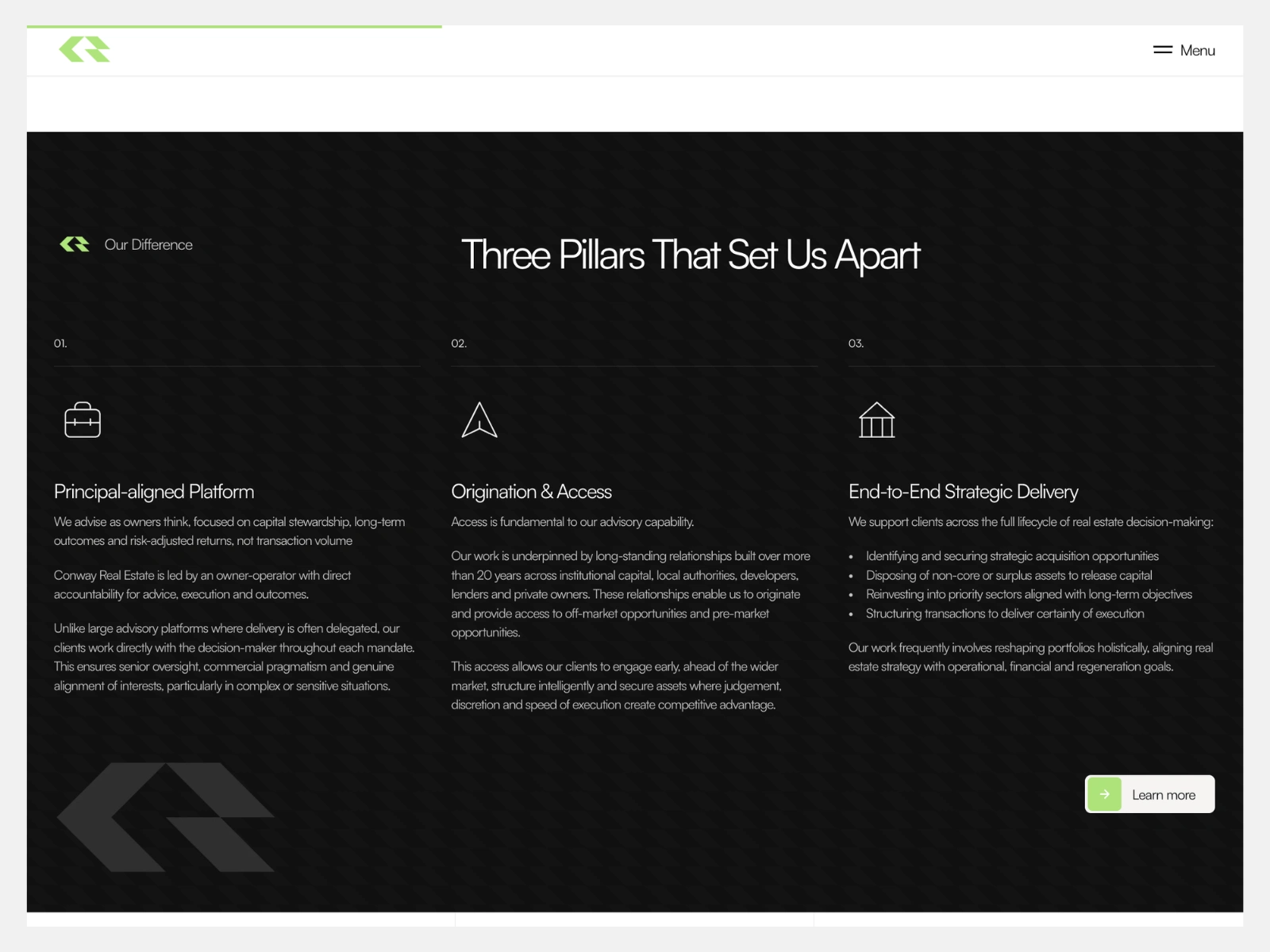
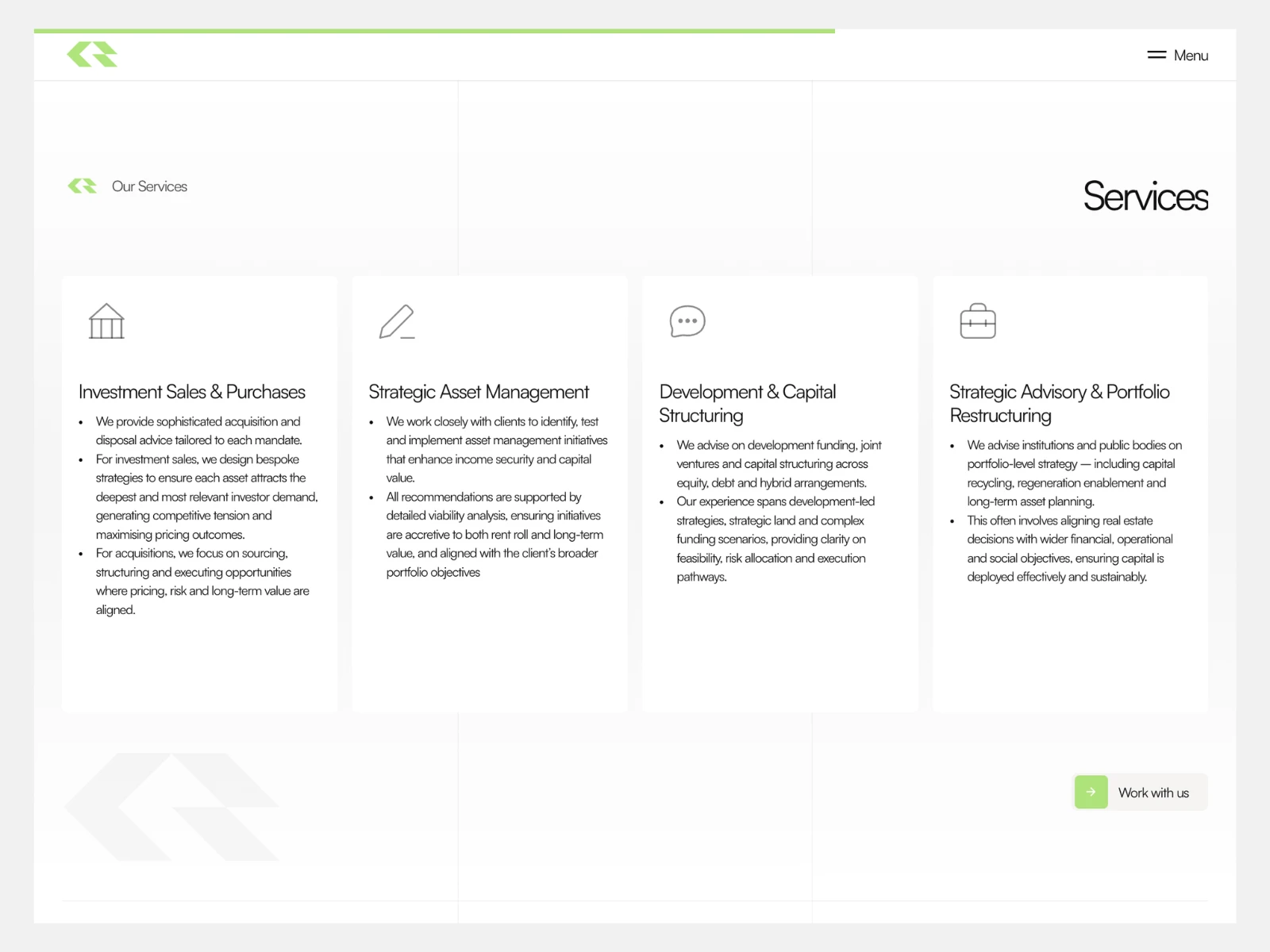
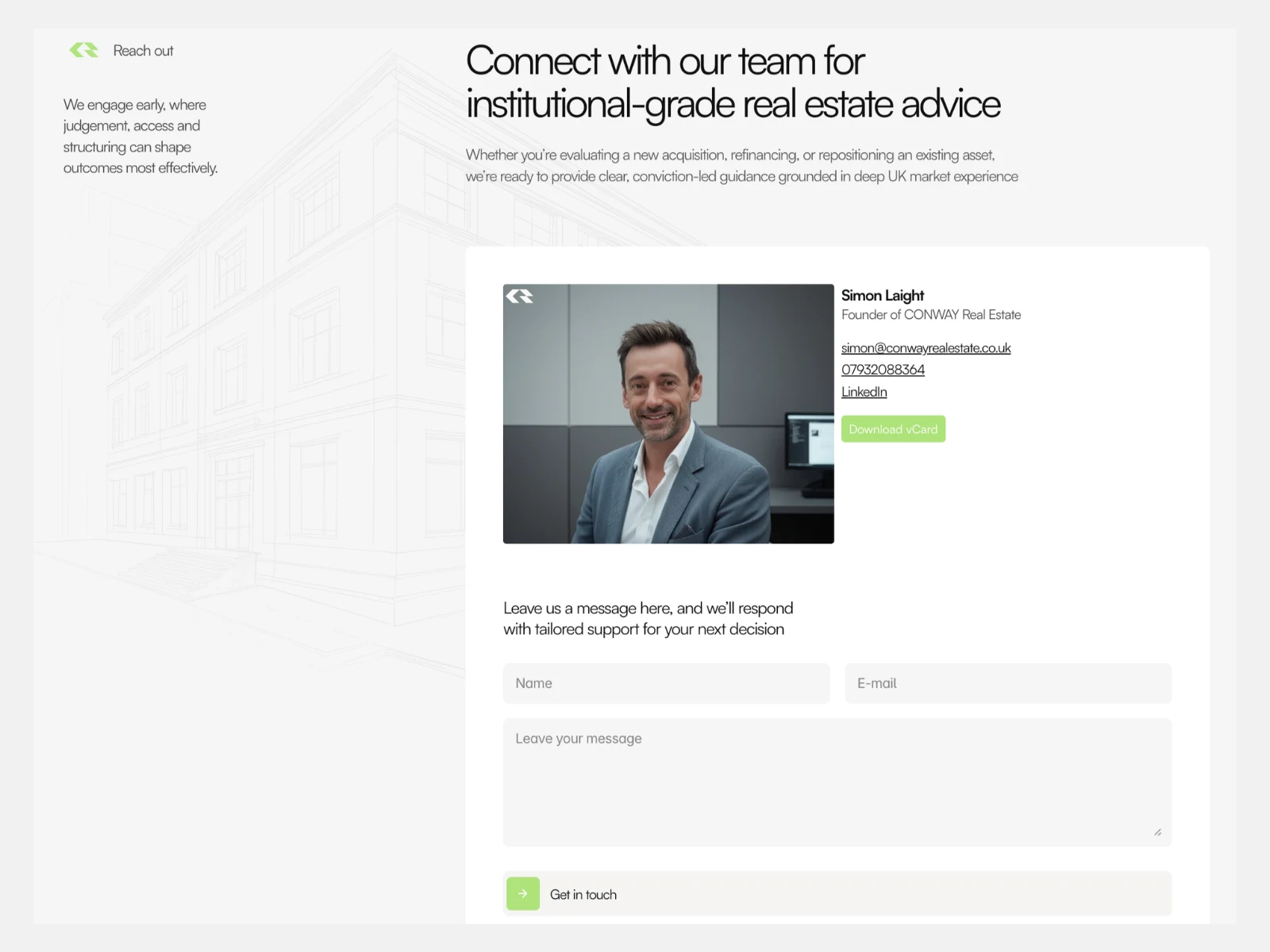
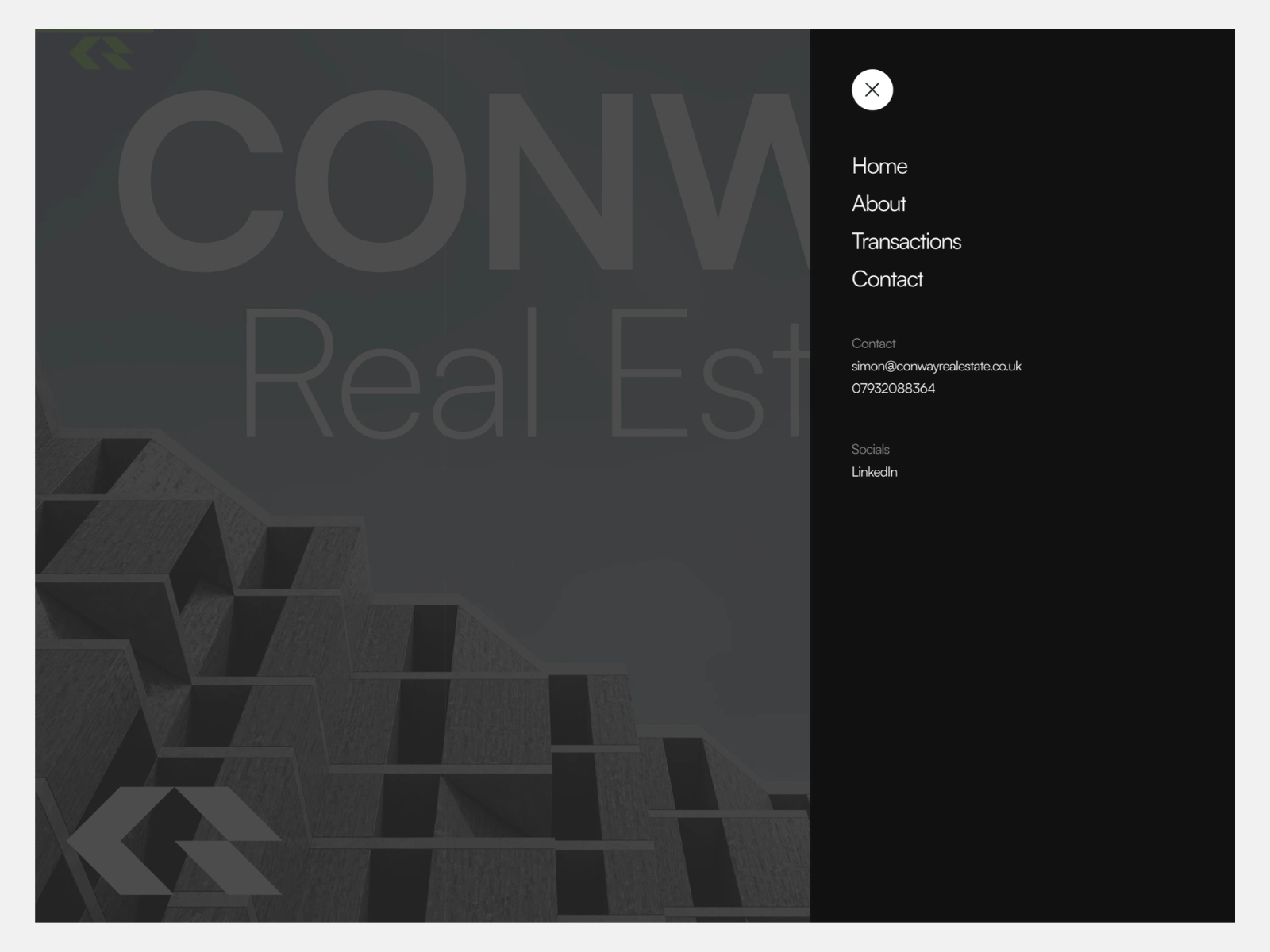
A multi-page Framer build covering home, about, transactions, case studies, clients, contact, and legal
Three CMS collections doing the real work: Transactions, Case Studies, Legal, all editable like a document by anyone on the team
A reusable case study template the team can duplicate, fill, and publish on their own — same structure, same quality, no design help needed
A stats and logos system on the homepage that the team can update inline by clicking directly on the live site
Hidden but ready: an FAQ block kept in the system as inactive, so it can be reactivated later without a rebuild
Light, dark, and social-share icon set, plus a social preview image for link unfurls
Built-in analytics for visitor counts, geography, devices, and referral sources
Custom domain on conwayrealrealestate.co.uk, with the Framer subscription, DNS records, and publish flow set up cleanly
A full ownership transfer into the client's own Framer login — the firm controls the asset, not the agency
Where the craft showed up
Track record as architecture. The transactions and case study collections are not decorative — they are the firm's pitch. We modeled them so a single new entry takes minutes and looks identical in quality to the launch set.
Editing on the live site. Stats, copy, transactions, and legal content can all be updated directly from the page using the pen icon. That removes the most common friction in long-lived websites: the team avoiding the CMS because it feels intimidating.
Drafts as a feature. Items in draft never appear publicly, even after publish, which gives the team a real workspace to prepare new transactions or case studies before they go live.
Style guardrails. Headings, colors, and components are wired through shared styles, so a careless edit cannot fracture the design system. The team gets flexibility where it helps and protection where it matters.
Search-ready from day one. Page titles, meta descriptions under 60 characters, structured headings, social preview, and a clean URL structure were set during the build, not retrofitted, so the site can earn rankings cleanly as Google indexes it.
Maintenance documented like a product. Handover included video walkthroughs covering: editing elements, toggling draft sections, updating transaction numbers, adding and removing transactions, plugging in social links, connecting the domain, and managing legal pages.
What changed for Conway
From no public presence to a website that does what the firm's introductions do, in pixels: it makes Conway feel like Conway. The track record finally lives somewhere a stranger can read. The team can grow that track record themselves, on their own platform, on their own domain, without coming back for help.
The work also produced a side outcome that says more than any analytics dashboard at this stage: the site became a reference point inside the firm's network, opening a referral conversation with another London real estate company looking for the same kind of upgrade.
Why this kind of project fits Kichigin Studio
Many firms in traditional industries sit in this exact spot — strong reputation, weak digital surface, content that exists but is not organized. Conway is the version of that story we are built to handle: a CMS-led site shaped around how the business actually wins work, delivered fast, handed over cleanly, and built to grow without us in the loop.

Like this project
Posted Apr 29, 2026
Developed and launched Conway Real Estate's first website using Framer, enhancing their digital presence.
Likes
5
Views
38
Timeline
Dec 12, 2025 - Mar 3, 2026
Clients
Conway Real Estate