Built with Framer
Website creation Case Study – Exymes (Biotech)

Andrey Kichigin
Verified


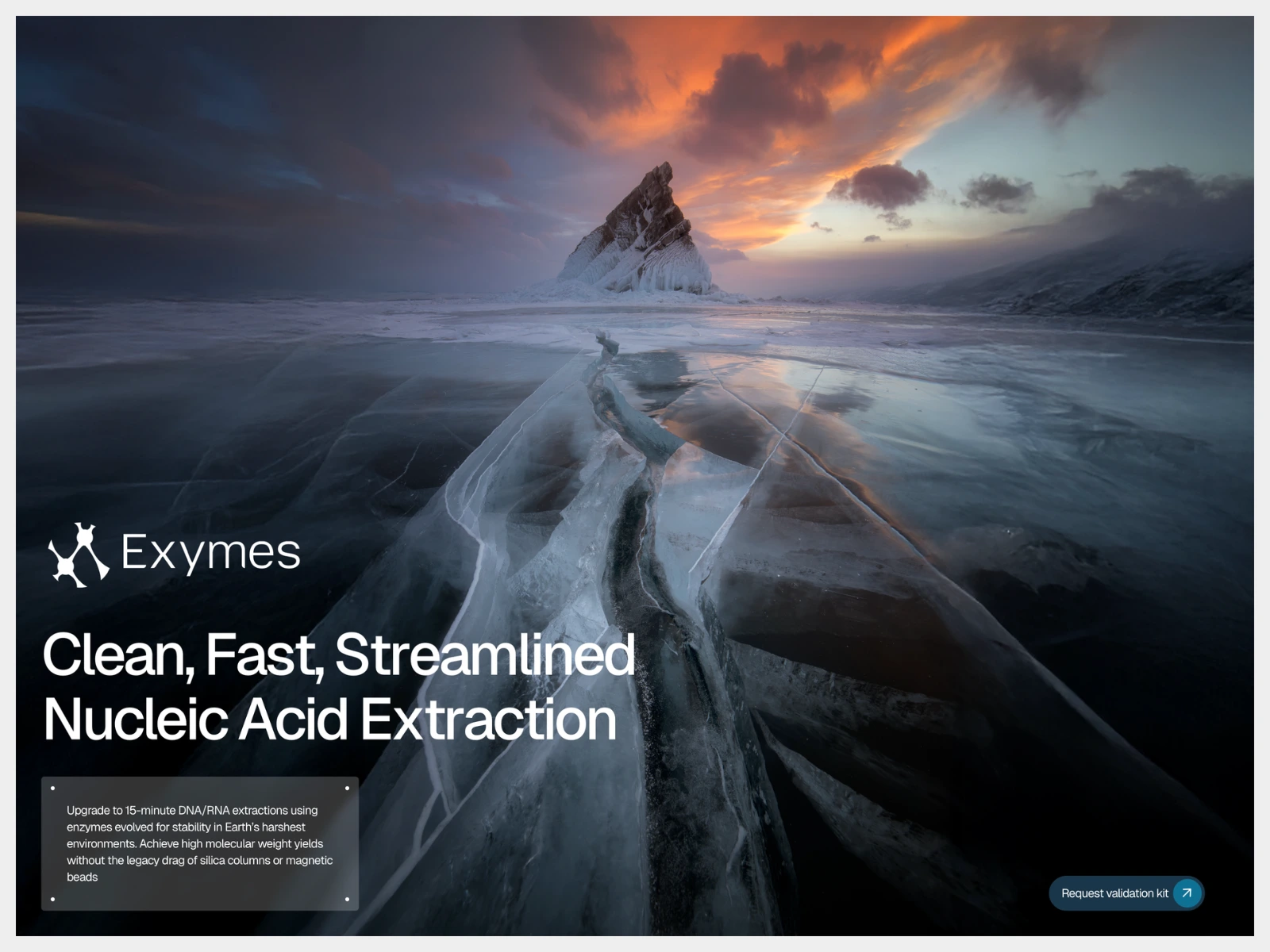
Exymes – rebrand carried into a credible, content-rich website
Industry: Biotech
Engagement: Multi-page Framer website + complex CMS
Timeline: ~2 months
Context: Tied to an international exhibition launch
The situation
Exymes already had real credibility in the market. The product was strong, the science was strong, the buyers were serious. The website was the part that did not match. It looked older than the company actually was, and that gap showed up the moment a prospect tried to evaluate them online.
The deadline made it sharper. The site was not just a marketing asset, it was going to be used in a real-world sales context at an international exhibition. That created a very practical definition of success. The site had to feel like a modern scientific company, work smoothly on the devices used at the stand, and support fast conversations with technical buyers.
The real challenge
The hard part was not visual design. The hard part was the information architecture and the content system.
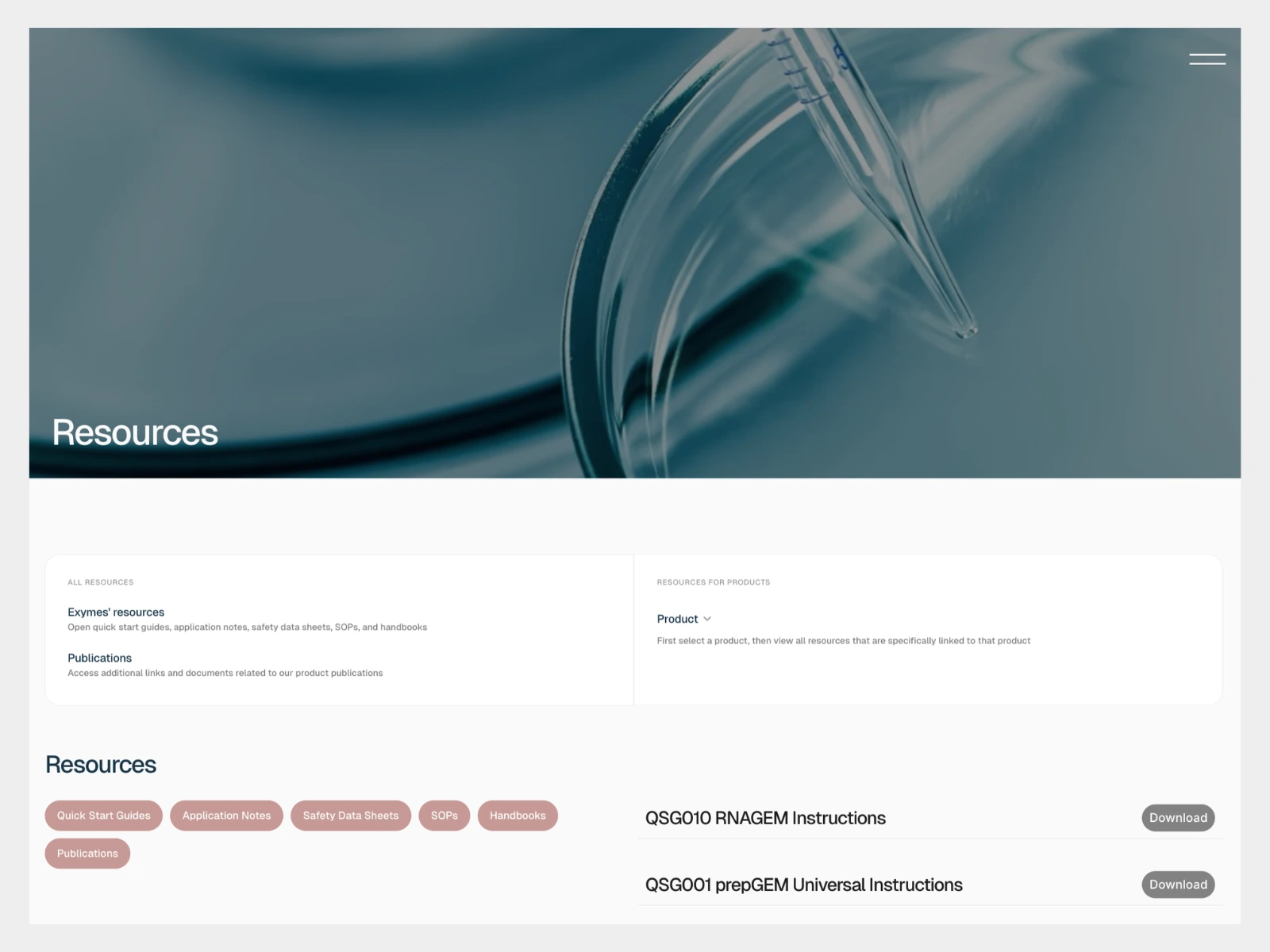
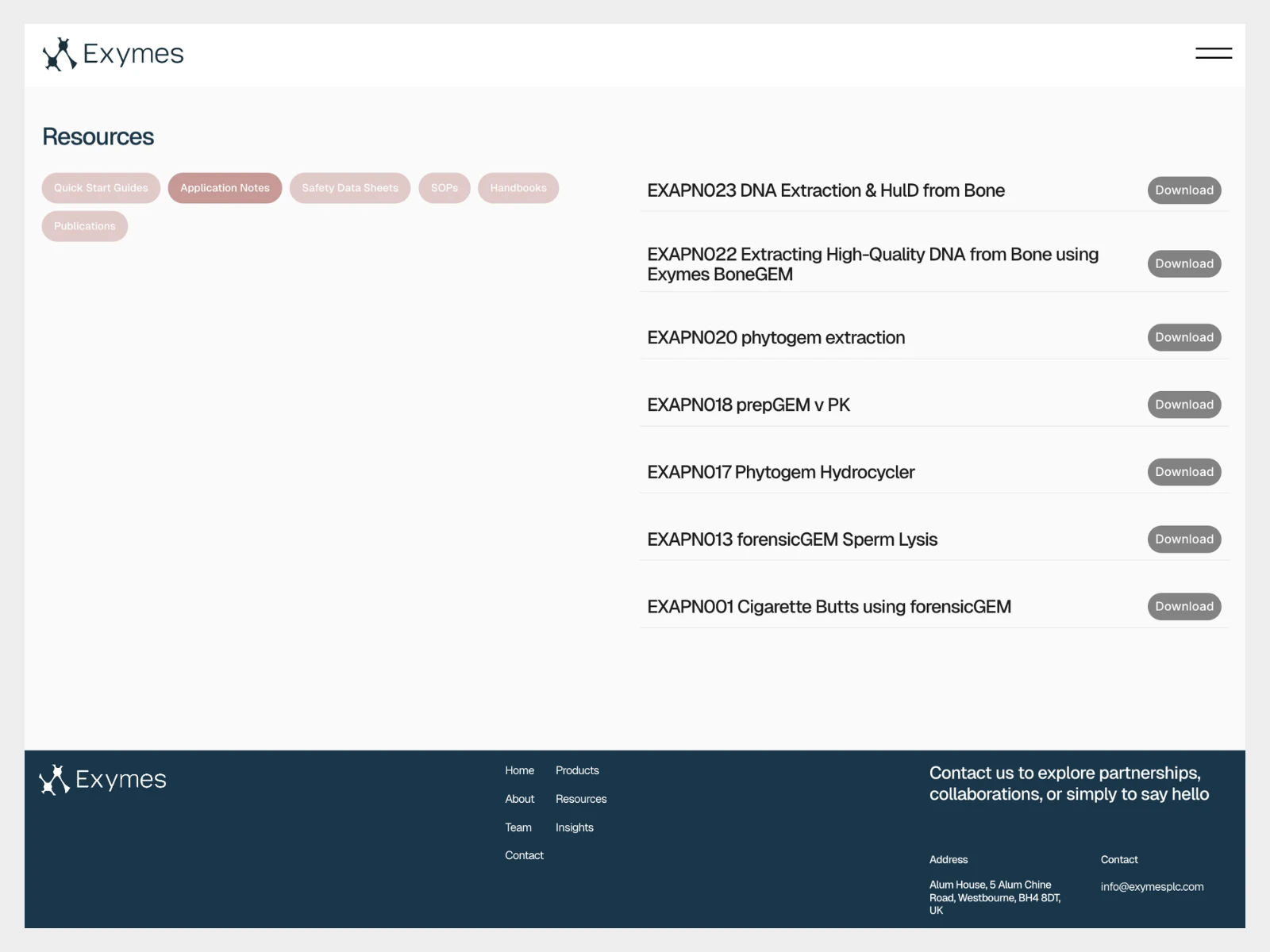
Exymes has complex data and multiple types of resources, and that content needed to become something a visitor could actually navigate. The website needed a structured library where resources could be connected, categorized, and filtered in a way that felt obvious to a scientific audience. This is the kind of project where a CMS is not a feature, it is the product.
On top of that:
Tight timeline of around two months
Multi-stakeholder feedback from the client team, the branding agency, and partners
A new brand system that had to be translated into a working product, not just applied as a skin
How we worked
The way the project stayed on track was by compressing ambiguity early.
Context and constraints. We mapped stakeholders, deadline, and content readiness before touching the design.
Rapid prototype. A first version went up early, not to be perfect, but to surface what was unclear and what was missing so the team could make real decisions.
System design. Once direction was locked, we built a layout and component system and a content model that could carry the full resource library.
Framer build. Responsive across breakpoints, optimized for performance, with proper SEO hygiene.
Launch and handover. QA across devices, a tablet pass for the exhibition, and a clean handover to the team.
Because there were multiple stakeholders, we ran the project on a single board with a single source of truth. Feedback, assets, decisions, and scope lived in one place. That kept weekly iterations calm and predictable instead of fragmenting into parallel conversations.
What we built
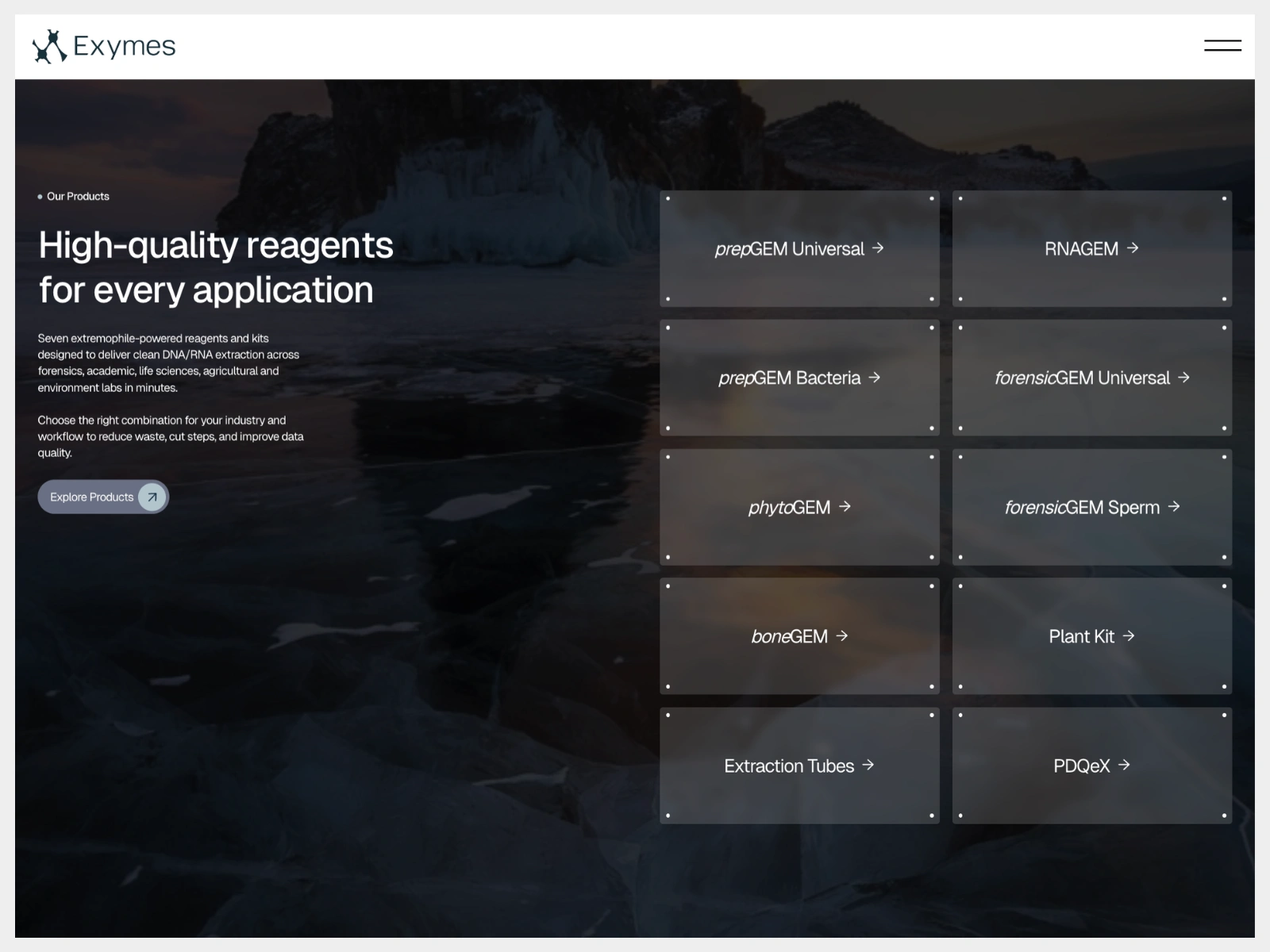
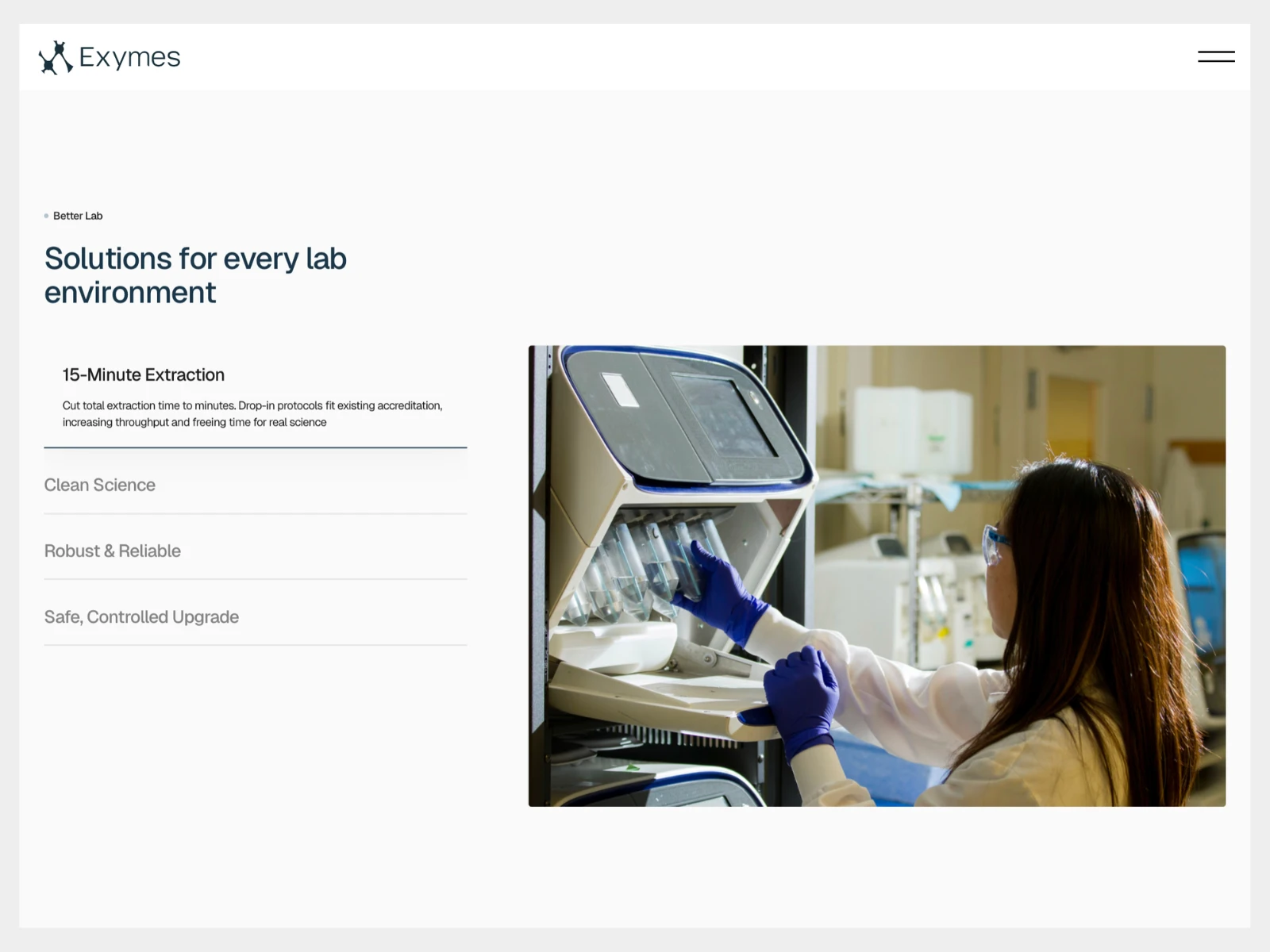
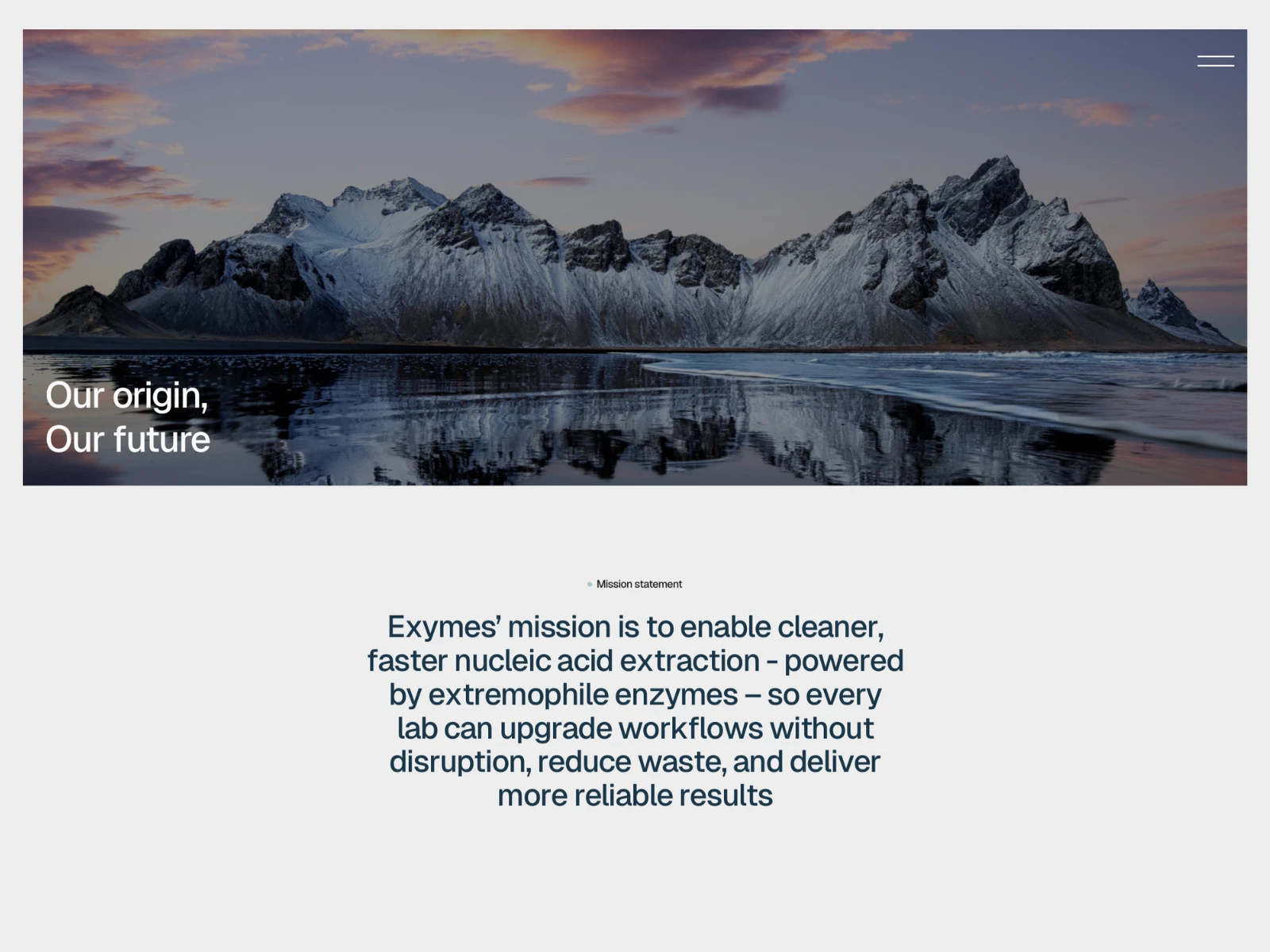
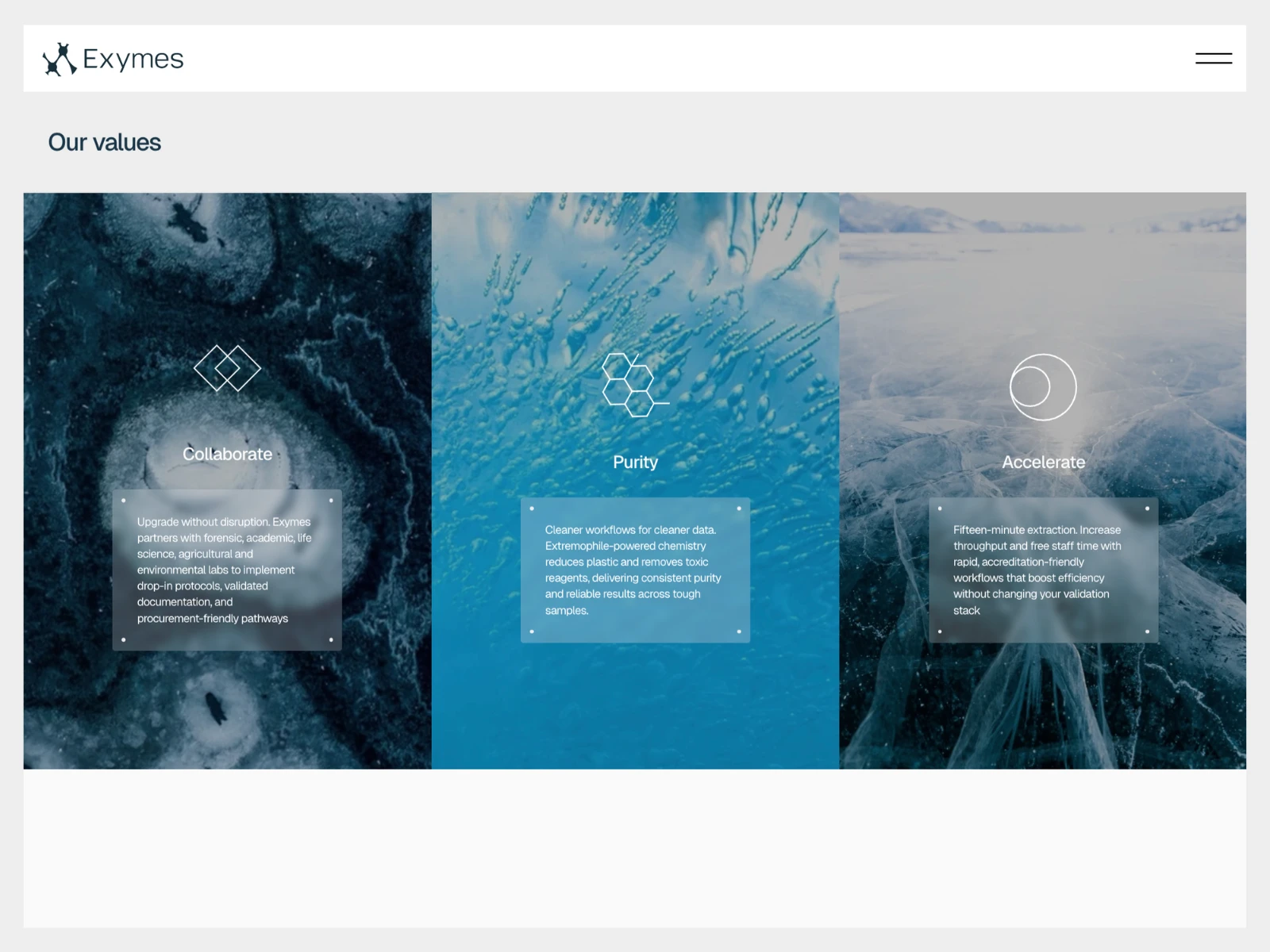
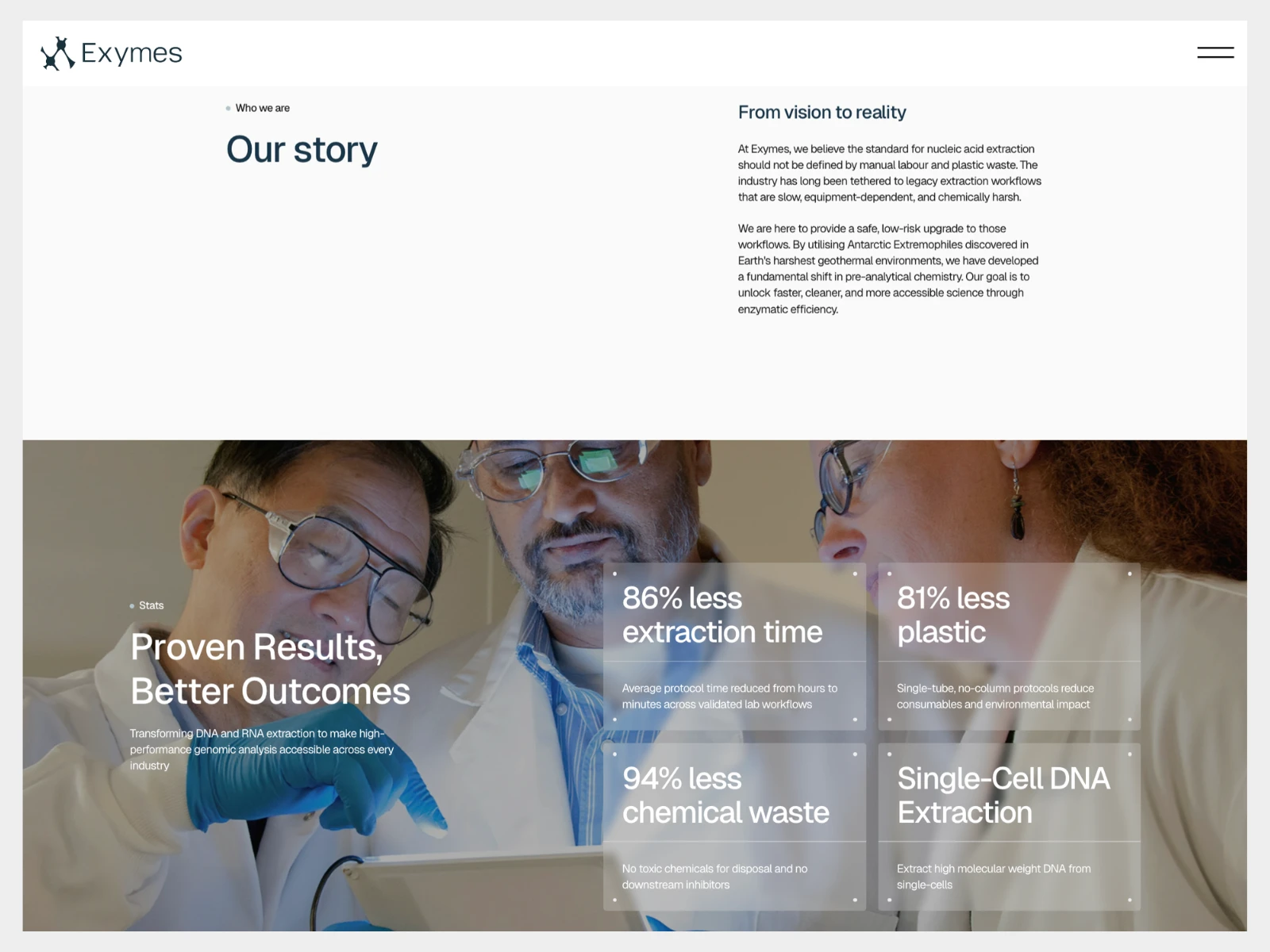
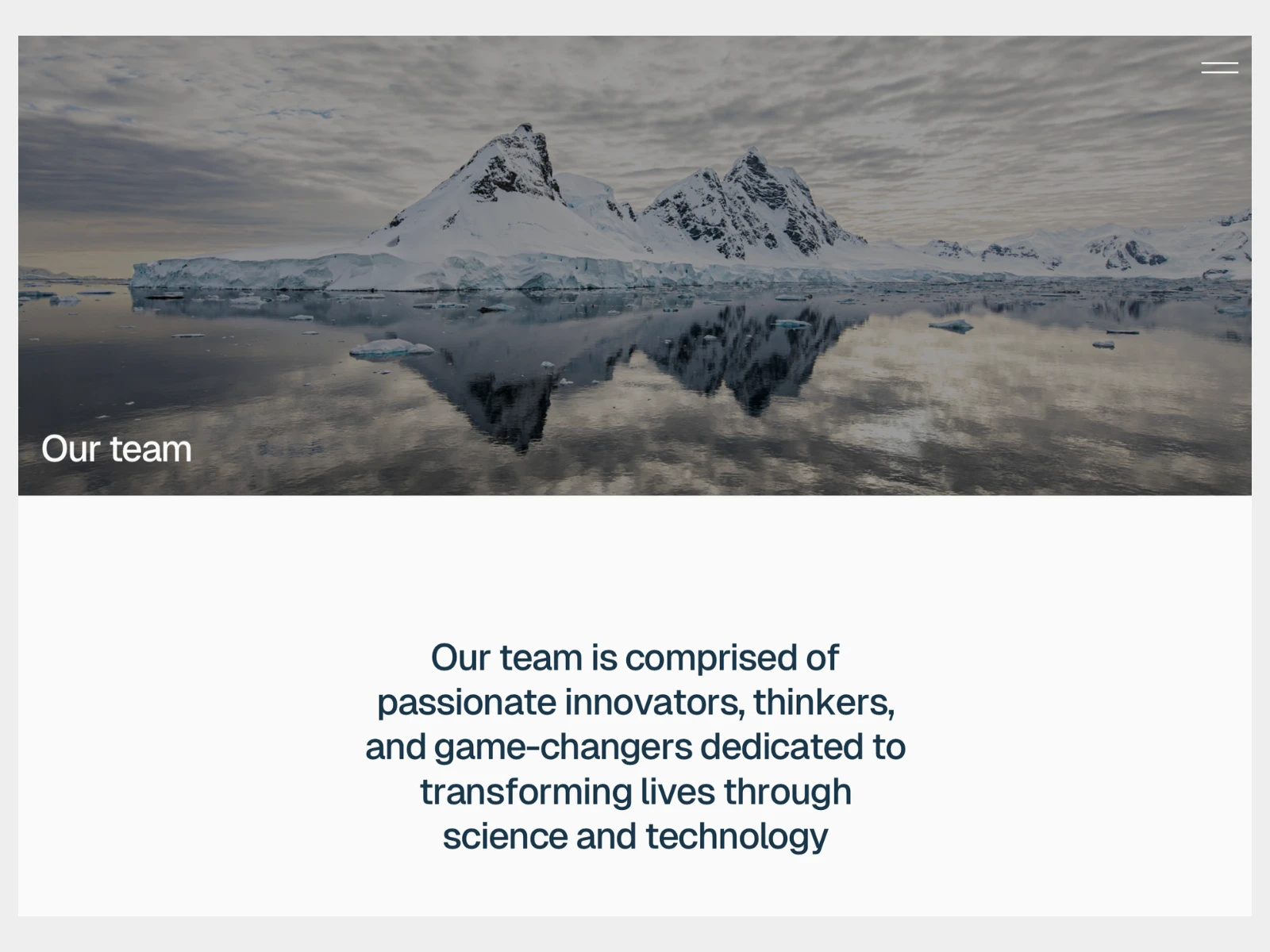
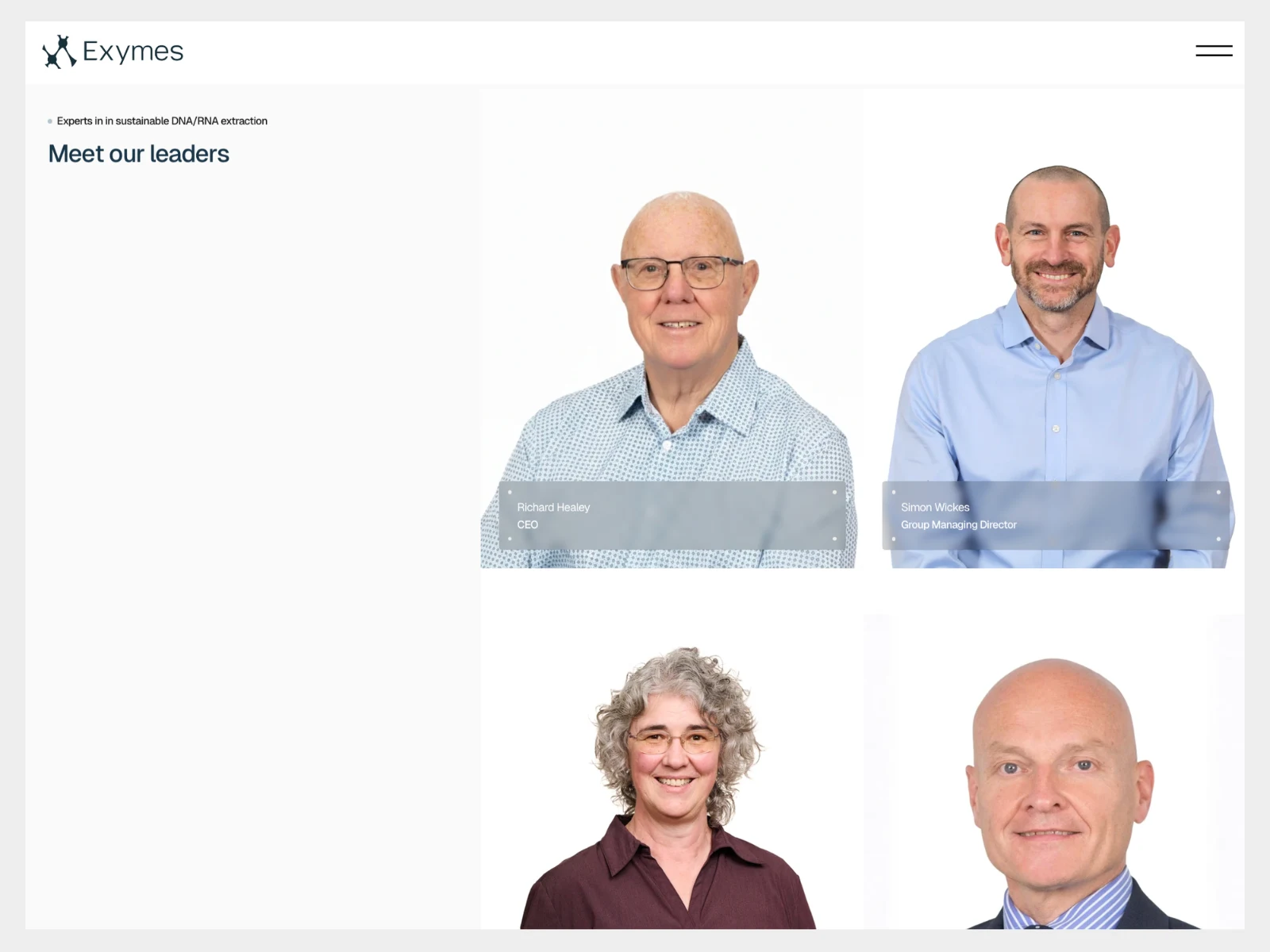
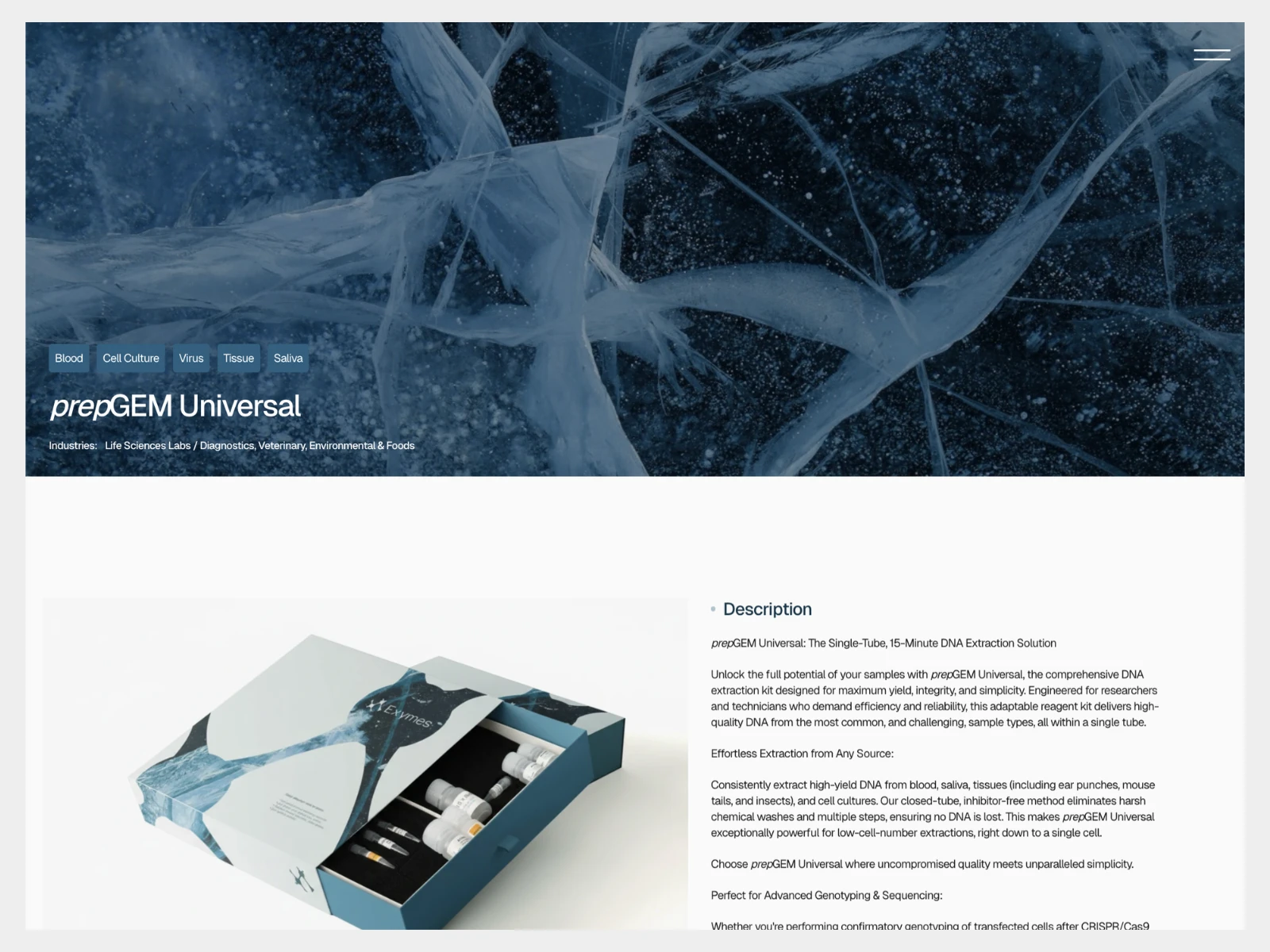
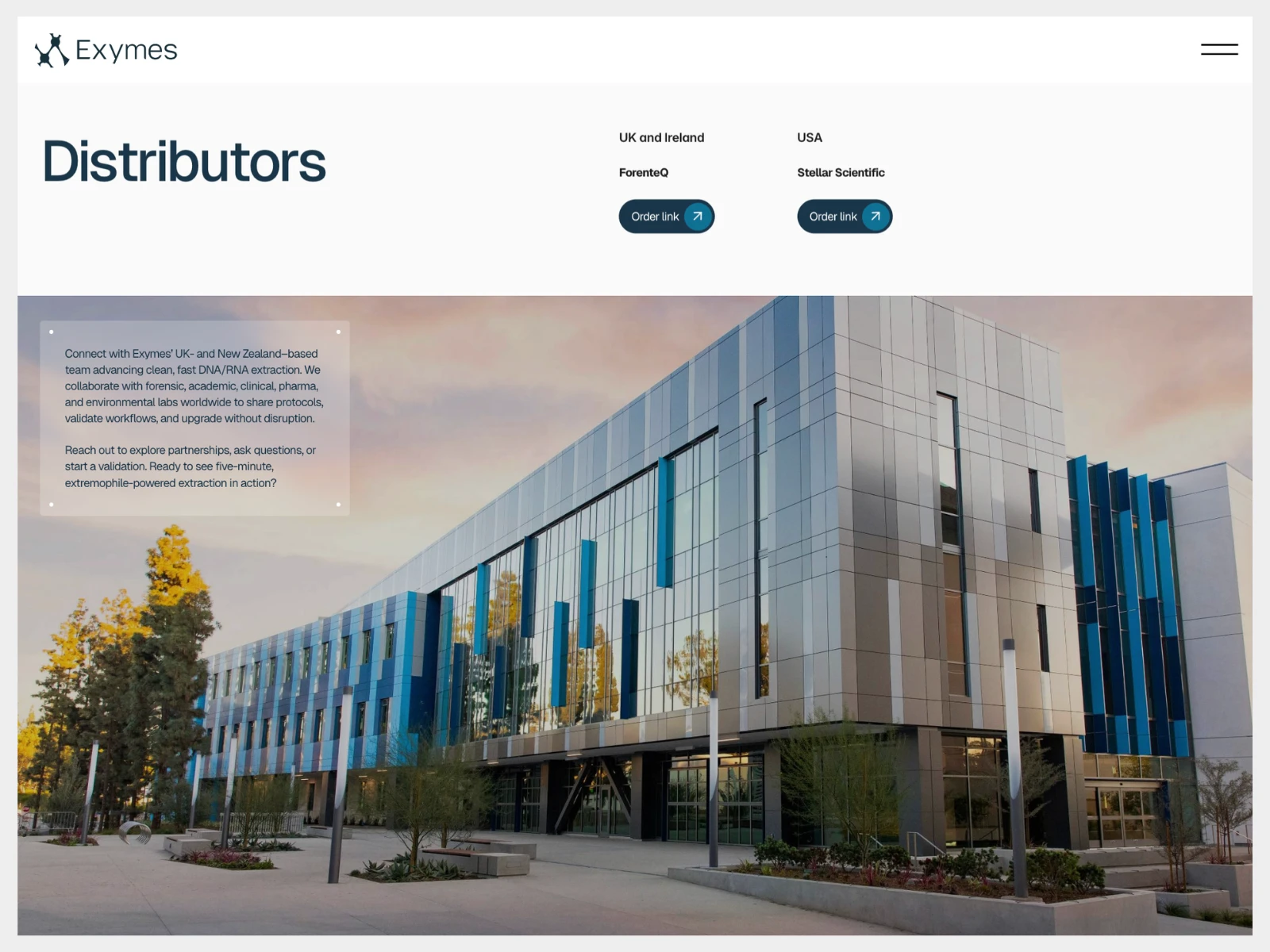
A multi-page Framer website aligned with the new branding
A content library with multiple resource types, categorization, and dynamic filtering
A component system of around 100 components to support the CMS and filtering UX without breaking consistency
Full responsive behavior across desktop and mobile
A tablet-optimized version built specifically for the exhibition demo
Craft and technical detail
A few things mattered more than usual on this project.
Scalable CMS architecture. Nested collections, conditional logic, and clean relationships between resources so the team can keep publishing without breaking the structure.
Responsive precision. Hierarchy and spacing held up at every breakpoint, including the tablet experience used live at the stand.
Performance discipline. Asset optimization, image handling, and lazy loading were built in from the start, not bolted on at the end. A fast site reads as a credible site, especially in biotech.
Intentional motion. Animations were used to support reading and navigation, not to decorate. The interface had to feel calm and confident, not flashy.
Pixel-level consistency. Type scale, spacing, and color tokens were defined as a system so the product surface stayed coherent across roughly 100 components.
Outcome
The site launched in time for the exhibition and was used on tablets at the stand. The new digital presence finally matched the credibility Exymes already had in the market, and the content library gave the team a system they could keep growing instead of a static brochure.
Why this case is representative
This is the kind of work Kichigin Studio is built for.
A real business with real complexity, where the website is a sales and clarity tool.
A CMS-heavy build done properly, with a structured content system instead of a few extra pages.
A tight deadline absorbed by a fast prototype, a single board, and disciplined weekly iteration.
A finished product that is responsive, fast, and easy for the team to maintain after launch.
Like this project
What the client had to say
If you need a Framer expert, Andrey is your man. He's been absolutely brilliant. He's thoughtful, reliable, and time pressure didn't impact the quality of his work. Just don't overbook him, so he's too busy to work with us again.


Tim Stoller, The Growth Edge
Jan 31, 2026, Client
Posted Apr 29, 2026
Two-month rebrand and Framer rebuild for Exymes biotech: scalable CMS, 100-component system, tablet-ready for the international exhibition stand
Likes
4
Views
35
Timeline
Dec 12, 2025 - Jan 31, 2026
Clients
The Growth Edge