Bureau for Neural Architecture - Brand & Website

Laura Vaugeois


The Setup
Bureau for Neural Architecture is a Paris-based practice founded by Laura Ulloa, architect, urbanist, and neuroscience researcher trained across Berlin, Vienna, and Shanghai. The work bridges two worlds that rarely meet: neuroscience and architecture. Fifty-six projects spanning ten countries. A decade of research and built work. Three active research programmes. No website to show for it.
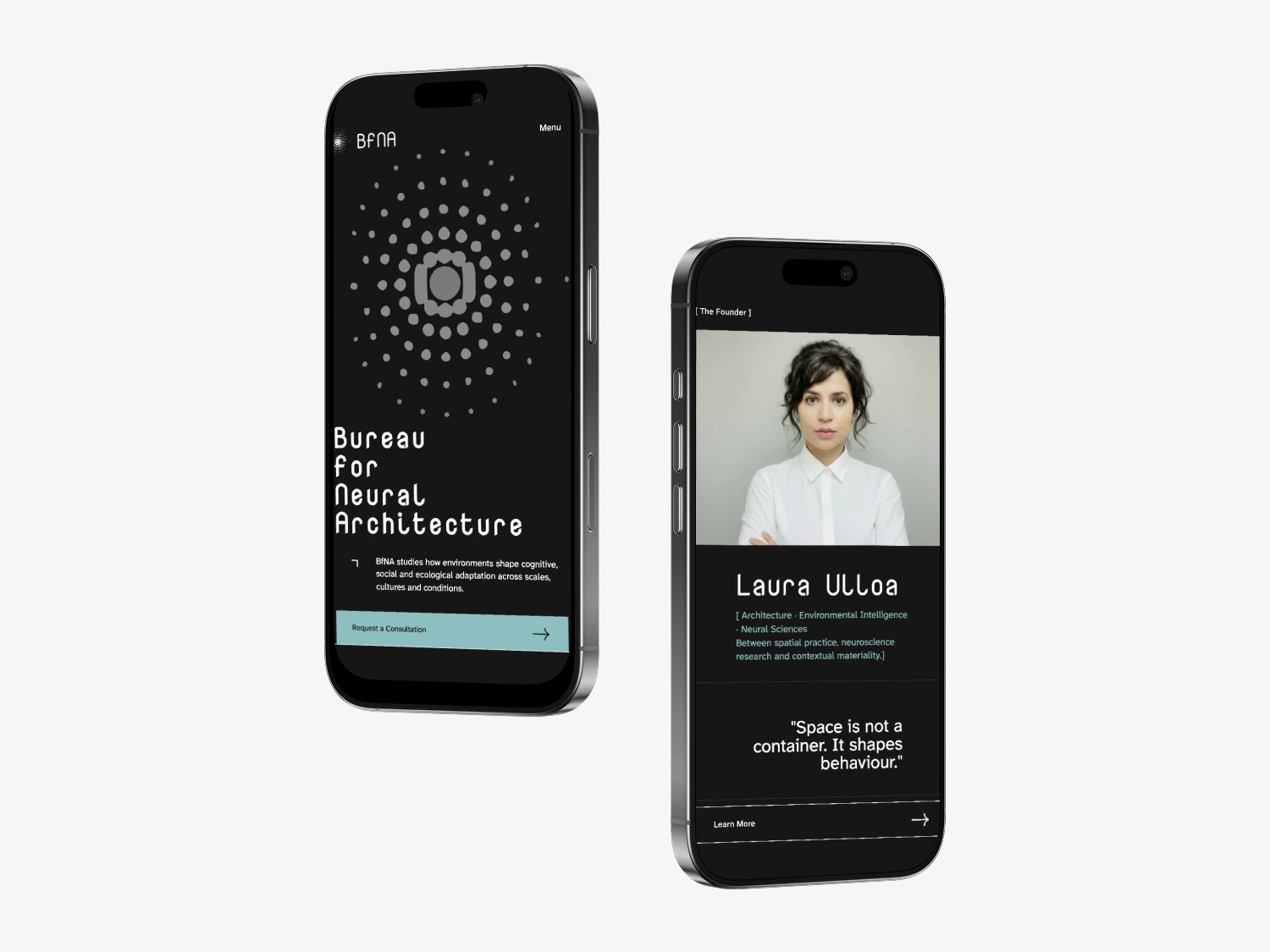
Mobile Mockups of Bureau for Neural Architecture
The Tension
Deep expertise. No visibility.
Laura was stepping into a new chapter for the practice >> new clients, new collaborators, new conversations. Architects, urban planners, and developers Google you before the first call. What they'd find was nothing. No way to assess credibility. No way to understand what neural architecture actually means. No way to see her work.
For a positioning this specific, no online presence meant no way to enter the conversation.
And building that presence came with its own design challenge. BfNA stands at the crossroads of neuroscience and architecture, two disciplines that rarely speak the same language. Neuroscience is rigorous, data-driven, deeply technical. Architecture is sensory, spatial, expressive. The challenge was to build a visual identity that holds both at once. A brand that feels at home in a research lab and in an architecture firm. Clean enough to signal scientific credibility, refined enough to speak the language of design.
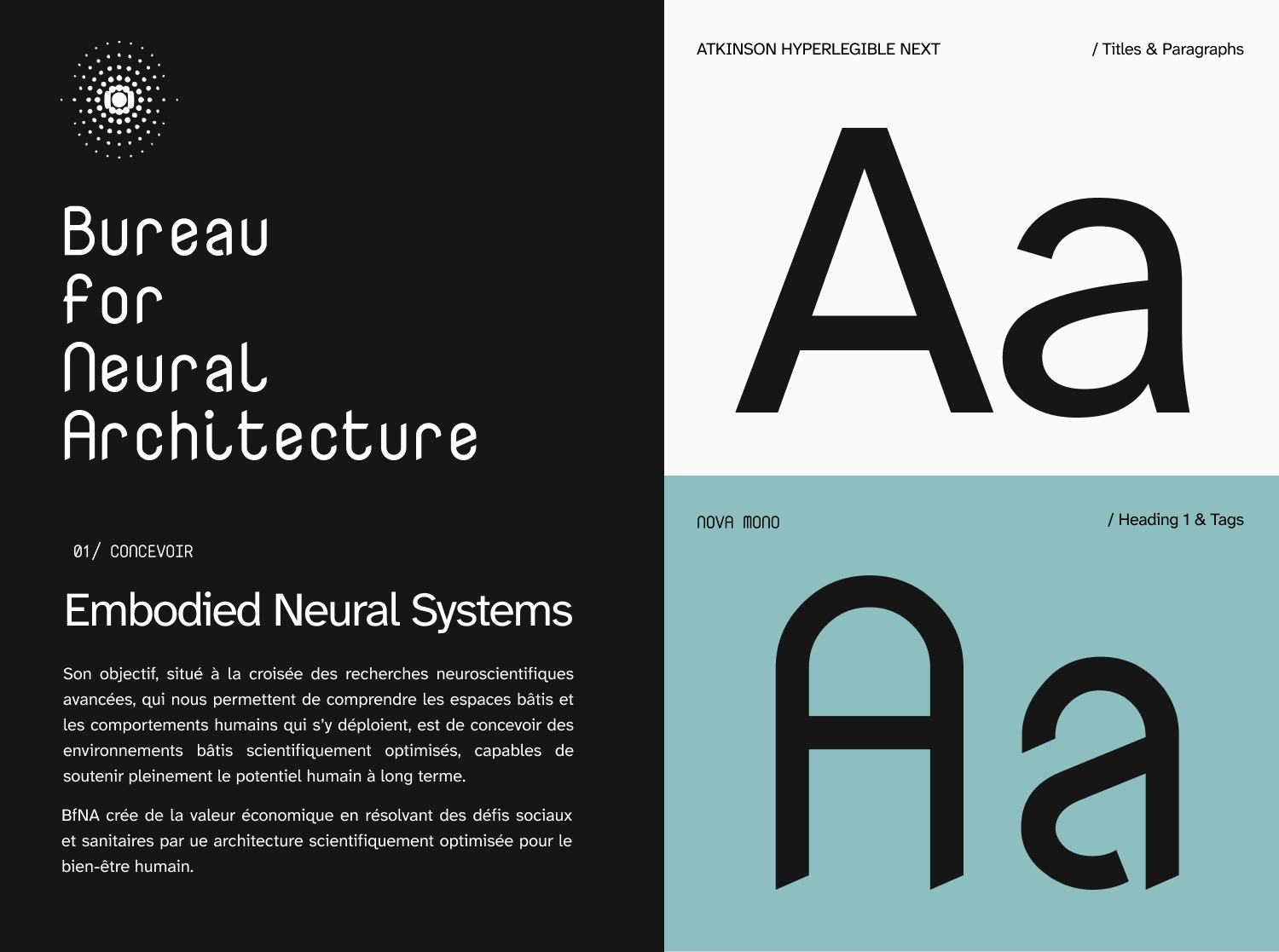
Branding BfNA
The Decision
I treated the whole project as a brand build, not only a web build. Identity system, logo, typography, animations, CMS architecture >> everything was designed to position BfNA as a credible interlocutor for institutions, firms, and researchers, while staying readable for a curious visitor with no scientific background.
Custom SVG animations to illustrate neuro-scientific concepts visually.
An animated logo that breathes.
A CMS structured for 56 projects with dual-collection filters, scalable to 200 without rebuilds.
Atkinson Hyperlegible as the body typography, a font designed by the Braille Institute for maximum legibility.
A privacy-first analytics stack with zero trackers, zero cookies, zero compromises. Pure CSS animations, no JS libraries.
The hardest constraint was self-imposed: a Website Carbon grade A. I made it non-negotiable because BfNA's positioning is about environmental intelligence. The site had to embody what the practice studies.
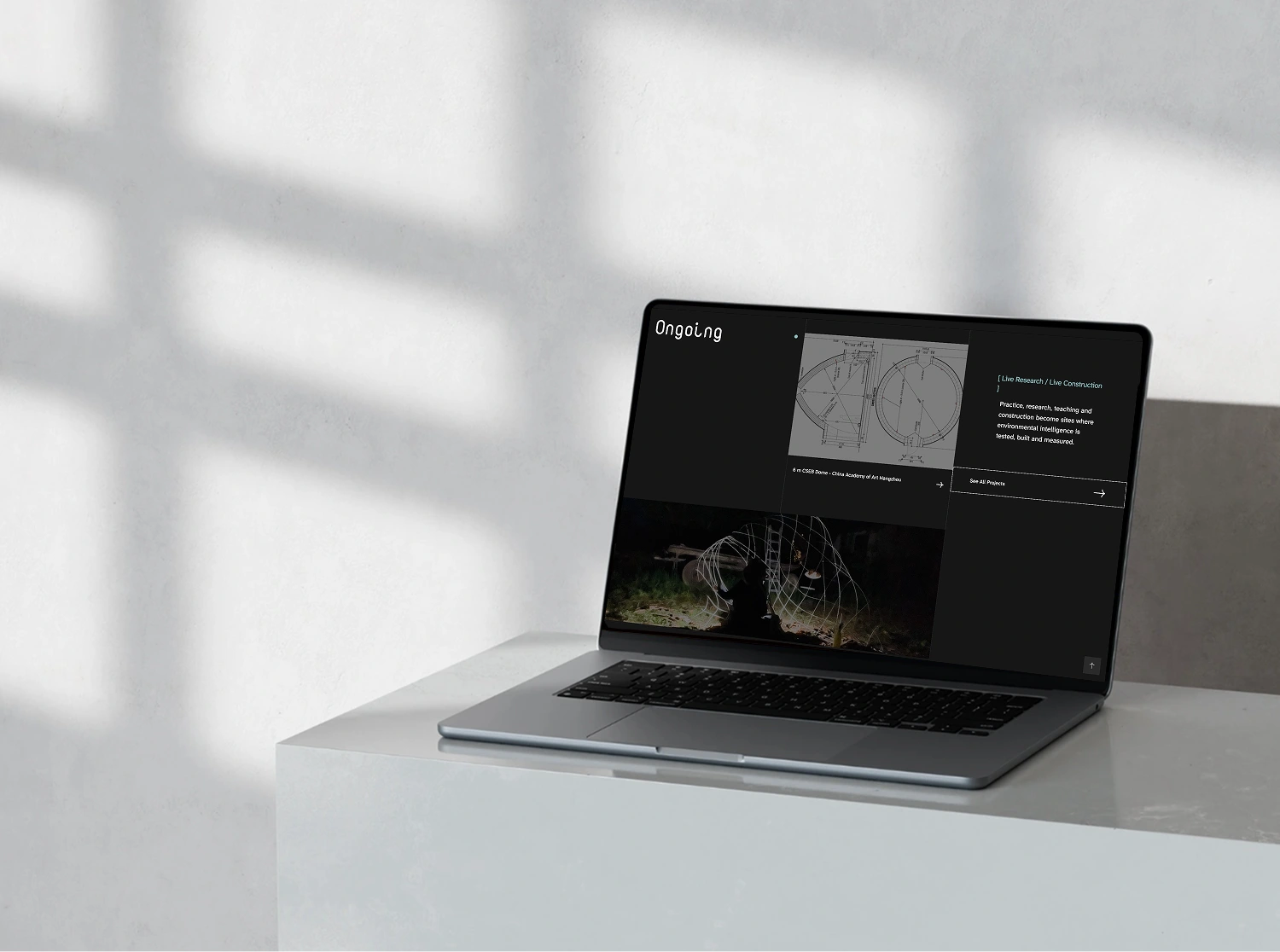
Desktop Mockups of BfNA
The Impact
Laura now has a digital presence she can confidently send to a hospital director, a school board, a real estate developer, or a research lab, and trust that the conversation will already be half-won by the time she's on the call.
The site loads in under a second.
It scores 90+ on PageSpeed across mobile and desktop.
It's cleaner than 96% of pages on the web, 0.06g of CO₂ per visit.
It's accessible (94/100).
Every part of it can be edited by Laura herself, from a project description to a new partner card, without ever opening the design layer.
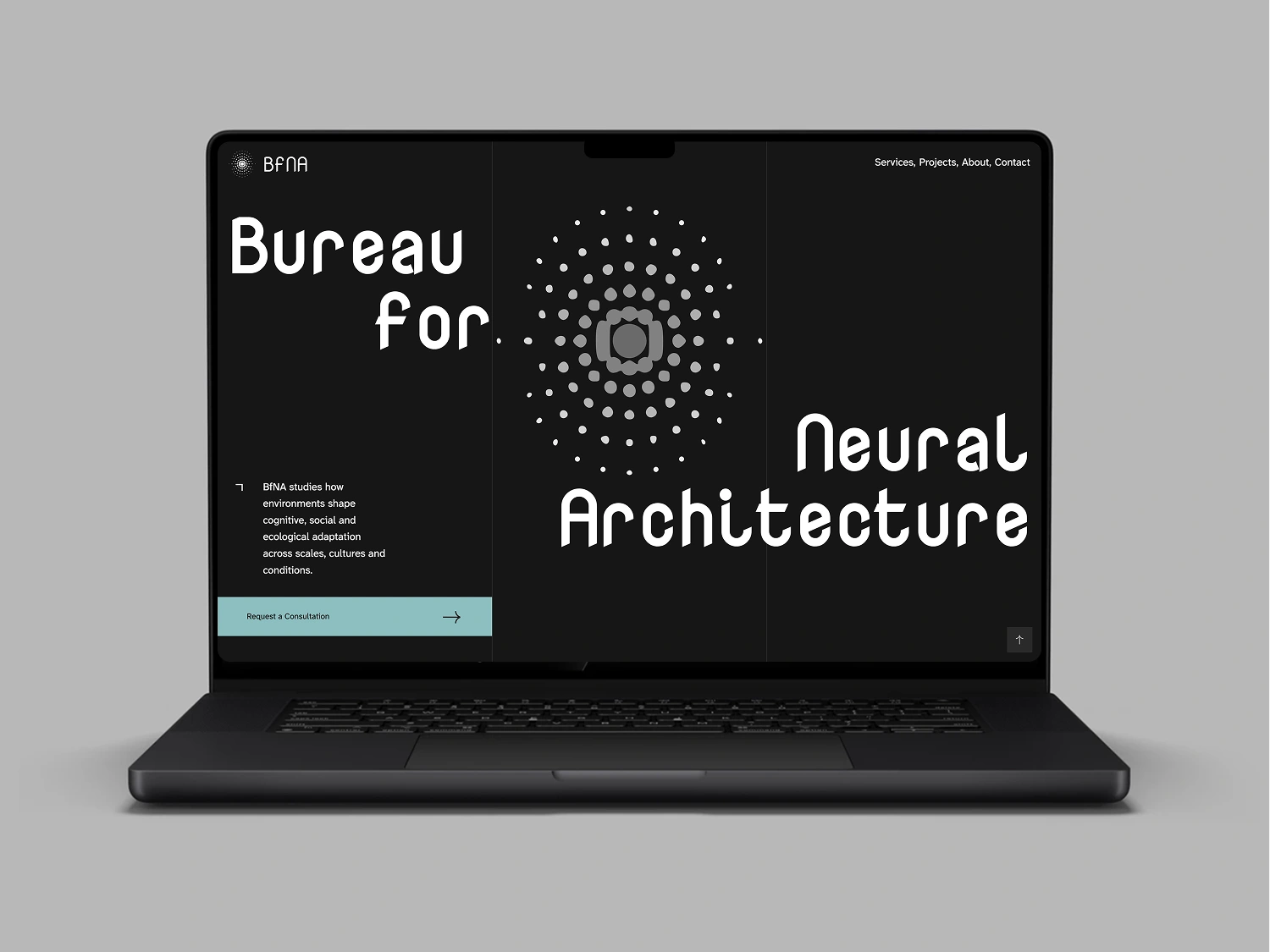
Homepage BfNA
The Takeaway
Most freelance designers ship a site and disappear. The ones who build something lasting build it for the practitioner, not just the visitor.
Build the brand, not the page. Build the system, not the screen. Build for the person who has to live with it after you're gone.
Like this project
Posted Jun 10, 2026
Premium brand and Webflow CMS build for a neuroscience-meets-architecture practice. Eco-conscious by design, scalable, and ready to grow with the business.
Likes
1
Views
23
Timeline
Apr 10, 2026 - Jun 10, 2026