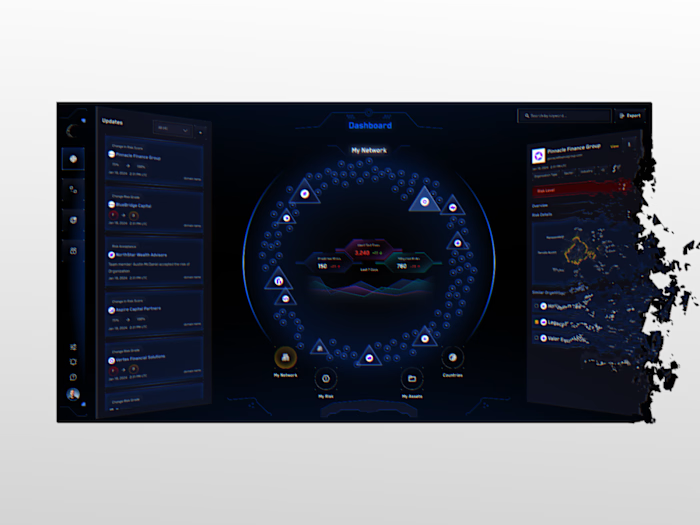
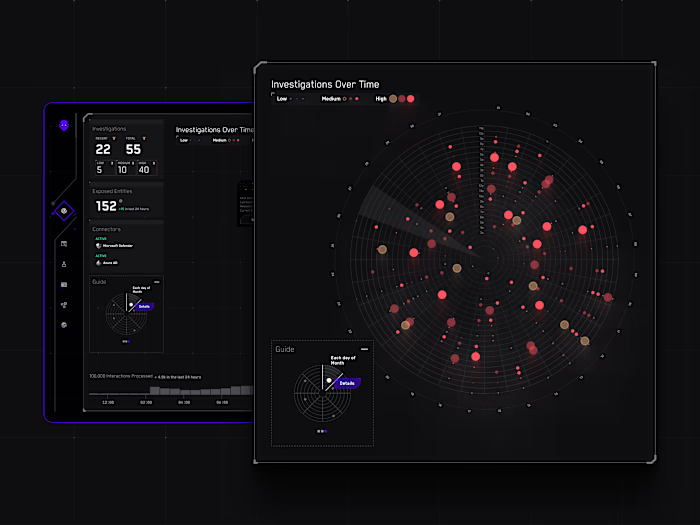
No-code Enterprise Data Quality Monitoring Tool

Kyle Chaplin

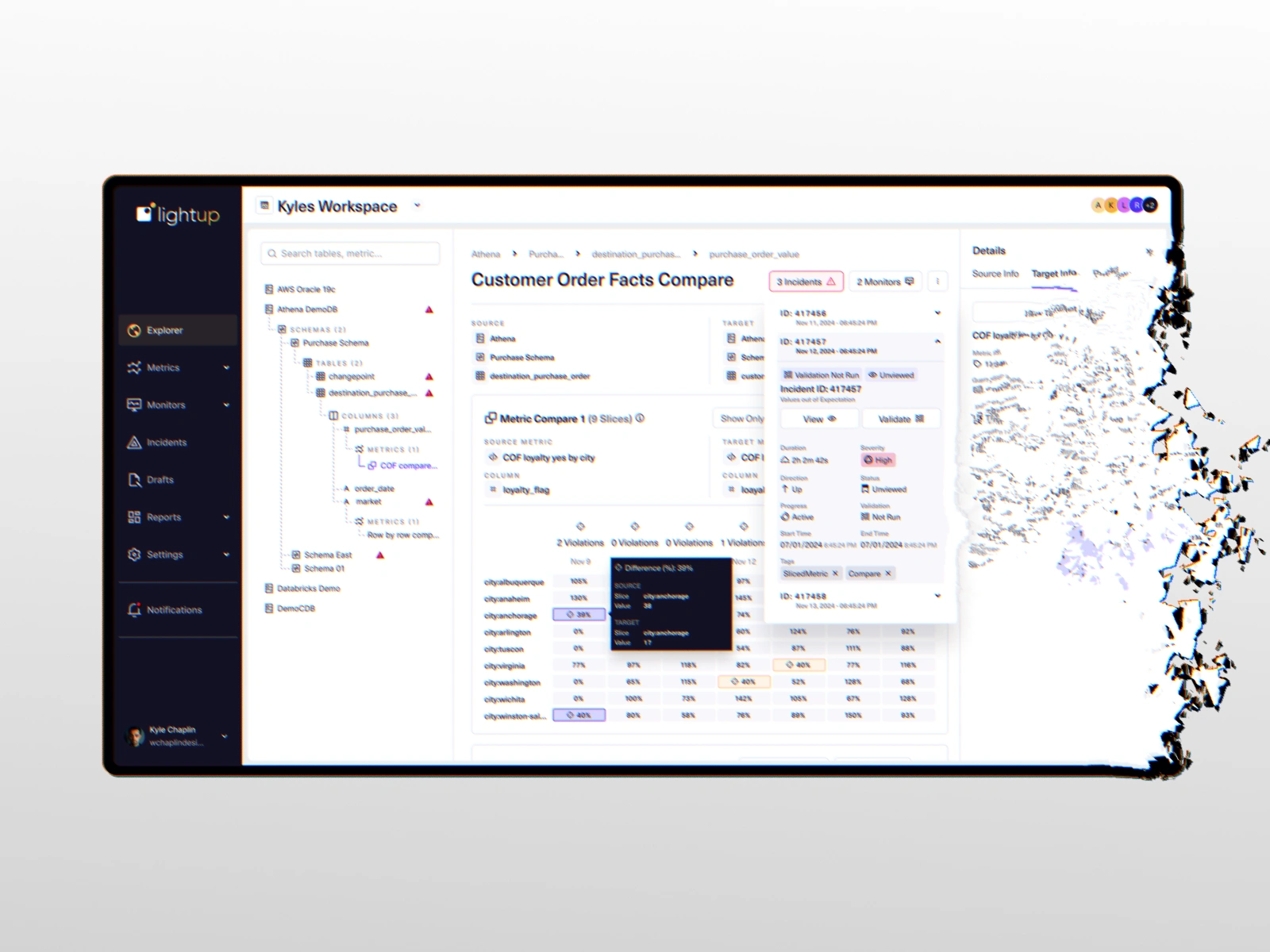
Challenges.
When I joined the Lightup project, the goal was clear but complex — to design an enterprise-grade data quality monitoring platform powered by AI-driven anomaly detection. The challenge was not just visual; it was deeply systemic.
The platform had to serve a wide spectrum of users — from data engineers and analysts to business leaders — each with different levels of technical fluency and expectations. Beyond that, the backend was still evolving, meaning many design decisions had to anticipate future capabilities while maintaining usability in the present.
I needed to create an experience that felt powerful yet approachable — something that made real-time data monitoring, anomaly detection, and incident management feel intuitive, scalable, and trustworthy, without overwhelming the user.
Solutions.
As the sole designer, I led the end-to-end product design process — from defining user flows and data visualization patterns to crafting the interaction models that made complex analytics readable at a glance.
I focused on designing a clear, structured system that gave users immediate insight into data health, anomalies, and remediation actions.
I built a modular design language that could adapt to evolving product features and backend updates, ensuring design and engineering remained aligned even under technical constraints.
Through iterative testing and close collaboration with the engineering team, I refined every component for speed, clarity, and consistency, ensuring the platform could scale across enterprise infrastructures.
Every element was built to serve one purpose — to help users detect, understand, and resolve silent data outages faster than any competing solution.
Results.
After more than a year of dedicated work, I was proud to help bring the redesigned platform to life. The new interface transformed Lightup into a cohesive, enterprise-ready data quality solution, empowering users to deploy anomaly detection workflows 10x faster than traditional systems.
Stakeholder feedback highlighted the product’s clarity, speed, and intuitive control, even for highly technical tasks. Despite backend limitations and an ambitious delivery timeline, the design remained seamless and consistent — a reflection of careful planning, deep collaboration, and design discipline.
This project wasn’t just about shipping a new platform; it was about proving that complex data ecosystems can be made human, scalable, and effortlessly usable through intentional design.
90-94 % Reduction in business incidents
12+ PB Volume of data covered
500k+ Daily live Data Quality checks
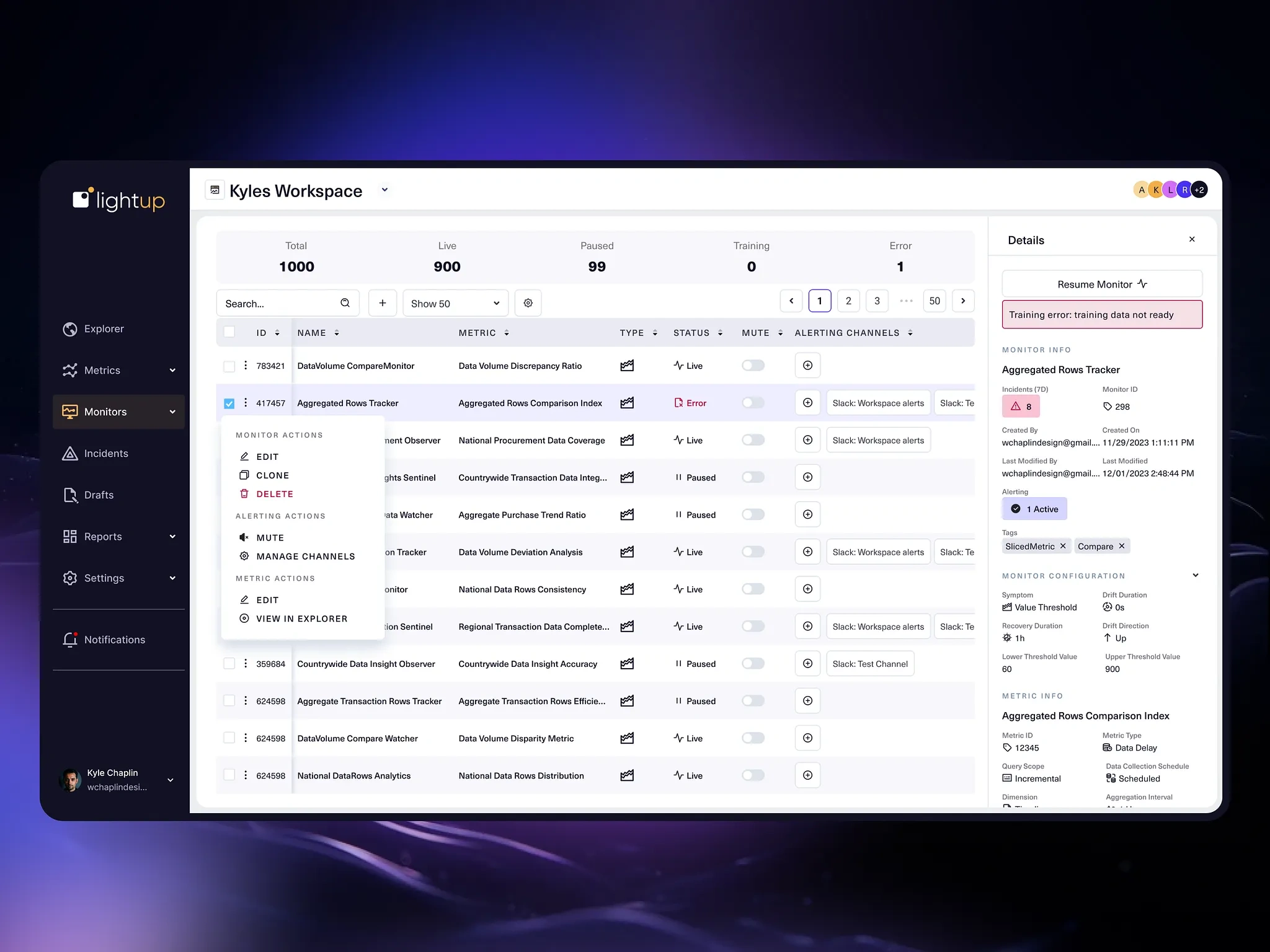
MONITORS
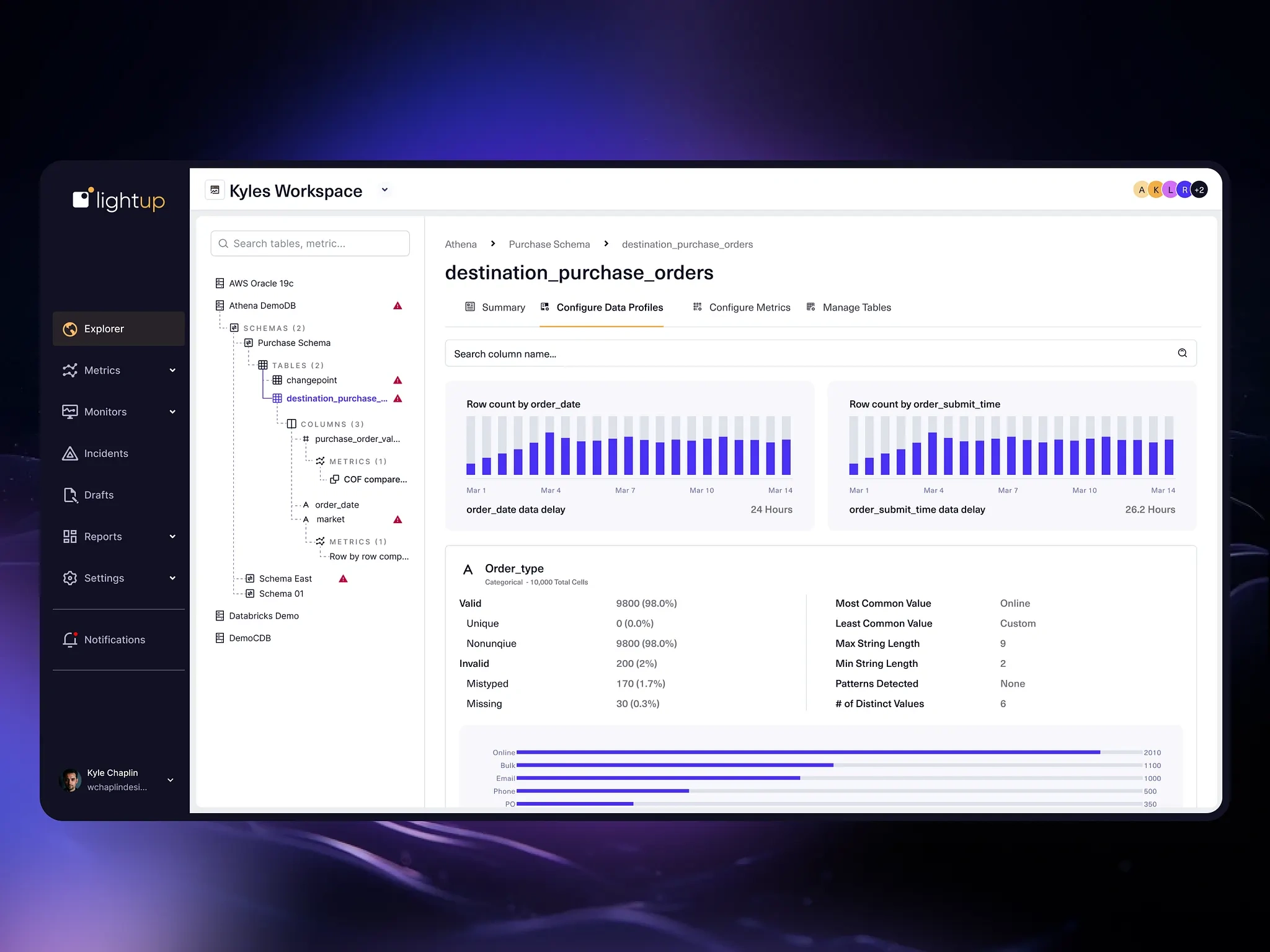
EXPLORER
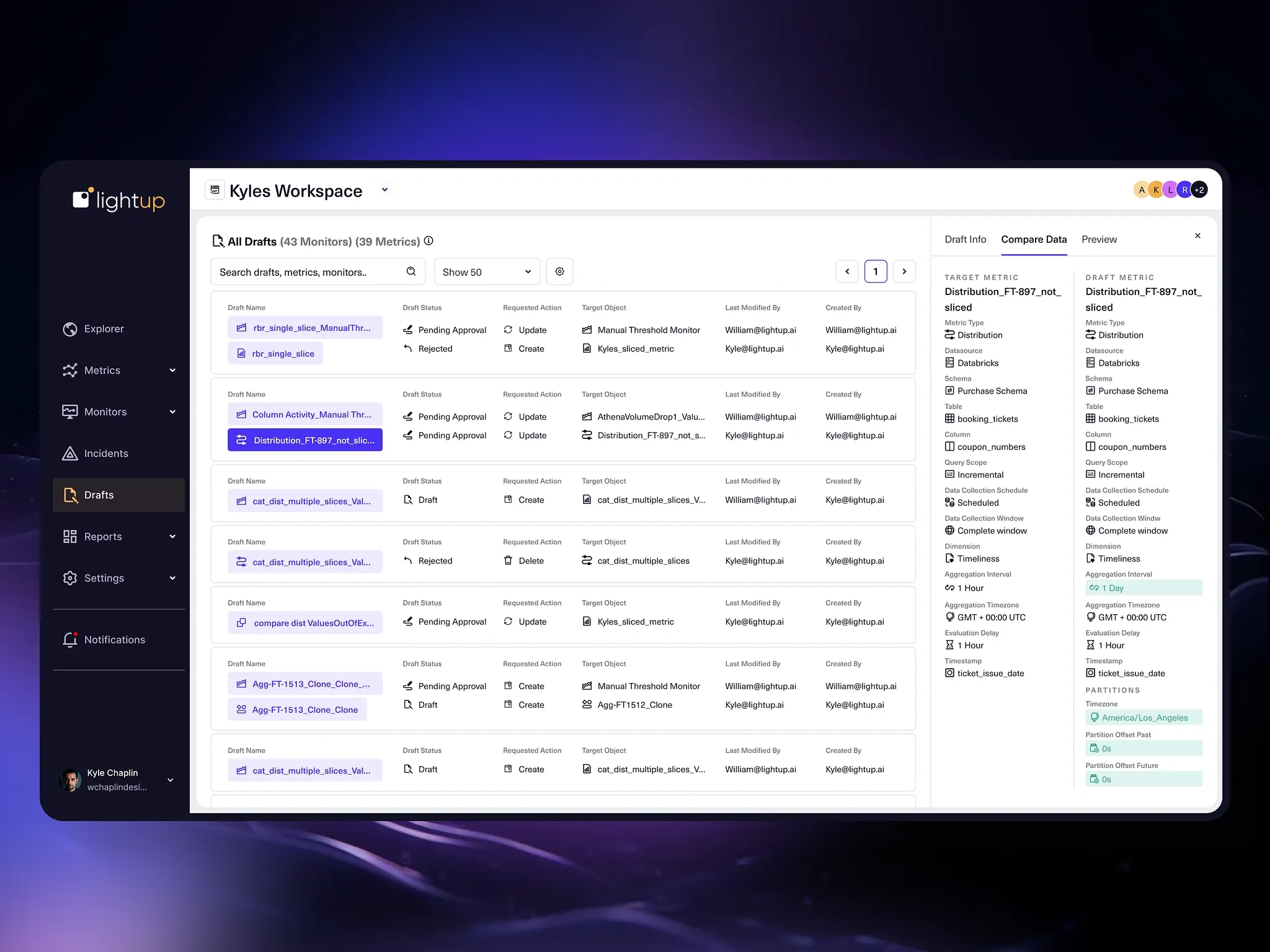
COMPARE DRAFTS
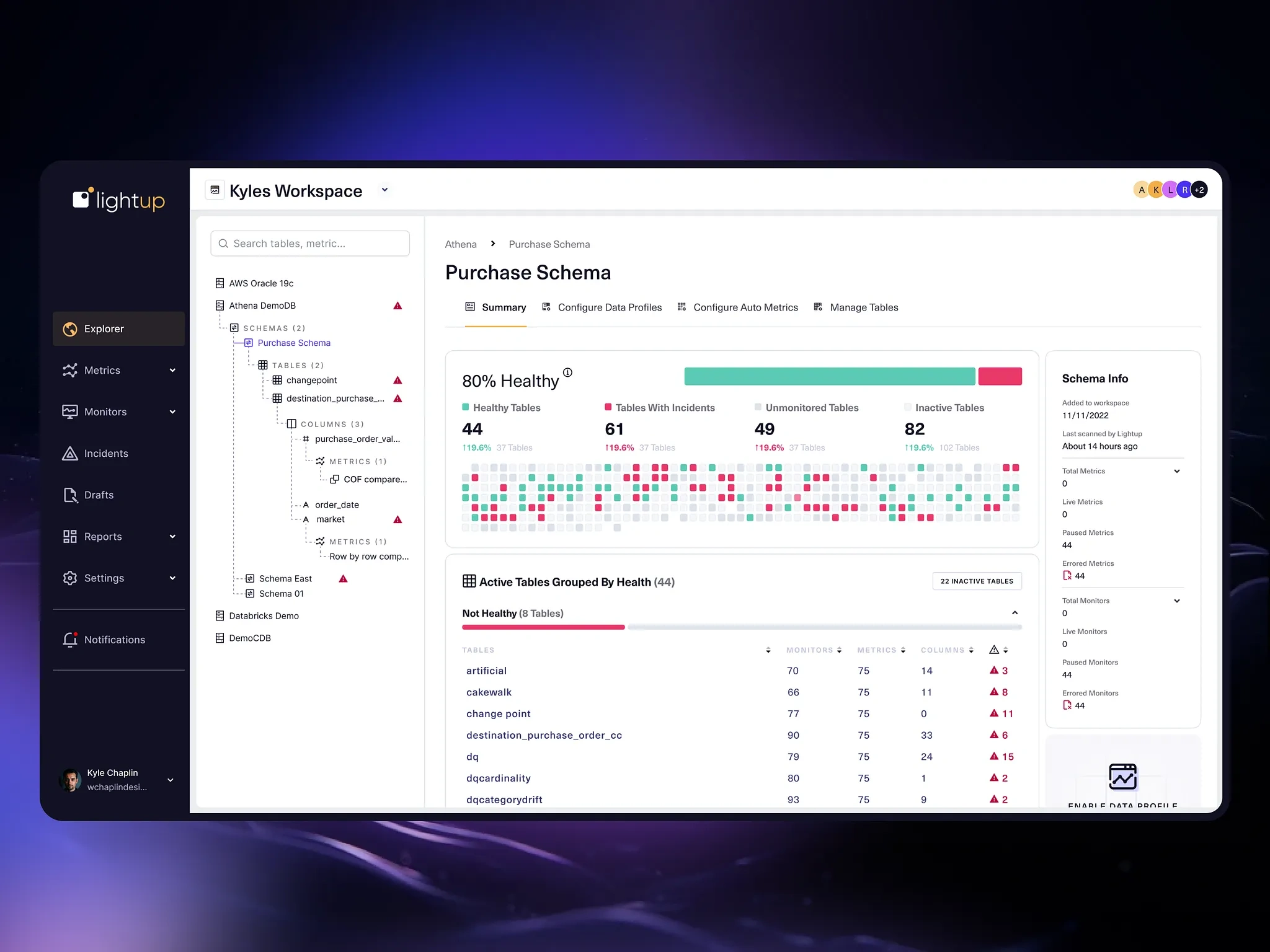
DATA HEALTH
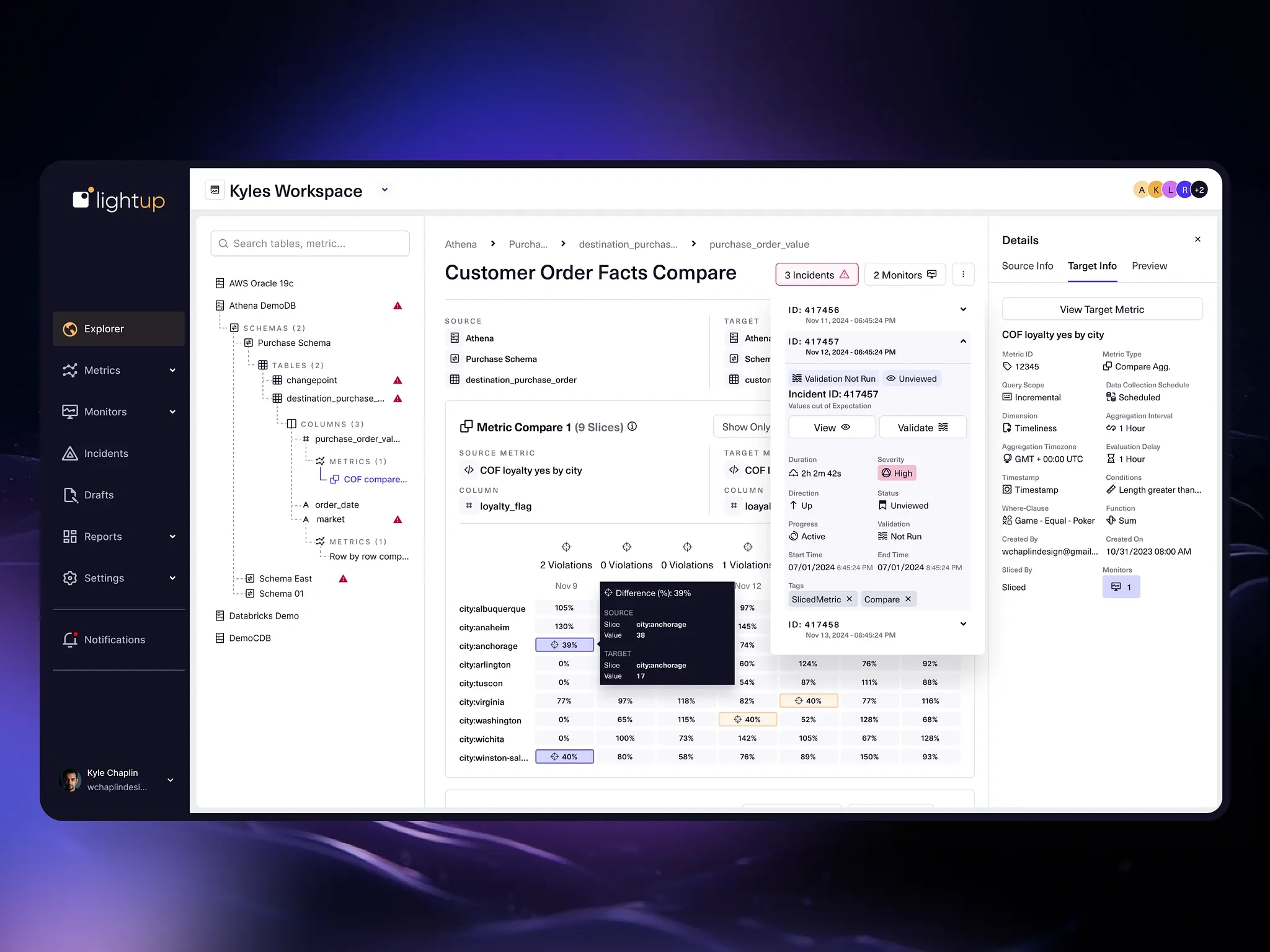
INCIDENT INFO
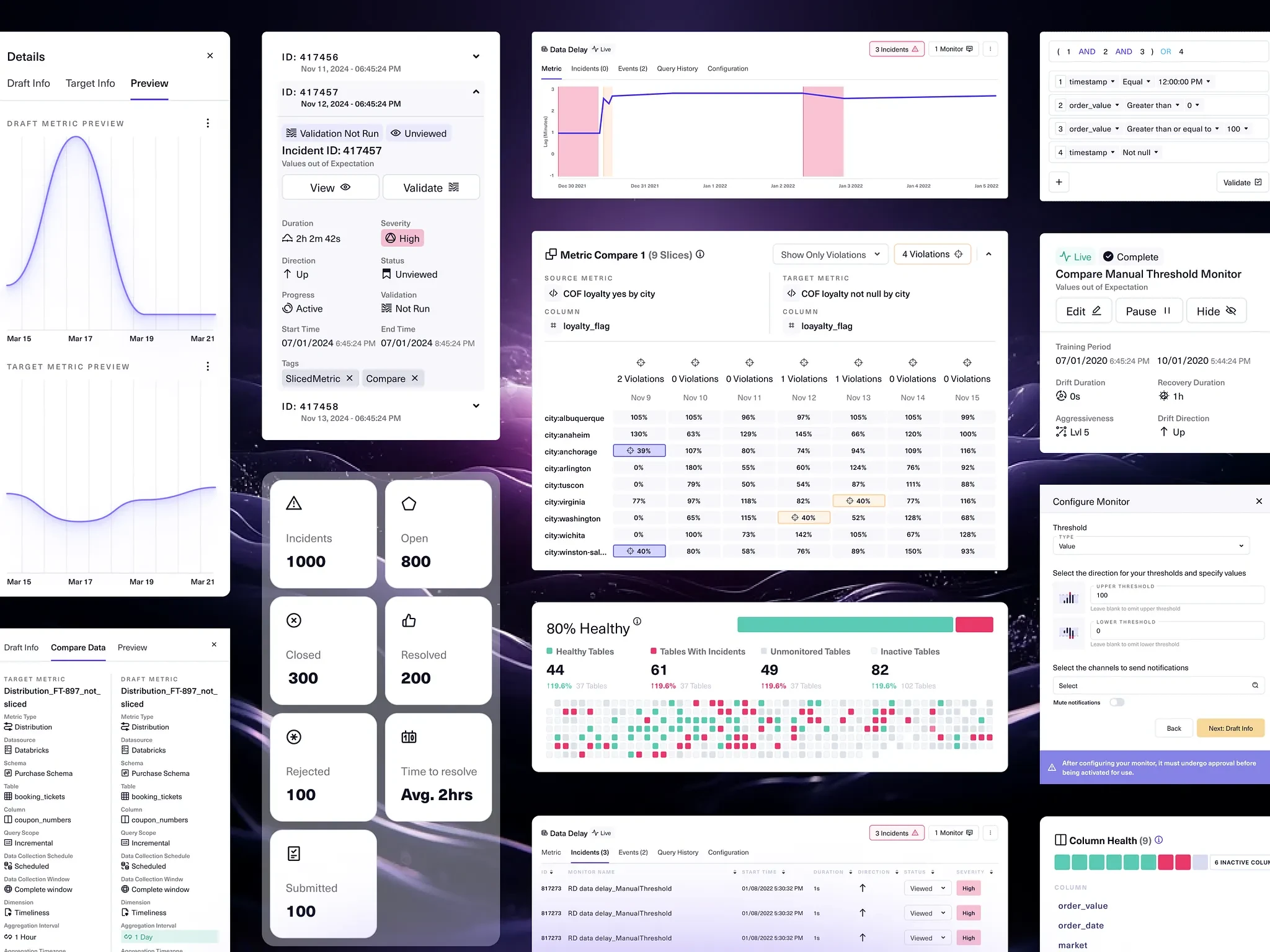
COMPONENTS
Like this project
Posted Jun 24, 2026
Designed a data quality monitoring platform with AI-driven anomaly detection for Lightup Ai, No-code monitoring.
Likes
0
Views
16
Timeline
Oct 24, 2023 - Mar 24, 2024
Clients
Lightup