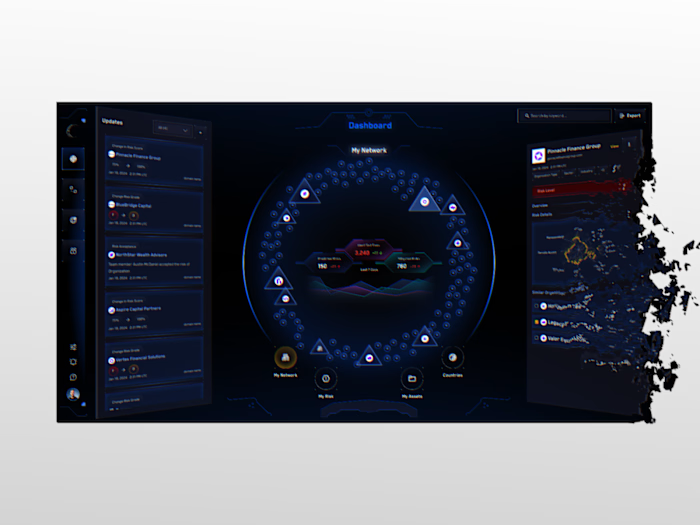
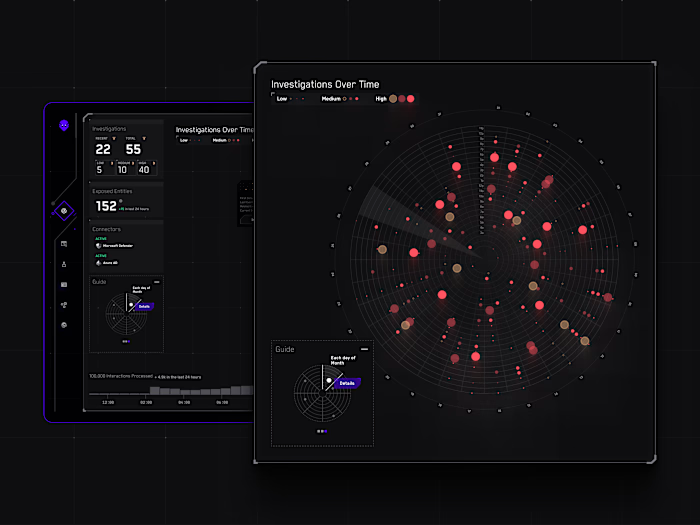
Unify Design System CS

Kyle Chaplin

Challenges.
When building Unify, the primary challenge was designing a system that remains scalable and consistent across many product contexts, while minimizing maintenance and decision overhead. As teams build more pages and features, design systems often degrade — patterns diverge, tokens become bloated, and syncing between design and development becomes costly.
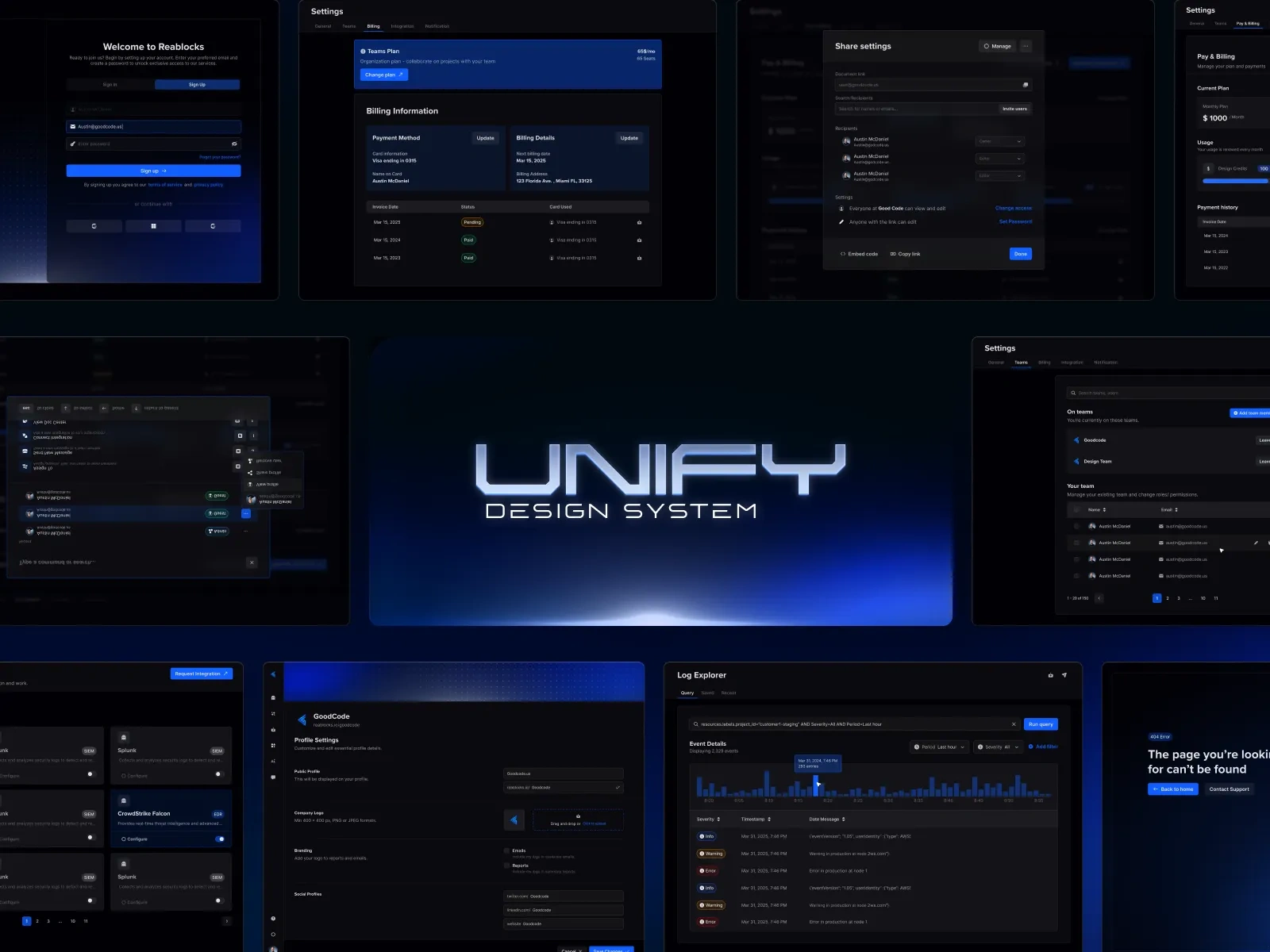
Additionally, Unify needed to support real production-ready use cases immediately (not just an abstract library) — meaning designers should be able to drop in login screens, settings pages, profile layouts, etc., right out of the box. That level of readiness often clashes with flexibility or customizability, so balancing both was a core tension.
Solutions.
To overcome these constraints, Unify was architected with a relational token system and a layered design logic structure:
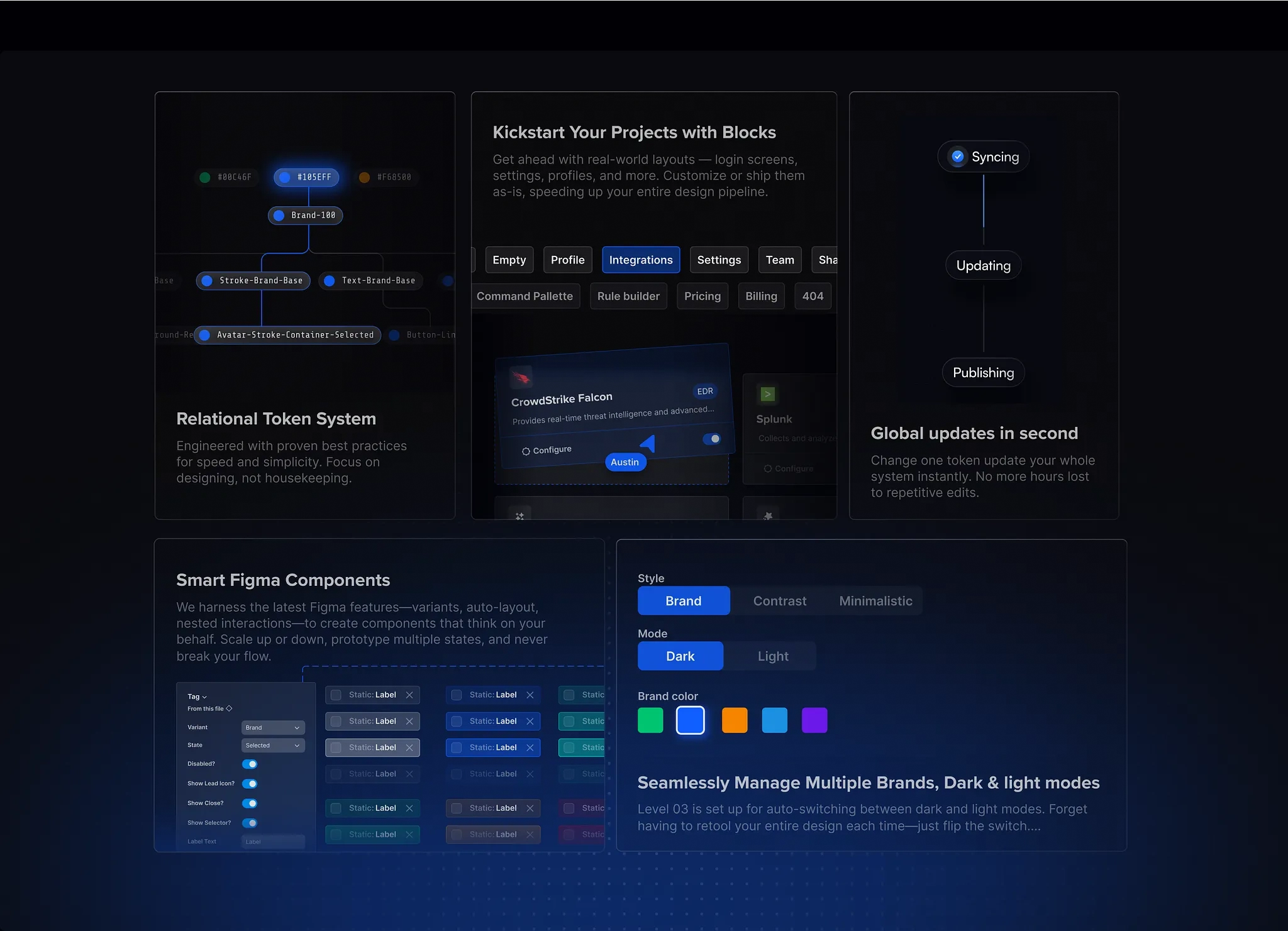
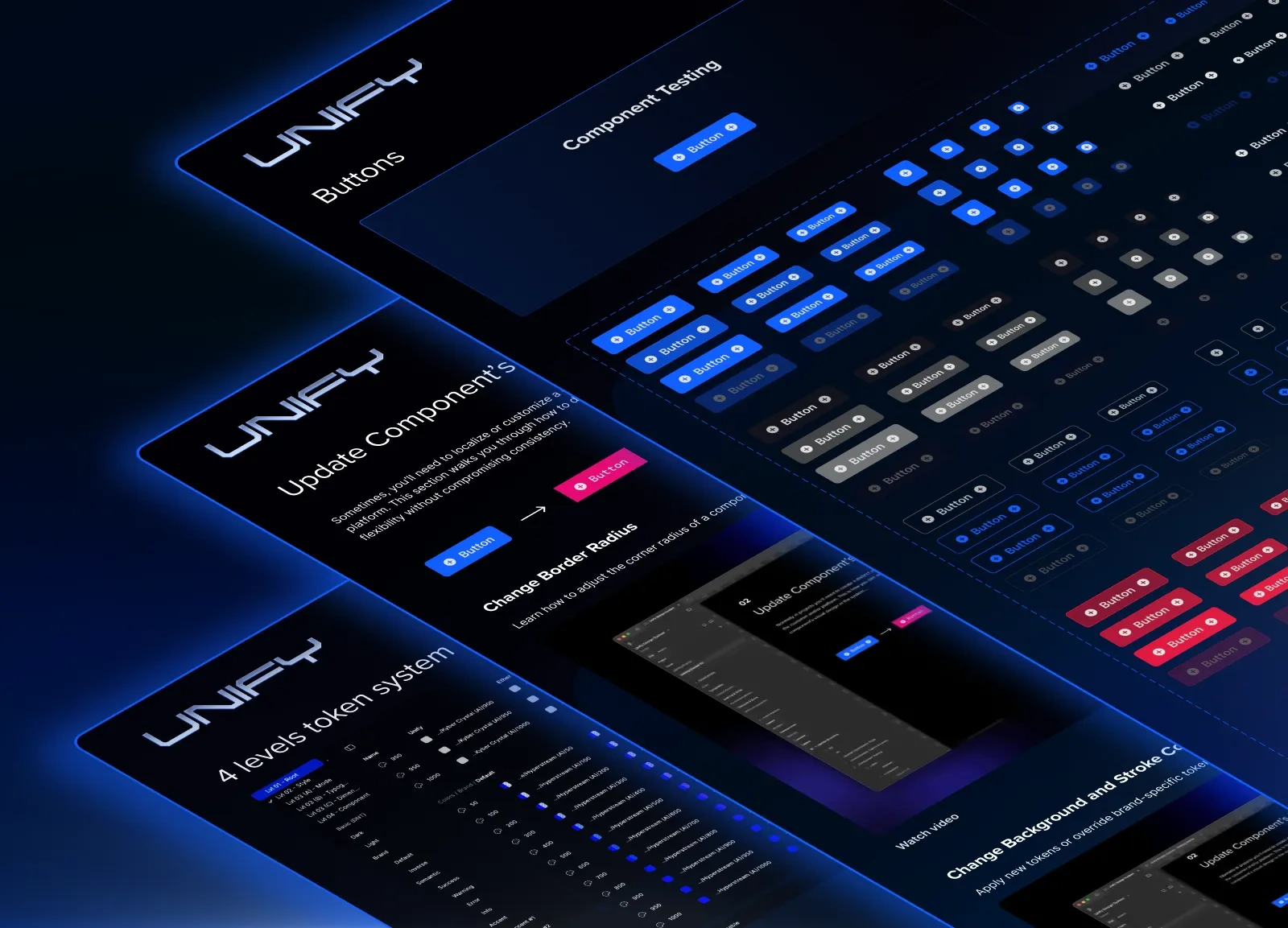
Root Value Tokens → Style Guide → Semantic Layer → Component-Specific Tokens: every layer builds from the last, ensuring no duplication or drift. (Tokens are referenced across levels so everything stays connected.)
Global updates: change a token once, and it propagates across the system — making sweeping refinements or theme updates painless.
Production-ready blocks: prebuilt layouts (login, settings, profile, etc.) designed to work immediately, accelerating onboarding of new product pages.
Smart Figma components: leveraging variants, auto-layout, nested interactions, and smart defaults so designers spend less time stitching and more time creating.
This architecture allowed the design system to be both flexible and robust, enabling teams to scale without repeatedly reinventing core patterns.
Results.
The final product is a clean, consistent, scalable design system that reduces friction and design debt. Unify delivers:
Over 2,251 tokens for maximum control, flexibility, and speed.
30 production-ready smart components / blocks ready to drop into projects.
A design-to-development workflow where changing one token updates the entire system, eliminating repetitive edits and minimizing maintenance overhead.
Unify empowers design teams to focus on innovation, not housekeeping, giving them a stable, high-performance foundation to build interfaces fast and with consistency.
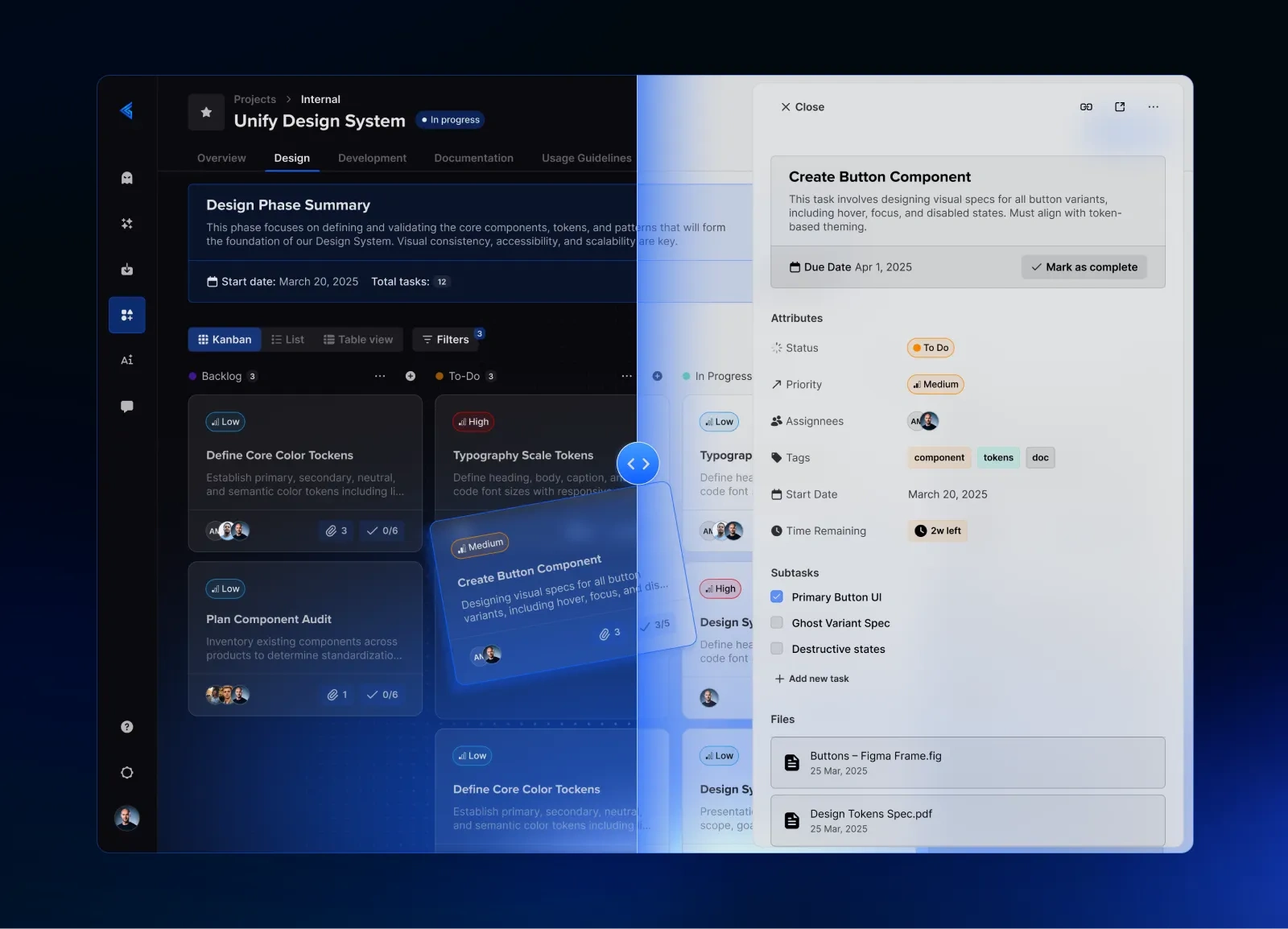
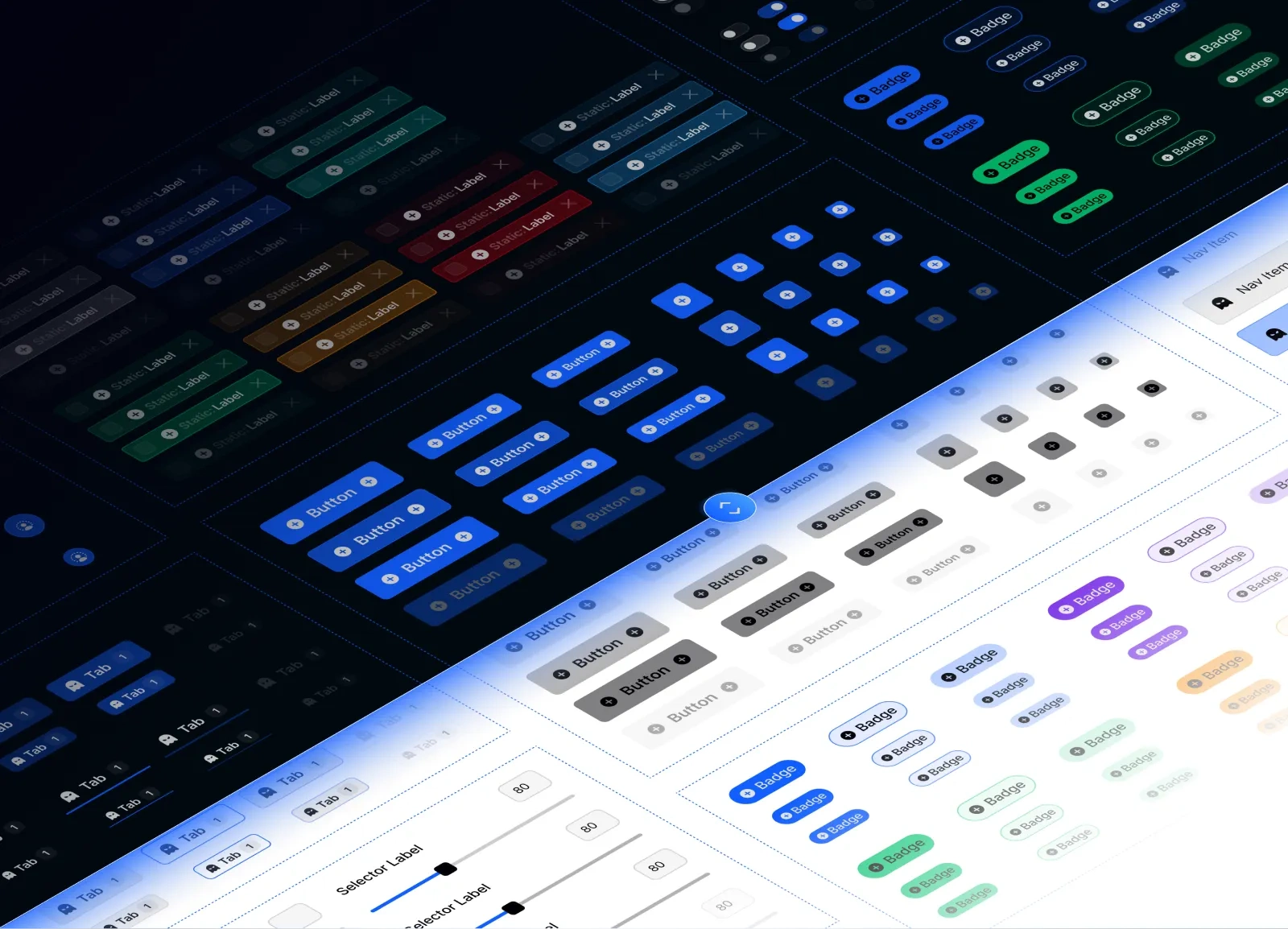
DARK MODE / LIGHT MODE
This project was completed while serving as Lead Product Designer at Good Code.
Like this project
Posted Jun 24, 2026
Designed a scalable system that maintains consistency across products while reducing maintenance, design debt, and design-to-development friction.
Likes
0
Views
11