
Franchise Capital is an investment review platform for a group funding new franchise outlets. It brings HR, Finance, Operations and Legal together to assess each application in one shared workspace, while giving board members a clear view of the reviews before making the final investment decision.
Project details
Role: Solo Product Designer
Client: Investment group (under NDA)
Timeline: February 2025 – June 2025
What I did: User flows, UX and UI for the applicant portal, the team workspace and the board view
Tools: Figma, FigJam, Notion, Claude, ChatGPT
The problem
Before the platform, applications moved between email, chat, shared drives and meetings.
Teams lost track of handoffs. Finance could finish a review while Operations had no idea the application was waiting for them.
Documents were scattered. Multiple versions of the same bank statement circulated, while other required files went missing.
Applications got stuck in inboxes. Nobody had a clear view of who owned a file or how long it had been waiting.
Every handoff depended on people. Teams often had to arrange meetings just to pass information along.
The board waited for a slot. Directors are investors with full calendars.
First opinions influenced the rest. During group discussions, the lead investor could shape how others voted.
The problem wasn't simply the number of steps. It was the lack of a shared process.
The redesigned workflow
Every application gets one shared record. Teams review, add their notes and pass it forward. Applicants can respond to change requests, while documents and progress stay connected until the board makes its decision.
How it work
Step 1 · Apply
The applicant completes one application form in four short steps.
A progress indicator shows how much is left. Each step focuses on one topic, and the required documents are listed upfront so applicants know what to prepare before starting.
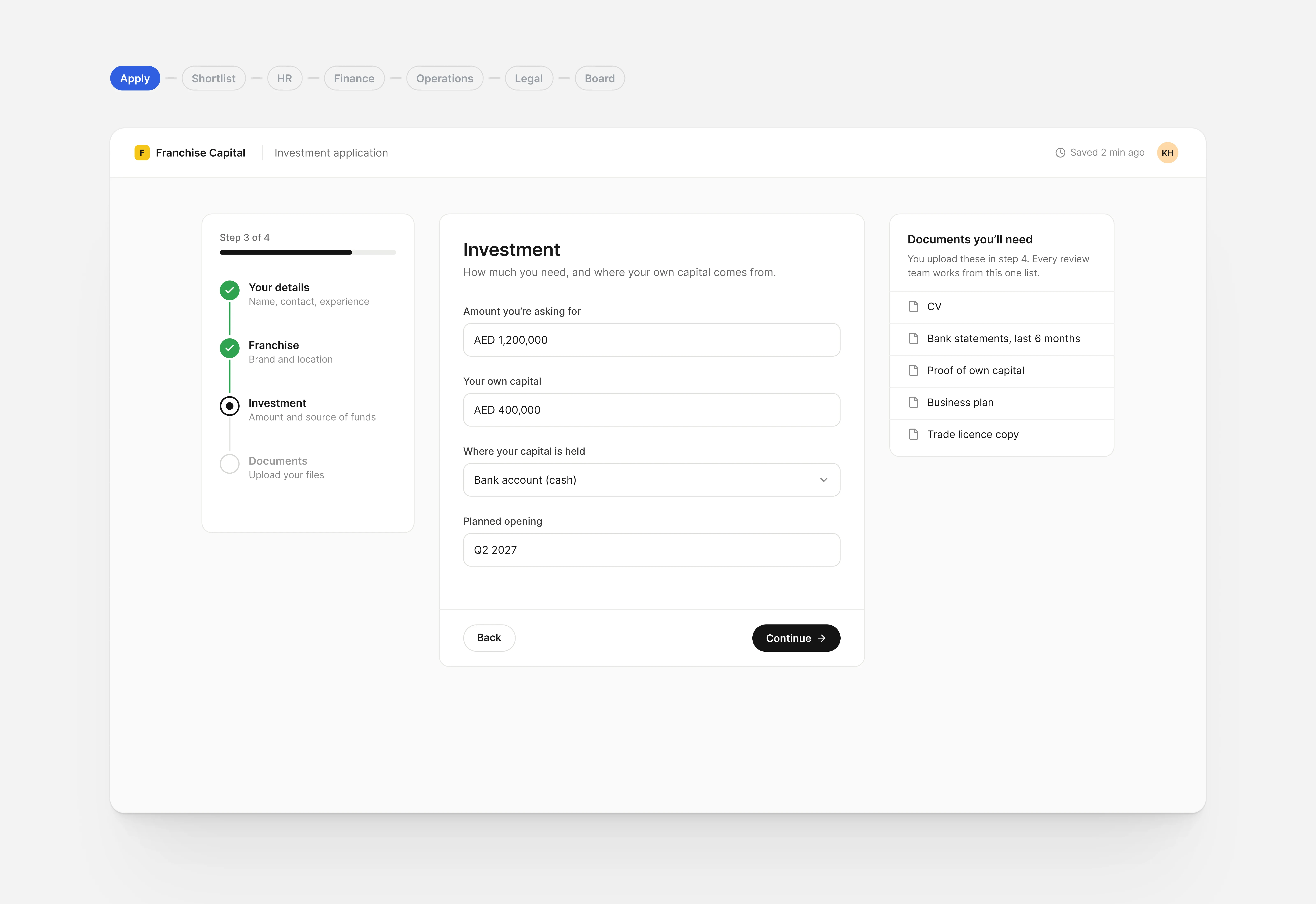
Application Form
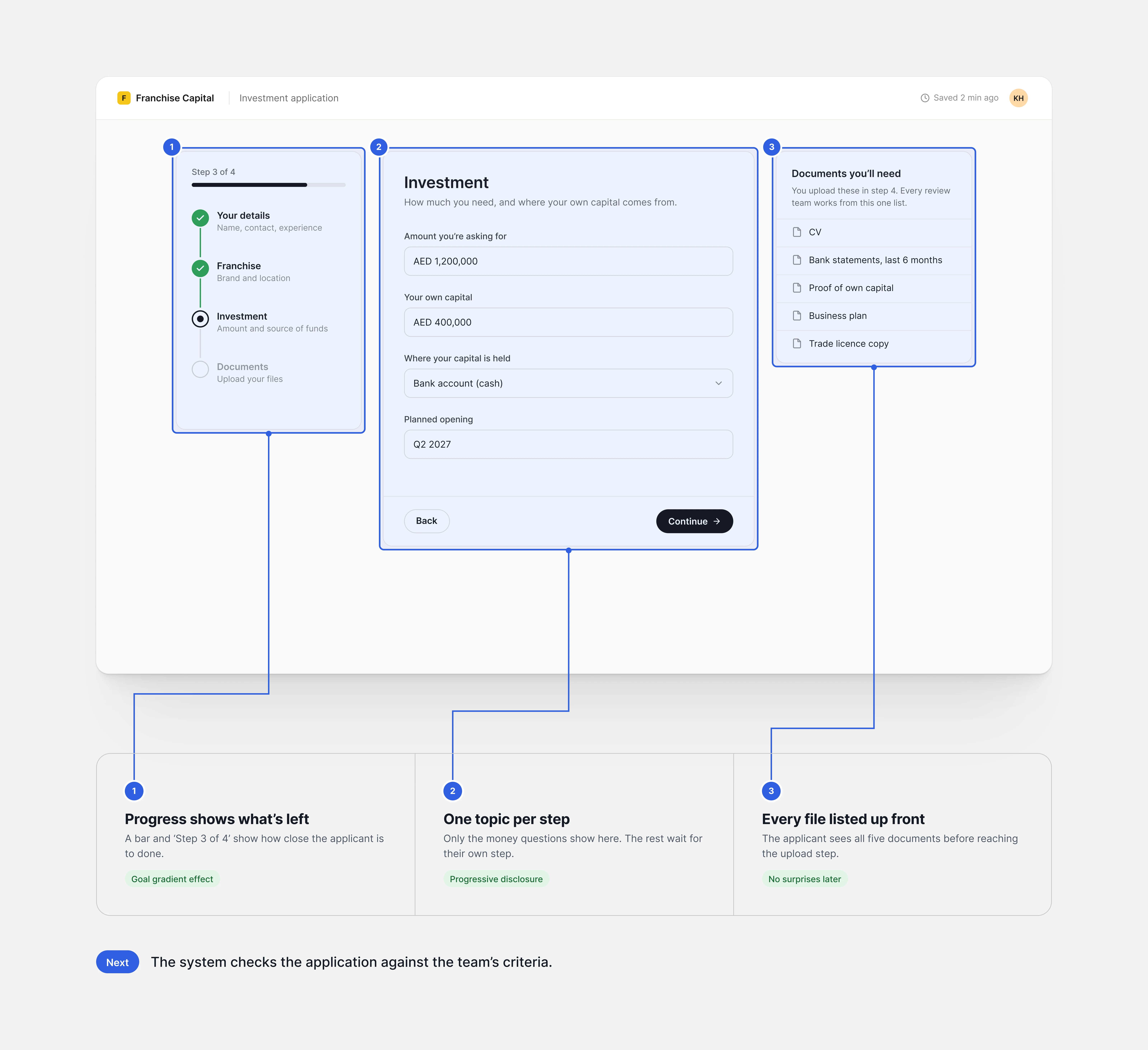
The Thinking Behind the Interface
Step 2 · Shortlist
Instead of making HR go through every application one by one, the team sets its selection criteria first.
The shortlist brings forward applicants who meet those requirements. Each row shows why an applicant matched, along with the current stage and assigned owner.
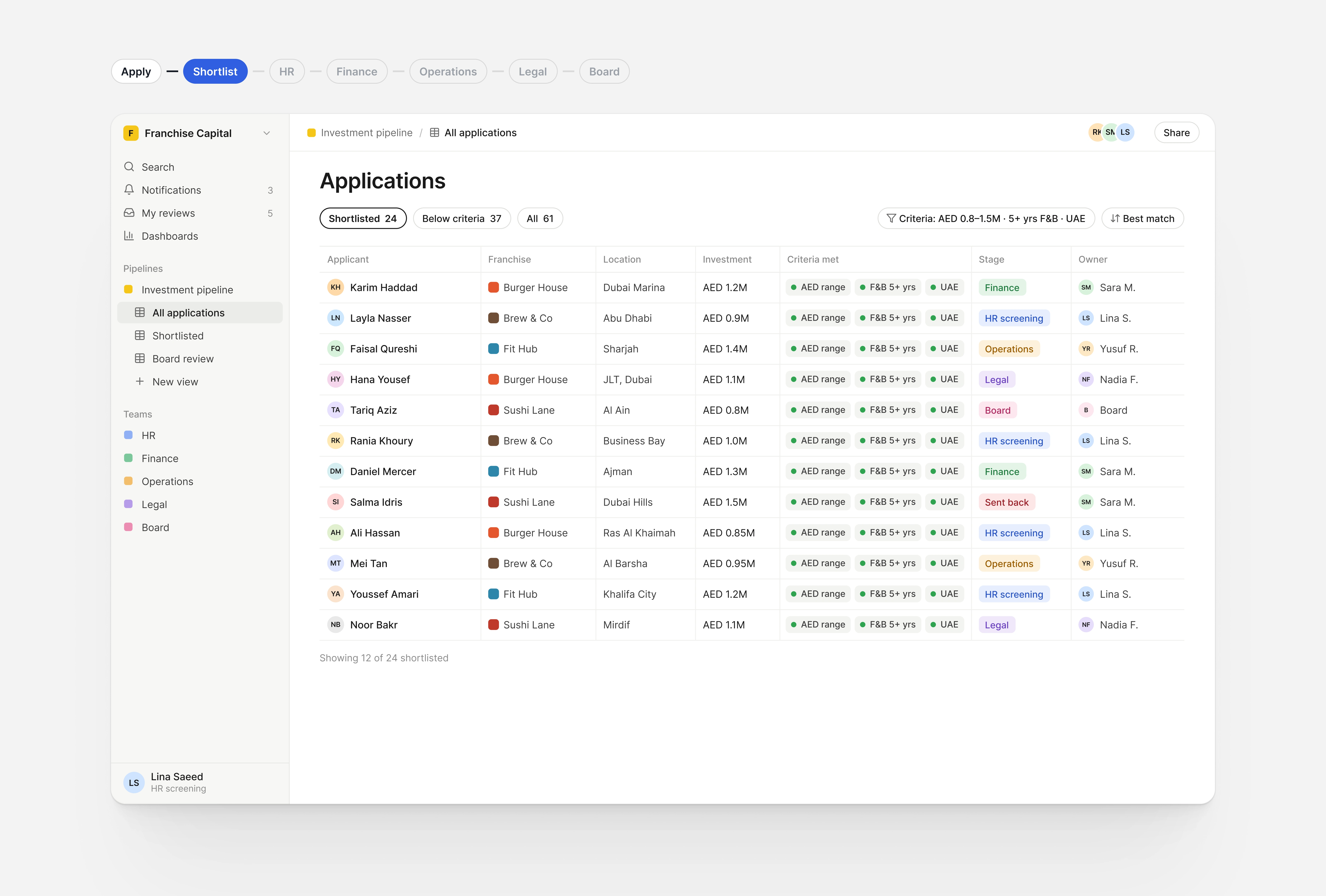
Shortlist
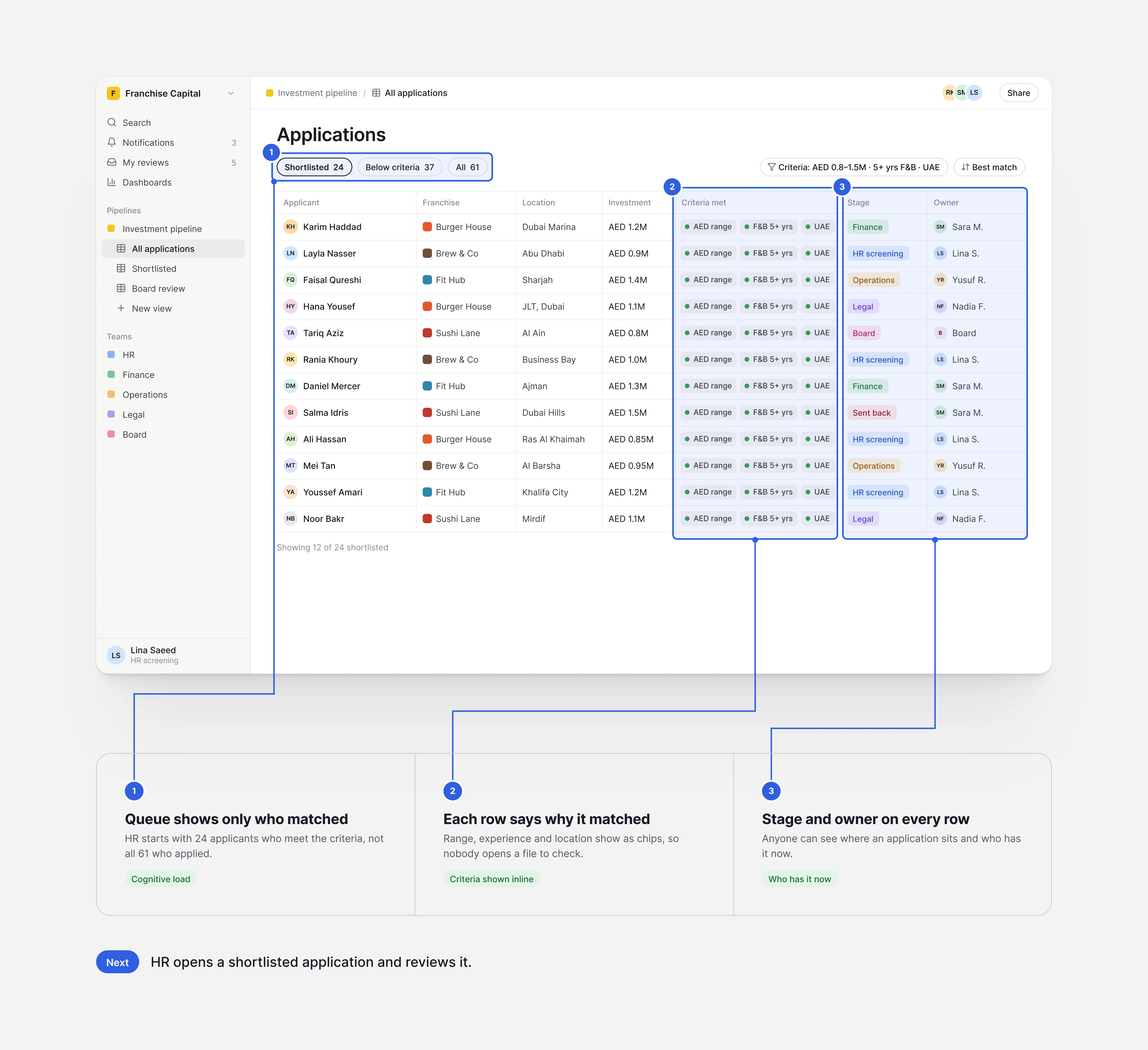
The Thinking Behind the Interface
Step 3 · HR review
Every reviewer follows the same review structure: strengths, risks and a recommendation.
There are only three possible outcomes, making the decision easier to understand and compare. The next action also makes it clear where the application goes after the review.
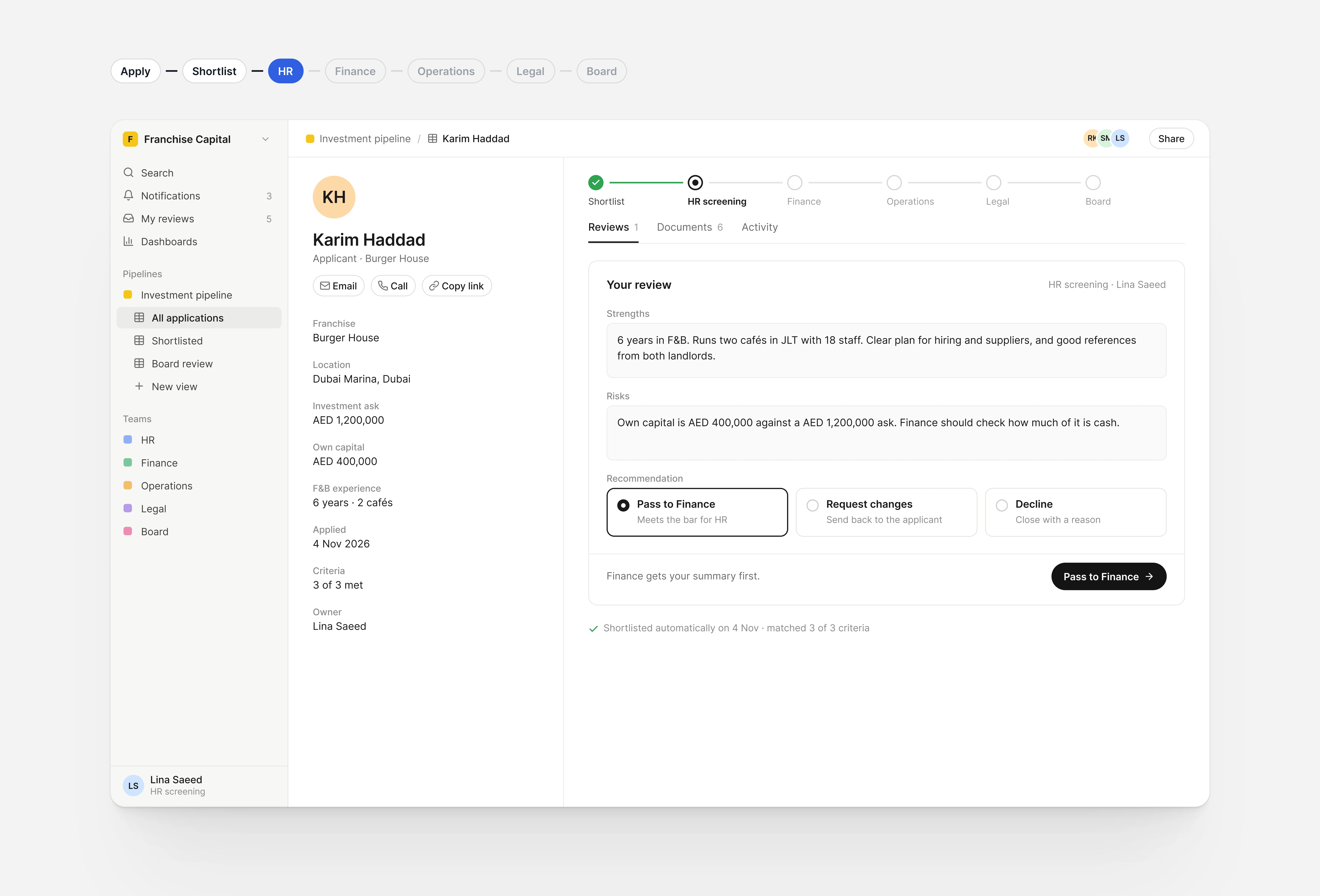
HR Screening
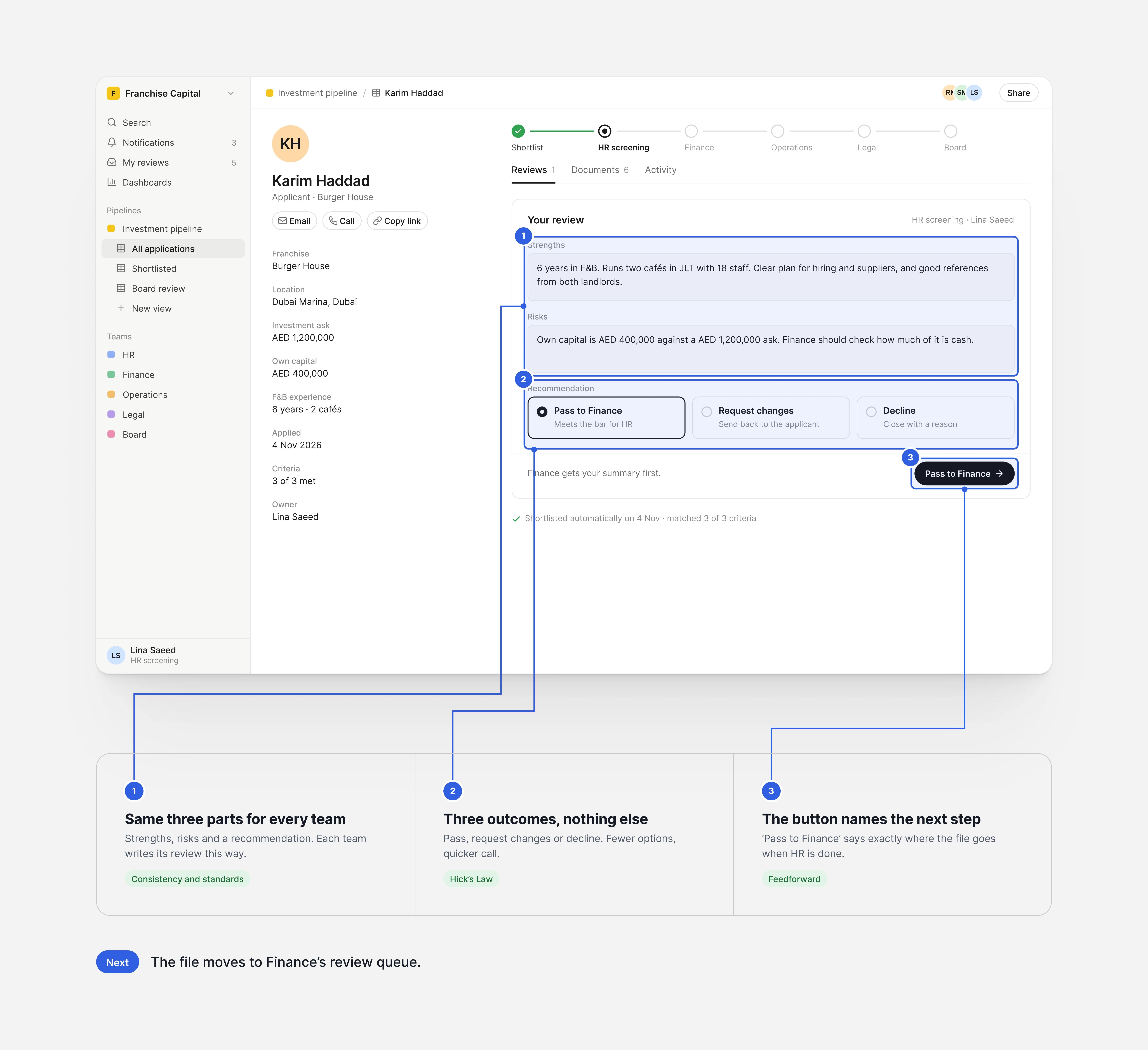
The Thinking Behind the Interface
Step 4 · Finance Review
HR reviews the applicant's background, experience and eligibility. Once the initial assessment is complete, the application moves to Finance for financial evaluation.
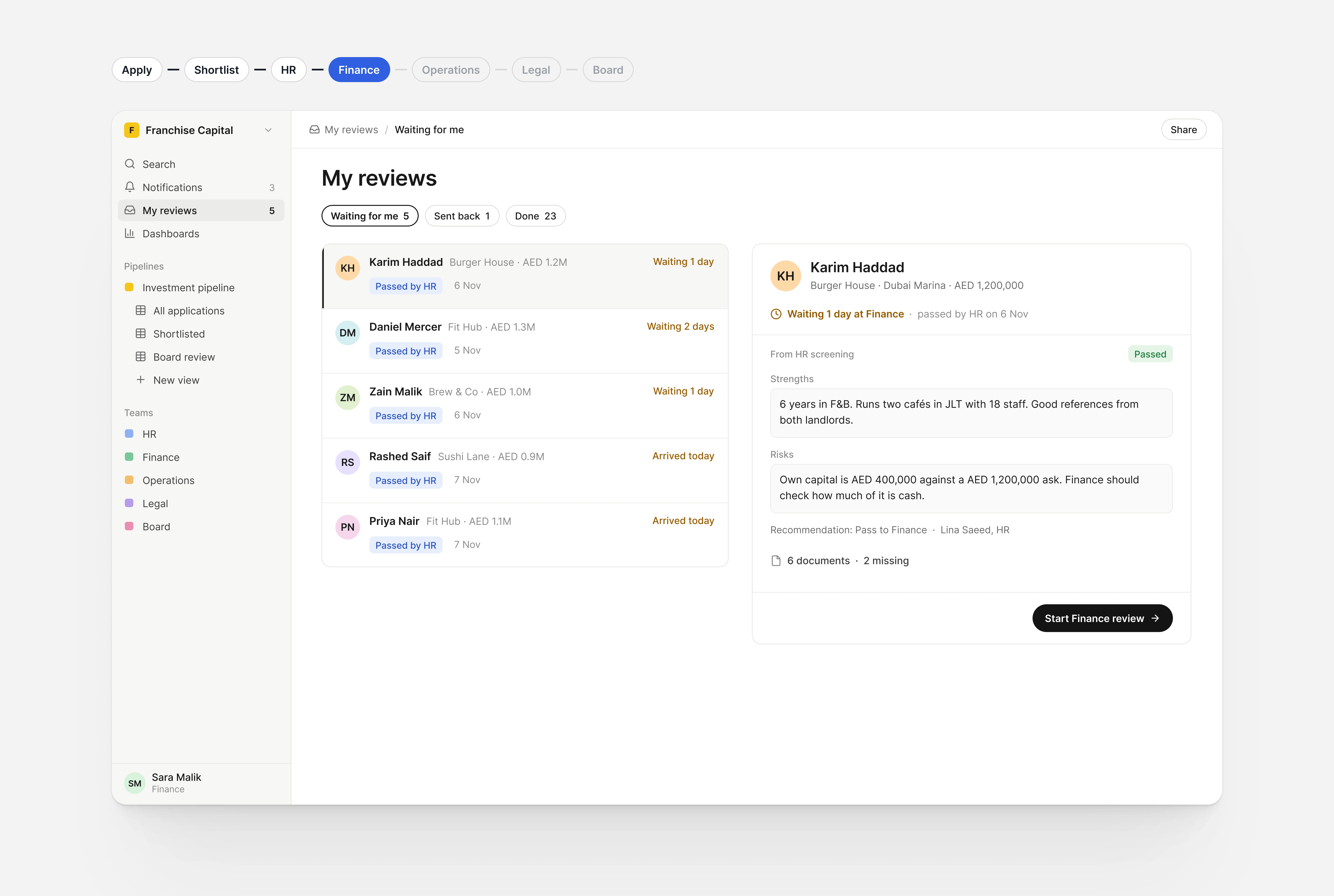
Finance Team Review
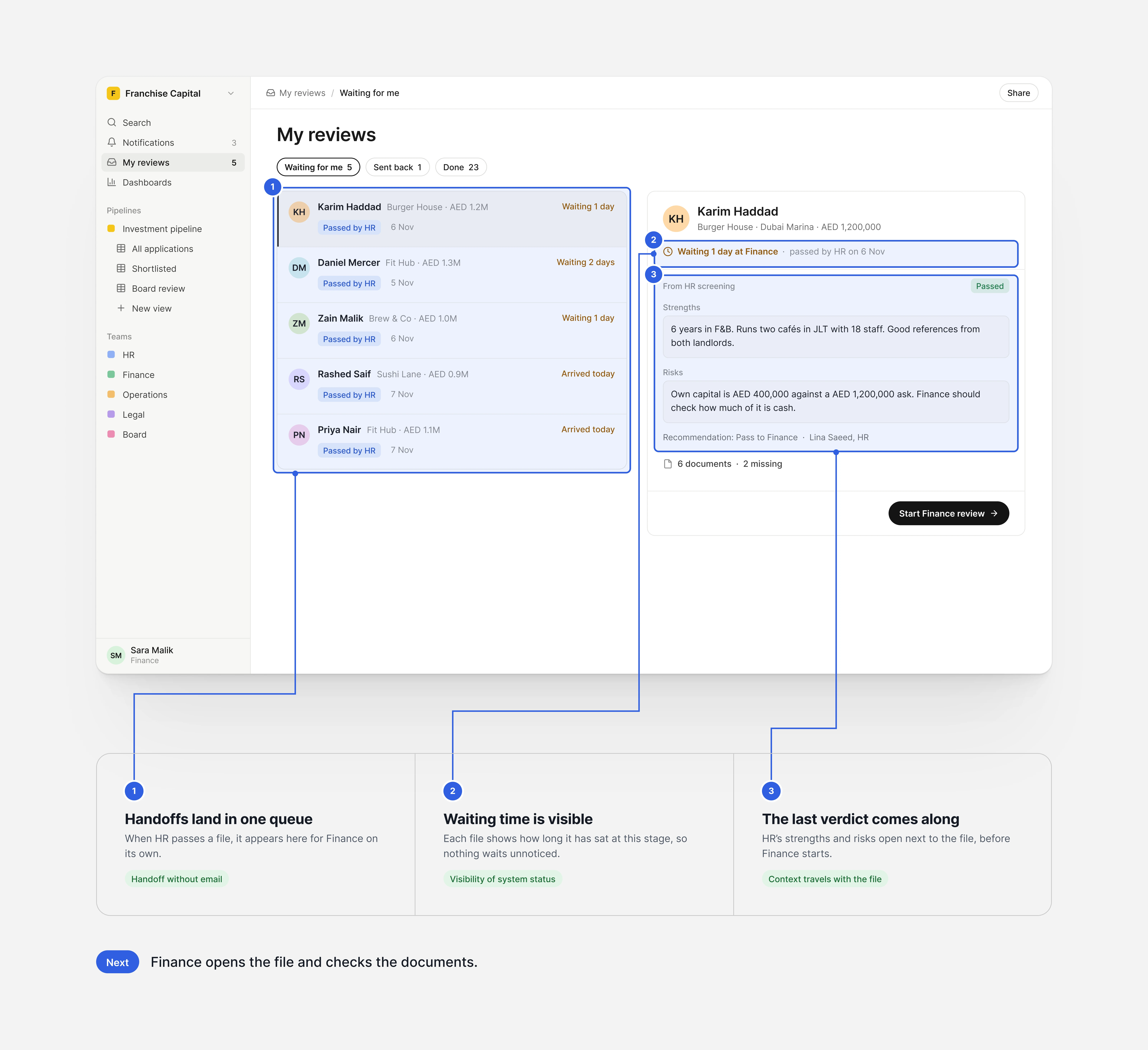
The Thinking Behind the Interface
Step 5 · Operation and Legal
Both teams review the application in parallel. Operations assesses the proposed location and business feasibility, while Legal verifies the required documents and compliance.
Their findings stay connected to the same application, ready for the final board review.
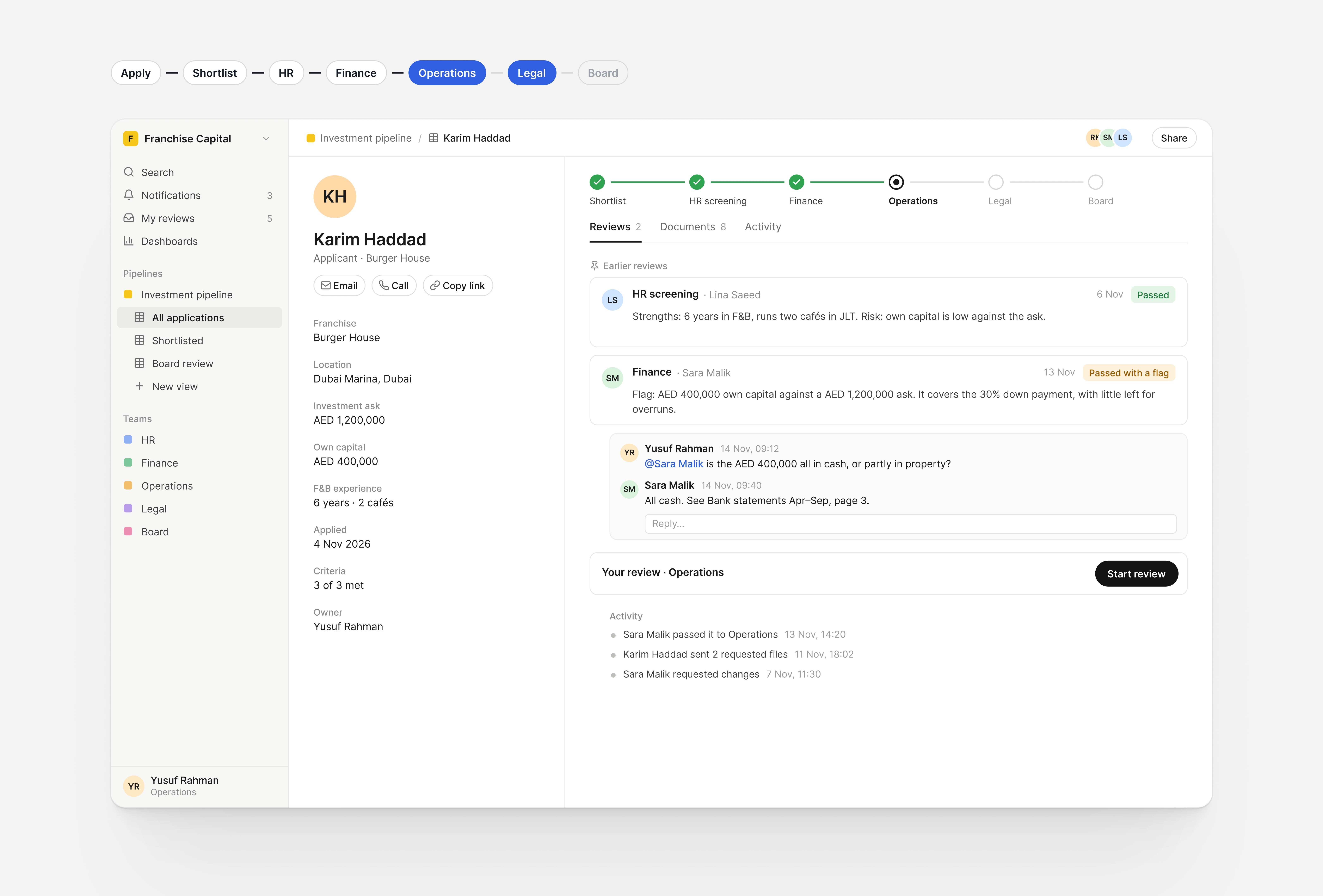
Operation & Legal Team Review
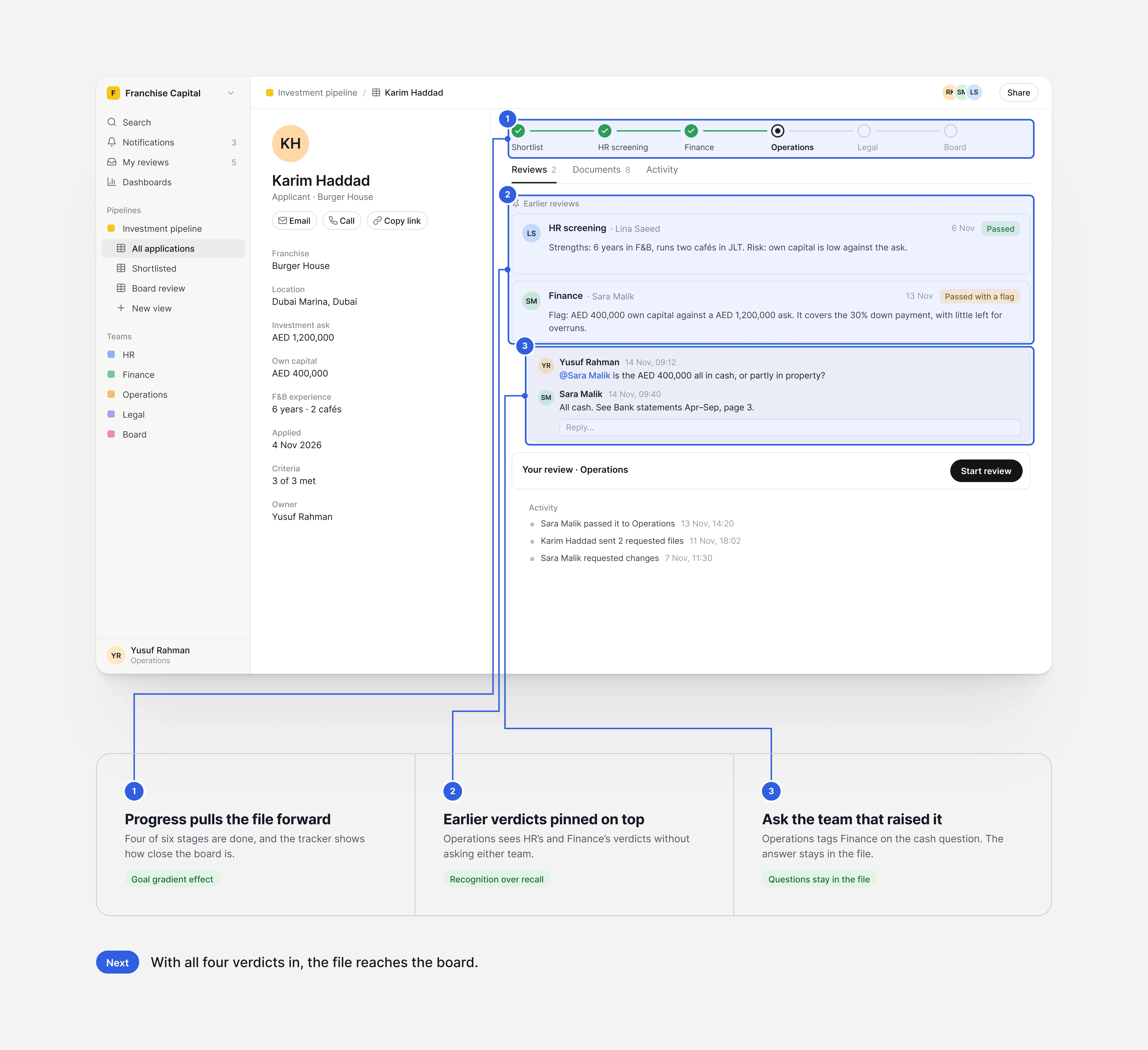
The Thinking Behind the Interface
Step 8 · Board vote
Once the required reviews are complete, the application reaches the board.
All four assessments appear together on one page. Each director can review the evidence and cast a vote independently, without seeing the other directors' decisions beforehand.
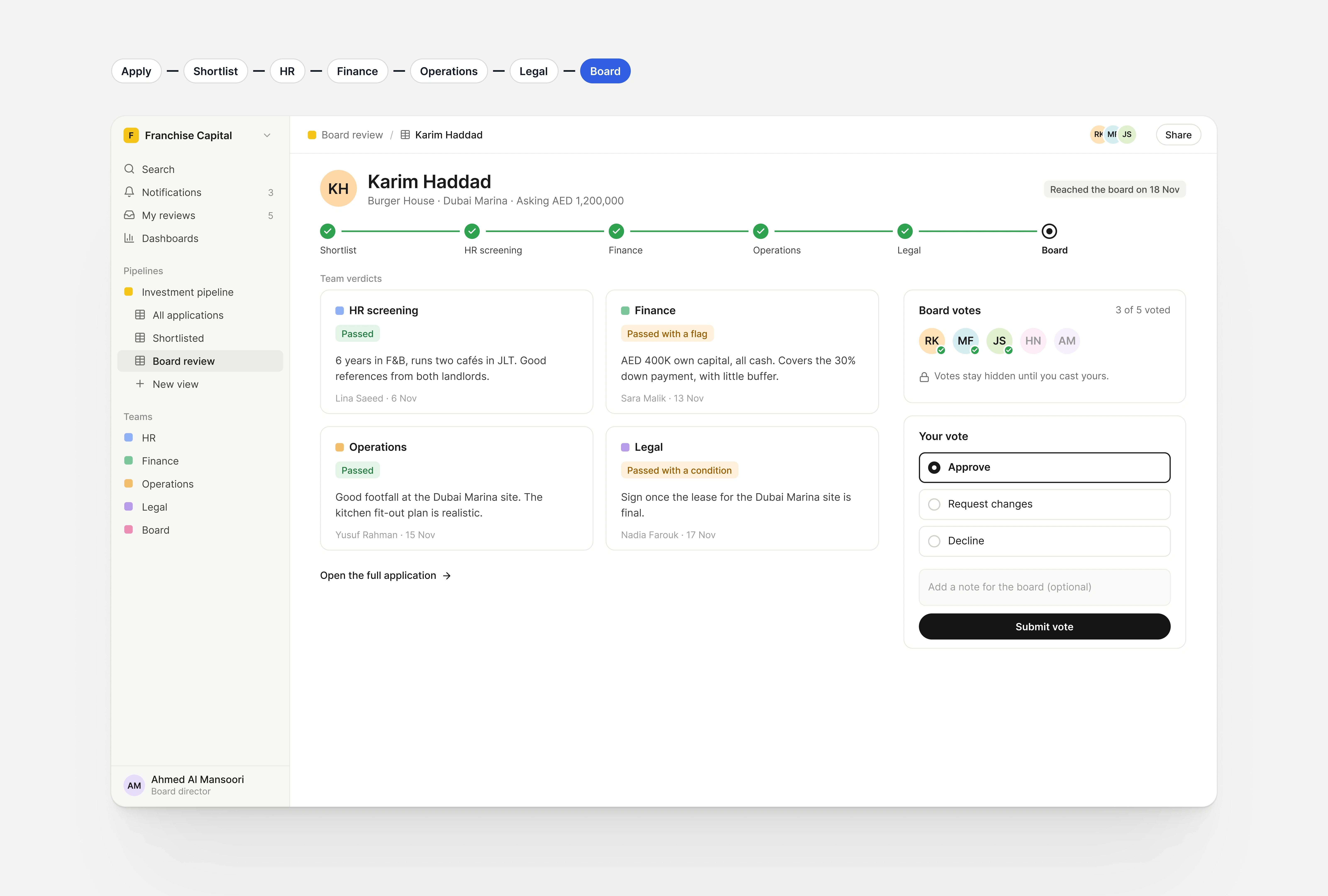
How Directors Make Their Decisions
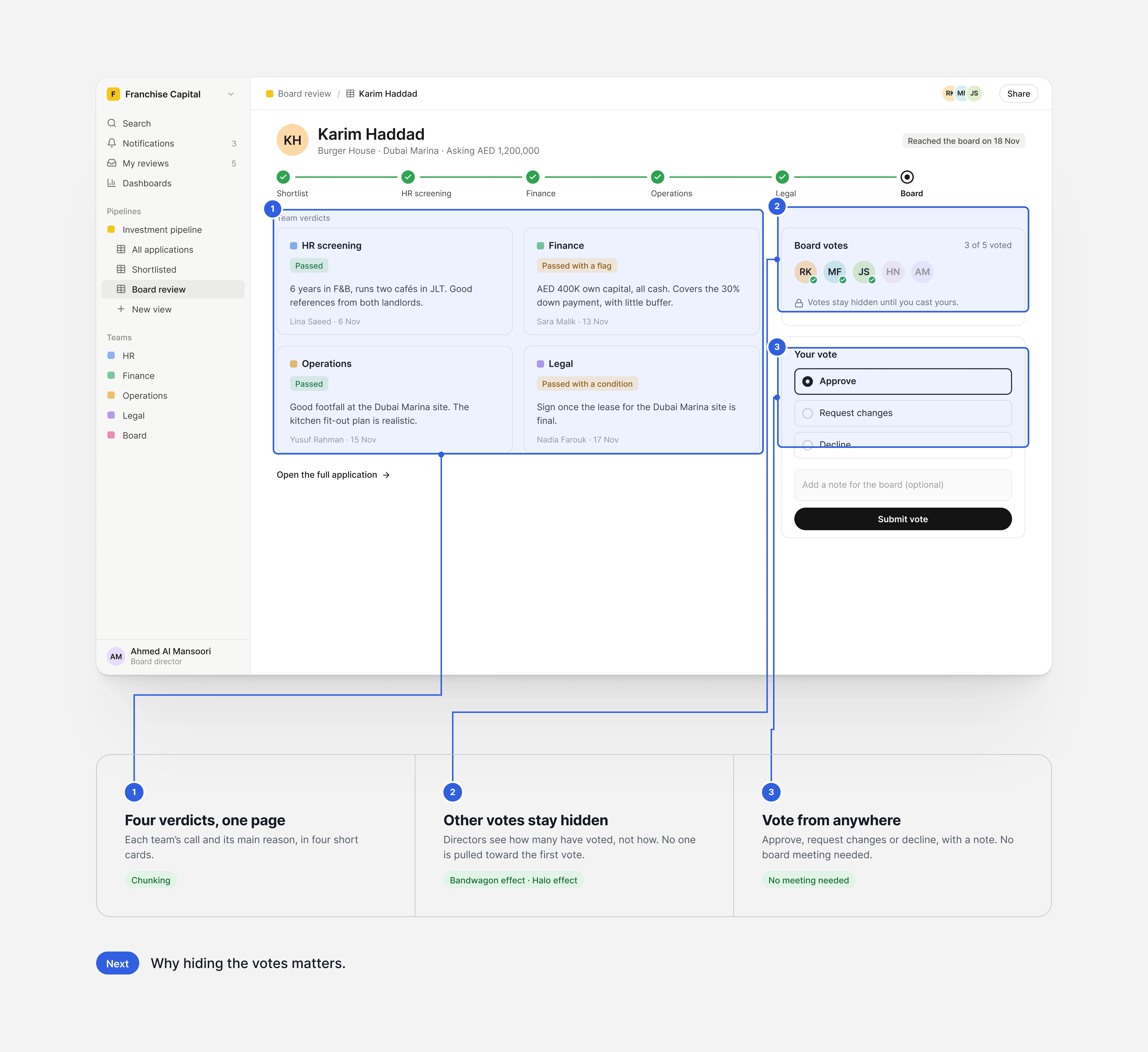
The Thinking Behind the Interface
Why votes stay hidden?
In a group discussion, the first opinion can influence everyone who speaks after it. Keeping votes private until submission helps each director make an independent assessment.
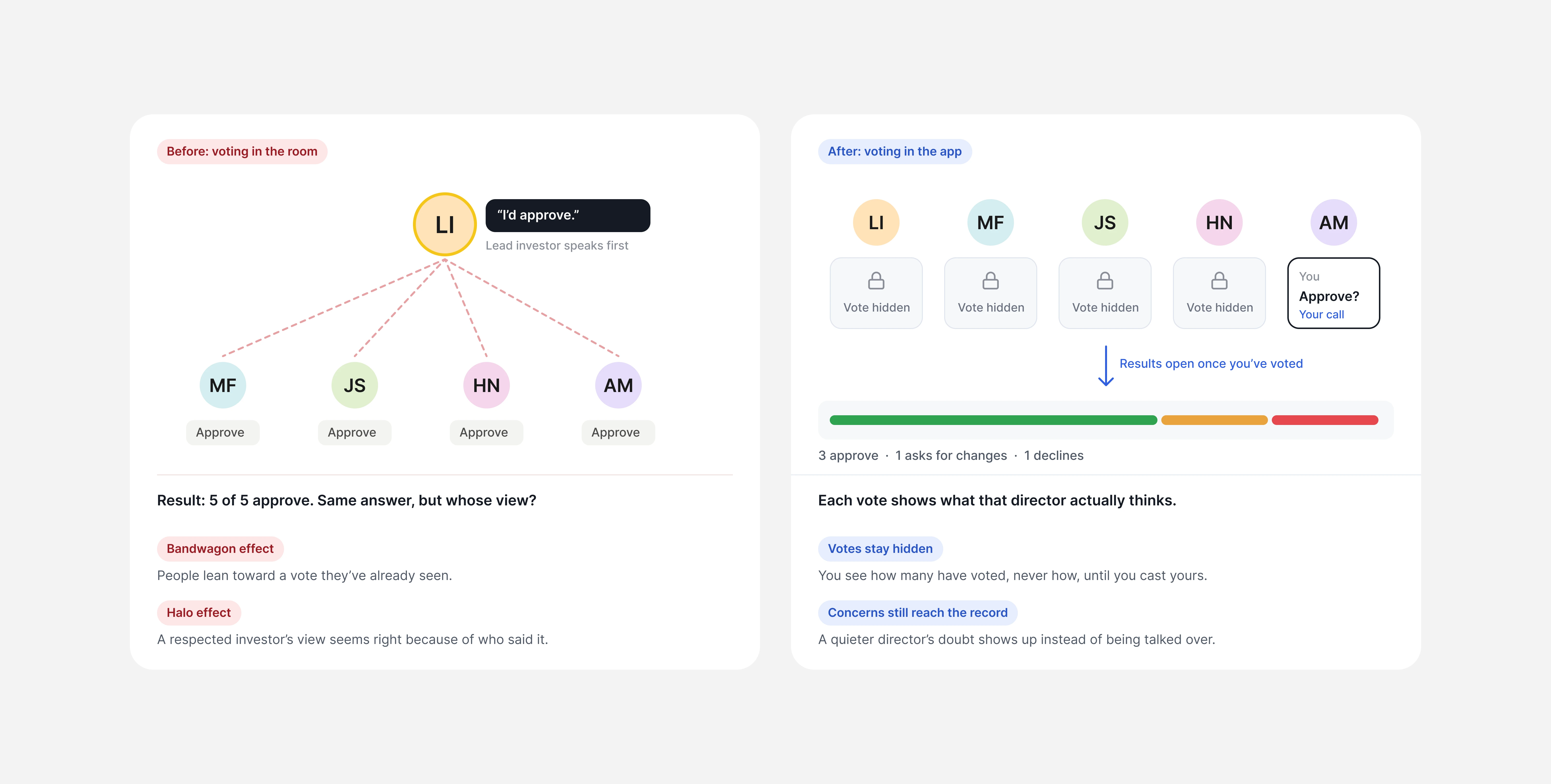
From Group Pressure to Independent Decisions
Also in the platform
Team notes
Notes can be shared across teams or kept within a specific team. Mentions bring the right person into the conversation without moving the discussion outside the application.
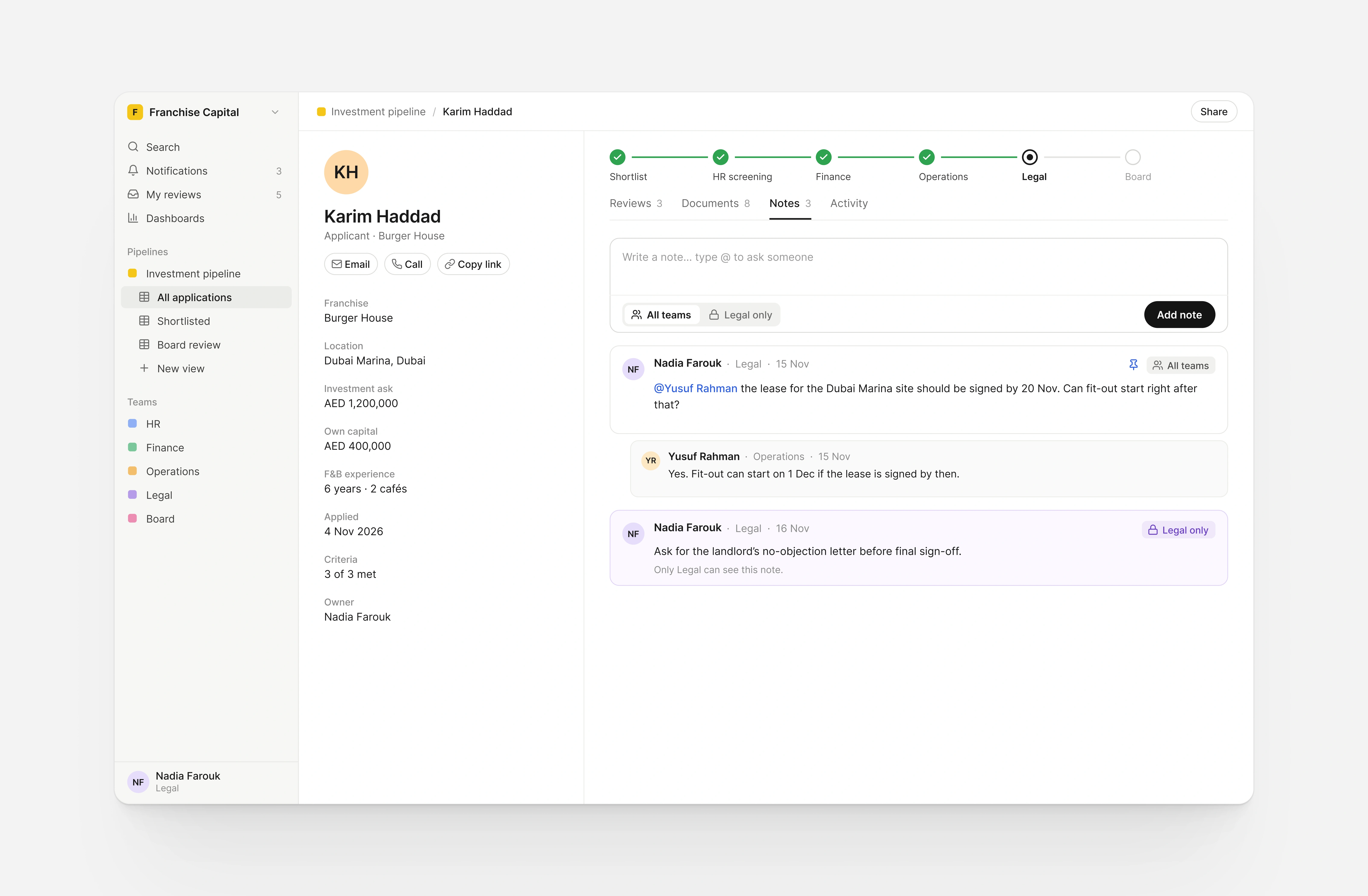
All Notes Together
Meetings, only when needed
When a meeting is necessary, the invitation includes the relevant people, a suitable time, a meeting link and an agenda.
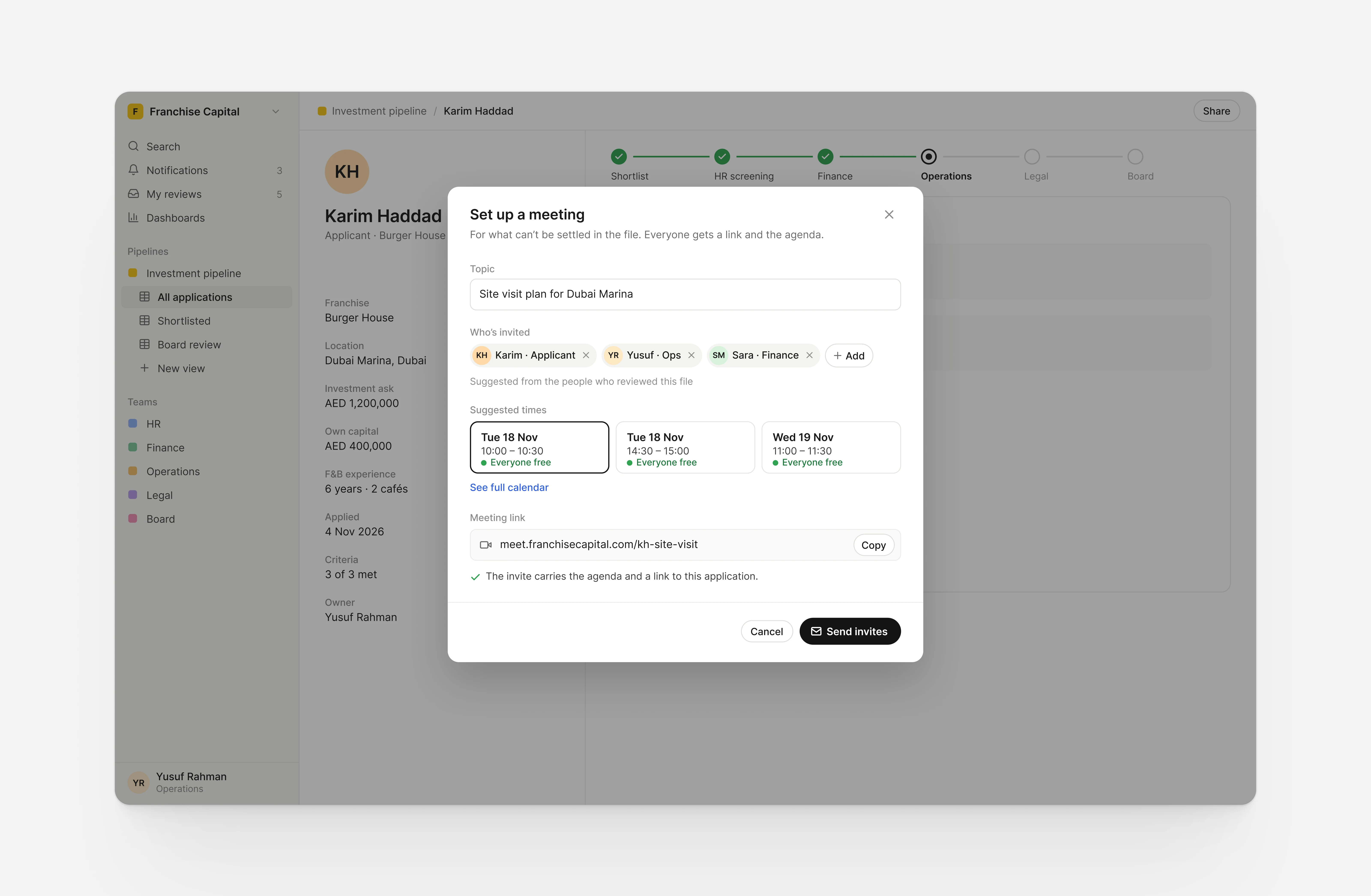
Create Meeting
Document Checks
Reviewers can open, verify or reject documents directly in the platform. If something is wrong or missing, they can explain why, so applicants know what to fix.
Reviewers can open, verify or reject documents directly in the platform. If something is wrong or missing, they can explain why, so applicants know what to fix.
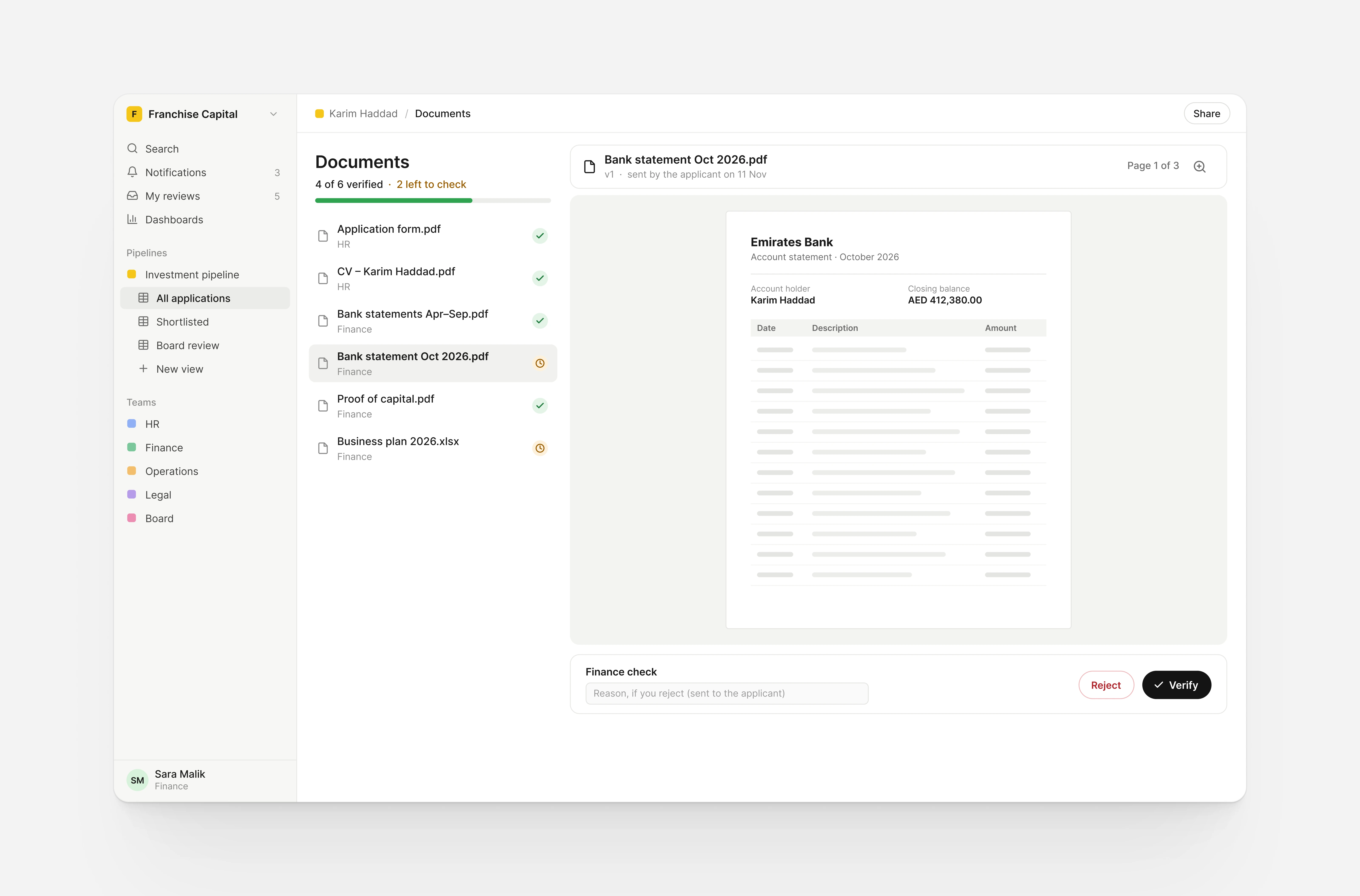
Document Checking Process
What changed
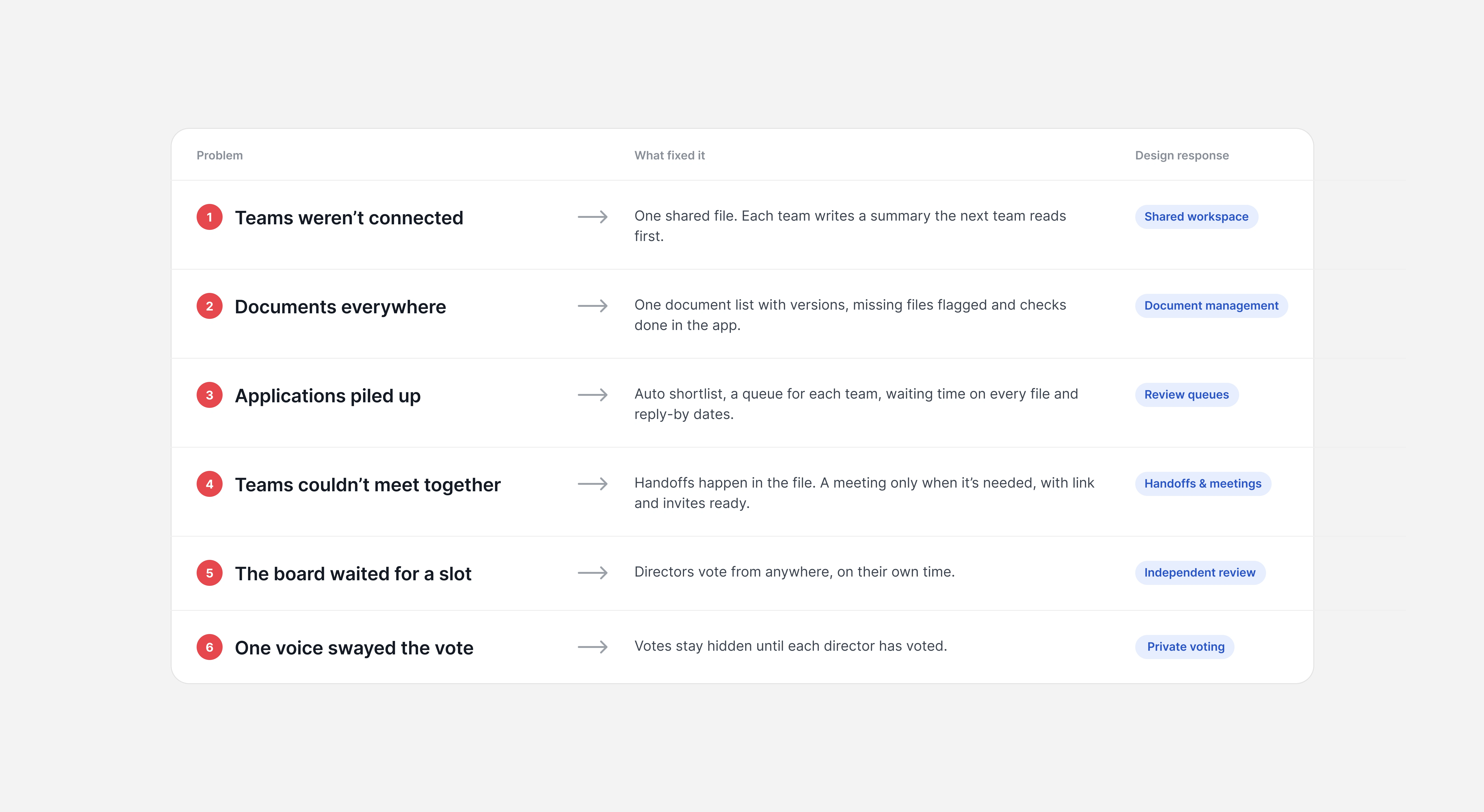
Every problem maps to the step that fixes it: one shared file for the teams, one document list, a queue with waiting times, and a board that votes on its own time.
Outcome
200+ screens
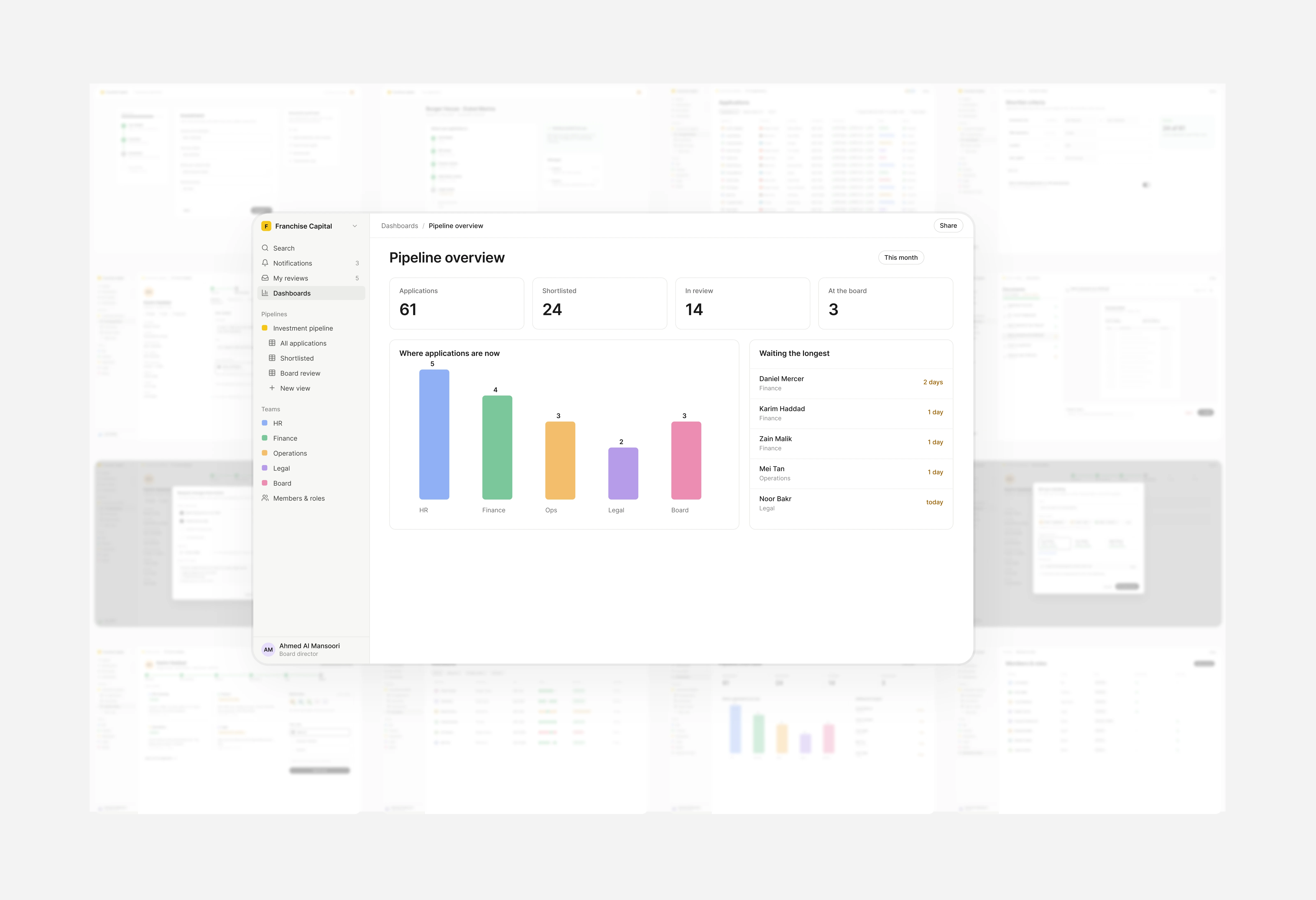
This case study covers the main application journey. The full platform includes 300+ screens across the applicant portal, internal team workspace and board experience.
All Screens

0 likes · 3 views · Nov 12, 2026
A web app where HR, Finance, Ops, Legal and the board review franchise investment applications in one shared file, and directors vote on their own.

