Conversion-Focused Landing Page for Hygiene Brand

Queennette Onyekachi


Overview
I helped design a conversion-focused landing experience for Clean and Go - a hygiene startup, testing its first product launch under a 1-week timeline.
The company launched its first pilot product, portable toilet seat covers, using QR codes attached to physical samples distributed for real-world testing. Users were supposed to scan the QR code after use and were directed to a landing page before completing a Google Forms survey.
Challenge
The founder planned to use a generic Framer template that pushed every visitor toward a single action: product feedback.
But this created a disconnect.
The experience felt too generic for a hygiene-focused product, missed the emotional context of what users had just experienced, and overlooked a second high-intent audience: people who scanned the product because they wanted to purchase it once it launched.
The challenge became: How do we collect meaningful user feedback without losing potential early customers?
Instead of editing the existing template, I pushed back and proposed designing the experience from scratch within the same tight timeline.
Approach & Solution
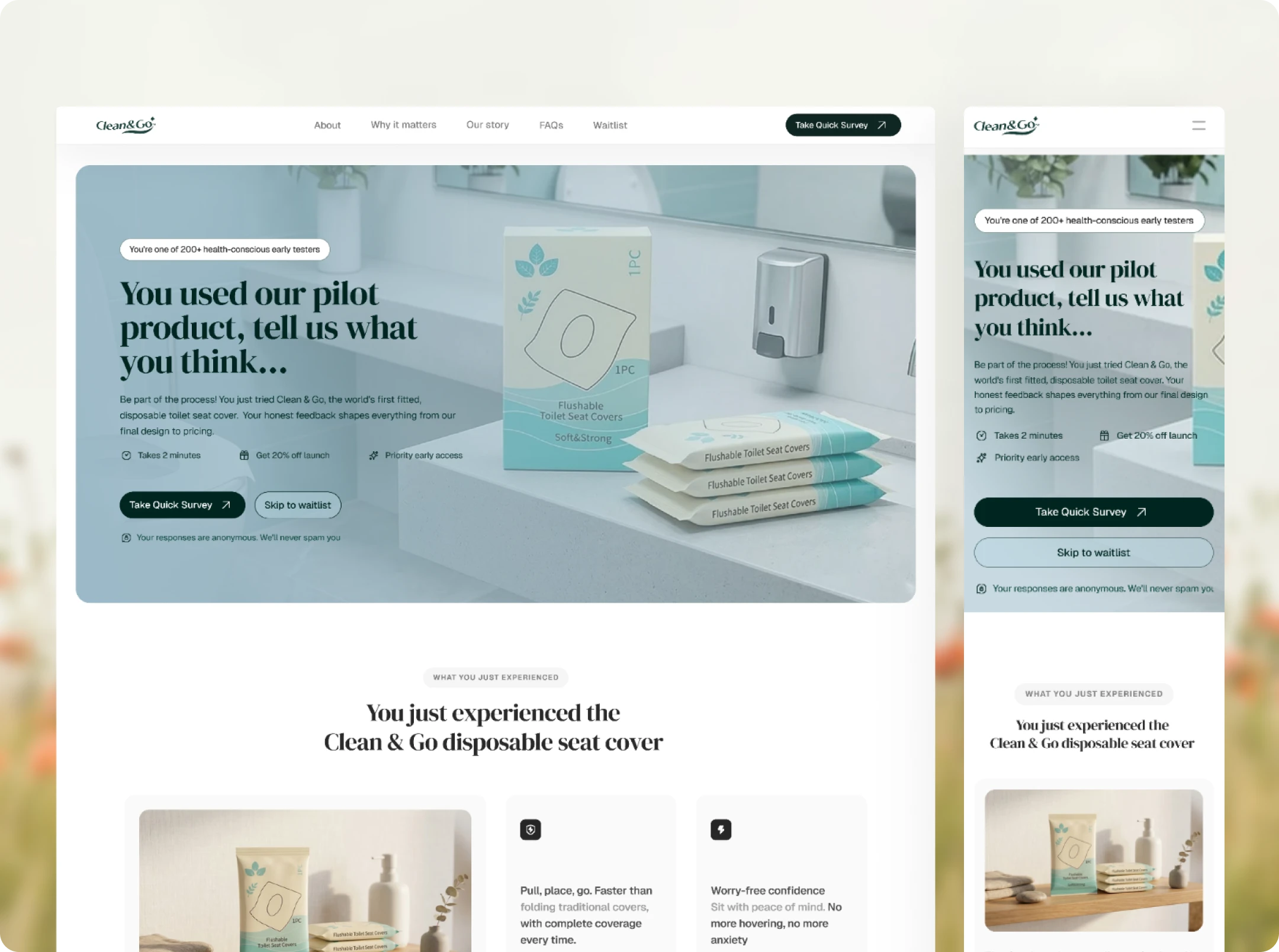
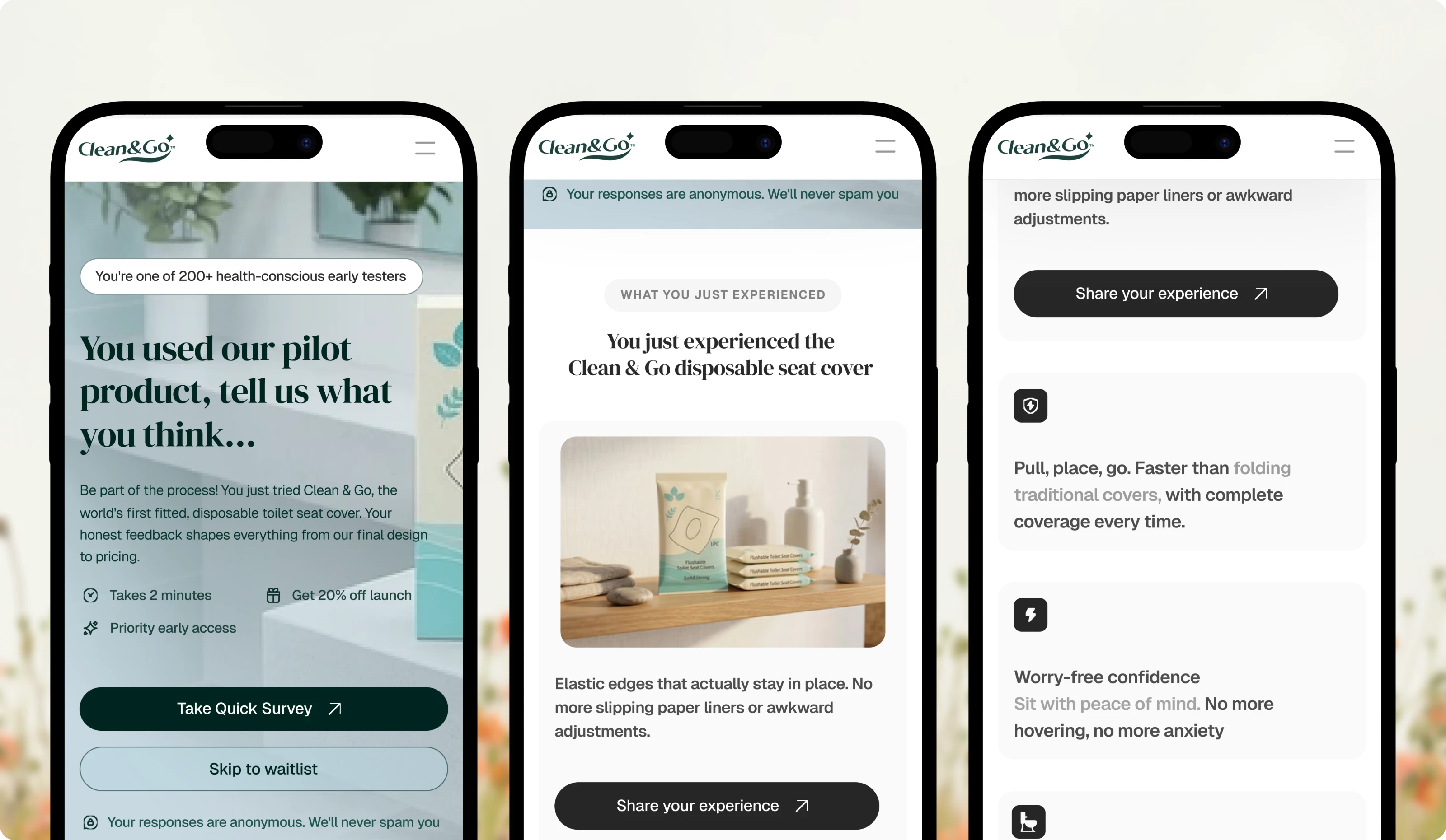
I redesigned and restructured the landing page around two user intentions:
1. Users willing to provide feedback: low-friction survey experience designed to increase participation and completion rates.
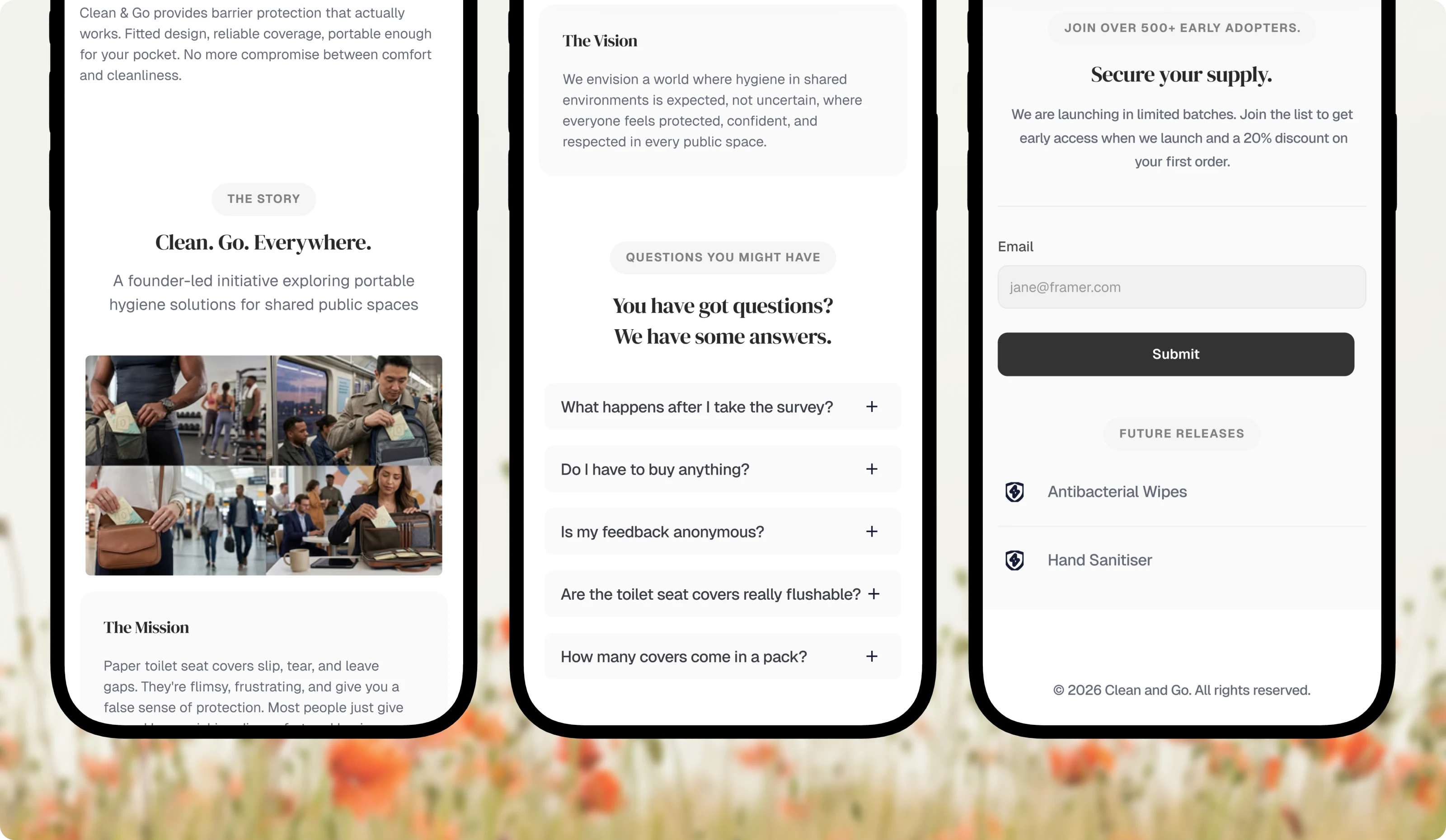
2. Users interested in purchasing later: waitlist flow that captured early demand instead of forcing every visitor into research participation.
To improve trust and reduce hesitation, I added:
anonymous response
indicators estimated survey completion time
first-purchase incentive messaging
clearer product context immediately after scanning
I also generated AI-based product visuals to help the founders validate the product professionally without investing in an expensive product shoot during the pilot phase.
Outcome
The redesigned experience helped the brand balance user research with early customer acquisition during its pilot launch.
Results:
48 of 61 people completed the survey from the QR code traffic.
36 of 81 people from website visit joined the waitlist
64 people started the survey.
This redesigned experience helped the founders reposition from a generic survey flow into a more intentional product introduction.
Like this project
Posted May 22, 2026
Turned a generic landing page into a conversion engine: 79% survey completion rate and 44% waitlist capture, in under a week, from scratch.