Optimizing GUI Design Through Continuity: A Gestalt Study

Wick Buccella


Finding The Flow
Project Overview:
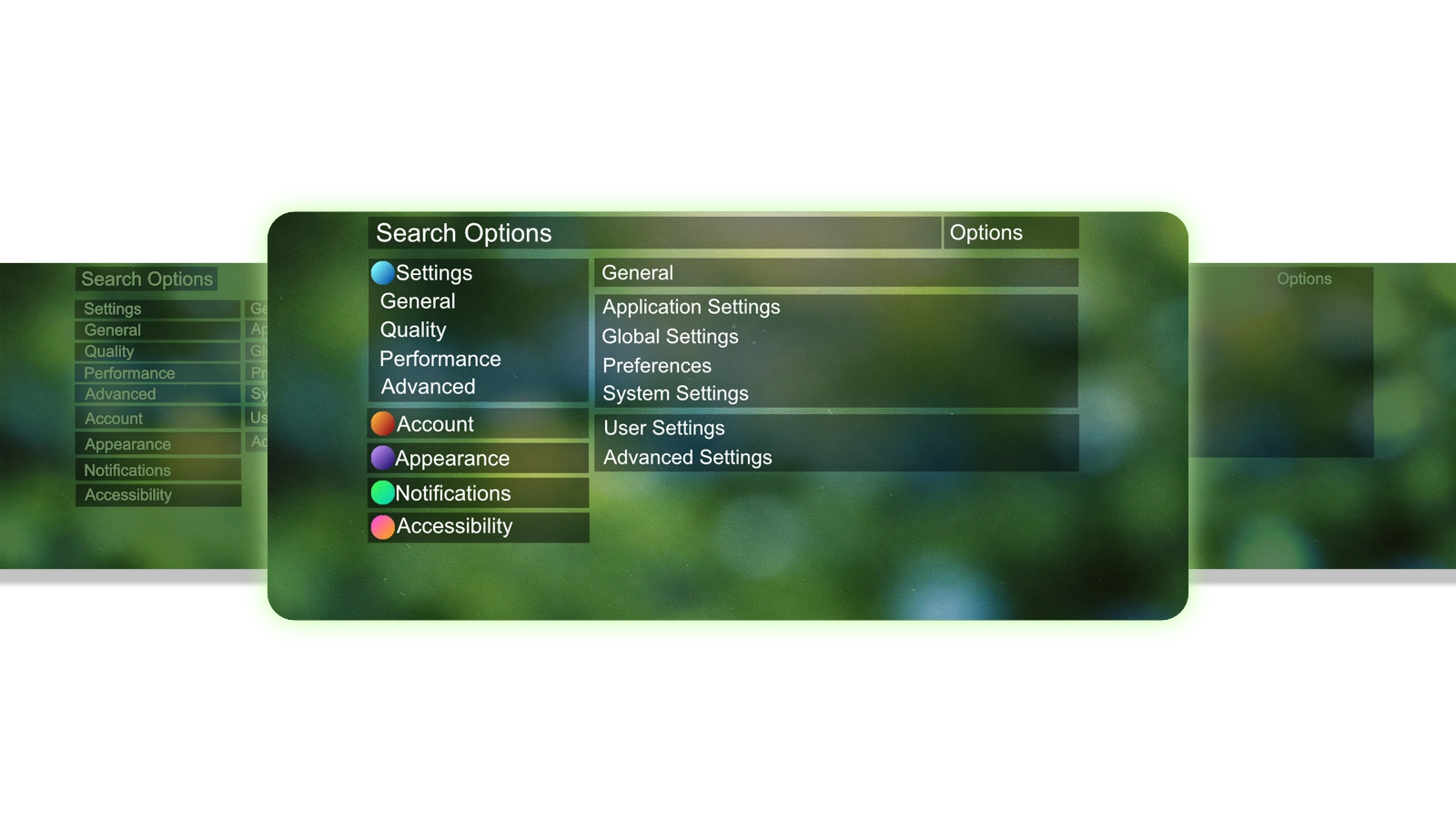
Finding the Flow is a quantitative HCI research study investigating how the Gestalt principle of continuity in graphical user interfaces (GUIs) affects user perception and cognitive load. The objective was to determine if an "optimal" level of visual continuity exists that minimizes mental effort while maximizing intuitive design.
The Cognitive Burden:
The Problem: Breaks in continuous visual grouping disrupt a user's expectation of flow, increasing the cognitive effort required to parse information hierarchy.
The Gestalt Application: In UI design, the Law of Continuity establishes relationships between elements. The study aimed to balance ease of processing with user engagement to discover the lowest possible cognitive load.
Role: Lead Researcher, Interviewer, UI Designer,
Information Architect
Project Type: Scientific Research
Team Size: 1
Timeline: 5 Months
Case Study Link: https://wickbuccella.webflow.io/finding-the-flow
Research Methodology
To test the hypothesis, a controlled quantitative study was conducted with 14 adult participants (ages 18–41) in isolated, distraction-free environments.
Test Stimuli: I designed five distinct GUI graphics representing a standard settings interface. These visuals systematically manipulated continuity across five distinct levels (from very low to highest).
Metrics & Data Collection: Participants rated each stimulus on a 5-point Likert scale across three core metrics: perceived flow, difficulty of use, and overall intuitiveness.
Experimental Controls: To mitigate order effects and cognitive bias, questionnaire sections were presented in a randomized sequence for each participant.

Visual Continuity Scale from Too Little -> Balanced -> Too Much
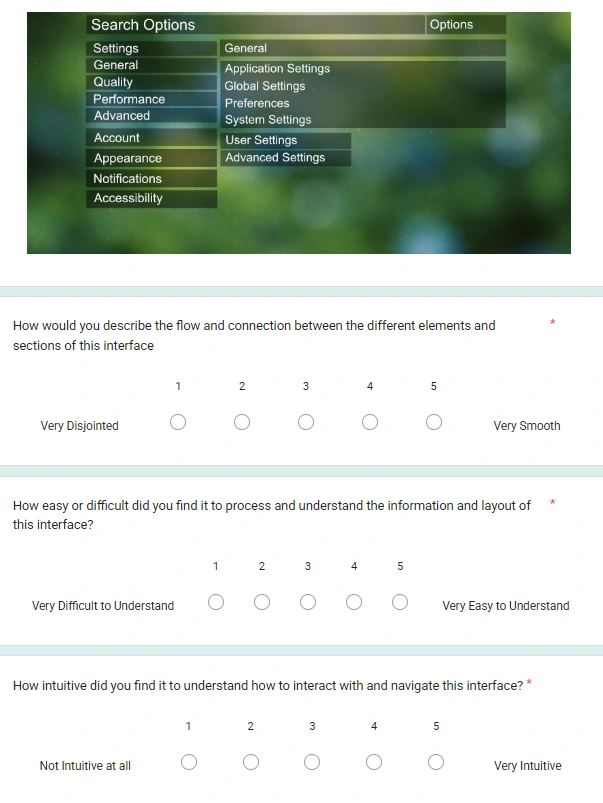
Example of Questionnaire
Quantitative Findings
The data confirmed the core hypothesis: an intermediate, balanced level of continuity optimizes the user experience, rather than simply maximizing or minimizing it.
Statistical Significance: Multiple linear regression analysis revealed a strong and statistically significant correlation (R^2 = .81, p < .001). Perceived flow and difficulty collectively accounted for 81% of the variance in perceived intuitiveness.
Predictive Values: Both perceived flow (t = 3.831) and difficulty (t = 4.183) significantly contributed to predicting how intuitive an interface was perceived to be.
Data Clustering: The mid-balanced continuity visual demonstrated the tightest clustering of data points around the trendline, indicating highly consistent user perception compared to the extreme high or low levels.

Visualized Scatter Plots for Perceived Flow/Difficulty and The Subsequent Perceived Intuitiveness
Takeaways & Future Scope
These findings provide actionable usability guidelines: designers must consciously calibrate continuity to create efficient interfaces, rather than defaulting to maximum visual grouping. This is particularly critical for high-stakes applications, like medical Electronic Health Records (EHRs) or complex control systems where reducing cognitive strain is paramount to safety and mitigating burnout.
Study Constraints & Iterative Learnings:
Semantic Clarity: The subjective nature of terms like "flow" may have led to varied interpretations. Future studies should incorporate visual anchors and stricter semantic definitions.
Uncontrolled Variability: The sample lacked strict background vetting for visual impairments, which could introduce variance in GUI perception.
Future Directions: I am interested in expanding this framework into the auditory domain to investigate if similar continuity patterns in audio feedback influence perceived cognitive load.
Like this project
Posted May 4, 2026
Study: Moderate Gestalt continuity creates a "Goldilocks zone" in GUIs, optimizing flow and ease of use over extreme under-grouping or visual overload.