Promptly - AI System for Converting Ideas to Specs

Nivyan B


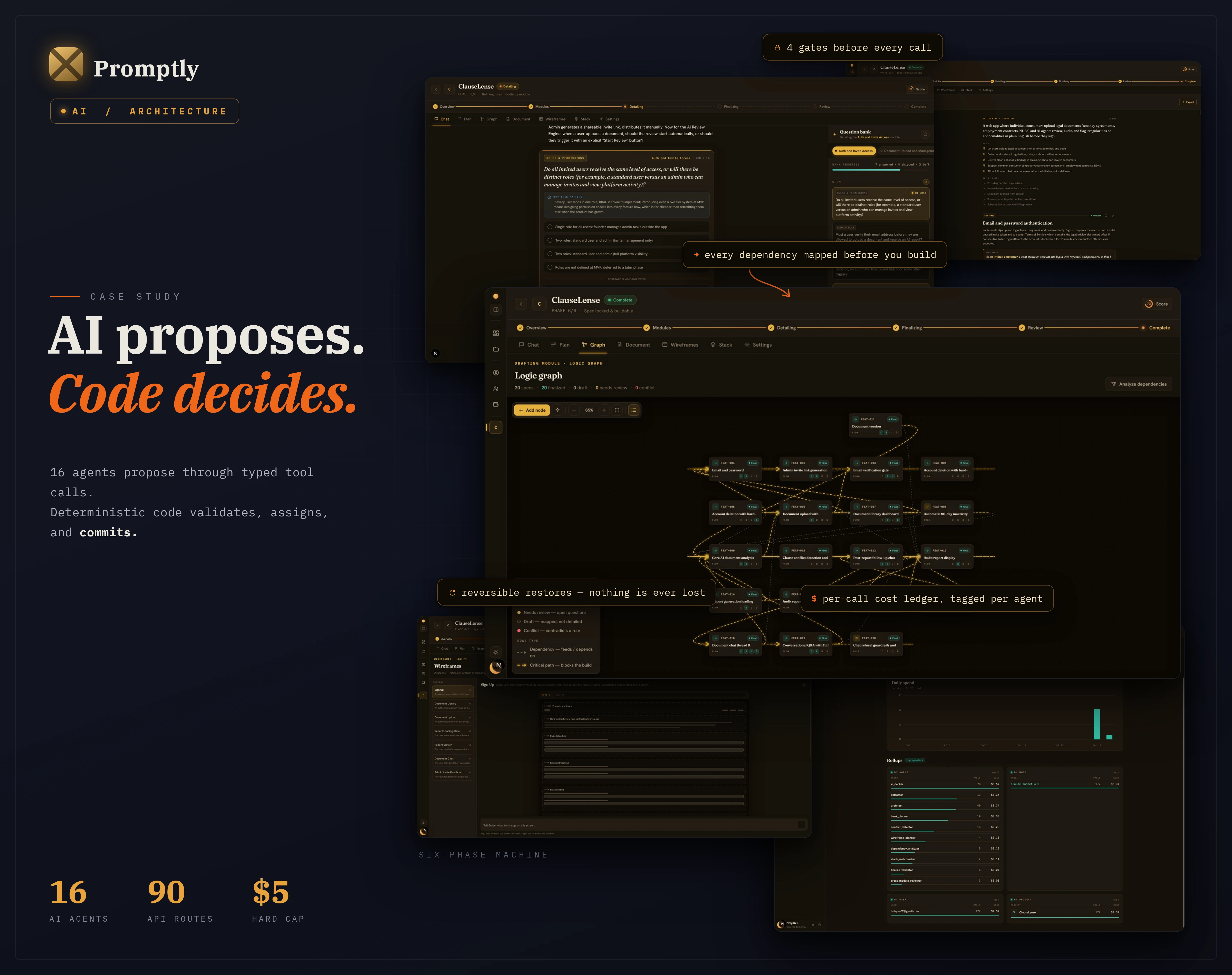
Promptly: AI Architect That Turns Vibes Into Specs
Role: Architect & Full-Stack Engineer (solo build)
The AI interviews you. The server owns every decision it proposes.
Founders usually show up with a vibe, not a spec: "an app like X, but for Y." I built Promptly to run that discovery conversation automatically. It interviews the founder, then turns the conversation into things an engineer can actually build from: modules, a dependency graph, a living PRD, and a consistency score.
The chat is the easy part. The real work is everything that stops the AI
from touching the database directly.
The problem
AI brainstorming produces prose, not specs. Nothing traceable, nothing versioned.
A model that can edit your database directly means hallucinated IDs and duplicated records.
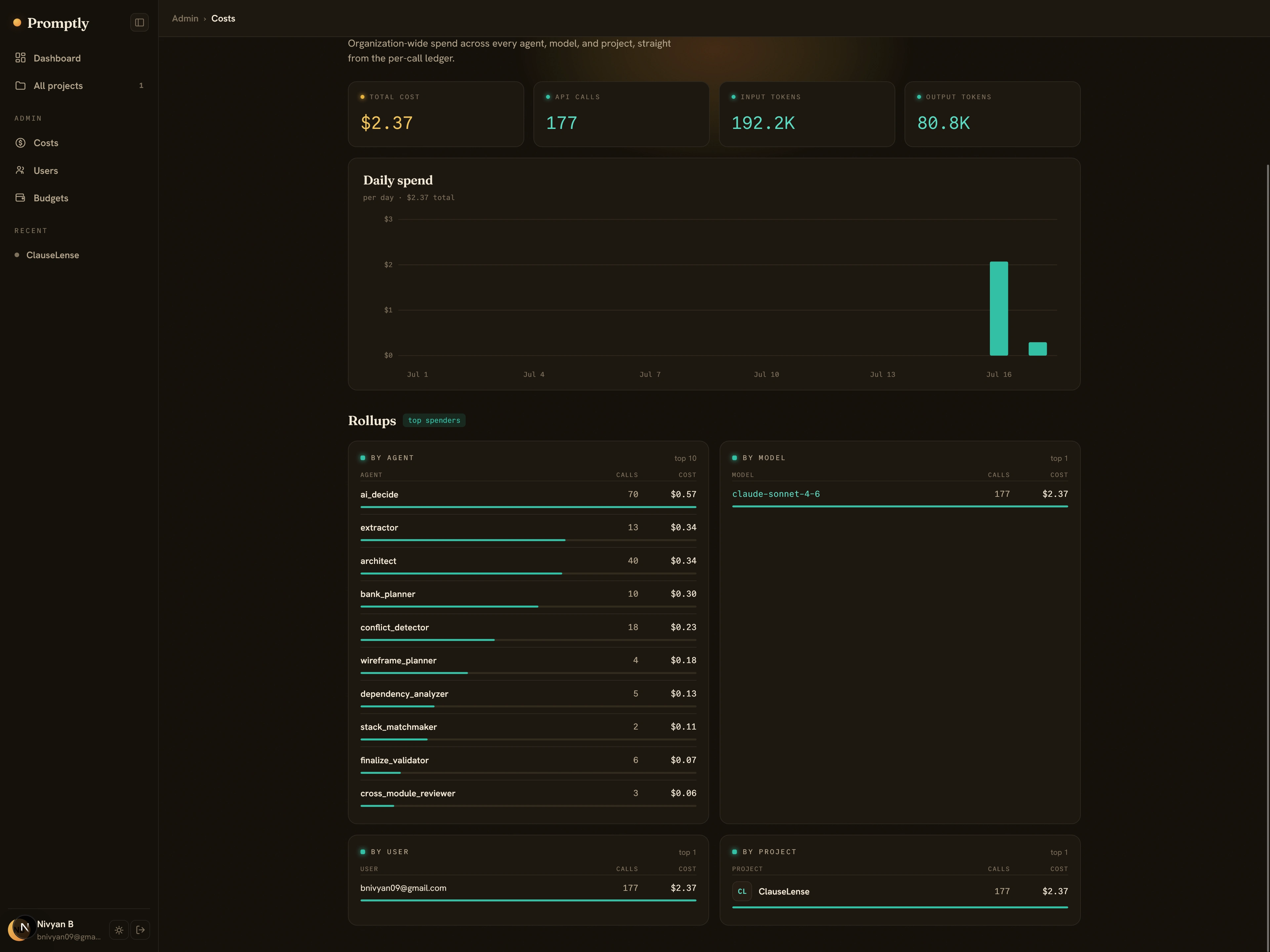
No spend cap means a surprise bill waiting to happen.
One failed AI call can leave a whole pipeline stuck.
Promptly fixes all four with actual code, not a disclaimer.
AI proposes, code decides
Promptly runs 16 AI agents (the Architect, Bank Planner, Extractor,
Dependency Analyzer, and more), but none of them touch the database
directly. Each one proposes a change through a typed tool call. Backend
code checks it, and only then does it happen.
The model can never assign an ID or skip a phase. Invalid tool calls get rejected and logged, never silently applied to the database.
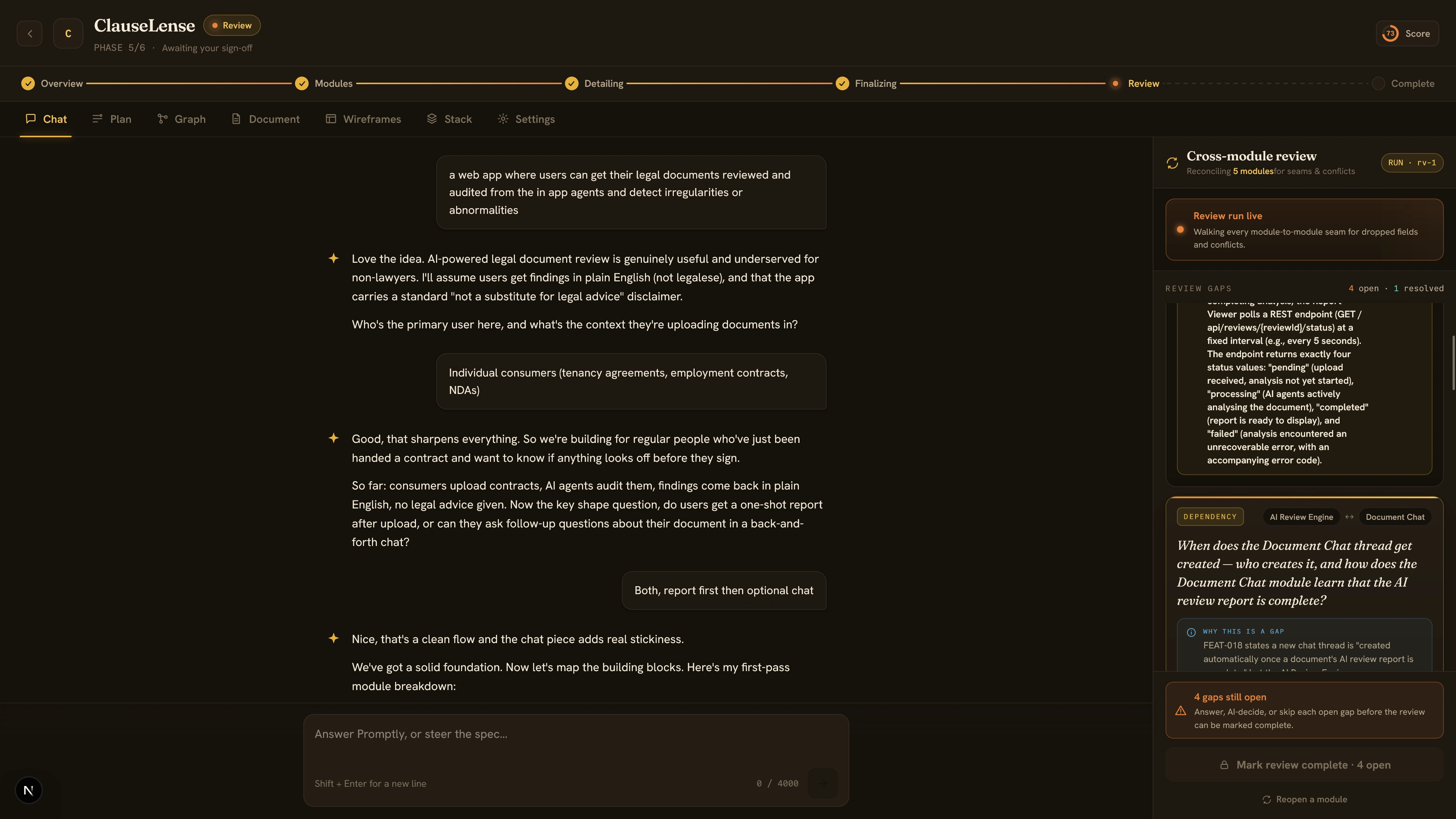
How a project actually moves
A founder chats with Ember, Promptly's interviewer persona, through a
guided conversation. Each module gets its own question bank, 6 to 12
questions, answered by typing, picking an option, or letting the AI decide
(with a confirmation step once it's decided more than half).
Every project moves through six phases: overview, modules, detailing,
finalizing, review, complete. Every move is logged with who triggered it
and why.
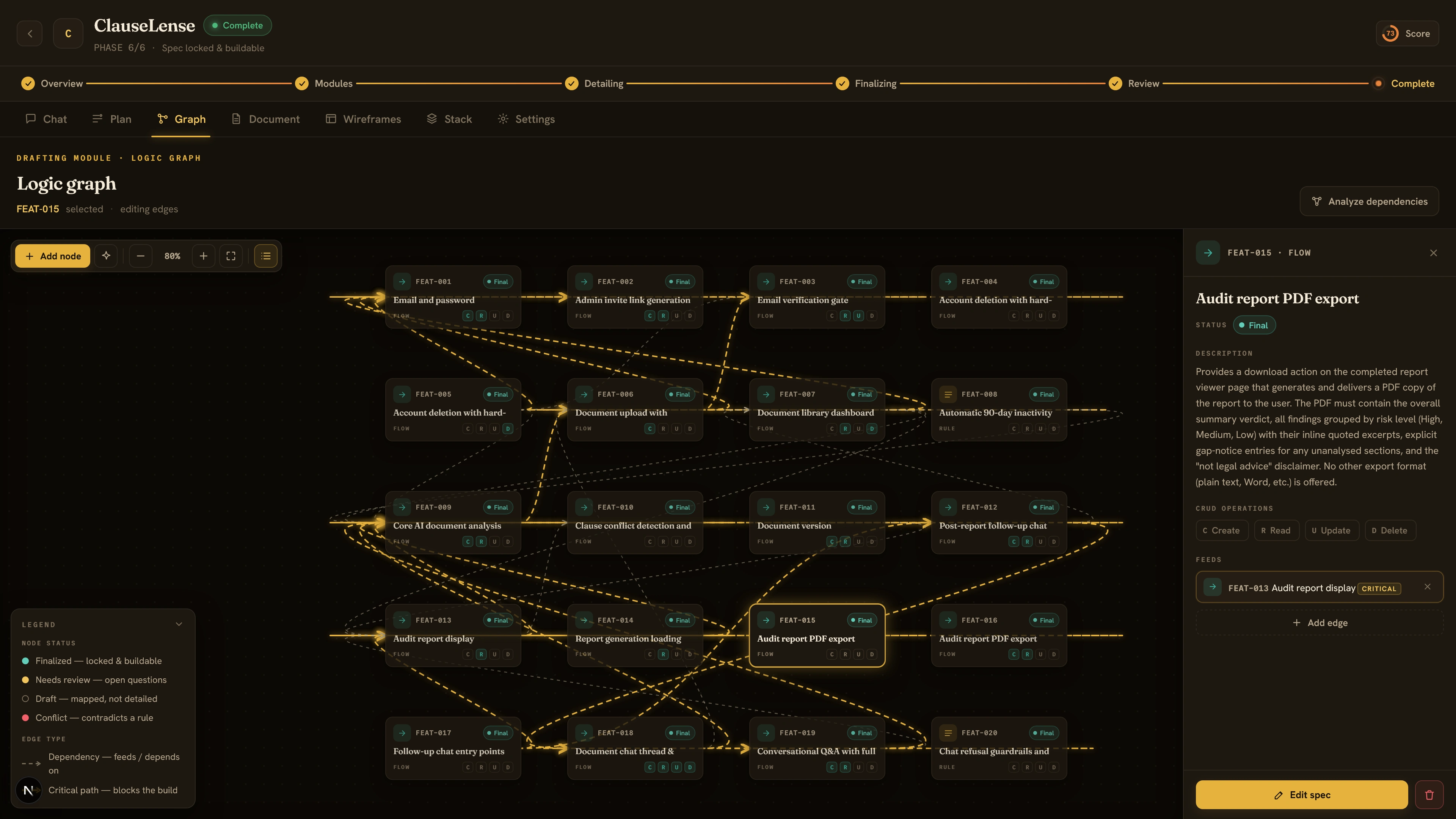
One spec, three views
Once a module is answered, Promptly extracts real specs (title, user
story, acceptance criteria) and gives each one a permanent code, like
FEAT-014. It maps dependencies between them automatically. Every dependency insert gets checked against the existing graph before it's committed, so the graph can never contain a cycle. The UI and the underlying data can never disagree.
The graph and the PRD document are the same data, shown two ways. Edit
one, and the other updates instantly. A live consistency score tracks how
solid the spec is overall.
Nothing gets lost
Promptly snapshots automatically before anything risky happens: finalizing,
reopening, restoring. You can roll back a single module or the whole
project. Even restoring has its own safety net, since every restore takes
a snapshot before it runs.
Built to scale, and to survive failure
Four WebSocket rooms per project keep chat, graph, document, and score in
sync live, backed by Redis so it works across multiple servers, not just
one. Sessions use rotating refresh tokens with reuse detection. If an already-used token gets presented again, the entire session chain gets invalidated, cutting off whoever stole it.
Every one of the 16 AI pipelines has a fallback built in. If a step fails,
the user never gets stuck staring at a dead spinner.
Tech stack
Backend: Python, FastAPI, SQLAlchemy, PostgreSQL
Real-time: Redis, WebSockets
AI: Anthropic API (Claude), streaming + tool calls
Frontend: Next.js, React, TypeScript, Tailwind
Closing
The AI interviews you. The server owns every decision it proposes.
That's the whole idea behind Promptly. The model gets to be creative. It never gets to be in charge.
I built it because I kept seeing the same breakdown happen over and over. A founder says one thing, the developer hears something else, and three weeks in you find out the whole build was based on a misunderstanding nobody caught early. Promptly exists to close that gap. The interview forces the vague idea into specific, written answers before a single line of code gets planned, so what the founder meant and what the engineer builds actually match.
Like this project
Posted Jul 20, 2026
Built an AI-powered system that turns a founder's rough idea into a structured, versioned project spec. Designed and shipped solo as a personal product.