Designing a science-backed Biological Age feature

Hillary N


Translating peer-reviewed science into a health feature that earned an 8.3/10 overall rating and motivated 79% of testers to engage weekly.
Role: Product Designer (sole designer on the feature)
Company: Elfie
Platform: iOS and Android
Available in 35 countries, 2.2M+ downloads
The Feature
Elfie is a digital health platform that rewards users with coins for monitoring their health — recommended by over 1,000 doctors worldwide and reporting clinical outcomes in the top 1% globally. I was brought in as the sole designer to take Biological Age from concept to validated prototype.
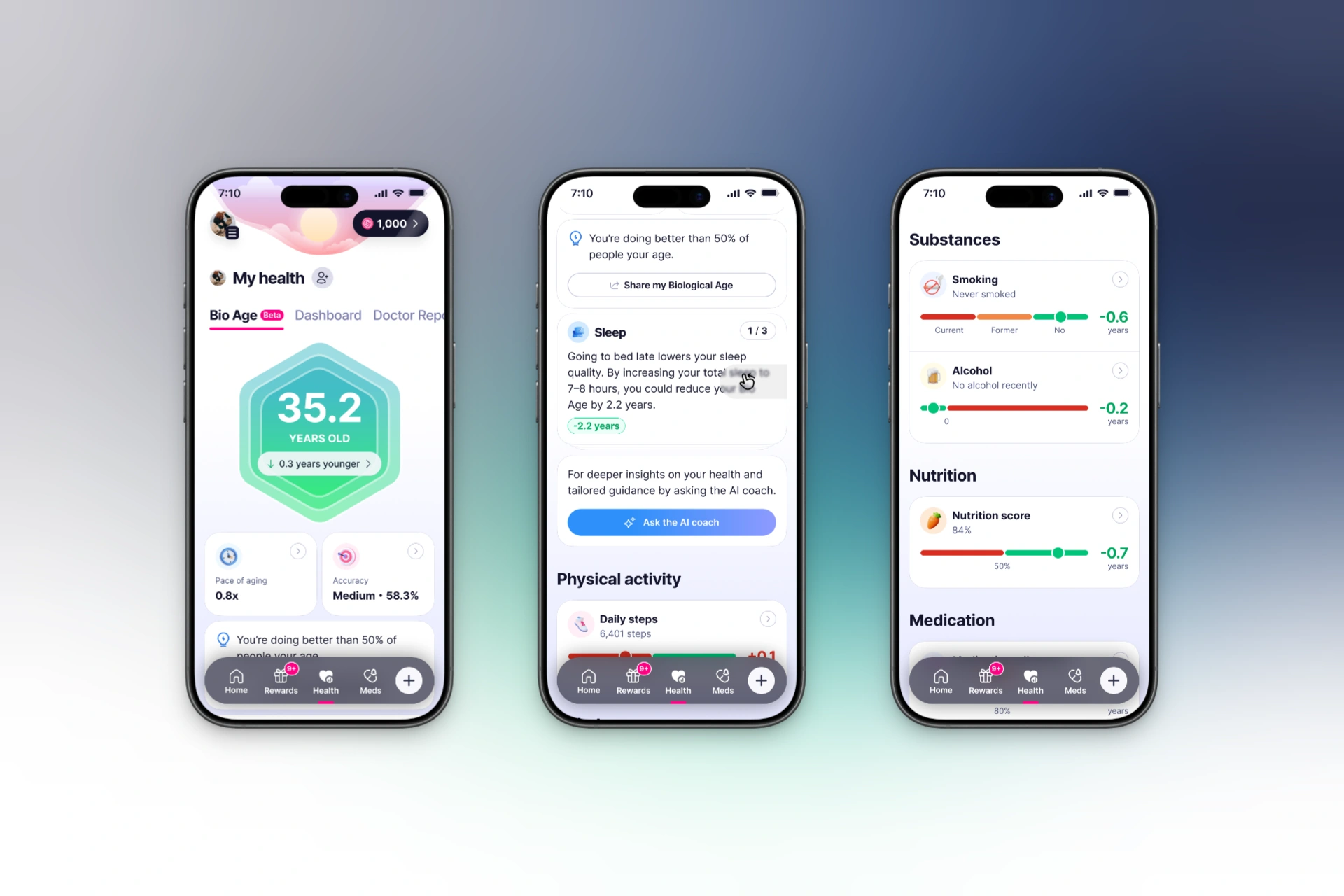
Biological Age reframes Elfie's existing Health Score as something more intuitive: not an abstract percentage, but an estimate of how old your body actually is based on how you live. The model was built on NHANES data with linked long-term mortality outcomes and integrates up to 14 health factors — physical activity, sleep, BMI, smoking, alcohol, nutrition, medication, blood pressure, and more — derived from Cox proportional hazards models.
The design challenge was making something grounded in epidemiological research feel immediately legible, trustworthy, and motivating to a general consumer audience.
The Design Problem
A feature this scientifically grounded carries a specific UX risk: it can easily feel either oversimplified or overwhelming. Strip out too much and users do not trust it. Surface too much and they disengage. The accuracy problem compounded this — the estimate carries approximately 58% confidence when based on self-reported data alone, which is honest but potentially deflating.
I started with the result screen rather than the entry flow, working backward once the core experience was resolved. Early exploration tested three layout variants in parallel, examining how the biological age number related to the health score, how contributing factors were broken down by category, and how AI-generated insights could contextualise the result for the individual user.
The key design decision was to make the accuracy indicator visible rather than hidden — framing lower confidence as an invitation to input more data, not a reason to distrust the feature. That single decision shaped the entire engagement loop the feature was designed around.
The Validation
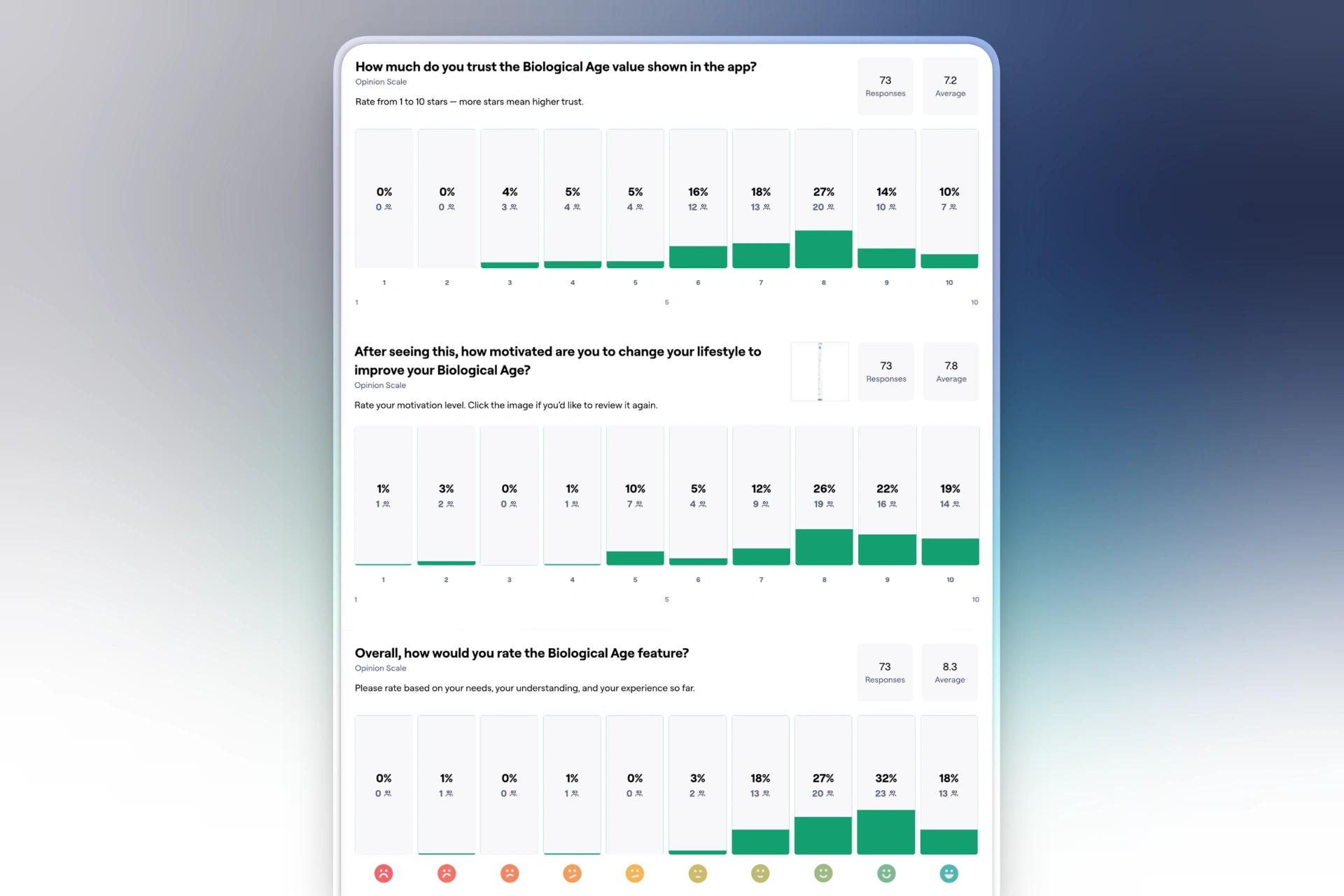
The prototype was tested with 84 testers on Maze — the only round of usability testing conducted during my tenure.
The results were strong across the metrics that matter most for a health behaviour feature. The overall feature rating averaged 8.3 out of 10. Motivation to change lifestyle to improve Biological Age averaged 7.8 out of 10. Trust in the Biological Age value averaged 7.2 out of 10 — meaningful given the stated uncertainty. 89% of testers said they felt motivated to enter more data to improve their accuracy score. 79% said they would check the feature weekly or daily if it updated in real time.
An A/B test of two result screen layouts ran within the same study. The variant with more structured factor-level breakdown and an explicit accuracy percentage was preferred by 66% of testers. That finding shaped the final design direction.
The onboarding flow introducing Biological Age achieved a 96.1% task success rate across 76 testers.
What Happened After
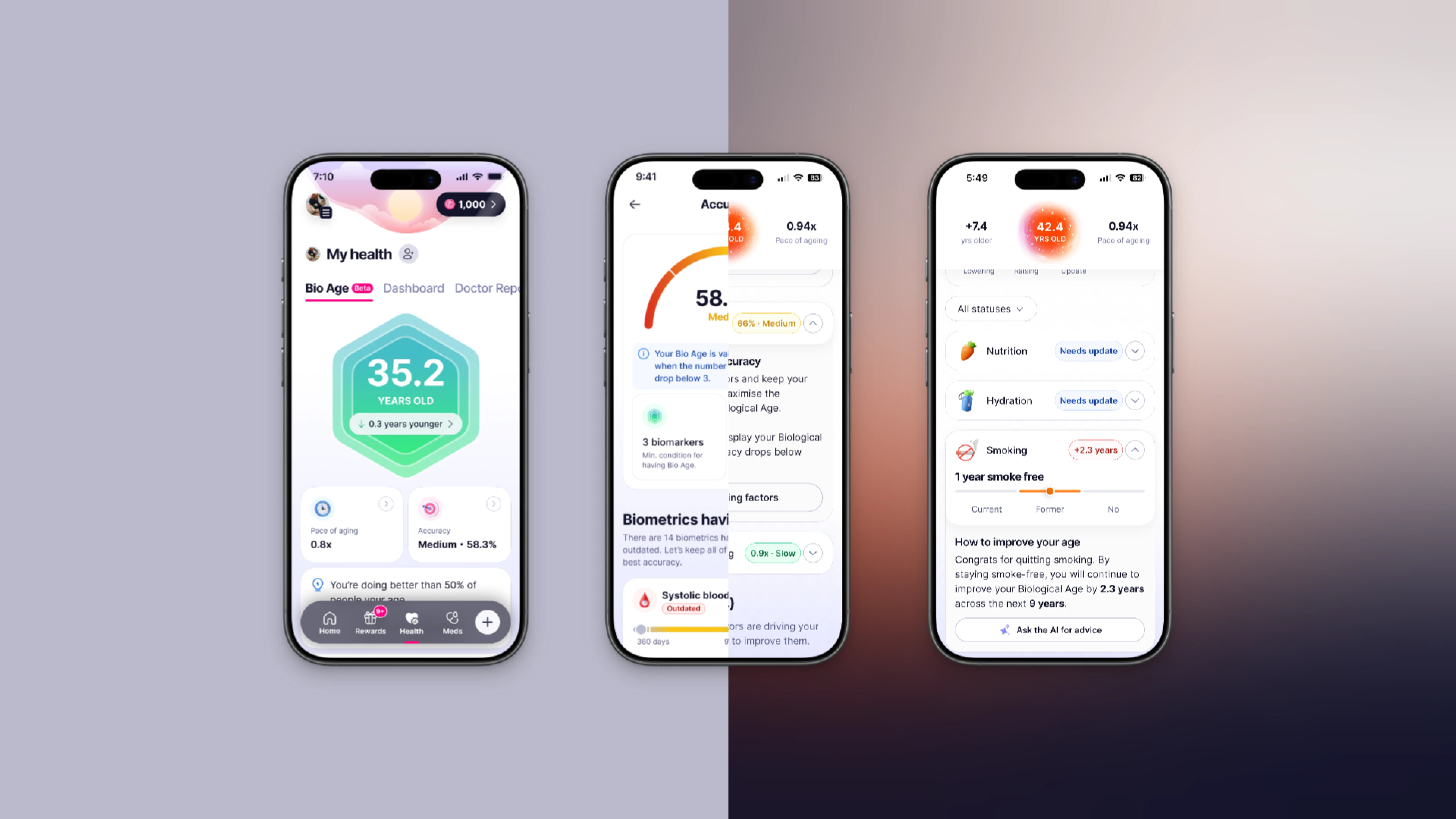
My tenure at Elfie ended before the feature shipped. The final design direction I delivered — the unified health and biological age screen, the category-level factor breakdown, the visible confidence indicator, the onboarding touchpoints — became the foundation the engineering team built from. The concept and structure carried through. Visual details evolved in production, as they typically do.
The shipped feature's App Store description: "How old is your body, really? Biological Age combines 14 science-backed health factors into one clear score that reflects how your body is functioning." The framing matches exactly what the design was built around.
Like this project
Posted Mar 31, 2026
Feature grounded in NHANES research and 14 health factors. Validated with 84 testers — 8.3/10 overall rating, 7.8/10 motivation to change behaviour.