Phobias: A Look into the World of Irrational Fear

Said Qabbaah


Human beings are extremely complex creatures. The way we feel, think, interact, and behave are a result of a sophisticated series of processes that define who we are as individuals, where the environment that we live in also playing a major role in the way we act, interact and react.
Those processes take place on a deep psychological level and involve the complex interaction between certain aspects that we possess such as our sensation, attitude, attention, learning, and memory which all make up the basis of our unique behavioural pattern.
An important element of human behaviour is perception. Perception helps create our experiences of the world around us, and it allows us to act in a certain way within our environment. Our emotional state is an important influencing factor of our perception of reality, especially as a result of a powerful emotion that we all naturally possess, called fear.
Fear is a normal part of human nature. It is a type of emotion that can be managed, is typically not dysfunctional, and is usually based on reason and logic.
The term fear can be defined as:
An intensely unpleasant emotion in response to perceiving or recognising a danger or threat.
While fear is typically considered a 'negative' emotion, it actually serves an important role in keeping us safe as it mobilises us to cope with a perceived danger or threat. Fear can be classified into three main types according to its nature:
Rational fear which occurs when there is a real or imminent threat.
Primal fear which is an innate fear that is programmed into our brains.
Irrational fear of an object, event or a situation which does not make logical sense and cannot be rationally explained.
Irrational fear gives rise to the well-known term of phobia which is derived from the ancient greek word 'phobos' meaning fear.
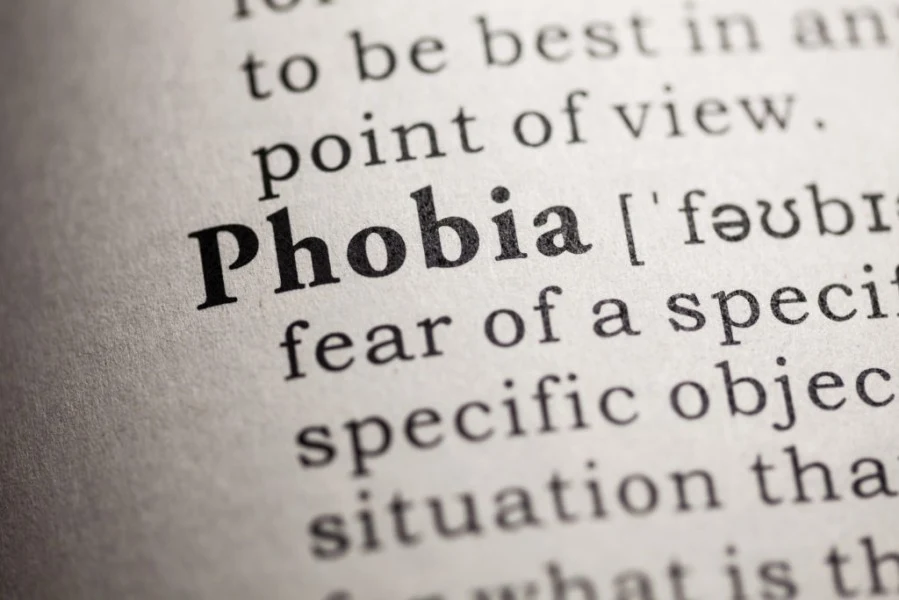
Phobia
The term phobia can be defined as:
An objectively unfounded 'morbid' dread of an element in the environment or particular activity, of such intensity as to evoke anxiety, panic, and adverse physiologic effects, and compel its victim to avoid contact with at virtually any social cost.
A phobia is essentially a persistent, abnormal, and irrational fear of a specific thing or situation that compels one to avoid it, despite the awareness and reassurance that it is not dangerous.
Phobias are a common form of anxiety disorders, generally affecting more females than males. The exact causes of phobias are not precisely known, however it usually starts in childhood as a result of a negative experience related to a specific event or a situation e.g. a dog bite, in addition to a combination of other factors that include genetics and the environment.
Phobias can cause strong physical, mental and emotional responses, and can have a profound psycho-social impact on the affected individual. The effect of a specific phobia typically involves a lasting fear of a certain object or situation that is much greater than the actual risk. Typical symptoms of phobias can include nausea, shakiness, elevated heart rate, clouded thoughts, and a sense of preoccupation with the feared object/ situation.
There are many types of phobias, each one with its own specific name. It is not uncommon to have a phobia of more than one object or situation. Additionally, phobias can also co-exist with other types of anxiety disorders. While some are quite common and are experienced by many people, several types of phobia are very rare and are considered somewhat 'unusual' and even unheard of because they affect only a handful of people.
Types of Phobias
According to the American Psychiatric Association (APA), there are three distinct categories under which phobias can be classified. The different categories are:
Social phobia or social anxiety disorder which is characterised by a fear of social situations.
Agoraphobia which involves an irrational and extreme fear of being in places where escape is difficult e.g. crowded places, open areas or even of leaving one's home.
Specific phobia which involves extreme fear of specific objects, creatures or situations e.g. needles, snakes, spiders, etc.
'Specific phobias' can be further sub-categorised according to the general trigger causing it:
Fear of the natural environment.
Fear of animals.
Fear related to medically-related issues.
Fears related to specific situations.
A phobia can develop as a result of literally anything, from everyday objects and common situations to animals, thoughts and sensations. Below is a list of the common specific phobias in alphabetical order for the purpose of outlining the variety and randomness of phobias:
Acrophobia: Fear of heights
Arachnophobia: Fear of spiders
Astrophobia: Fear of outer space
Belonephobia: Fear of pins and needles
Bibliophobia: Fear of books
Botanophobia: Fear of plants
Catoptrophobia: Fear of mirrors
Chronophobia: Fear of time
Cibophobia: Fear of food
Claustrophobia: Fear of confined spaces
Coulrophobia: Fear of clowns
Dendrophobia: Fear of trees
Dentophobia: Fear of dentists
Domatophobia: Fear of houses or being in a house
Elurophobia: Fear of cats
Equinophobia: Fear of horses
Gamophobia: Fear of marriage
Genuphobia: Fear of knees
Glossophobia: Fear of speaking in public
Heliophobia: Fear of the sun
Hemophobia: Fear of blood
Hydrophobia: Fear of water
Iatrophobia: Fear of doctors
Insectophobia: Fear of insects
Koinoniphobia: Fear of rooms
Koumpounophobia: Fear of buttons
Leukophobia: Fear of the color white
Lilapsophobia: Fear of tornadoes and hurricanes
Lockiophobia: Fear of childbirth
Mageirocophobia: Fear of cooking
Melanophobia: Fear of the colour black
Mysophobia: Fear of dirt and germs
Necrophobia: Fear of death or dead things
Nomophobia: Fear of being without your mobile phone
Nosocomephobia: Fear of hospitals
Octophobia: Fear of the figure 8
Ombrophobia: Fear of rain
Ophidiophobia: Fear of snakes
Ornithophobia: Fear of birds
Papyrophobia: Fear of paper
Pedophobia: Fear of children
Pteromerhanophobia: Fear of flying
Pyrophobia: Fear of fire
Samhainophobia: Fear of Halloween
Scolionophobia: Fear of school
Selenophobia: Fear of the moon
Somniphobia: Fear of sleep
Tachophobia: Fear of speed
Technophobia: Fear of technology
Thalassophobia: Fear of the ocean
Venustraphobia: Fear of beautiful women
Wiccaphobia: Fear of witches and witchcraft
Xenophobia: Fear of strangers or foreigners
Zoophobia: Fear of animals
Zuigerphobia: Fear of vacuum cleaners
Other unusual types of phobias not mentioned in the list above also include:
Thantophobia (fear of losing someone you love).
Chorophobia (fear of dancing).
Athazagoraphobia (fear of being forgotten).
Chrometophobia (fear of money).
Eleutherophobia (fear of freedom).
Phronemophobia (fear of thinking).
A phobia is an emotional extreme that can be experienced by many people and can be due to a vast number of things. It can vary significantly in terms of severity, cause and manifestation, and can have different impacts on different people. From an external perspective, phobias can come across as being quite bizarre and maybe even confusing especially when related to completely harmless and seemingly innocent objects, creatures or situations.
Nonetheless, phobias often represent a serious issue for the affected individual as a result of their distressing and frightening nature. On that note, having a phobia does not necessarily mean that one must treat it, especially if it does not interfere with the daily living, wellbeing or the quality of life in general. However, if a certain phobia does in fact have a significant impact on one's life which prevents them from accomplishing a certain task or achieving a desired goal, then there are fortunately numerous types of therapies that focus mainly on exposure-based treatments, which can provide effective help for getting over the fear, often with long-lasting results.
<Picture(s) credit to the rightful owner(s)>
Like this project
Posted Oct 12, 2025
Our emotional state is an important influencing factor of our perception of reality, especially as a result of a powerful emotion, called fear.
Likes
0
Views
13