CraftLink: Empowering Artisans with Blockchain Technology

Abdulqoyyum Aileru


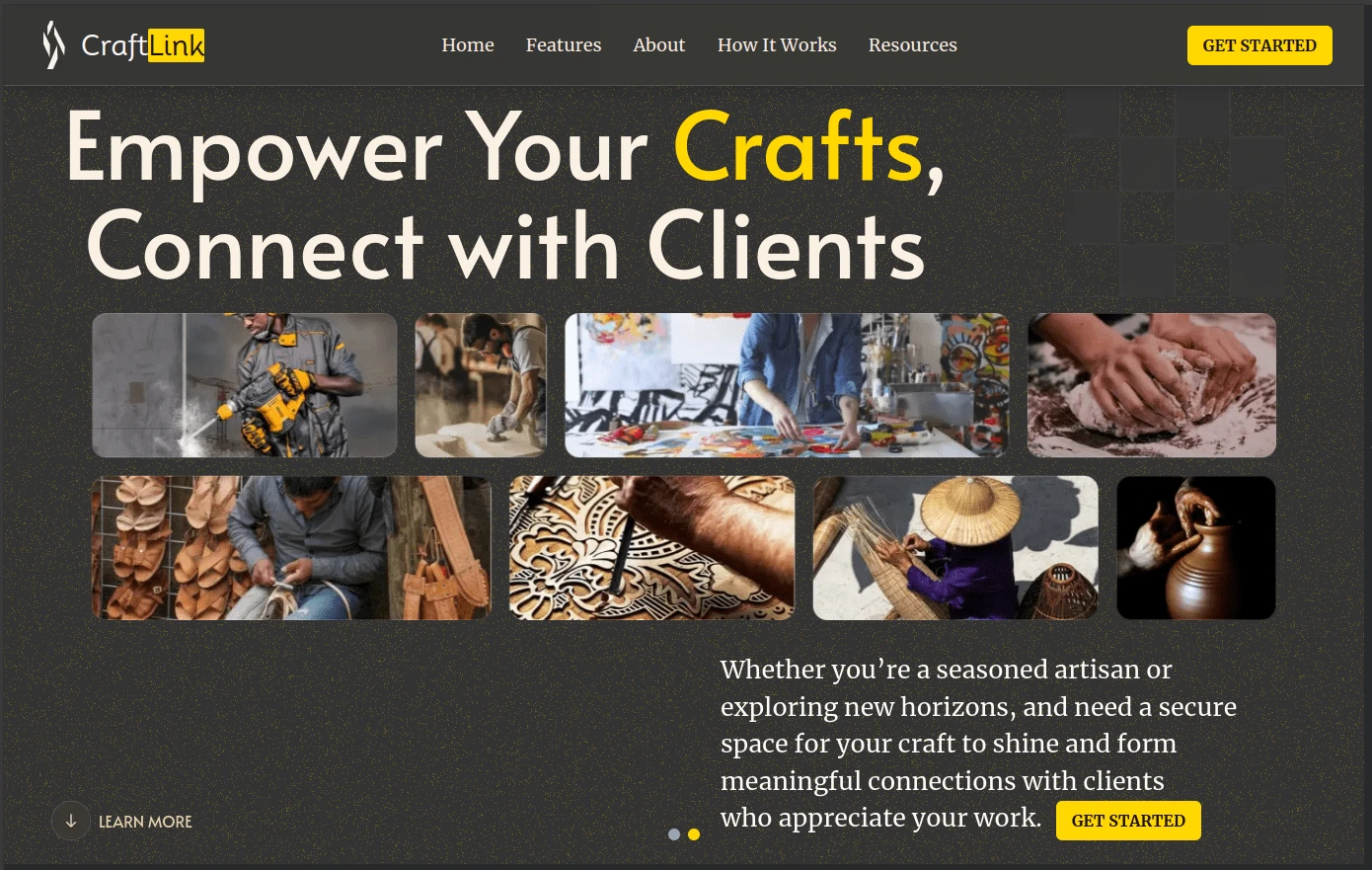
CraftLink: A Decentralized Marketplace Giving Artisans Global Work and Guaranteed Pay
Role: Full-Stack & Smart Contract Engineer
Stack: Next.js, React, Tailwind CSS, Zustand, Solidity, Lisk, Express, TypeScript, MongoDB, IPFS, Cloudinary, Thirdweb, Viem, Ethers.js
The Problem
Millions of skilled artisans and informal workers, including tailors, carpenters, designers, and makers, do excellent work but are locked out of the global economy. Their reputation lives in word of mouth, so it disappears the moment they look beyond their own community. Clients abroad hesitate to hire someone they can't verify, and artisans hesitate to work for clients who might never pay. Cross-border payments add fees, delays, and banking barriers on top of that.
The problem comes down to trust. Without a way to prove their track record or guarantee payment, talented workers stay invisible.
The Vision
CraftLink set out to make trust built-in rather than assumed. The idea was a borderless marketplace where clients can post work, artisans can apply based on their skills, and payment and reputation are both guaranteed by blockchain rather than by a middleman. Just as important, the platform had to feel as simple as any modern app, because most of its users would never have touched a crypto wallet.
My Role
I worked across the full stack, from the smart contracts that hold and release funds, to the backend services and relayer, to the interface artisans and clients use every day. My focus was making blockchain guarantees invisible to the user while keeping them fully verifiable underneath.
The Solution
Escrow that protects both sides. When a client hires an artisan, payment is locked in a Solidity smart contract on Lisk. Funds are released only when the job is completed. The client knows the money won't move until the work is delivered, and the artisan knows the money exists before starting. Neither has to trust the other, or the platform.
Gasless transactions for real-world users. Asking a tailor in Lagos to buy cryptocurrency just to pay network fees would kill adoption on day one. I built a custom relayer using meta-transactions, so users sign actions while the relayer covers gas. Users interact with on-chain features without ever holding tokens for fees.
On-chain portfolios artisans truly own. Completed gigs, deliverables, and reviews make up an artisan's reputation, and on CraftLink that reputation belongs to them. Portfolio media is stored on IPFS, and work history is anchored on-chain using Merkle trees. This creates tamper-proof proof of work that stays with the artisan even beyond the platform.
Efficient verification with Merkle trees. Writing every record to the blockchain individually would be slow and expensive. Instead, the TypeScript and Express backend batches transactions and deliverables into Merkle trees and commits only the root on-chain. Any single record can still be proven authentic, at a fraction of the cost.
On-ramp and off-ramp built in. Artisans need money they can spend, not just tokens. CraftLink supports moving between local currency and crypto, so workers can get paid globally and withdraw locally.
A familiar, polished experience. The frontend is built with Next.js, React, and Tailwind CSS, with Zustand managing state for a fast, responsive interface on any device. Wallet connection through Thirdweb supports MetaMask, Coinbase Wallet, and WalletConnect, while Viem and Ethers.js handle contract interactions behind the scenes.
Architecture at a Glance
CraftLink uses a hybrid on-chain and off-chain design, putting each kind of data where it fits best. Smart contracts on Lisk handle what must be trustless, such as escrow and proof of work. MongoDB stores searchable data like gig listings and profiles for fast queries. IPFS holds portfolio media in decentralized storage, and Cloudinary optimizes images for quick loading. The frontend is deployed on Vercel and the contracts on Lisk Sepolia.
The Outcome
CraftLink shows that blockchain can solve a real human problem without making users learn blockchain. Artisans get access to global clients, guaranteed payment, and a portable reputation they control. Clients get verifiable talent and protection for their money. The platform removes the middleman's role in trust while keeping the experience as simple as any Web2 marketplace.
What This Shows
I can design and ship complete Web3 products: secure smart contracts, scalable backend infrastructure, and user experiences that bring non-technical users on-chain smoothly. I care about building technology that opens doors for people who have been left out.
Like this project
Posted Feb 25, 2025
Built a blockchain backend with Merkle tree, Ethereum smart contracts, integrated Redis caching, and designed a modern UI with Next.js, Tailwind CSS, and Framer
Likes
1
Views
20
Timeline
Nov 20, 2024 - Feb 25, 2025