Turning research into an evidence-led MVP

Jenna Patrick


Turning research into an evidence-led MVP
This is a product thinking case study, focused on the discovery process rather than the final interface. Exploring how research, behavioural science and AI informed the early direction of a new product concept.
Like all good design should, this project began with a question rather than a solution.
Rather than jumping straight into product design, I wanted to understand why existing approaches work well for some people yet consistently fail others. Instead of validating an idea, the goal was to explore the problem space, challenge assumptions and define whether there was an opportunity worth pursuing.
This case study focuses on the discovery process used to explore that question, demonstrating how research, synthesis and product thinking informed the early direction of a new product concept.
Some research artefacts, product principles and implementation details have been intentionally simplified or omitted while the concept continues to evolve.
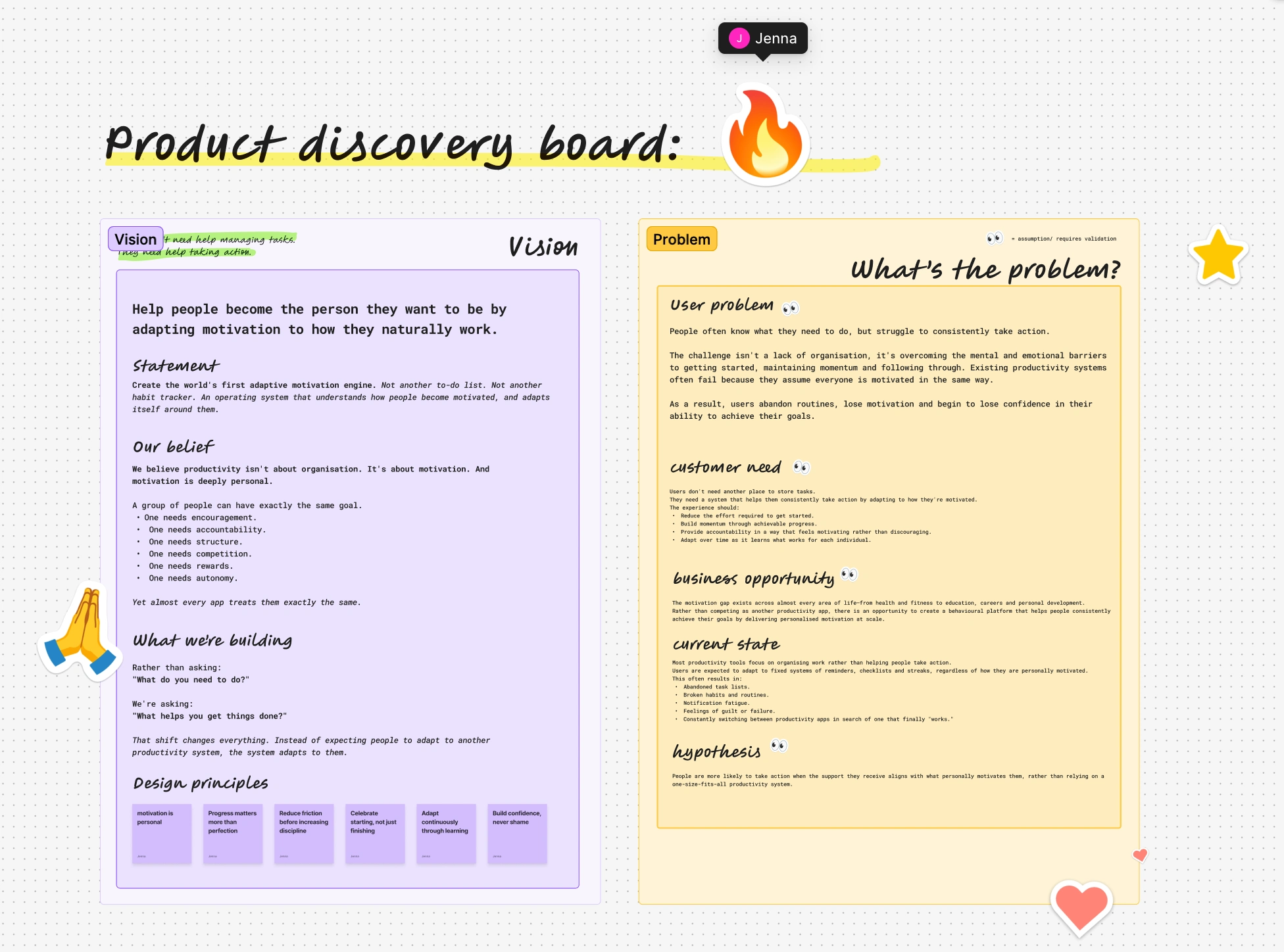
Understanding the opportunity
Every product begins with assumptions.
Before exploring solutions, I deliberately focused on understanding the behaviours, motivations and challenges influencing how people approach everyday tasks. Rather than asking “What should I build?”, I wanted to understand “What problem is actually worth solving?”
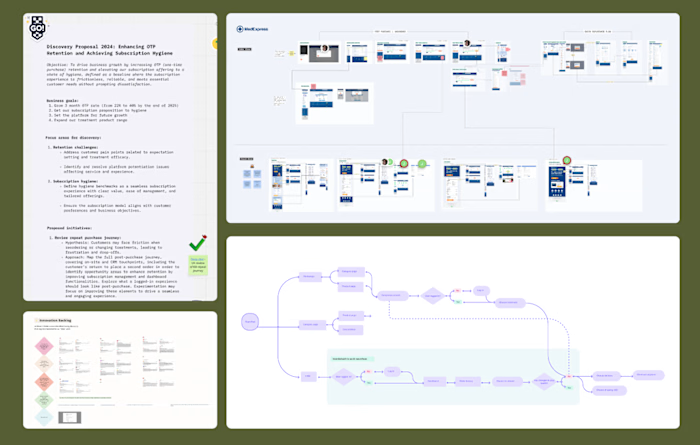
My discovery combined behavioural research, existing literature, competitor analysis and insight synthesis to build a deeper understanding of the opportunity before considering potential solutions.
Alongside my experience designing digital healthcare products, my approach was also informed by Mental Health First Aid training and Autism in the Workplace certification with the National Autistic Society. While not clinical qualifications, they encouraged me to consider behaviour, executive function and cognitive load through a broader, more human-centred lens.
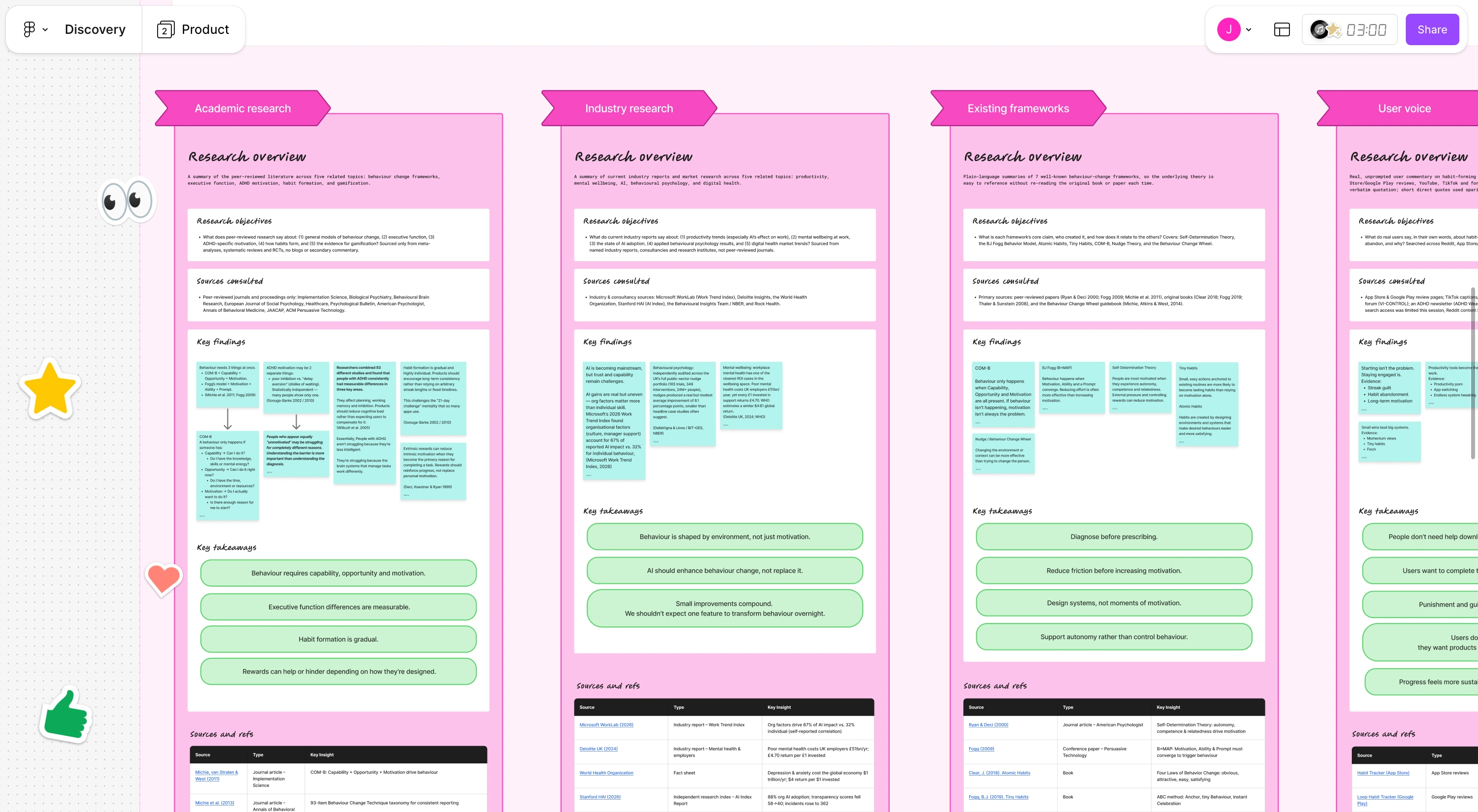
Concepts for the online editorial content
Making sense of the research
Discovery generated a significant amount of information, but the objective was never to validate an existing idea.
Instead, I focused on identifying recurring patterns, contradictions and unanswered questions that could help shape the product direction.
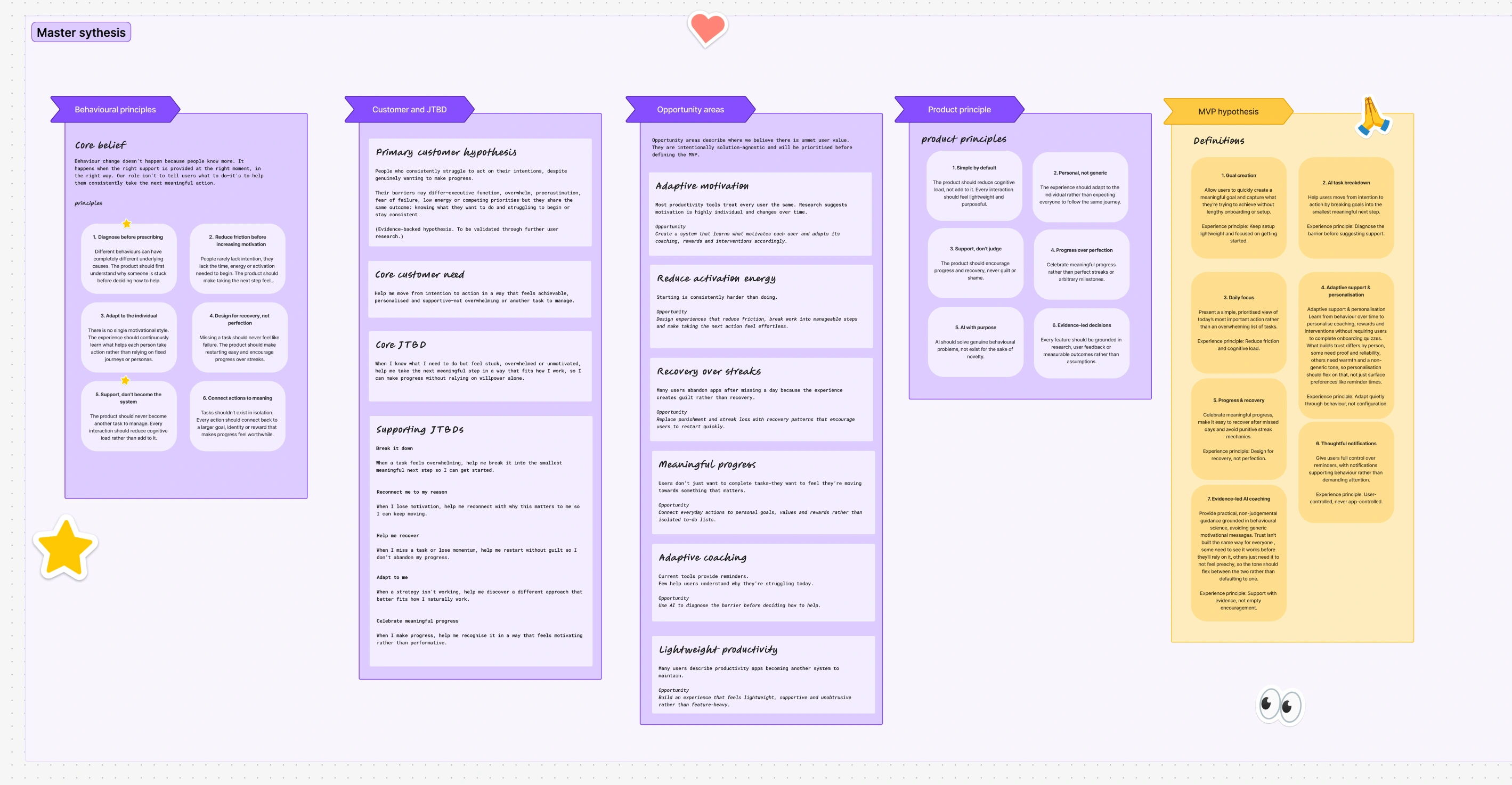
Research was synthesised into themes, opportunity areas and a set of product principles that created an objective framework for evaluating ideas throughout the project. Rather than relying on instinct, every decision could be traced back to evidence gathered during discovery.
Perhaps most importantly, the research challenged several assumptions I’d made at the outset, ultimately leading the concept in a very different direction than originally anticipated.
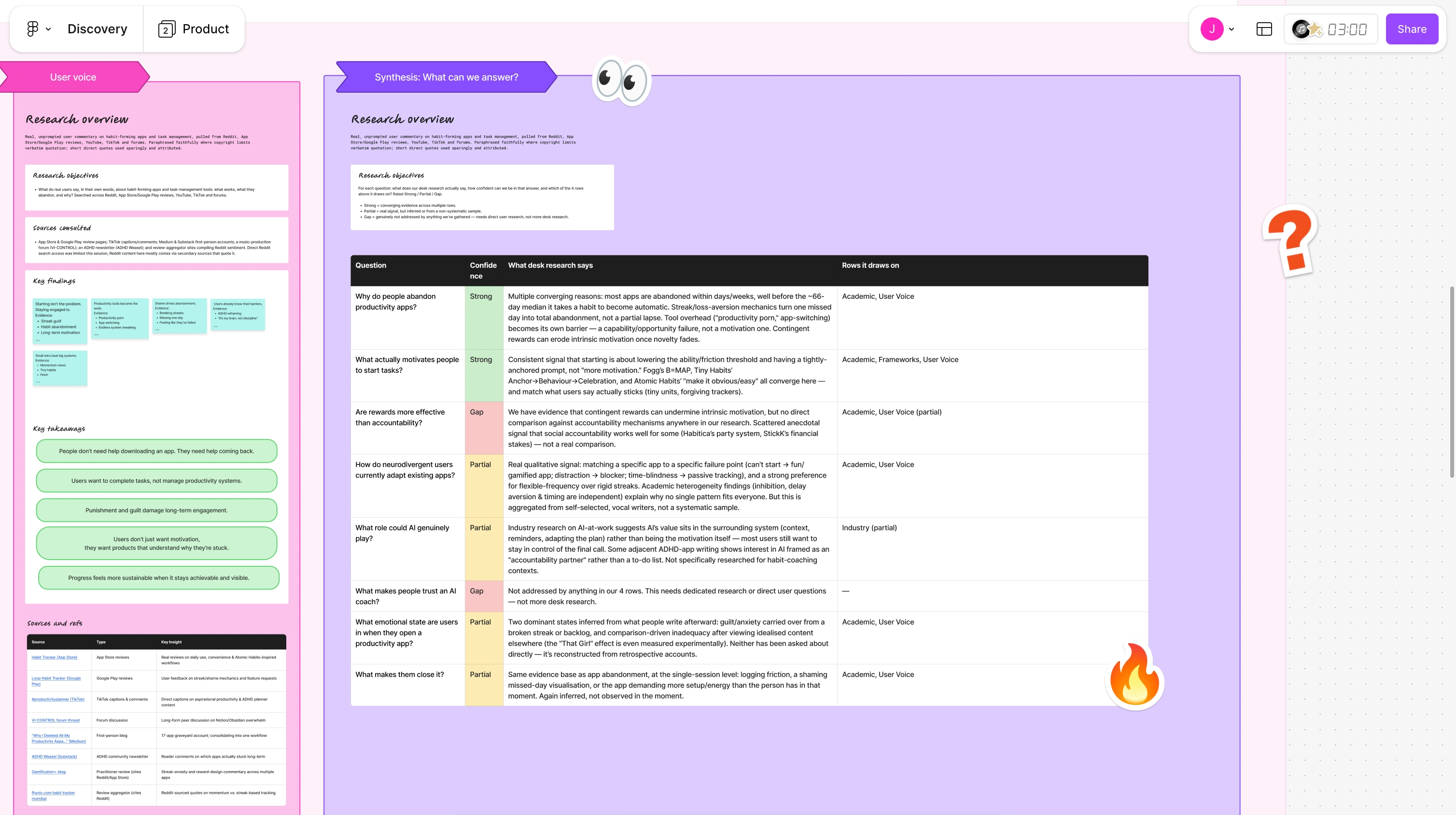
Defining the product direction
Rather than attempting to solve every challenge uncovered during discovery, I focused on defining the smallest opportunity worth exploring further.
Every concept was evaluated against the research, helping prioritise what deserved further investigation while deliberately resisting the temptation to over-engineer the product too early.
The outcome wasn’t a detailed feature roadmap.
It was confidence that the right opportunity had been identified, supported by a clear direction for continued exploration and validation.
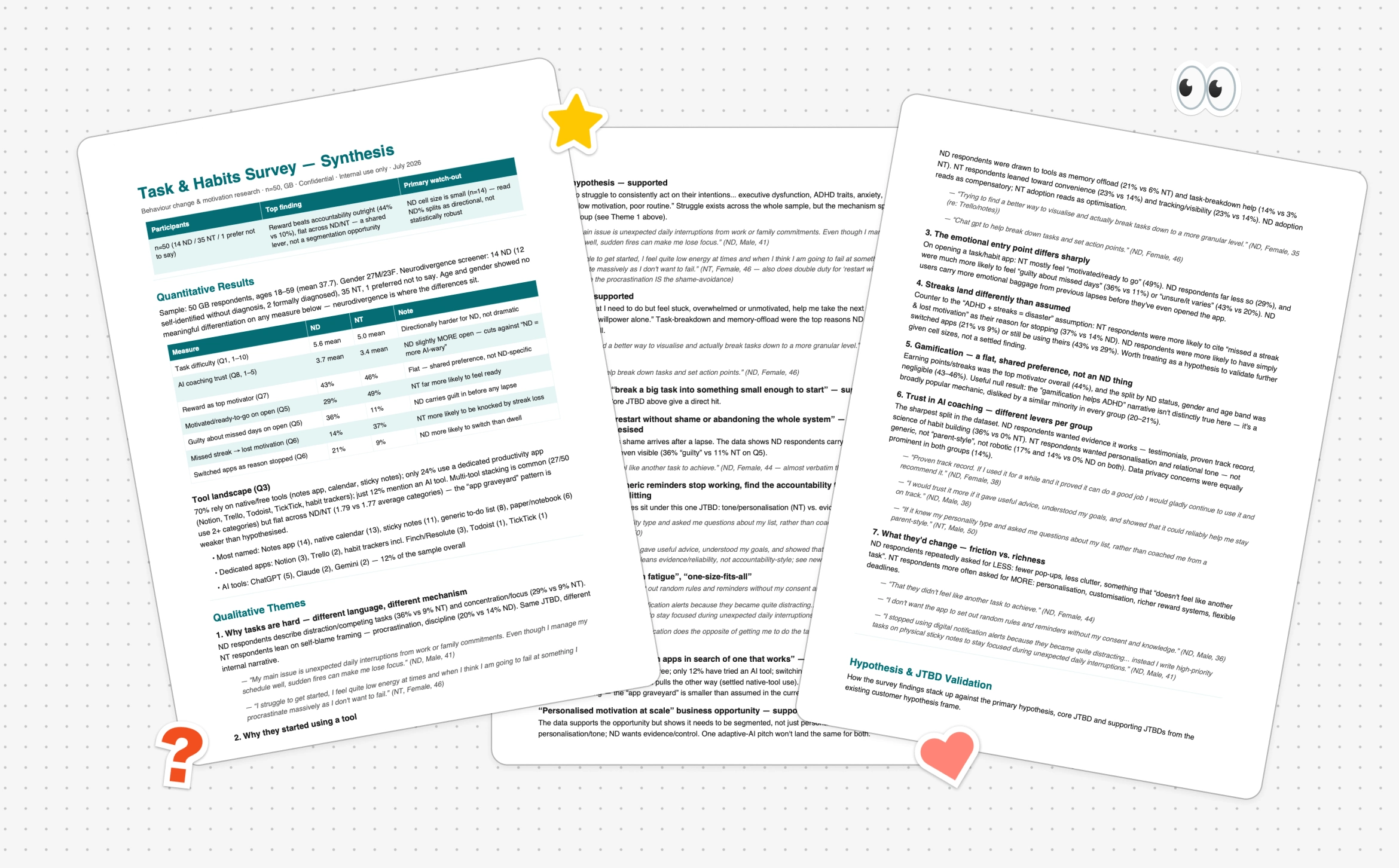
Exploring the experience
Only once the product direction felt sufficiently understood did interface exploration begin.
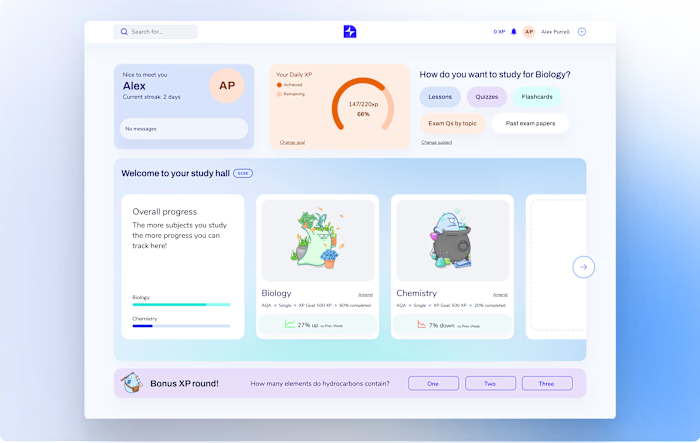
Rather than refining visual design, this stage focused on testing information architecture, interaction patterns and overall product structure. The objective wasn’t to perfect screens, but to explore how the experience could support the behaviours identified throughout discovery.
The interface became another research tool, helping validate ideas before investing in higher-fidelity design.
Reflection
This project reinforced something I believe strongly as a product designer:
The quality of a product is often determined long before high-fidelity design begins.
Investing time in understanding the problem, challenging assumptions and synthesising evidence resulted in a far clearer and more focused product direction than I could have achieved by jumping straight into solutions.
While the concept continues to evolve, the most valuable outcome wasn’t producing polished interfaces, it was building confidence that the product is solving a meaningful problem worth pursuing.
Product Discovery | Research & Synthesis | Product Strategy | Behavioural Design | Product Definition | UX & Prototyping
Like this project
Posted Sep 14, 2023
Role: Lead Product Designer // Outcomes: Product Discovery, Research & Synthesis, Product Strategy, UX Concept
Likes
0
Views
30
Timeline
Jun 29, 2026 - Ongoing