Designing an AI-powered storytelling experience

Jenna Patrick


Designing an AI-powered storytelling experience
Exploring how AI could create more meaningful bedtime stories through personalisation, imagination and shared moments.
Moonlet explored how AI could transform bedtime stories into more personal experiences, creating moments of connection, imagination and memories that families could revisit together.
Rather than replacing traditional storytelling, the concept explored how technology could enhance it, allowing stories to feel unique to every child while encouraging curiosity, comfort and imagination through a beautifully crafted digital experience.
This self-initiated project became an opportunity to explore the intersection of AI, storytelling and product design, balancing emotional design with intuitive interactions and a cohesive visual identity.
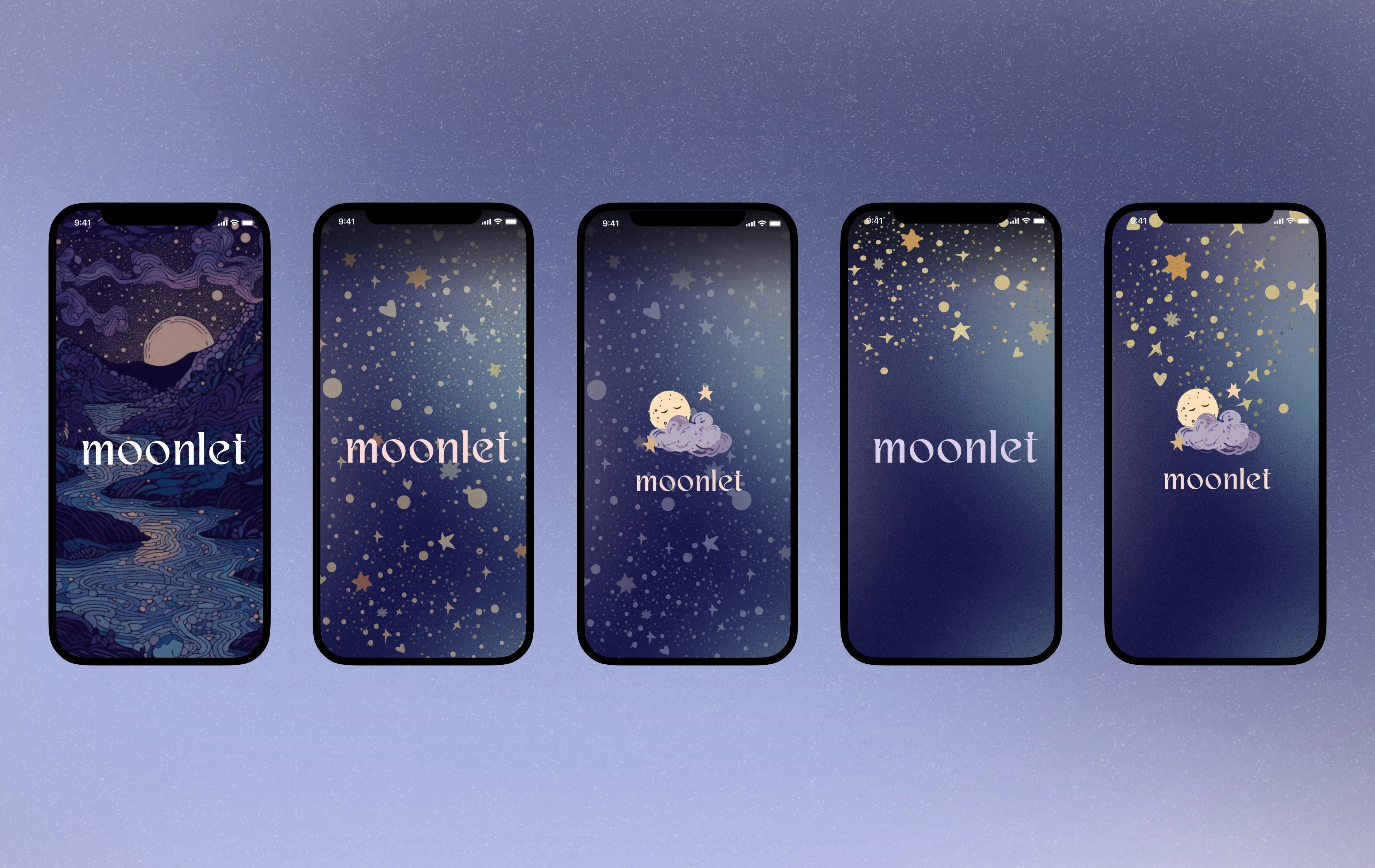
introducing moonlet
Understanding the experience
Before exploring interfaces, I wanted to understand what makes bedtime stories feel memorable.
Rather than focusing purely on functionality, I explored how parents and children might move through the experience together, identifying opportunities where personalisation could strengthen emotional connection while keeping the interaction simple and reassuring.
Early sketches helped establish the core product flow and provided a foundation for exploring how AI could support the storytelling experience.
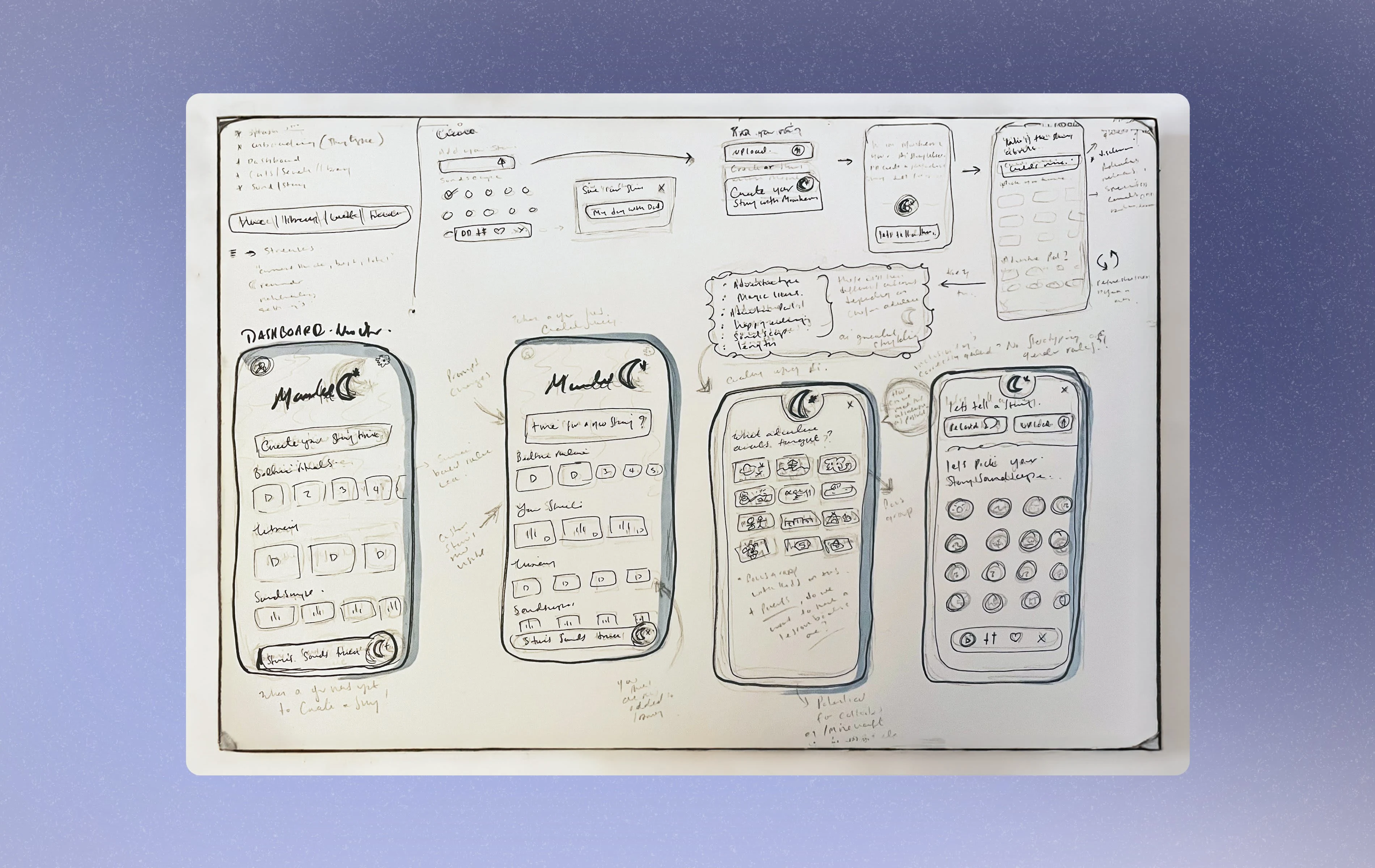
Exploring the core bedtime journey before designing the interface.
Shaping the product
With the experience mapped out, I began exploring how onboarding, story creation and navigation could work together to create a seamless product experience.
The focus was on reducing complexity while ensuring the product remained playful, intuitive and easy to use for both parents and children.
Every iteration balanced functionality with delight, ensuring the interaction never distracted from the stories themselves.
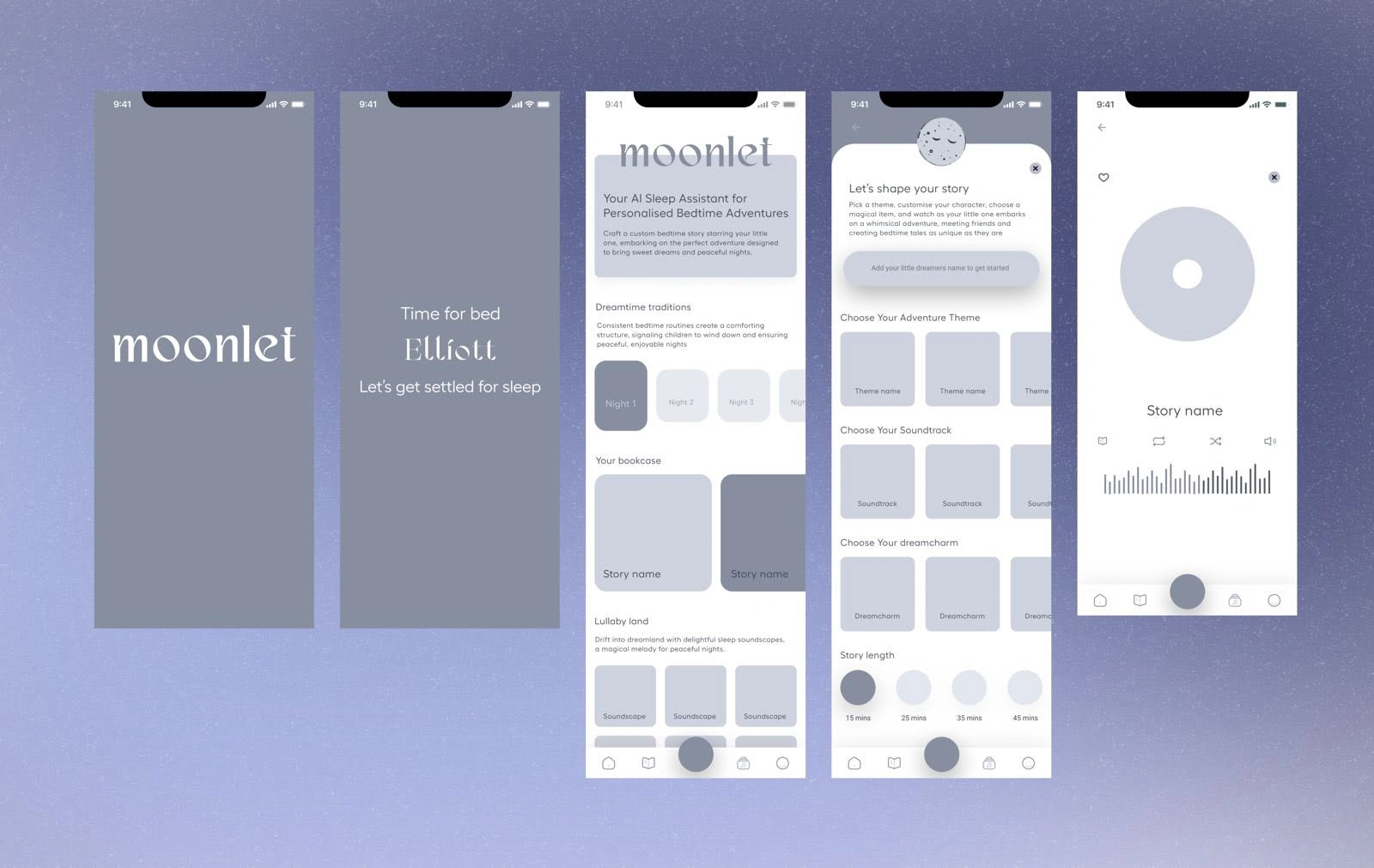
Exploring how interaction design could support a simple, engaging storytelling experience.
Creating the visual language
The visual identity was designed to evoke warmth, curiosity and imagination.
From typography and illustration to colour and motion, every decision aimed to create an experience that felt calm enough for bedtime while remaining magical enough to spark a child’s imagination.
Rather than decorating the interface, the visual language became part of the storytelling itself.
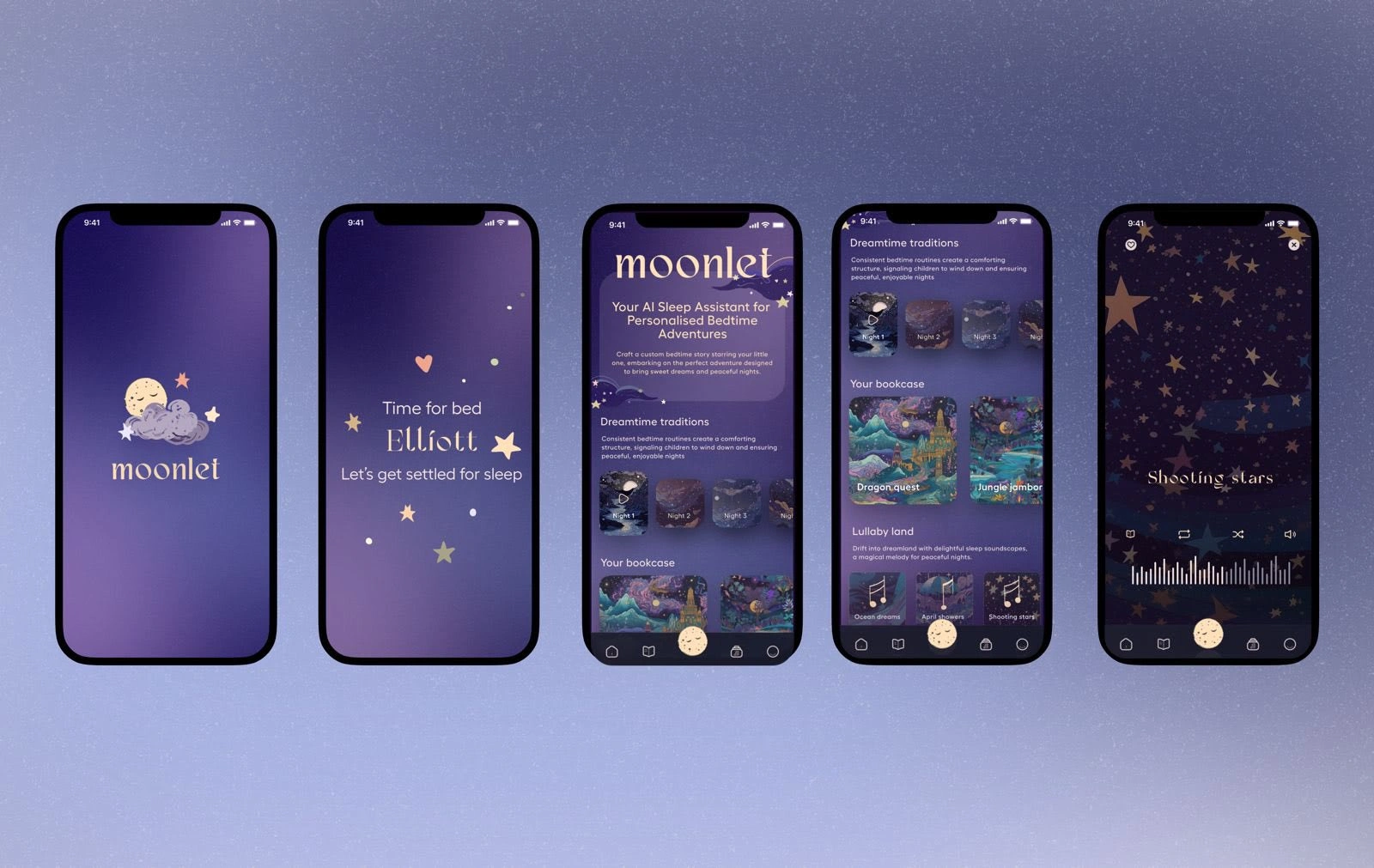
Bringing interaction, storytelling and visual design together into a cohesive product experience.
Bringing the concept to life
Once the experience and visual language had been established, the final interface brought together product thinking, interaction design and branding into a cohesive concept.
The result was an experience designed to feel intuitive for parents while creating moments of delight, anticipation and wonder for children.
Reflection
Moonlet reinforced the importance of designing around human experiences rather than technology.
While AI enabled the concept, it was never intended to be the hero. The real opportunity lay in using technology to strengthen moments of connection, encourage imagination and create experiences families would genuinely want to return to together.
Product Design | UX Strategy | Interaction Design | AI Concept Design | Visual Identity | Prototyping
Like this project
Posted May 16, 2024
Role: Product Designer & Creative direction // Outcomes: UXR, UX/UI Design, Brand design
Likes
0
Views
102
Timeline
Dec 11, 2024 - Mar 11, 2025