Treatwise AI — End-to-End Medical Platform Design

Mustofa Al-Ameen Mustafa


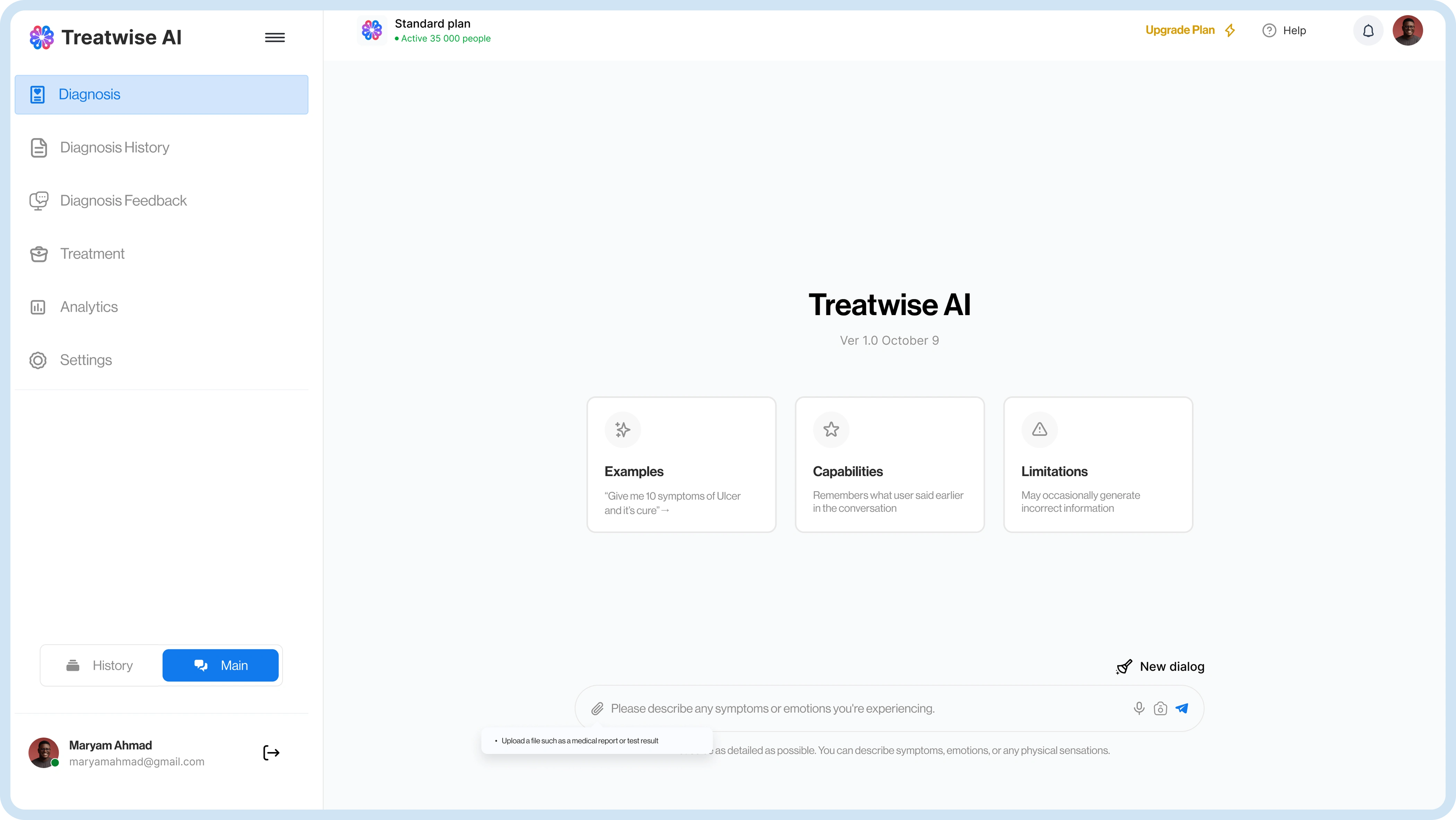
Treatwise AI — Designing a Zero-Training Medical AI Platform
Role: Product Designer (co-lead with Maryam Ahmad)
Scope: End-to-end UI/UX design, research, design system, shipped product
Timeline: 6–7 months
Team: 2 designers, 1 founder/PM, development team
Status: Live at treatwise.ai
The Problem
Most medical AI tools feel clinical in the wrong way: cold interfaces, dense forms, and steep learning curves. For a platform helping people in high-stress health situations, that friction isn't just a UX problem. It's a trust problem.
Treatwise AI's founder came to us with a clear goal: build an AI-powered symptom analysis platform that anyone could use without training. The product needed to feel safe, fast, and credible from the first interaction.
My Role
I was hired alongside Maryam Ahmad, who served as team lead. In practice, we split the design work evenly across the full product surface. The founder managed the product roadmap and priorities directly, functioning as PM, while a separate dev team handled implementation.
My responsibilities spanned the entire design lifecycle: auditing existing healthcare flows for research, building information architecture, designing high-fidelity screens, iterating based on feedback, and delivering production-ready assets to engineering.
Research and Discovery
Before opening Figma, I audited 50+ healthcare app flows through Mobbin to understand where existing products created friction in symptom reporting. The patterns were consistent: too many form fields upfront, unclear next steps after input, and interfaces that felt transactional rather than supportive.
These findings shaped the core design direction: conversational over clinical, progressive disclosure over upfront complexity.
The Key Pivot
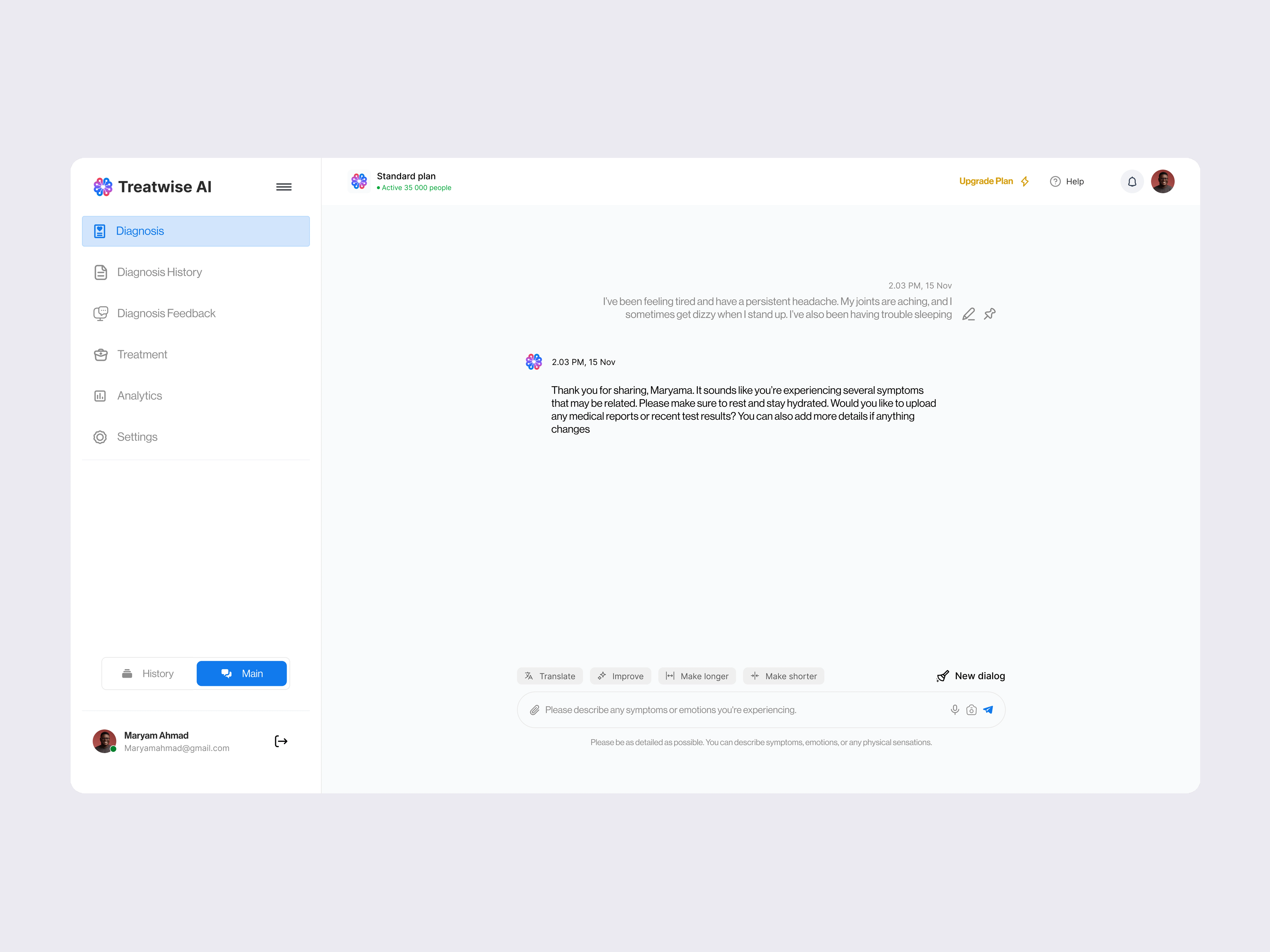
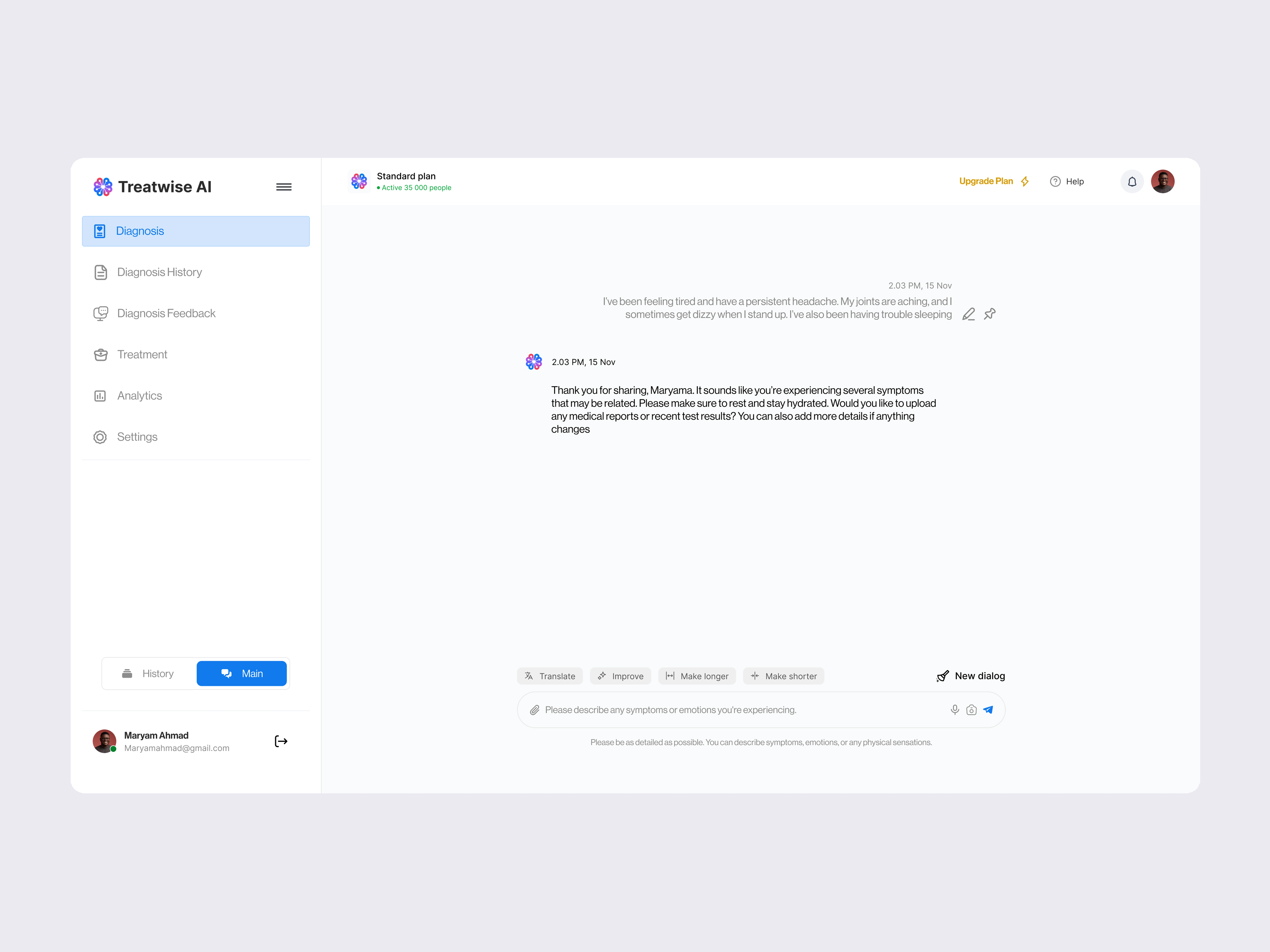
The original symptom input was a structured form. Fields for symptoms, duration, severity, history. It was thorough, but testing revealed the problem: users in a health-stress moment don't want to fill out a medical intake form. They want to describe what's happening in their own words.
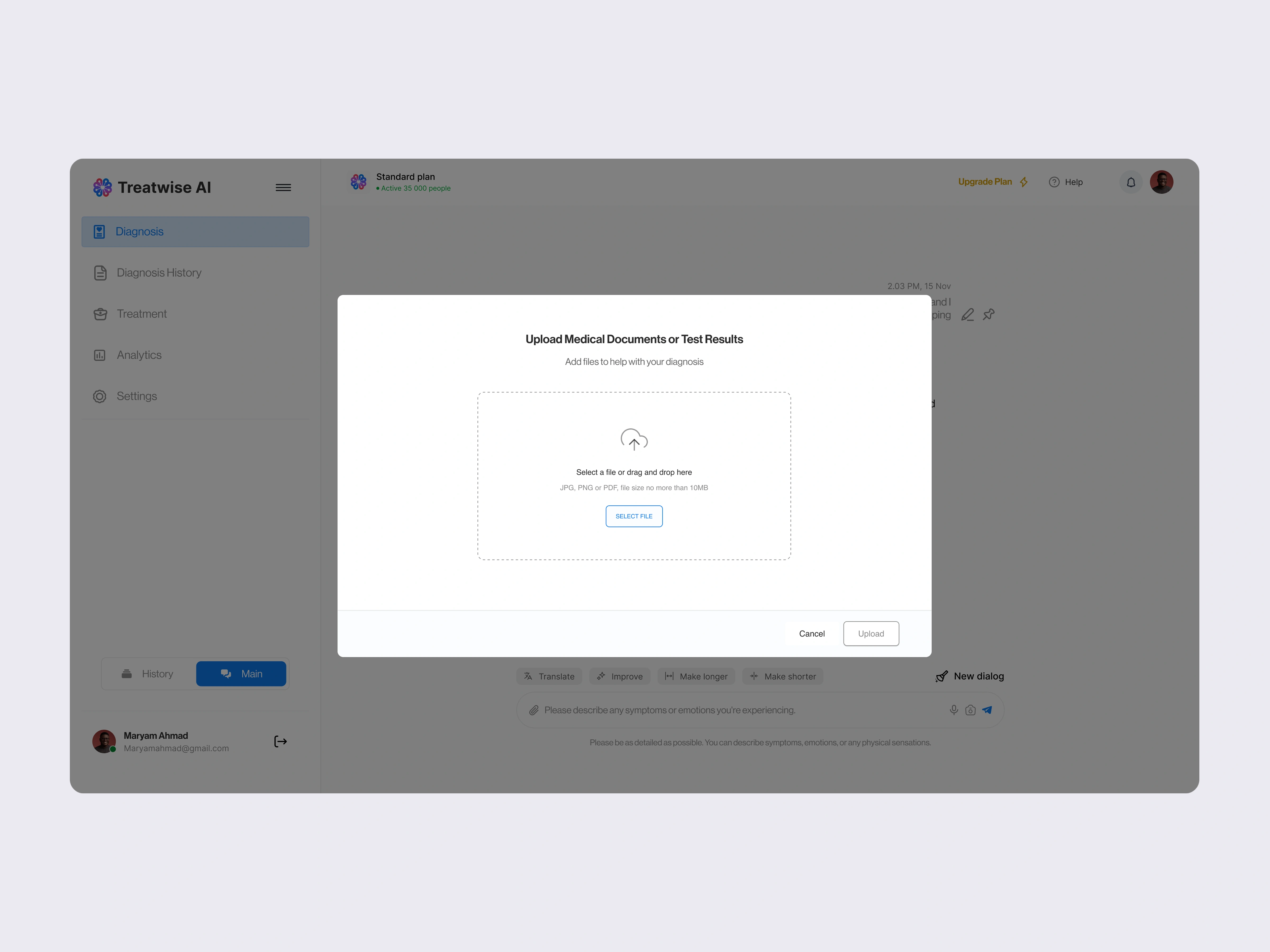
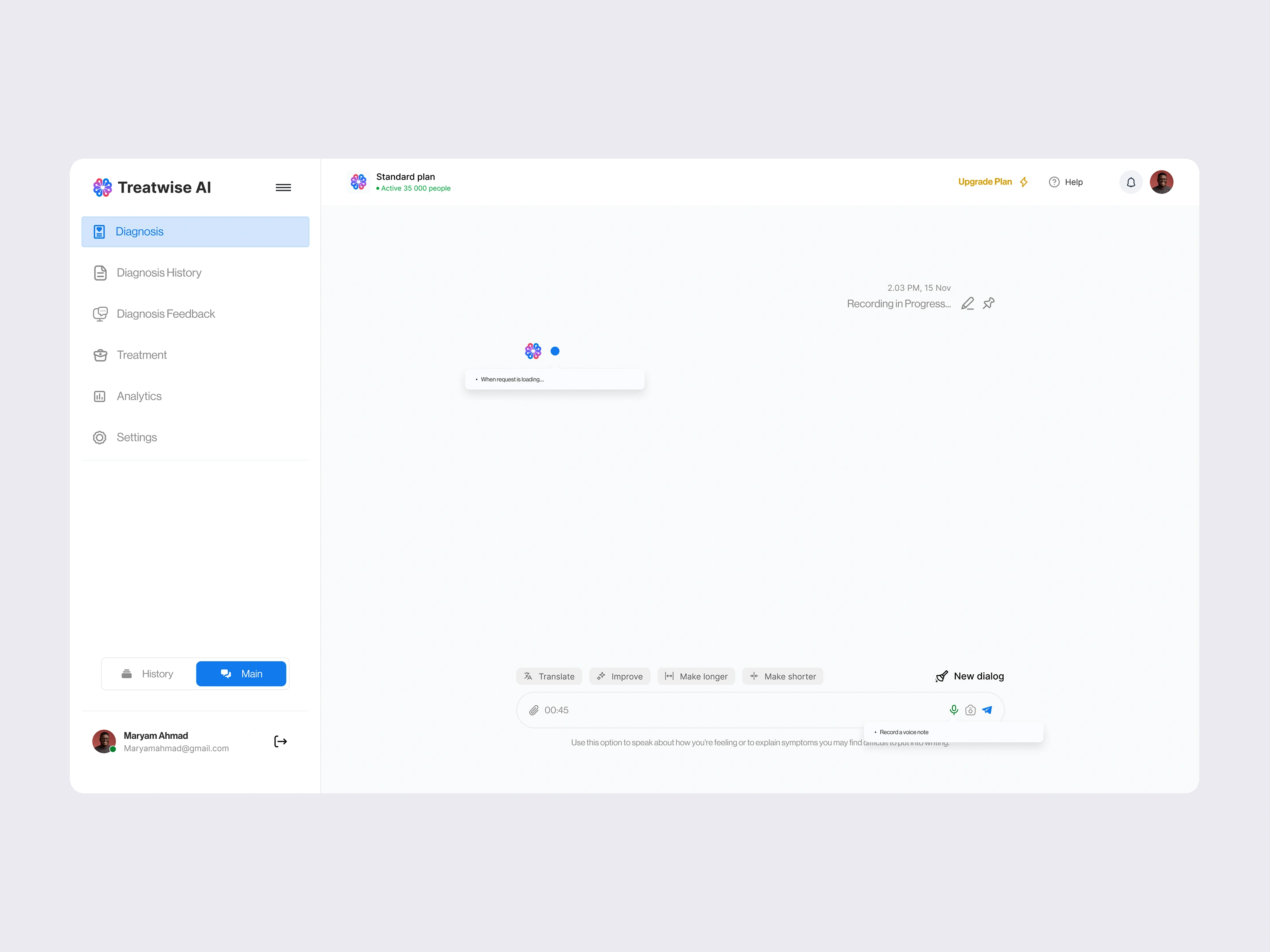
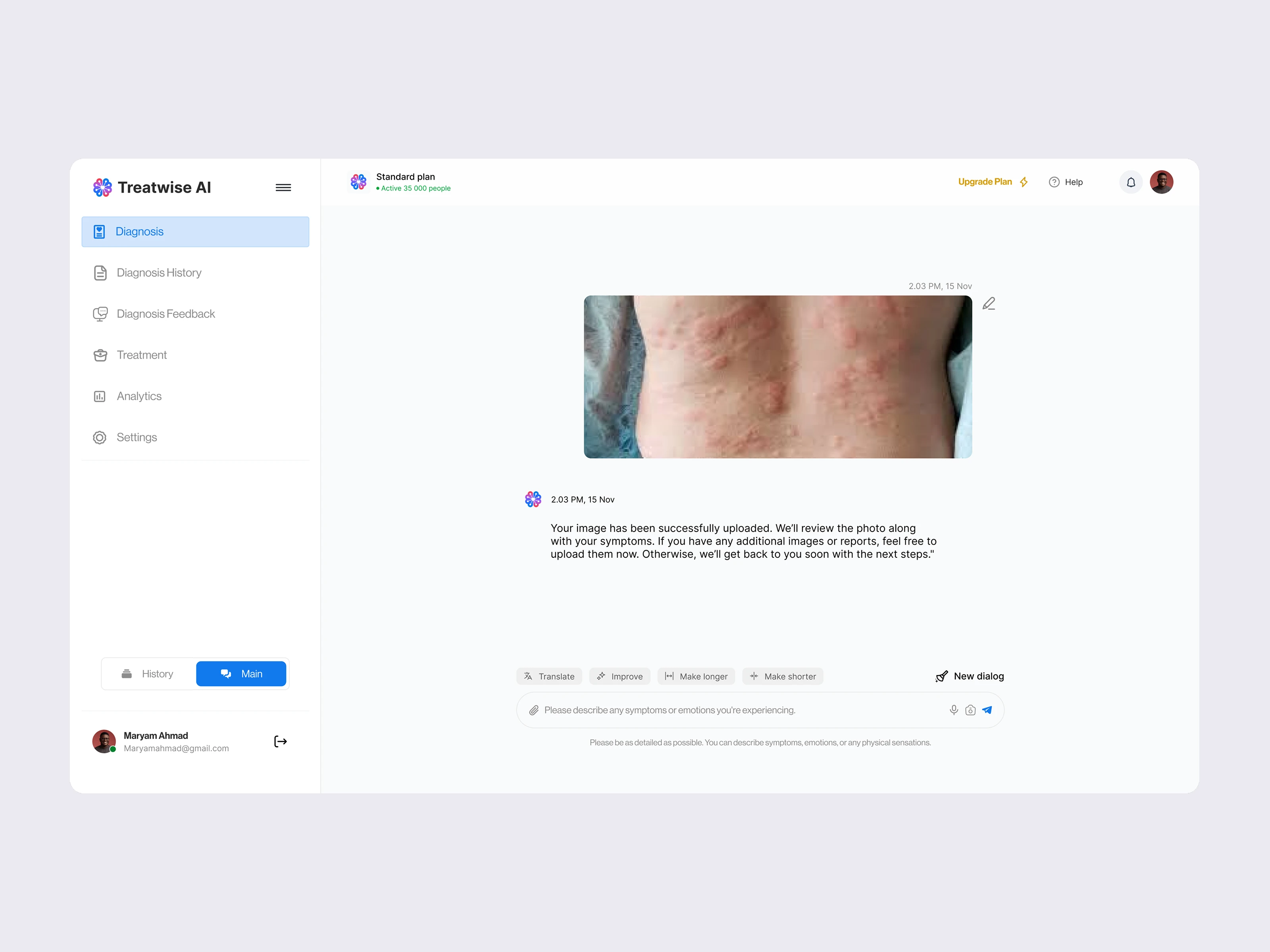
We switched to a conversational-first input model. The interface accepts natural language (symptoms, context, even emotional state) and processes it into structured clinical data on the backend. This was the single biggest design decision on the project, and it changed the entire interaction model.
Design Decisions
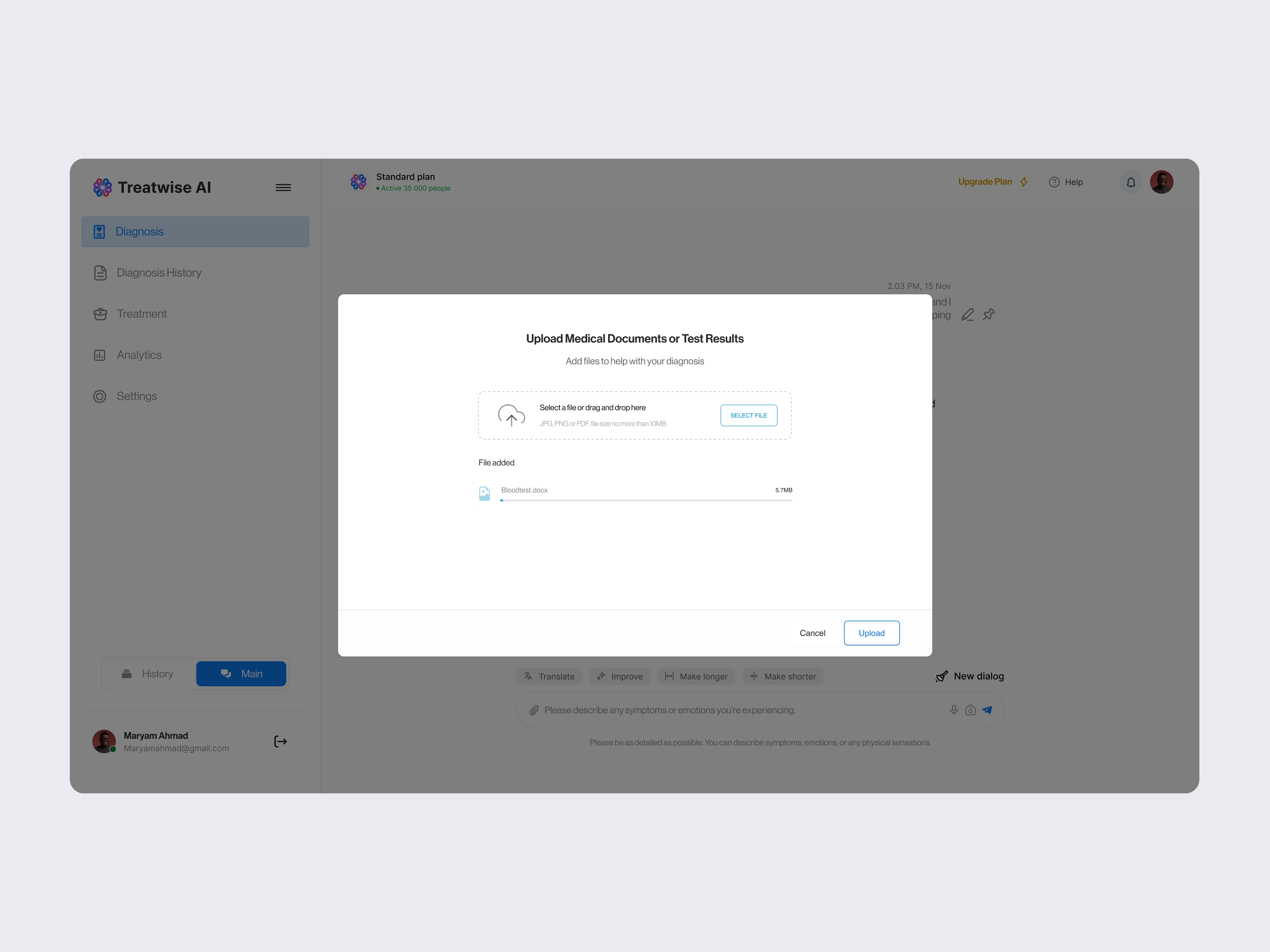
Postel's Law as a design principle: Liberal in what the input accepts (free text, voice, fragmented descriptions), conservative in how it outputs clinical-grade structured data. This let us build trust on both sides: users feel heard, clinicians get usable information.
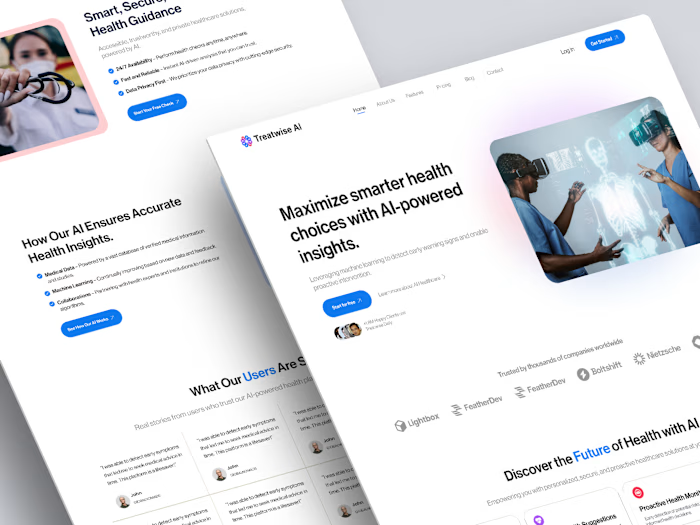
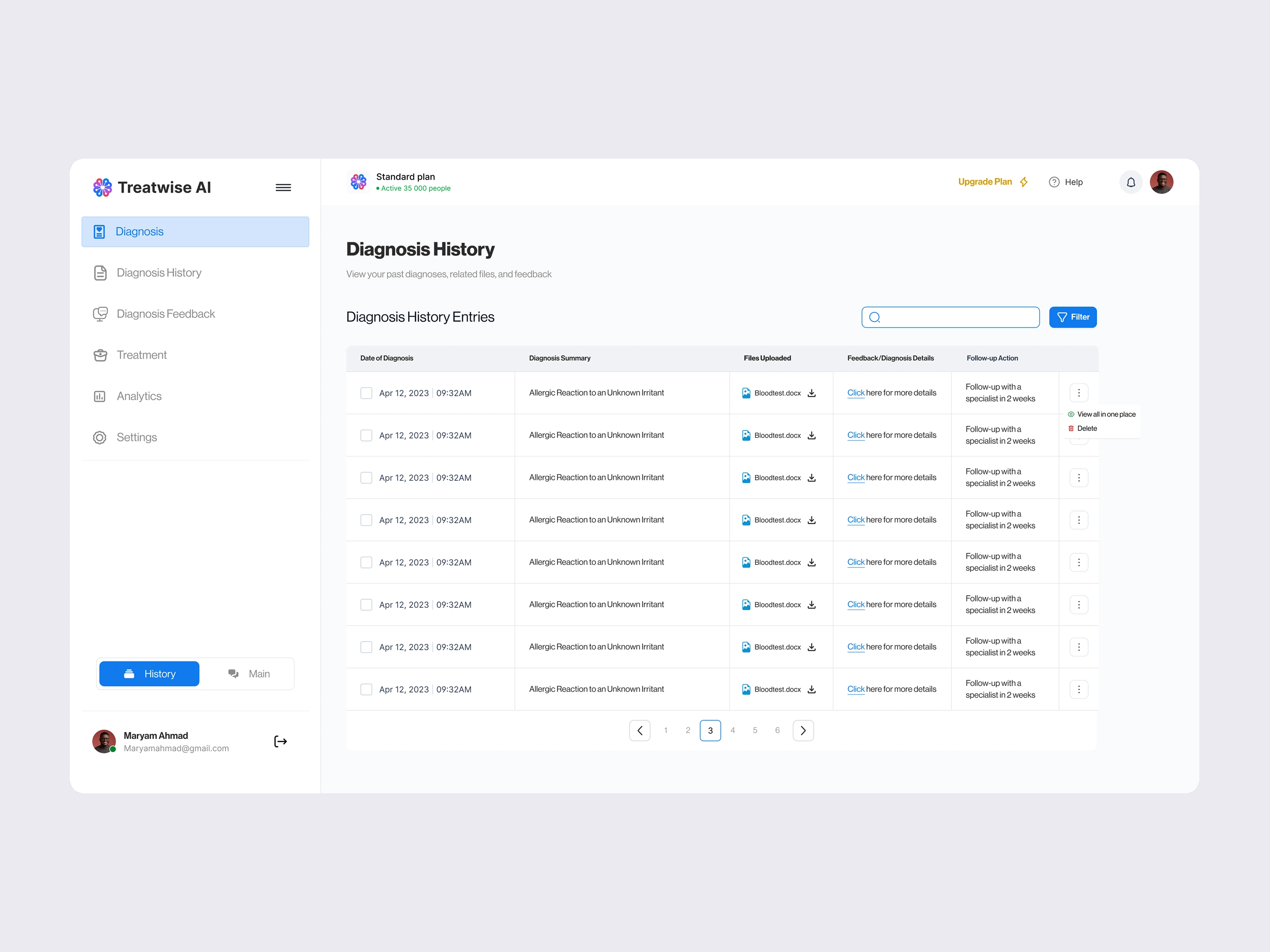
"Medical Blue" visual system: We paired a clinical blue palette with fintech-style card components. The goal was authority without coldness. Healthcare products need to feel credible; SaaS products need to feel modern. We needed both.
Modular architecture: The design system was built for scale. Treatment modules, analytics dashboards, and additional clinical tools can bolt on without redesigning the core experience. This was a deliberate choice given the founder's product roadmap.
Outcome
The webapp shipped and is live at treatwise.ai. The landing page was also designed during this engagement but hasn't launched yet, as the team prioritized getting the core product into users' hands first.
Over 6–7 months, we took this from research through to a production product. The work involved real collaboration with a founder acting as PM, a dev team building what we designed, and continuous iteration based on what we learned along the way.
Like this project
Posted Apr 7, 2026
Designed and shipped a zero-training medical AI platform over 6 months, from research through production.
Likes
3
Views
45