Farm data reconciliation system development

Natalia Bukhtiiarova


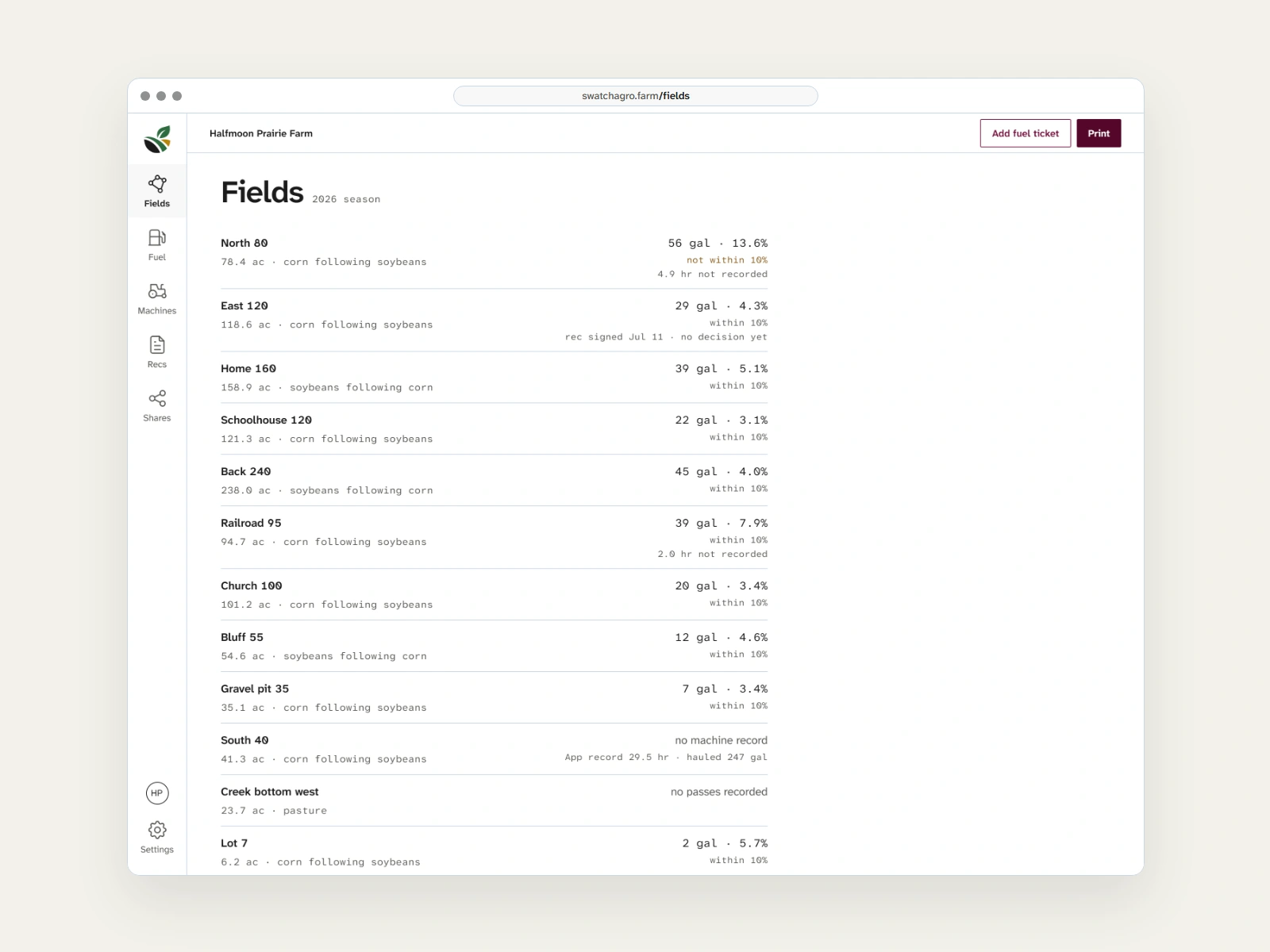
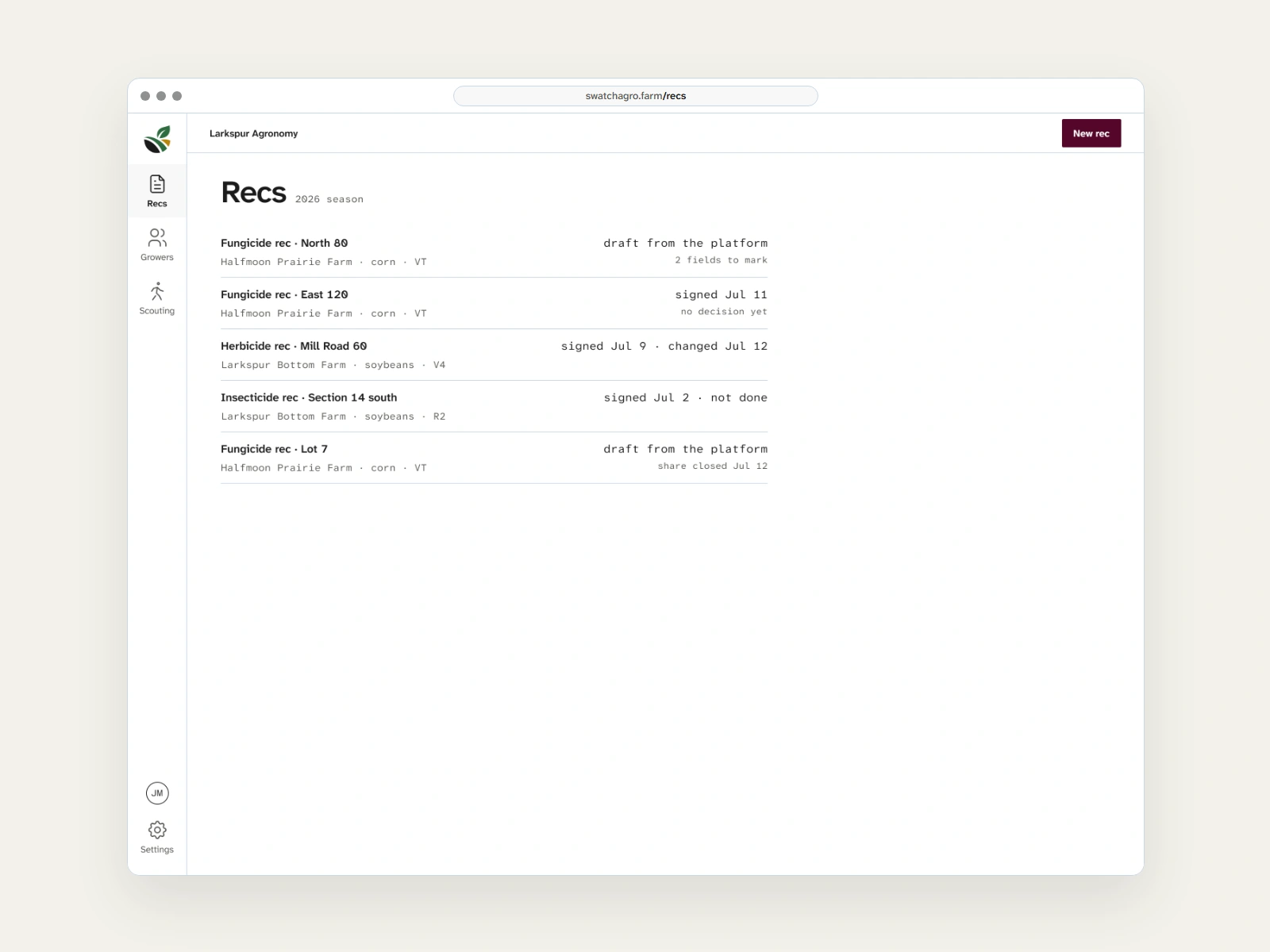
Swatchagro is one field record in two views: the farmer's cost sheet and the agronomist's rec (his written recommendation), with a source on every figure. The sheet sets the fuel the machines recorded beside the fuel the farmer hauled, the fuel delivered to his own tank, and names the difference; the rec says which fields the agronomist walked before he signed it.
The case runs like a product engagement: research with every claim graded, then job stories and working stories, then a written design system and the screens. The farm is a worked example: Halfmoon Prairie Farm, a fictional corn and soybean farm in central Iowa, 2026 season. Every number on the screens reconciles to one set of figures.
For whom, which problem
The farmer's field fuel comes up short against what he hauled, because his field record keeps only what the display wrote while it was mapping coverage, the map of where the machine worked. "It does not include any information when the coverage map is not recording," a farmer in southwest Iowa wrote (September 15, 2026, grade B). The missing fuel and hours sit in the machine's own record, keyed to the machine and the clock.
The agronomist now gets a platform's draft rate, a proposed application rate, first and refines it at the office. His professional code says "the degree of completeness of information upon which it is based should be clear" (Certified Crop Adviser code of ethics, 2016 wording, grade A). No tool the research opened gives him a place to show it.
The farmer: a mixed-fleet owner-operator. Modems on four machines and a display that maps the field on one; two records, field and machine, that he can't join. Money and the weights from the grain cart's scale in a spreadsheet, the passes over each field in the field record, tickets and a notebook in the cab. Won't type the same figure twice or trust a number without a physical one beside it. Carries the risk of a cost per acre wrong by the unrecorded hours, then used for rent and for the work he charges neighbors for.
The agronomist: a retail agronomist with a platform draft. Serves 20 to 30 farmers; vendors sell him AI tools on the promise of 40 to 50. Paid out of the margin on the inputs he sells, which his code says he must disclose. Won't send the draft unedited, or show a farmer a rec with no human line on it. Fears a confident wrong answer going out under his name.
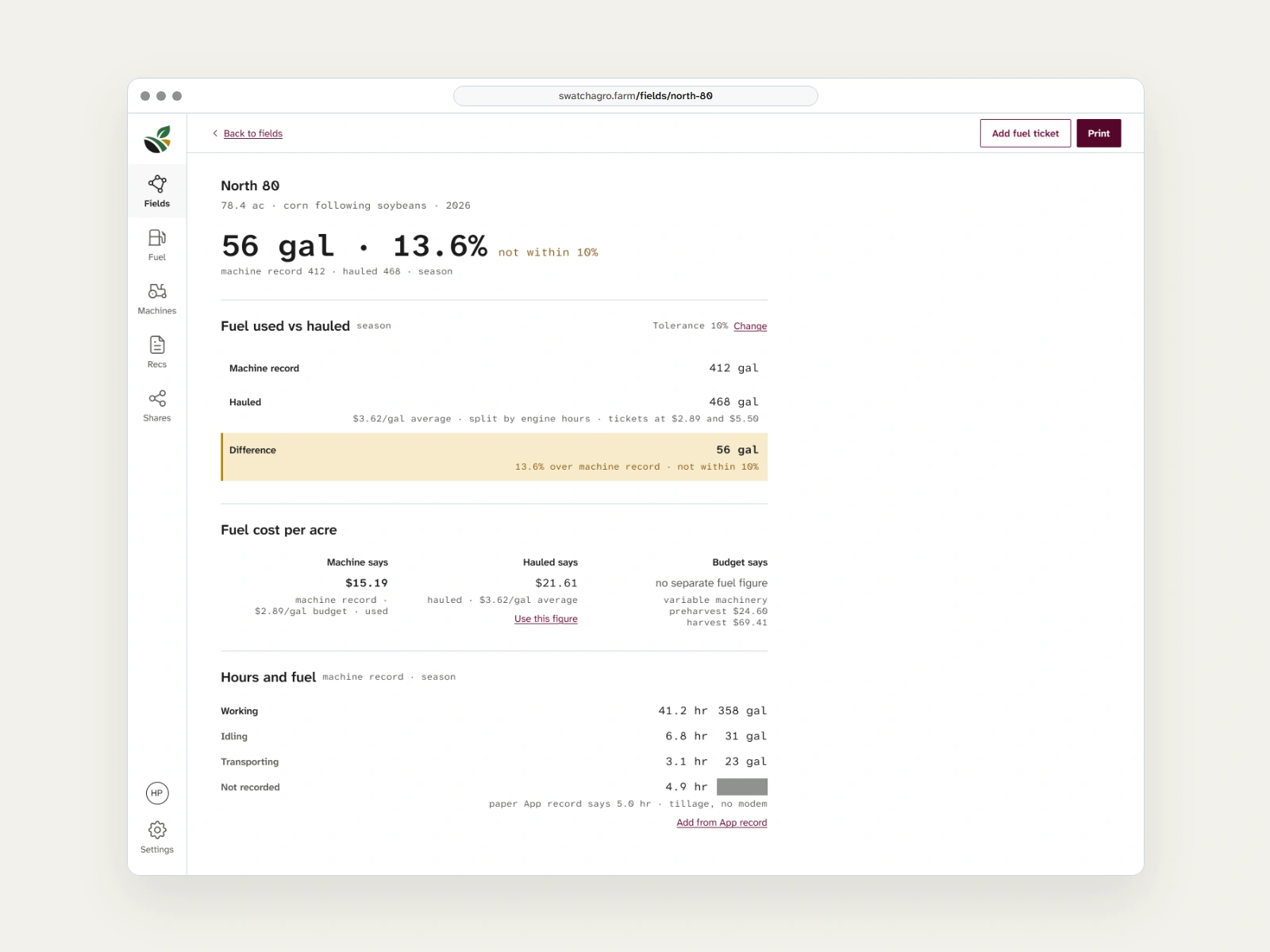
Unrecorded time keeps its own line. Deere's and Case IH's feature pages describe a field record and a machine record kept apart by design (read September 21, 2026, grade A). The field record has no row for time the coverage map was off, so a sum reads that absence as no time. Counting coverage only went, because it leaves the cost per acre quietly wrong. So did a better rule of thumb, the method a 2022 forum thread on fuel per acre shows failing. Instead the sheet adds a fourth state beside working, idling and transporting: Not recorded, with its hours and a gray fill where its fuel would be, never counted as zero.
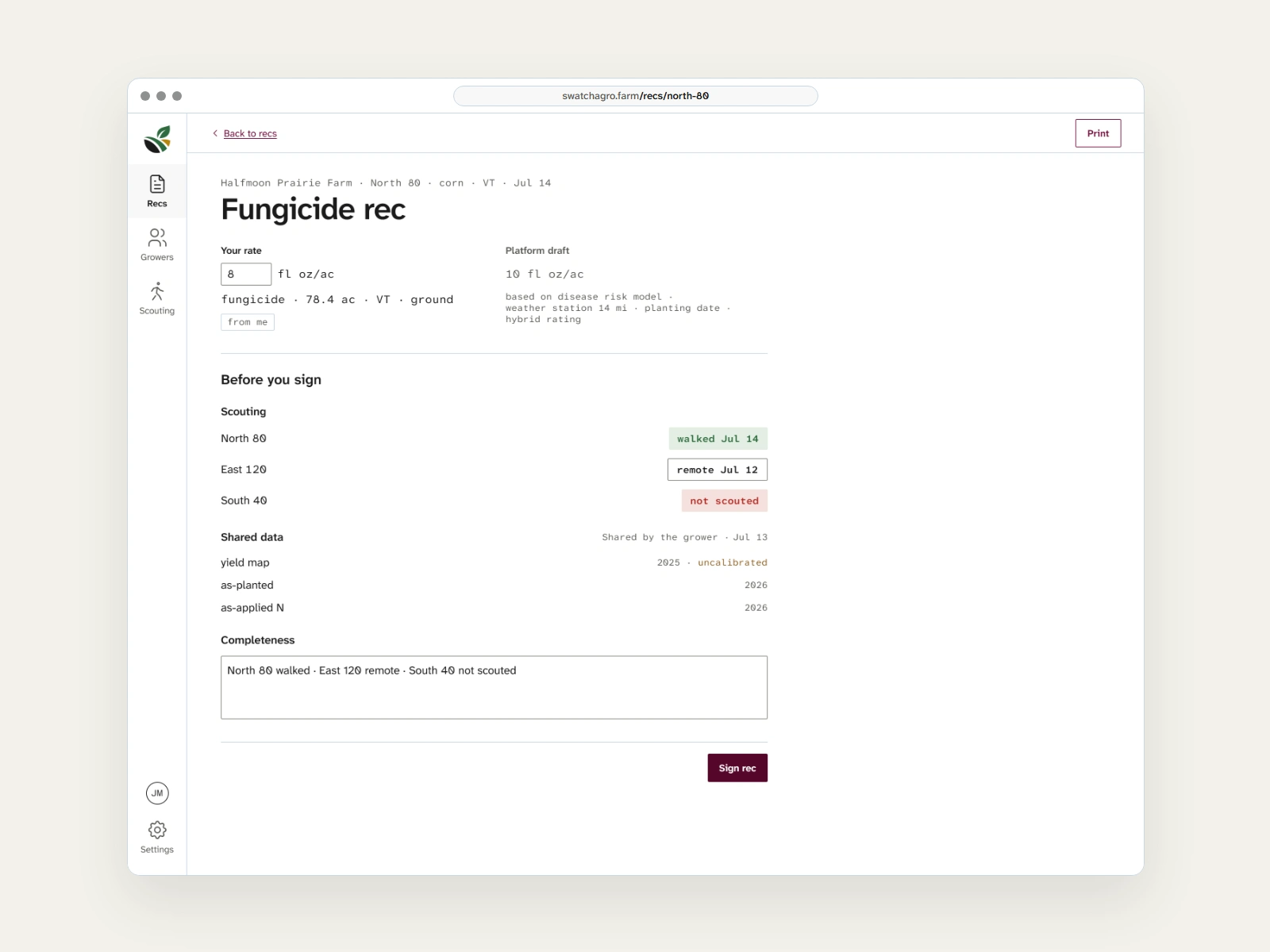
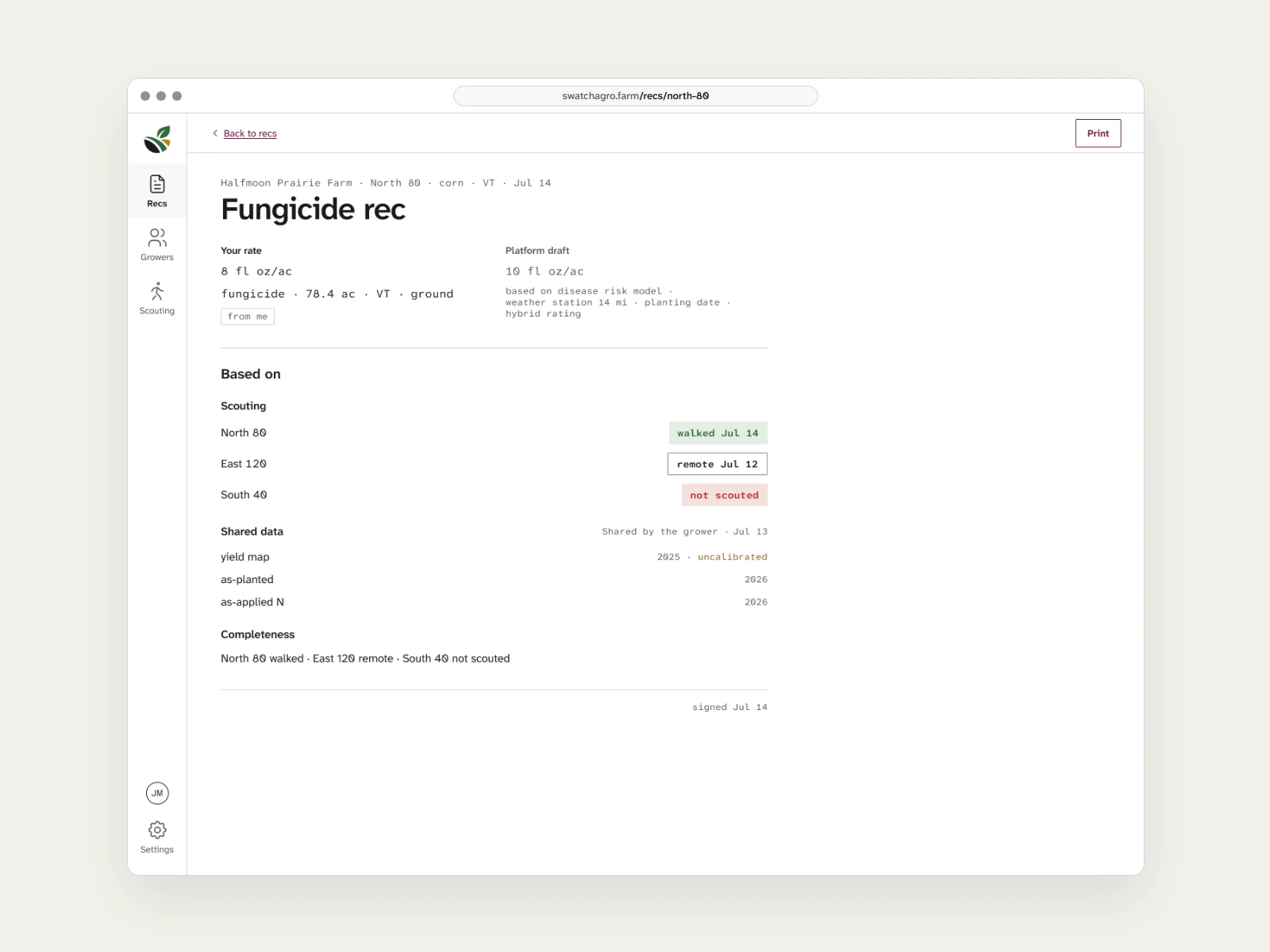
The agronomist signs the basis himself. A log of what he opened was the first option. The platform would have to keep it, the share toggles in today's farm platforms record nothing of the kind, and "log" sits with "audit" among the words that lose this audience. So the basis goes on the rec, as his code asks.
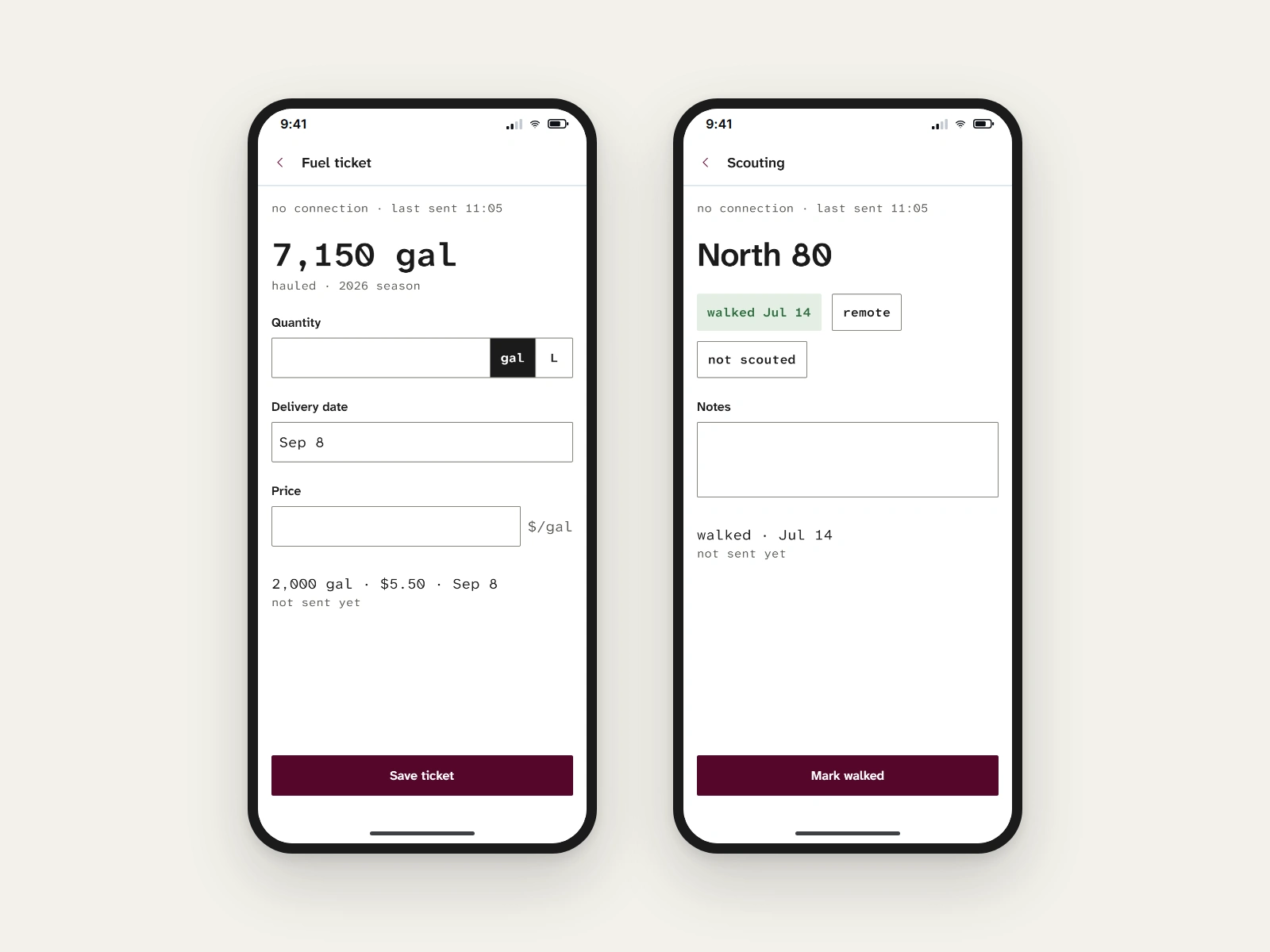
Phones only for the two outdoor moments. Both people make the sheet, the packet (the printed pages for the bank or the landlord) and the rec in an office, and the evidence for a phone is light. So the phone got two frames of one step each: the fuel ticket at the tank and the walked mark on the walk.
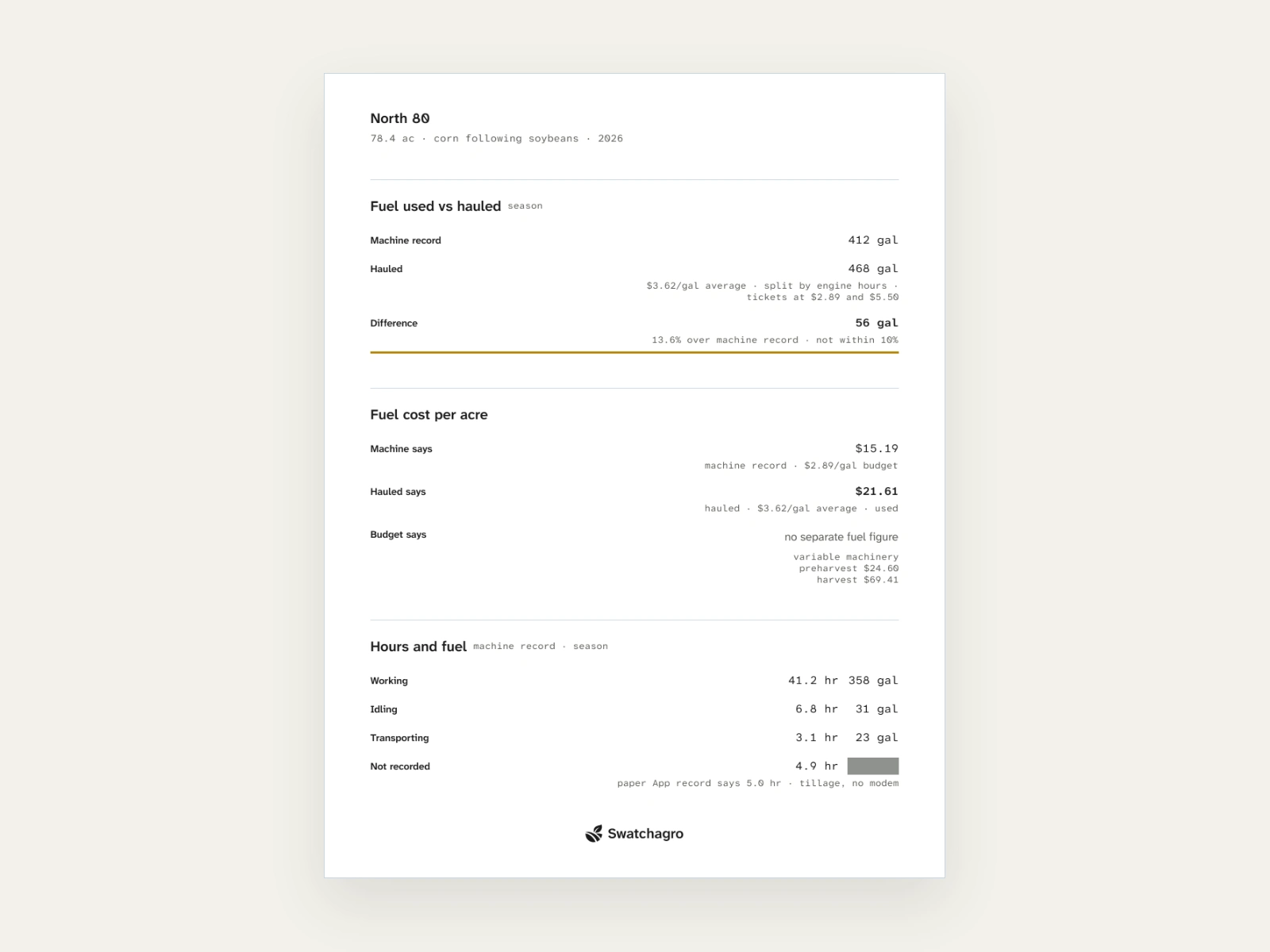
Printed page
Each text pair passes WCAG AA on the exact hex values, and the lowest, ochre-deep text on its wash, is 4.98:1. The type is Atkinson Hyperlegible Next with its Mono, which tells 1 from l and 0 from O, set with tabular figures in every column. Icons come from Tabler's outline set. On the printed page every state is a word, so a black and white copy loses nothing.
Farmer, before. Tickets in the cab, a notebook, and a field fuel figure that falls below his hauled fuel, the rest of it in the machine's record. Figures for the bank and the landlord go into a spreadsheet by hand, "in the layout I need" (August 16, 2026, grade B).
Farmer, after. He types each ticket once, at the tank or in the office. His hauled share stands beside the machine record with the difference named against his own tolerance, and unrecorded hours keep their own line. The printed page for the bank lists every source.
Agronomist and farmer, before. The platform's draft becomes the rec with no line of its own. It reaches the farm as a spray sheet: "I just get the spray sheets by email and do as I'm told," a UK farmer wrote (September 2019, grade B). What the farmer changed is nobody's record.
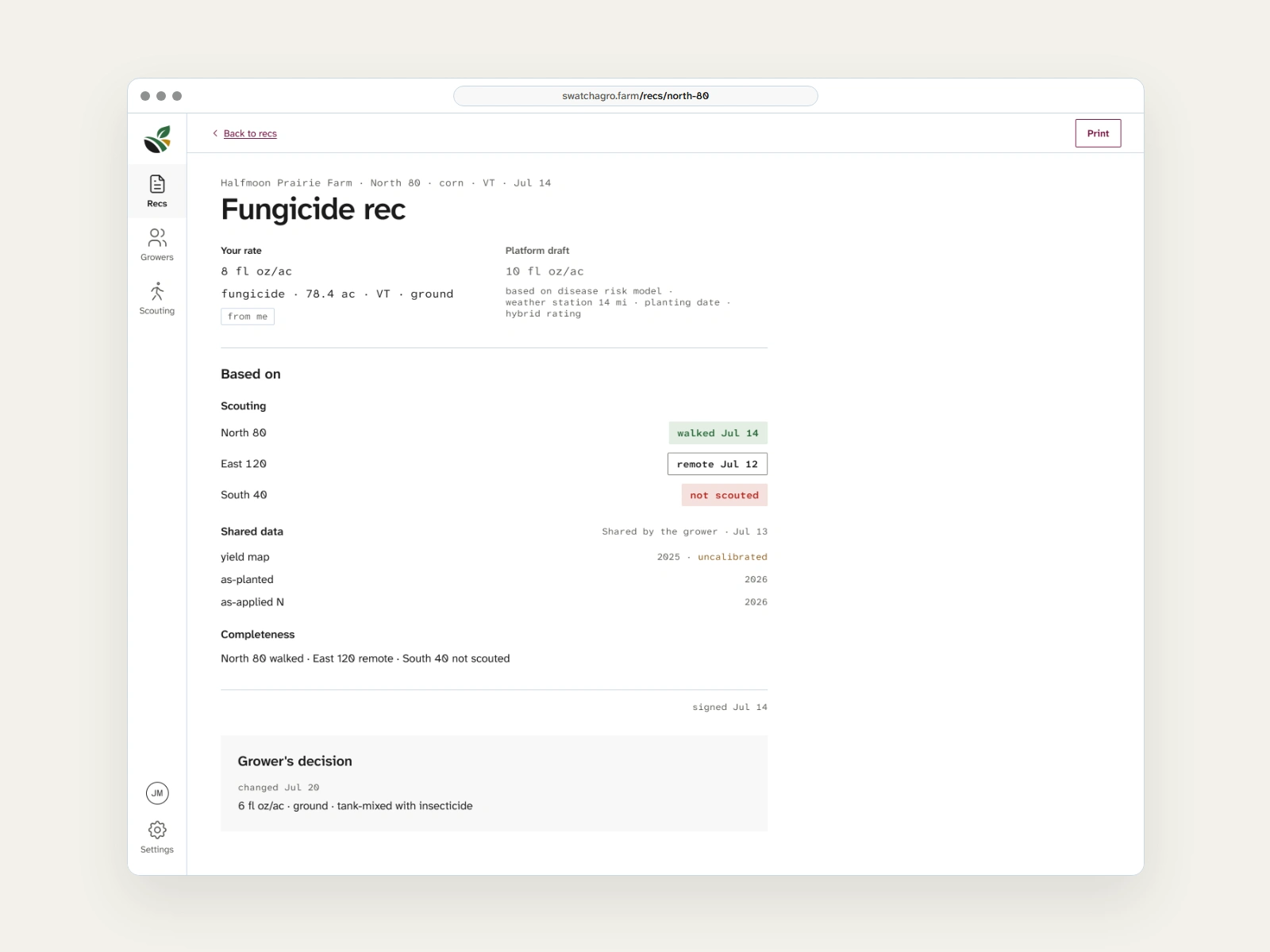
Agronomist and farmer, after. The draft stays beside the agronomist's rate, and each line says "from the platform" or "from me". He signs the basis on the rec. The farmer's decision, if he writes one, sits under the signature with its date.
Like this project
Posted Oct 7, 2026
Developed a system to reconcile farm field and machine records for accurate fuel and cost data.
Likes
0
Views
1
Timeline
Aug 16, 2026 - Sep 21, 2026