Casa Cendra — Kiln Booking for Ceramics (Concept)

Muhammad Muneeb


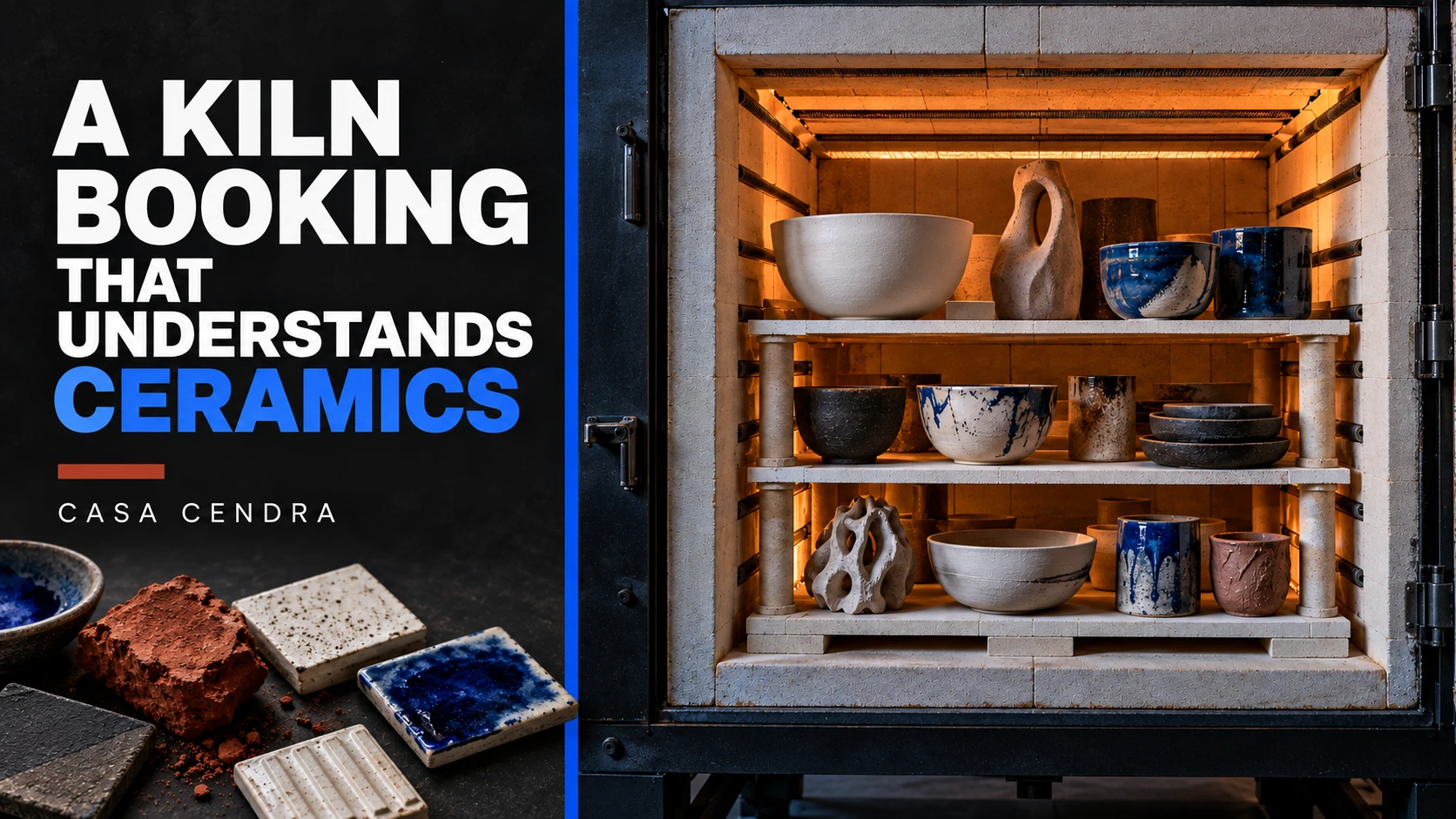
Casa Cendra — a kiln booking system that understands ceramics
Casa Cendra: From Firing Enquiry to Firing-Ready
Casa Cendra turns incomplete pottery-firing enquiries into compatibility-checked, correctly scheduled kiln bookings, while routing only unsafe or uncertain work to the solo owner.
Process walkthrough
How it was made — the brief, why kiln booking isn't ordinary scheduling, the eight build phases, the deterministic compatibility rules, and the owner-side cancellation recovery loop.
The client brief
Casa Cendra is a fictional one-person community kiln studio in Valencia. Its customers arrive with very different levels of ceramic knowledge. Some know their clay body and firing profile. Others only know that they have four bowls, used a blue glaze and need the work before an exhibition.
That makes a normal appointment calendar dangerous. Before accepting a firing, the studio must understand the material, dryness, glaze range, temperature, dimensions, quantity and timing. Every incomplete message creates another round of questions for the owner. A wrong assumption can damage a piece, a kiln shelf or an entire shared load.
The intervention
I designed Casa Cendra as a guided firing workflow rather than a generic booking form.
Customers choose the closest firing path, describe their pieces and move through a transparent compatibility check. The Kiln Fitprint explains each decision instead of hiding it behind an unexplained AI score.
The system produces one of three honest outcomes:
Ready: compatible work can continue to available kiln capacity.
Review: uncertain or specialist work enters a focused owner queue.
Blocked: unsafe work is stopped with a specific reason and corrective action.
Compatible requests are connected to real kiln stages, preliminary pricing and available capacity. The confirmation becomes a Firing Passport containing the reference, schedule, preparation requirements, reminder plan and management link.
Customer experience
Four meaningful paths: bisque, Cone 6 glaze, private kiln and unsure.
Structured piece intake with material, condition, profile, dimensions, count and needed-by date.
Deterministic compatibility checks for moisture, firing range, glaze, kiln fit and timing.
Clear ready, review and blocked states.
Capacity-aware kiln scheduling and preliminary pricing.
Confirmation or owner-review request without false promises.
Self-service rescheduling, cancellation and earlier-run waitlist preferences.
Persistent local demo state with a safe reset path.
Owner experience
The owner workspace is deliberately an operations cockpit, not a decorative analytics dashboard.
Needs-attention queue with the reason for every exception.
Today and upcoming kiln activity.
Searchable booking records and status filters.
Full compatibility, capacity, pricing and reminder context.
Approve, request information, reschedule, cancel, complete and no-show actions.
Released-capacity matching, with completed recoveries recorded alongside open slots awaiting a decision.
Activity history and deterministic demo reset.
Every simulated action is labelled honestly. The prototype does not claim that an email, SMS or waitlist message was sent when no live connector exists.
Cancellation recovery
A cancelled shared booking does not simply disappear. The released kiln space becomes an opportunity the system can fill.
When capacity opens, Casa Cendra lists only the waitlist candidates who genuinely fit: same firing route, shelf demand within the released space, and a date preference that matches the run. Each candidate is shown with the reasons they match, so the owner approves a decision rather than researching one. The workspace keeps both sides of that loop visible — slots still open for a decision, and slots already recovered and filled.
Before and after
Before Casa Cendra, the owner must translate incomplete messages into technical firing information, identify unsafe work, estimate kiln space, suggest a run, explain preparation and recover cancelled capacity manually.
With Casa Cendra, customers provide the necessary details once. The system handles routine qualification and scheduling. The owner sees only work that requires judgement and the operational actions that matter next.
Design direction
The interface uses a contemporary Kiln Editorial system: mineral white, near-black charcoal, cobalt blue and fired-clay red. Tactile material photography supports the journey from raw clay to a loaded kiln, while bold typography and restrained motion keep the operational workflow readable.
Build and verification
Casa Cendra was built in Lovable using React, TypeScript and Tailwind. The final build passed 74 of 74 automated tests, TypeScript validation and lint with only pre-existing non-blocking warnings. Customer and owner flows were checked at mobile, tablet and desktop sizes, including keyboard focus, reduced motion, persistence and browser navigation.
Workflow proof
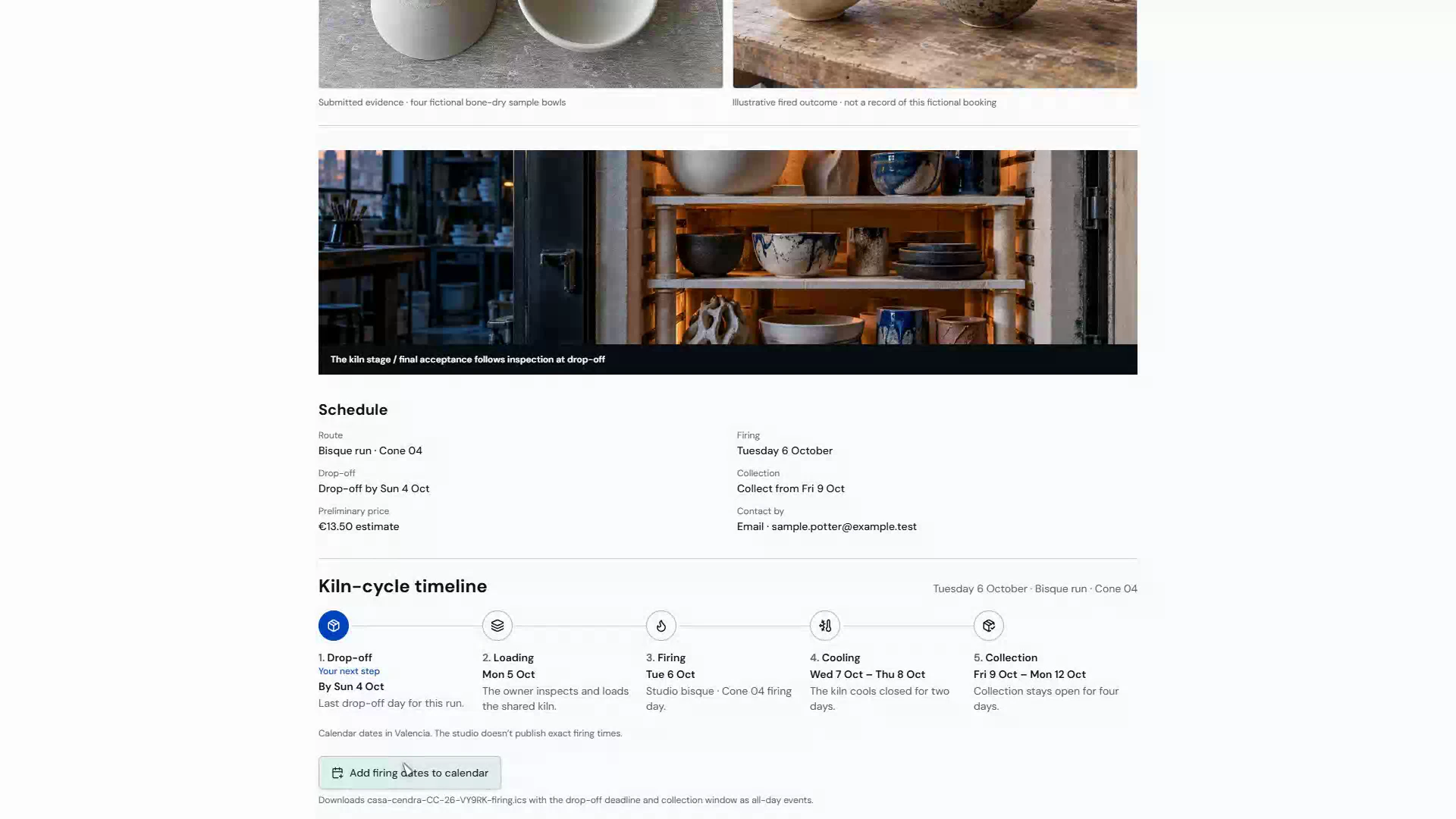
Firing Passport showing the confirmed kiln cycle, preparation context and booking schedule
Owner operations cockpit
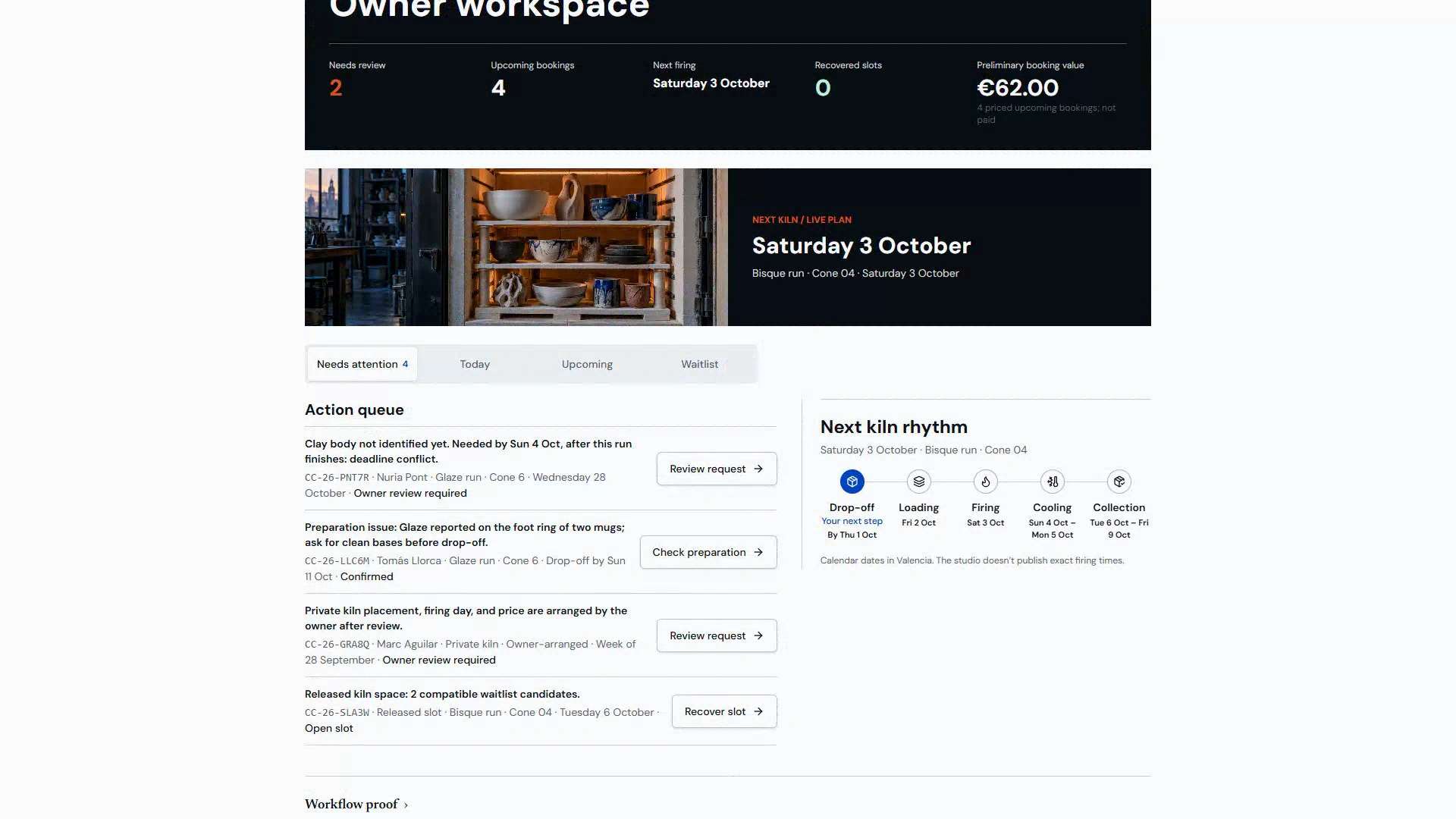
Owner workspace showing exception handling, kiln rhythm and released-capacity recovery
Project link
Social post
Read the build story on LinkedIn — why a kiln is not a calendar, and what that changes about booking. Tagged @Lovable, #lovablechallenge.
Disclosure
Casa Cendra is a fictional studio created for the Lovable Built for Small Business Challenge. It uses fictional data and simulated reminders and offers. No real customer information is included.
Like this project
Posted Sep 27, 2026
A compatibility-aware booking workflow that turns incomplete pottery firing enquiries into safe, capacity-aware bookings for a fictional solo kiln studio.