Rebuilding Design Consistency at Scale

Mahmoud Ahmed


Rebuilding Design Consistency at Scale
A strategic approach to transforming chaos into cohesion across multiple products.
The Challenge
1. Severe Inconsistency
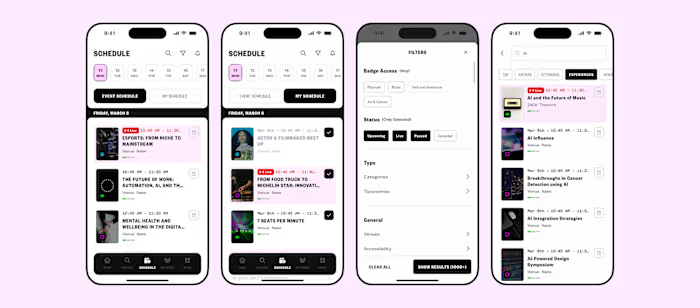
There was no single source of truth, leading to countless duplicated and detached components (e.g., dozens of different buttons).
2. Major Inefficiency
Design files were slow and bloated, and the intended token system was unused, making the process of rebranding for clients extremely slow (1-2 months).
3. Development Friction
The handoff to developers was chaotic, resulting in implementation discrepancies, constant rework, and shipped products with bugs and visual inconsistencies.
Discovery & Research
1. Stakeholder interviews
Research revealed pain points across teams:
Designers: struggled with inefficient files and inconsistent components
Developers: lacked clear specifications
Product managers: faced delays and inconsistent quality.
2. System Audit
Analyzed existing design files and component libraries
Documented current handoff processes
Mapped brand switching workflows
Identified most commonly used and duplicated components
3. Competitive Analysis
Researched how other companies handled similar multi-product, white-label scenarios.
Studied design system governance models from industry leaders.
Key Insights
Trust was broken - The team had lost confidence in the design system.
No clear ownership - System maintenance was everyone's and no one's responsibility.
Parallel work streams needed - We couldn't stop all work to rebuild everything.
Governance was missing - No processes for requesting, reviewing, or implementing changes.
Strategic Approach
The Rebuild Strategy: Rather than attempting to fix the existing system (which had failed), I proposed a parallel implementation strategy.
Phase 1: Foundation Building
Build new design system from scratch alongside existing work.
Announce completed components for immediate use in new designs.
Maintain existing designs until refactor opportunities arose.
Phase 2: Pilot Implementation
I leveraged the development of a new product (Product X) as a strategic opportunity by using it as a testing ground to:
Prove the system's value and build team confidence.
Refine processes based on real-world usage.
Phase 3: System Expansion
Roll out successful patterns to existing products.
Establish governance model.
Scale team involvement and ownership.

Getting Buy-In
The key to success was building trust through small wins:
Started with foundational elements (colors, typography, spacing).
Demonstrated clear improvements in file performance and consistency.
Involved team members in the decision-making process.
Maintained transparency about challenges and progress.
Design System Architecture
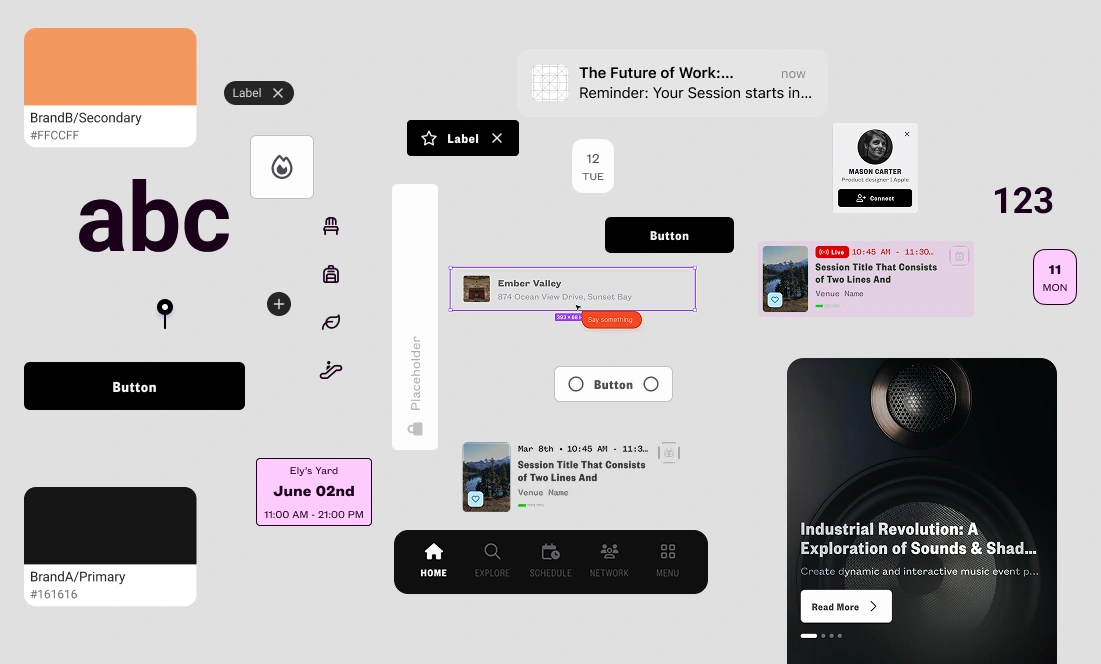
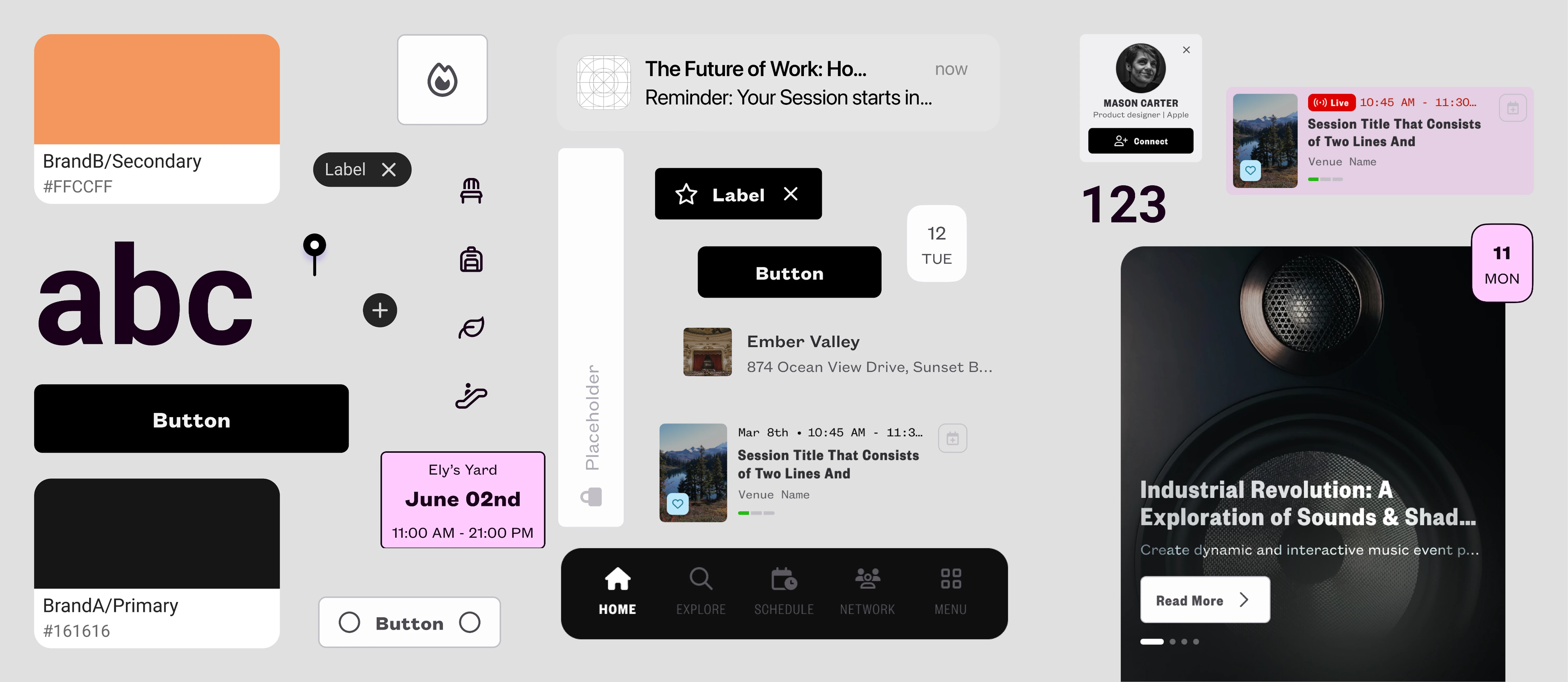
I implemented an atomic design methodology with clear hierarchies.
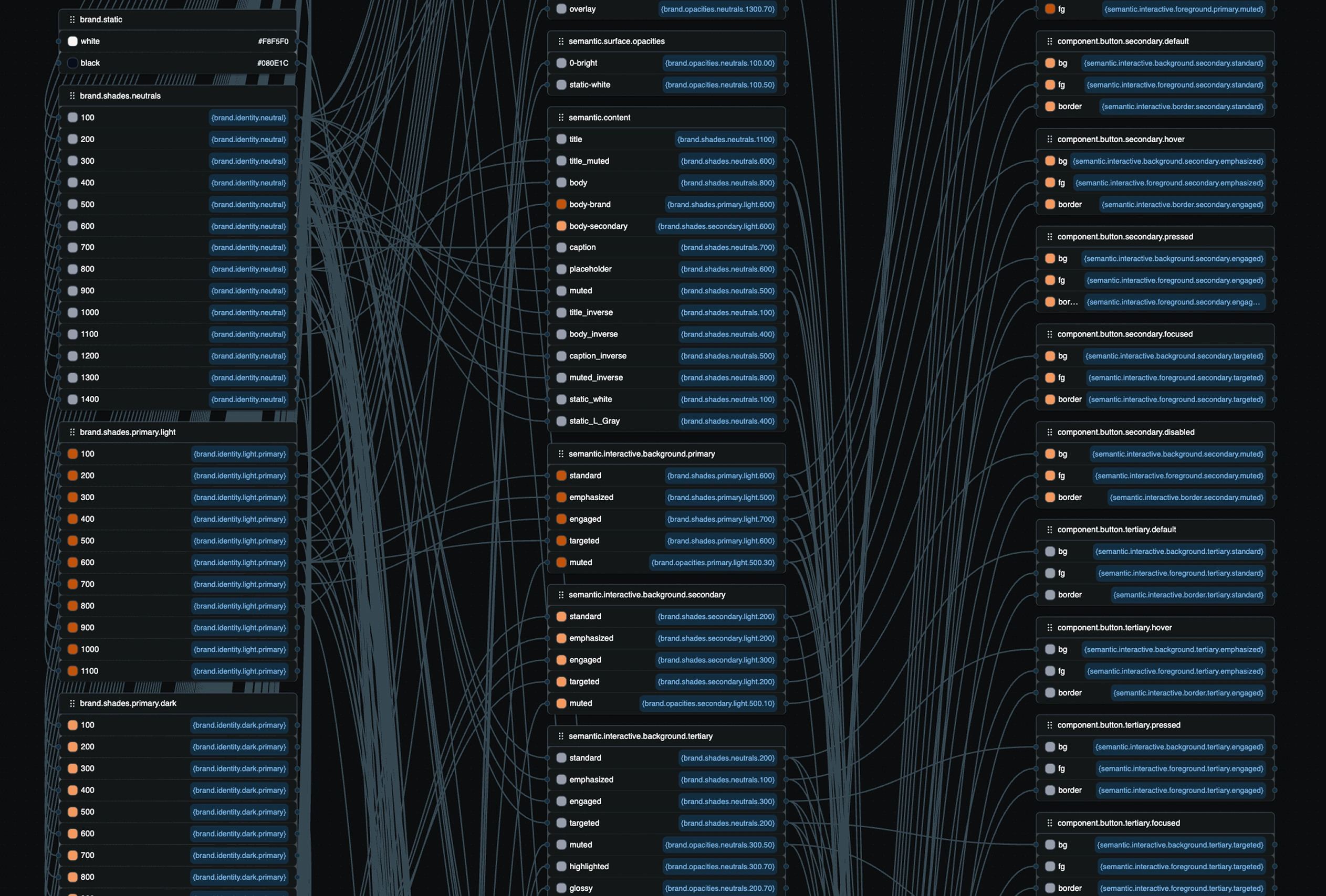
Design Tokens
Rebuilt token structure for better coherence and scalability.
Semantic naming conventions (interactive/background/primary/standard, surface/contextual/canvas).
Brand-agnostic base tokens with brand-specific overlays.
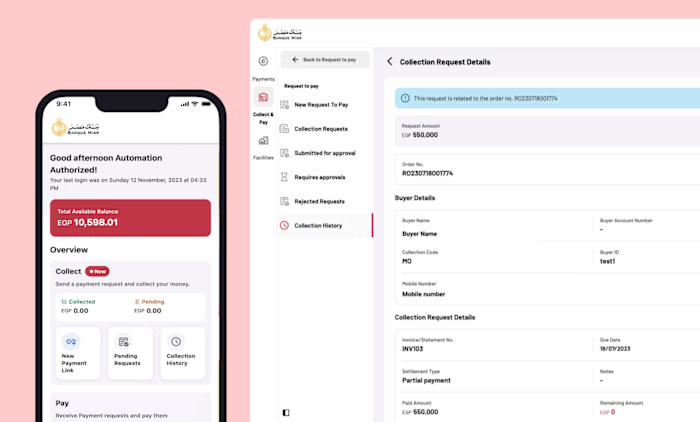
Reduced brand switching time from 4-8 weeks to days.
Component Library Structure
Atoms: Basic elements (buttons, inputs, icons).
Molecules: Simple combinations (search bars, card headers).
Organisms: Complex interface sections (navigation, product cards).
Templates: Layout structures and page frameworks.
Governance & Collaboration
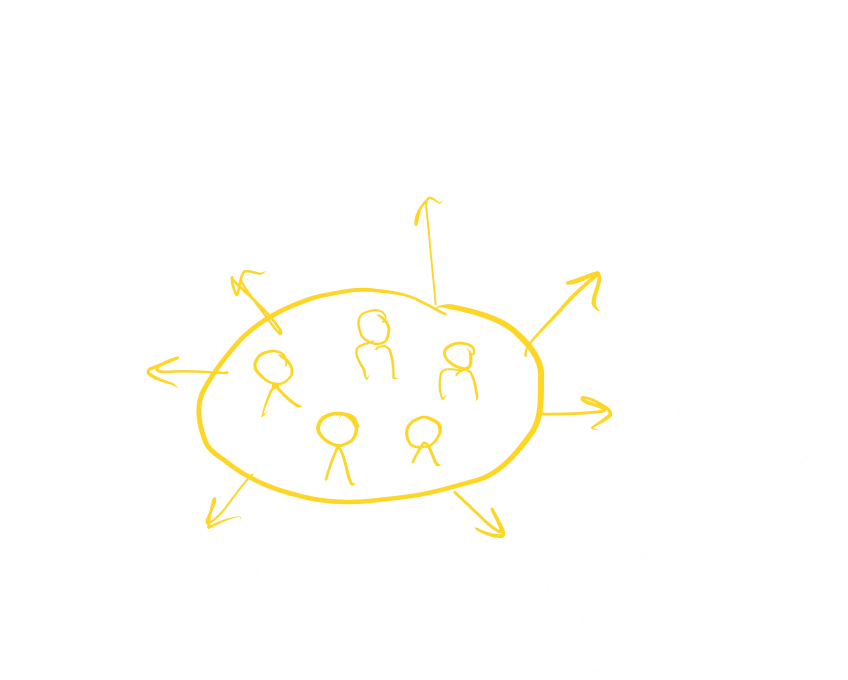
Hybrid Governance Model: The hybrid model combines a federated and centralized approach for managing a design system. In this structure:
Advantages: This model offers a balance between centralized control and distributed autonomy.
Consideration: Its success depends on clearly defining the balance of control and freedom, requiring strong communication and guidelines to ensure consistency.
Component Request Process
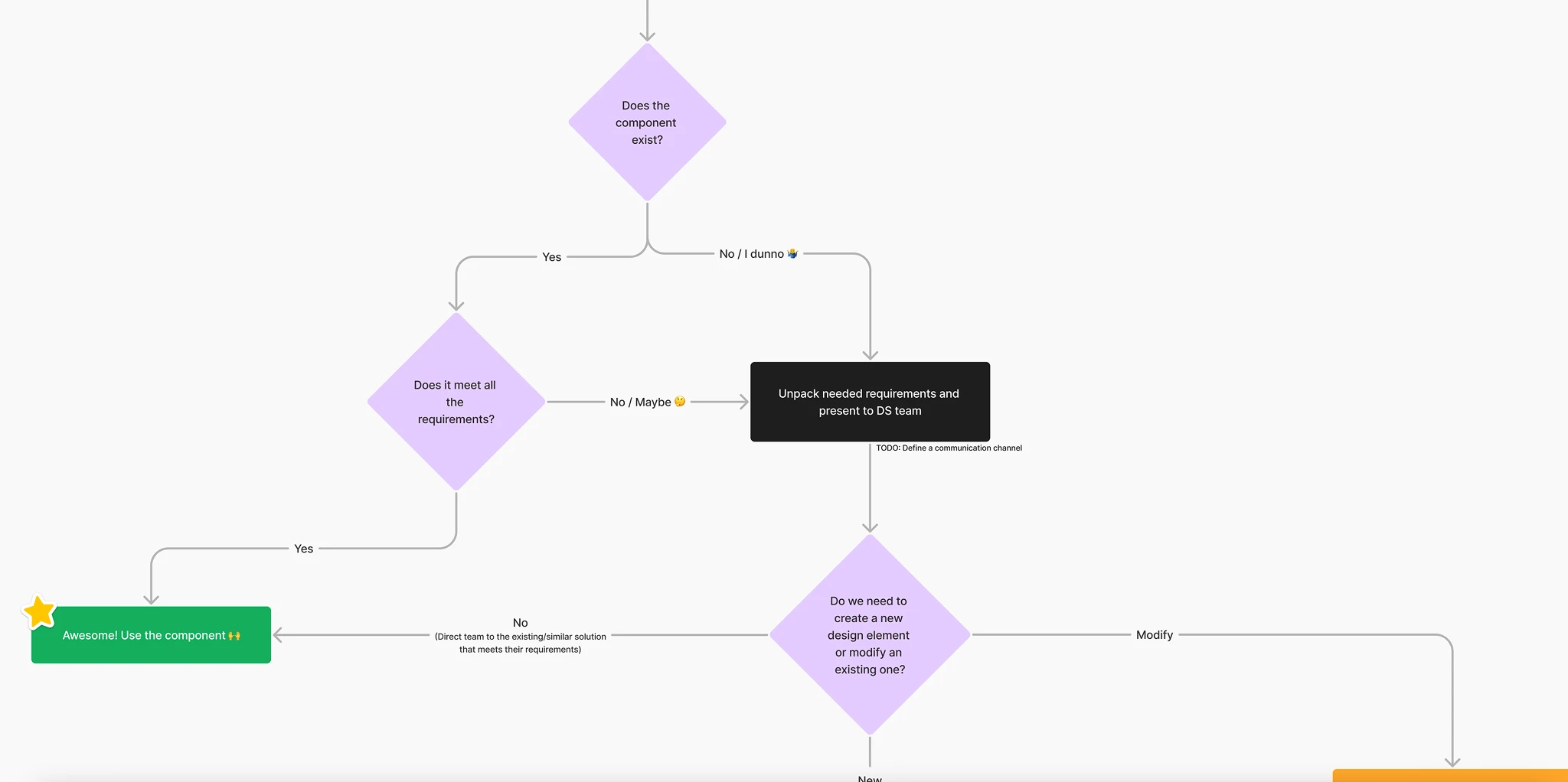
Streamlined Component Request Workflow: To maintain system integrity while enabling team autonomy, I developed a comprehensive decision-tree workflow that guides teams through component requests:
Initial Assessment: Teams evaluate whether existing components meet their needs before requesting new ones.
Requirements Validation: Clear criteria determine whether modifications to existing components or entirely new elements are needed.
Reusability Evaluation: Components must demonstrate potential for cross-product usage to justify inclusion in the core system.
Collaborative Review: Multi-stage review process involving design system team, product teams, and development to ensure feasibility and consistency.
Quality Assurance: Systematic testing for structure, naming conventions, token usage, responsive behavior, and accessibility compliance.
Naming Conventions & Guidelines
Standardized rules and documentation for components and tokens, covering their naming, properties, usage guidelines, and code handoff specifications.
Team Involvement
Included weekly design system reviews, clear component contribution guidelines, cross-team collaboration protocols, and regular feedback-driven iterations.
Impact & Results
Quantifiable Improvements
Adoption Metrics
The new product achieved over 95% design system adoption, 98% token implementation across designs, and zero detached components.
Operational Efficiency
Brand switching cut from 4-8 weeks to 3–5 days, faster design files, developer queries down, and feature delivery 60% quicker.
Qualitative Impact
Team Experience
Gained confidence through reliable, consistent components that streamlined their workflow.
Experienced less confusion and faster implementation.
Cross-team communication became smoother, stronger alignment.
Increased overall team satisfaction and motivation, creating a more positive work environment.
Product Quality
Delivered unified user experiences across all products.
Reduced visual bugs and implementation errors through components.
Enabled faster client onboarding with dependable brand customization.
Improved compliance across products, ensuring more inclusive experiences.
Scaling Success
Product X's (the new product) success sparked expansion to other products.
Product A and Product B products reached 35%+ adoption in new features.
Product C and Product D began systematic design system integration.
New team members ramped up faster with clear guidelines.
Reflection & Future Evolution

Key Learnings
Change Management is Critical
Building trust through small wins was more valuable than technical perfection.
Team involvement in the process created ownership and advocacy.
Parallel implementation reduced risk while proving value.
Governance Enables Scale
Clear processes prevent system degradation over time.
Cross-functional collaboration improves both design and development outcomes.
Documentation and guidelines are as important as the components themselves.
Atomic Design Works for Complex Products
Systematic approach to component hierarchy improved consistency.
Easier maintenance and updates across multiple products.
Clear mental model for team members to follow.
Future Improvements
Technical Evolution
Integrate accessibility testing into component development process.
Process Refinement
Develop metrics dashboard for ongoing system health monitoring.
Create advanced training programs for new team members.
Establish design system contribution recognition and career paths.
Scale Preparation
Plan for international localization and RTL language support.
Develop advanced customization capabilities for complex client needs.
Like this project
Posted Apr 8, 2026
A comprehensive project focused on creating a cohesive design system to improve product consistency and efficiency.
Likes
0
Views
5