Leading the Shift to AI-Native Product Design

Samuel Lombardo


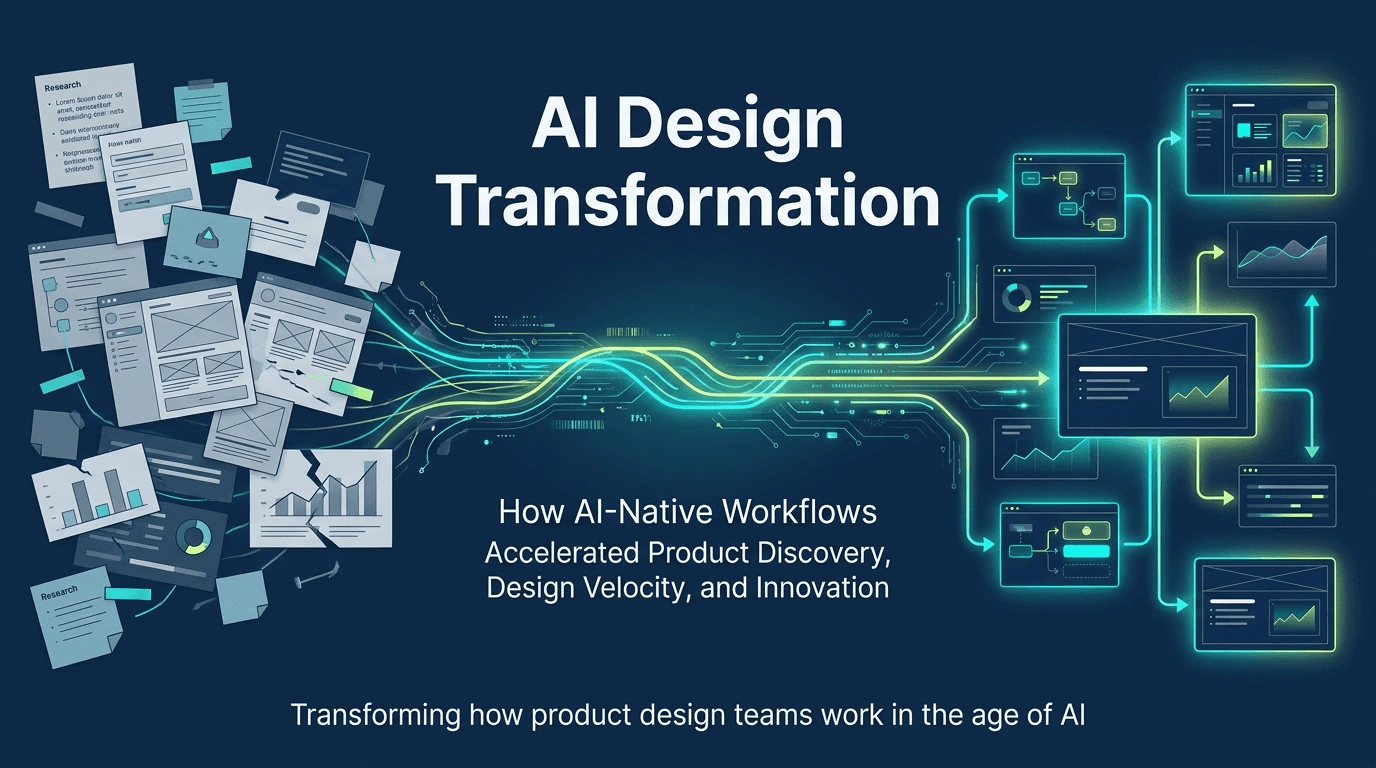
A leadership framework showing how AI is reshaping product design, team operations, discovery, and enterprise innovation.
Leading the Shift to AI-Native Product Design
Over the past 20 years, I have helped organizations transform complex systems into products, platforms, and experiences people can confidently use. As AI reshapes how products are designed and built, I believe the role of design is evolving from creating interfaces to orchestrating intelligent systems. This case study explores the frameworks, workflows, and product thinking I use to help teams move faster, make better decisions, and build AI-native products that create measurable business impact.
Executive Summary
Focus
AI-Native Product Design
Scope
Framework + Product Ecosystem
Experience
20 Years
Products Built
4 AI Products
Core Expertise
Product Strategy • AI Workflows • Systems Thinking
Outcome
Built ClarityOS to validate the framework in practice
THE INDUSTRY SHIFT
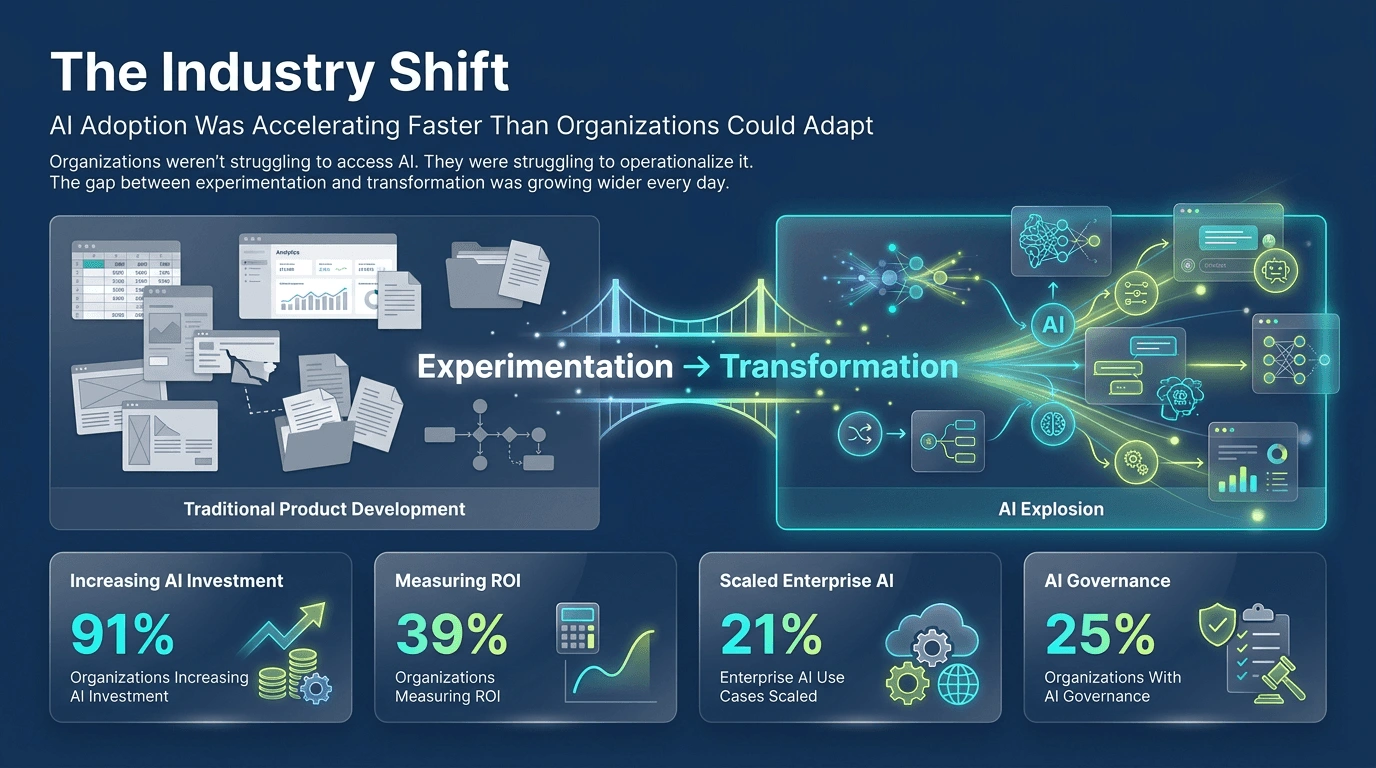
The Shift to AI-Native Product Design
Product design is entering a new era. AI is accelerating research, ideation, prototyping, and decision-making at a scale that was previously impossible. The opportunity is not simply to work faster but to rethink how products are discovered, designed, and delivered. The future belongs to teams that combine human judgment with intelligent systems to create better outcomes.
REIMAGINING PRODUCT DESIGN
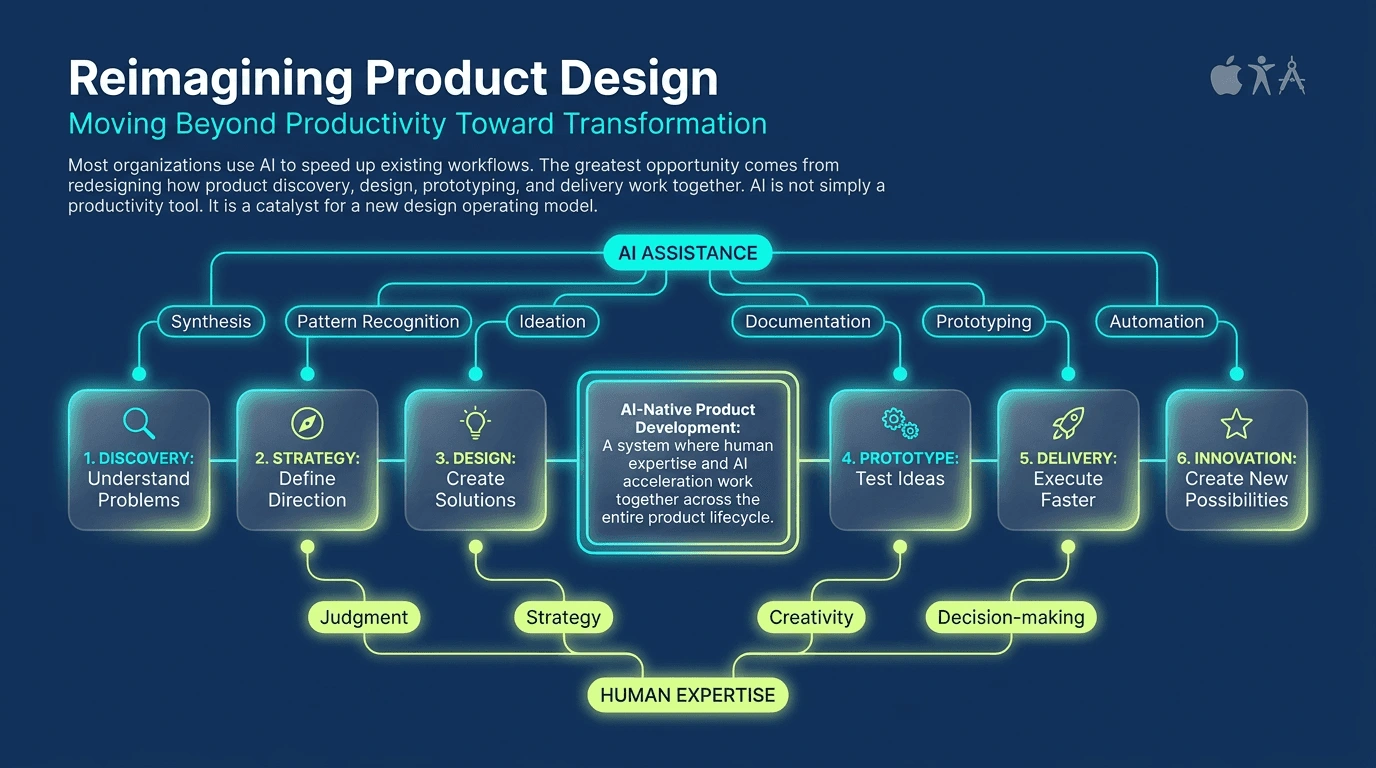
Moving Beyond Traditional Workflows
Traditional product design follows a largely linear process of research, ideation, prototyping, testing, and delivery. AI introduces a more dynamic model where insights, exploration, and validation happen continuously. Designers become orchestrators of systems that generate, evaluate, and refine solutions faster while maintaining human oversight and strategic direction.
AI-NATIVE DESIGN FRAMEWORK
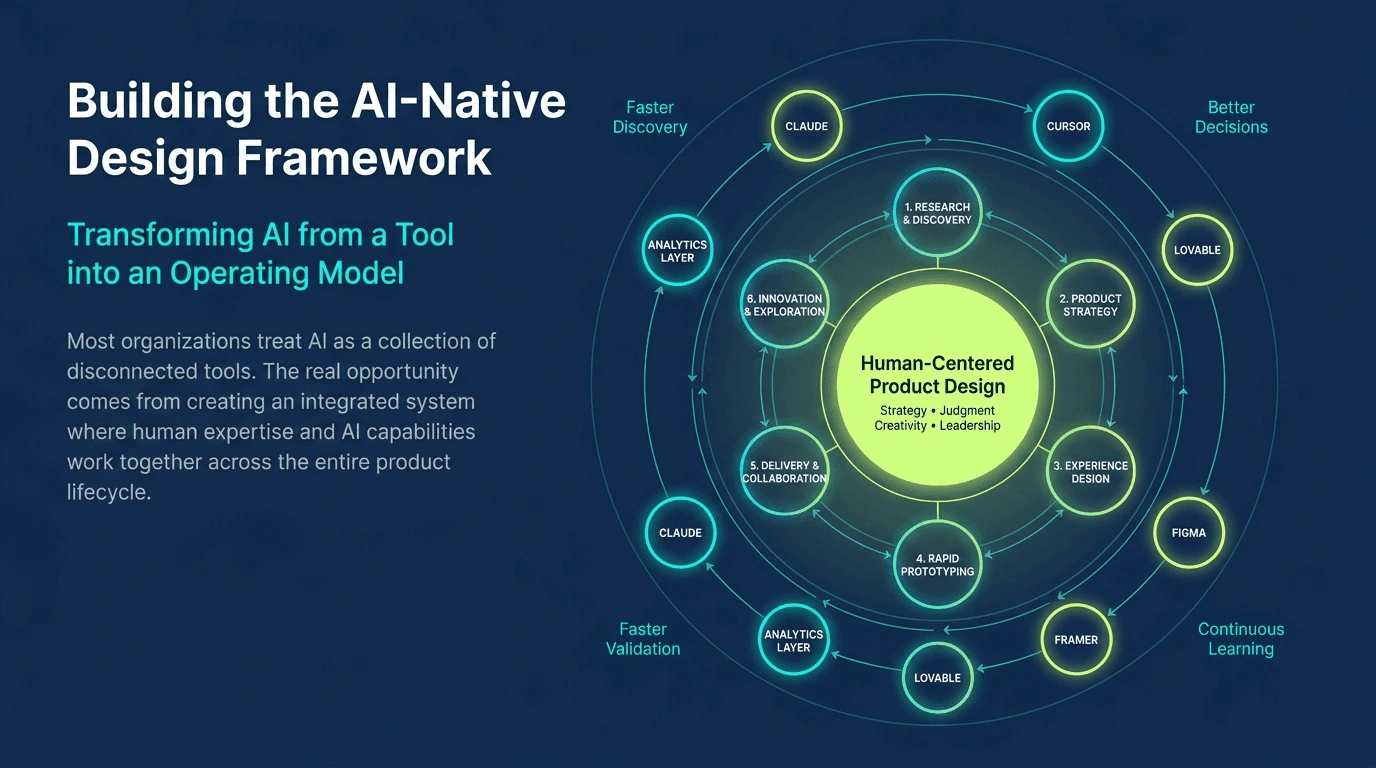
Building a Framework for AI-Powered Product Development
To effectively integrate AI into product teams, I developed a framework that combines research, systems thinking, experimentation, and decision intelligence. Rather than treating AI as a standalone feature, the framework embeds intelligence throughout the product lifecycle, helping teams uncover opportunities, reduce uncertainty, and accelerate learning.
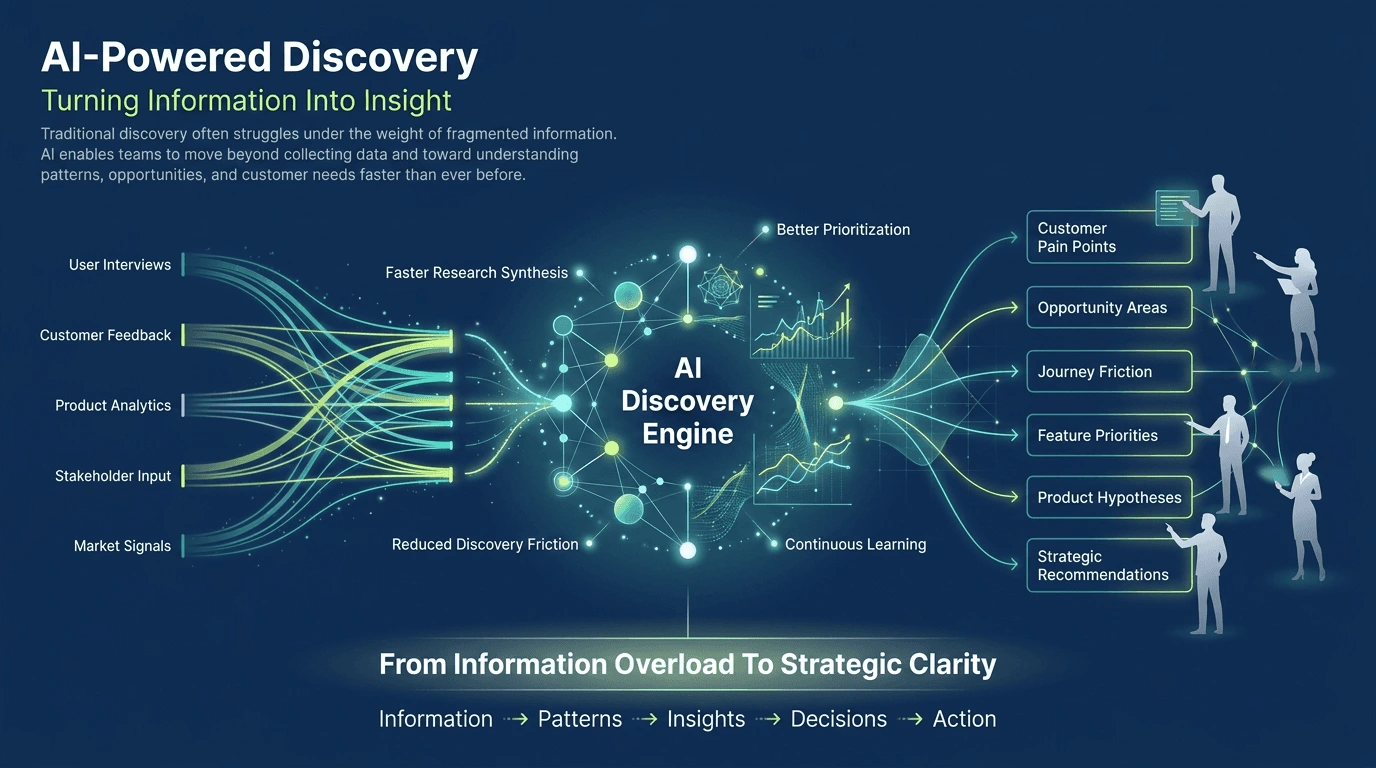
AI-POWERED DISCOVERY
Turning Information Into Insight
Research often produces more information than teams can effectively process. AI helps identify patterns across interviews, analytics, feedback, and market signals, allowing teams to move from raw information to actionable insight more quickly. The result is stronger prioritization and more confident product decisions.
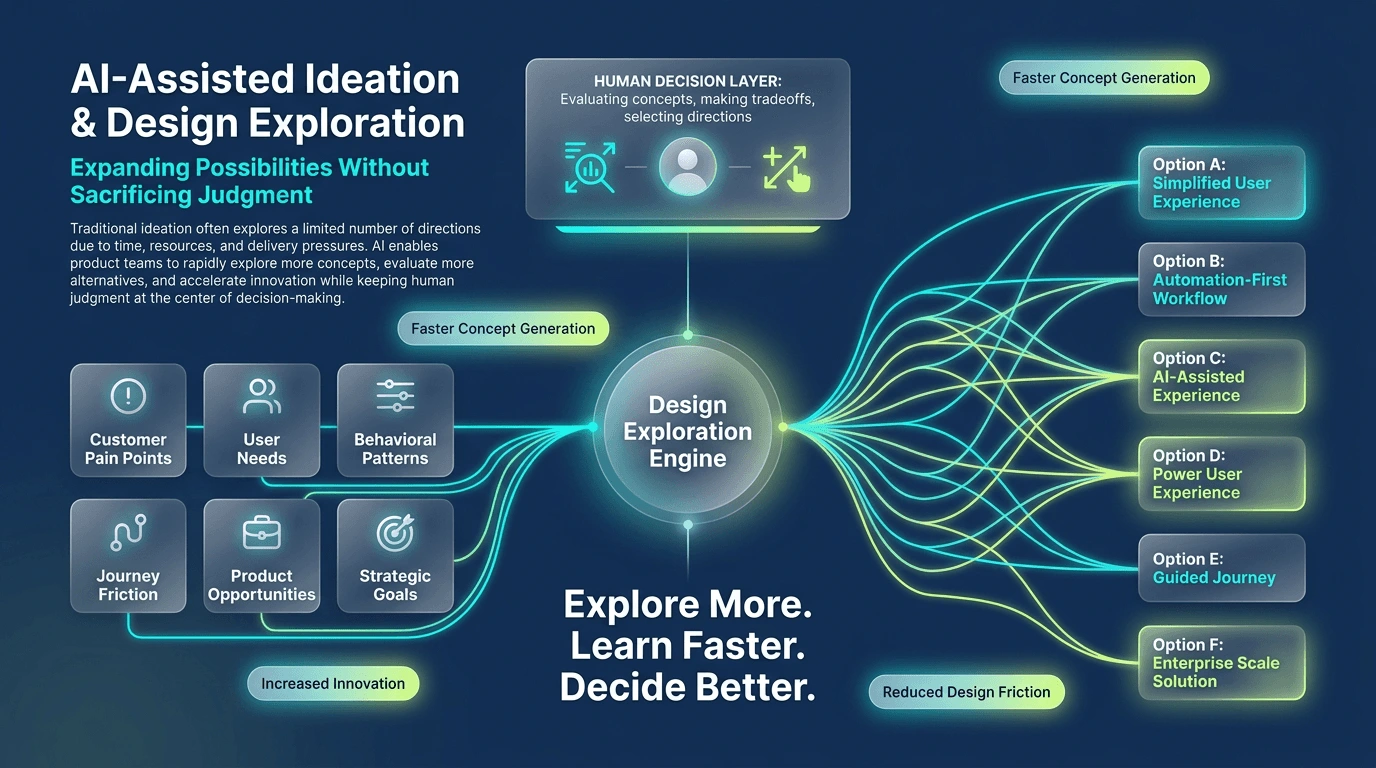
Exploring More Possibilities Faster
AI expands the range of concepts teams can explore during early discovery and design. Instead of replacing creativity, it enables designers to test more ideas, challenge assumptions, and evaluate multiple directions in less time. Human judgment remains essential, but exploration becomes significantly faster and broader.
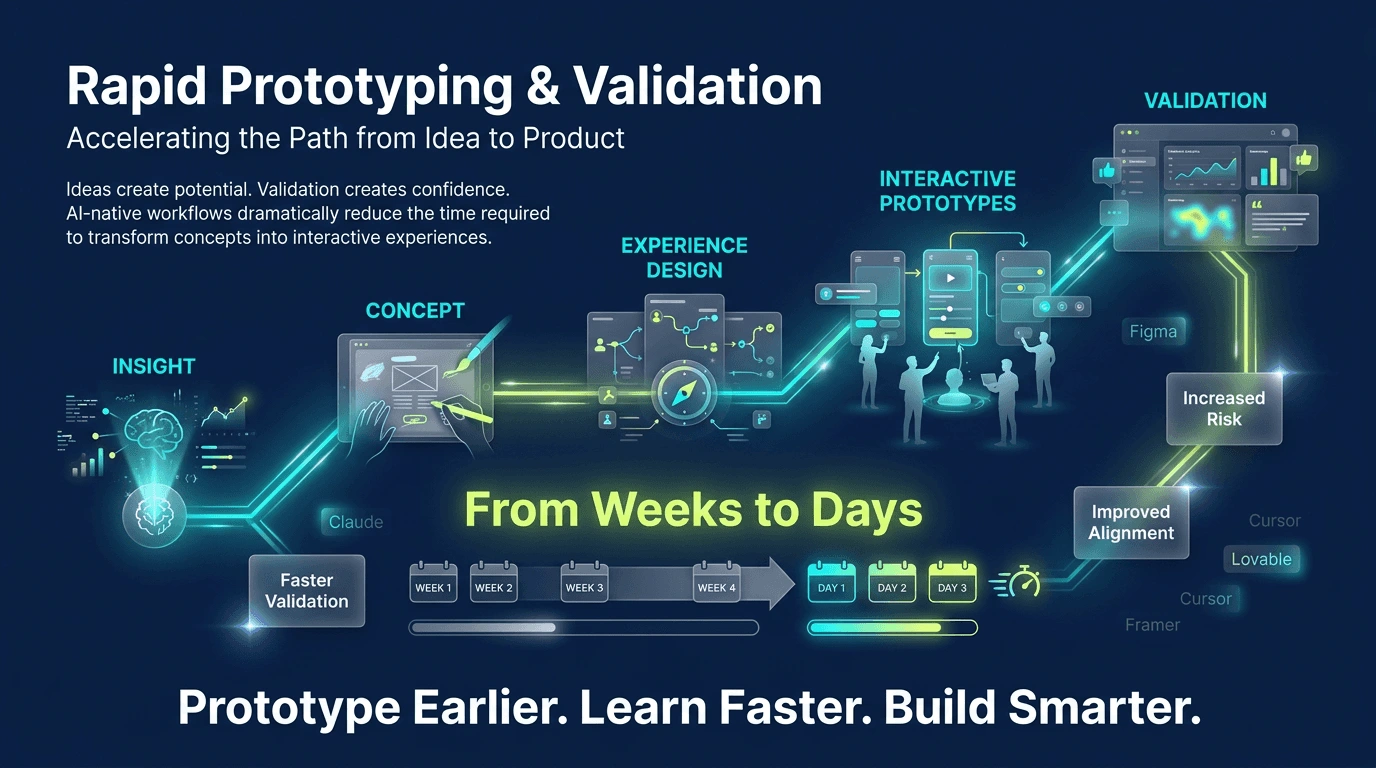
RAPID PROTOTYPING & VALIDATION
Accelerating Learning Through Iteration
The ability to quickly test assumptions is one of the biggest advantages of AI-native workflows. By accelerating prototype creation and feedback loops, teams can validate ideas earlier, reduce risk, and focus resources on the solutions most likely to succeed.
CLARITYOS ECOSYSTEM
From Framework to Product Ecosystem
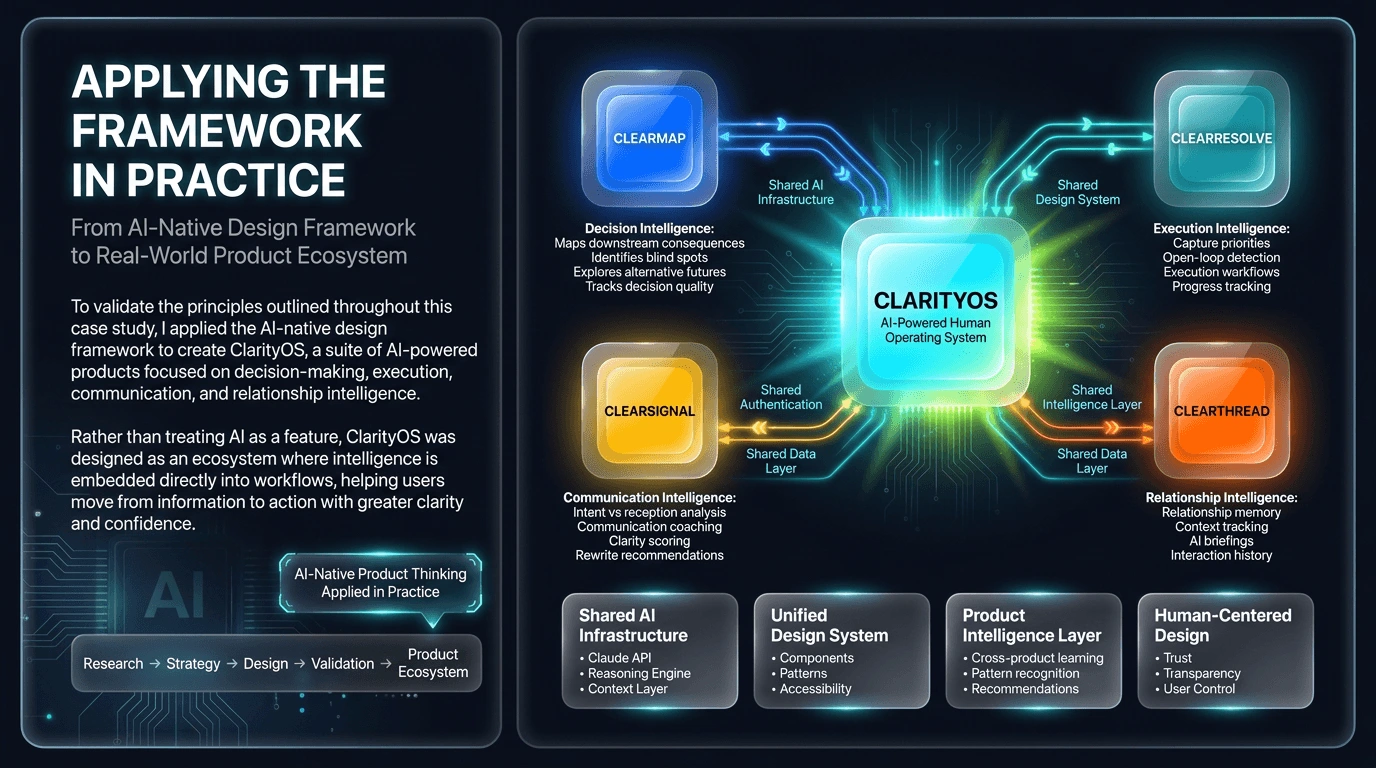
The concepts explored throughout this framework evolved into ClarityOS, an AI-powered ecosystem designed to help individuals and organizations make better decisions. Each product addresses a different aspect of clarity, from decision intelligence and execution management to communication and relationship tracking, creating a connected system that transforms information into action.
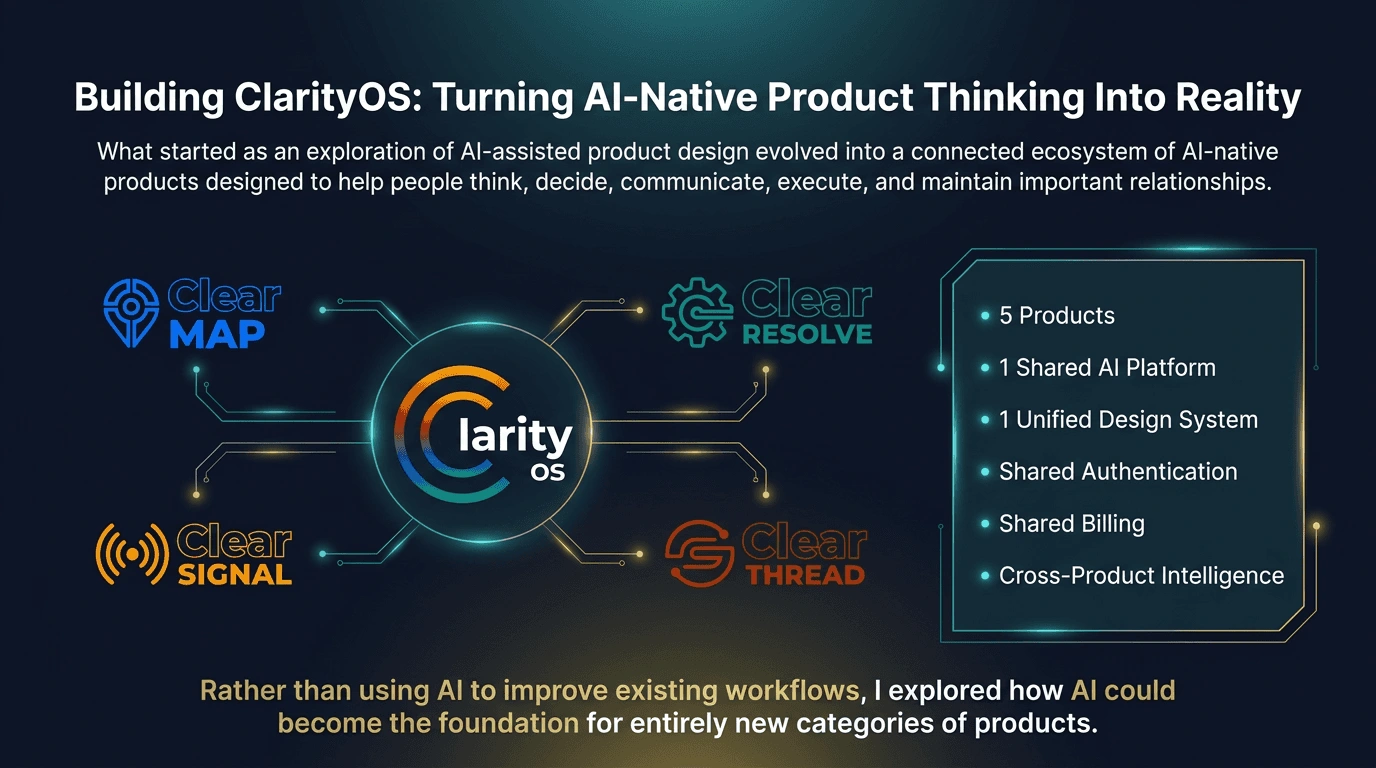
APPLYING THE FRAMEWORK IN PRACTICE
To validate the principles outlined throughout this case study, I applied the AI-native design framework to create ClarityOS, a suite of AI-powered products focused on decision-making, execution, communication, and relationship intelligence.
Rather than treating AI as a feature, ClarityOS was designed as an ecosystem where intelligence is embedded directly into workflows, helping users move from information to action with greater clarity and confidence.
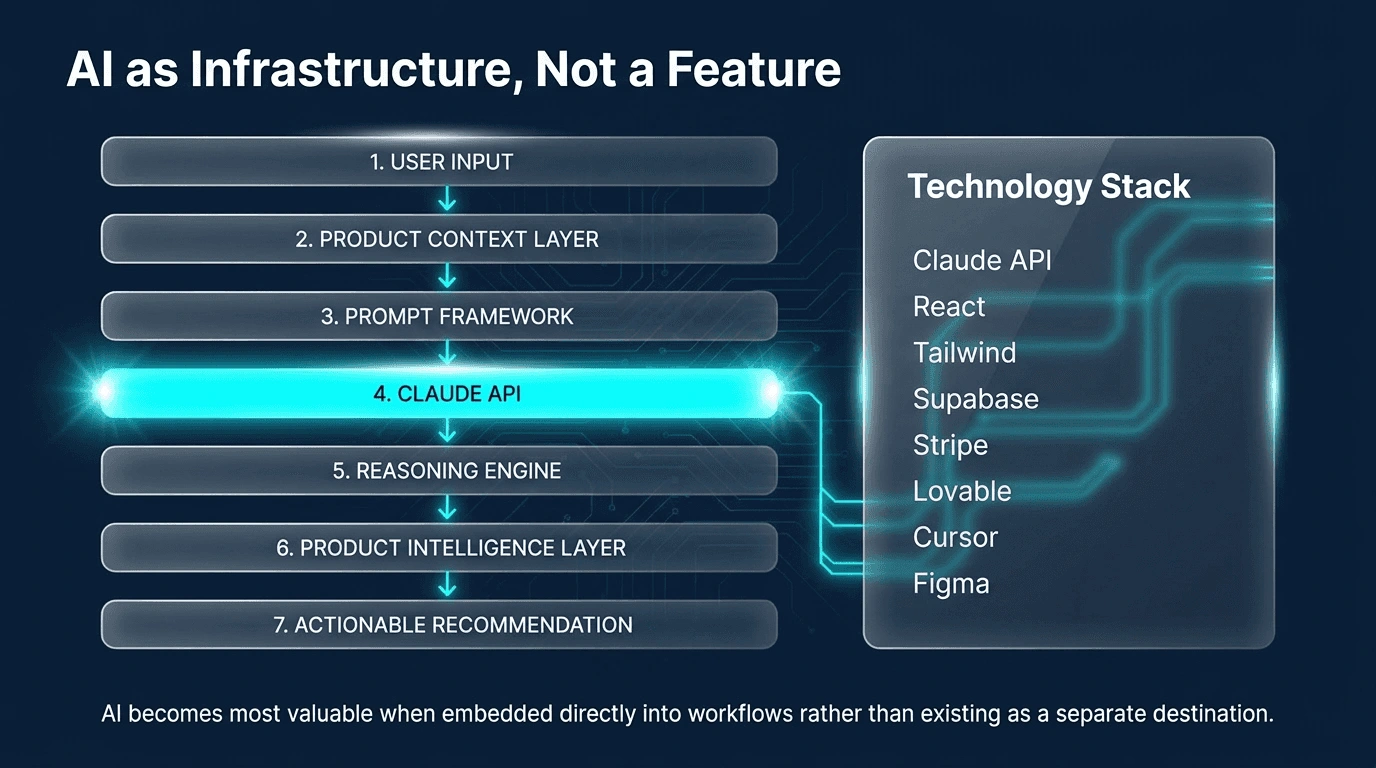
AI AS INFRASTRUCTURE
Intelligence Embedded Throughout the Experience
The most effective AI products do not position AI as a feature. Instead, intelligence becomes part of the underlying system, supporting decisions, reducing friction, and helping users achieve their goals without requiring them to think about the technology itself.
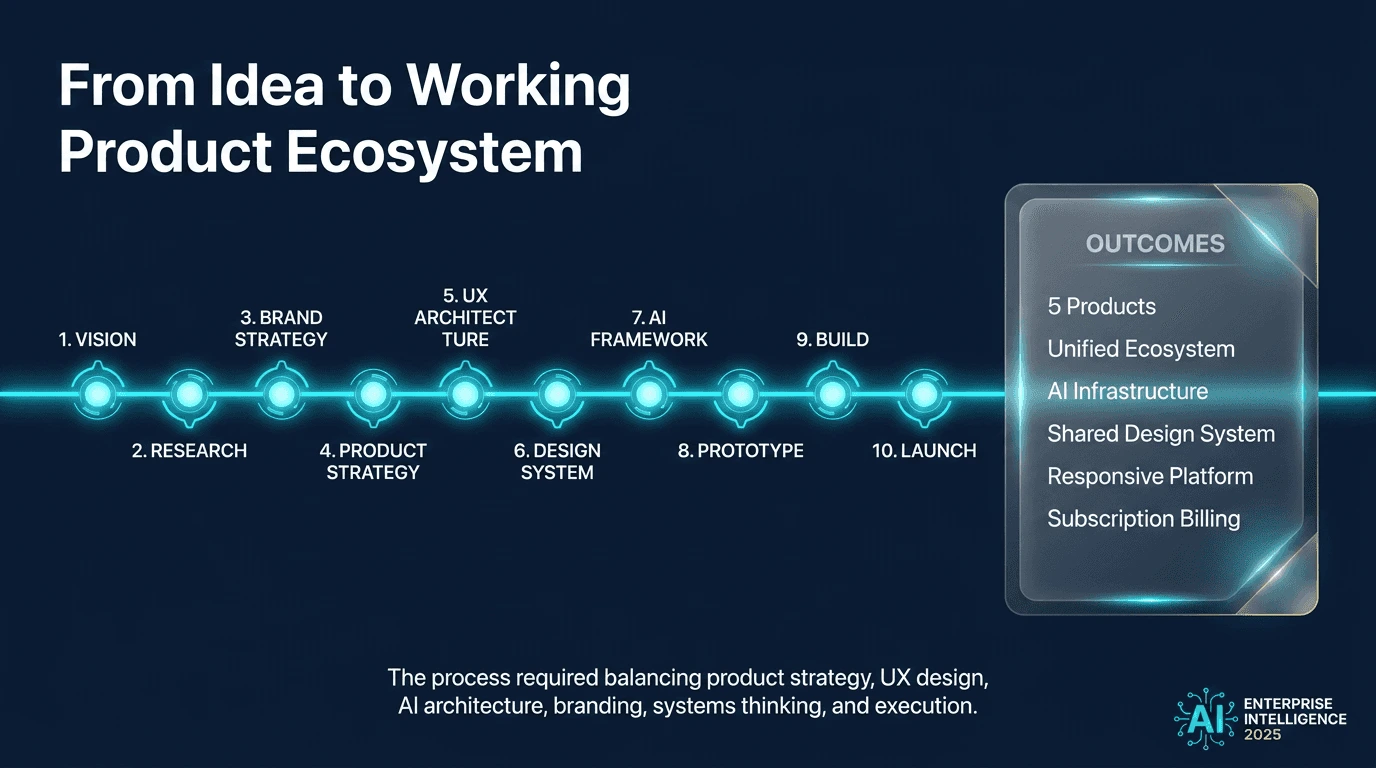
FROM IDEA TO PRODUCT ECOSYSTEM
Turning Concepts Into Connected Products
Building successful AI products requires more than generating ideas. It requires a structured process for validating assumptions, defining systems, and continuously refining solutions. This journey illustrates how strategic product thinking can transform concepts into scalable product ecosystems.
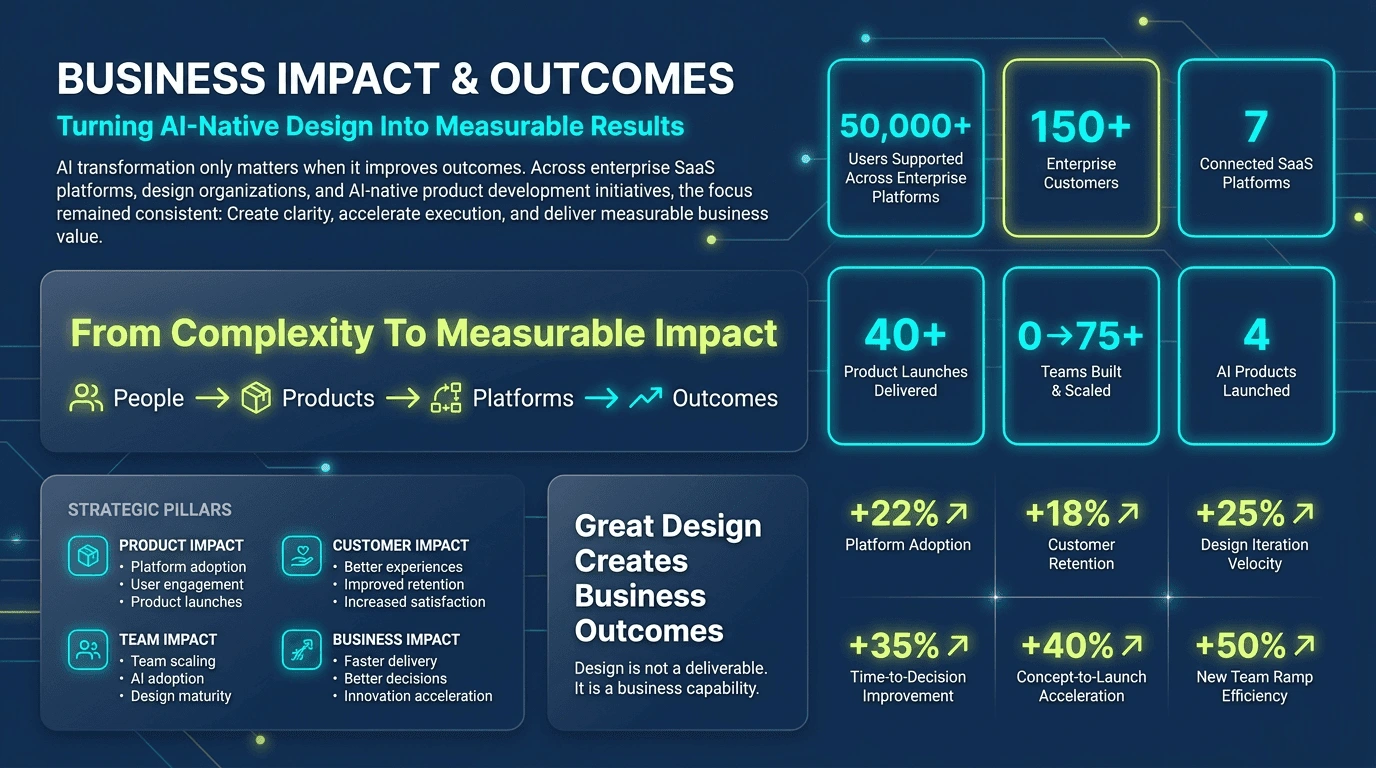
BUSINESS IMPACT & OUTCOMES
From Complexity to Measurable Results
Across enterprise SaaS platforms and the ClarityOS ecosystem, I applied AI-native product design principles to accelerate discovery, reduce iteration cycles, and improve product adoption. While each initiative had different goals, the consistent outcome was the same: transform complexity into measurable business value through better product strategy, design systems, and AI-assisted workflows.
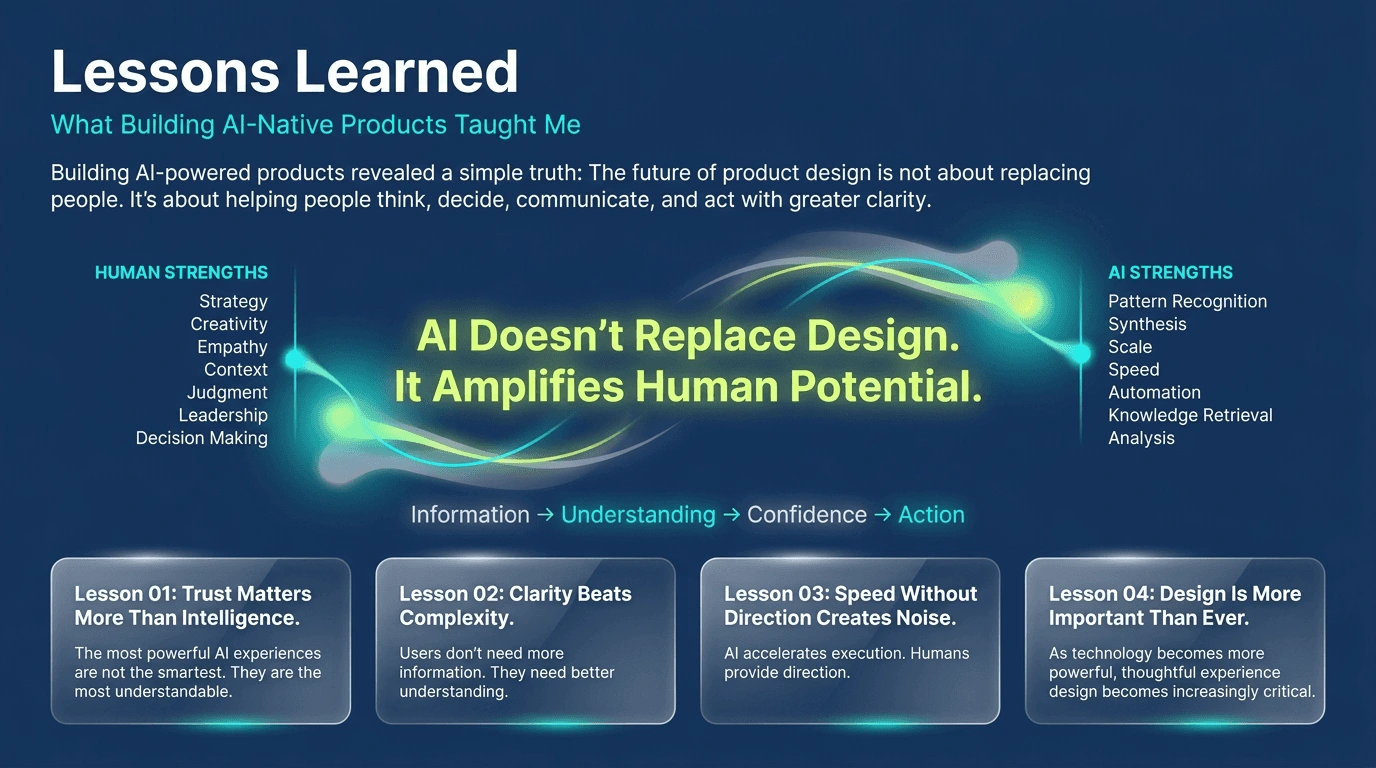
LESSONS LEARNED
What AI Has Reinforced About Design
The most important lesson from AI-powered product development is that technology does not replace design thinking. AI amplifies existing processes, accelerates learning, and expands exploration, but strategy, judgment, empathy, and systems thinking remain fundamentally human responsibilities. The strongest outcomes occur when human expertise and AI capabilities work together.
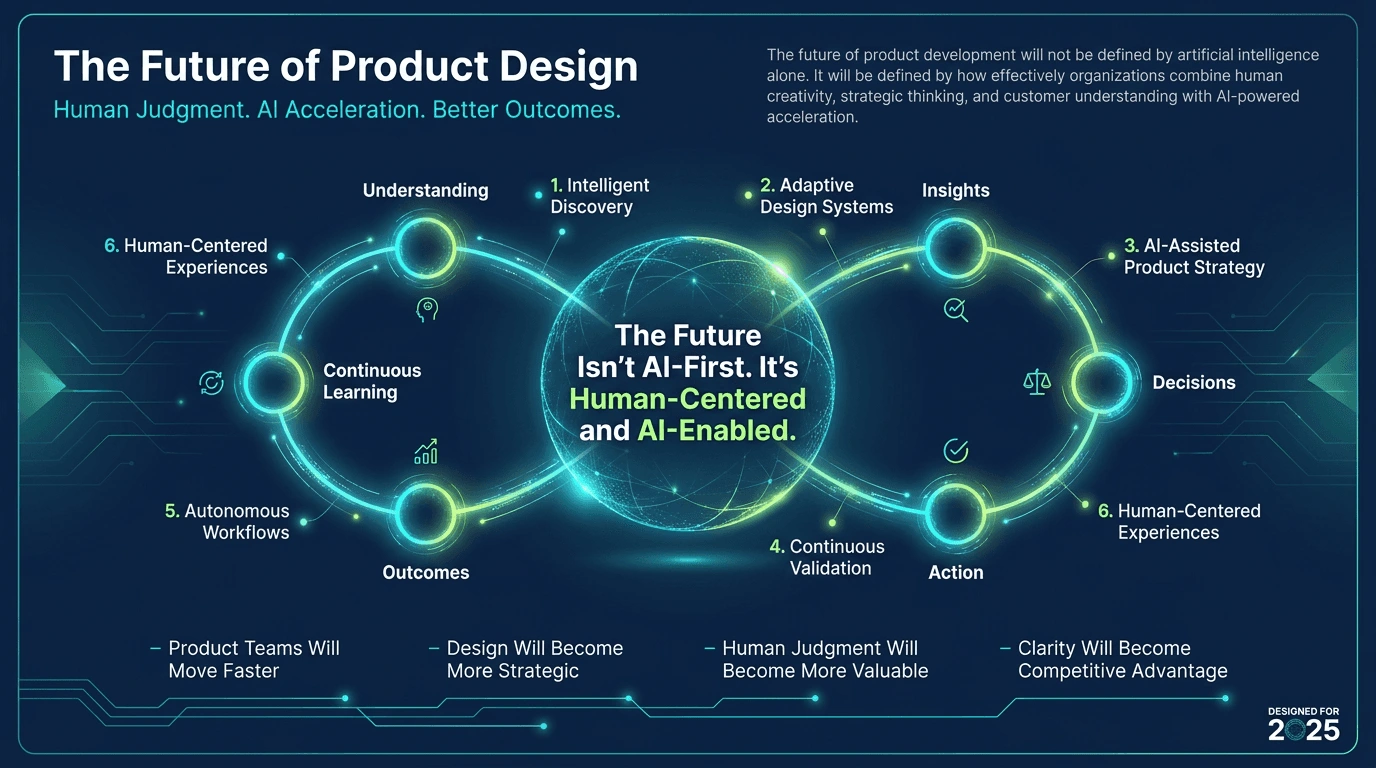
THE FUTURE OF PRODUCT DESIGN
Designing for Human-AI Collaboration
The future of product design is not about replacing people with technology. It is about creating systems where humans and AI work together effectively. Organizations that embrace this model will be able to innovate faster, adapt more quickly, and deliver better experiences at scale.
The future isn't AI-first. It's human-centered and AI-enabled.
Like this project
Posted Jun 29, 2026
Developed AI-native design framework and ClarityOS ecosystem for enhanced product strategy.