Transforming Enterprise SaaS Ecosystem through UX Strategy

Samuel Lombardo


UserCore: Turning Platform Complexity into Product Clarity
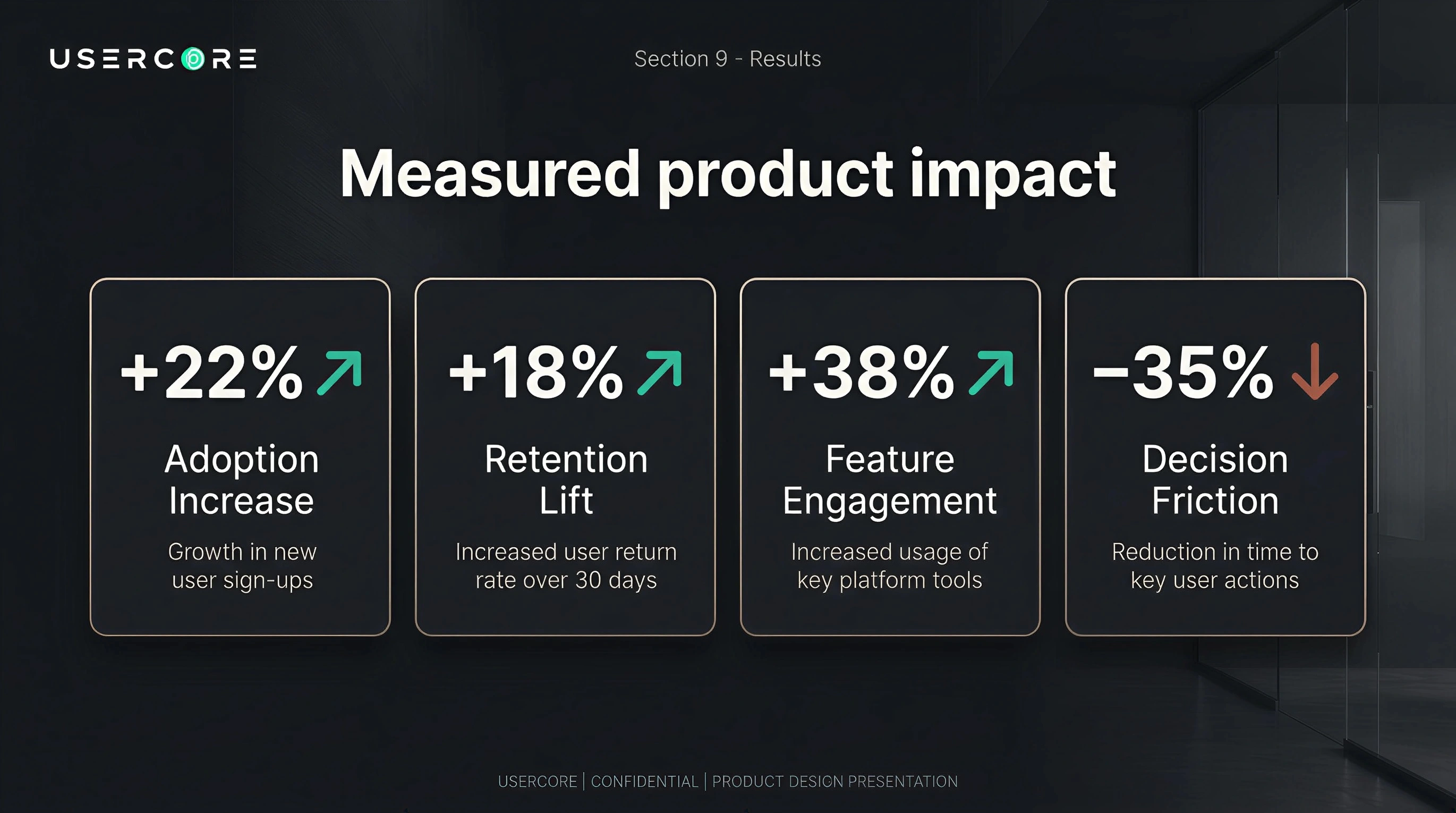
Led UX strategy across a seven-platform enterprise SaaS ecosystem serving 50,000+ users, increasing adoption by 22%, retention by 18%, and feature engagement by 38%.

Executive Summary
Role
Director, UX & Product Design
Scope
Enterprise SaaS Ecosystem
Platforms
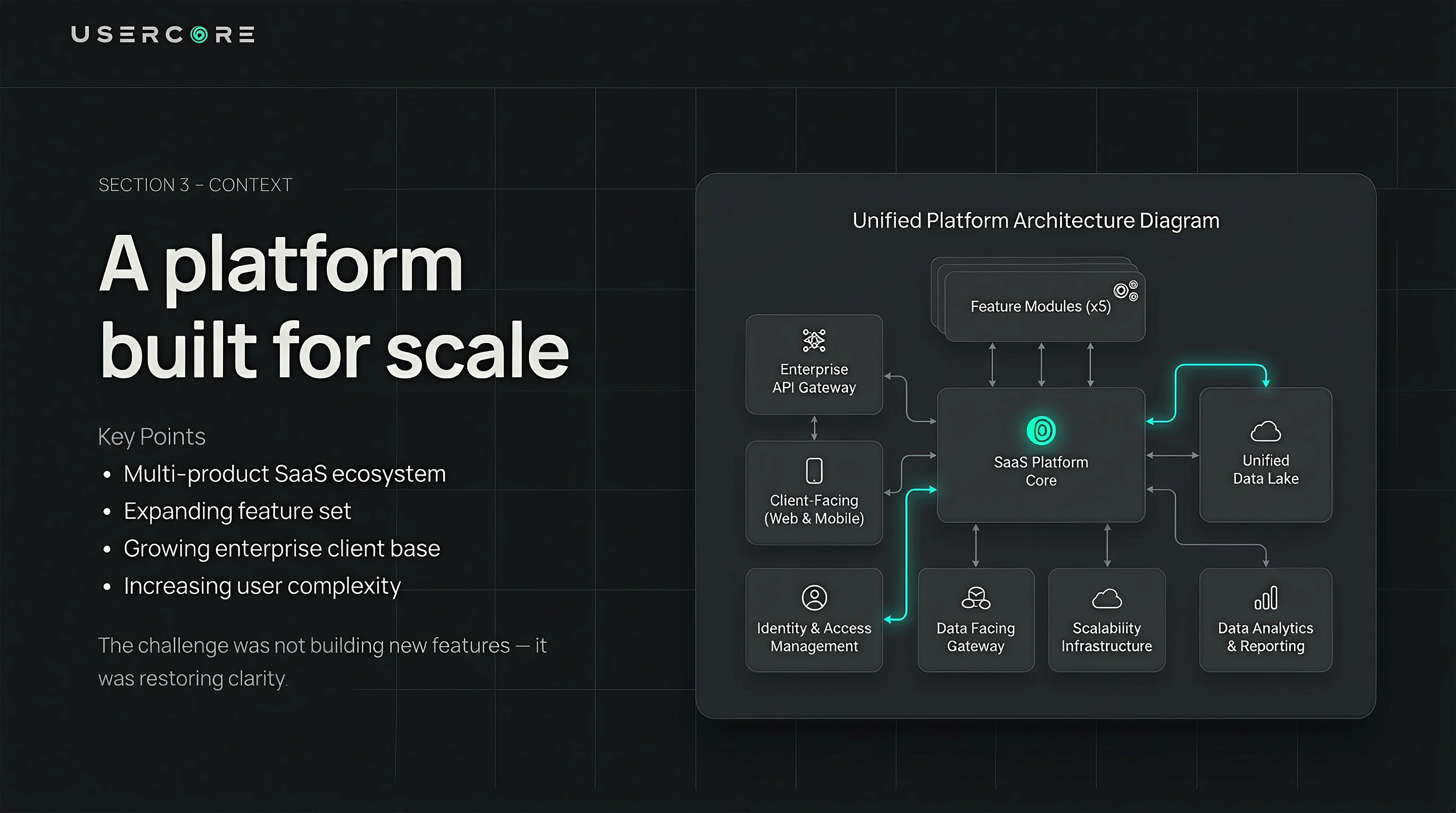
7 Connected Products
Users
50,000+
Clients
150+ Enterprise Organizations
Outcome
+22% Adoption • +18% Retention • +38% Feature Adoption
My Role
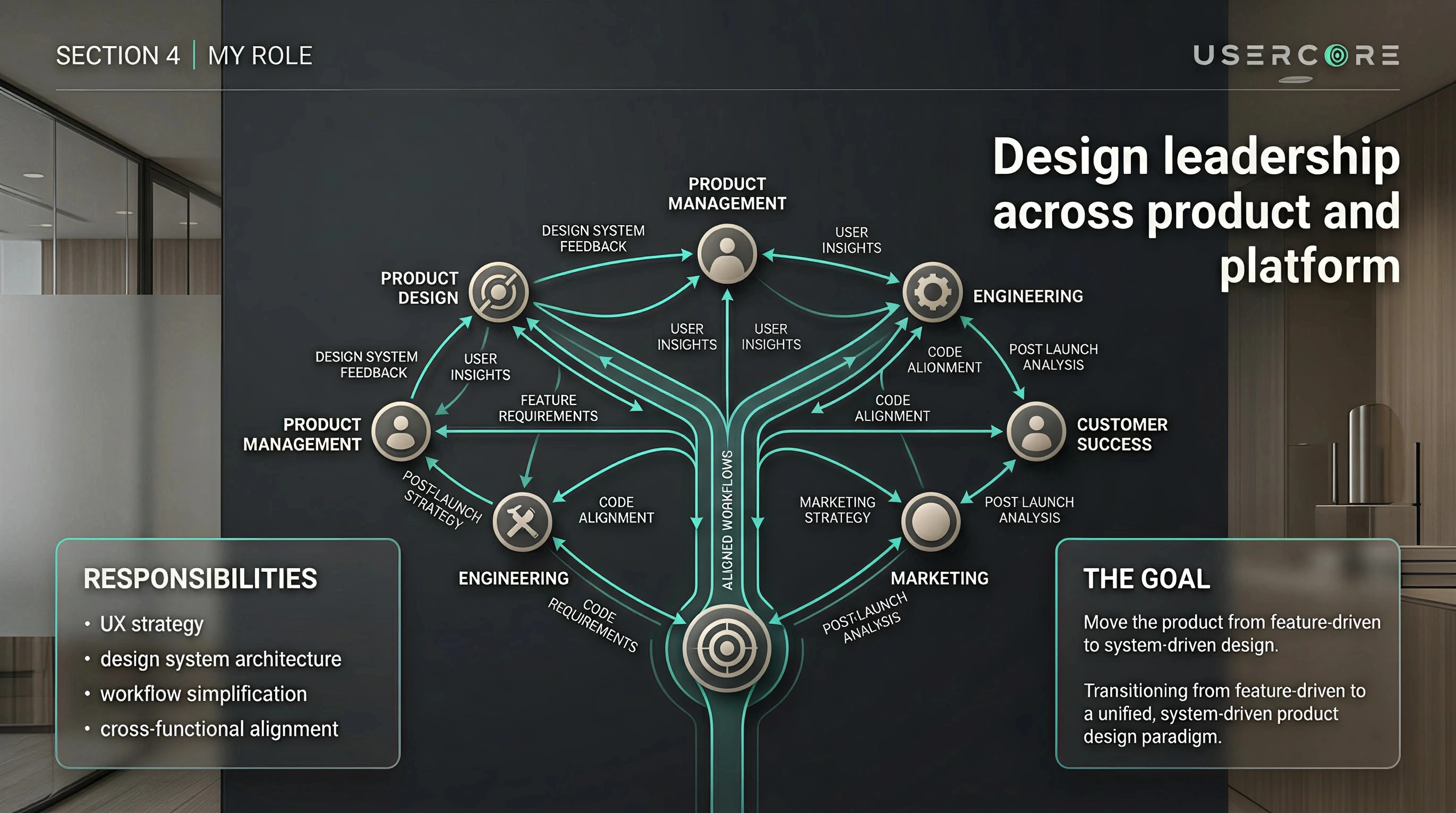
As Director of UX & Product Design, I led the product design strategy for a seven-platform enterprise SaaS ecosystem serving more than 50,000 users across 150+ enterprise organizations. My responsibility extended beyond interface design to include product strategy, cross-functional leadership, design system governance, UX research, stakeholder alignment, and long-term platform scalability.

Strategy & Key Product Decisions
Turning Research Into Platform Strategy
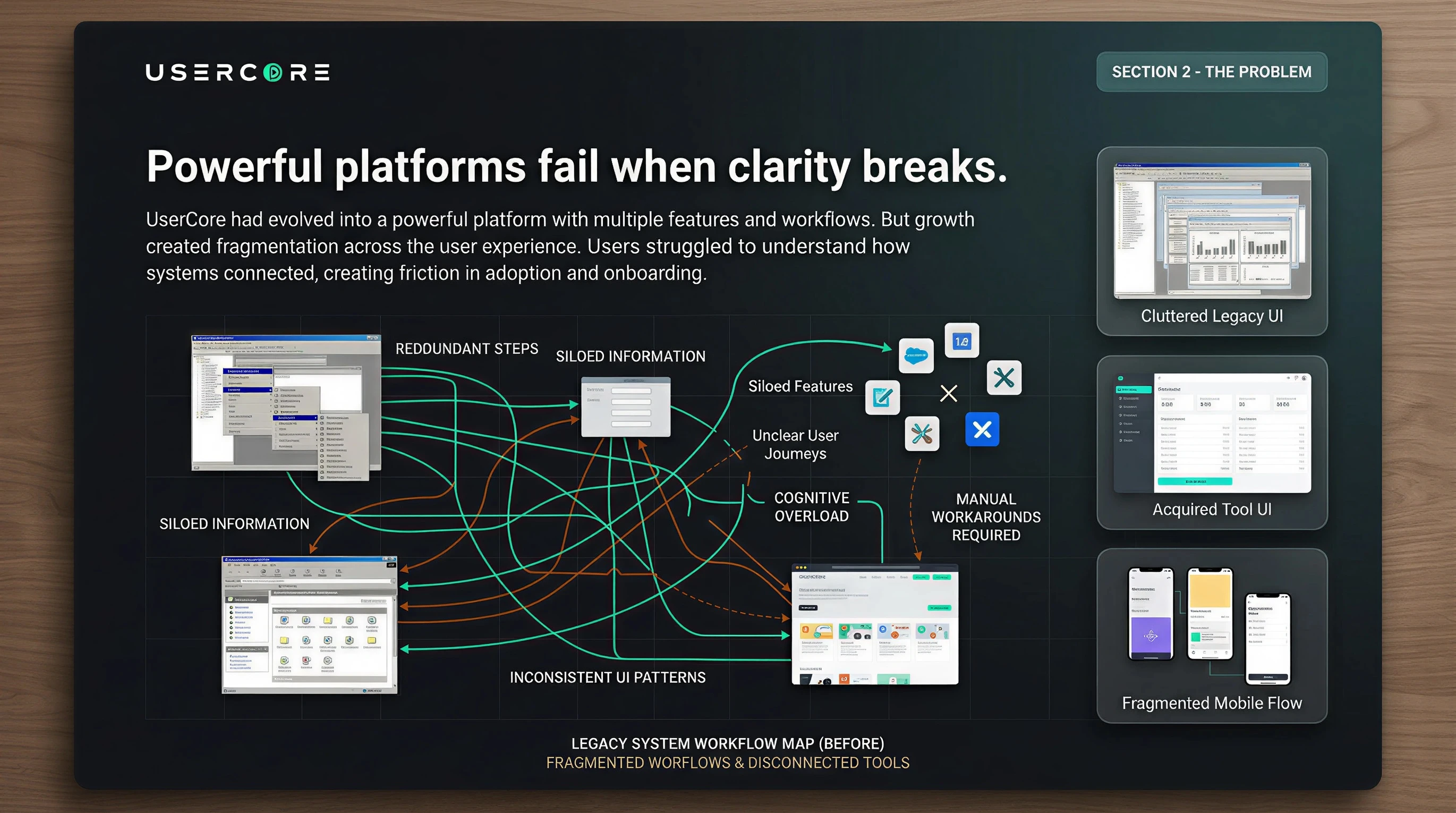
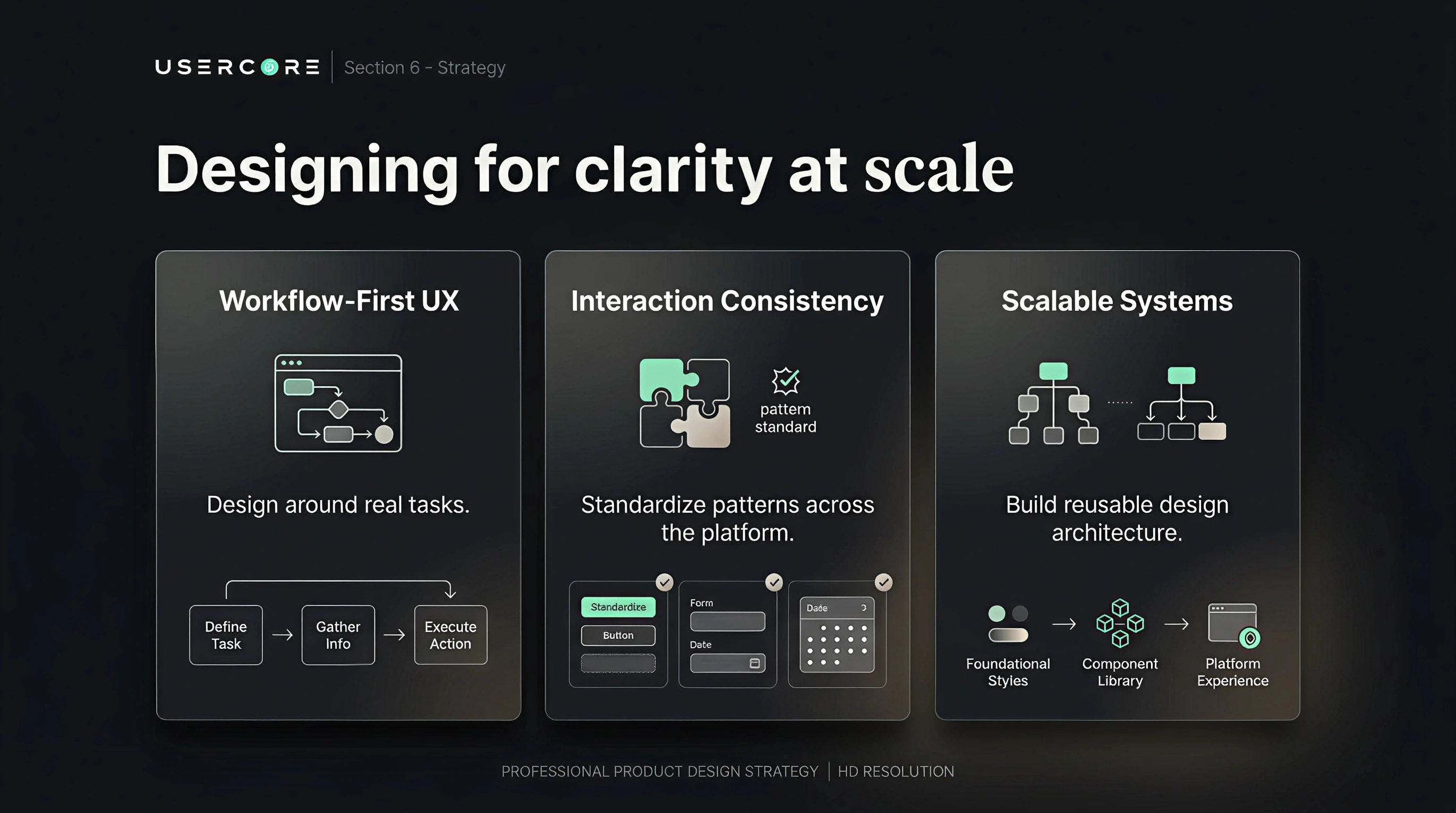
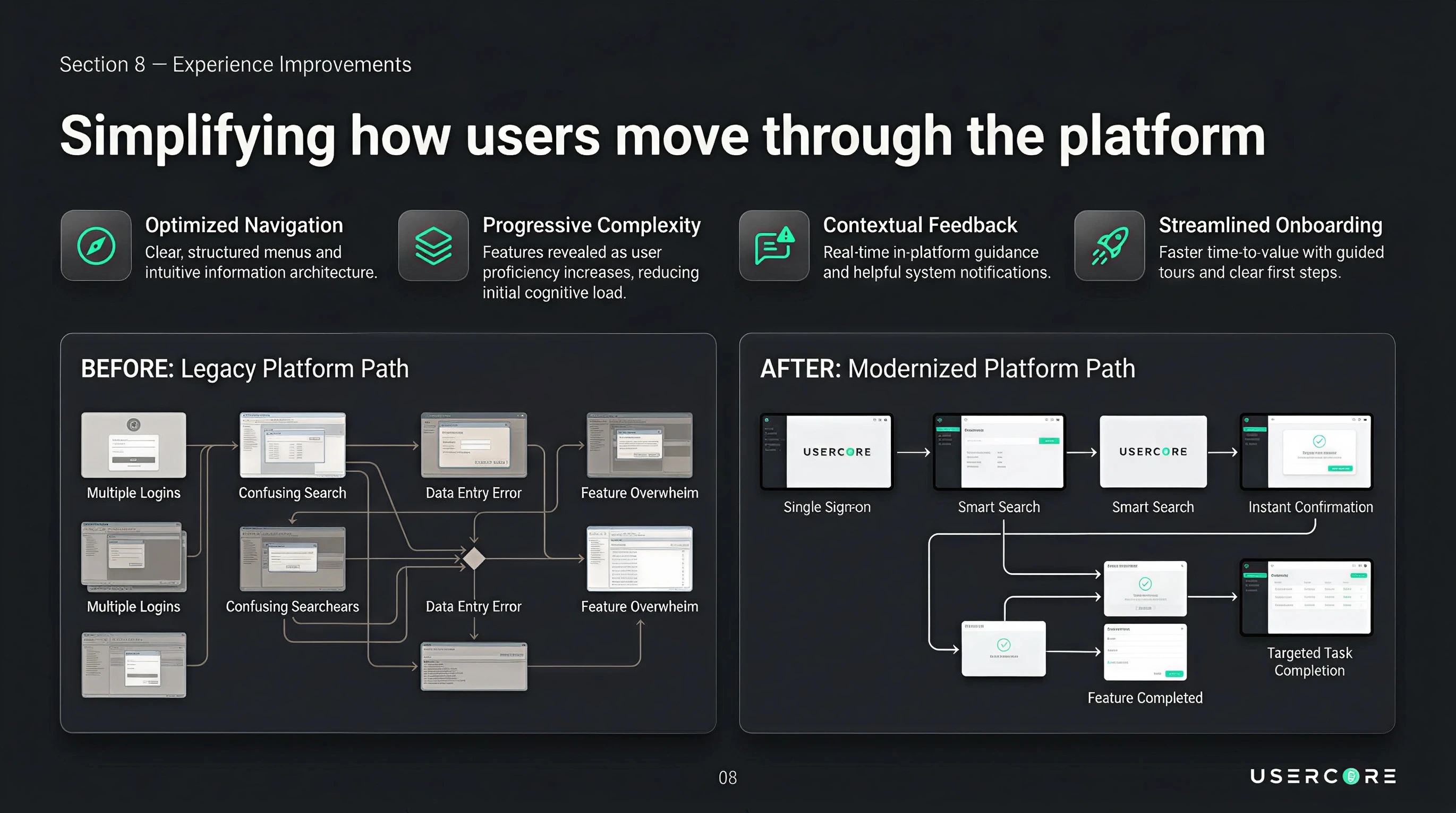
Discovery uncovered more than usability issues, it revealed structural challenges across the platform ecosystem. Rather than optimizing individual interfaces, the strategy focused on simplifying workflows, establishing consistent interaction patterns, and creating a scalable design foundation that could support seven interconnected enterprise products. Every decision was intended to reduce cognitive load, improve collaboration, and create a more cohesive experience for both users and internal teams.
Why unify seven platforms?
Fragmented workflows created unnecessary complexity and inconsistent experiences. A unified product ecosystem improved usability while establishing a scalable foundation for future growth.
Why prioritize a shared design system?
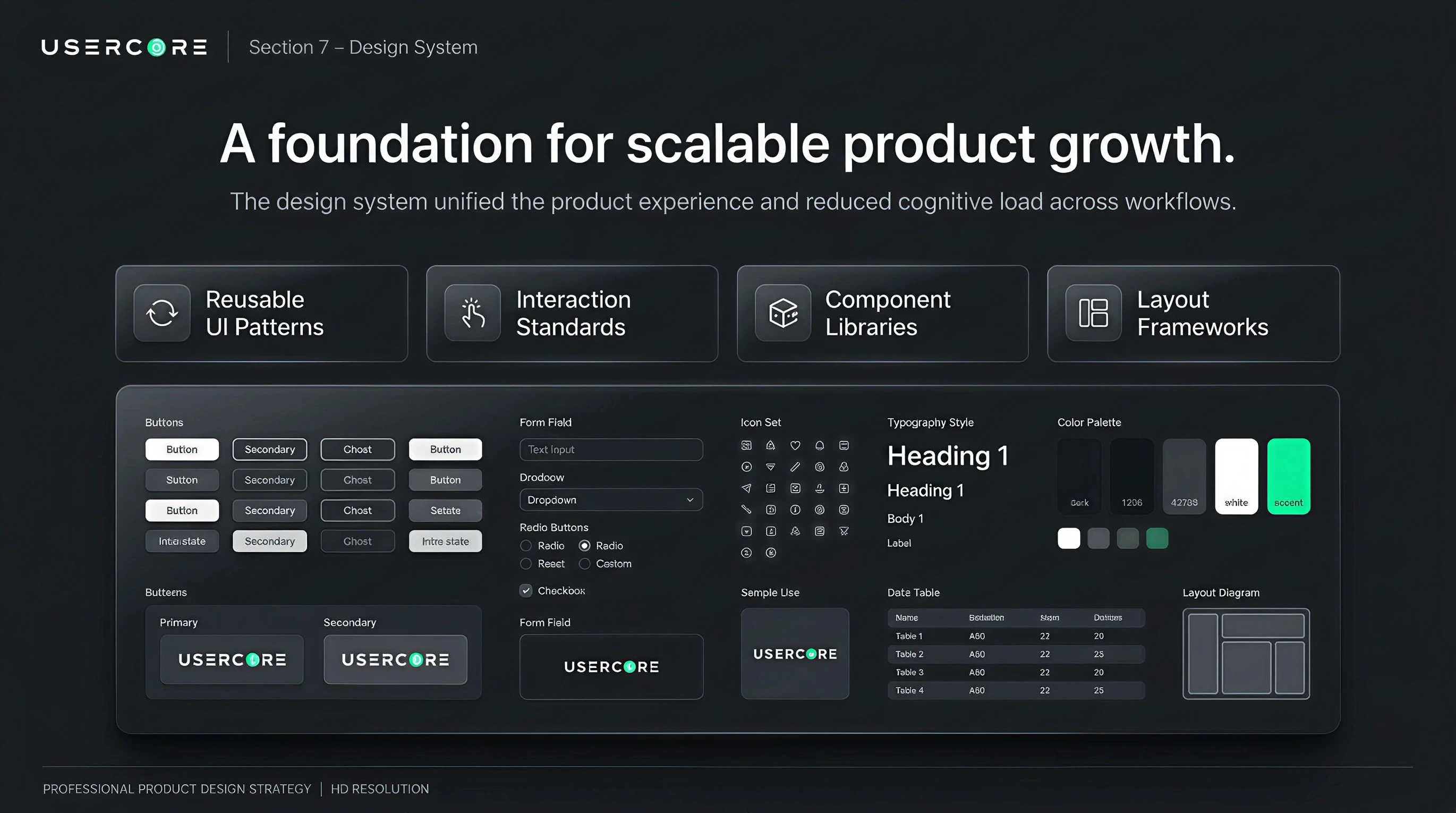
Standardized components and interaction patterns accelerated delivery, reduced design debt, and created a more consistent experience across every platform.
Why invest in discovery first?
User research revealed workflow bottlenecks that analytics alone could not explain, allowing product priorities to be driven by real customer behavior instead of assumptions.
Why align product, design, and engineering early?
Early cross-functional collaboration reduced revision cycles, improved implementation quality, and accelerated delivery across multiple teams.
Executing the Strategy
Business Impact
Building clarity at scale produced measurable business outcomes across the enterprise ecosystem.
Metric
Outcome
Enterprise Platforms
7 Connected Products
Platform Adoption
+22%
Customer Retention
+18%
Decision Friction
−35%
Design System
Unified Architecture
Cross-functional Alignment
Product • Design • Engineering
"The platform didn't need more features. It needed clearer pathways through complexity."
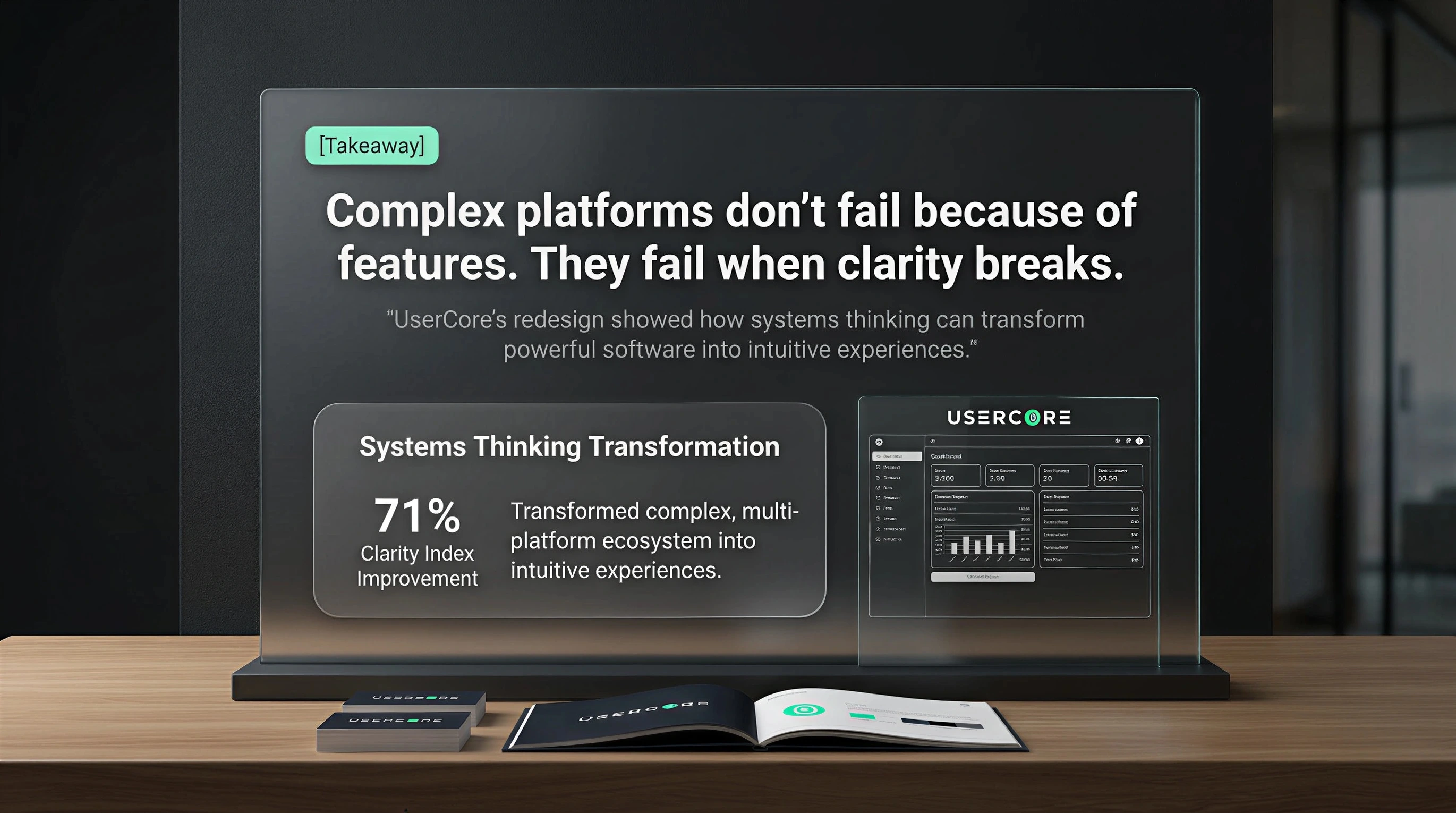
Rather than adding more functionality, the work focused on reducing complexity through a unified design system, standardized interaction patterns, and workflow-first experiences. The result was a platform that became easier to adopt, easier to maintain, and more scalable for both users and internal teams.
Leadership Reflection
UserCore reinforced an important lesson: enterprise platforms rarely fail because they lack features. They struggle because complexity grows faster than clarity. By aligning product strategy, design systems, and cross-functional collaboration around real customer workflows, we transformed a fragmented ecosystem into a more scalable, understandable, and measurable product experience.
Like this project
Posted Jun 29, 2026
Led UX strategy for a 7-platform SaaS ecosystem, boosting adoption, retention, and engagement.
Likes
0
Views
11