Enhancing Buyer Confidence in Higharc's Platform

Samuel Lombardo


Designing the Future of Connected Homebuilding
A strategic exploration of how product design can strengthen Higharc's platform by connecting customer experience, AI, and business outcomes across the homebuilding ecosystem.
Every home begins as a decision.
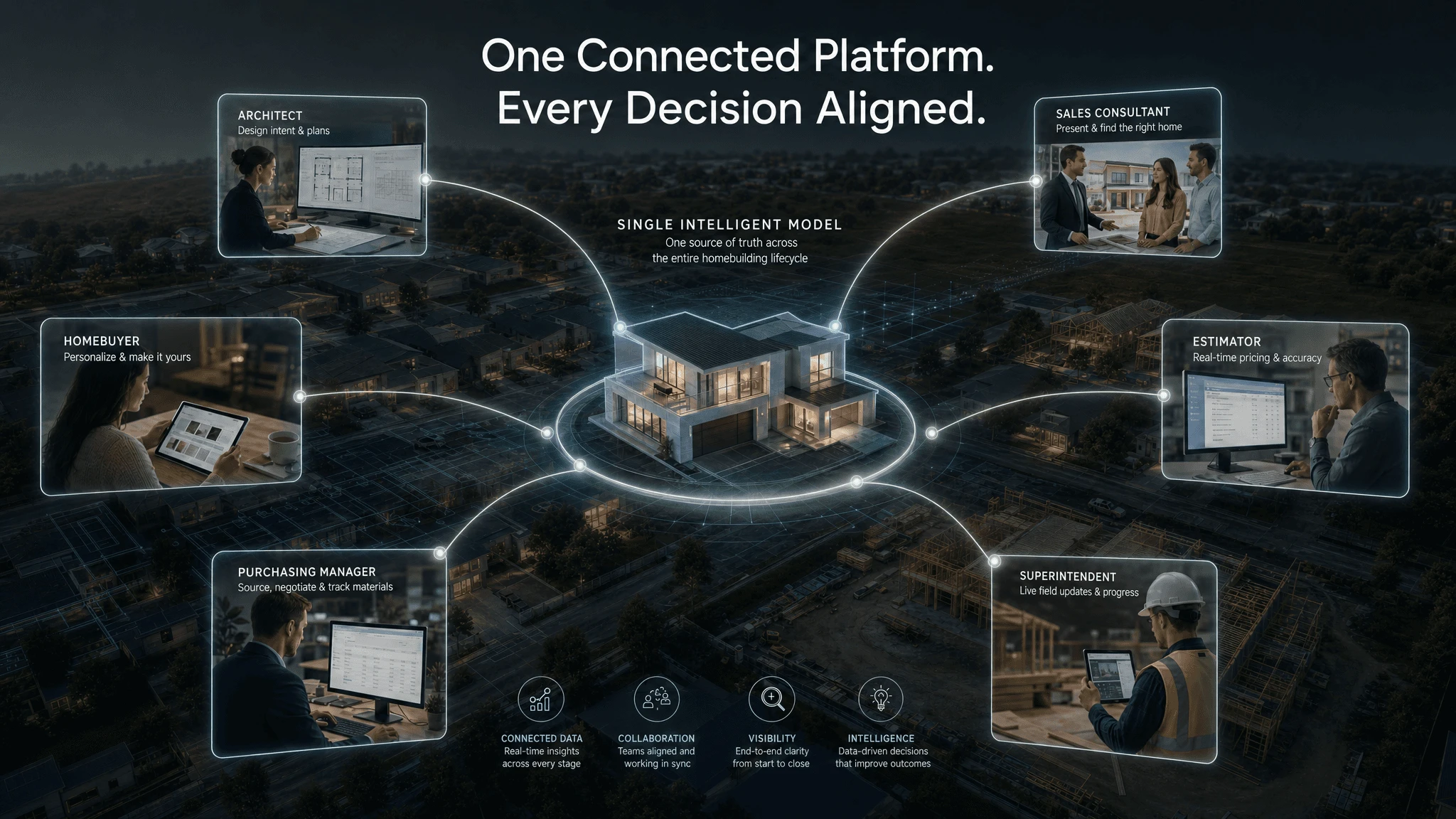
Thousands of those decisions flow through architects, estimators, purchasing teams, construction managers, sales consultants, and ultimately the homeowner.
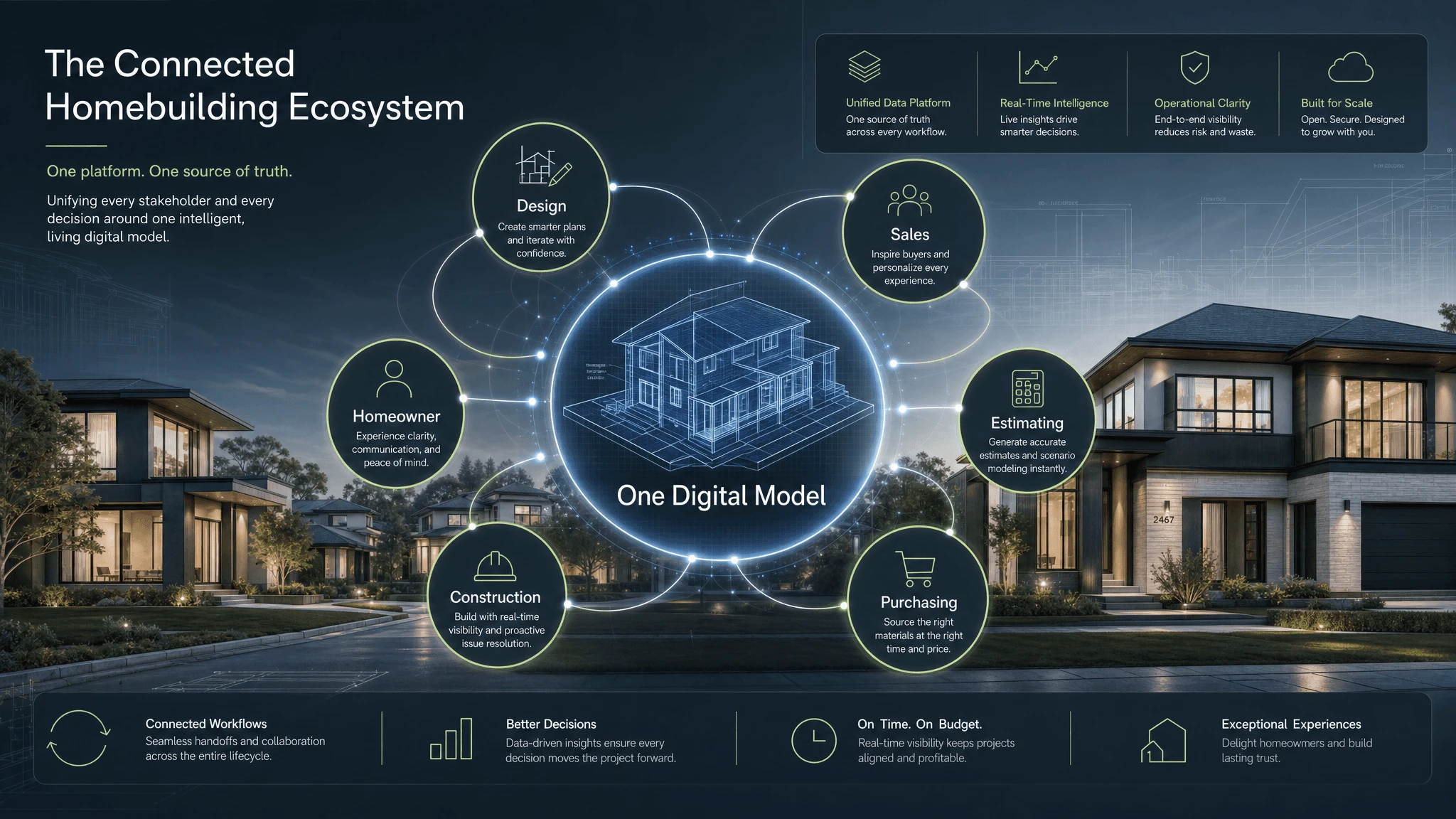
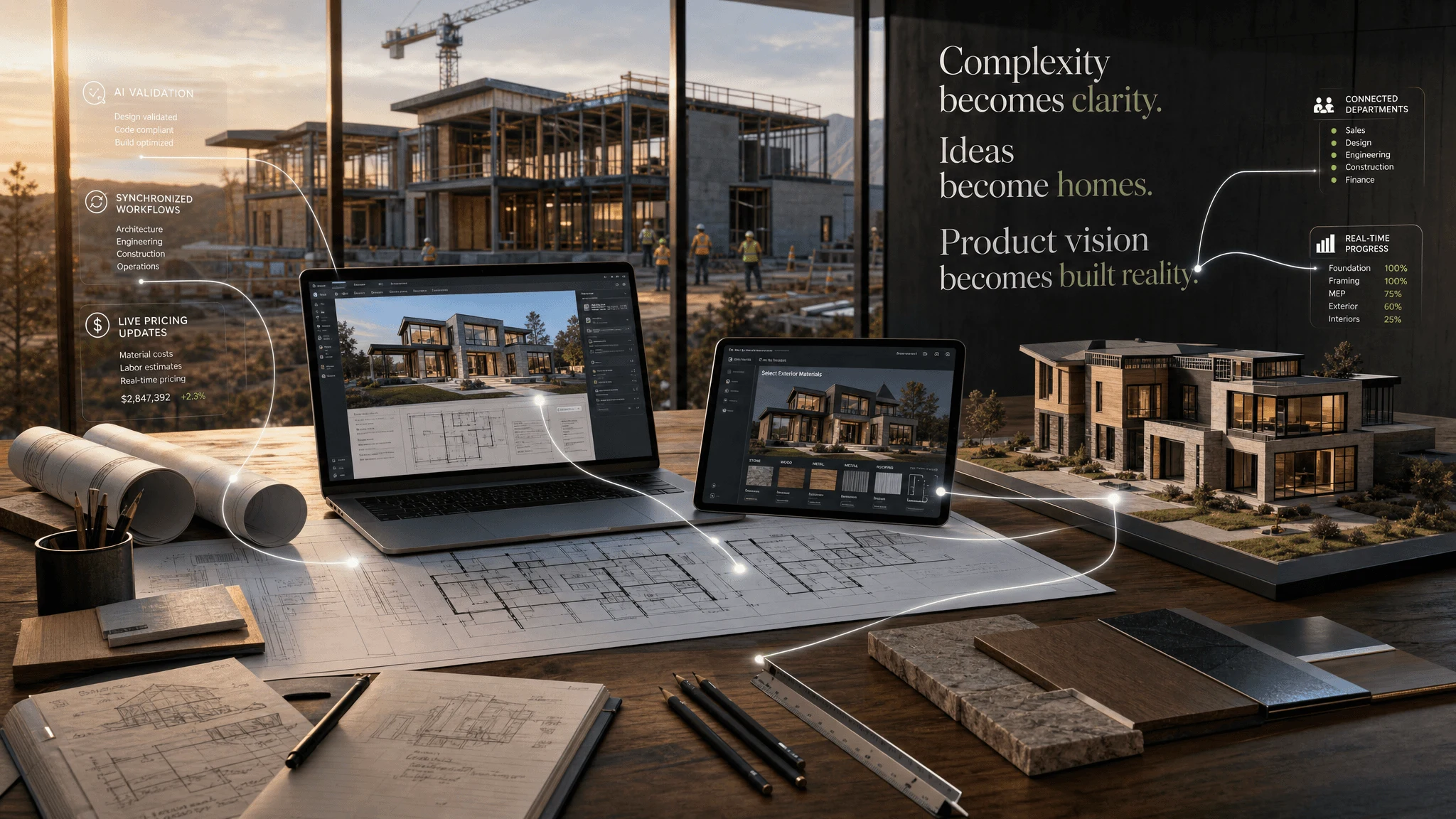
Higharc's vision is to transform those disconnected decisions into one intelligent digital model that connects the entire homebuilding lifecycle. By replacing disconnected systems with one intelligent digital model, Higharc creates a shared source of truth that improves collaboration, reduces operational complexity, and helps builders move faster with greater confidence.
That vision is what inspired this study.
Rather than redesigning individual screens, I wanted to understand how product design could strengthen an already ambitious business strategy by improving the moments where customers, builders, and technology intersect.
The buyer configurator became the focal point because it represents the first meaningful interaction many customers have with the Higharc platform. It is the point where operational complexity becomes a deeply personal decision and where every interaction either builds confidence or introduces uncertainty.
This is not a redesign of Higharc's product. It is a product strategy and experience vision that demonstrates how I approach enterprise platforms, connecting systems thinking, AI, customer experience, and business strategy to transform complexity into clarity.

The Traditional Homebuilding Model Creates Friction
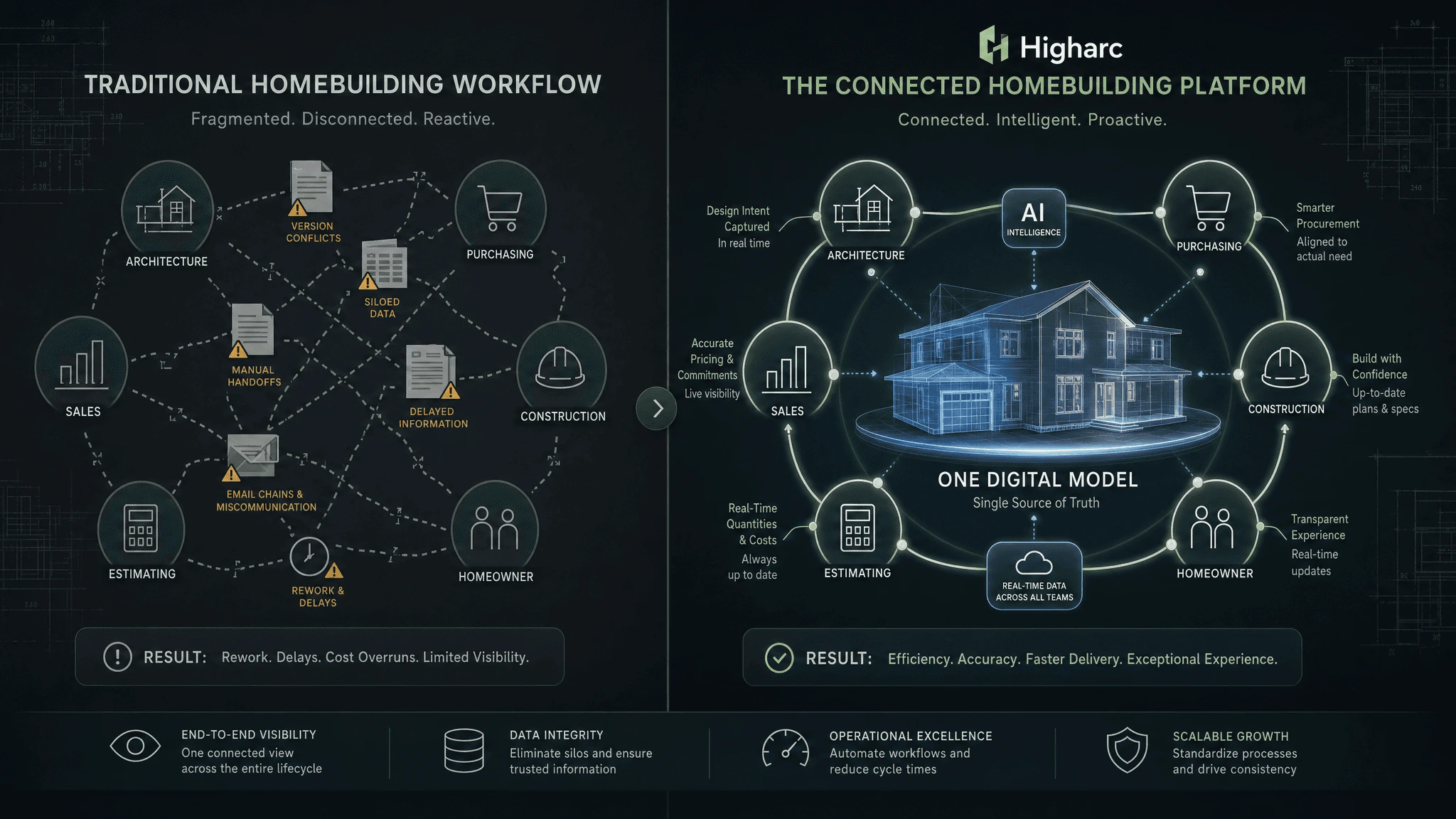
Homebuilding has long depended on disconnected systems, manual processes, and repeated handoffs between design, sales, estimating, purchasing, and construction. While each department may optimize its own workflow, the overall experience often becomes fragmented, creating unnecessary complexity for both builders and homebuyers.
Higharc's vision is to replace those disconnected processes with a single intelligent digital model that connects every stage of the homebuilding lifecycle. Instead of information being recreated or transferred between teams, every decision flows from one shared source of truth.
That operational transformation creates an equally important opportunity for product design.
When complexity has been removed behind the scenes, the customer experience should communicate that same clarity. Every interaction should reinforce confidence, reduce uncertainty, and help buyers understand the impact of each decision without feeling overwhelmed.
This became the foundation for the rest of this product vision.
"The UX design and interface are a bit dated when it comes to visuals and color schemes." Higharc's own team acknowledged it publicly. Three opportunity areas emerged: visual design modernization, information architecture, and how AI moments are surfaced to the buyer.

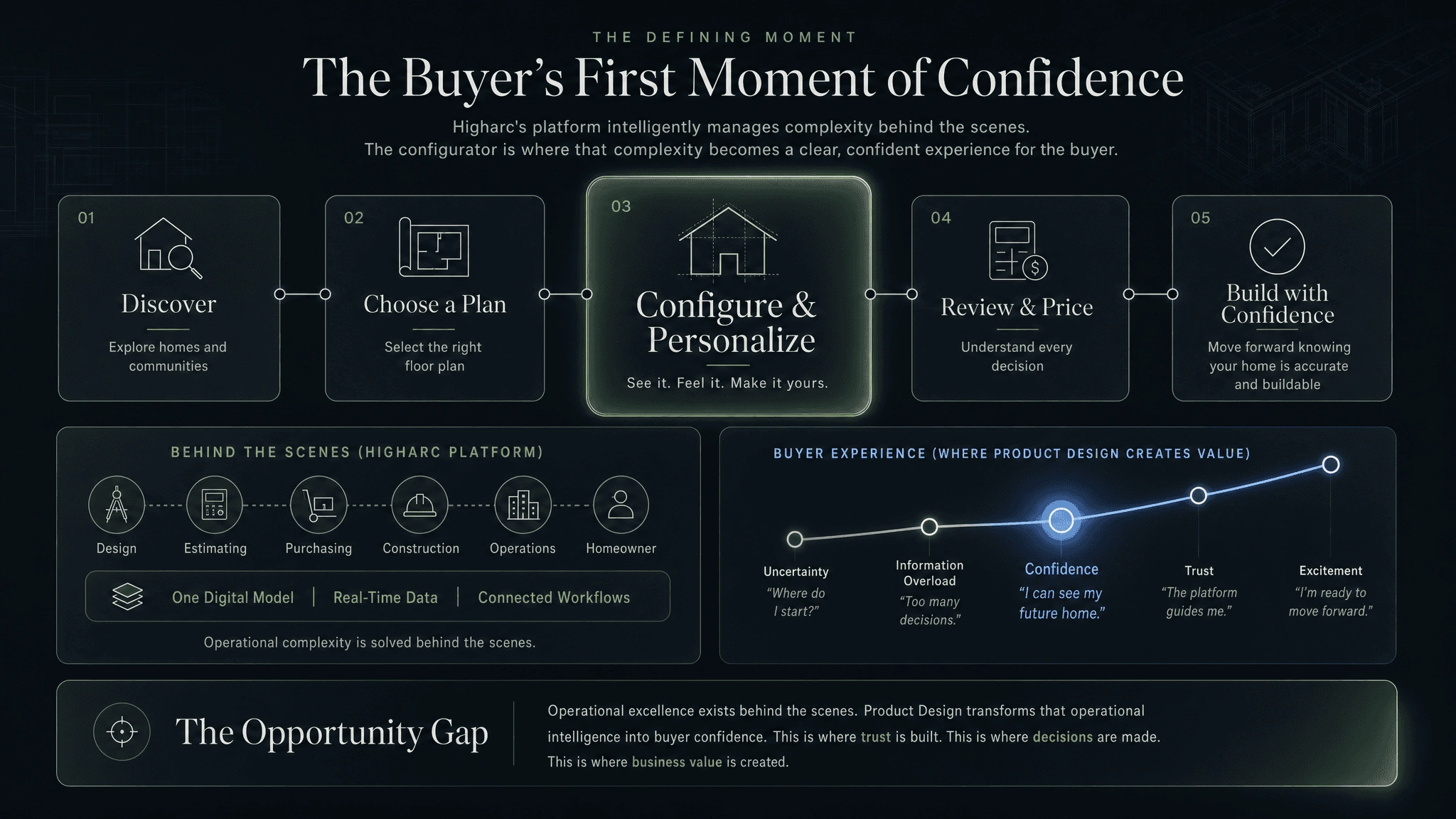
The Buyer's First Moment of Confidence
Every connected platform has a defining moment where its value becomes real to the customer.
For Higharc, that moment is the buyer configurator.
This is where a future homeowner begins transforming a floor plan into a personal home. Every material selection, layout decision, and design choice contributes to one of the largest financial and emotional investments they will ever make.
While Higharc's connected platform intelligently manages the operational complexity behind the scenes, the configurator is responsible for communicating that intelligence to the customer. It is the bridge between a powerful enterprise platform and a confident buying experience.
That creates a unique product design opportunity.
Rather than simply helping users complete a configuration, the experience should build confidence, reduce cognitive load, visualize decisions in real time, and reinforce that every selection is accurate, connected, and buildable.
When the buyer feels confident, the entire platform becomes more valuable.
and that's the problem. Seven dropdown menus, a buried 3D preview, no sense of progress, and a price reveal only at the very end. For a builder, it checks every box. For a buyer making the largest financial decision of their life, it feels like filling out a form. The gap between what Higharc's platform can do and what the buyer actually feels in that appointment is where the design opportunity lives.
The current configurator successfully exposes the available options, but it places much of the cognitive work on the buyer. Configuration is driven through long lists, sequential dropdowns, and delayed visual feedback, making the experience feel procedural rather than intuitive.
From a business perspective, the platform is doing exactly what it was designed to do.
From a customer perspective, however, the experience can create unnecessary uncertainty during one of the most important decisions in the homebuying journey.
That gap between operational excellence and emotional confidence is where the greatest product opportunity exists.
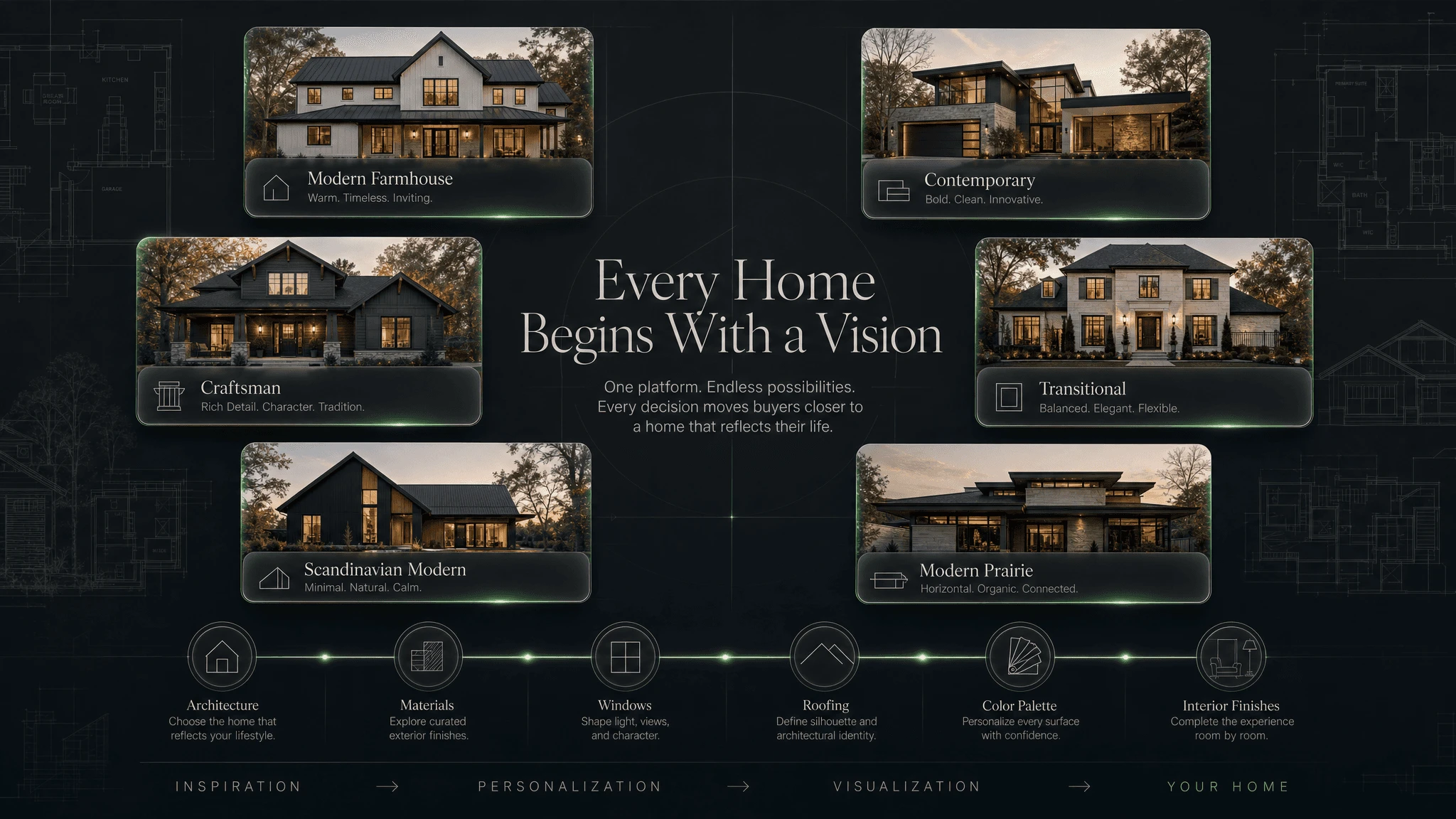
A Product Strategy Built Around Confidence
The opportunity was not to redesign the configurator. It was to rethink what the configurator should accomplish.
Instead of asking buyers to complete a series of forms, the experience should guide them through one of the most important purchasing decisions of their lives with confidence, transparency, and clarity.
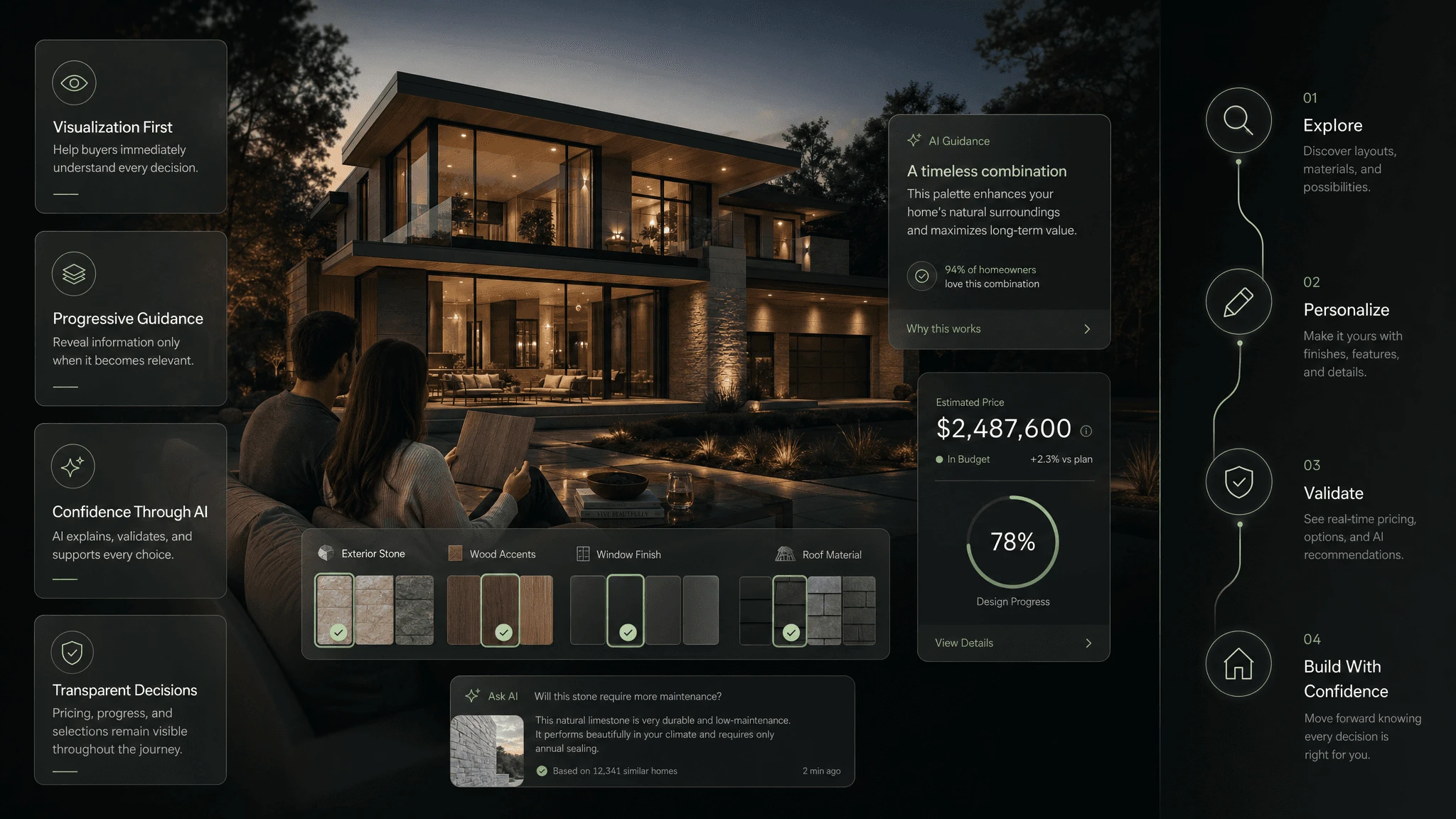
That shift led to four product principles:
Visualization Before Configuration
The 3D home should lead the experience, helping buyers see the impact of every selection in real time.
Progressive Decision-Making
Complex choices should be broken into clear, manageable steps so buyers are not overwhelmed.
AI as a Confidence Layer
AI should act as a trusted guide that explains, validates, and supports decisions rather than simply appearing as a feature label.
Continuous Transparency
Pricing, selected options, and progress should remain visible throughout the journey so buyers always understand where they are and what each decision means.
Together, these principles turn configuration from a transactional workflow into a guided decision-making experience.
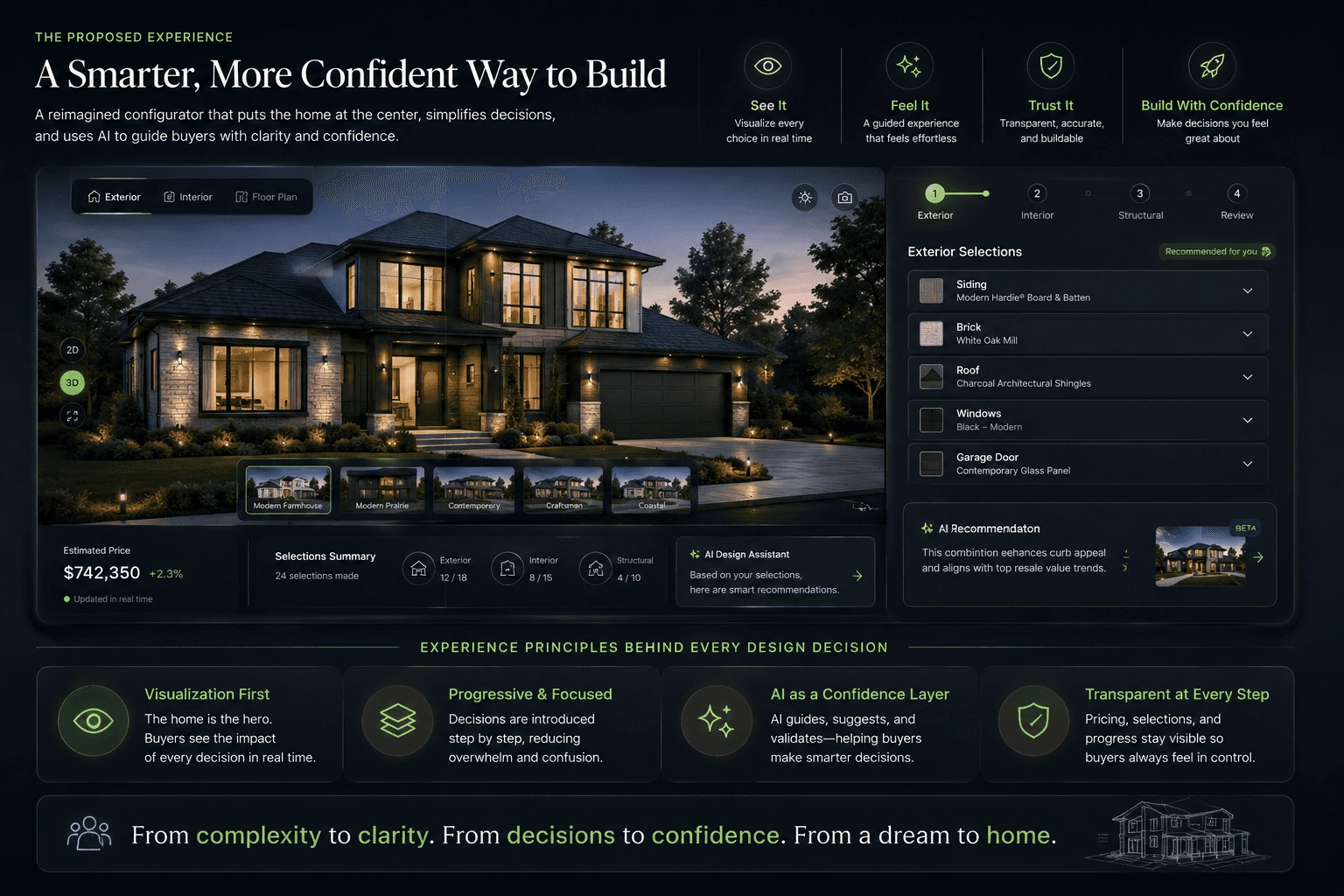
Why This Experience Works
Every design decision supports a larger product strategy. The split-pane layout gives the home the emotional focus. Progressive steps reduce cognitive load. Persistent pricing builds trust. AI becomes a confidence layer that helps buyers understand and validate decisions.
Measuring Success
A product vision only creates value when it delivers measurable business outcomes.
Every recommendation throughout this study is designed to improve both the customer experience and Higharc's business performance. Rather than measuring success by visual redesign alone, I would evaluate the product across customer adoption, engagement, buyer confidence, operational efficiency, and revenue impact.
This creates a shared scorecard that aligns Product, Design, Engineering, Sales, and Executive Leadership around the same business objectives.
Customer Experience Metrics
Configuration Completion Rate
Measure the percentage of buyers who successfully complete the entire home personalization journey.
Time to Complete Configuration
Track how efficiently customers move from floor plan selection to a purchase-ready configuration.
Customer Confidence Score
Capture how prepared and confident buyers feel after completing their home configuration.
Customer Satisfaction (CSAT)
Evaluate overall satisfaction immediately following the configuration experience.
Net Promoter Score (NPS)
Measure whether buyers would recommend the experience to future homeowners.
Configuration Abandonment Rate
Identify where customers become overwhelmed or exit the experience before completion.
Business Performance Metrics
Average Upgrade Revenue
Measure whether improved visualization and guided decision-making increase premium option selections.
Sales Cycle Duration
Track reductions in the time required for buyers to move from exploration to purchase.
Configuration Revision Rate
Reduce unnecessary revisions between Sales, Estimating, Purchasing, and Construction.
Builder Productivity
Measure time saved through more accurate customer selections and fewer downstream corrections.
Platform Adoption
Increase engagement across builders utilizing the complete Higharc ecosystem.
Support Requests
Reduce customer confusion by creating a more intuitive and transparent buying experience.
Like this project
Posted Jun 29, 2026
Developed a product strategy for Higharc focusing on enhancing buyer confidence and reducing complexity in home configuration.
Likes
0
Views
6
Clients
Higharc