Wonder: an AI agent that builds storefronts

Ana Estrela


Storefront editor
Two stages, kept apart
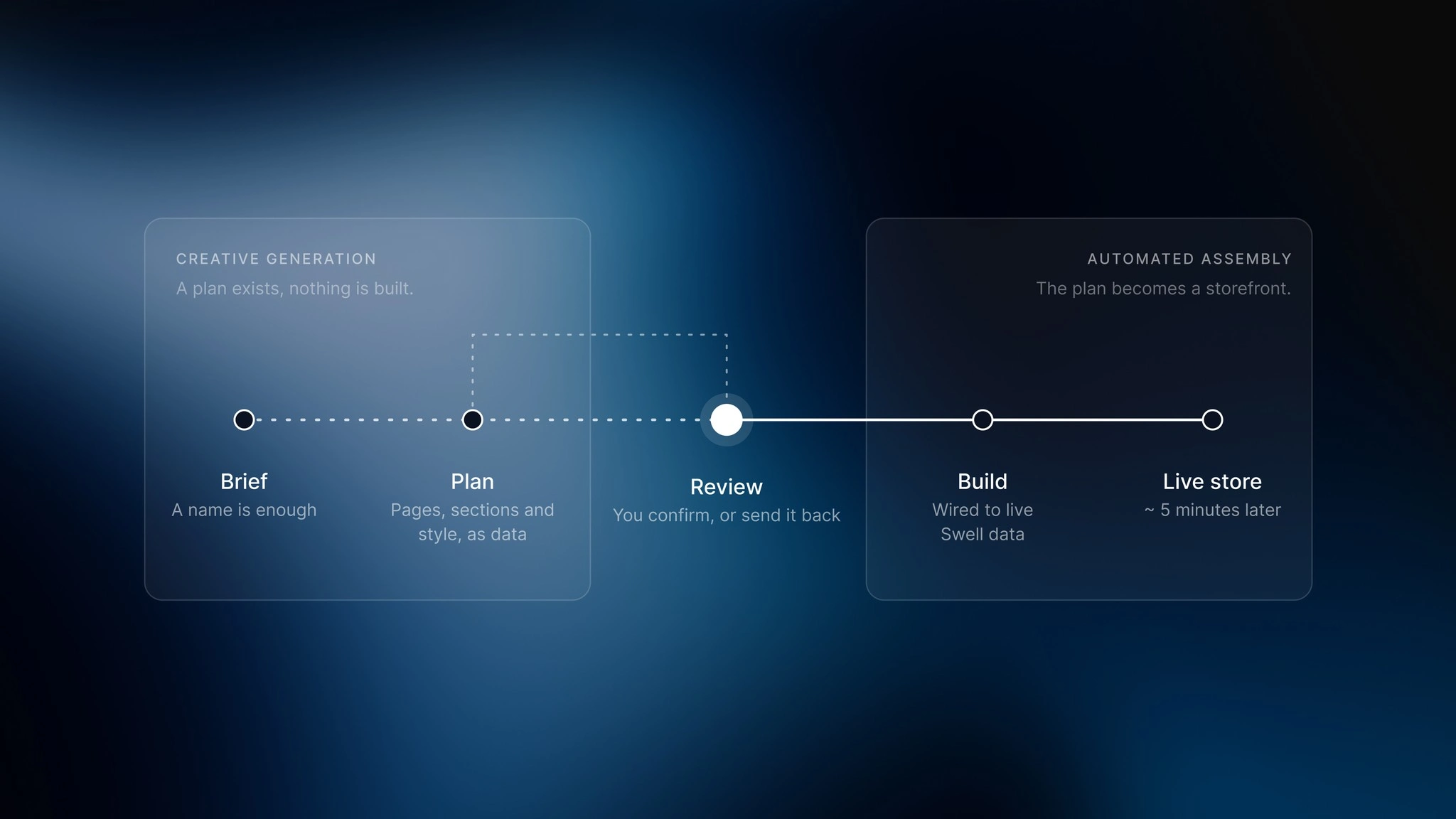
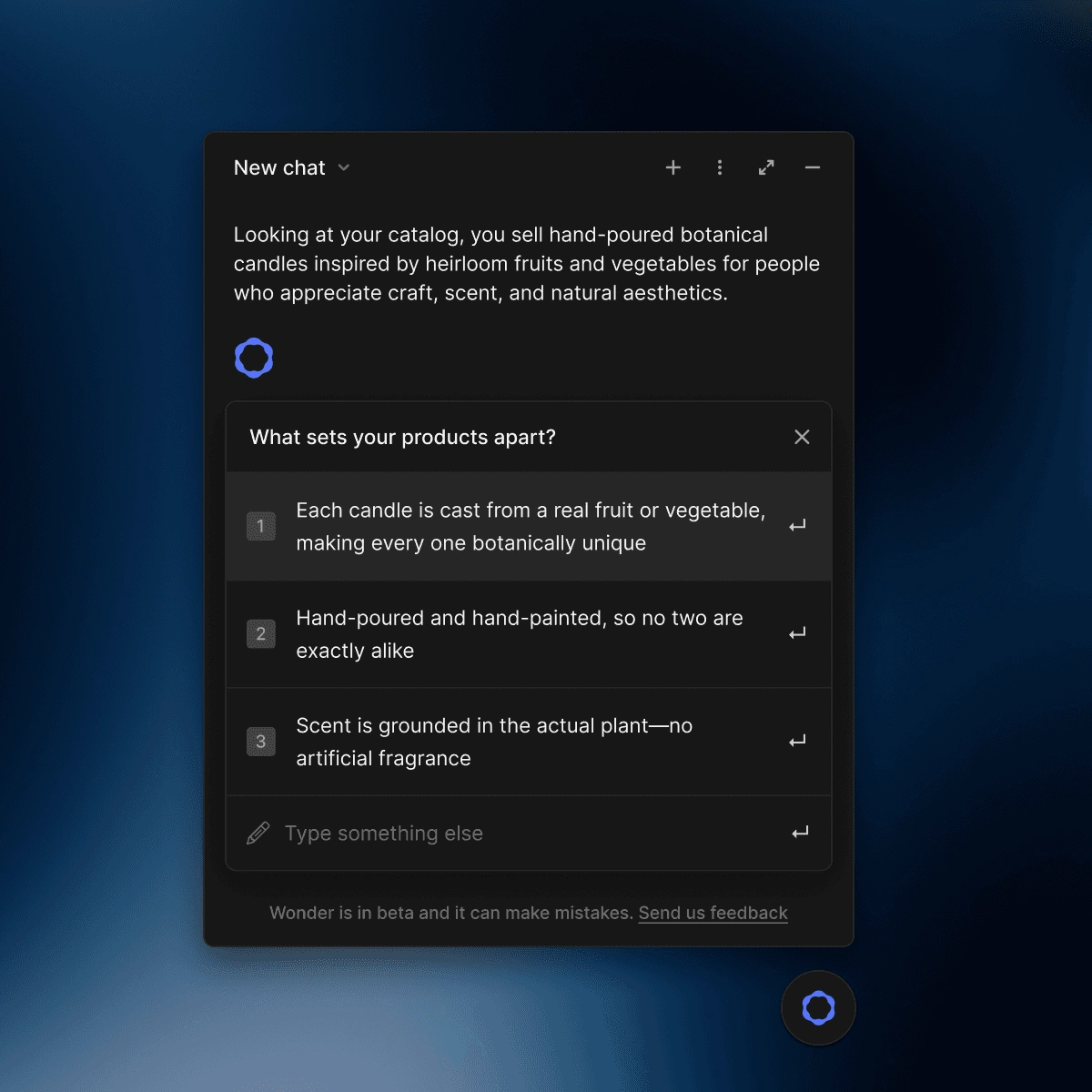
Wonder works in two stages. The first is the brief. Wonder reads the merchant’s catalog, asks a few short questions and proposes a plan with the pages, a taste direction with its type pairing and palette, and a summary of what it inferred along the way. The second is generation. A single agent builds the storefront from that plan inside a Swell storefront template, writing a token-only theme and the sections for each page against live catalog data. Products, cart and checkout are already wired by the template, which leaves the model free to concentrate on design rather than on API work. The result builds, repairs itself once if the build fails, and deploys as a Swell storefront app.
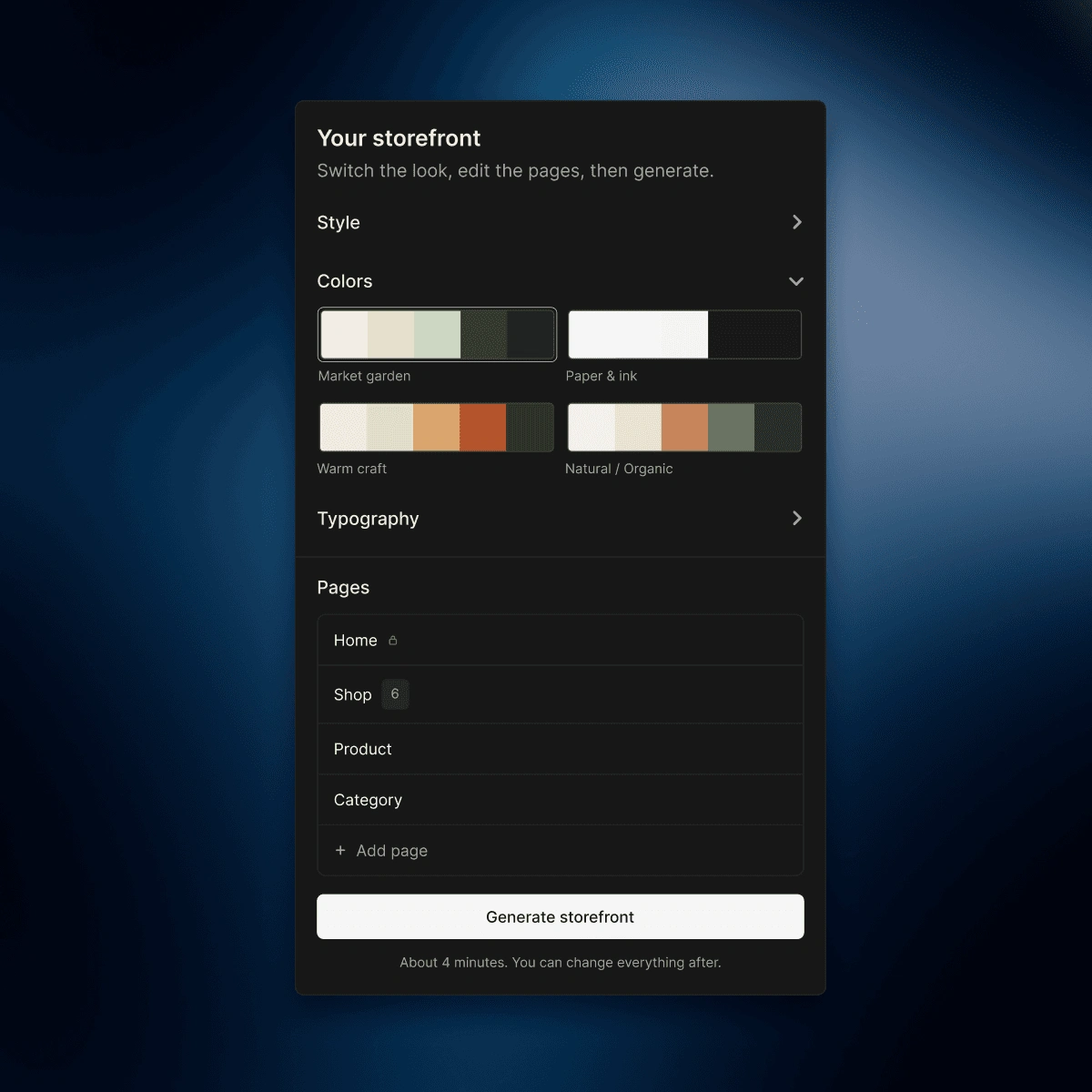
Keeping the plan separate from the build turned out to be the decision that paid off most. A generation run takes a few minutes and costs a few dollars, and the two mistakes we kept seeing only showed up once that money was spent. A page that should have been there was missing, or a brief that said “minimal” came back loud. The plan is data, so showing it costs nothing, and review sits between the brief and generation. One card shows what Wonder read from the catalog, the products, the audience, what sets them apart and the voice, and the merchant can correct any of it. The next shows the pages and how the style and colour were read, with the look switchable in place. Nothing runs until the merchant has confirmed or corrected it.
The decisions
The storefront name is the only required field. The first version I shipped opened with a brand form asking for name, brief, colour, pages and four visual style radios, and it failed at both ends. A first-time merchant with no formed brand was being asked to pick density before seeing anything, and an established brand could not fit a brand book into a text box. Everything beyond the name is now optional and framed as add what you have. An established brand can drop in a logo or brand imagery and the agent reads mood, colour and type from it, which carries more than any description a merchant would type. People start by asking for something, not by defining a style system.
A taste is a named bundle, not a set of adjectives. A model responds to a style with a name far better than to words like clean or modern, because a name points at a specific combination and an adjective points at the average of everything it has seen. Each taste in Wonder bundles rhythm, edges, radius, motion and weight. The merchant picks one as a look and the agent commits to all of it. Inference fills whatever the merchant did not touch and an explicit choice always wins. In my first version the structural tokens that most decide whether a store reads as committed or as a template, density, shape, outline and motion, were radios defaulting to the safe middle, and inference was not allowed to set them. Leaving them alone produced bland structure with colour and type layered on top. The rule became that a default is not a choice. The design tracks touched against untouched state per token, and the agent sets whatever was left alone, reading “minimal” as spacious and outline free.
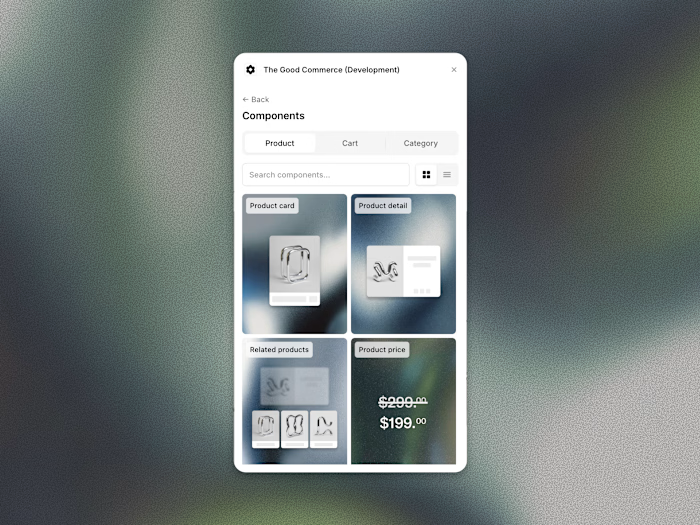
Sections start from a reference library I curated rather than from nothing. Each section role has a reference image, a measured spec and a copy-stripped component, so the agent chooses from a small set of decisions I already made rather than from the whole of CSS. It can instantiate a section verbatim, with the result verified deterministically, or author a new one with the library as the exemplar. A picture gives a model the tone of a design. A component gives it the thing itself. Taste is easier to curate than to prompt for, and the same library could sit alongside Swell’s marketplace, where professionally designed sections and themes would double as starting points for generation.
Wonder chat
Wonder's feedback animations
Telling the model what to avoid was necessary and not sufficient. The generation prompts name the defaults that make a store look generated, nested cards, decorative gradients, the same three-column feature row, but a list of prohibitions does not produce an identity. The positive direction has to come from somewhere, and in Wonder it comes from the taste and the library.
The three ideas I would carry anywhere are to ask less and infer more, to show the plan before spending on the build, and to curate taste rather than prompt for it. The wider work on AI design tooling has been landing on the same three since, which suggests they are not specific to ecommerce.
Like this project
Posted Oct 31, 2026
Product and design lead for Swell's AI agent: describe your brand, get a working storefront in minutes, then tweak it on a visual canvas.