Freekick - A Sports Venue Booking App ⚽

Breeje Anadkat
Verified
1 collaborator

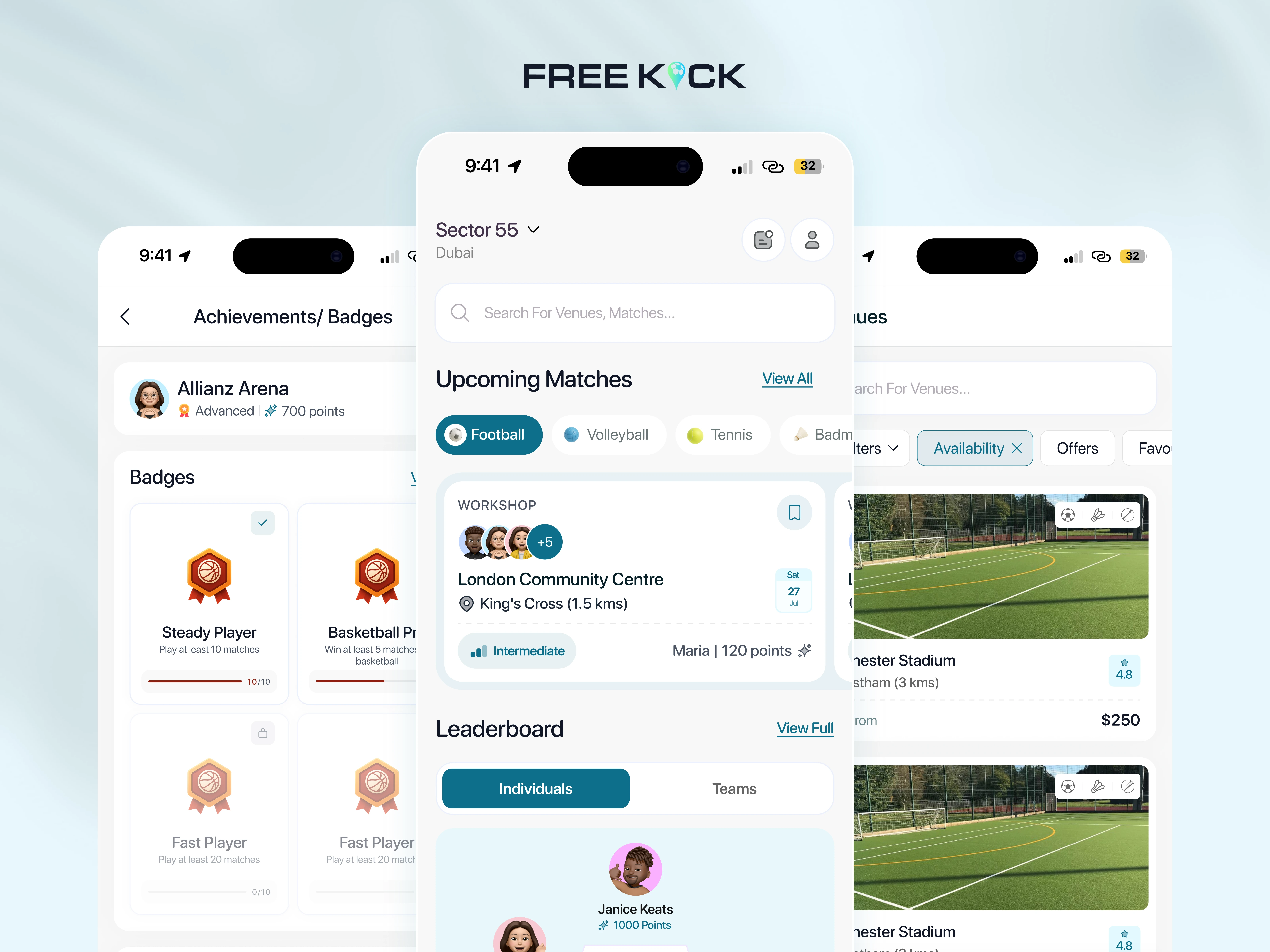
I know people don’t like to read long case studies, so I’m adding my work first below. But if you’d still like to read the full case study, you’ll find it after the project images.
The project lasted around 1.5 months and is now under development.
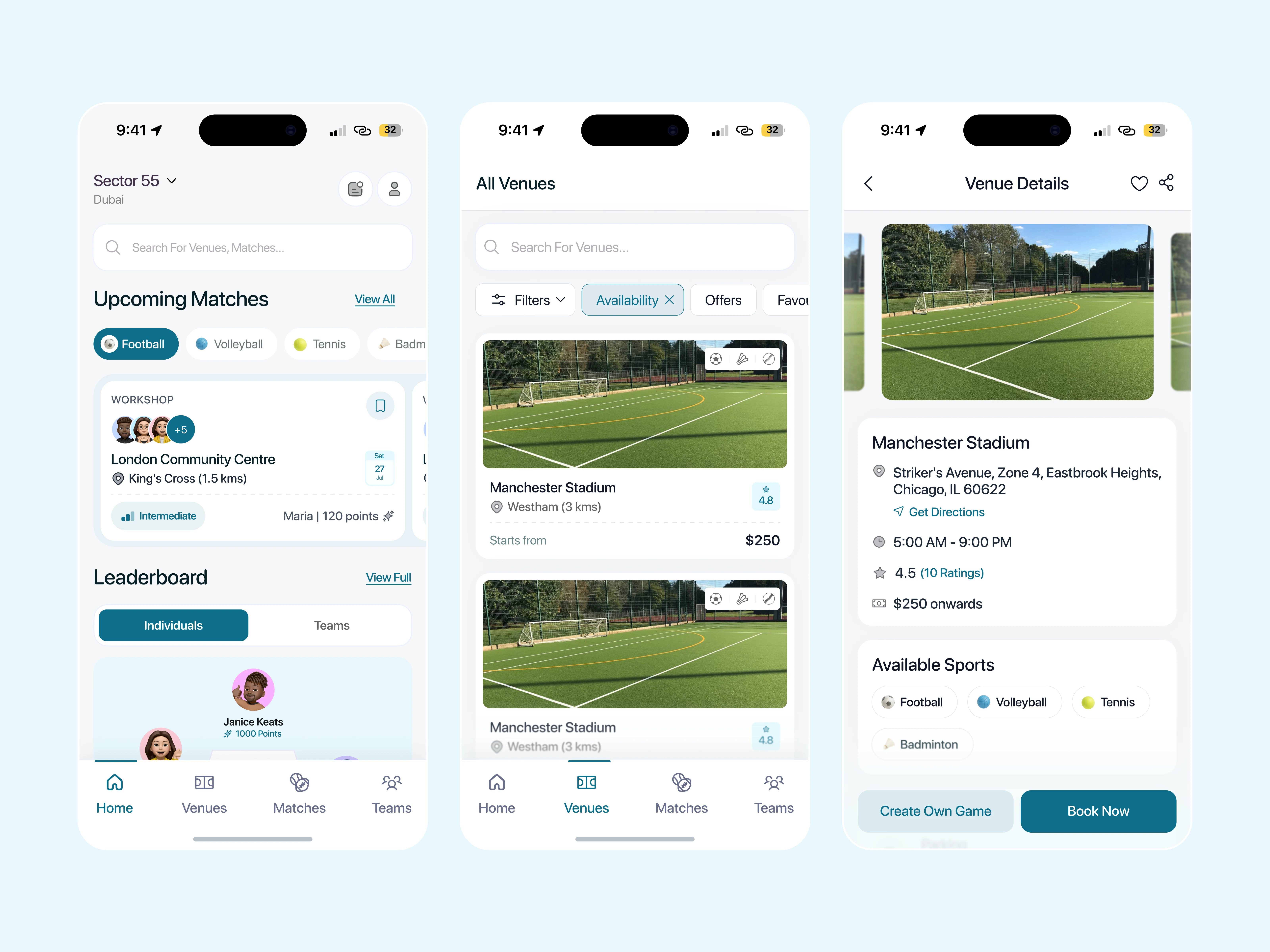
User Portal Images
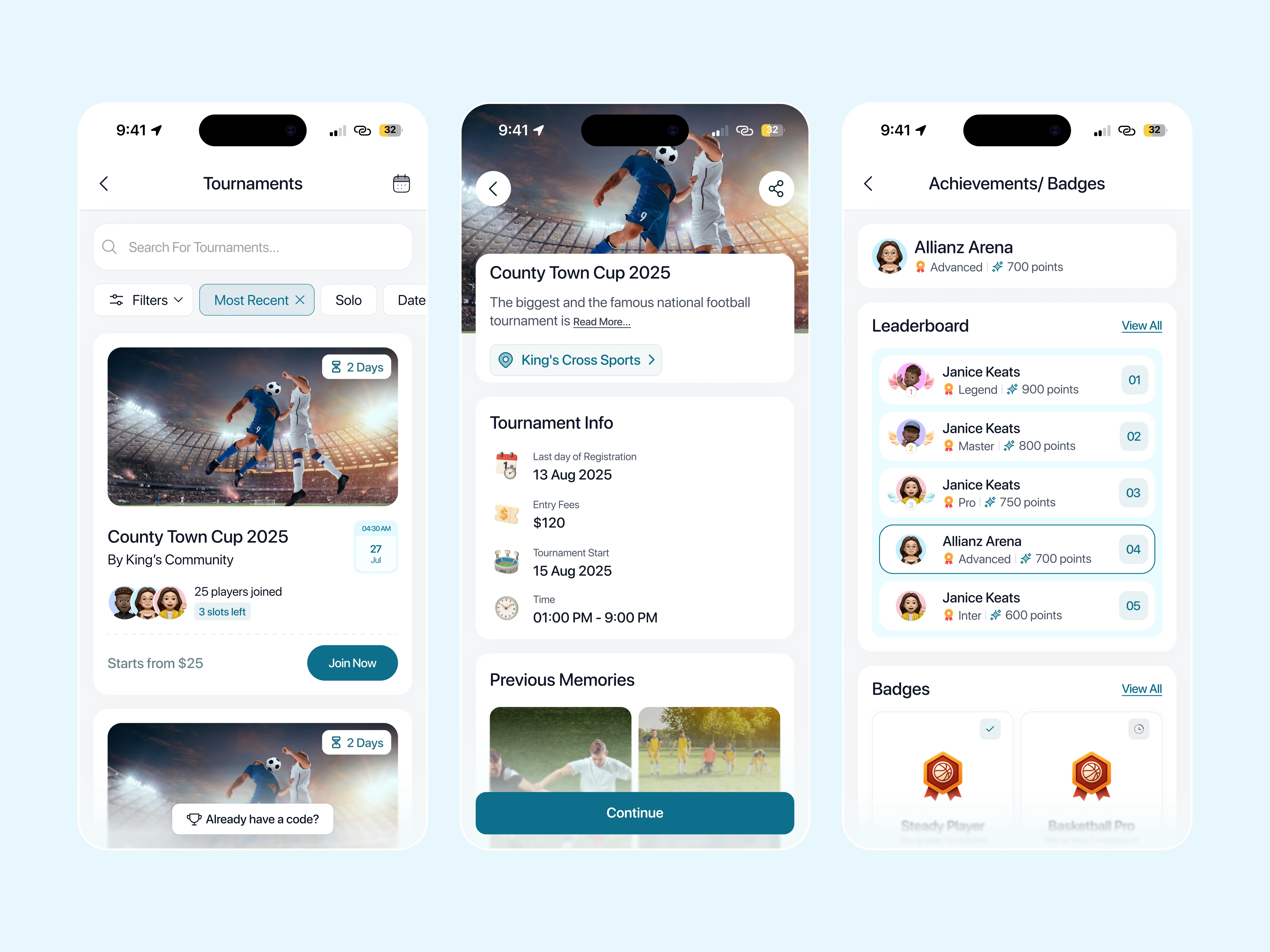
User Portal Images
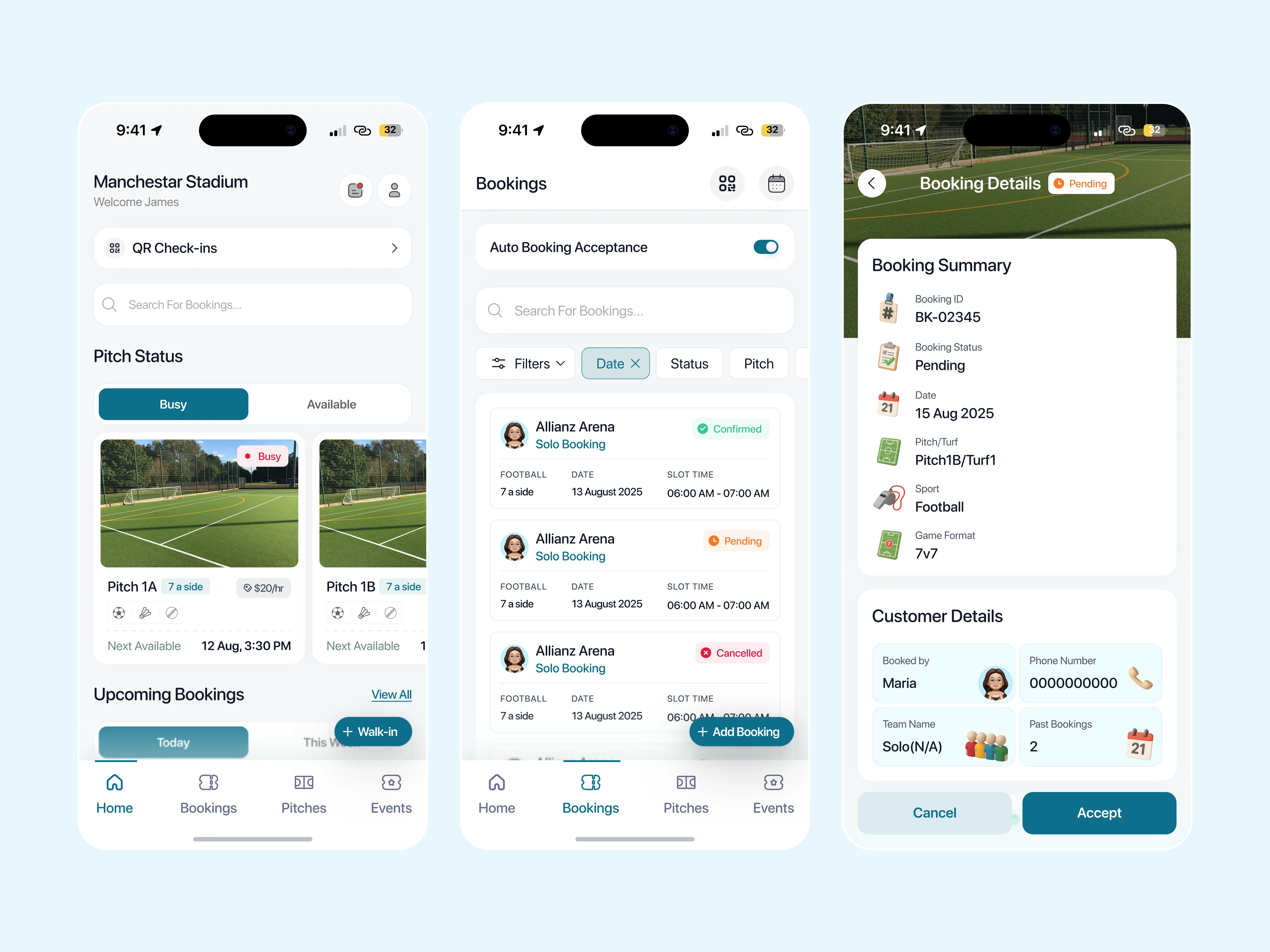
Pitch Owner Portal Images
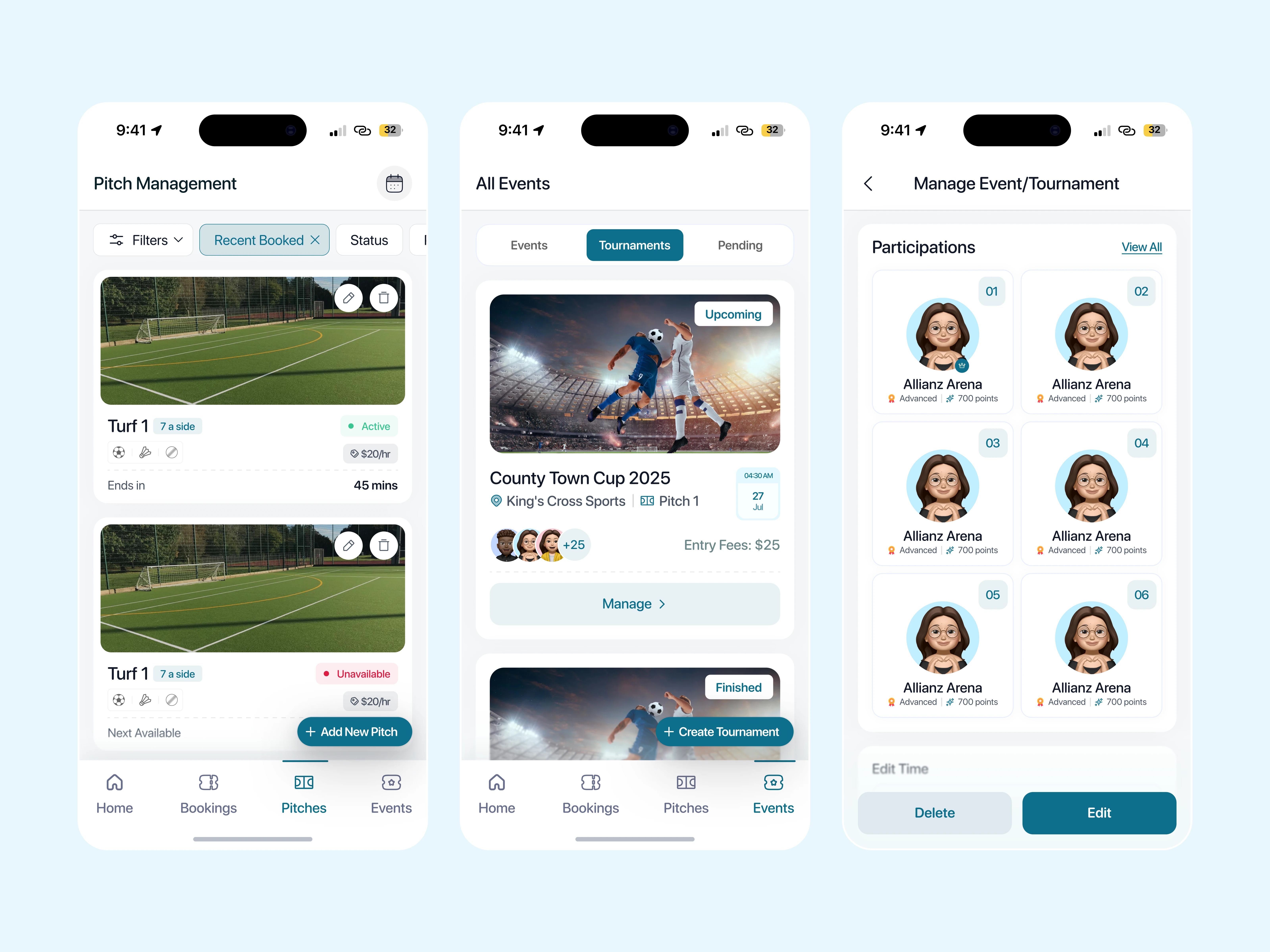
Pitch Owner Portal Images
Project Overview 🌐
Freekick is a modern mobile app built to simplify how players and teams book sports venues — and how pitch owners manage their facilities.
The product includes two synchronized portals:
User App for discovering, booking, and paying for fields or courts.
Owner App for managing schedules, tracking revenue, and handling team bookings.
The goal was to design a seamless, real-time experience that connects players and venue owners with minimal friction — delivering the same convenience as ordering a ride or food online, but for sports.
Platforms: iOS, Android
Deliverables: UI/UX Design, Design System, User Flow Architecture, Prototyping
Timeline: 1.5 Months
The Challenge
Recreational sports booking is often chaotic — manual calls, unclear slot availability, and poor coordination between players and venues.
Our challenge was to:
Create two independent yet connected interfaces for users and owners.
Make the booking flow intuitive, fast, and visually consistent across both apps.
Ensure the UI feels energetic and sporty while keeping it clean and scalable for future features (like tournaments, team management, and payments).
My Role
I led the end-to-end product design across both apps — from concept to final prototype.
Key responsibilities included:
Defining core user journeys: booking a pitch, managing availability, viewing analytics, etc.
Designing high-fidelity UI for both user and owner apps with consistent brand language.
Creating a modular design system with reusable components for faster development.
Prototyping micro-interactions and user flows to ensure a smooth, game-like feel.
Collaborating with developers to align on handoff and design consistency.
Process
1. Discovery & Research: We analyzed competitors like Playo and BookMyTurf, identified gaps in usability, and gathered feedback from both players and venue owners.
Key insight: users valued speed, clarity, and trust, while owners prioritized ease of management and transparency in payments.
2. Information Architecture: I mapped two separate but interconnected app flows:
User App: Search → Select Venue → Book Slot → Pay → Track Booking
Owner App: Manage Calendar → Accept/Reject Bookings → Track Revenue → Add New Venue
3. Visual Design: The interface uses bold typography, action-driven CTAs, and vibrant highlights inspired by the energy of sports fields.
I balanced functionality with aesthetics — ensuring real-time updates (like slot availability and payment confirmation) felt lively yet reliable.
4. Prototyping & Testing: Interactive prototypes were tested with real users from local turf communities.
Feedback loops helped refine the flow — reducing booking steps from 6 to 3, and simplifying the owner’s dashboard for faster management.
Results
Streamlined booking flow: Users can now book and pay for venues in under 30 seconds.
Owner efficiency: Venue owners can view daily stats, upcoming bookings, and revenue in one glance.
Consistent ecosystem: Both apps share a unified visual and design language, building brand recognition.
Scalable system: The modular design system enables quick integration of future features like loyalty points and team leaderboards.
Like this project
Posted Oct 30, 2025
Designed the app and created a seamless booking flow, with vibrant visuals and motion that guide users from browse to book in seconds.
Likes
2
Views
71
Timeline
Jul 29, 2025 - Ongoing
Collaborators