Tracing a Fixed-Fee Cost Overrun | Fictional Case Study

Command Current


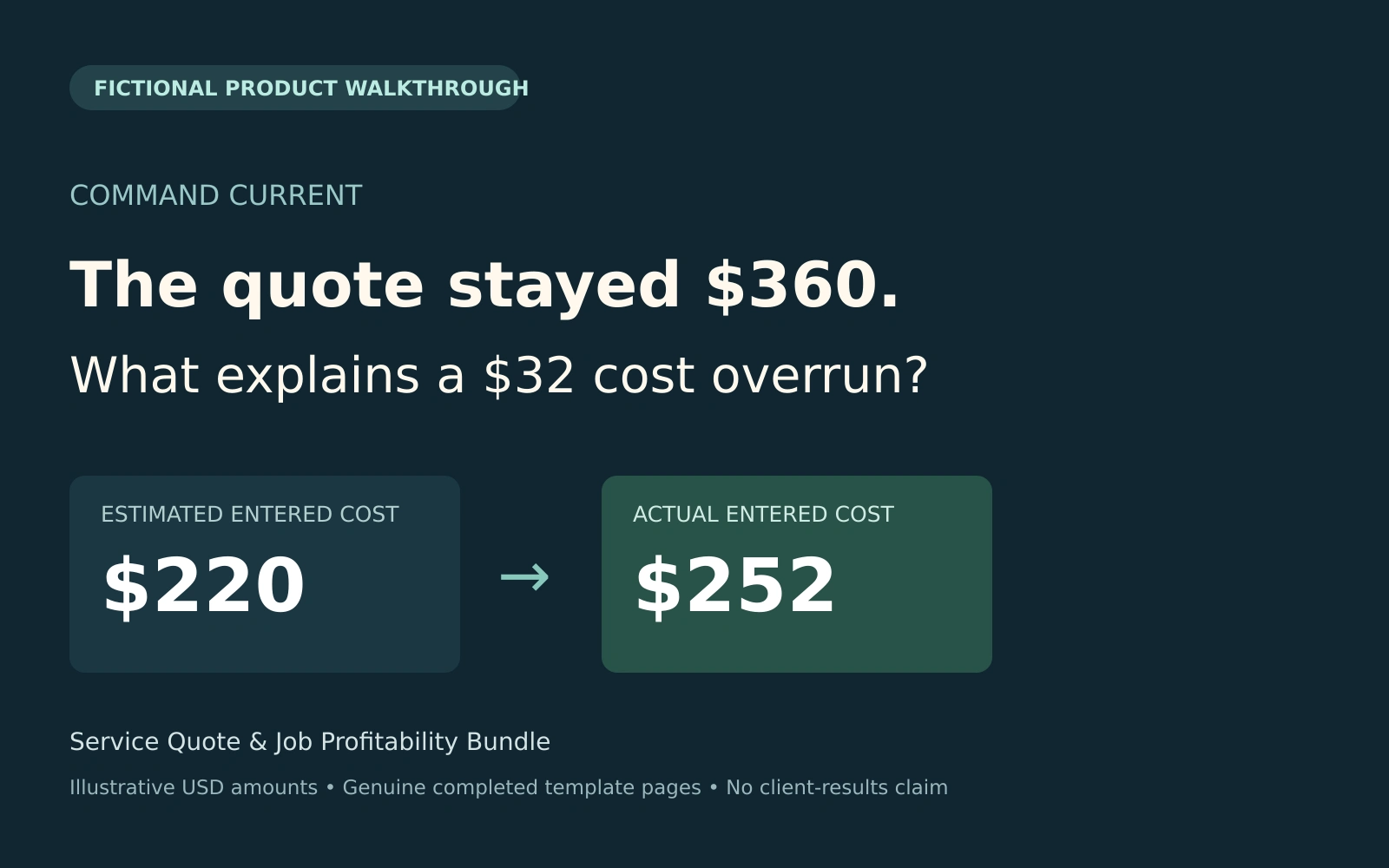
A fixed quote, an explainable difference
A fictional assembly job is quoted at USD360. The agreed work stays the same, but entered costs finish USD32 higher than planned. Which assumptions should be checked before estimating the next comparable job?
This self-initiated case study demonstrates Command Current's Service Quote & Job Profitability Bundle using its included fictional worked example. All names, dates, rates and job results are invented for demonstration. The images are genuine pages from the bundle, not a real customer engagement.
1. Make the scope and assumptions visible
The example covers two freestanding tables and four chairs, with preparation and felt pads included. It excludes wall mounting, electrical work, transport and off-site disposal. Complete kits, suitable space and manufacturer instructions must be available.
The planned entered costs are USD175 for labor, USD25 for materials and USD20 for travel allocation: USD220 in total. Labor uses total person-hours at the example's invented cost rate. General overhead is not included.
2. Separate the customer quote from internal costing
The example's chosen fixed quote is USD360 before tax. Its customer-facing page records the included work, exclusions, assumptions and proposed timing without exposing the internal cost breakdown. Copying that page into a separate file keeps internal costing and review notes private.
The price is an illustrative choice, not a suggested market rate. Service terms, scheduling and authorization to start are confirmed separately; the page is not a contract.
3. Connect the overrun to delivery evidence
The fictional delivery record shows the original six items assembled with no added customer scope. One additional assembly person-hour adds USD25. Extra consumables add USD3, and the revised travel allocation adds USD4.
Those three differences explain the full USD32 increase: actual entered costs are USD252. The customer price remains USD360, so the overrun is absorbed within the original quote in this example.
4. Turn the comparison into the next estimating questions
The completed review compares the same scope and cost categories:
Estimated entered costs: USD220. Actual: USD252.
Price before tax: USD360 in both columns.
Profit before unmodeled costs: USD140 estimated, USD108 actual.
Margin on price: 38.9% estimated, 30.0% actual, down 8.9 percentage points.
The useful output is an explained difference and specific questions for the next estimate: check the number and type of assembly components before estimating person-hours, review actual consumable use, and revisit the travel assumption. Replace every example rate with your own supported input.
Use the same review with your own records
The bundle includes a five-page editable Word working packet and matching static PDF, an Excel calculator, the five-page fictional worked example and a Quick Start. It is designed for current desktop Microsoft Word and Excel; software is not included. The calculator has prepared ranges for 8 labor rows, 8 material rows and 6 other-cost rows.
These figures demonstrate a workflow, not a customer outcome or guaranteed improvement. Profit here means price excluding tax less the entered costs, before any overhead and taxes not included. The workbook does not set rates, calculate legal tax obligations, authorize extra billing or replace bookkeeping.
Explore the Service Quote & Job Profitability Bundle:
View the Service Quote & Job Profitability Bundle
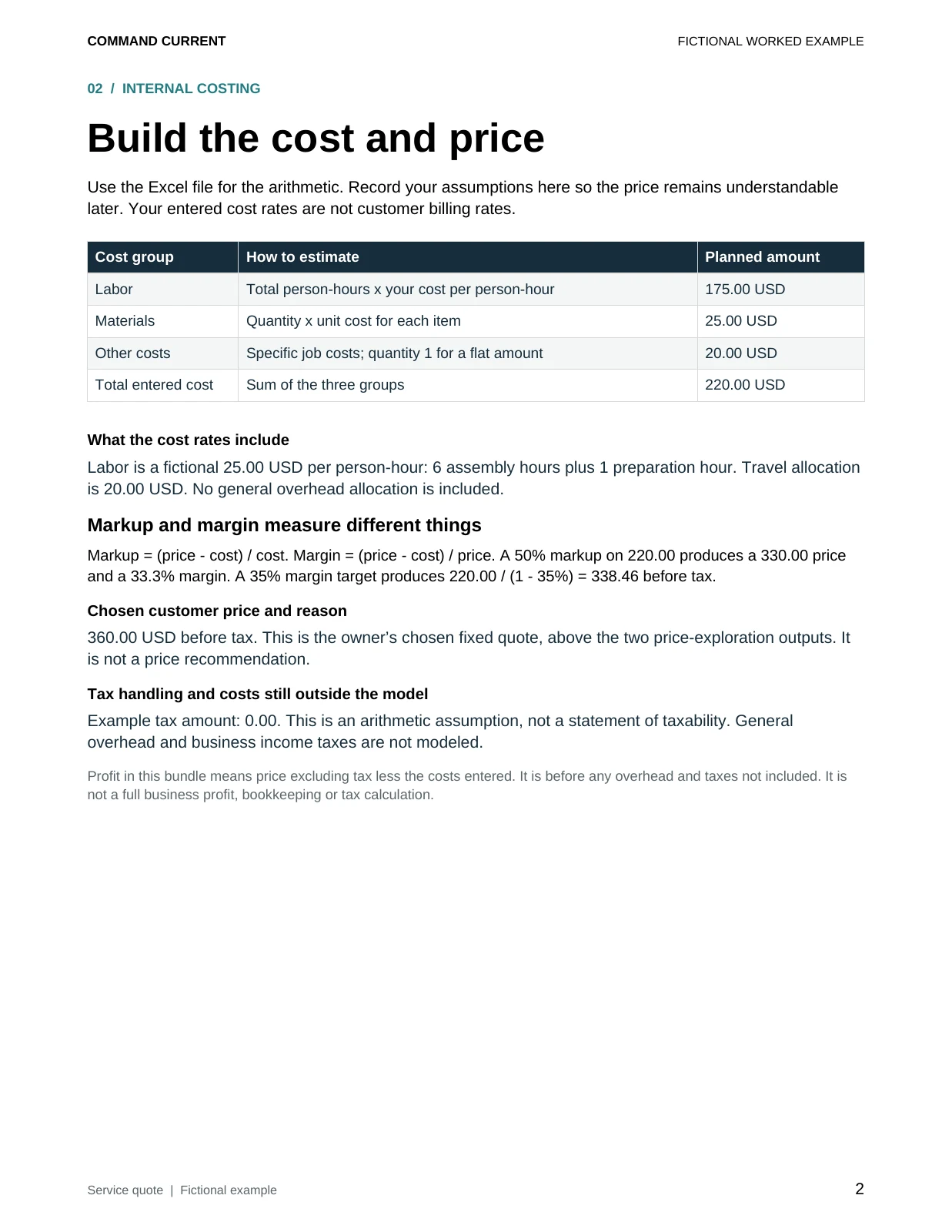
Fictional example, page 2: USD220 entered cost and the separately chosen USD360 quote.
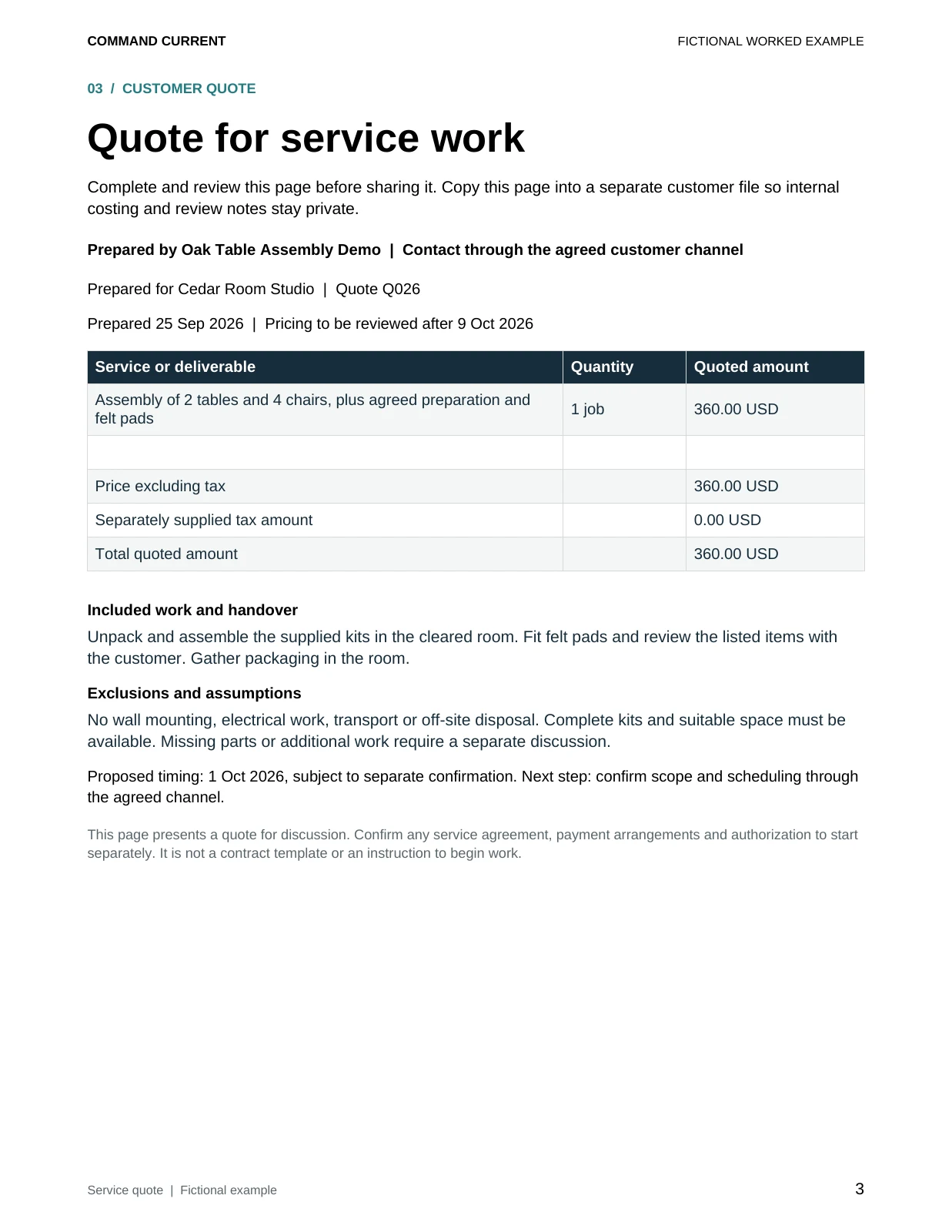
Fictional example, page 3: customer-facing scope, exclusions and fixed quote, kept separate from internal costing.
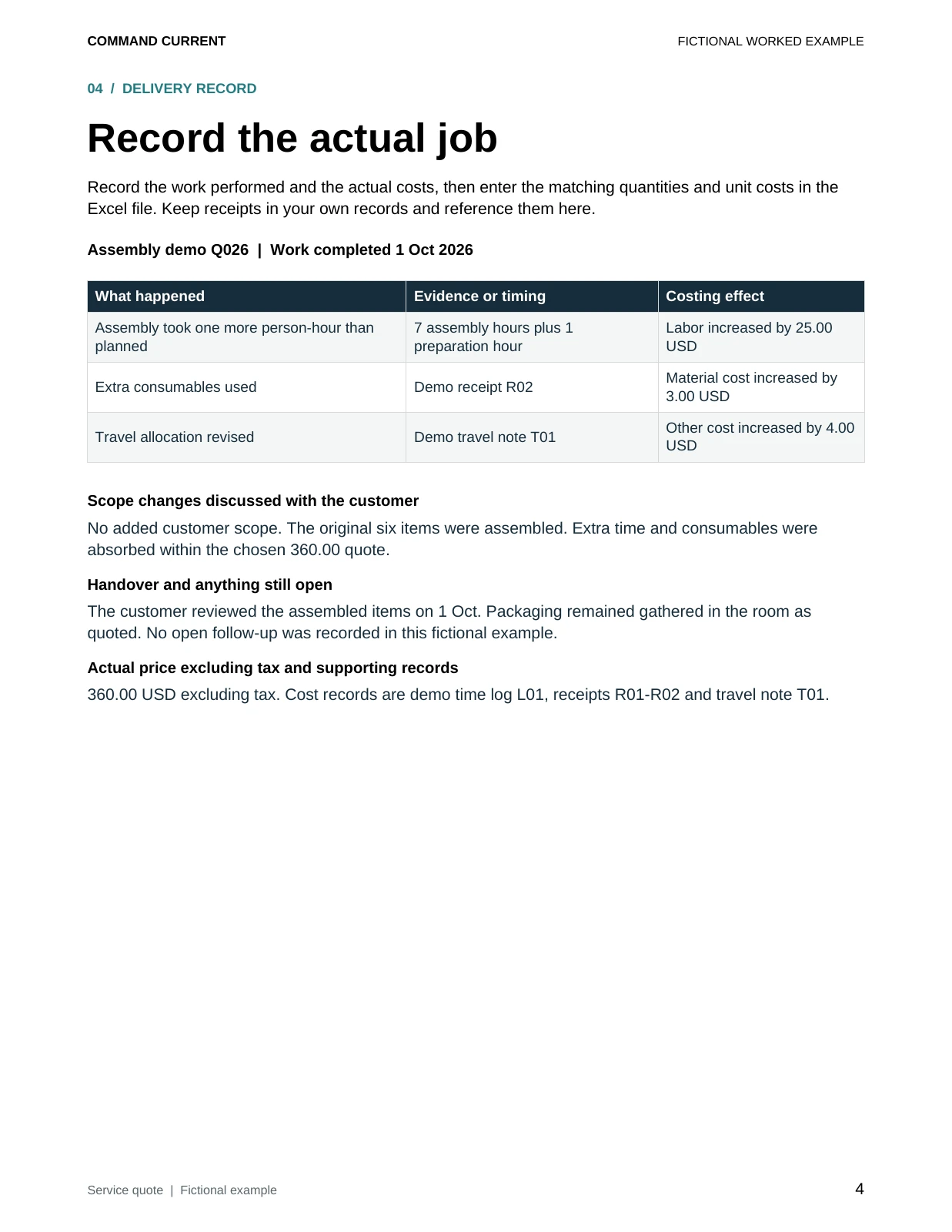
Fictional example, page 4: one extra person-hour, consumables and travel explain the USD32 increase.
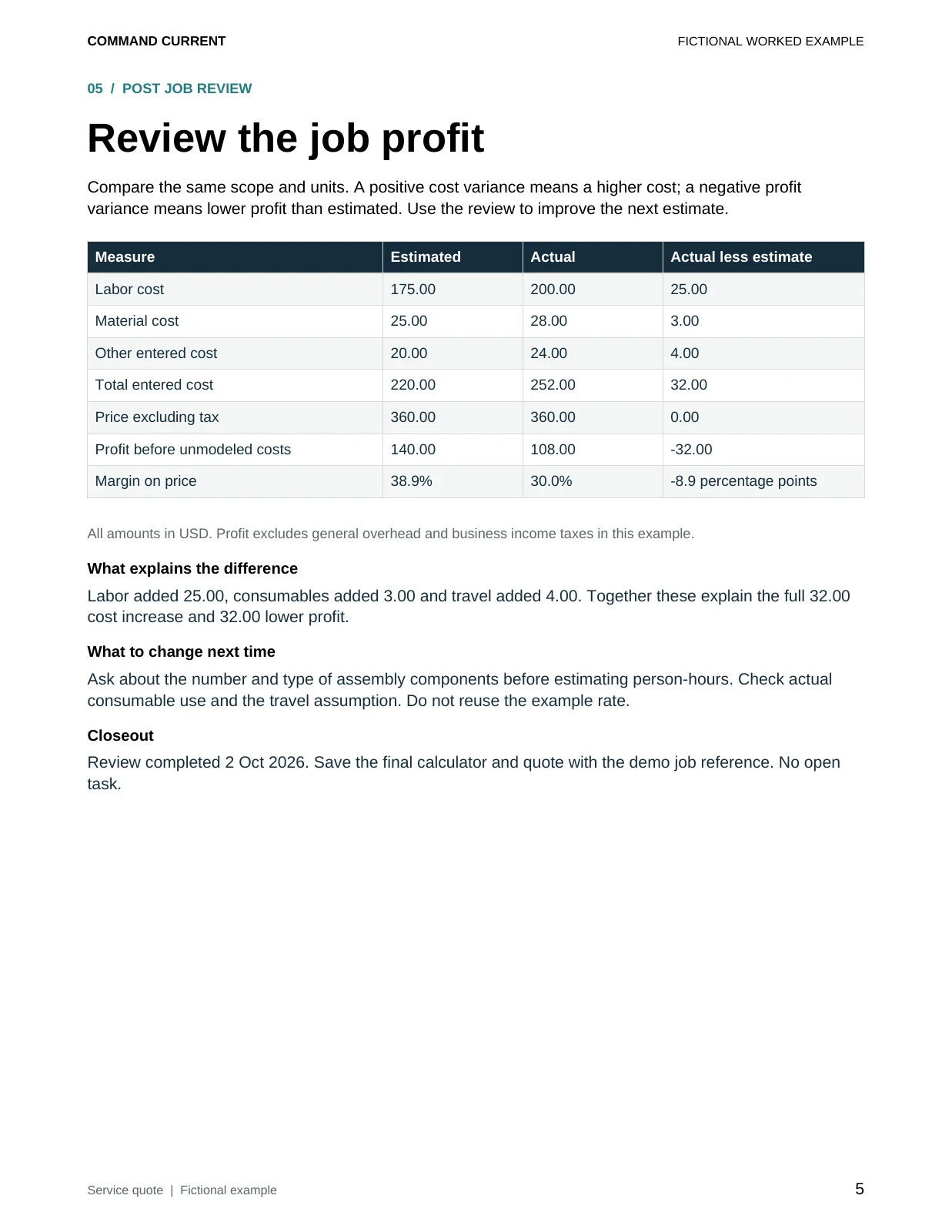
Fictional example, page 5: complete estimate-to-actual reconciliation and questions for the next estimate.
Like this project
Posted Oct 10, 2026
A self-initiated product walkthrough: trace a fictional $32 cost overrun from the original quote to the completed review, using genuine template pages.
Likes
0
Views
3