Nodex Branding and Product Design

Prem Pandey


Nodex™ - Full Branding and Product Design
A complete brand and product design for a conceptual Web3 infrastructure company - from naming and identity to dashboard UX and a full landing page experience.
Type: Conceptual / Self-Initiated
Deliverables: Naming · Brand · Dashboard · Landing Page
Role: Solo - Everything
001 /// Why this project exists
Web3 infrastructure products are technically fascinating.
But most of them look the same:
Neon gradients
Heavy crypto aesthetics
Overly technical interfaces
Confusing dashboards
Somewhere in all that, clarity disappears.
Nodex started as a challenge:
Can I take one of the hardest categories in tech and make it feel calm, trustworthy, and easy to understand?
Not dumbed down. Just clear.
I wanted Nodex to feel closer to:
Stripe
Linear
modern infrastructure tools
Instead of another “crypto-looking” product.
“Anyone can design for easy products.Simplifying hard products - that’s the real skill”002 /// The process
Everything started with one question:
If this company became real tomorrow, what would it actually need?
I treated Nodex like a real product from day one:
naming
branding
copywriting
dashboard UX
landing page
visual systems
Everything needed to feel connected.
/// Naming & Identity
The name “Nodex” came from: nodes + index
Short, technical, memorable.
The branding phase took the longest because it defined the entire direction.
Early concepts explored typical Web3 visuals:
yellow/black palettes
aggressive 3D renders
loud crypto aesthetics
But it immediately felt generic.
So I moved toward:
dark surfaces
restrained blue gradients
minimal typography
isometric illustrations
calm layouts
The goal was:
futuristic without feeling chaotic.
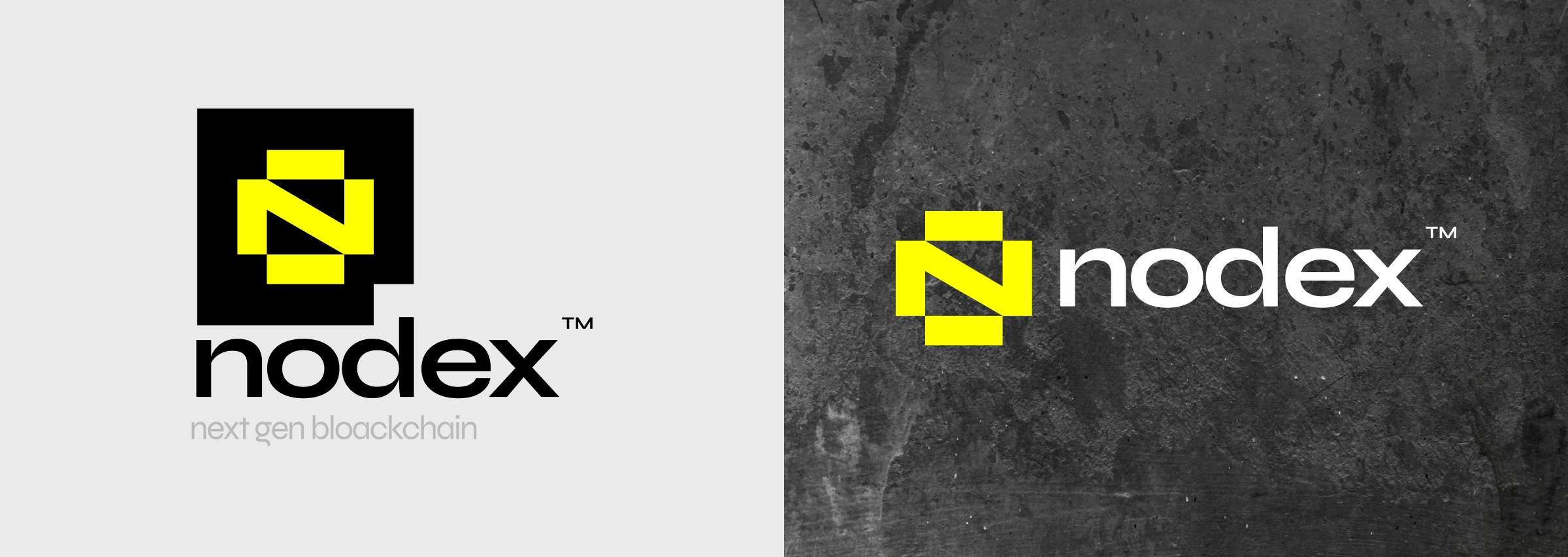
/// Early Exploration ///
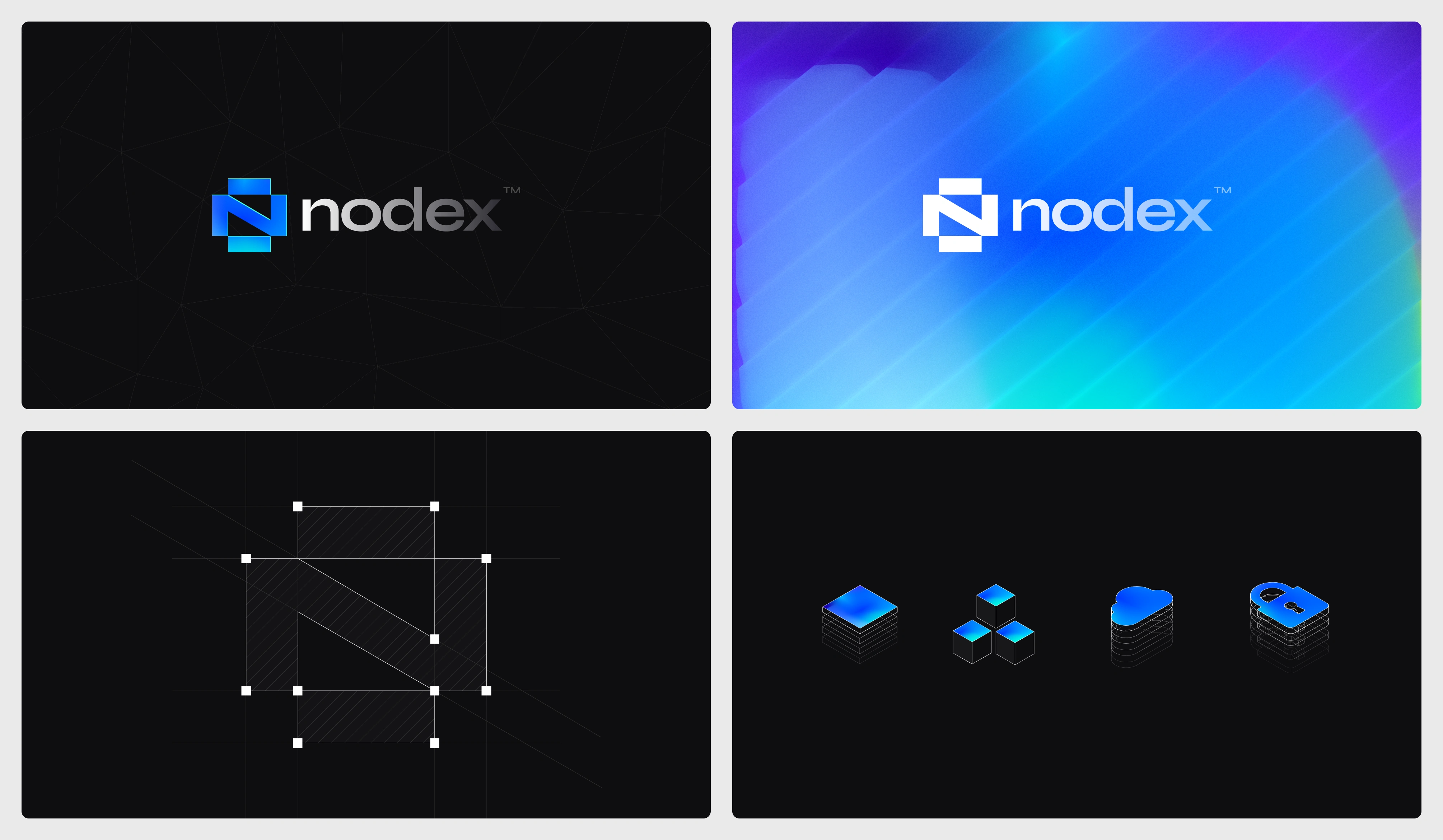
Final Version
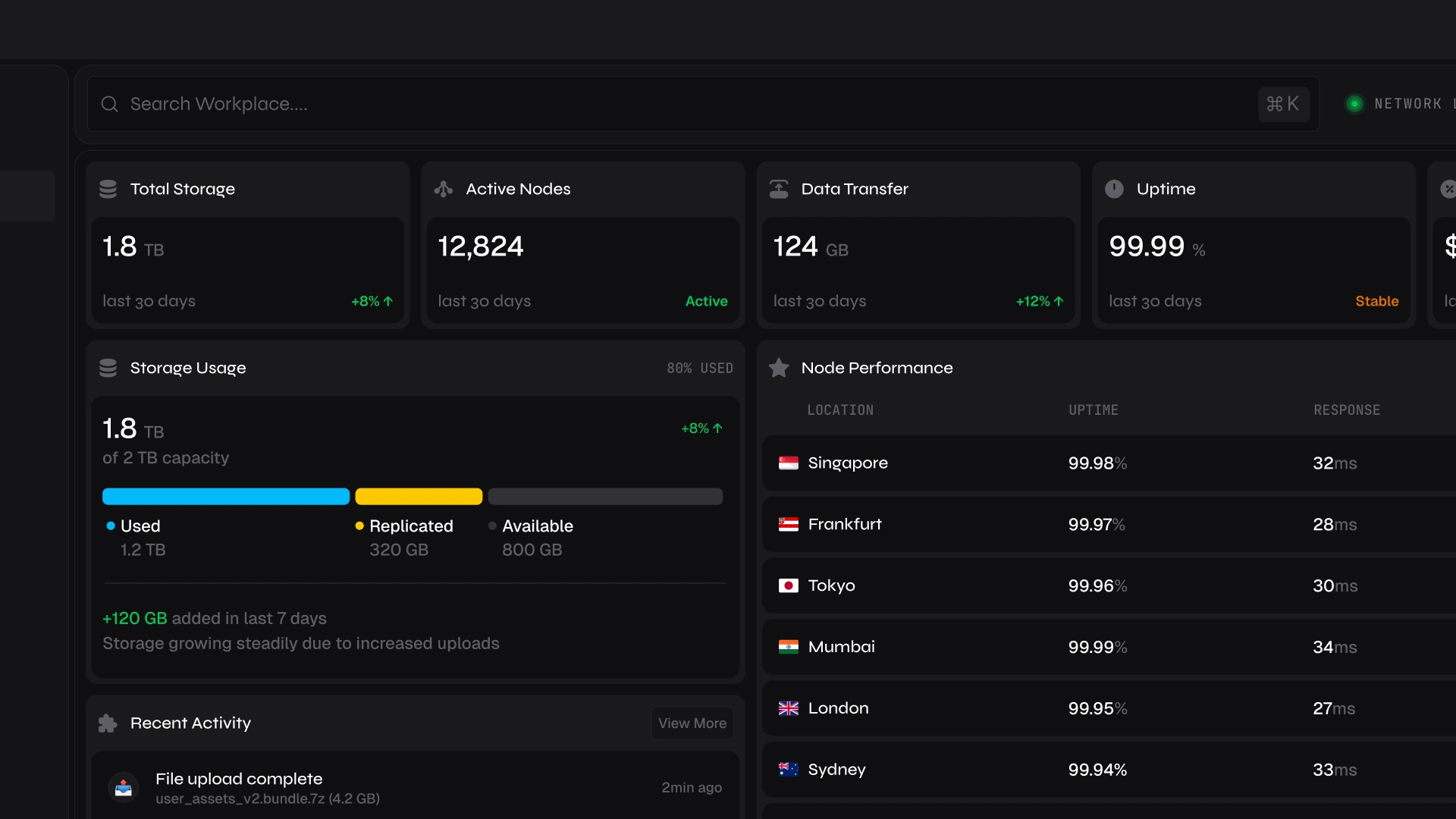
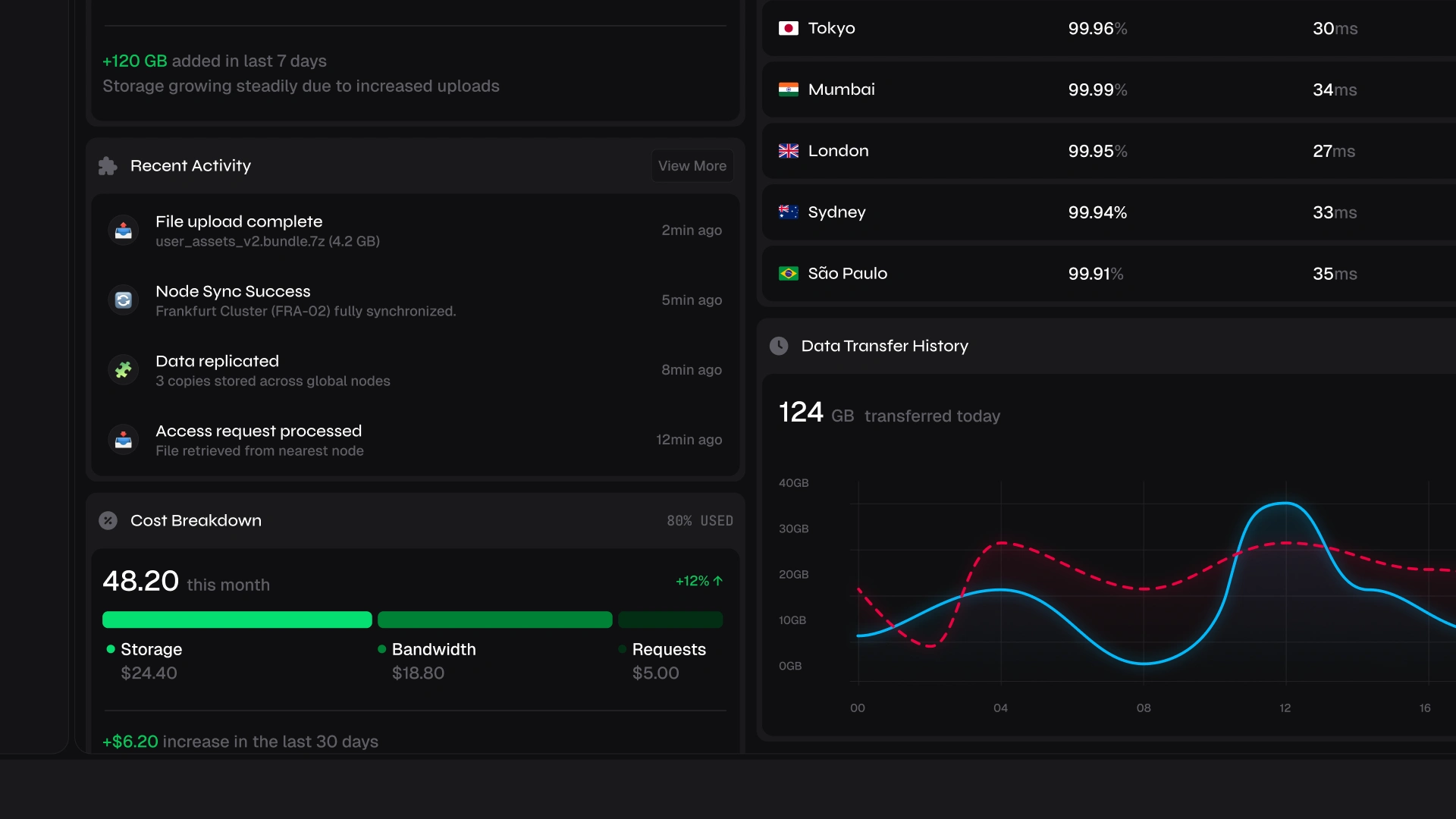
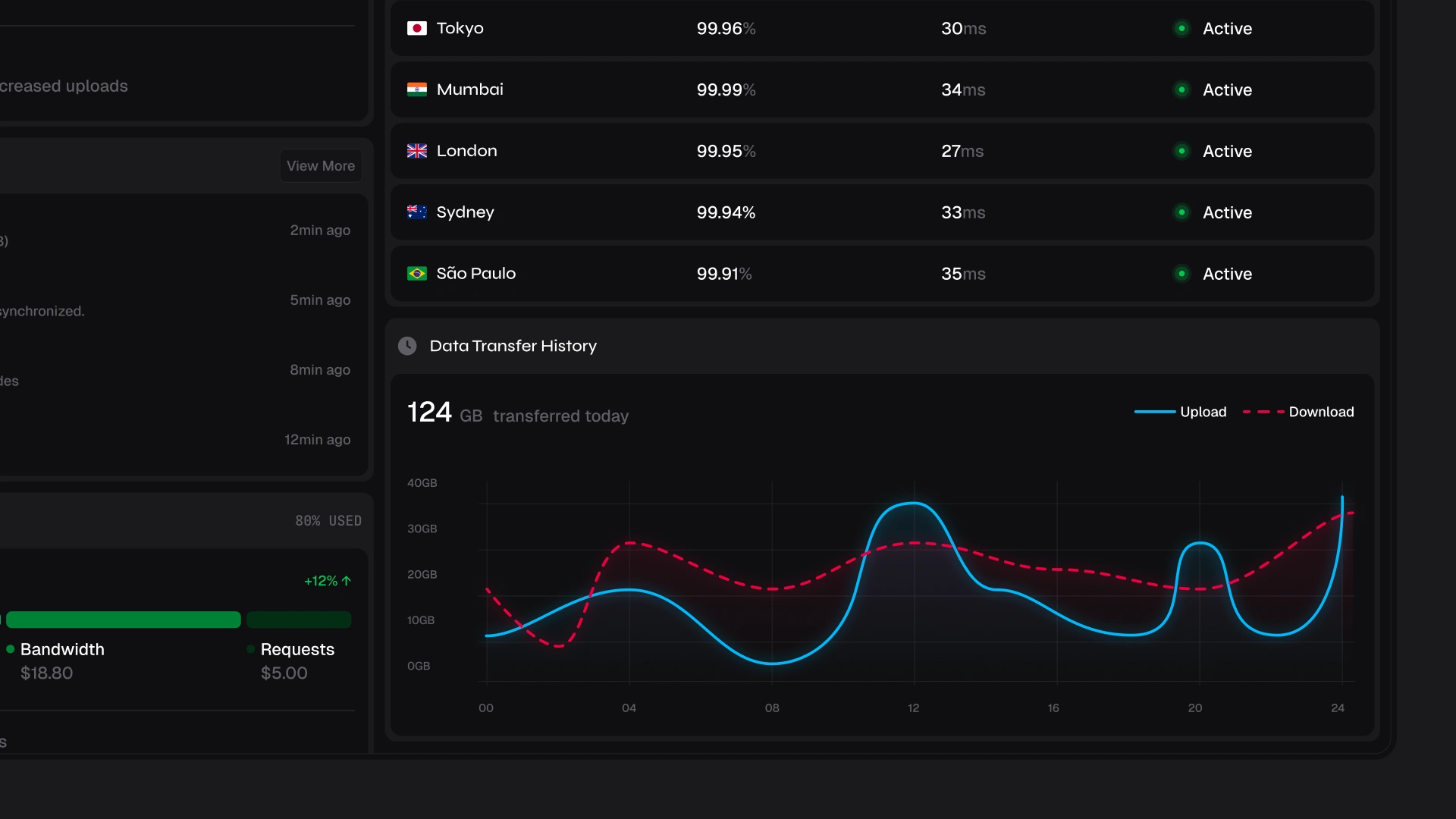
/// Dashboard UX
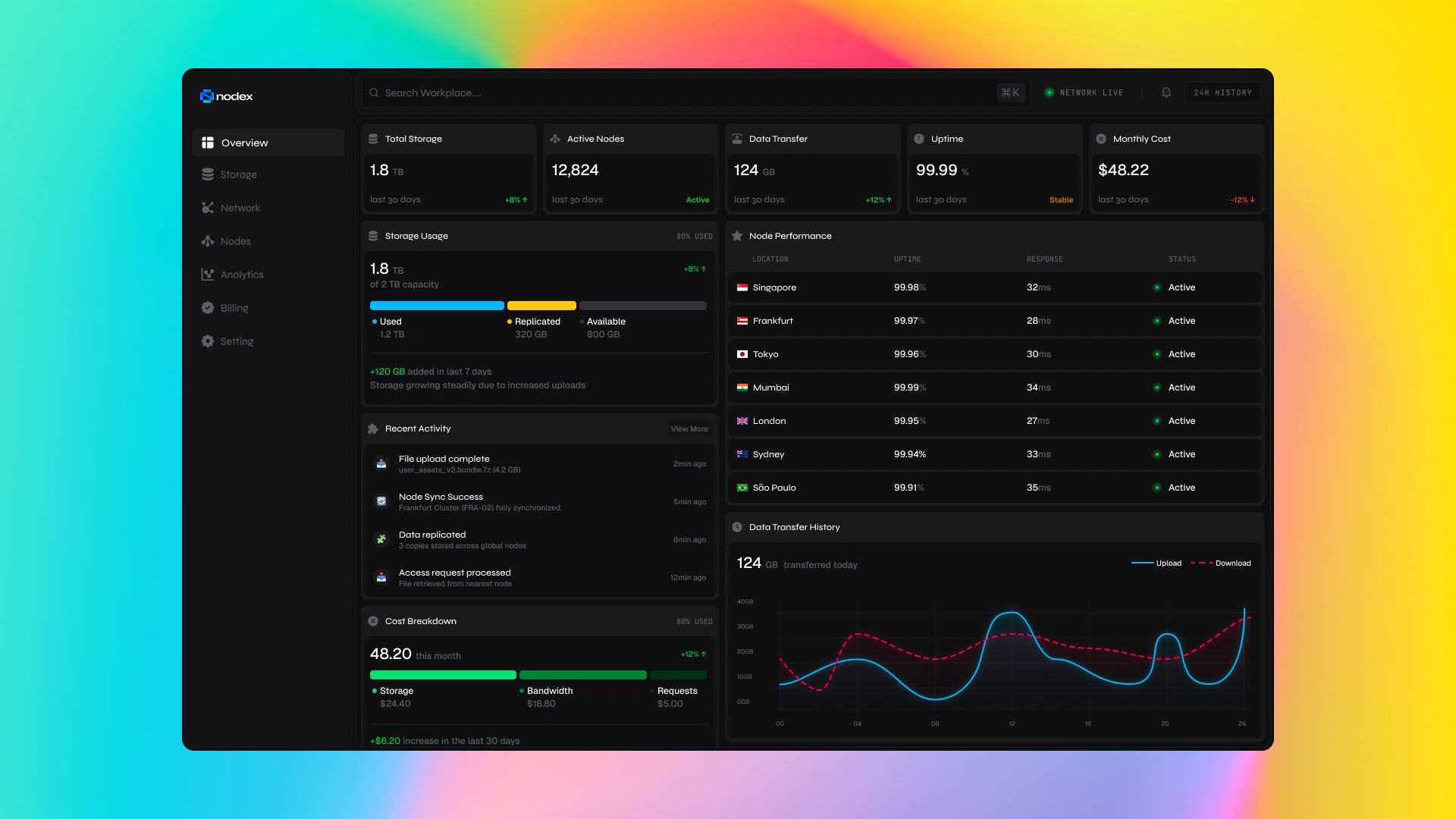
The dashboard was the hardest part of the project.
Distributed storage systems involve:
node activity
routing
uptime
analytics
replication
storage usage
A lot of complexity.
The challenge wasn’t:
“What should I add?”
It became:
“What can I remove?”
Instead of filling the interface with charts,
I focused on:
system behavior
data movement
network activity
visual storytelling
At one point, the dashboard became too dense and started feeling like an engineering tool instead of a product.
That reset the entire direction.
The final UI became much cleaner, calmer, and easier to understand.
/// Landing Page
I didn’t want the landing page to feel like another SaaS template.
I wanted it to unfold like a story.
Every section had a purpose:
explain the product
reduce confusion
build trust
simplify technical ideas
The hero section took the longest because it had to communicate:
distributed systems
scale
reliability
without overwhelming users.
That’s where the isometric illustration system became important.
A big philosophy throughout the project became:
Show, don’t tell.
Instead of explaining systems with paragraphs,
I used visual storytelling to make complex ideas feel intuitive.
Full Landing Page
003 /// The hard problems
Most challenges weren’t visual problems.
There were communication problems.
Explaining distributed storage simply
The “How It Works” section compressed a technically dense system into four simple steps:
Upload → Split → Distribute → Retrieve.
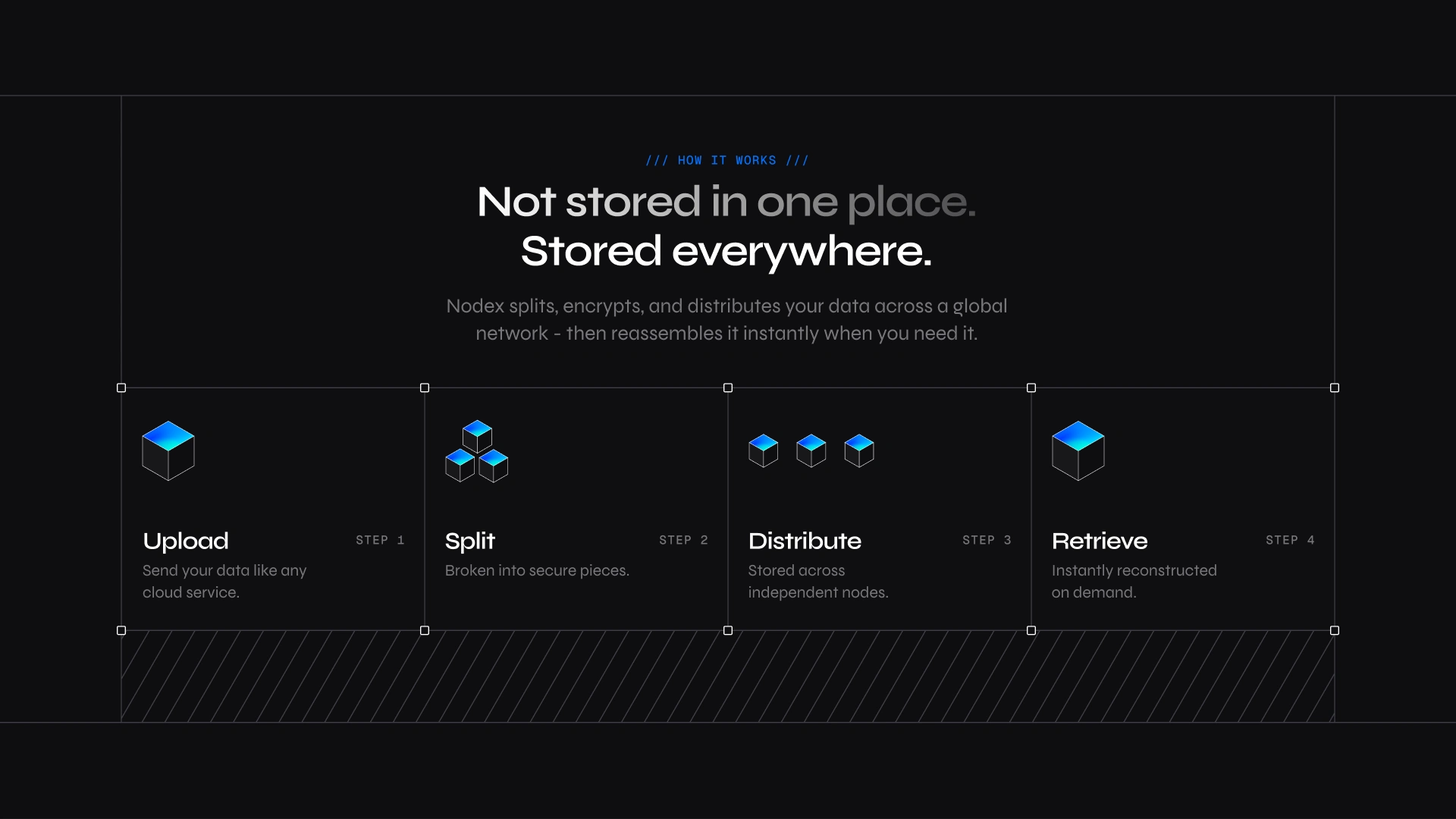
/// How it works section ///
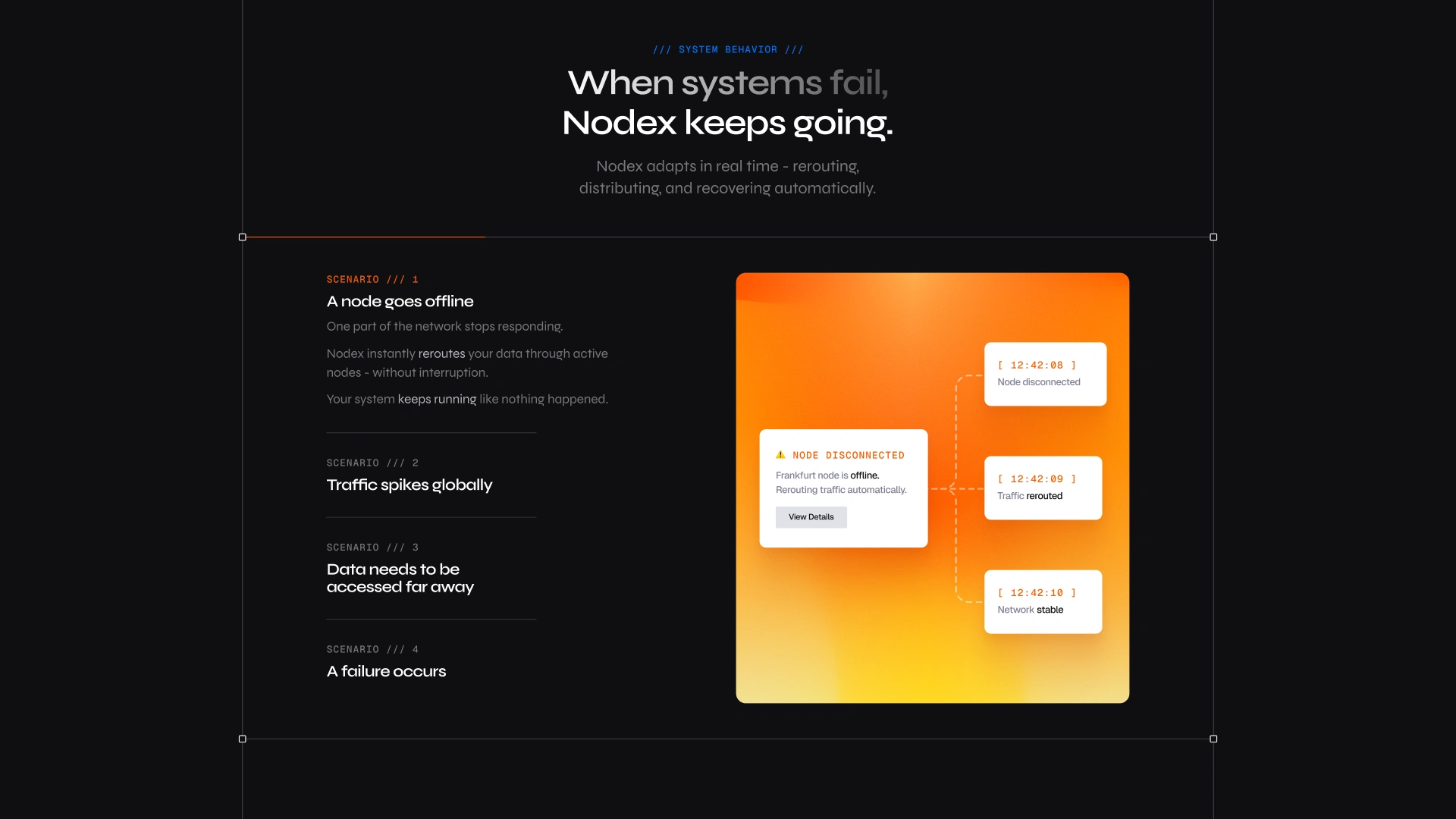
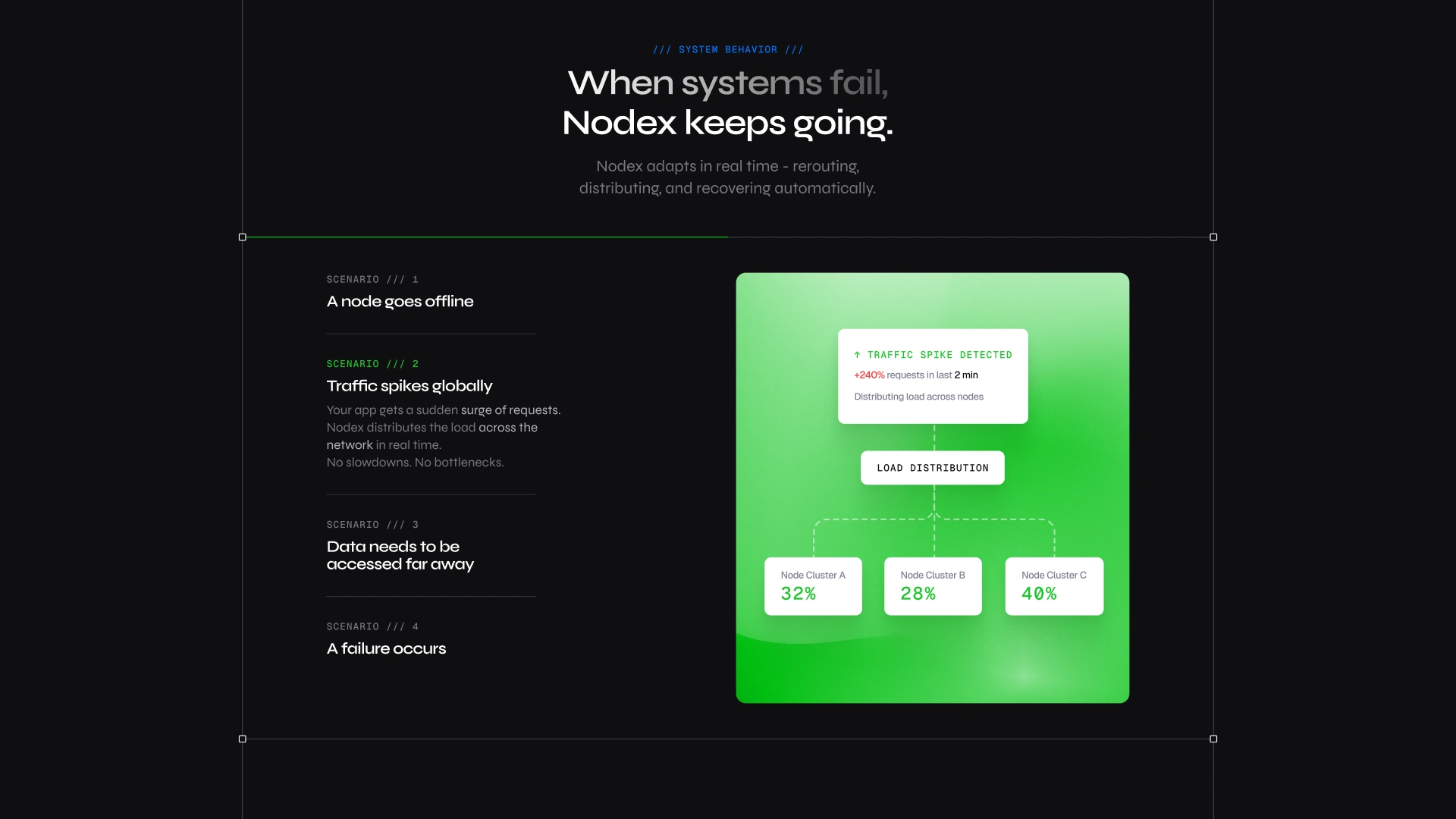
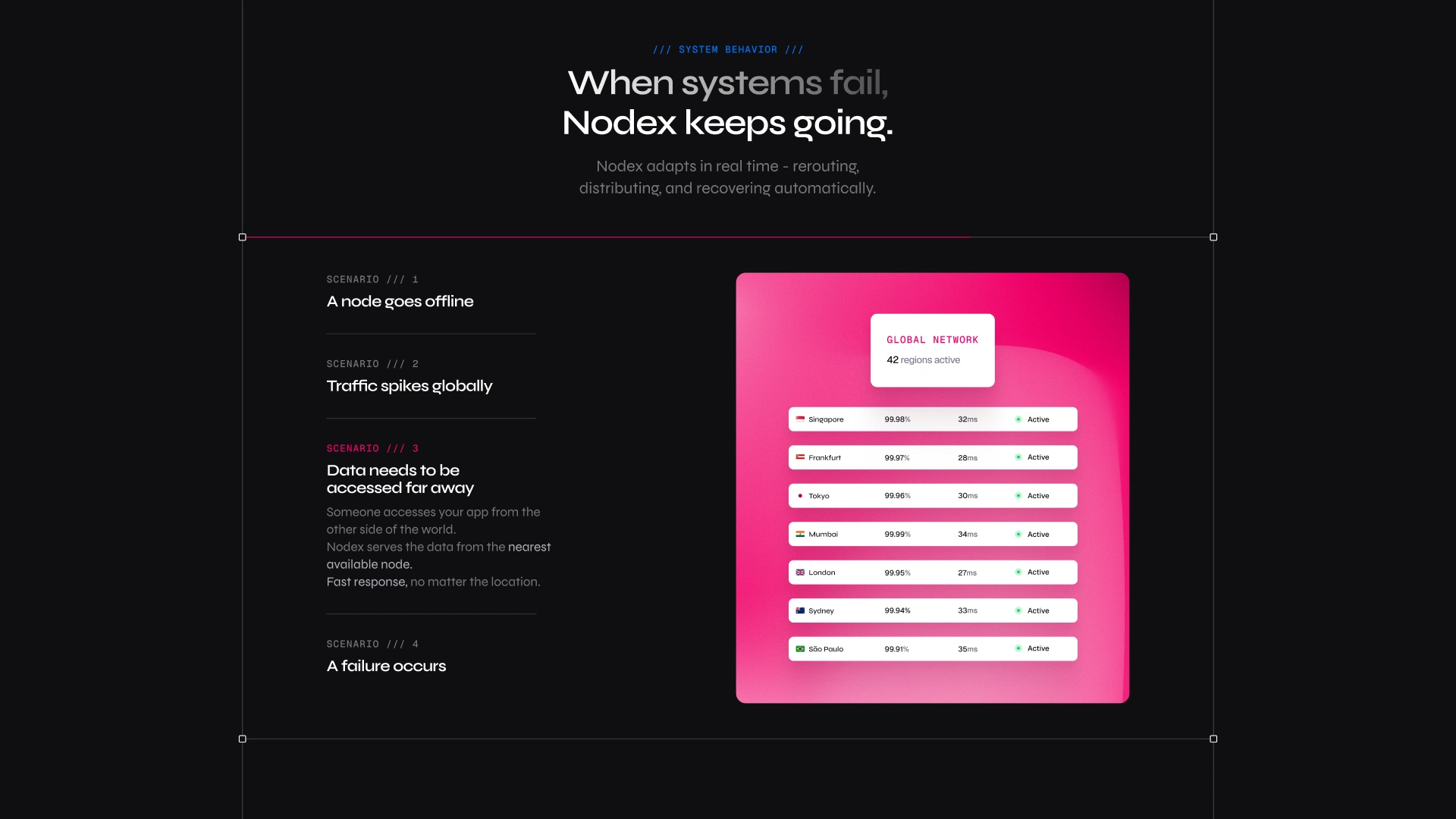
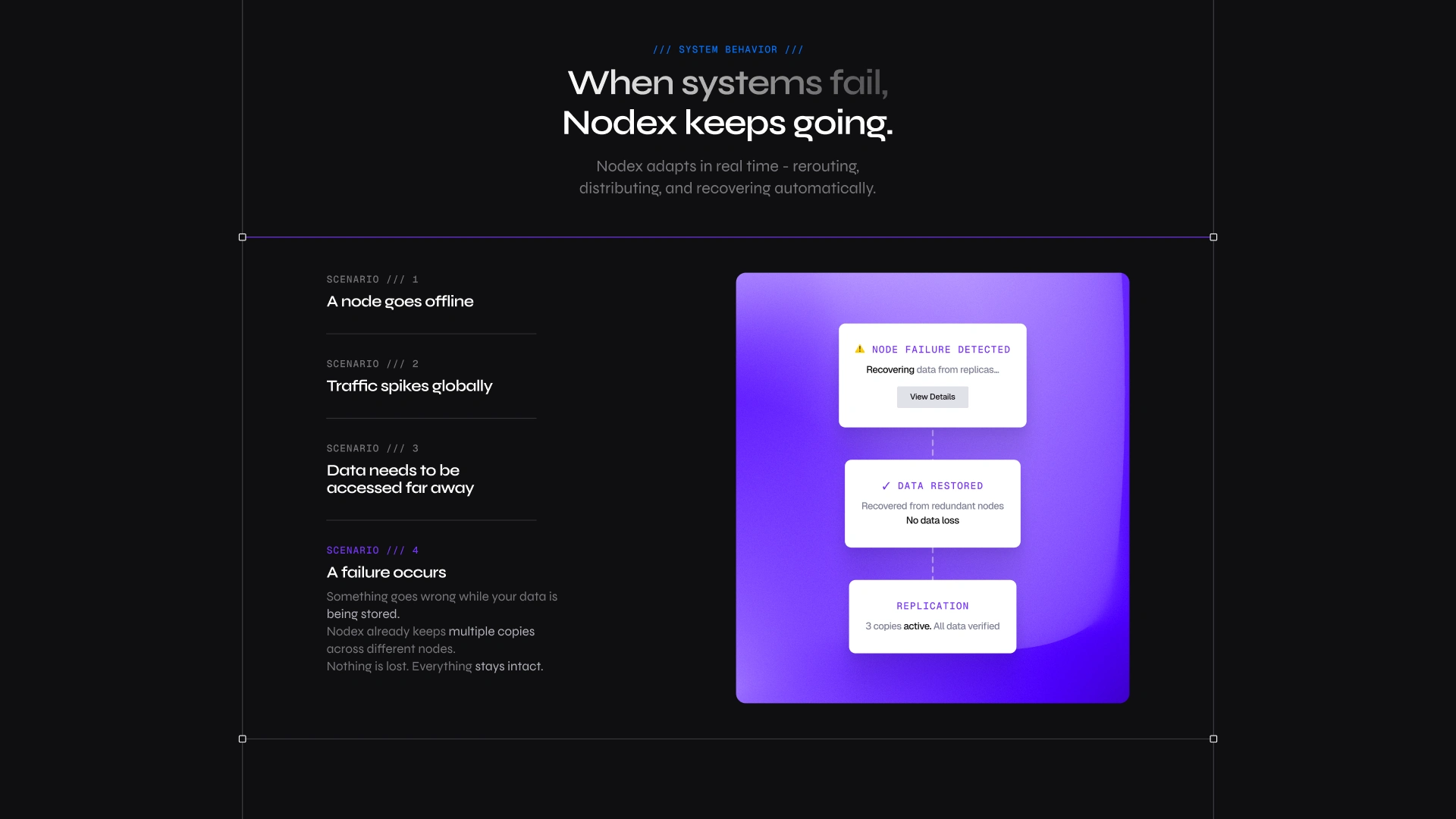
Making reliability feel real
Instead of showing technical stats,
I designed scenario-based storytelling:
node failures
traffic spikes
geo-routing
recovery systems
The goal was helping users feel:
“This system can handle pressure.”
Avoiding feature overload
Most infrastructure products become giant spec sheets.
The bento system helped structure features visually without overwhelming users.
004 /// What got rejected
A big part of the project was deciding what not to do.
Rejected ❌
yellow/black crypto visuals
heavy neon aesthetics
overly technical iconography
generic SaaS layouts
Chosen ✅
restrained blue gradients
calm dark UI
isometric illustrations
scenario-based storytelling
copy-first design
The goal wasn’t:
“make it look futuristic.”
It was:
“make it understandable.”
005 /// What shipped
The final project included:
complete brand identity
logo system
dashboard UI
12-section landing page
custom illustration system
full product copywriting
Everything was treated like a real product.
No shortcuts.
/// Nodex™ - Full Branding and Product Design ///
006 /// What this taught me
↗
Understand before designing
Infrastructure products are conceptually complex.
Before designing anything, I had to understand the system deeply enough to simplify it.
↗
Show, don’t tell
The strongest parts of the project weren’t paragraphs.
They were visuals explaining systems naturally.
↗
Simplicity is harder than complexity
Reducing complexity without losing meaning is the real challenge.
↗
Hard products are the best design training
I intentionally picked a difficult category because simplifying hard systems sharpens product thinking in a completely different way.
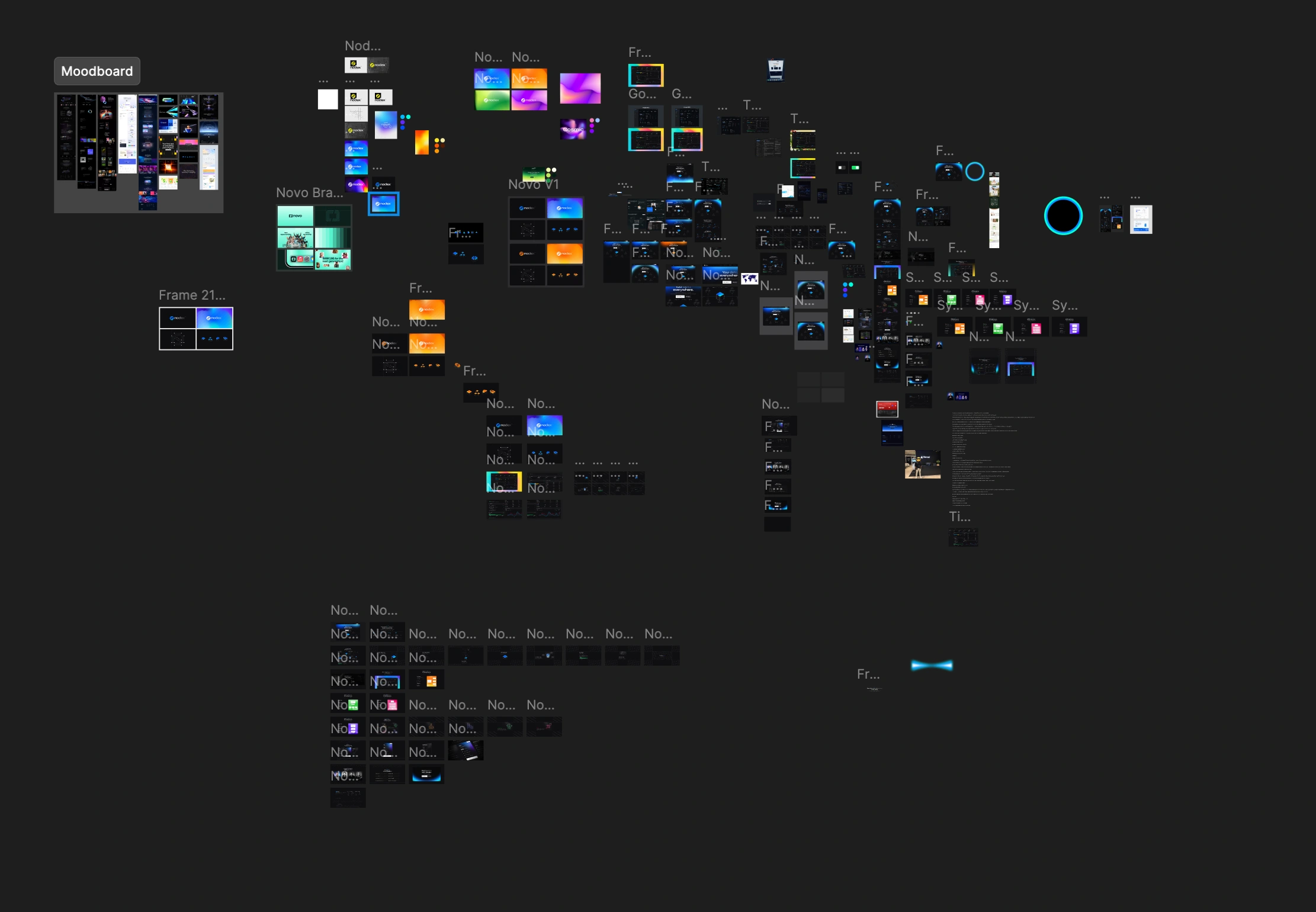
/// Raw Figma File ///
Nodex is fictional.
But the thinking behind it isn’t.
Every decision - from the logo to the dashboard architecture - was treated like a real product shipping tomorrow.
Let’s work together.
I enjoy designing products that are complex under the hood but simple to understand.
Especially in:
SaaS · AI · Infrastructure · Developer Tools
If you’re building something ambitious,
Like this project
Posted May 6, 2026
Designed a full brand and product experience for the Web3 company Nodex.
Likes
1
Views
16
Timeline
Apr 7, 2026 - May 31, 2026