LuxeGuide - Luxury Travel Platform

Koonj Imdad


LuxeGuide — Luxury Travel Platform
End-to-End Design: Brand Identity, Information Architecture, Wireframes & Full UI for a Premium Travel Website and Admin Panel
Role: Lead Designer — sole designer responsible for all phases from brand identity through final UI delivery
Industry: Travel
Duration: 2-3 Months
The Challenge
LuxeGuide entered a market where the gap between what luxury travel brands promise and what their digital presence delivers is often significant. High-end travellers — the target audience — are accustomed to exceptional experiences in the physical world. When a website fails to meet that standard, it doesn't just lose a booking. It loses trust in the brand entirely.
The challenge was not simply to design something that looked premium. It was to design a complete digital ecosystem — from the brand mark through to the admin panel — that felt coherent, intentional, and worthy of the audience it was trying to reach. Everything had to be built from scratch, and every decision had to serve both the aspirational quality of the brand and the practical needs of users booking complex, high-value travel experiences.
Key Design Challenges
Building a brand identity from zero, logo, colour, typography — that immediately communicated luxury, trust, and global sophistication without being generic
Designing an information architecture that could surface a complex catalogue of destinations, tour types, and experiences without overwhelming or confusing high-intent users
Balancing editorial ambition with usability, luxury travel sites are visually rich, but richness without clarity loses bookings
Designing an admin panel that gave the LuxeGuide team full operational control, managing tours, bookings, users, and content, in a system that was as polished as the public-facing site
Maintaining visual and experiential consistency across two very different interfaces: the aspirational, content-led public website and the functional, data-heavy admin dashboard
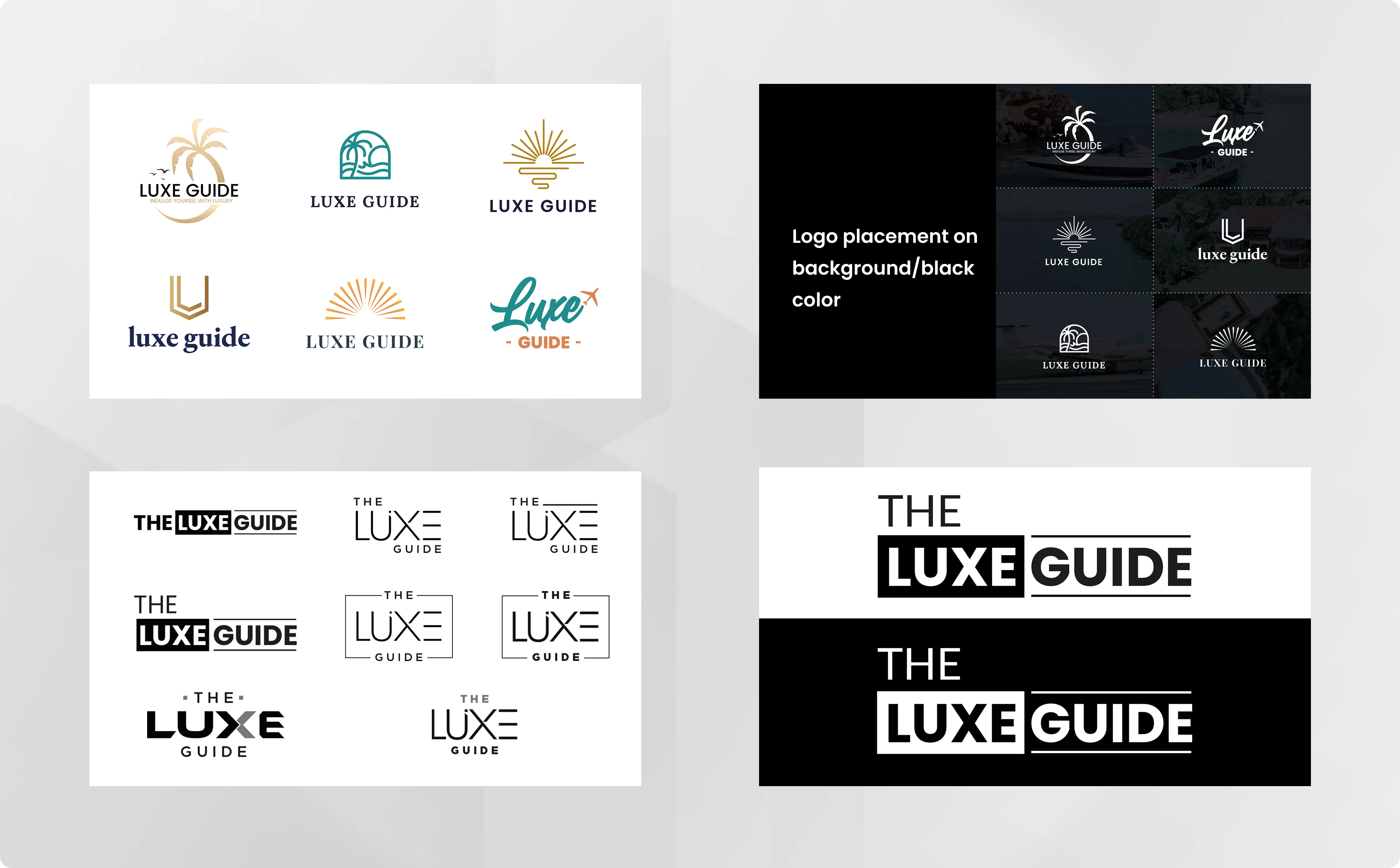
Logo Directions & Variations
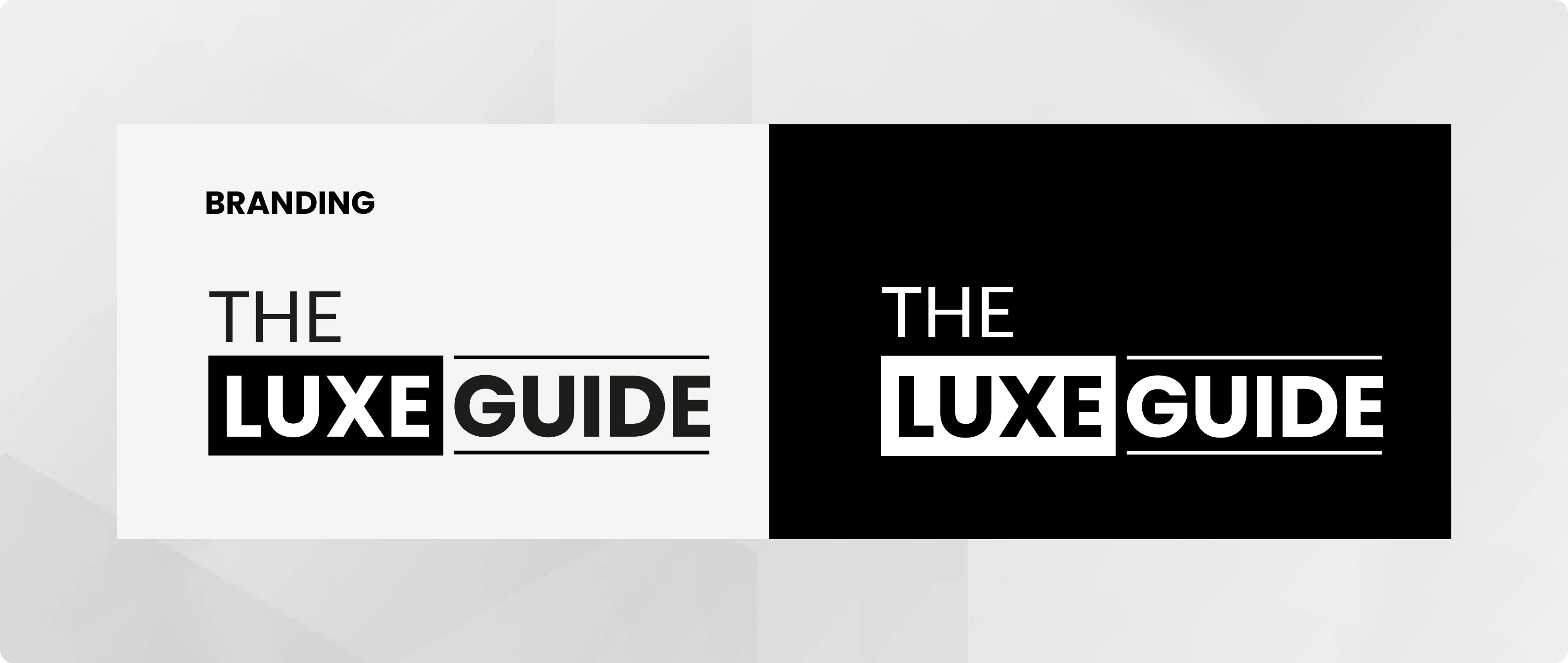
Final Logo Design
Design Process
Phase 01 — Discovery & Brand Strategy
Before opening Figma, the first task was to define what LuxeGuide stood for, not just visually, but strategically. Who is the user? What do they feel when they're planning a trip of this scale? What separates LuxeGuide from every other travel brand using the same words: exclusive, curated, luxury?
The target audience was affluent, well-travelled, and time-poor. They were not browsing casually. They arrived on the site with intent; either they already knew what experience they wanted and needed to trust LuxeGuide to deliver it, or they wanted to be inspired and guided toward something they hadn't considered. Both journeys required the same foundation: immediate credibility and a sense that LuxeGuide understood them.
The brand positioning landed on: refined guidance. Not flashy, not trying to impress, but knowledgeable, calm, and authoritative. Like a trusted concierge, not a salesperson.
Phase 02 — Brand Identity
The logo was designed to work across multiple contexts — the website header, mobile app icon, printed materials, and embossed on physical assets like luggage tags or documents. The mark needed to convey prestige without being ornate or period-specific. The final direction used a wordmark with a custom letterform treatment, paired with a monogram icon that could be used independently.
Colour palette: deep navy and warm gold as primary brand colours — navy communicates authority and trust; gold signals value and aspiration without crossing into excess. Off-white and warm neutral tones for backgrounds, ensuring photography would always take centre stage
Typography: a refined serif typeface for headings and display use — authoritative, timeless, not decorative — paired with a clean geometric sans-serif for body copy, UI labels, and functional text
Brand guidelines Documented: logo clear space rules, colour values (hex, RGB, CMYK), type scale, and usage do/don'ts — ensuring the visual language remained consistent across any future touchpoint
Phase 03 — Sitemap & Information Architecture
With the brand established, the next task was to map out the full structure of both the public website and the admin panel before a single screen was designed. Jumping straight to UI without a clear architecture is one of the most common and expensive mistakes in web design. It leads to screens that look good individually but don't connect logically, and to navigation that makes sense to the designer but confuses the user.
The sitemap for LuxeGuide was built around two distinct user journeys:
The aspirational journey: a user arrives inspired but undecided — they need to be moved emotionally before they commit to a specific tour. This journey called for a homepage that led with immersive imagery and storytelling, feeding into destination and theme-based browsing
The intentional journey: a user knows what they want and needs to find it quickly. This journey required clean, filterable tour listings and a frictionless path from tour detail to enquiry or booking
Public website sitemap covered: Homepage, Destinations (hub + individual destination pages), Tours (listing + detail), Experiences (thematic collections), About LuxeGuide, and Contact/Enquiry.
The admin panel sitemap was mapped separately, structured around the operational needs of the LuxeGuide team: Dashboard overview, Tour management (create/edit/archive), Booking management, User/client management, Content management, and Analytics & reporting.
Phase 04 — Wireframes
Wireframes were produced for all key pages before any visual design began — a step that is often skipped under time pressure but one that pays back significantly in reduced revision cycles later. Wireframing forces decisions about layout, hierarchy, and content structure to be made at the cheapest possible stage, before any visual investment has been made in a direction.
Key wireframing decisions made at this stage:
Homepage: Fullscreen hero with a single, high-contrast CTA, decided against a carousel at the wireframe stage as research consistently shows they underperform for conversion on luxury travel sites. Below-fold structure: destination highlights, editorial feature, testimonials, and a persistent enquiry prompt
Tour Detail Page: Designed to answer the four questions a high-intent buyer has: what is included, where exactly does this go, how much does it cost, and why should I trust LuxeGuide, in that order, matching the psychological journey from desire to decision
Admin Dashboard: Wireframed for information density, the LuxeGuide team needed operational clarity at a glance. Booking status, upcoming departures, revenue snapshot, and recent enquiries all surfaced on the primary view
Booking Management: Table-based layout with filtering, status tracking, and a slide-over detail panel, chosen over a separate detail page to reduce navigation overhead for high-frequency admin tasks
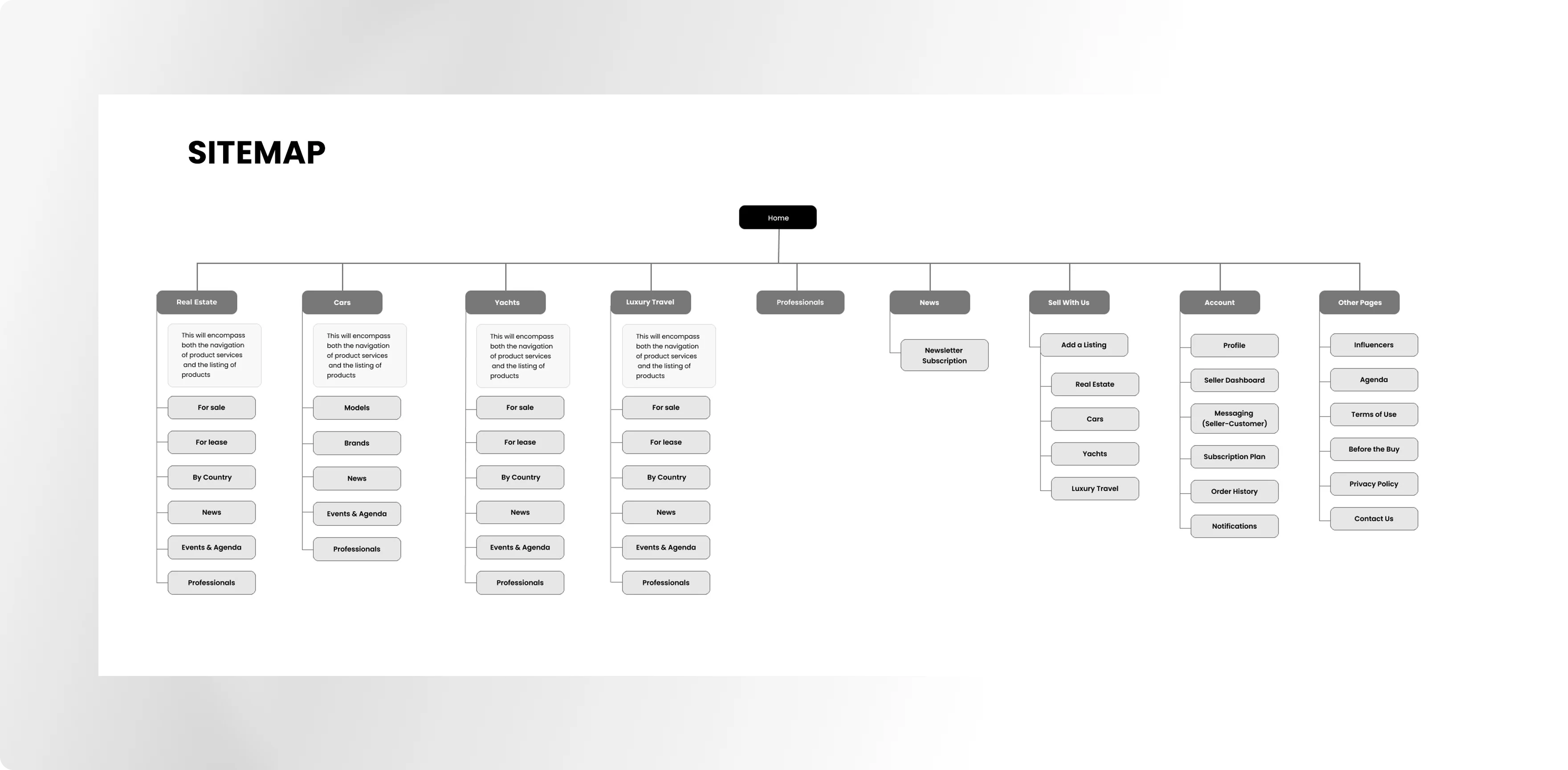
Information Architecture
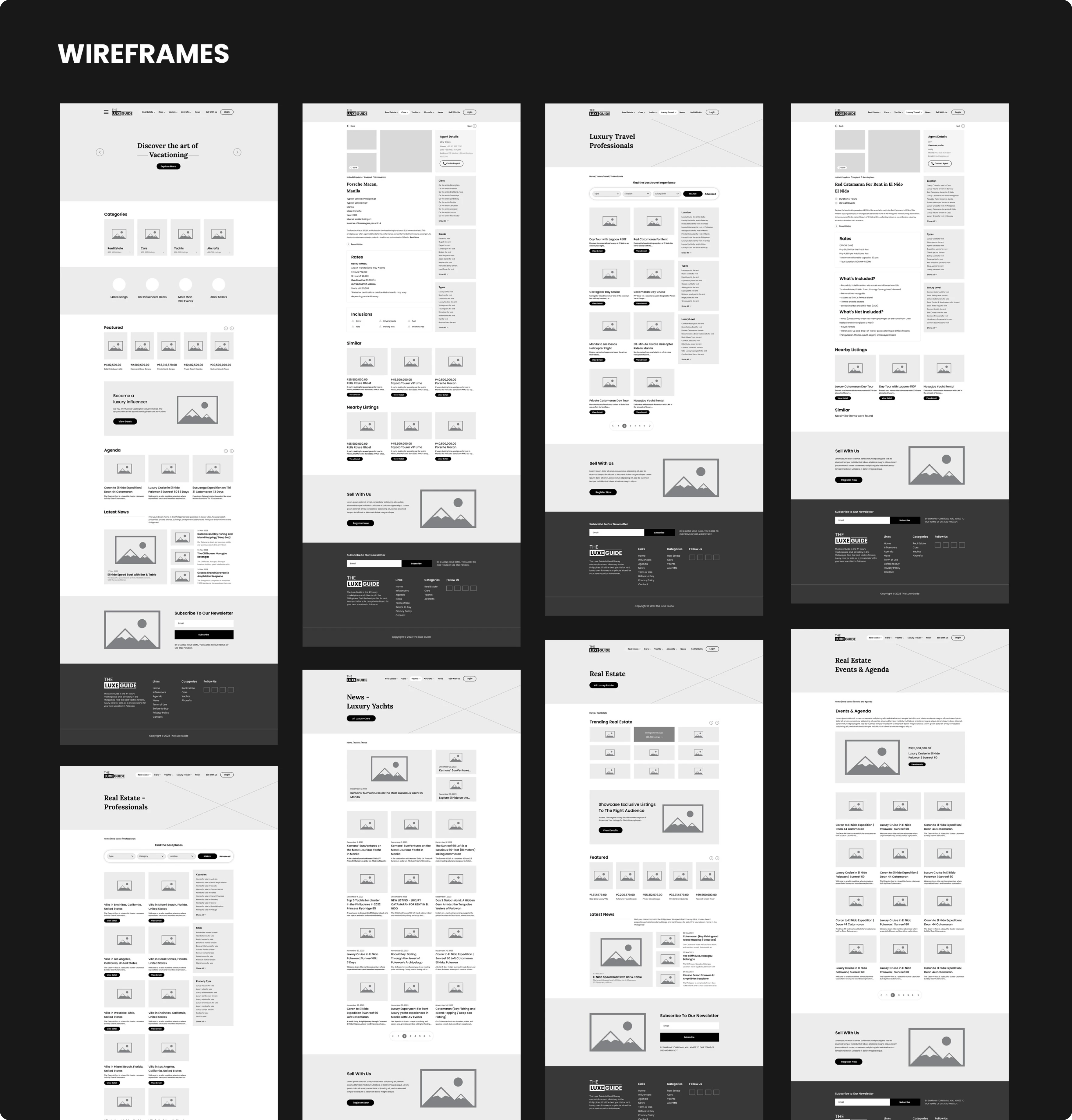
Wireframes
UI Design
Website
The visual design translated the brand system into a full-screen, editorial experience. Every page was designed with photography as the primary design element; the UI exists to frame and contextualise the imagery, not to compete with it. This meant generous white space, restrained use of UI chrome, and typography that guided without intruding.
Homepage: Fullscreen hero with parallax-ready layout, a single destination search/enquiry CTA, and a curated editorial section below the fold. Destination cards used an oversized image format with minimal overlay text, respecting the photography while providing enough context to invite a click
Destinations: hub page with a map-based and grid-based view toggle. Individual destination pages led with an immersive header, then structured content in a magazine-style layout, storytelling first, practical information second
Tour Detail Page: the most conversion-critical screen. Designed around a sticky right-column enquiry panel that remained visible as users scrolled through itinerary, inclusions, and gallery content, eliminating the friction of having to scroll back up to take action
Mobile: designed mobile-first for all public pages, the majority of initial discovery browsing on luxury travel sites happens on mobile, even when the final booking is completed on desktop
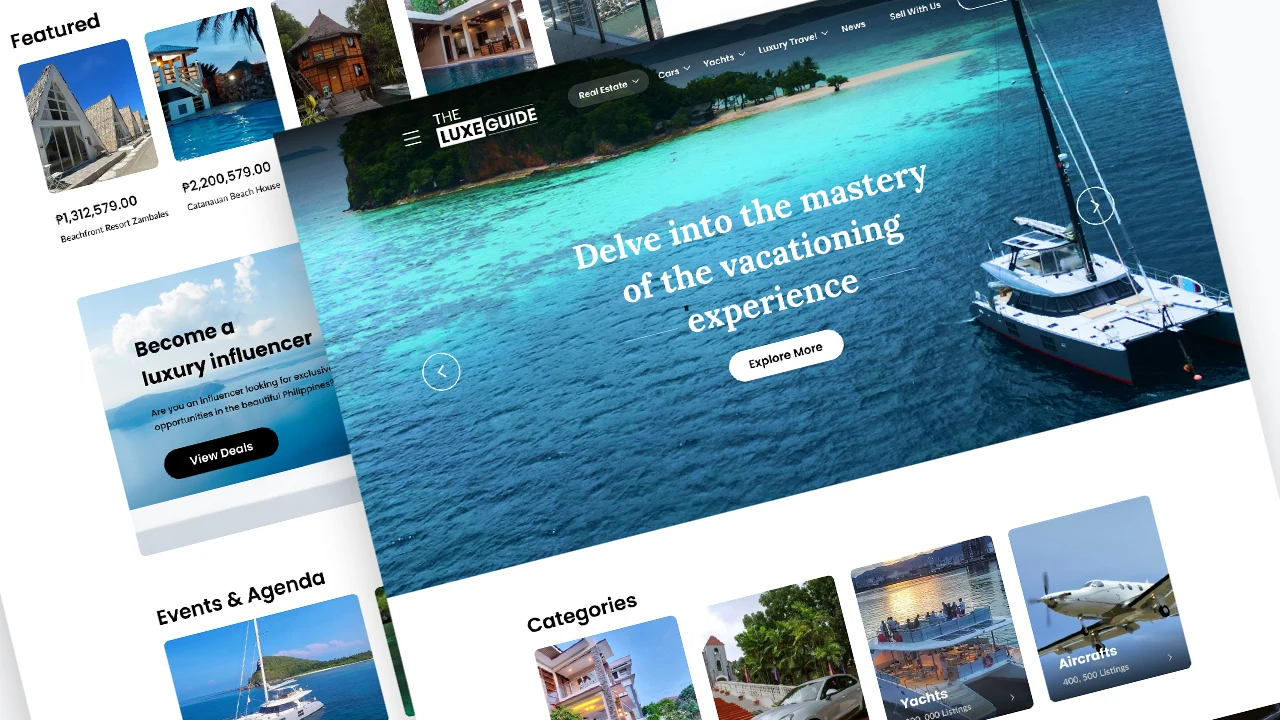
Website Design
Admin Panel
The admin panel required a complete shift in design thinking. Where the public website was editorial and emotionally led, the admin panel was operational and efficiency-led. The same brand colours were used, maintaining visual coherence, but the layout, density, and interaction patterns were entirely different.
Dashboard: KPI cards for active bookings, upcoming departures, total revenue (current month), and pending enquiries. A bookings timeline and recent activity feed below — giving the team a complete operational snapshot on arrival
Tour Management: a card-based layout for browsing the tour catalogue, with a full create/edit form using a multi-step layout to reduce the cognitive load of building out a complex tour with multiple itinerary stages, pricing tiers, and availability windows
Booking Management: sortable, filterable data table with status indicators (confirmed, pending, cancelled, completed), with a slide-over panel for booking detail and action, designed to handle a high volume of bookings without requiring page navigation
Typography and Density: tighter spacing, smaller type scale, and higher information density than the public website, calibrated for users who spend hours inside the system, not occasional visitors
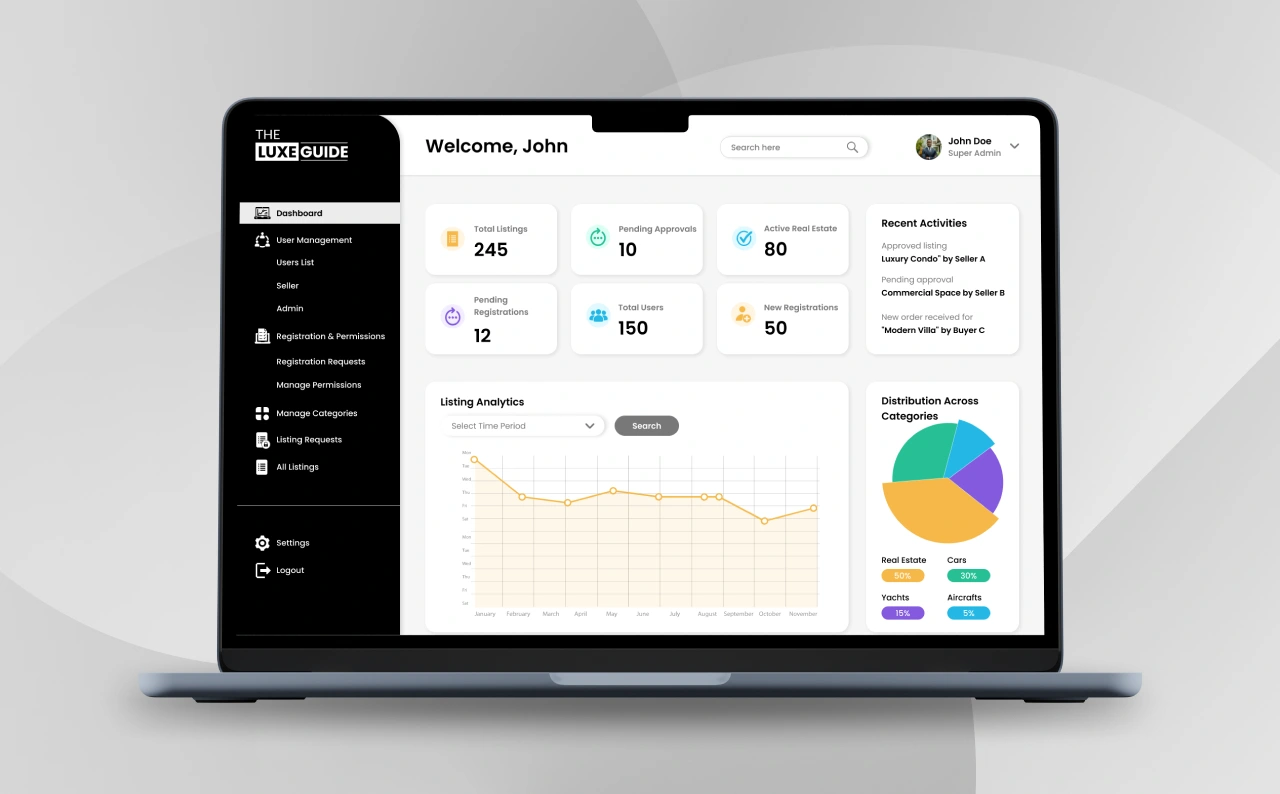
Dashboard Design
Outcome & Reflection
LuxeGuide represents the most complete end-to-end design project in my portfolio, the only project where I owned every decision from the first brand mark to the final admin screen. That continuity matters because it means every layer of the product was designed with full awareness of what came before and what came after it.
The brand system gave the UI its visual language. The sitemap gave the UI its logic. The wireframes gave the UI its structure. By the time high-fidelity screens were being produced, the hard decisions had already been made, which is exactly how it should work.
What This Project Demonstrates
End-to-end design ownership, the ability to lead a product from brand strategy through to final UI without losing coherence across phases
Information architecture thinking, treating structure as a design discipline, not a precursor to it
Dual-interface design, understanding that a public-facing website and an internal admin tool serve fundamentally different users, and designing accordingly
Luxury brand sensitivity, understanding what makes a premium digital experience feel earned, not performed
Design process discipline, wireframing before UI, sitemap before wireframes, brand before everything
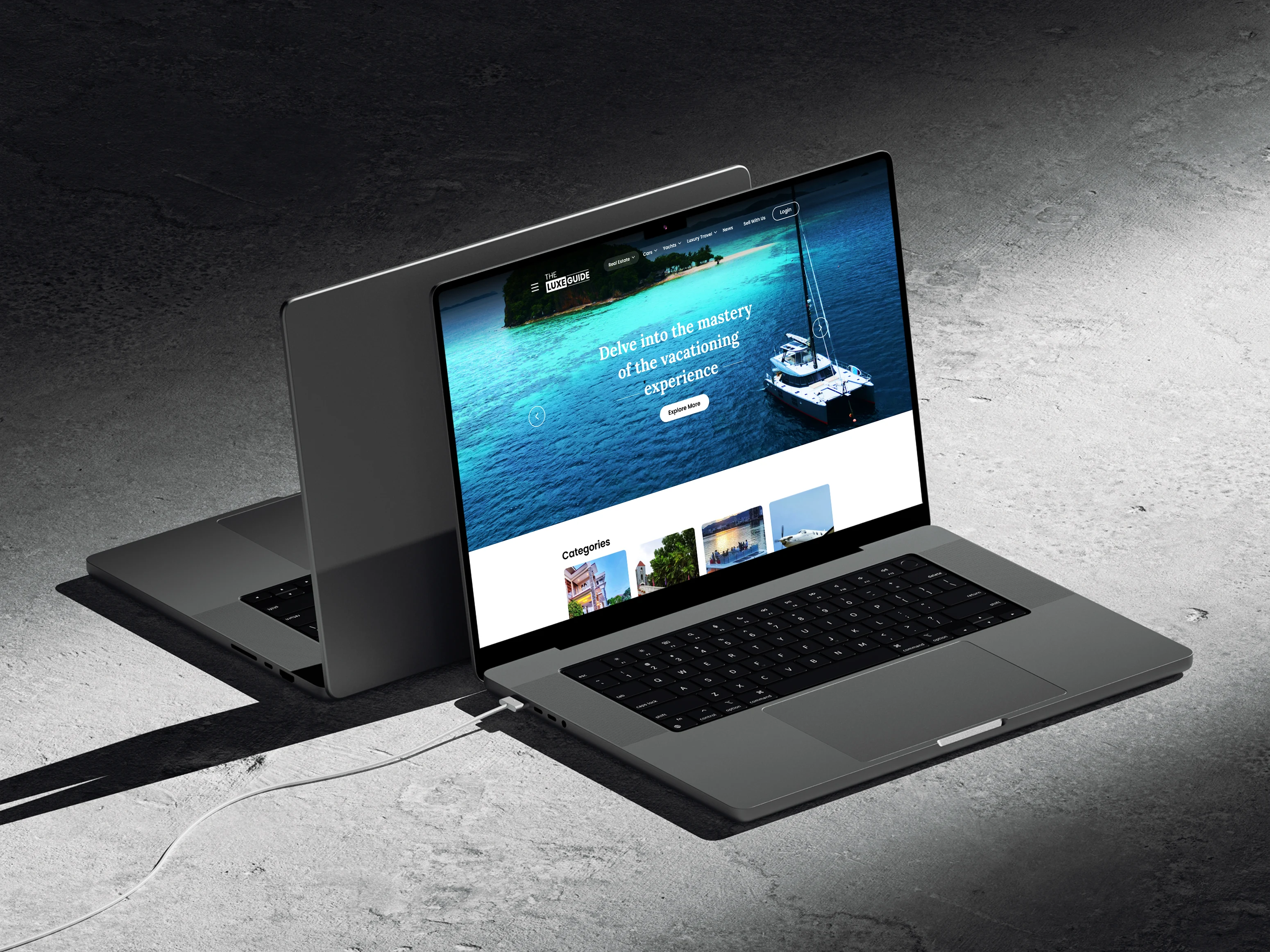
Luxury Travel Platform
Let's Work Together
Koonj Imdad
UX/UI Designer
Like this project
Posted Jun 9, 2026
End-to-End Design: Brand Identity, Information Architecture, Wireframes & Full UI for a Premium Travel Website and Admin Panel