Web-Based Platform for Rental Property Management and Leasing

Zhan Y.


Web-Based Platform for Rental Property Management and Leasing
The project centers around creating a comprehensive rental platform that bridges the gap between tenants, landlords, and roommates. The goal is to design a seamless, user-friendly experience that makes property renting and management more transparent, efficient, and accessible. By focusing on user-centric design principles, the platform simplifies interactions, reduces friction, and enhances communication between users.
Design Goals
Simplicity: Ensuring the platform is intuitive for users of all experience levels.
Transparency: Providing clear information regarding contracts, payments, and user reviews.
User Empowerment: Allowing users to make informed decisions by providing them with all the relevant tools and data.
Engagement: Creating features that encourage consistent use and positive user interactions, leading to long-term retention.
User Roles
The platform supports four main user roles, each with specific needs and functionalities:
Tenants – Looking for a rental property and managing lease-related tasks.
Landlords – Offering properties for rent and managing tenants.
Roommates – Seeking shared living spaces or offering a room to rent.
Casual Users – Browsing the platform with limited access, but able to explore blog content and platform services.
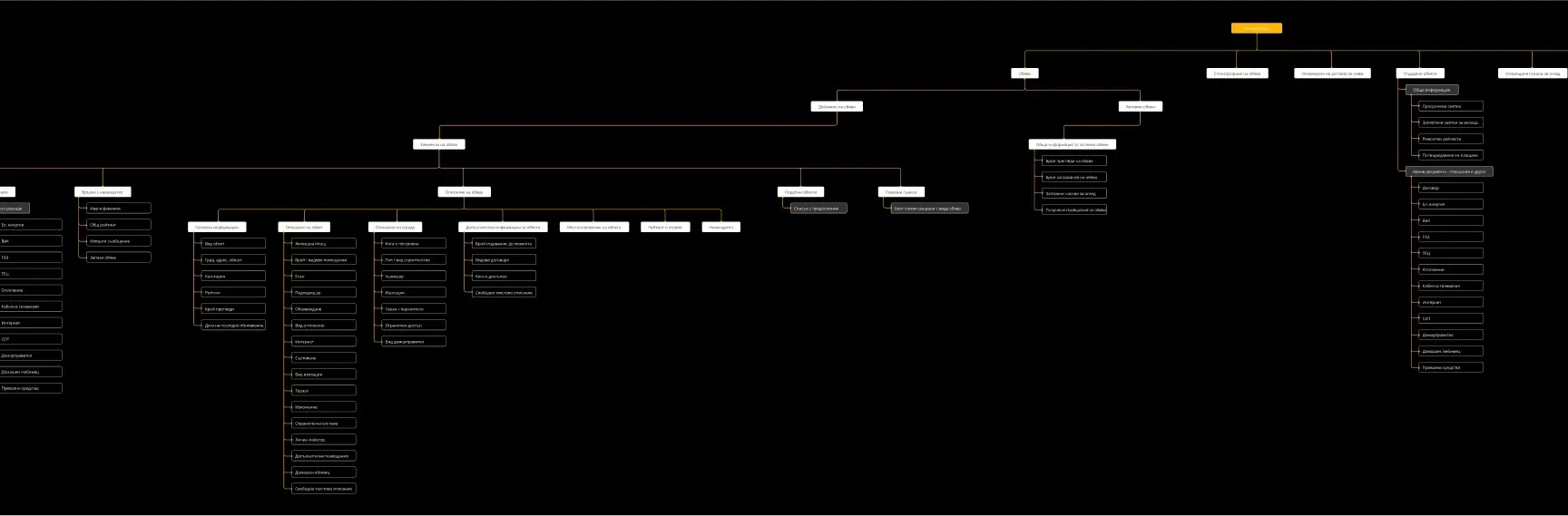
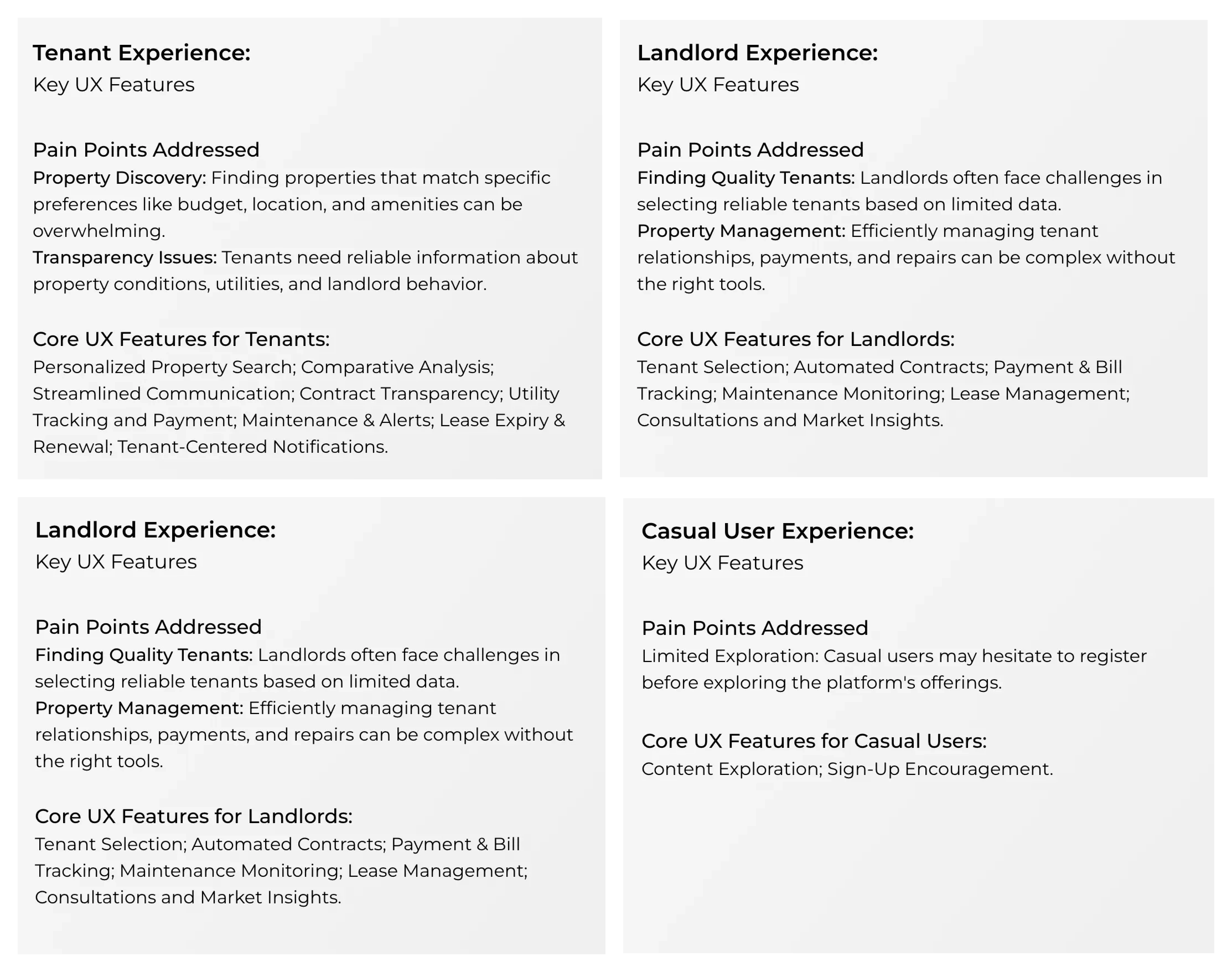
Having in mind the user role that will have on the platform, we had to address the pain points, think about the core UX feature,s and consider the experience for each of them. Each user role had separate flows and features that needed to be explored and designed.
Below you’ll see some of the features that were considered for each user role.
UI/UX Design Considerations
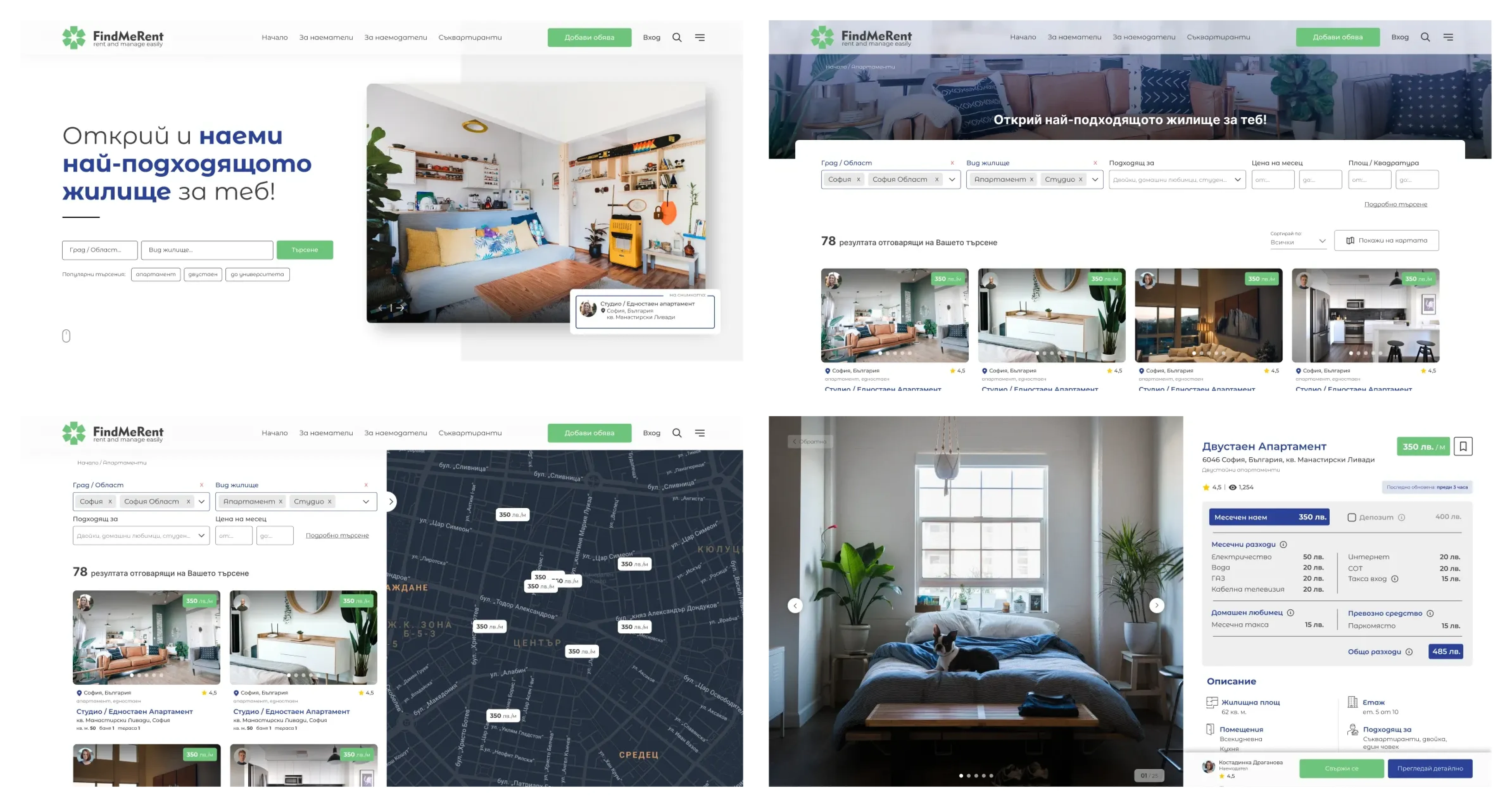
Simplicity & Clarity:
The interface is designed to be clean and minimal, prioritizing clarity. Key elements like search bars, buttons, and filters are always visible and intuitive, ensuring quick access to features.
Mobile-First Design:
Given that many users will access the platform on mobile devices, responsive design is essential. Key actions like property search, payment tracking, and messaging are easily accessible on mobile screens.
Personalization:
The platform leverages user data to deliver personalized recommendations based on their search history, preferences, and past activity. This is key to improving user engagement.
Trust & Transparency:
Clear ratings and reviews help build trust between landlords and tenants. The ability to report discrepancies and leave feedback ensures that both parties are held accountable.
Complaint Systems:
An accessible way to report issues ensures a transparent, conflict-free rental experience.
Conclusion
This project delivers a user-centric design tailored to the unique needs of tenants, landlords, roommates, and casual users. Through thoughtful UX research and design, the platform addresses key pain points in the rental process, such as property discovery, payment management, and tenant screening. The result is a streamlined, intuitive experience that encourages engagement, builds trust, and facilitates smoother transactions for all user roles.
By focusing on personalization, transparency, and simplicity, the platform has the potential to revolutionize the rental experience for users across the board.
Like this project
Posted Dec 12, 2025
Web-based rental property management platform focusing on user-friendly design and transparency.
Likes
0
Views
12