Designing One Platform for Three Conflicting Audiences

Rohan Boda


Designing One Platform for Three Conflicting Audiences
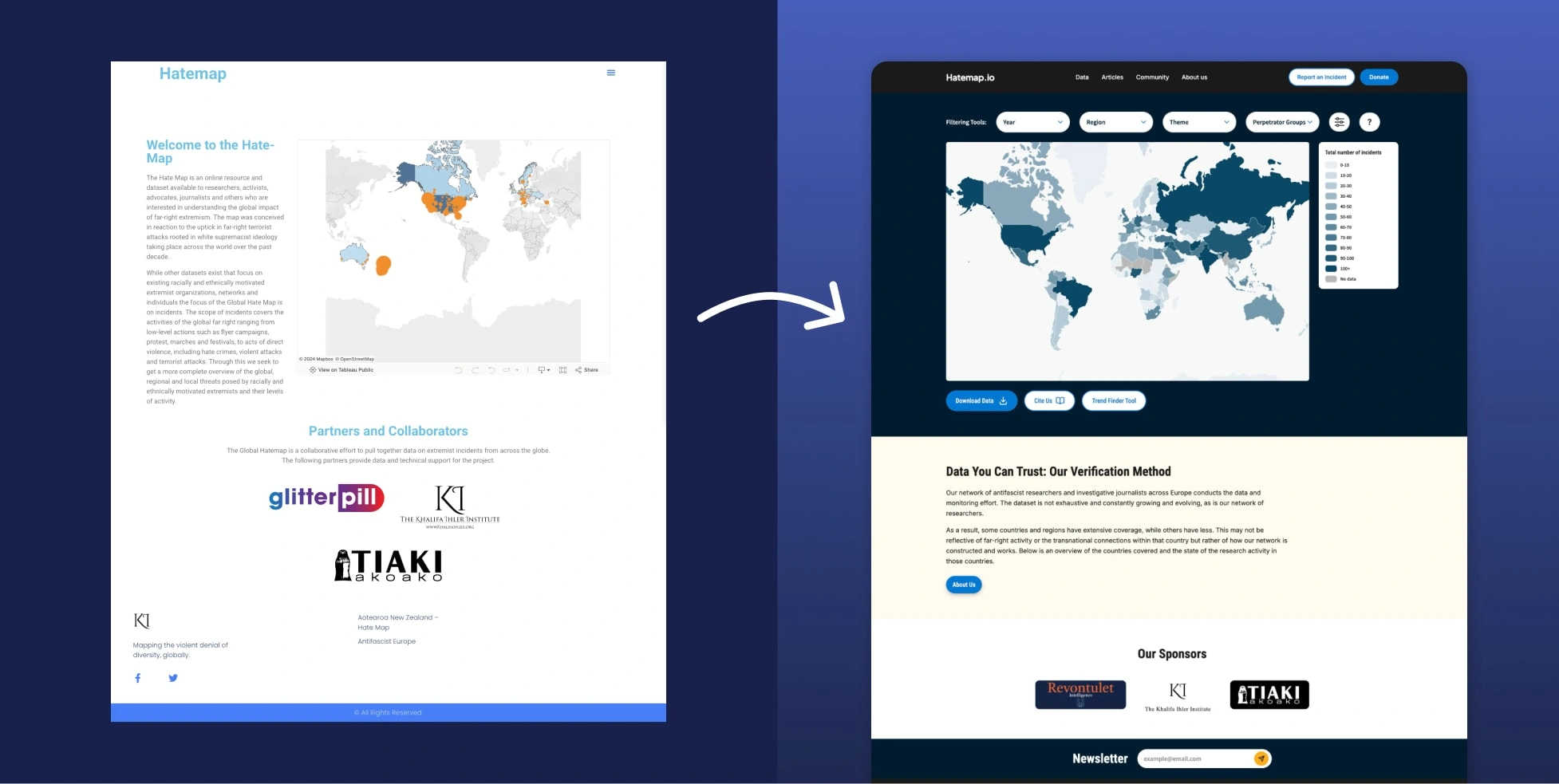
A civic data platform redesign that had to serve casual visitors, PhD researchers, and hate crime survivors, all at once, without compromising any of them.
Prototyped on Figma Make, Designed on Figma.
Duration: 3 weeks
Skills: UX Strategy, Information Architecture, Data Visualization, User Research
Industry: Civic Tech
The Problem
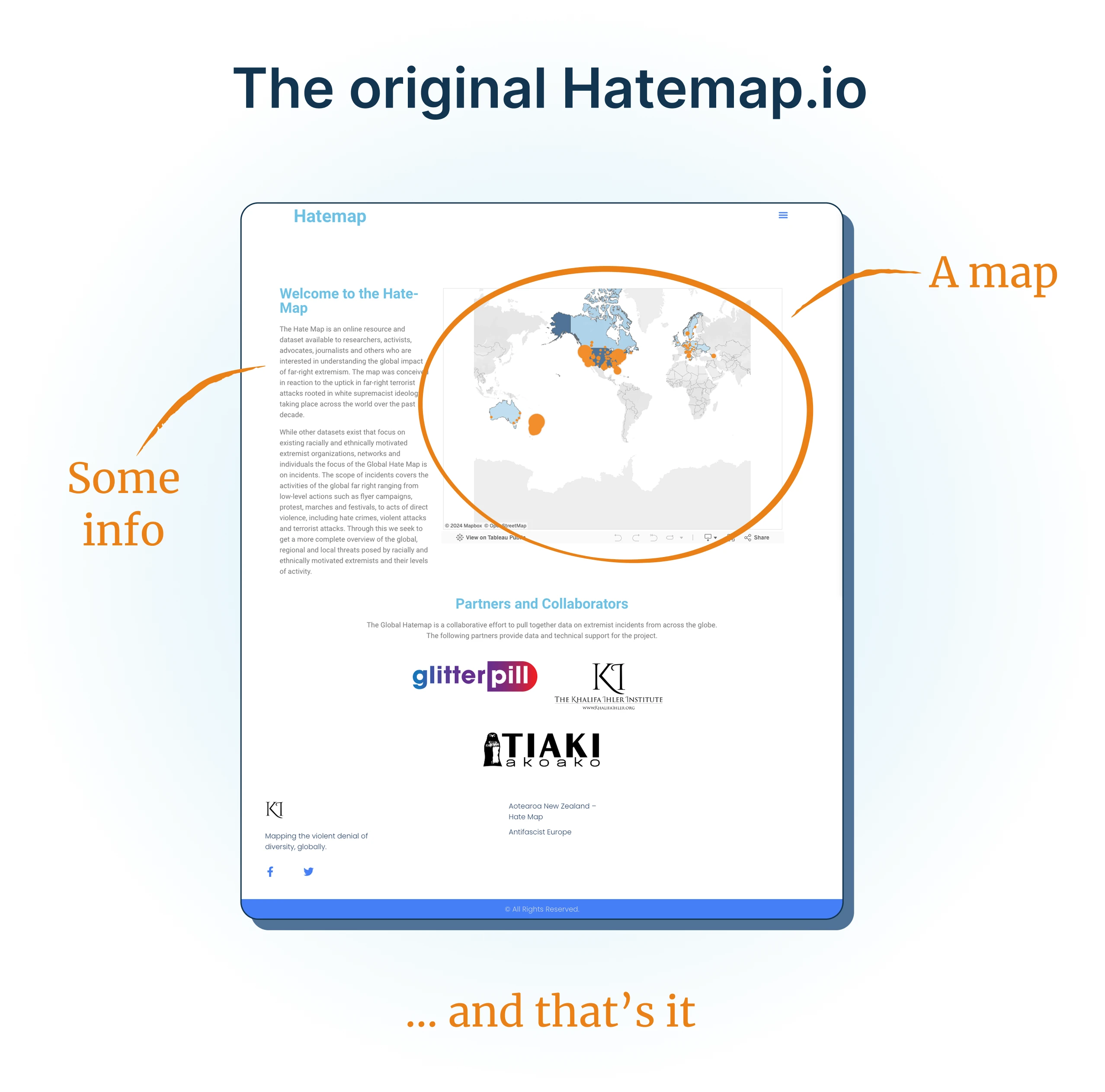
Hatemap.io tracks hate crimes worldwide. The data is important, but the platform had a fundamental design conflict: its three core user groups needed completely different things.
Casual visitors wanted a quick, digestible snapshot of global trends.
Researchers needed raw data, export tools, and full methodological transparency.
People directly affected by hate crimes needed resources, community, and support (not charts).
Most platforms pick one audience and quietly fail the rest. The challenge here was designing a single product that served all three without watering anything down.
What I Found
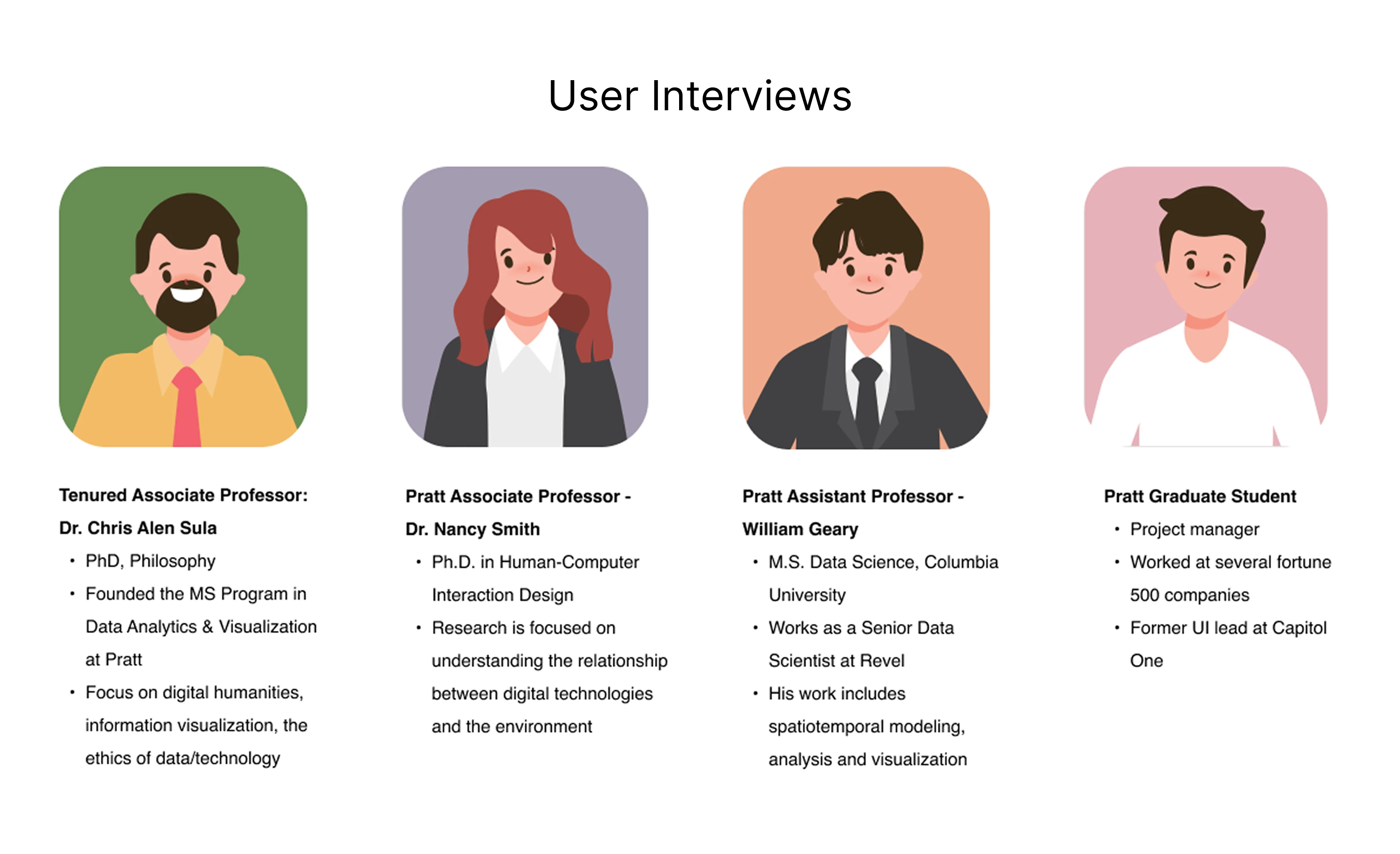
Three weeks of research across six user interviews (including PhD researchers), and a competitive analysis of five comparable data platforms.
The most important finding: even expert users don't want to land on raw data. They need a narrative entry point first, then the ability to go deep. That single insight became the foundation for the entire architecture.
Research also confirmed that trust in sensitive data depends on transparency, i.e. cited sources, visible methodology, and acknowledged gaps. For a platform covering hate crimes, credibility wasn't optional.
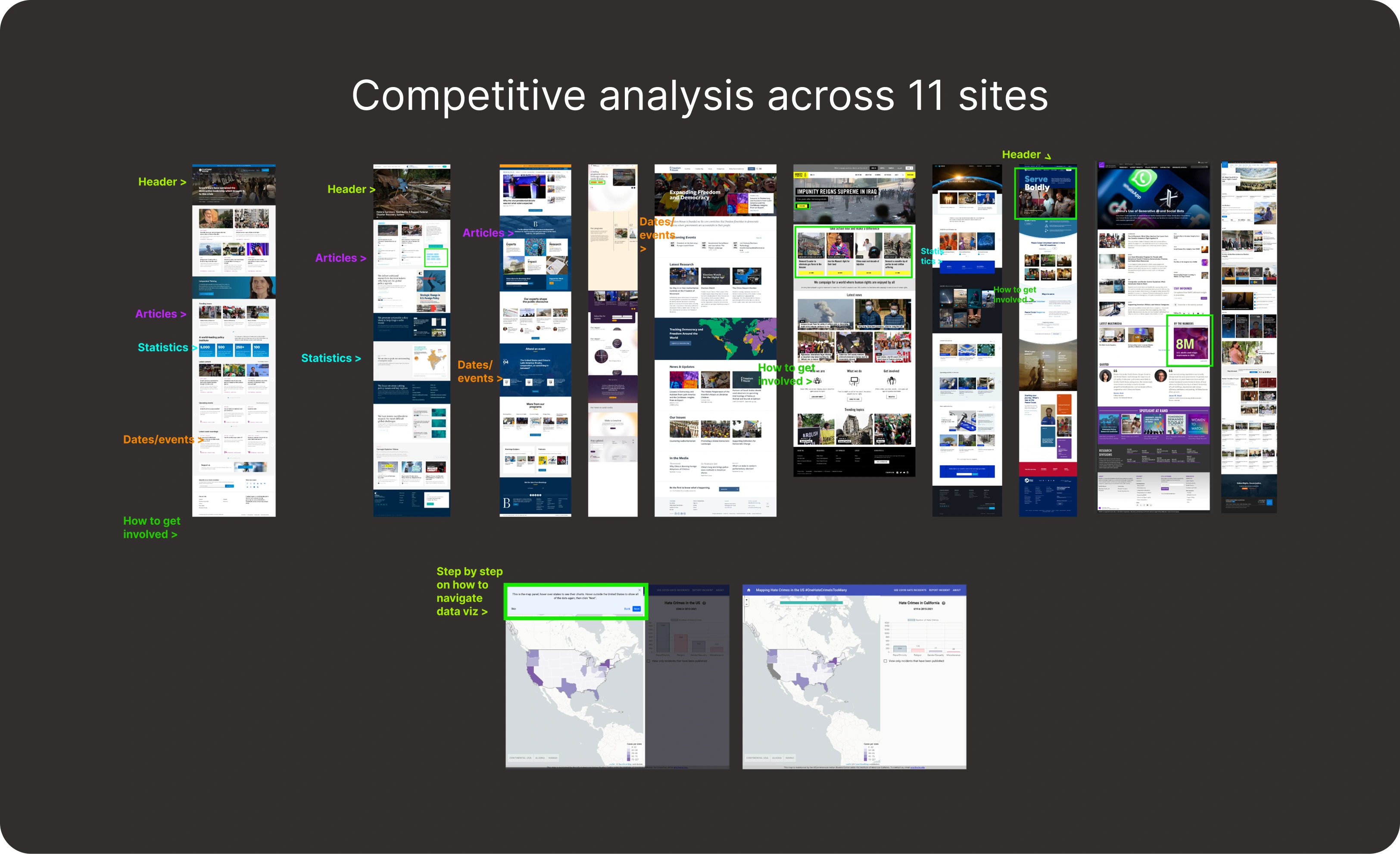
Competitive analysis in order to understand what elements make a successful platforms usable
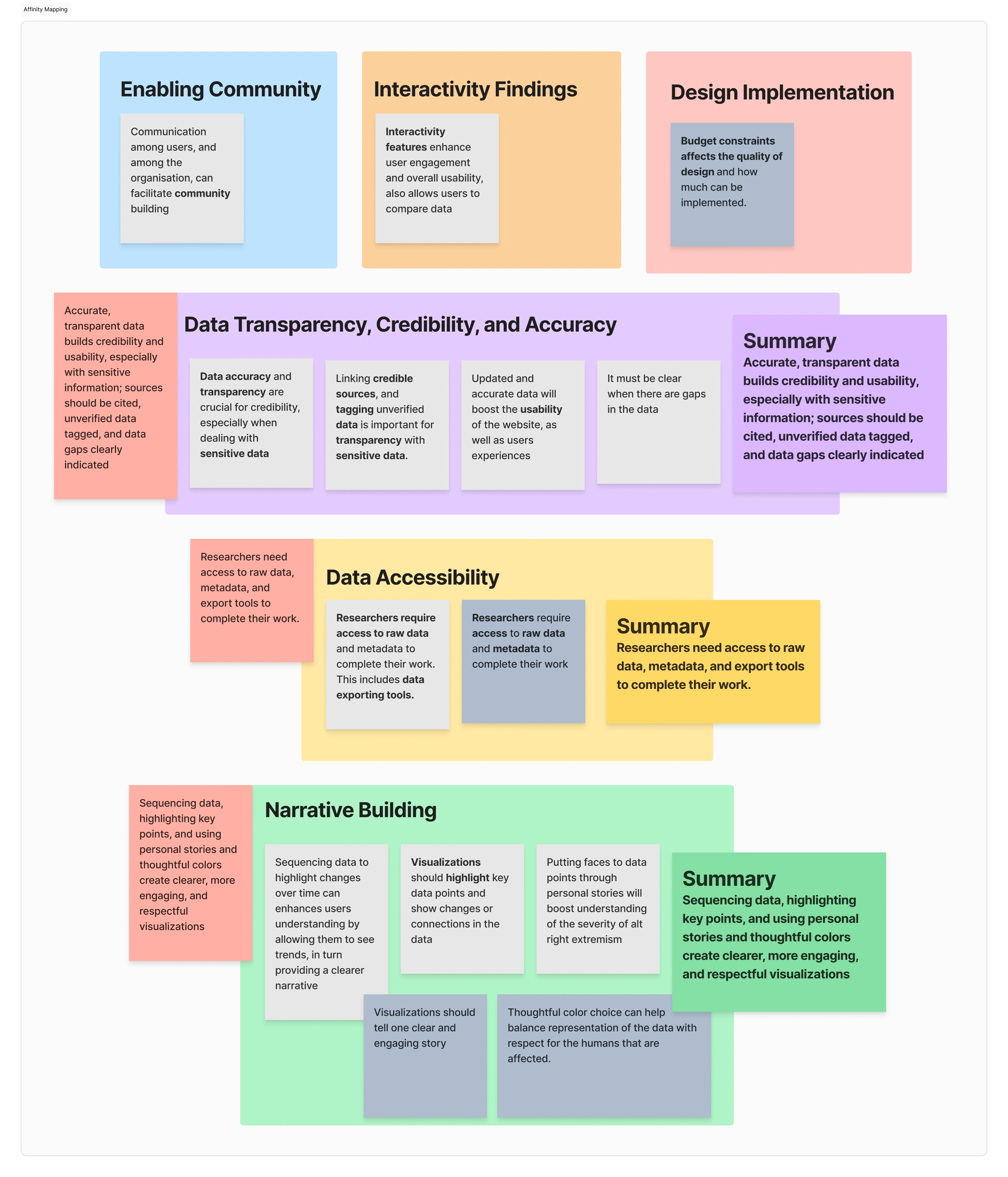
Our findings from Affinity an mapping activity
The Solution: Layered Information Architecture
Rather than forcing a compromise, I designed a system built around progressive disclosure, the same entry point, different depths depending on who you are.
Gradual data reveal
Users land on a high-level map. One click surfaces incident-level detail. Another reveals sources, methodology, and data gaps. Casual visitors leave satisfied. Researchers go deeper.
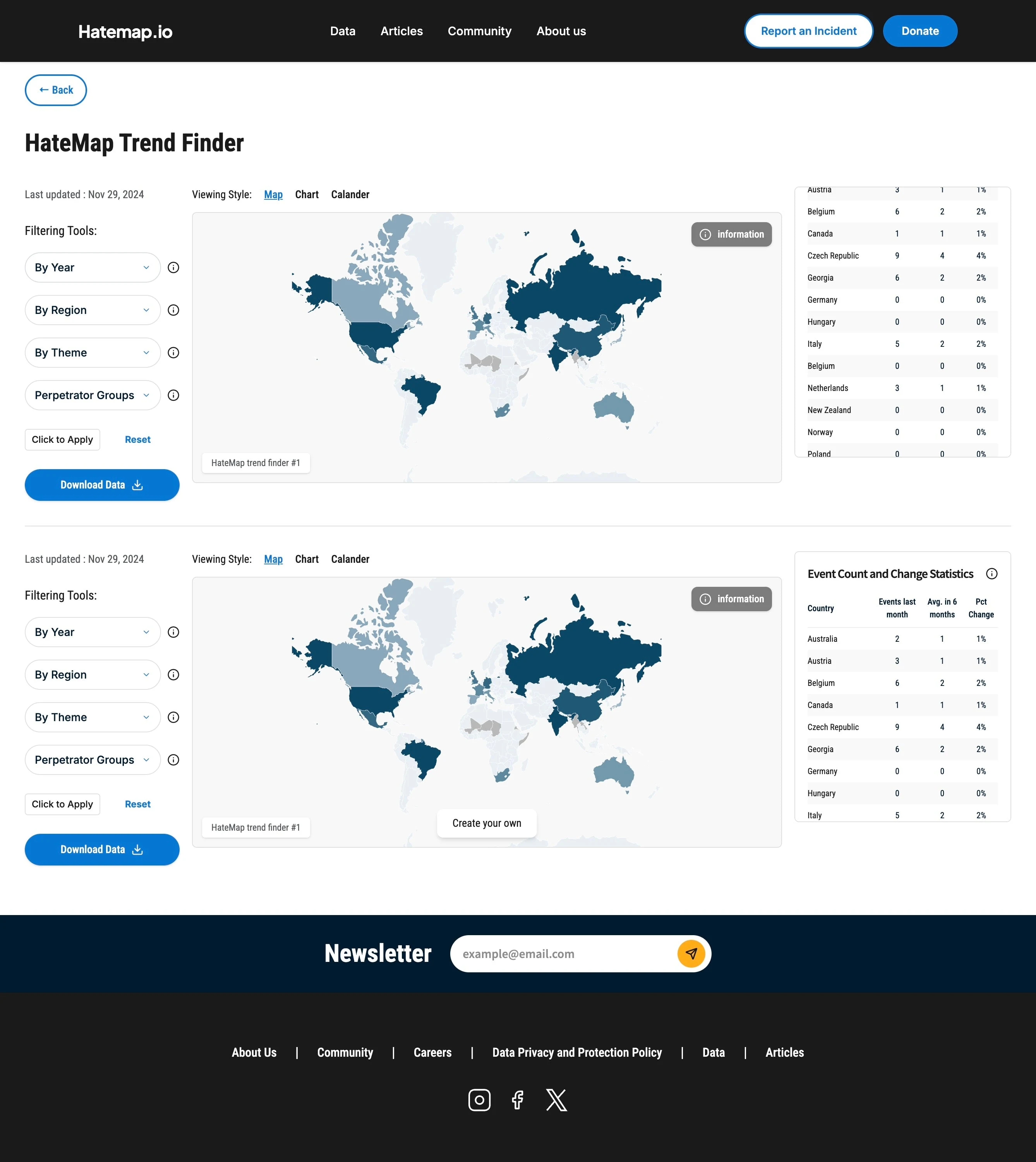
Trend Finder tool
A dedicated research mode for analysts to compare regions, filter by incident type, and connect patterns across datasets, without cluttering the main experience.
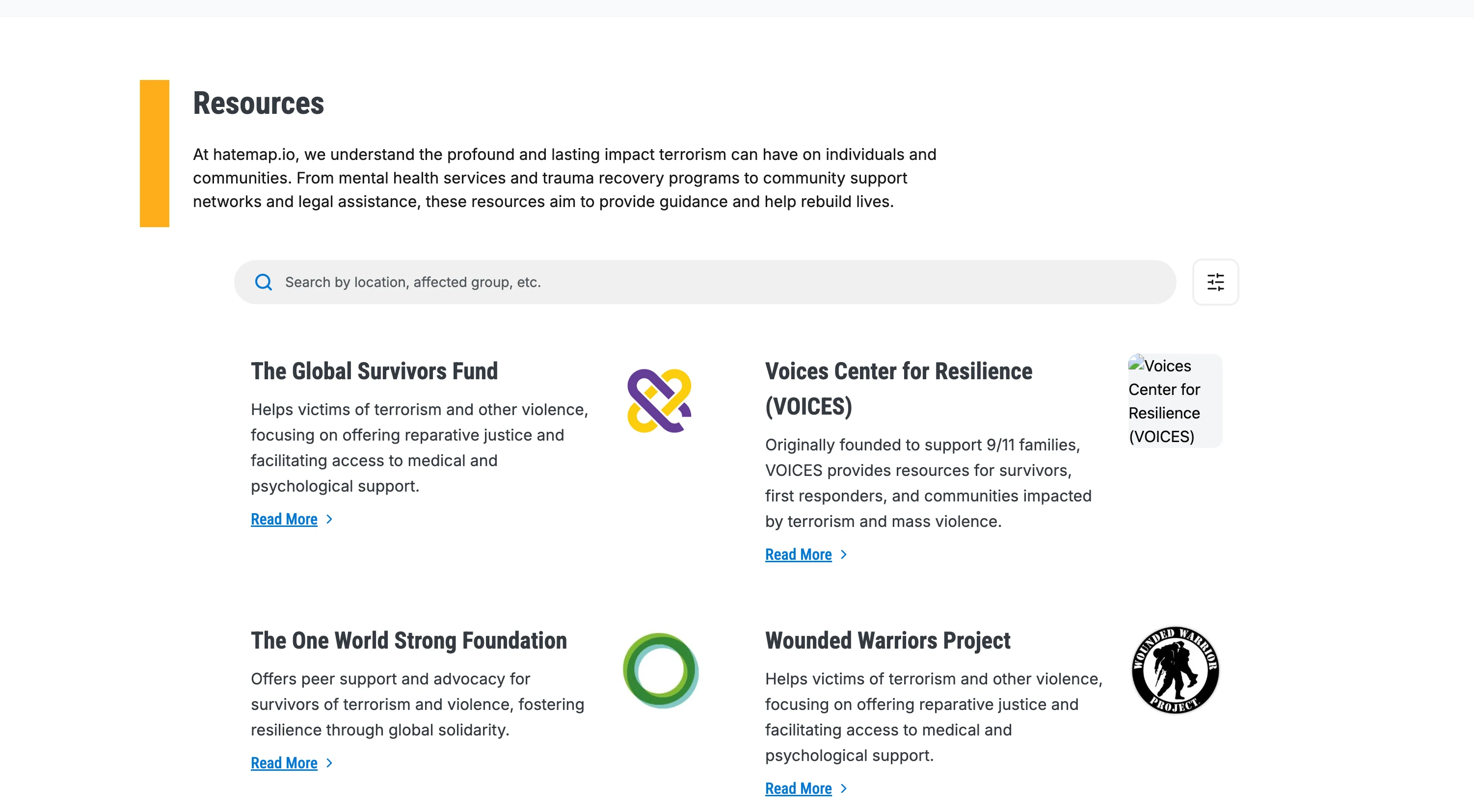
Advocacy layer
A separate section surfaces resources, articles, and community spaces for people directly affected, so the platform supports as well as informs.
Who This Is For
If you're building a product with multiple user types pulling in different directions, a data platform, a two-sided marketplace, a tool serving both power users and casual ones, this is the type of structural problem I'm built for.
Project Context
Proof of concept developed at Pratt Institute's IXD program. Six user interviews, competitive analysis of five platforms, full Figma prototype. Research published on Pratt's IXD blog and used as a funding pitch document.
See my full case study
Like this project
Posted Mar 30, 2026
How do you design for casual visitors, PhD researchers, and hate crime survivors — on the same platform, at the same time?
Likes
1
Views
3
Timeline
Sep 9, 2024 - Dec 13, 2024