TaskHub – Task Management System Design

chouaib Belagoun


TaskHub – Task Management System
About the project
If you've ever found yourself drowning in a sea of sticky notes, forgotten Slack messages, and three different project management tools that nobody actually uses consistently—TaskHub gets it. We built this for teams who are just plain exhausted from trying to keep everything together.
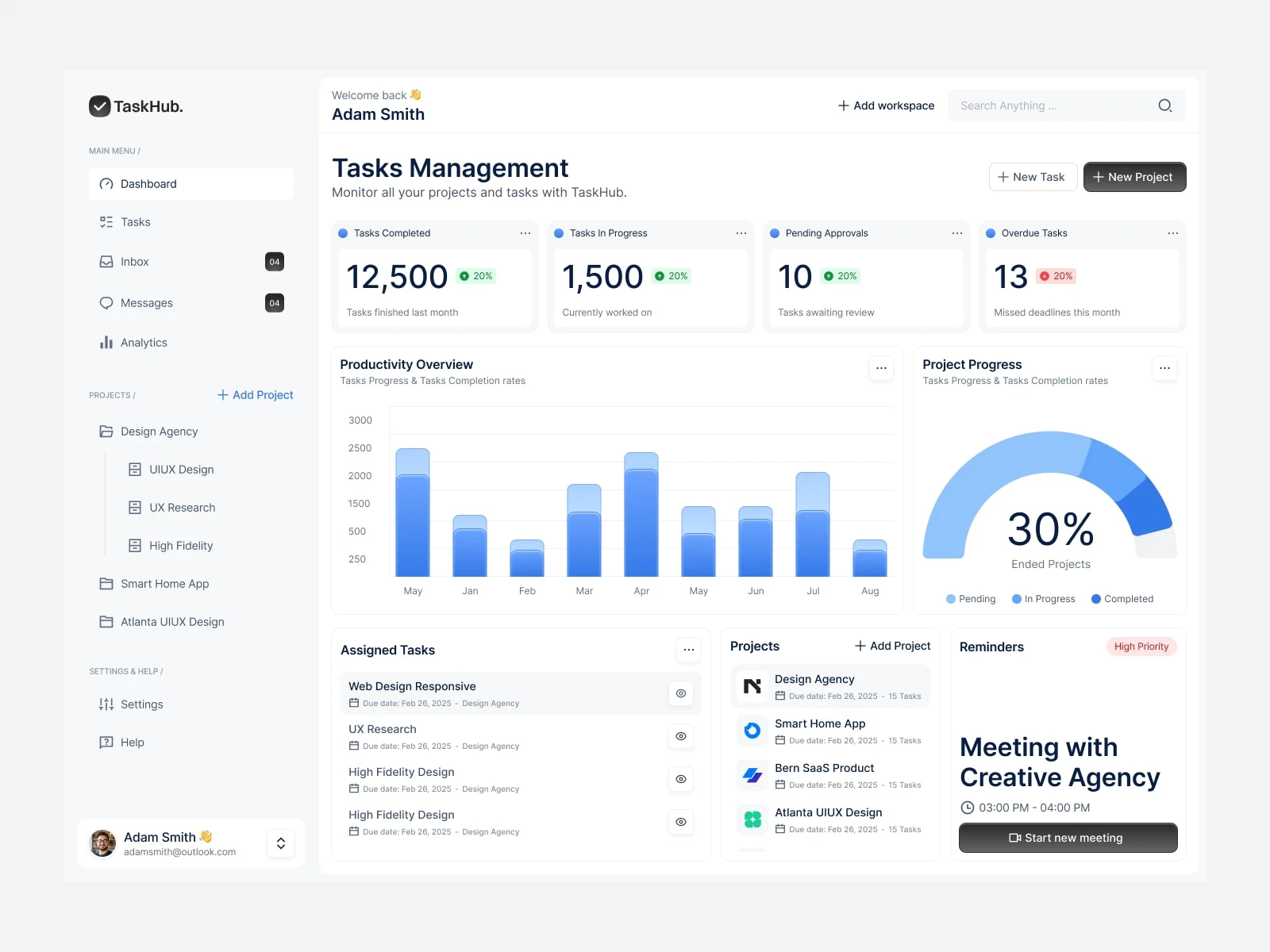
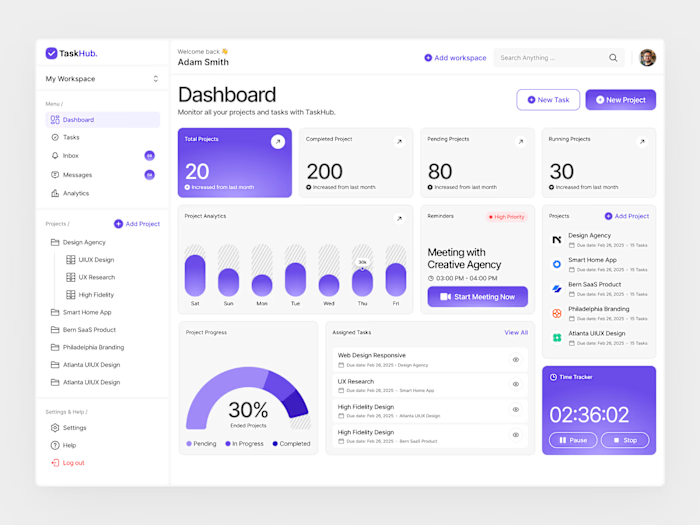
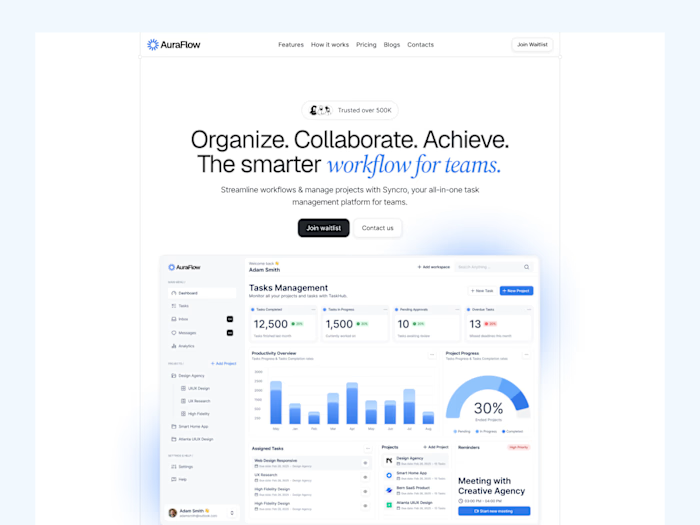
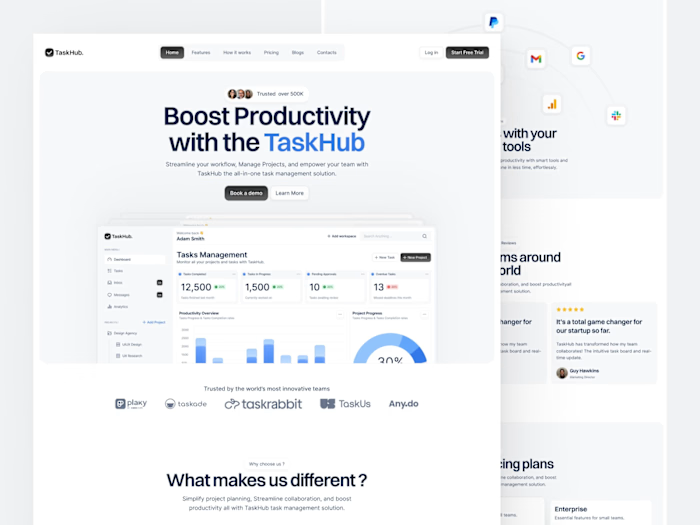
Here's the thing: TaskHub gives you one clean space to organize everything. You can actually see what's happening with your projects, make decisions based on real data, and—here's the best part—you don't need a PhD to figure out how it works.
When we started designing this, we did something pretty basic: we asked people what drove them crazy about the tools they were already using. The complaints? Pretty much the same everywhere. Too many buttons. Dashboards that looked like airplane cockpits. Menus buried inside other menus. People just wanted something that made sense.
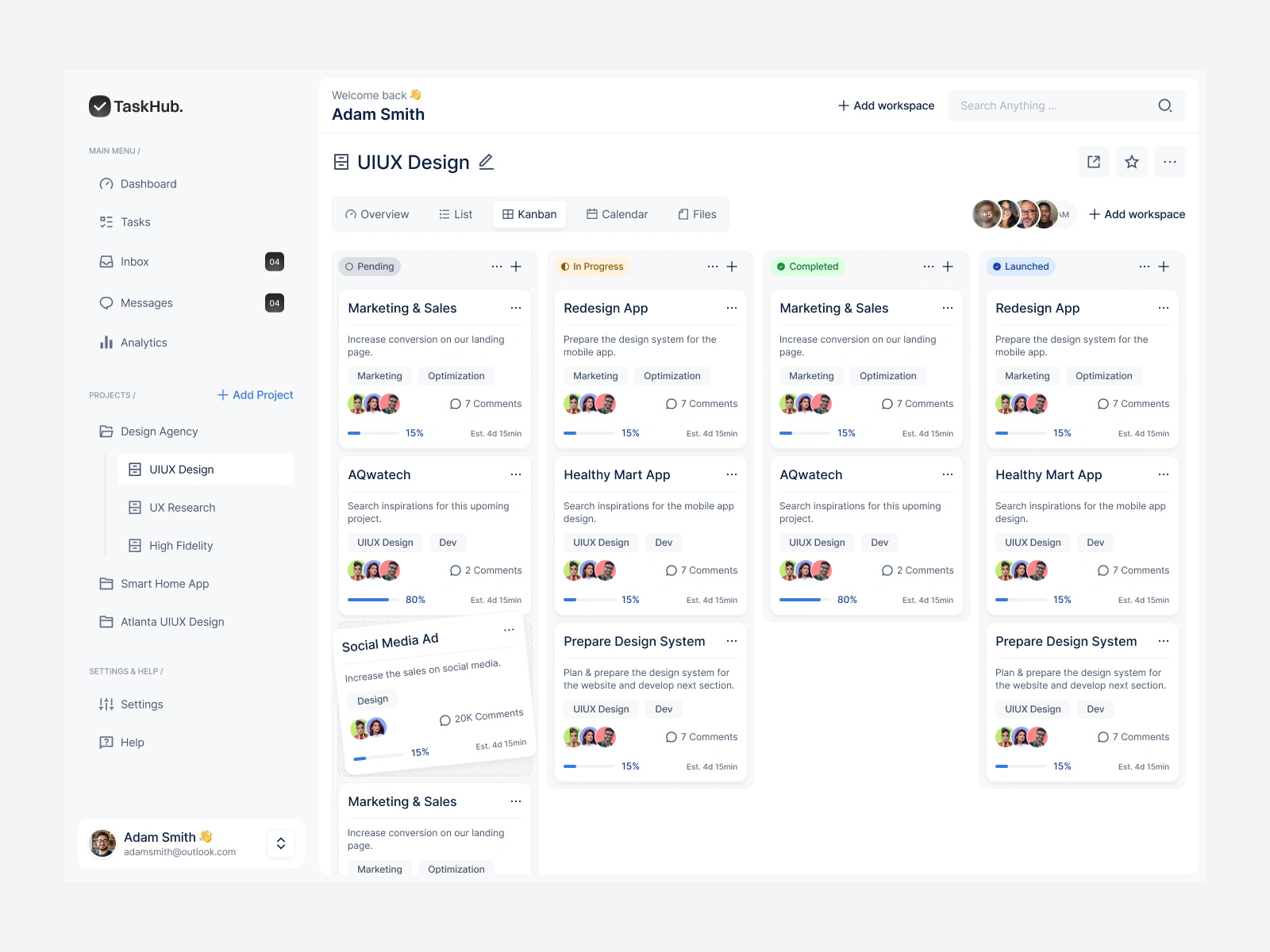
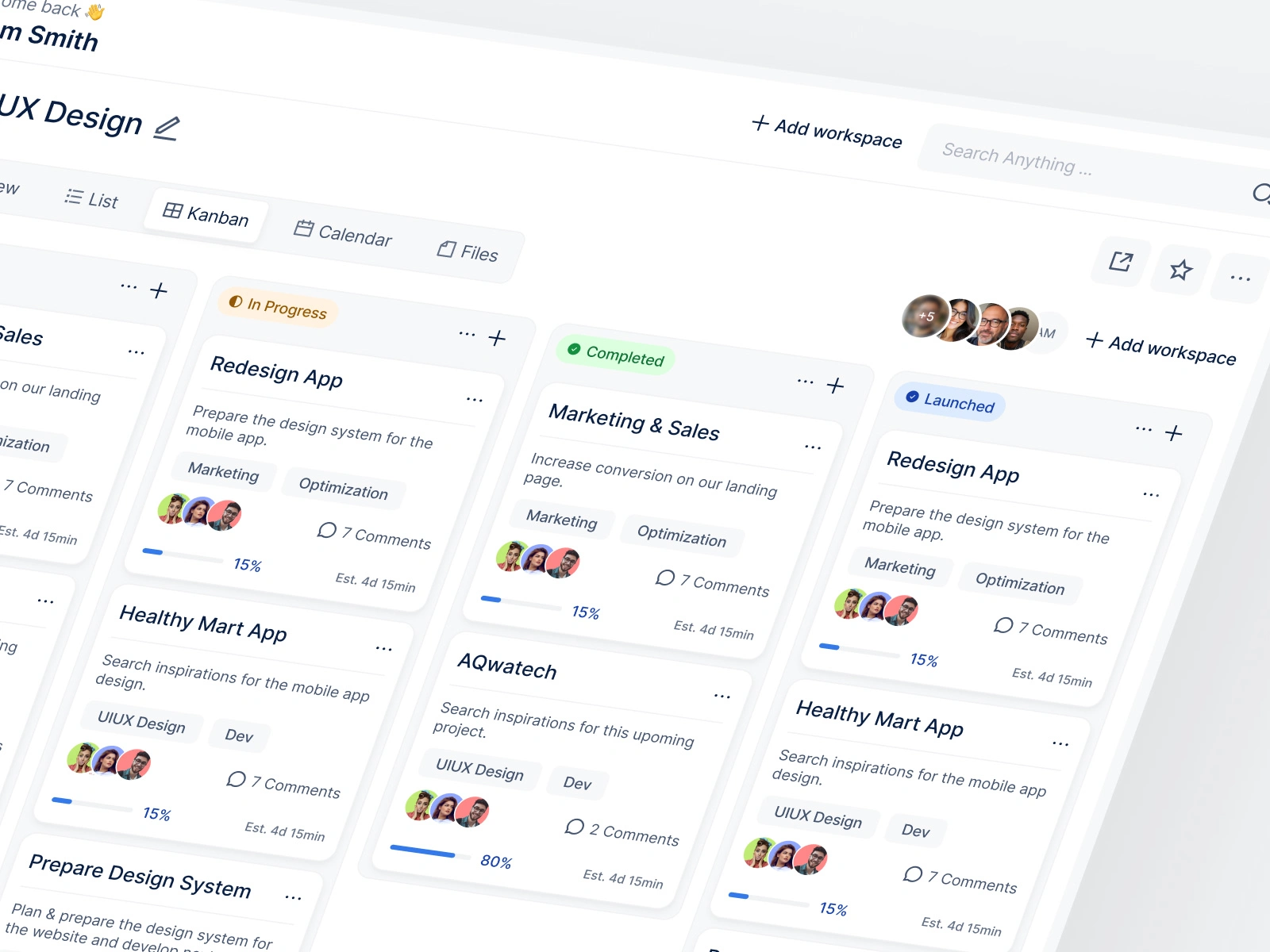
The Kanban board does what it's supposed to do: helps you move work forward. Drag something from "In Progress" to "Done" and everyone sees it. No status meetings required. It keeps people accountable without being obnoxious about it, and collaboration just... happens.
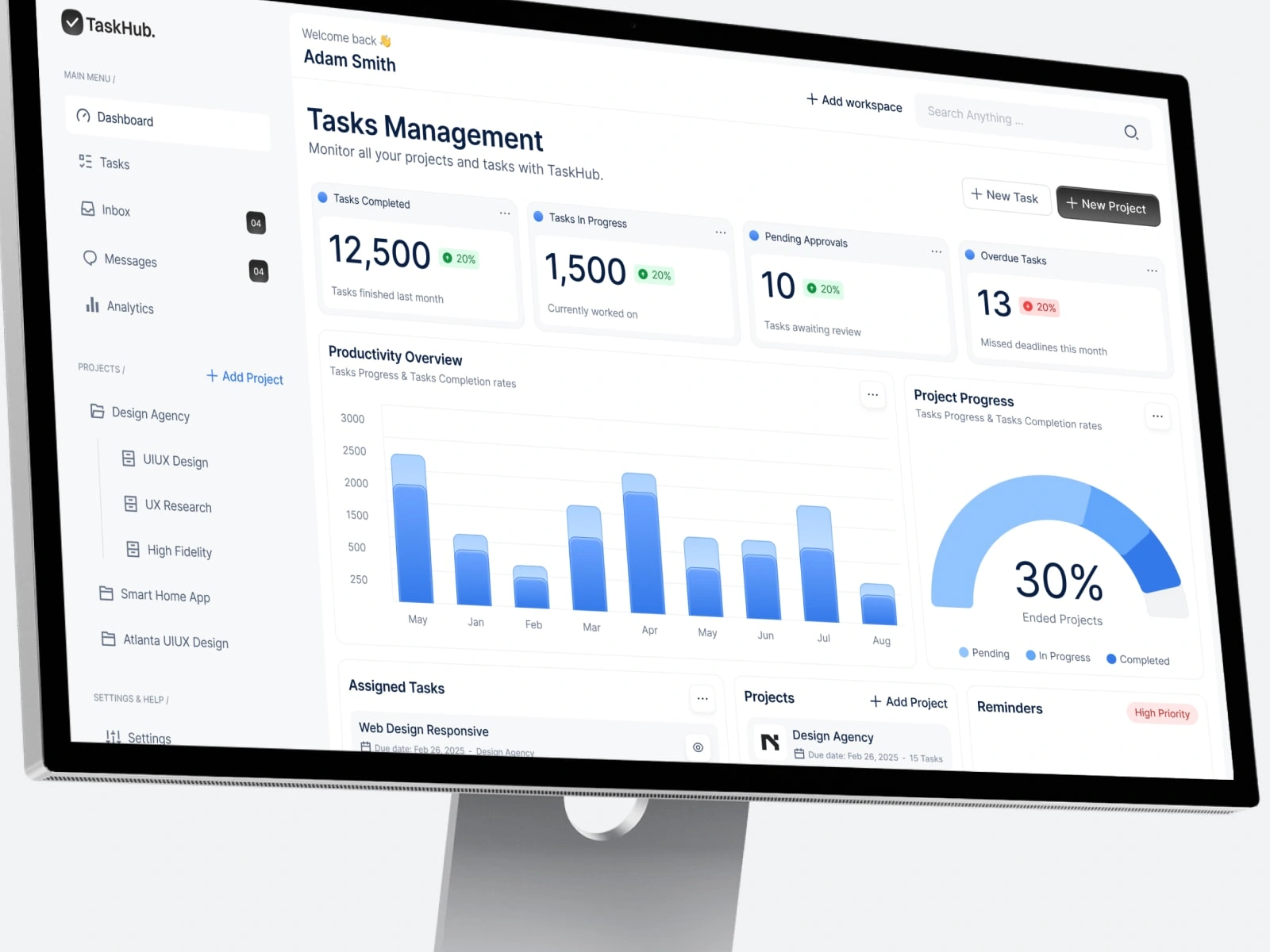
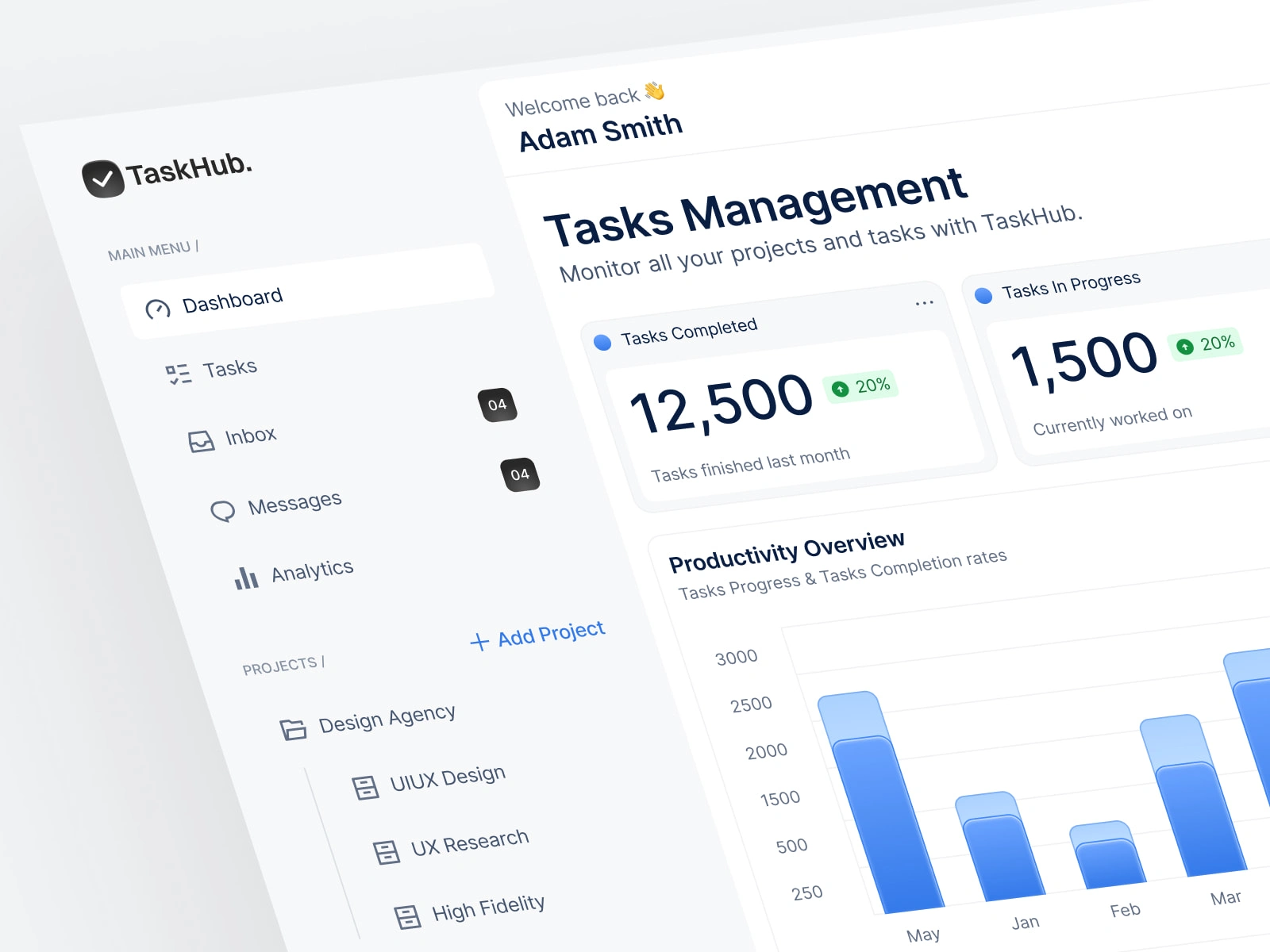
So we stripped everything back. The main dashboard shows you what matters—how your team's actually doing—with visuals that tell a story, not just numbers that make your eyes glaze over. You get a sense of momentum. You can feel whether things are moving or stuck.
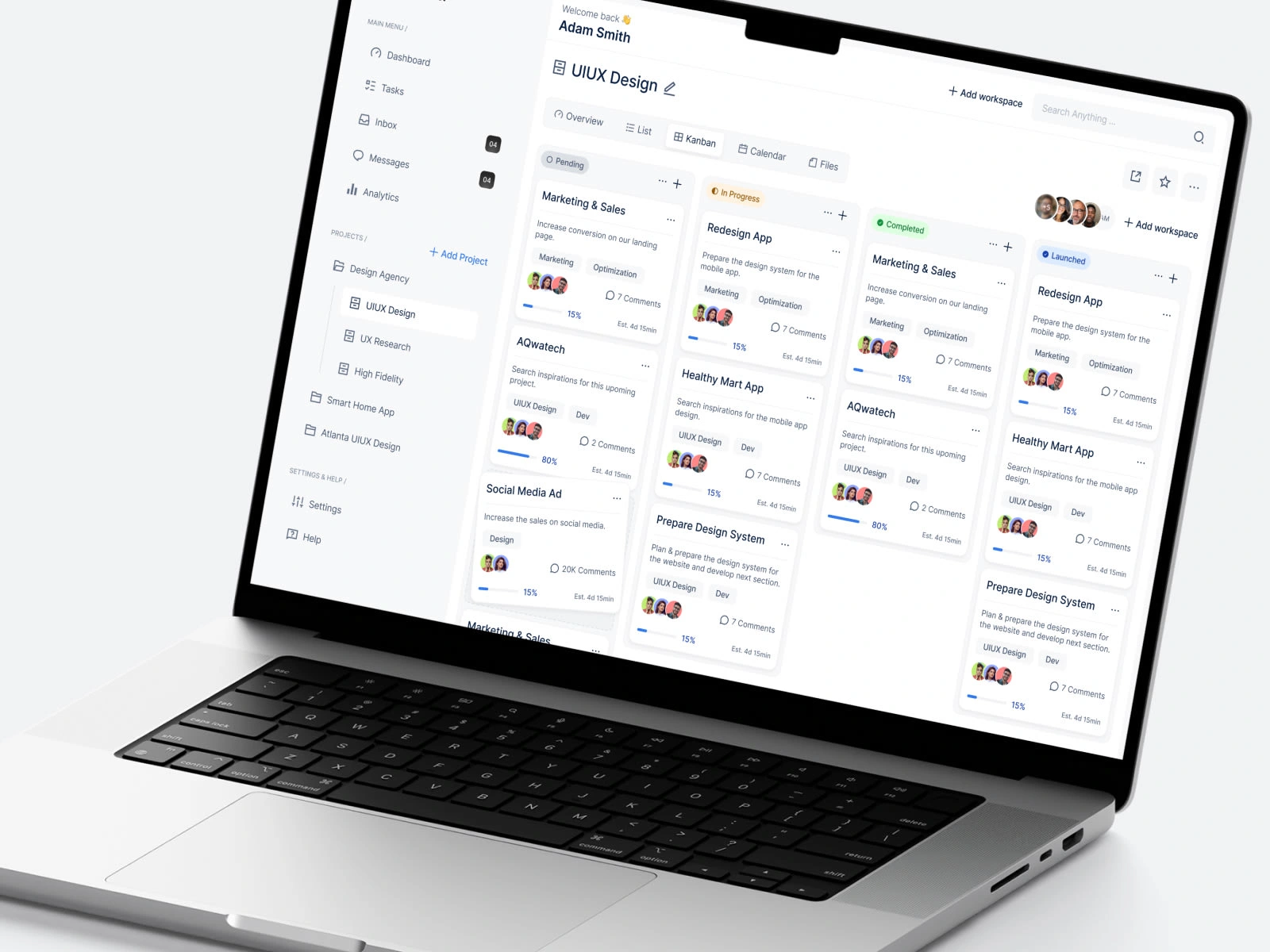
We obsessed over the small stuff. Adding a new project shouldn't feel like filling out a tax form. Checking a report shouldn't require coffee. We picked fonts that don't strain your eyes. We gave everything room to breathe. We chose colors that actually help you process information instead of just looking "modern."
Look, TaskHub isn't trying to revolutionize anything. It's just a really solid productivity hub that works the way actual teams work—quickly, without friction, and together. Because at the end of the day, that's all anyone really wants.
Like this project
Posted Nov 9, 2025
TaskHub was designed as a complete solution for teams struggling with scattered workflows and inconsistent project visibility.