
A coaching business had useful knowledge spread across long transcripts. The application needed to make that material easier to work with while keeping the connection between an extracted teaching and its original source.
I built the knowledge foundation and developed a client-planning workflow around it. My work covers the application, AI processing, structured outputs, review history, saved records and deployment.
From transcripts to reviewable knowledge
The knowledge workflow starts with coaching material. The system processes the transcripts into teachings that can be reviewed rather than treating every generated summary as finished content.
Each teaching retains a link to its source. A reviewer can check the underlying material, revise the interpretation and approve the result. Revisions and review history remain part of the workspace, so the library can develop through actual editorial work.
This source connection is central to the product. A useful knowledge application needs to support the question, "Where did this come from?" The interface gives people a way to return to the source and judge whether an extracted idea accurately represents it.
I also worked on the processing around those outputs, including status handling, retries and model-usage accounting. These support the practical operation of the application when material takes time to process or a generation attempt needs attention.
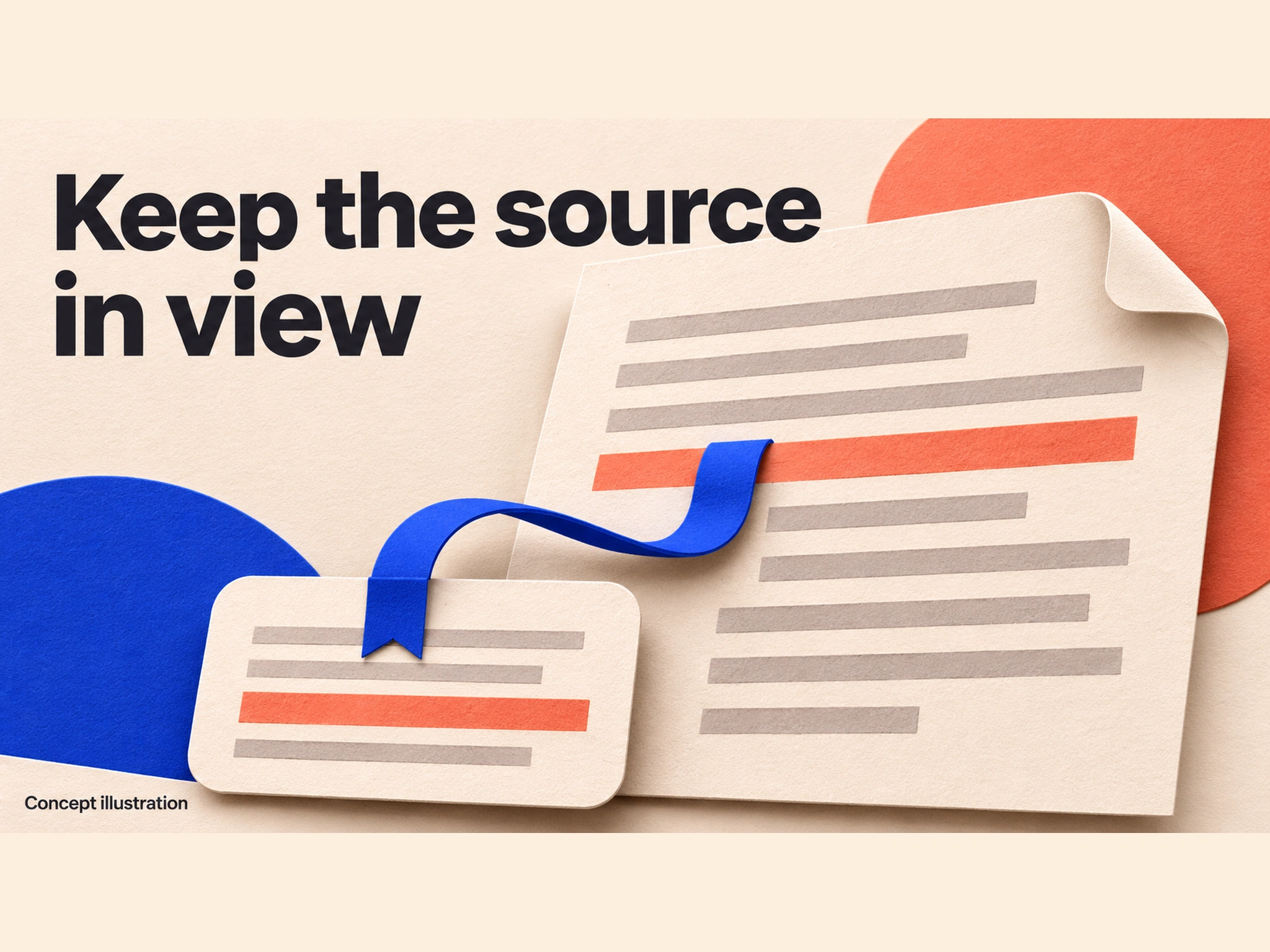
Concept illustration of turning long transcripts into reviewable teachings linked to their sources.
Connecting knowledge to a client plan
The planning workflow begins with a client brief. The user reviews and confirms its details before continuing to a 90-day roadmap.
The roadmap is accompanied by dated check-ins and weekly updates. Plans can be saved, reopened and exported to PDF. That gives the team a continuous workflow from the initial brief to a planning document and the later updates that sit alongside it.
The individual steps have distinct purposes. The brief captures the client's situation, the roadmap organizes the plan, and the check-ins and updates provide places to return to that work. I connected these steps in the application so the team could test the complete sequence on staging.
My role in the application
I handled the AI processing workflows and the application behavior around them, including structured generation, review and approval history, persistence and hosted delivery. The work includes the interfaces people use to inspect the material as well as the backend processing that produces and stores it.
I verified the staging journey from a confirmed brief through the roadmap, check-ins, weekly update and PDF output, including saving and reopening the work. This allowed the client to evaluate a connected planning workflow rather than a set of isolated generated examples.
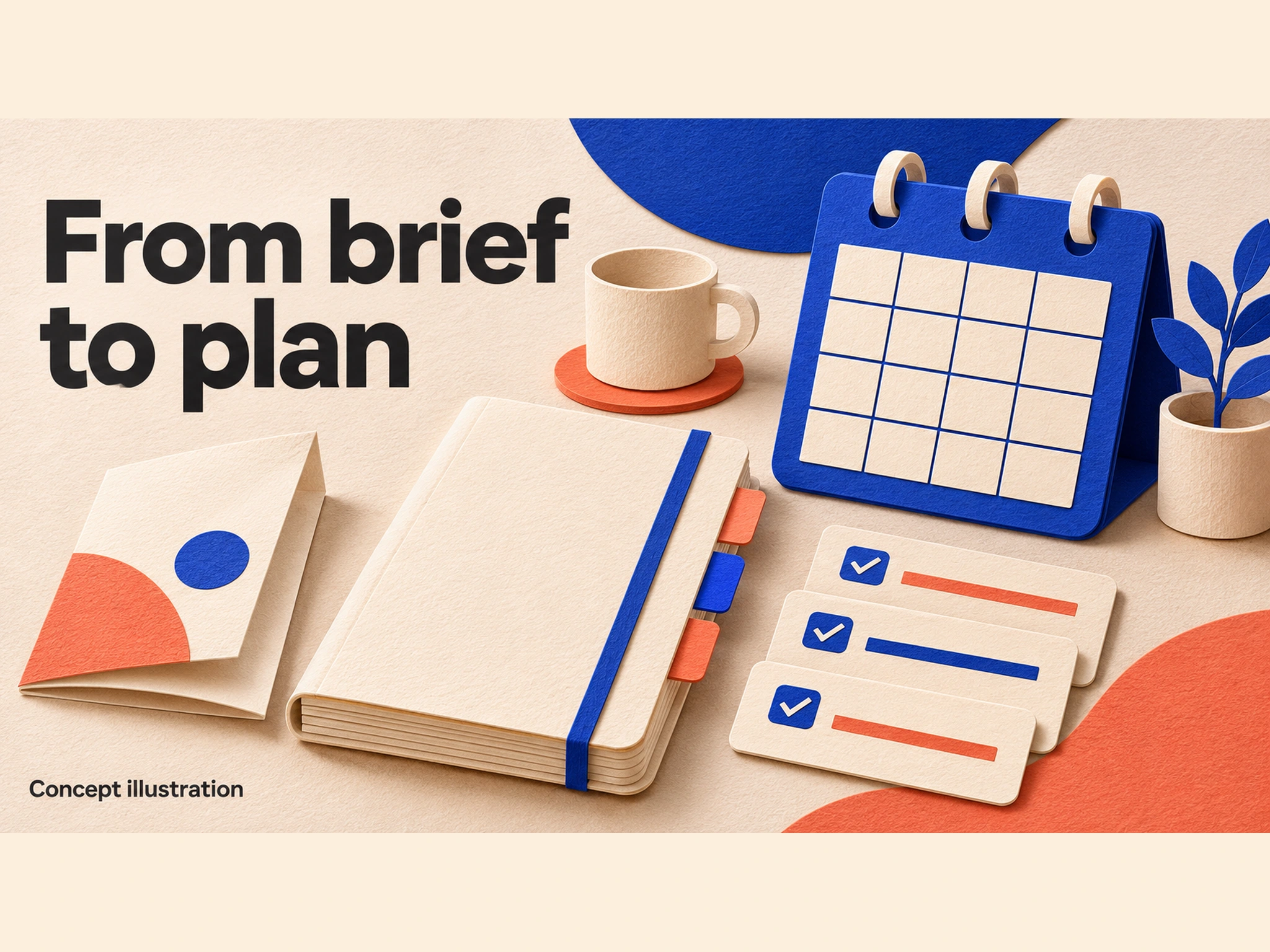
Concept illustration of a client brief, 90-day roadmap, check-ins and weekly updates.
Delivery and current stage
The knowledge foundation was accepted. The client-planning workflow is deployed on staging, with external service integration and acceptance work still in progress.
Client names, transcripts and application screens remain private. The accompanying images are concept illustrations of source-linked knowledge and planning, not screenshots of the client system.
0 likes · 1 view · Nov 16, 2026
A workspace that turns coaching transcripts into reviewable, source-linked knowledge and supports client planning with AI.


