Quse Budgeting and Financial Management App

Heather Peters


Built a flexible budgeting system that adapts to real-life spending
Summary
Traditional budgeting tools are often rigid and difficult to maintain. I led the design of a more flexible system that simplifies financial planning while supporting real-world behavior.
The Problem
Budgeting tools are often complex, inconsistent, and require ongoing effort to maintain.
Users needed a system that felt intuitive while still supporting deeper financial control.
What I Did
I designed a flexible, system-driven budgeting experience that balances simplicity with control.
Simplified complex financial concepts into clear, usable flows
Designed a structure that adapts to different user needs
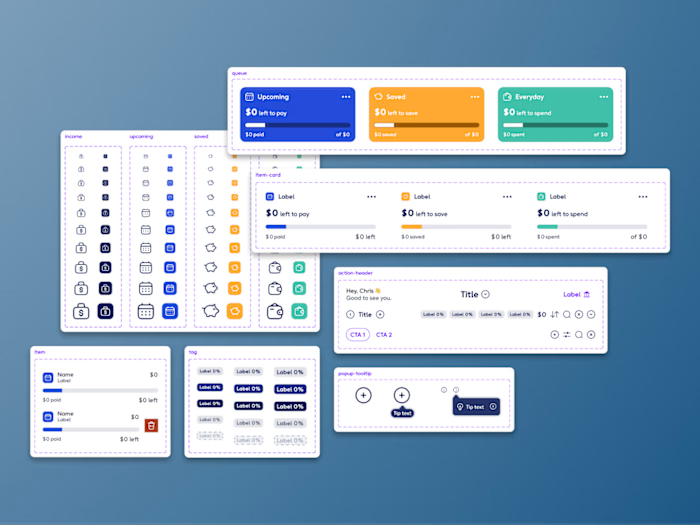
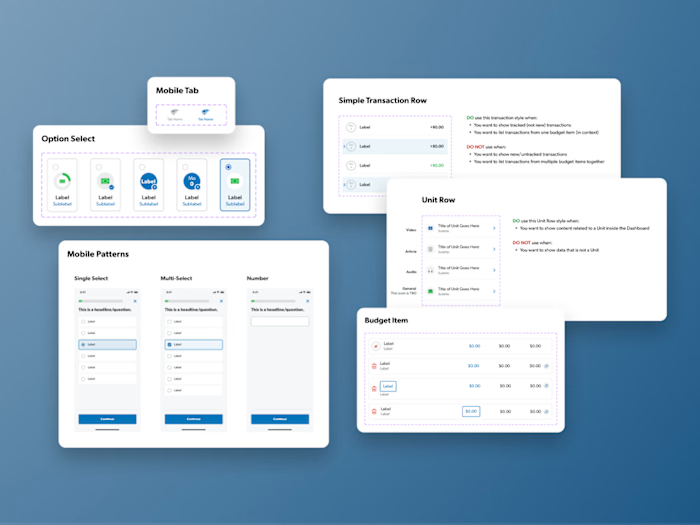
Established consistent interaction patterns and hierarchy
Created a cohesive visual system across the product
Leveraged AI tools early to explore system concepts and iterate on interaction patterns more quickly
Key Decisions
Focused on reducing cognitive load by simplifying how information is presented
Prioritized clarity and usability over feature density
Designed flows that support both quick actions and deeper control
Early concepts felt too complex, so I simplified structure and hierarchy to improve usability
Constraints
As an early-stage product, parts of the system were still evolving, requiring flexibility in how solutions were designed and implemented.
What Changed
The product evolved from a fragmented experience into a cohesive, scalable system. This created a stronger foundation for future development and supported both direct users and potential partnerships.
Hindsight
Future iterations could include deeper personalization and more advanced automation to further reduce manual effort.
Like this project
Posted Mar 24, 2026
Designed an end-to-end budgeting experience that simplifies financial planning for everyday users while supporting advisor-led workflows.