Paycheck Planning

Heather Peters


Showed users how long their money will last between paychecks (+39% trial starts, $1.8M impact)
Summary
Users could track past spending, but couldn’t easily see if their money would last until their next paycheck. I led the design of a forward-looking experience that made income timing and expenses easy to understand and act on.
The Problem
Users with irregular income couldn’t confidently answer a simple question:
“Will I run out of money before my next paycheck?”
The app focused on past transactions, making it difficult to understand future cash flow or adjust spending in time.
What I Did
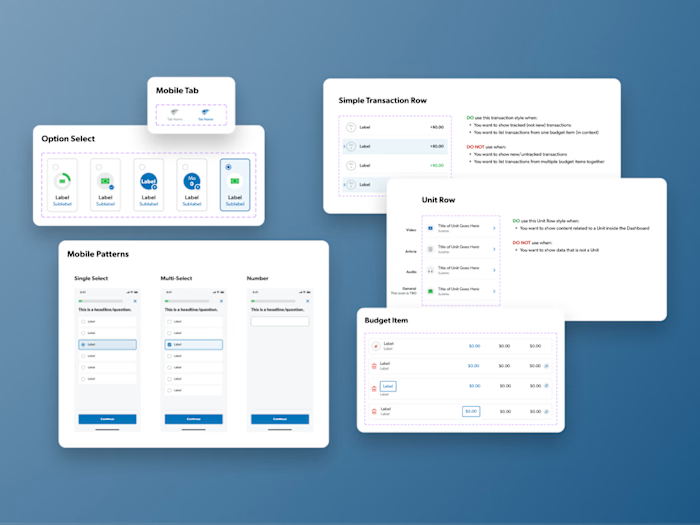
I designed a forward-looking experience that helped users plan around income timing and expenses.
Introduced paycheck-based planning instead of static monthly budgets
Allowed users to project spending across future dates
Added risk signals to show when they were likely to overspend
Designed for quick adjustments so users could stay on track
Some improvements (like date selection) were constrained by the existing codebase, so I focused on improving clarity and inputs instead.
Key Decisions
Early versions of the flow led to confusion around pay cycle selection, so I expanded and clarified the available options based on user feedback.
Focused on forward-looking projections instead of historical tracking
Delayed visibility of income until expected dates to reflect real cash flow
Introduced buffer-based planning to prevent overcommitting funds
Prioritized quick adjustments so users could recover from risk
Constraints
Solutions needed to leverage existing UX/UI patterns across web and mobile to maintain consistency and reduce development time.
Technical limitations influenced how dynamically income and projections could be modeled in V1.
What Changed
Users could quickly understand how long their money would last and adjust spending before running into issues. This increased confidence in managing irregular income and significantly improved conversion.
Hindsight
Would expand flexibility by allowing custom income frequencies and bulk editing of items and dates to reduce manual effort.
Future iterations could incorporate AI-driven suggestions for income timing and budgeting based on past behavior to further support planning.
Both enhancements were constrained in V1 due to engineering limitations.
Like this project
Posted Mar 24, 2026
Designed a budget planning experience for users with irregular income, helping them predict cash flow and avoid overspending.