Psychology-Driven Onboarding Redesign for Breathwork App

Sofia Mateo Ortega


Boosting trial starts by 16.5% through a psychology-driven onboarding redesign
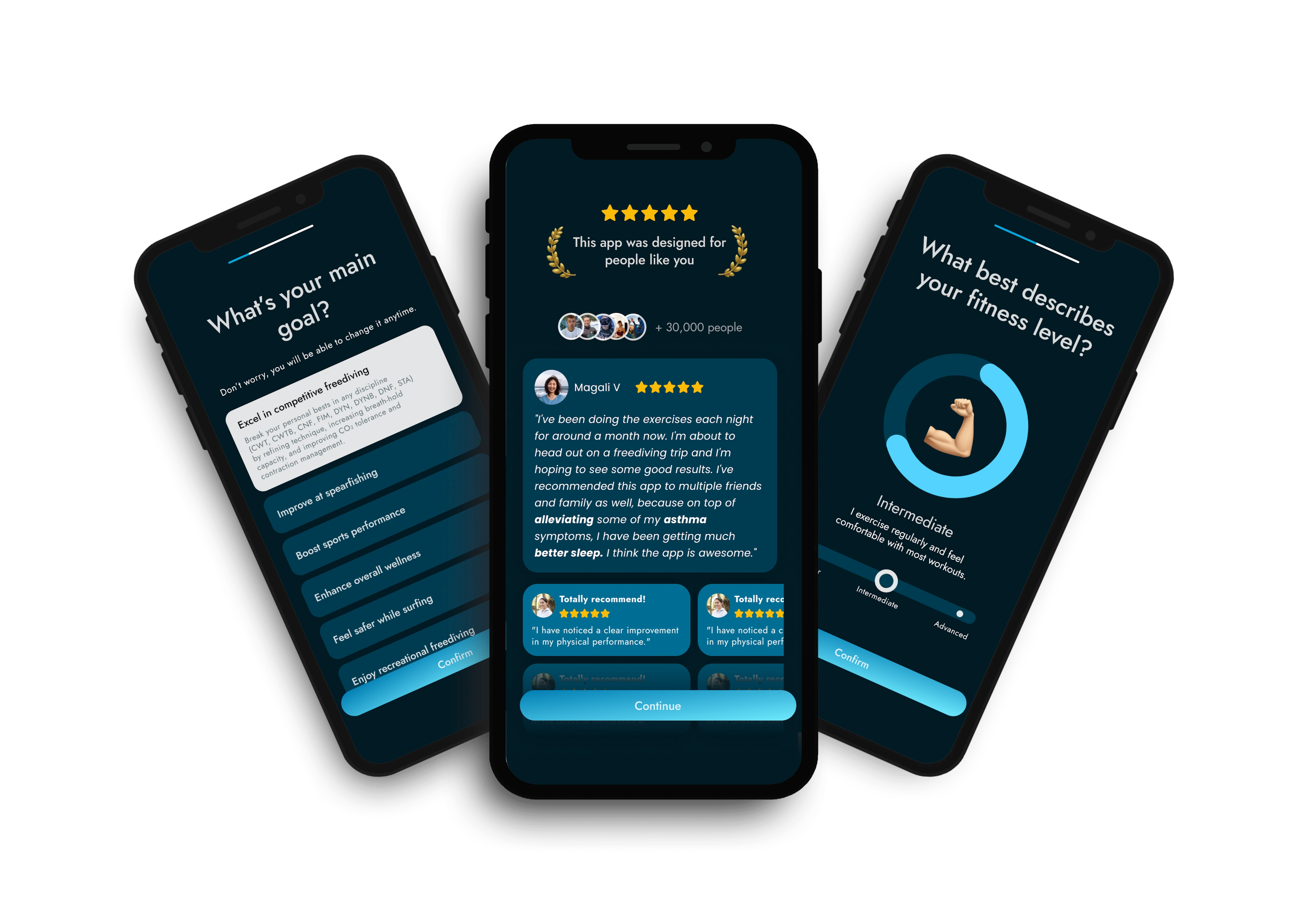
Redesigned the onboarding of a breathwork & apnea training app, using behavioral psychology and UX best practices to improve clarity, motivation, and flow. I led research, prototyping and UI design, resulting in a 16.5% increase in trial starts and better user activation. This project proves how thoughtful onboarding can drive real business results and set the tone for long-term engagement.
CHALLENGE
The app, designed for beginner and intermediate freedivers, had a basic onboarding process consisting of four monotonous questions. While functional, it lacked engagement and failed to highlight the app’s core value early in the user journey.
The goal was to personalize the experience based on user goals and to redesign the onboarding to create a more polished, professional first impression—one that immediately conveyed value and ultimately increased user activation and conversions.
APPROACH
To create a more dynamic and psychologically engaging onboarding experience, I applied key UX principles and onboarding best practices:
Progressive disclosure. Instead of overwhelming users with too much information at once, the onboarding reveals relevant details progressively, ensuring each step is easy to digest.
The process starts with goal-setting, which personalizes the experience early on and sets user expectations.
Emotional Triggers & Reinforcement. Reinforcement screen with user testimonials and ratings reassures credibility and impact.
Visual & Interactive Enhancements. Static multiple-choice questions were redesigned into interactive selections with visual feedback.
The UI maintains high readability and usability across devices.
THE PROCESS
What It Took to Lift Trial Starts by 16.5%
Redesigning an onboarding experience isn’t just about better visuals—it’s about reducing friction and guiding users toward their ‘Aha! Moment’ before they drop off. To increase activation and trial starts, I followed a structured process grounded in competitor research, behavioral psychology, and rapid design iteration.
1.Competitive & Market Analysis
Before making any changes, I analysed onboarding flows from dozens of apps, both within and outside the breathing and wellness industry. The goal was to identify common patterns, best practices, and potential pitfalls that could inform my decisions.
FINDINGS
Applications that integrate personalisation early in the process tend to achieve higher engagement. For example, by asking for the person’s name or asking them to state their goal early in the process.
Visual storytelling (images + concise text) reduces the cognitive load and keeps users moving. Obviously, the image must be related and add value to the text.
Social proof (reviews, testimonials) plays a crucial role in increasing perceived value before users commit.
Based on these findings, I created some low definition wireframes to show to the client. This proposal includes an improved goal-based question, testimonial reinforcement screens, and more dynamic question formats to encourage completion.
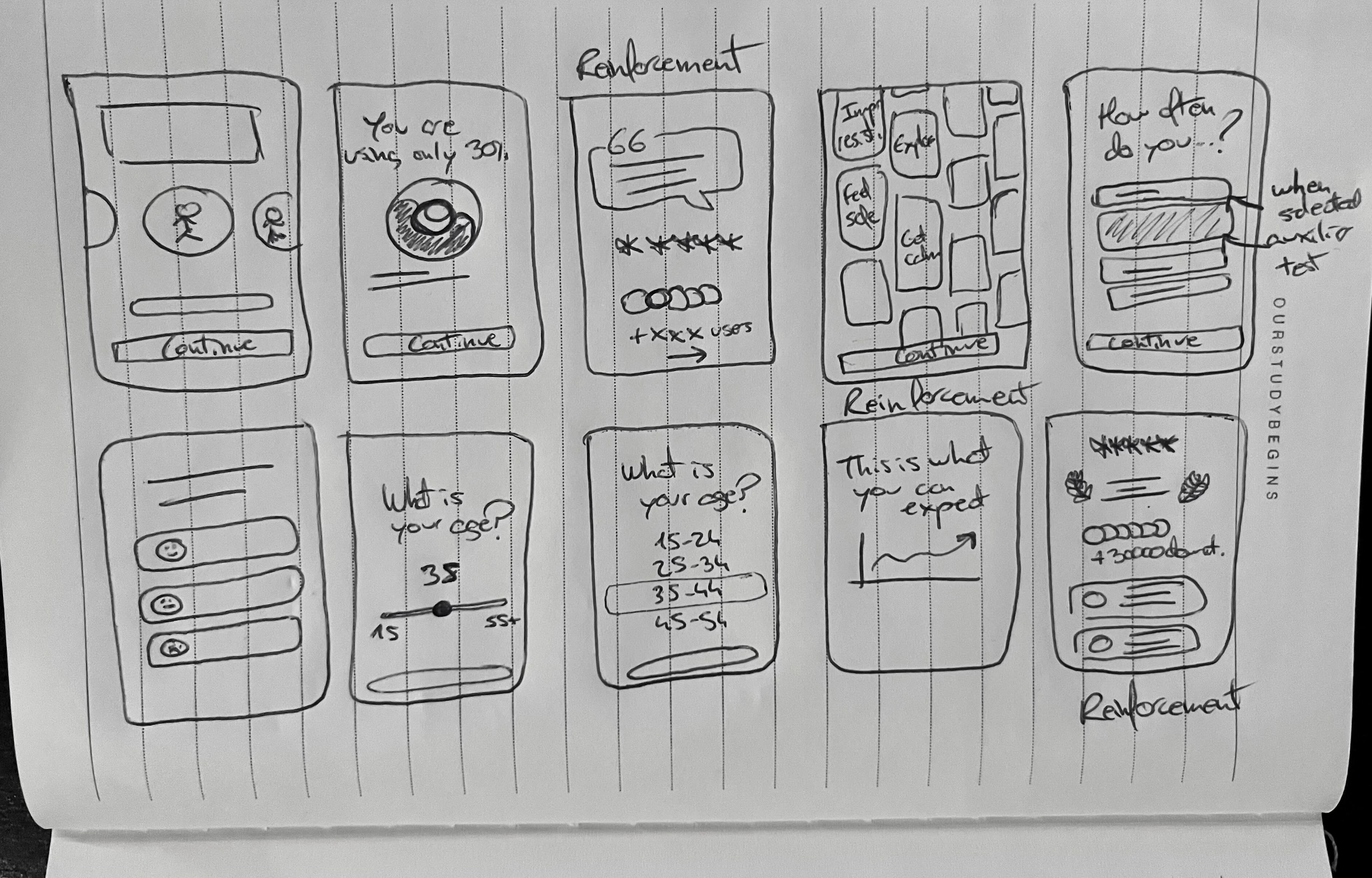
Wireframes onboarding redesign
2.User pains, goals and flow behaviour
To better understand the user, I interviewed the client and analyzed behavioral data from Mixpanel and Amplitude. I identified that users had diverse goals and interacted with the app in different ways. Based on these insights, I created flowcharts to map out each user journey during onboarding—ensuring that every type of user could perceive value from the very first interaction.
3.Psychological Triggers & User Behaviour
Onboarding is as much about persuasion as it is about usability. I incorporated psychological principles such as:
Loss Aversion. For this task, I analysed and reviewed studies on the importance of freediving on health, sports performance and other aspects of life.
Commitment Bias. The journey starts with small, meaningful choices—selecting a goal, setting a personal challenge—making users feel more invested in their progress from the very first interaction.
Social Proof. Seeing real people improve their breath-holding ability and overall performance through the app reassures new users that they, too, can achieve remarkable results.
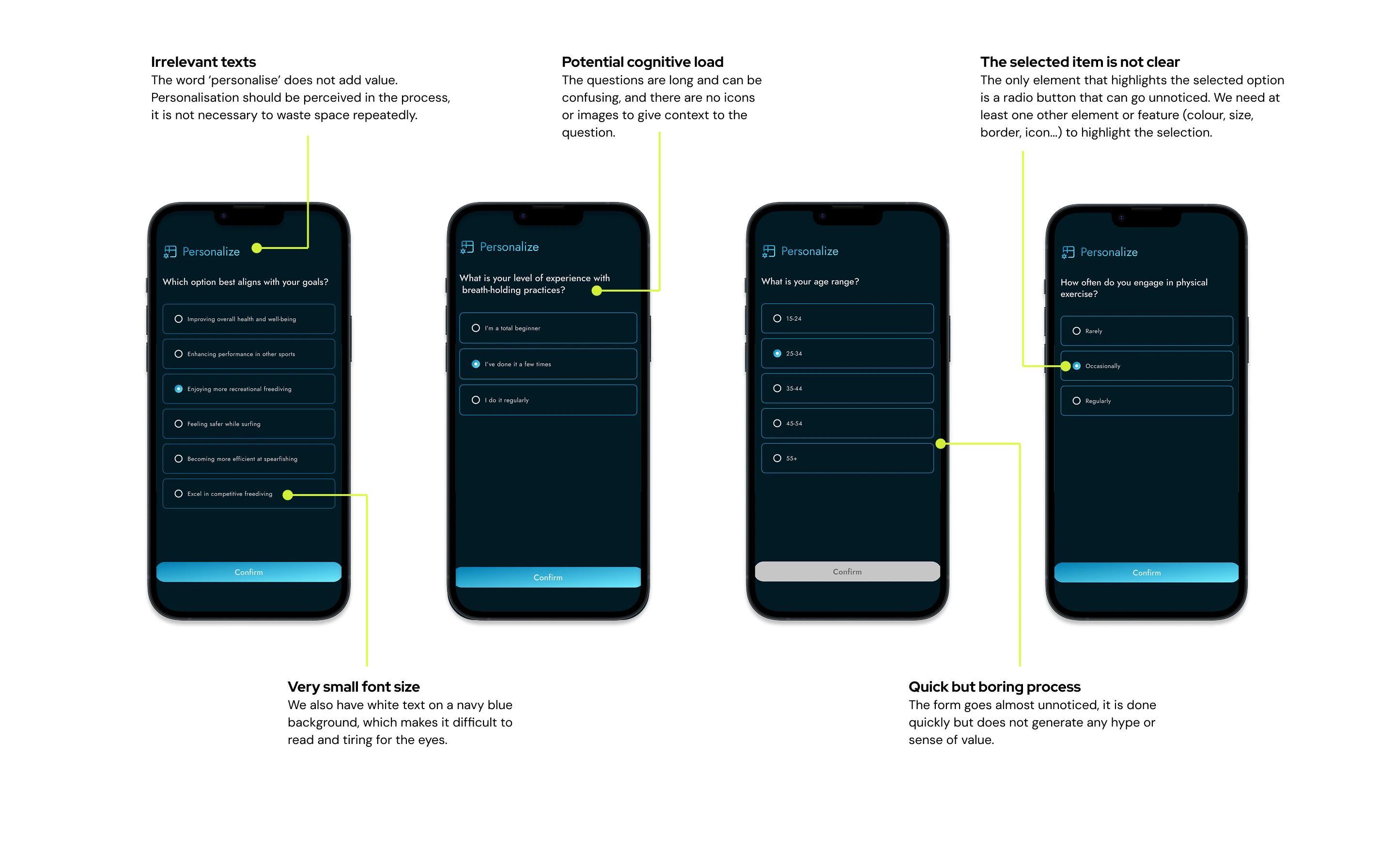
Onboarding before redesign
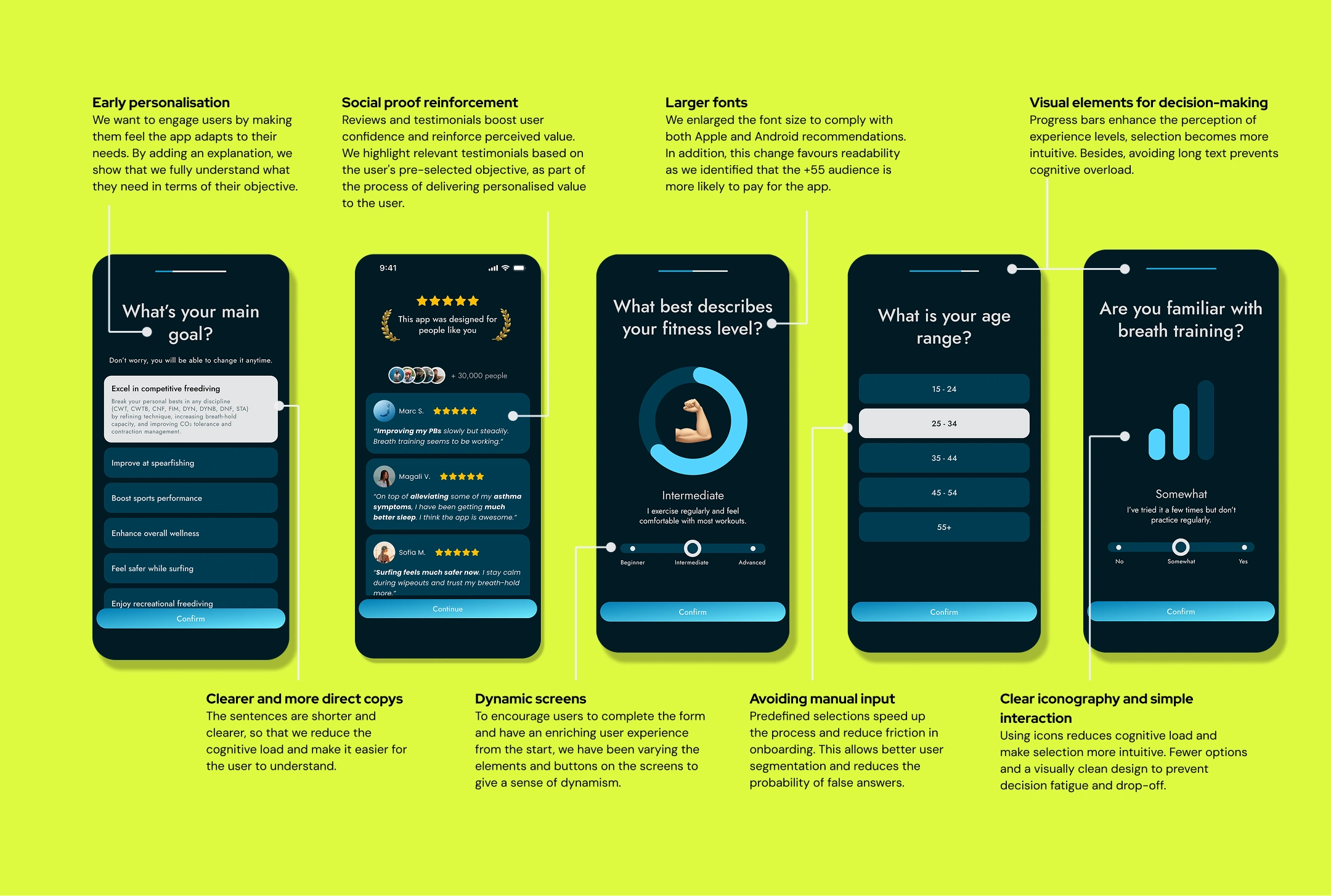
Onboarding flow after UX/UI redesign
Full onboarding redesign
RESULTS
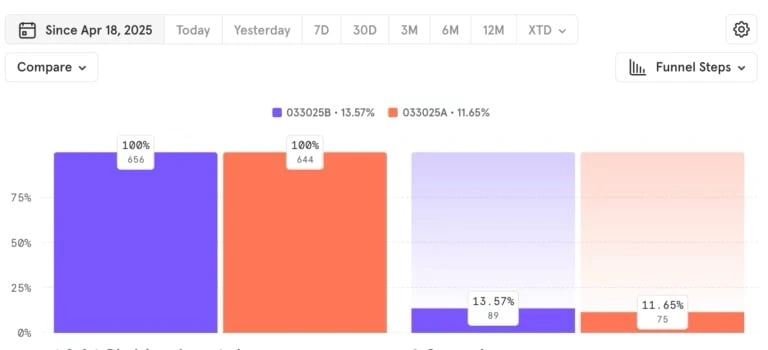
A/B testing showed a 16.5% increase in conversion from onboarding to activation with the new flow, confirming that early personalization, emotional framing, and social proof led to more users starting their first training or trial.
Like this project
Posted Jun 8, 2025
Redesigned app onboarding, boosting trial starts by 16.5% using UX and psychology.
Likes
0
Views
8
Timeline
Oct 1, 2024 - Jan 1, 2025
Clients
Growth Garage