Cut call initiation to 1-2 clicks, zero lost leads

Noah Henry


The problem
An enterprise real-time communications platform had a clunky, multi-step call initiation flow that was losing inbound leads. Customers couldn't start sessions quickly, and after-hours visitors hit a dead end with no fallback. The workflow was a friction point in revenue-adjacent sales demos.
What I built
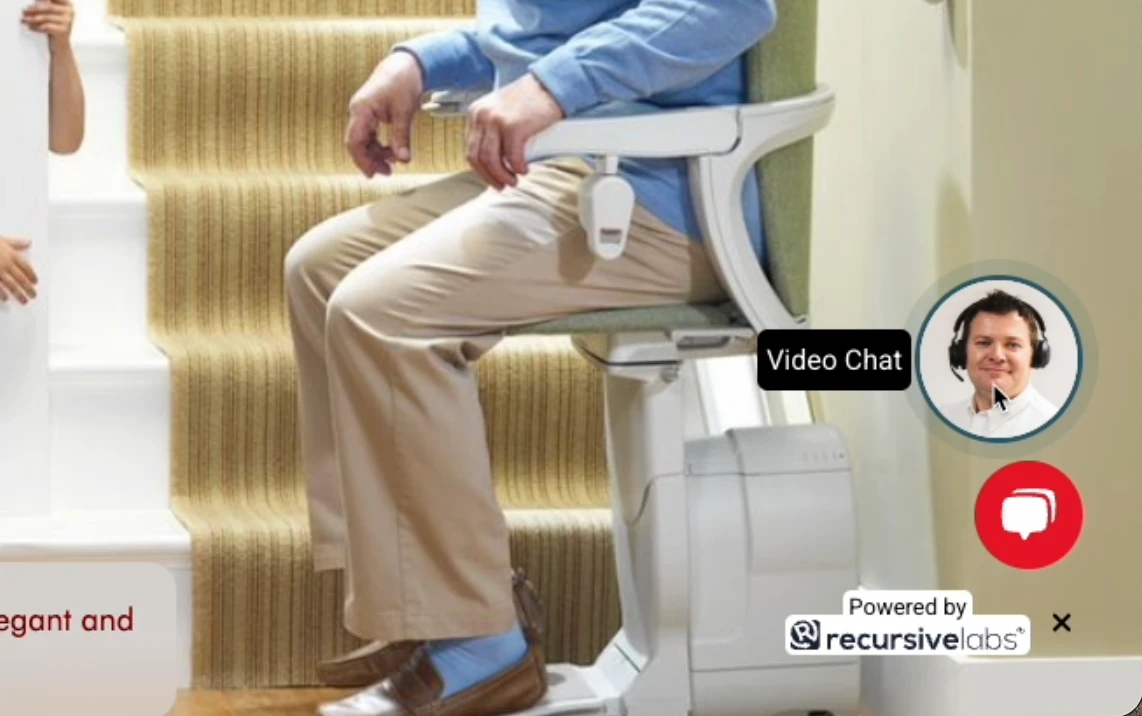
A streamlined call experience with progressive disclosure:
Clear primary CTA with visual attention cues — one obvious action
Minimal modal — just enough context, then action
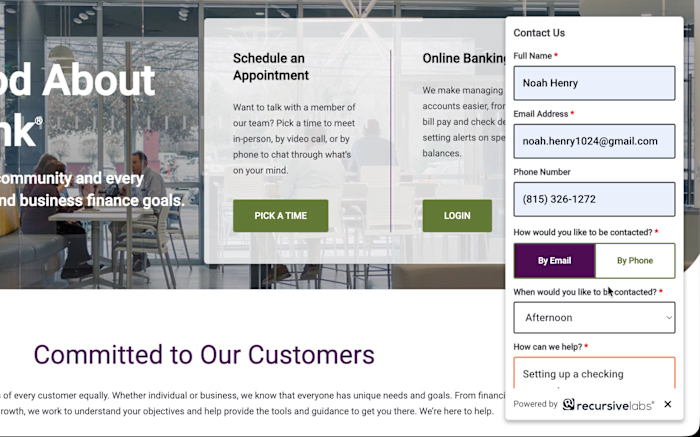
Conditional after-hours UI with contact form fallback, so zero inbound leads are lost outside business hours
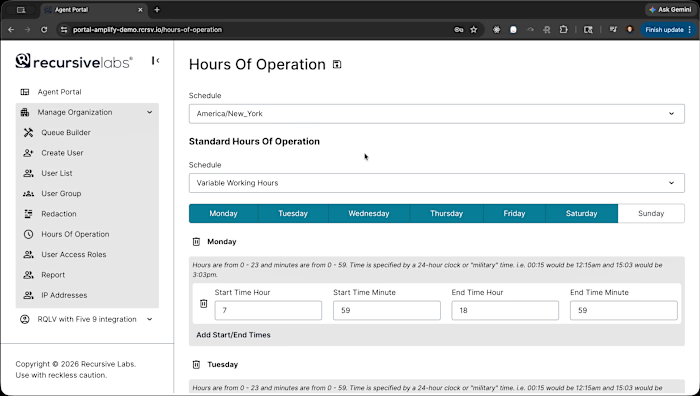
Backend API extensions to support hours-of-operation logic
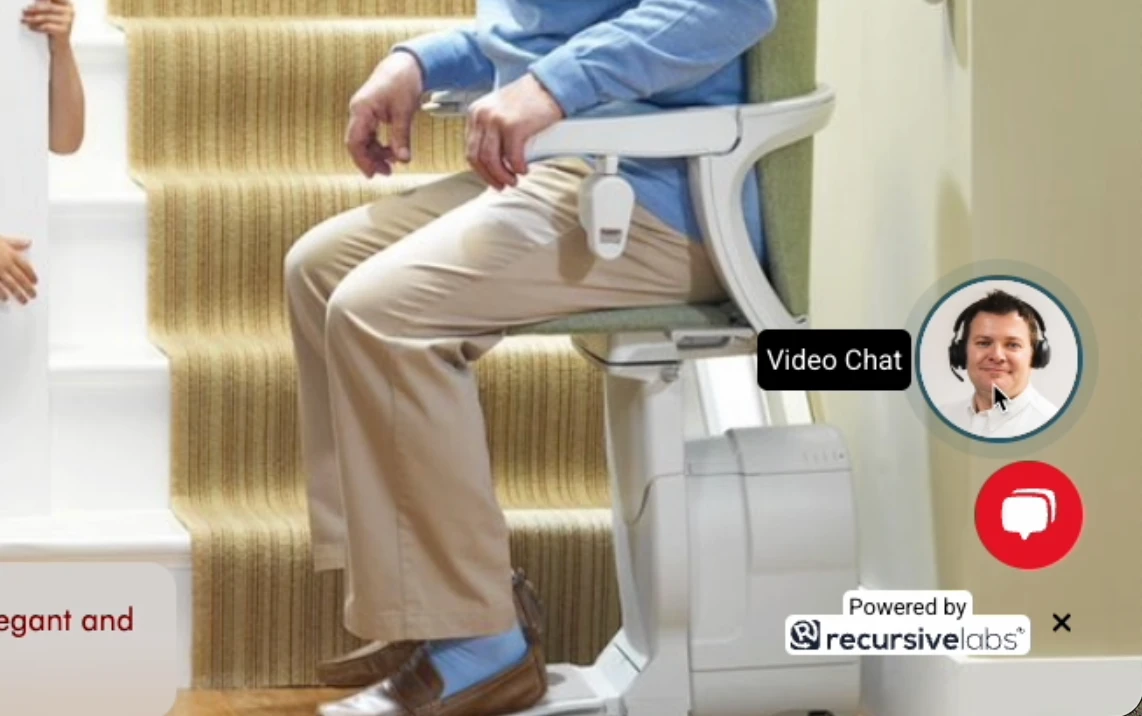
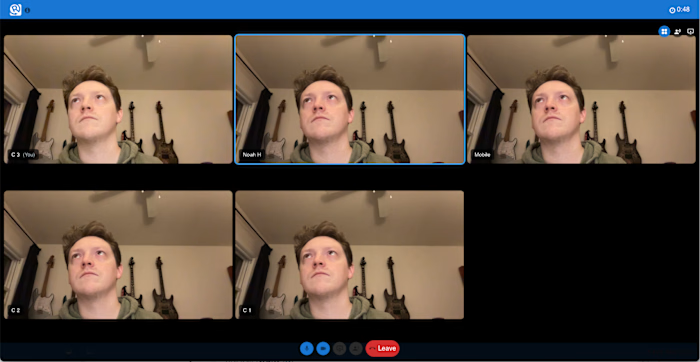
Start call modal UI
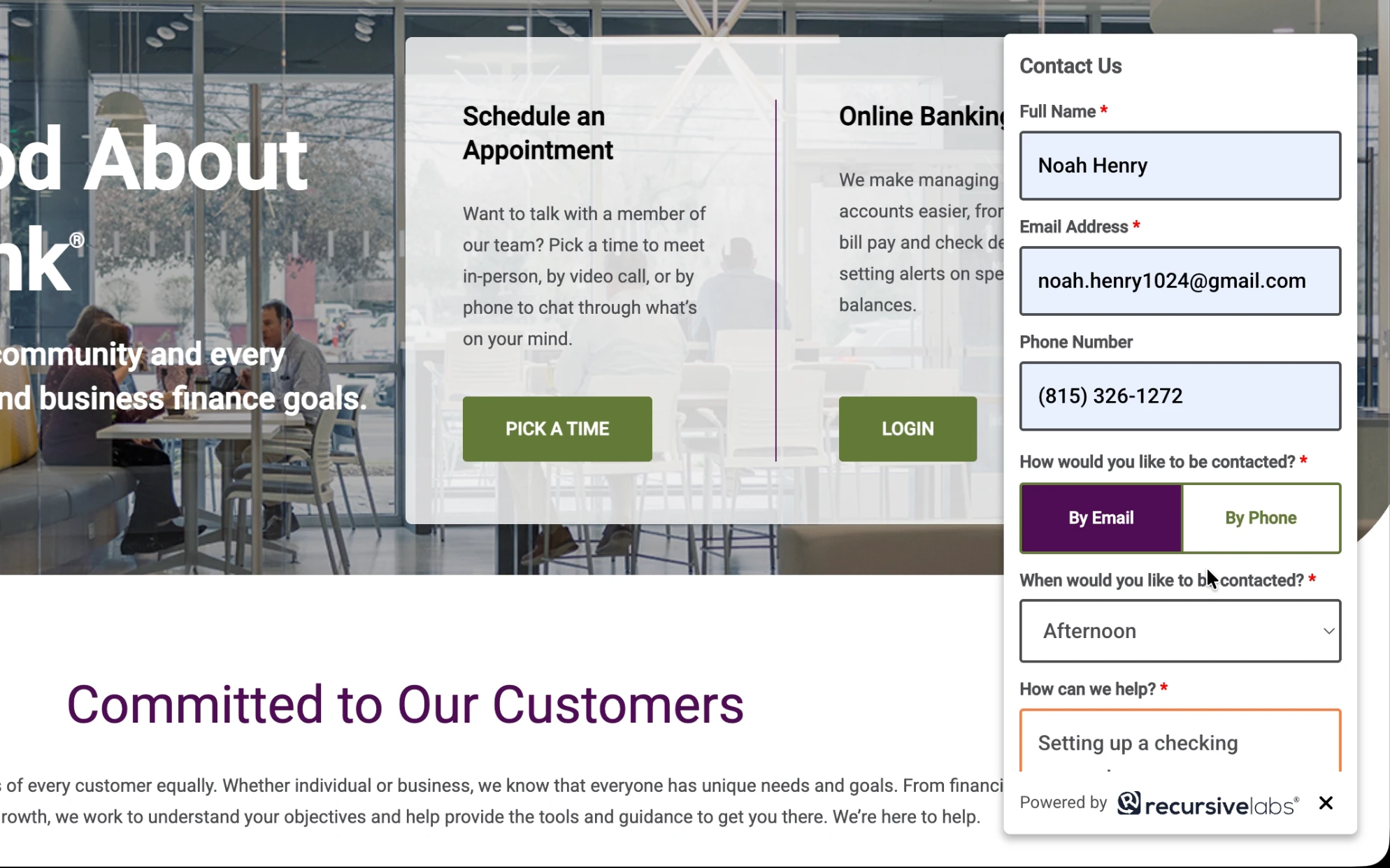
After-hours fallback UI
My role
Owned UX redesign, frontend architecture, and backend extensions across multiple customer deployments:
Redesigned the call initiation UX end-to-end
Extended backend APIs for hours-of-operation conditional logic
Implemented real-time UI state handling
Maintained and deployed across multiple customer sites
Resolved bugs in the after-hours libraries as they surfaced in production
Outcomes
1–2 clicks to session start — down from a fragmented multi-step flow
0 lost inbound leads after-hours — prevented via conditional fallback UI
Core sales demo feature — used as a primary feature in revenue-adjacent demos
Multi-site deployment — shipped and maintained across customer implementations
Stack
Vue, Vite, Pinia, Node.js, Redis, AWS S3, CloudFront, Figma.
Like this project
Posted Jun 11, 2026
Redesigned a fragmented real-time customer engagement workflow into a fast, intuitive call experience — deployed across multiple customer sites.