Rebuilt real-time video conferencing system in 2 weeks

Noah Henry


The problem
An enterprise real-time communications platform had a fragmented peer-to-peer video tool that couldn't scale. Multi-user sessions were unreliable, the UX was clunky, and adding features meant fighting the existing architecture. The original delivery estimate was 6 weeks.
What I built
A scalable, real-time conferencing system supporting:
Multi-user video sessions with adaptive layouts (grid, presenter, dominant speaker)
Two-way screen sharing
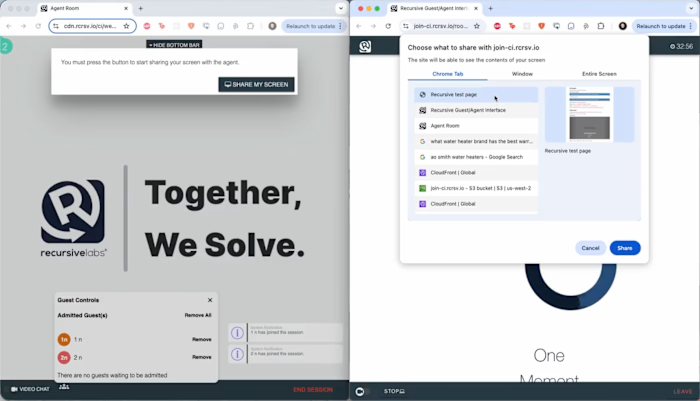
Host/guest roles with waiting room and admission control
Real-time state management architecture built to extend
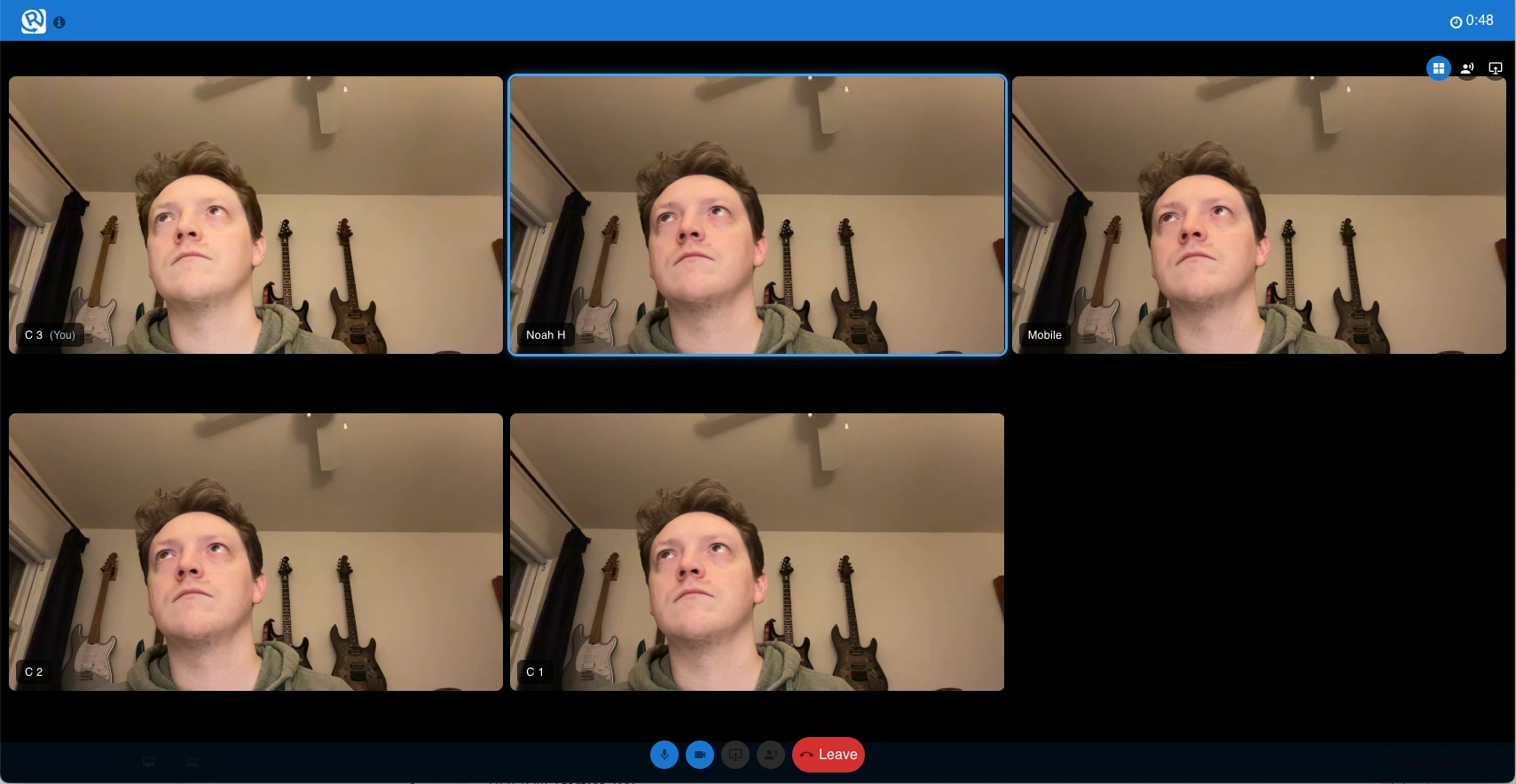
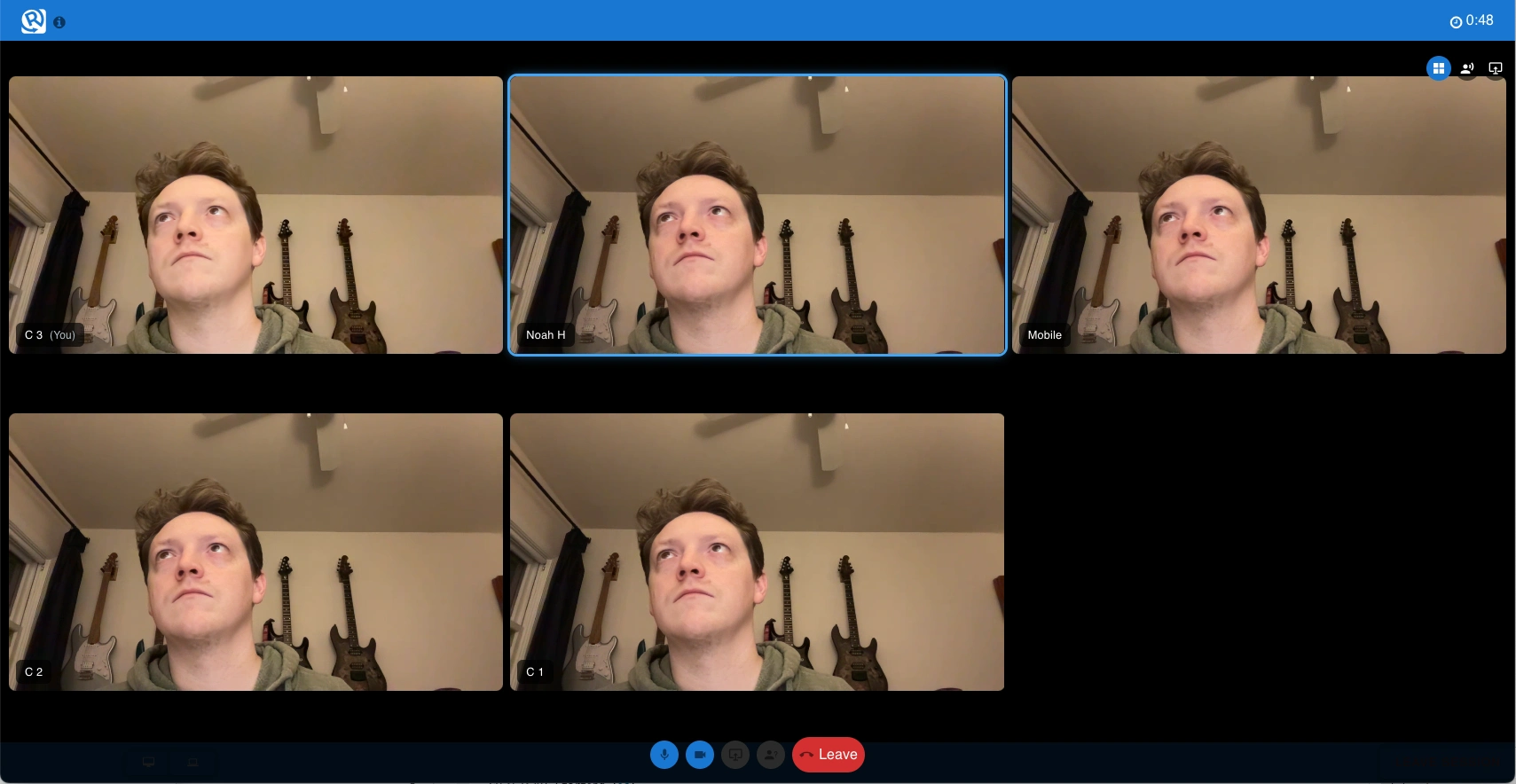
Conferencing — grid view with 5 participants
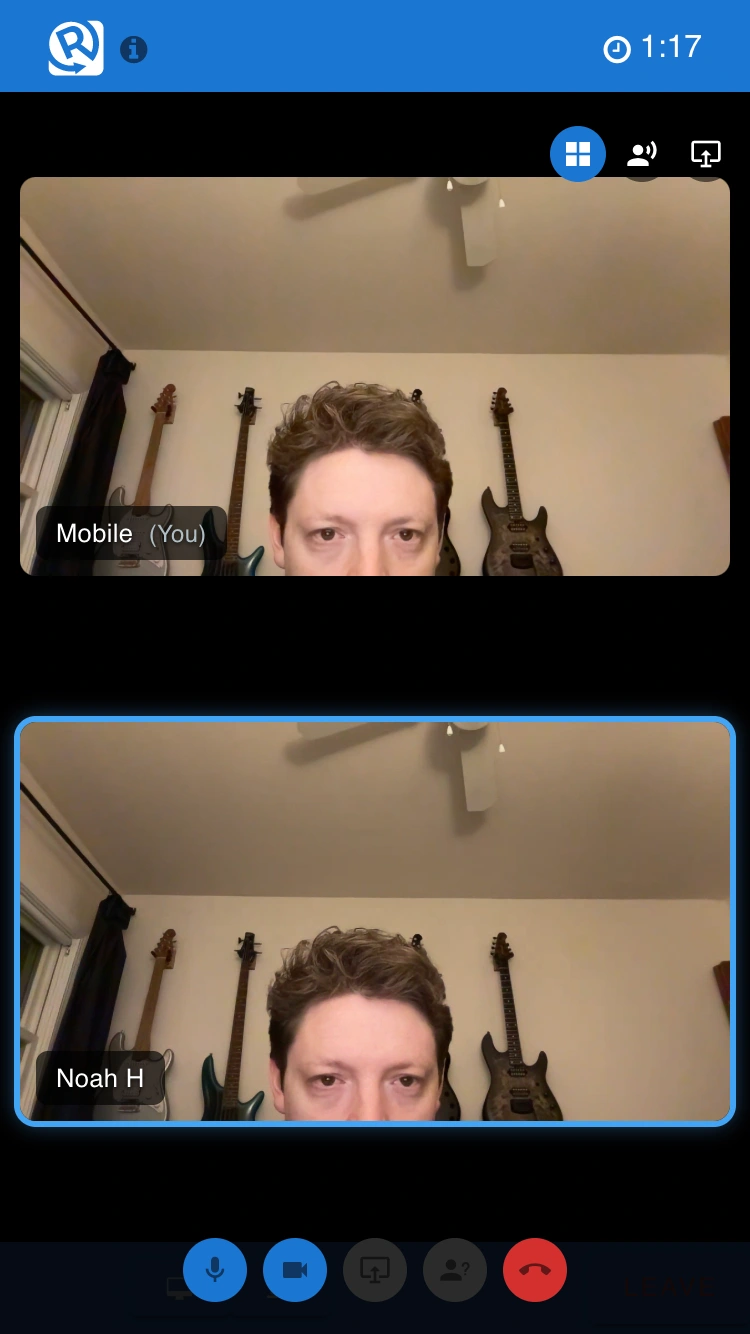
Conferencing — host controls
My role
I owned this end-to-end — product definition, UX design, frontend architecture, and backend integration:
Designed interaction models and system flows in Figma
Built the frontend architecture and real-time state management layer
Implemented backend integrations across sockets, Redis, and APIs
Made the architectural calls that kept the system extensible
Outcomes
65% faster delivery — 2 weeks instead of 6, via AI-assisted workflows
0 to 1 — non-production prototype turned into a viable product system
Scalable foundation for future real-time, multi-user features
Stack
Vue, Vite, Pinia, Node.js, Redis, WebSockets, Figma, ChatGPT, Codex.
Like this project
Posted Jun 11, 2026
End-to-end rebuild of a fragmented peer-to-peer video tool into a scalable multi-user conferencing platform — shipped in 2 weeks instead of 6.