Transformation of B2B SaaS Marketing Strategy

Marcus Castro


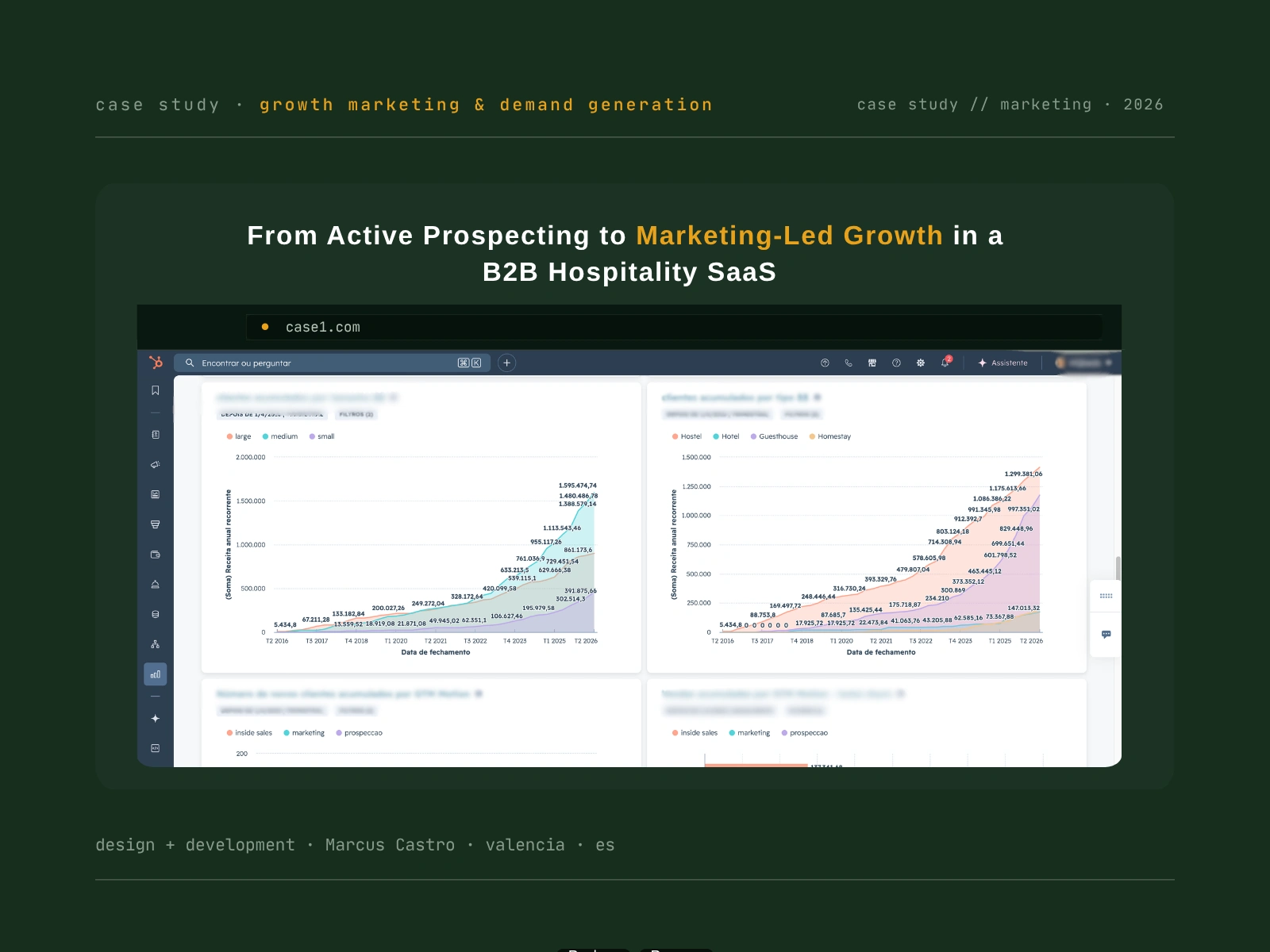
From Active Prospecting to Marketing-Led Growth in a B2B Hospitality SaaS
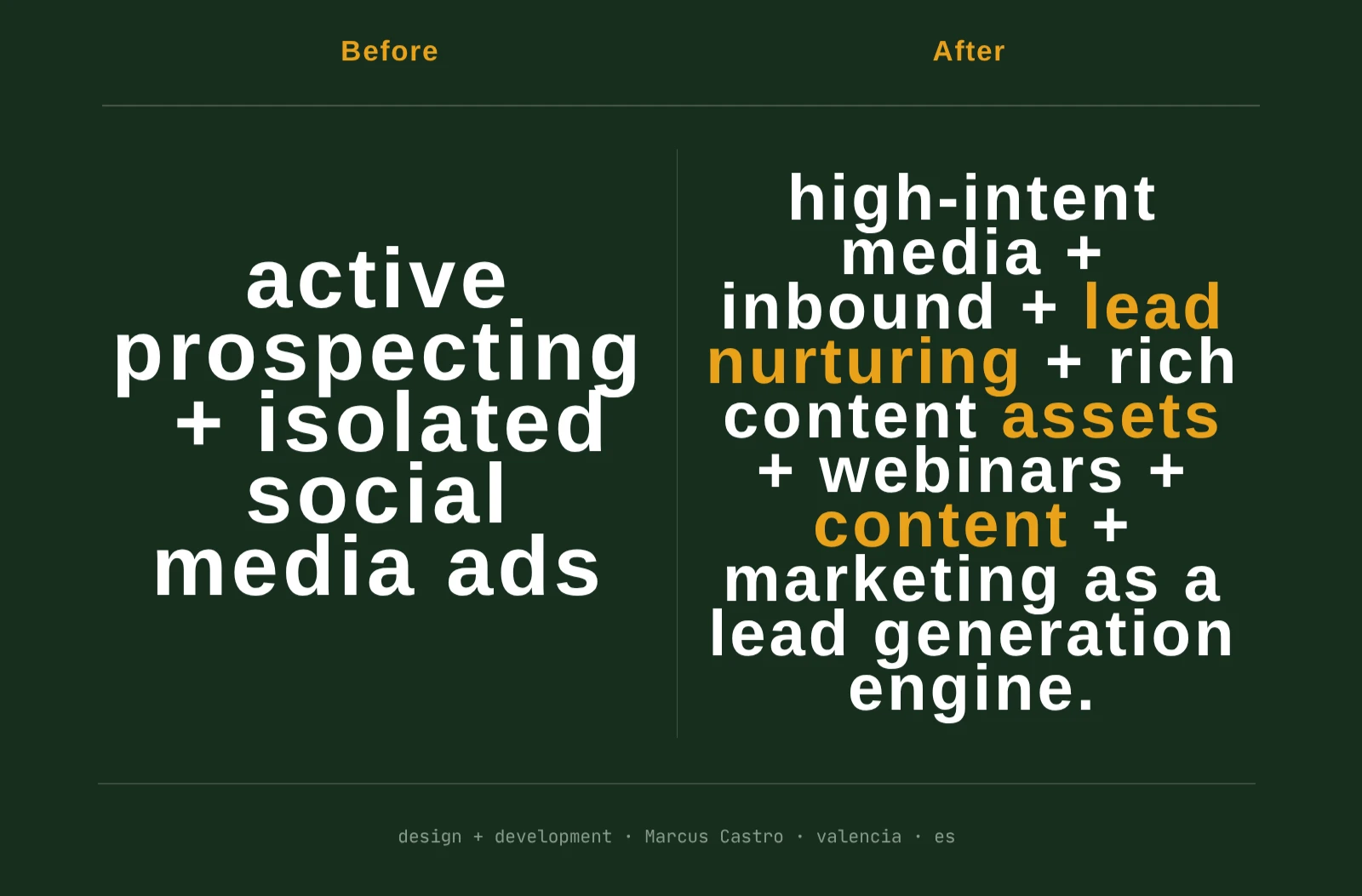
A B2B SaaS company in the hospitality industry relied heavily on active sales prospecting to generate commercial opportunities. Before the restructuring, marketing was not operating as a strategic acquisition engine.
From this project onward, marketing started to play a new role inside the company. The strategy was rebuilt around high-intent media, inbound marketing, lead nurturing, rich content assets, live sessions, webinars, content production and a stronger digital presence.
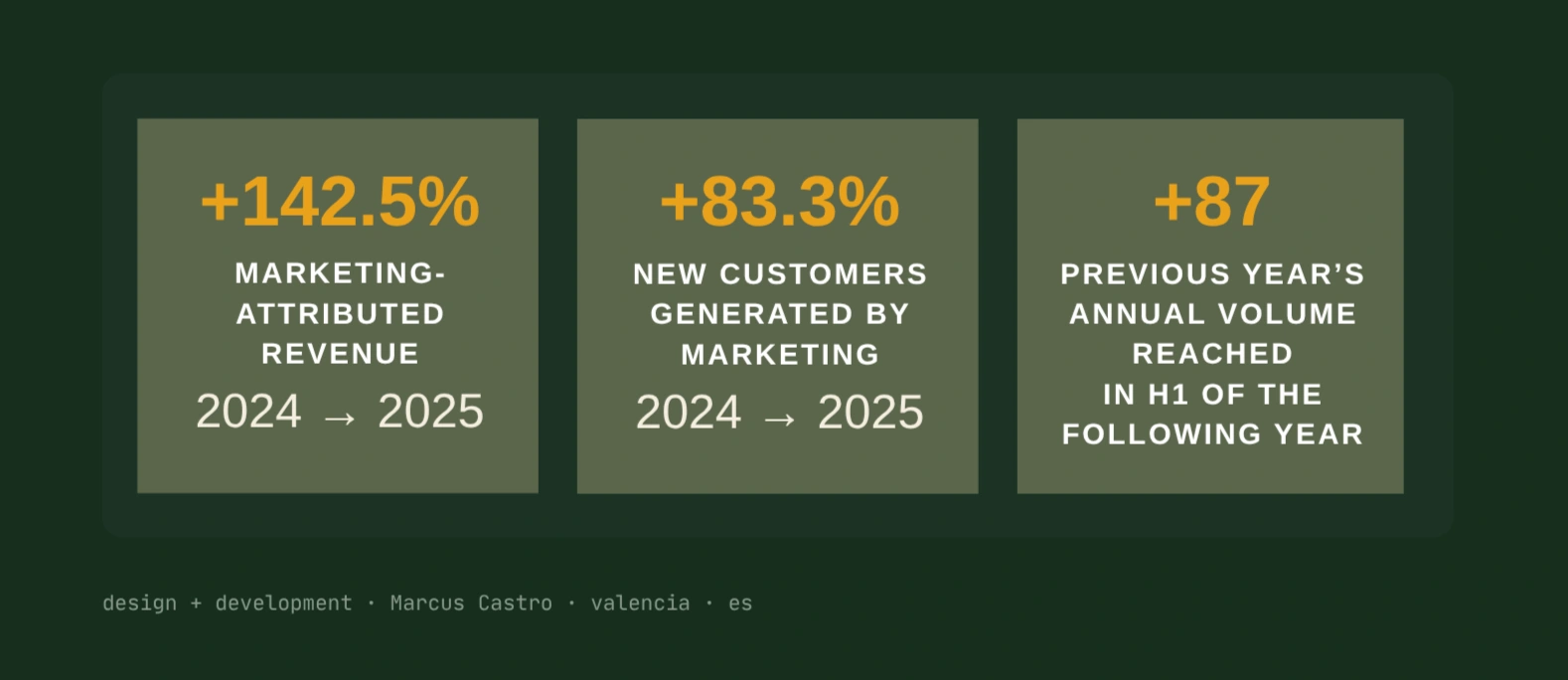
Between 2024 and 2025, marketing-attributed revenue grew by 142.5%. During the same period, the number of new customers generated by marketing increased by 83.3%.
Context
The client is a B2B SaaS company that provides technology solutions for hospitality businesses, including hostels, hotels, inns and short-term rental operations.
Before the marketing operation was structured, acquisition was mainly driven by the sales team and active prospecting. Growth depended largely on salespeople finding new opportunities, approaching potential customers and starting commercial conversations.
Marketing did not yet have a clear role as a demand generation engine. Existing initiatives were isolated, with paid traffic mainly focused on social media and no clear strategy for the B2B buying journey.
This created a limitation: the company had a strong solution for the market, but not a marketing operation capable of attracting, educating, nurturing and converting potential customers in a predictable way.
For a B2B SaaS company, this shift was essential. Buying decisions are not driven only by direct ads or sales outreach. They require trust, education, relationship-building, digital presence and clear communication of value throughout the journey.
The Challenge
The challenge was to transform marketing into a strategic growth operation.
It was not just about publishing more content or improving ads. The deeper goal was to move away from an acquisition model highly dependent on active prospecting and build a system where marketing could generate qualified demand, nurture leads and contribute directly to new customer acquisition.
The central question of the project became:
How can marketing become a predictable engine for lead generation and revenue in a B2B SaaS company?
To make this possible, it was necessary to restructure channels, messaging, content and processes. Marketing needed to move from a complementary function to a more strategic role within the company’s commercial operation.
The Strategy
The strategy was built around an integrated B2B growth logic.
In paid media, one of the first changes was to rethink budget distribution. Previously, the focus was heavily concentrated on social media. With the restructuring, high-intent channels gained more relevance, especially those capable of reaching potential customers already searching for solutions related to management, reservations, direct bookings and hospitality technology.
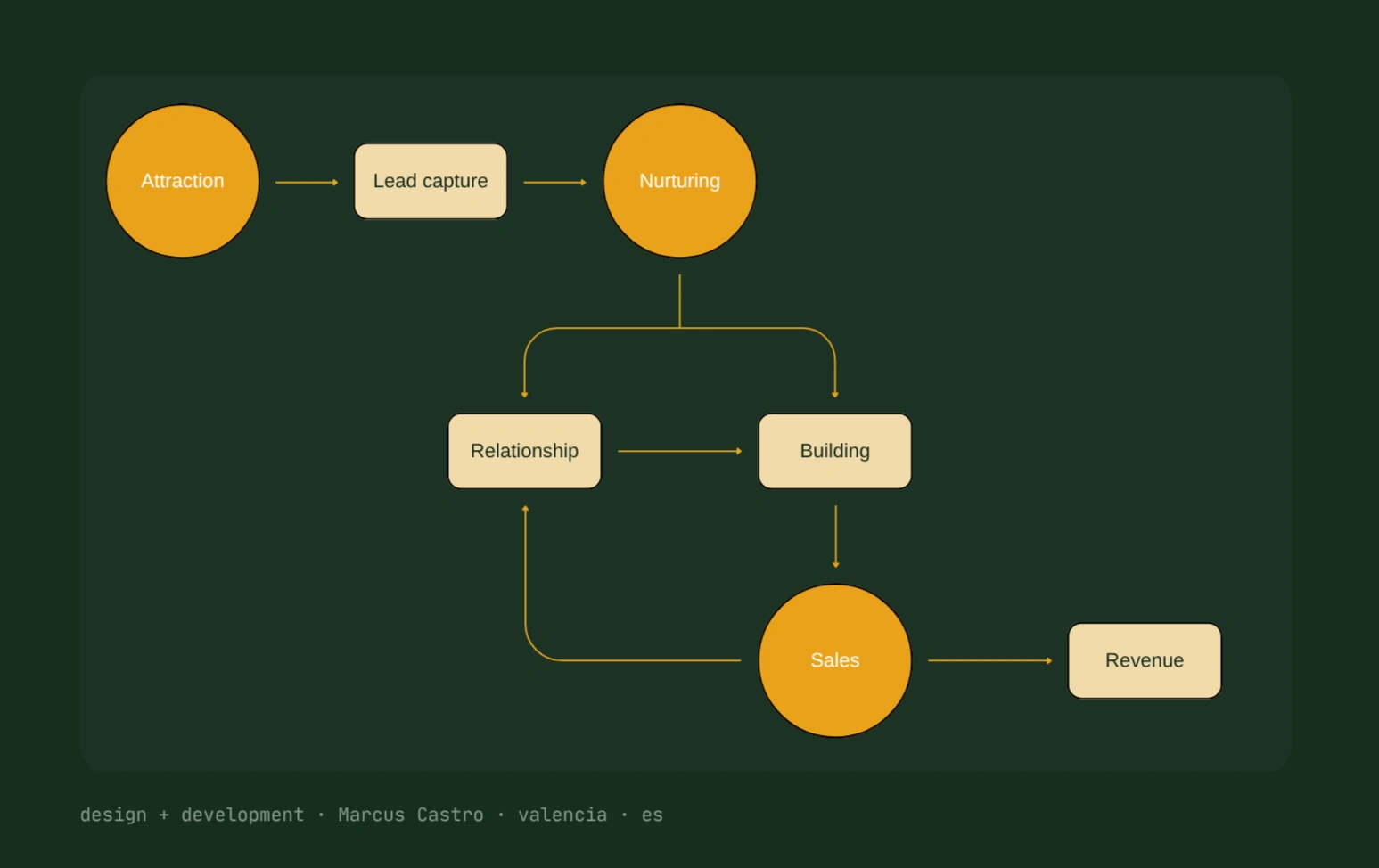
In inbound marketing, lead nurturing flows were created to guide leads throughout the journey. The goal was to stop treating each contact as an isolated opportunity and start building relationships based on education, context and value.
On the content side, the brand started to occupy more digital space. Social media, blog content, rich materials, live sessions, webinars and online events began to work together to strengthen the company’s presence and authority in the market.
Communication also became more focused on the audience’s real pain points: dependency on OTAs, difficulty organizing reservations, low commercial predictability, operational challenges, the need to increase direct bookings and lack of control in hospitality management.
The strategy also helped reposition marketing internally. The area was no longer evaluated only by deliverables, publications or reach, but also by its contribution to lead generation, new customers and marketing-attributed revenue.
What Was Done
The project involved building a more structured marketing operation, with different areas working together.
One of the main changes was the restructuring of paid traffic. Higher-intent channels started receiving more attention and investment, allowing the company to reach people closer to the buying decision. This helped align paid media with the reality of a B2B market.
Lead nurturing and inbound flows were also developed. These flows helped educate potential customers, present management challenges, explain solutions and keep the brand present throughout the decision-making process.
Rich content assets became an important demand generation strategy. Guides, in-depth content and lead capture assets started working as entry points for new leads and as support tools for the commercial relationship.
The company also began investing more consistently in live sessions, webinars and online events. These initiatives helped bring the brand closer to its audience, build authority and create more qualified conversations with hospitality managers.
On social media, the brand’s digital presence was strengthened. The company started producing more content, with greater frequency and stronger connection to the pain points and interests of its B2B audience. This helped increase visibility and made the brand more present in market conversations.
As the operation evolved, the marketing team also gained more structure, following the growth of the area and the need to sustain a more robust strategy.
Tools and Marketing Stack
To support the new operation, the project also involved organizing a marketing stack connected to a B2B growth logic.
On the paid media side, acquisition channels such as Google Ads and social media advertising platforms were used, with a more strategic redistribution of budget toward channels with higher search intent.
For measurement and analysis, tools such as Google Analytics, Google Search Console, Looker Studio and media reports helped monitor performance, user behavior, lead generation and key marketing indicators.
For inbound and relationship-building, automation, CRM and email marketing tools supported nurturing flows, contact segmentation, opportunity tracking and ongoing communication with potential customers.
Content production and rich materials were supported by tools for planning, creation and digital asset management, including editorial calendar platforms, design tools, content management systems and campaign organization tools.
For live sessions, webinars and online events, streaming, meeting and lead capture tools helped turn live content into opportunities for relationship-building, market education and demand generation.
More than the tools themselves, the main point was connecting the stack to the strategy. Media, content, automation, CRM, analytics and sales started to work together throughout the acquisition journey.
The Shift in the Acquisition Model
One of the most important aspects of the case was the change in the company’s acquisition model.
Before the restructuring, active prospecting played the leading role in generating opportunities. Marketing was not yet a central part of the acquisition engine.
With the new structure, this changed. Marketing started generating more leads, attracting more qualified opportunities and feeding the sales pipeline with more consistency.
This did not remove the importance of the sales team. Instead, it changed the dynamic between marketing and sales. Active prospecting was no longer the main acquisition engine, while marketing began to play a stronger role in demand creation.
The company became less dependent on cold outreach and more supported by an operation capable of attracting, educating and preparing potential customers before the sales conversation.
This shift is especially relevant in B2B SaaS businesses, where predictability, lead quality and authority-building are essential to sustain growth.
The Results
Transforming marketing into a more complete operation had a direct impact on business indicators.
Between 2024 and 2025, marketing-attributed revenue grew by 142.5%. This shows that marketing started contributing more directly to the company’s commercial growth.
During the same period, the number of new customers generated by marketing increased by 83.3%, reinforcing the area’s evolution as a real acquisition source.
In 2026, the consistency of the operation became even more evident. Still in the first half of the year, the company had already reached 87% of the total number of new customers generated by marketing in 2025.
This shows that growth was not just a temporary spike. The strategy created a more solid, repeatable and scalable demand generation base.
Why This Case Matters
This case shows the difference between executing marketing actions and building a growth operation.
Before, the company relied mostly on active prospecting and isolated paid media initiatives. After the restructuring, it started operating with a more connected system, combining traffic, inbound, nurturing, content, rich materials, webinars, online events, digital presence and revenue analysis.
The brand became more visible, communicated better with the market and guided potential customers more clearly throughout the journey.
For a B2B SaaS company, this shift is critical. Marketing cannot be only a communication function. It needs to generate trust, educate the market, support sales and contribute directly to acquisition and revenue.
In this project, that shift helped transform marketing into a measurable growth lever.
Key Learnings
The main learning from this project is that paid traffic alone is not enough to sustain a mature B2B operation.
Ads can generate leads, but it is the combination of channel, message, content, nurturing, brand presence and sales alignment that turns interest into real business opportunities.
It also became clear that in B2B markets, the buying decision depends on education and trust. That is why rich materials, inbound flows, live sessions, webinars and strategic content were essential to bring the company closer to its audience.
The evolution did not come only from investing more in marketing, but from a shift in logic: moving away from isolated actions and building an operation connected to the customer journey and commercial results.
Conclusion
This case represents a transformation in marketing maturity.
The company moved from a scenario in which acquisition was highly dependent on active prospecting to an operation where marketing took a leading role in lead generation and commercial growth support.
More than creating campaigns, content or events, the work helped structure a new acquisition logic: more integrated, more predictable and more connected to revenue.
In short, marketing stopped being a complementary function and became a B2B growth engine.
Like this project
Posted Jun 24, 2026
Transforming B2B SaaS marketing into a growth engine, increasing revenue and customer acquisition.
Likes
0
Views
10
Timeline
Jan 1, 2024 - Dec 31, 2025