Private event deck - interactive financial model

Kacper Mioduszewski


This started as a business conversation: could an outdoor event work financially, operationally, and visually? I turned that into an internal interactive deck that presents the concept while letting the team test the assumptions.
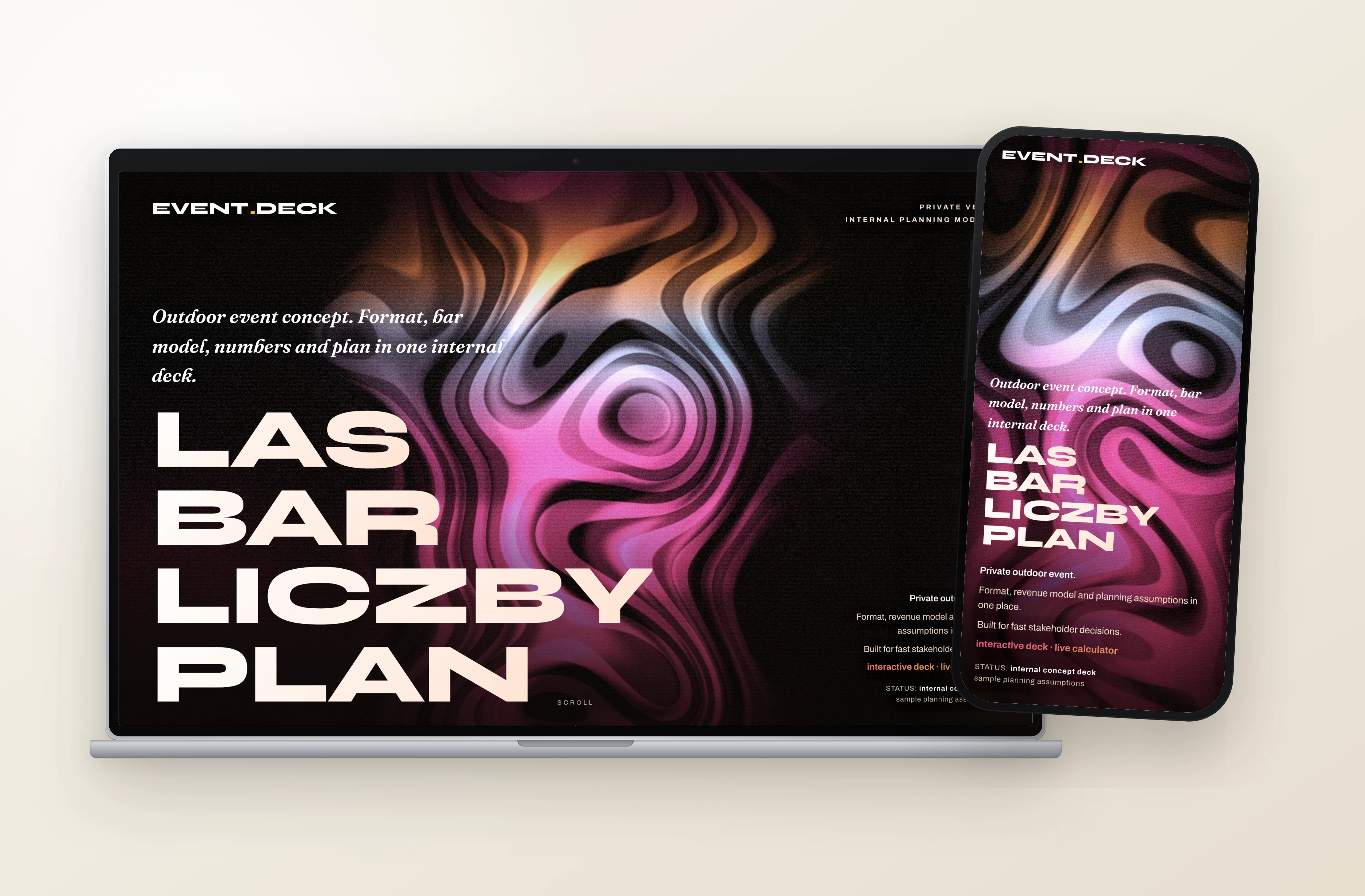
A pitch deck that behaves like a product
The goal was not to make a decorative landing page. The page needed to work as a decision surface: concept, visual direction, constraints, planning logic, and next steps in one flow. Sensitive venue, budget, and operational details are redacted in this public case.
The financial model is part of the interface
A static deck would hide the most important question: does the event make sense under different assumptions? I built the calculator into the page so the team can change attendance, ticket price, bar revenue, margin, reserve, and cost lines - then immediately see cost, revenue, result, and break-even.
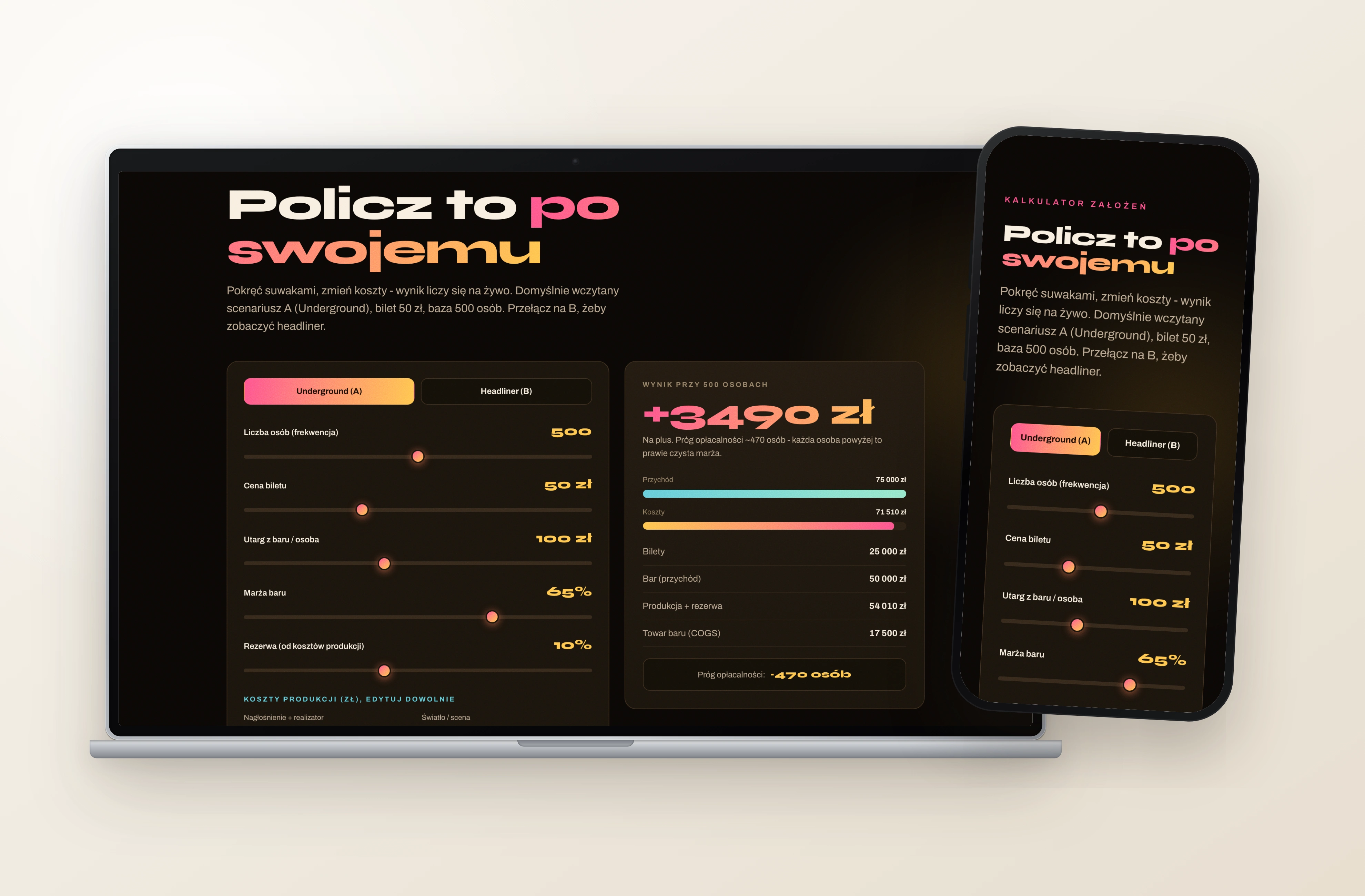
The assumptions calculator: stakeholders can plug in their own numbers and compare the potential cost, result, and break-even without leaving the deck. Specific internal values are redacted.
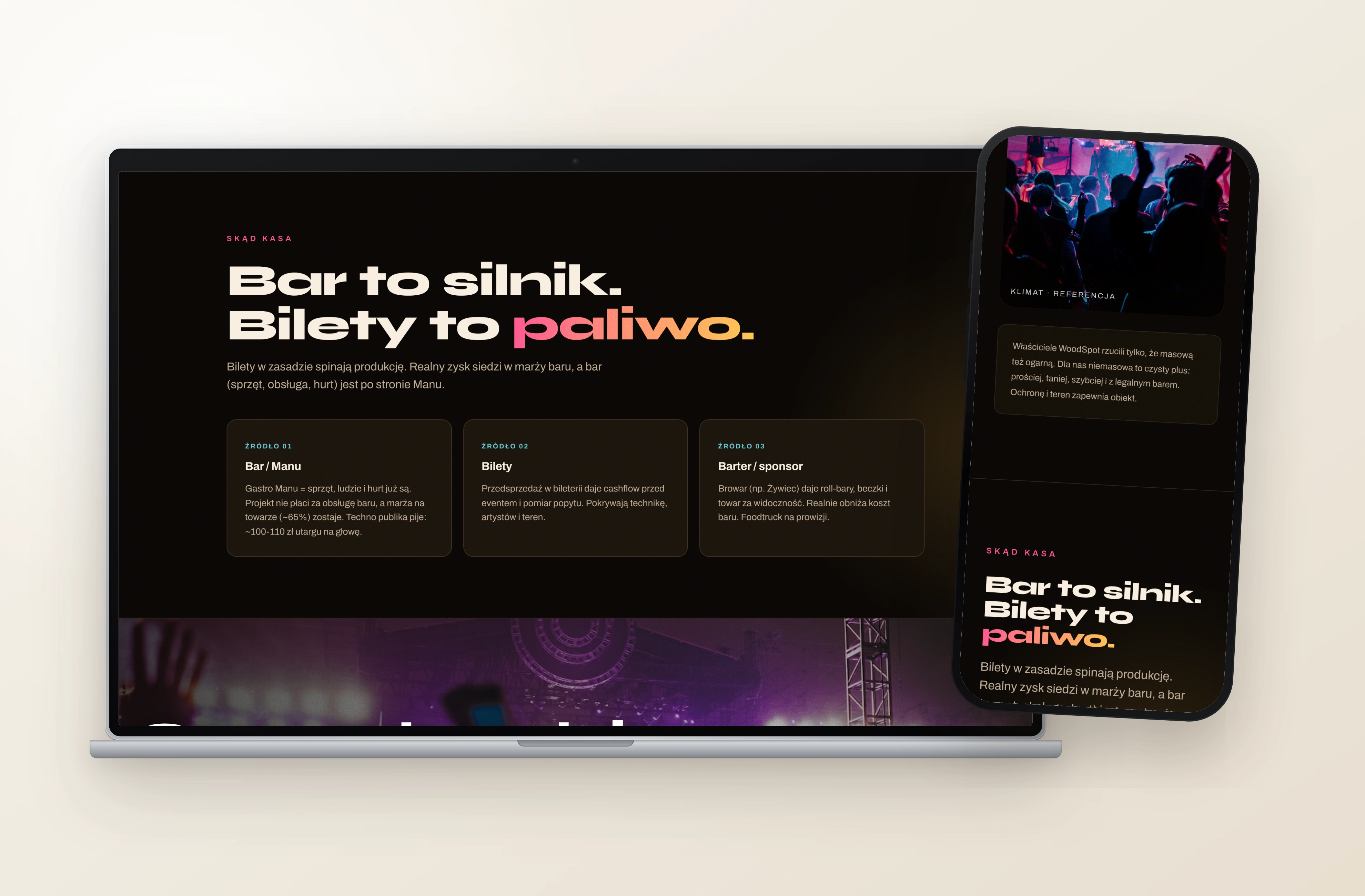
The operating model section turns the planning logic into a visual decision layer instead of leaving it as a spreadsheet-only discussion.
Hero credit
Mobile proof
The deck still works as a phone link - important when the concept is being shared in chats, calls, and quick partner conversations. The mobile screenshots are redacted for public portfolio use.
Mobile motion proof on a horizontal canvas, so the phone experience is visible without turning the case into an oversized portrait screenshot.
Role
I handled the concept-to-interface structure, deck architecture, responsive frontend, interaction design, financial calculator, redaction for public portfolio use, and deployment.
Stack
Vanilla JavaScript, GSAP interactions, responsive HTML/CSS, component adaptation, local image assets, and Vercel hosting.
Result
A live decision deck: visual enough to make the concept feel real, concrete enough to discuss assumptions, and interactive enough to replace a static proposal or spreadsheet screenshot.
Like this project
Posted Jul 6, 2026
An internal interactive deck for an outdoor event concept: brand direction, anonymized planning data, scenario logic, and a live calculator.
Likes
0
Views
0