Evidence-Grounded AI Research Audit + Company Dossier

Phillip Wells


The problem
The most dangerous AI failure isn't an obvious error. It's a confident, well-written company or market profile that was never grounded in a source — wrong products, missing competitors, suppliers listed with no context, contradictions smoothed over. Teams and investors make decisions on that.
What I built — the audit system
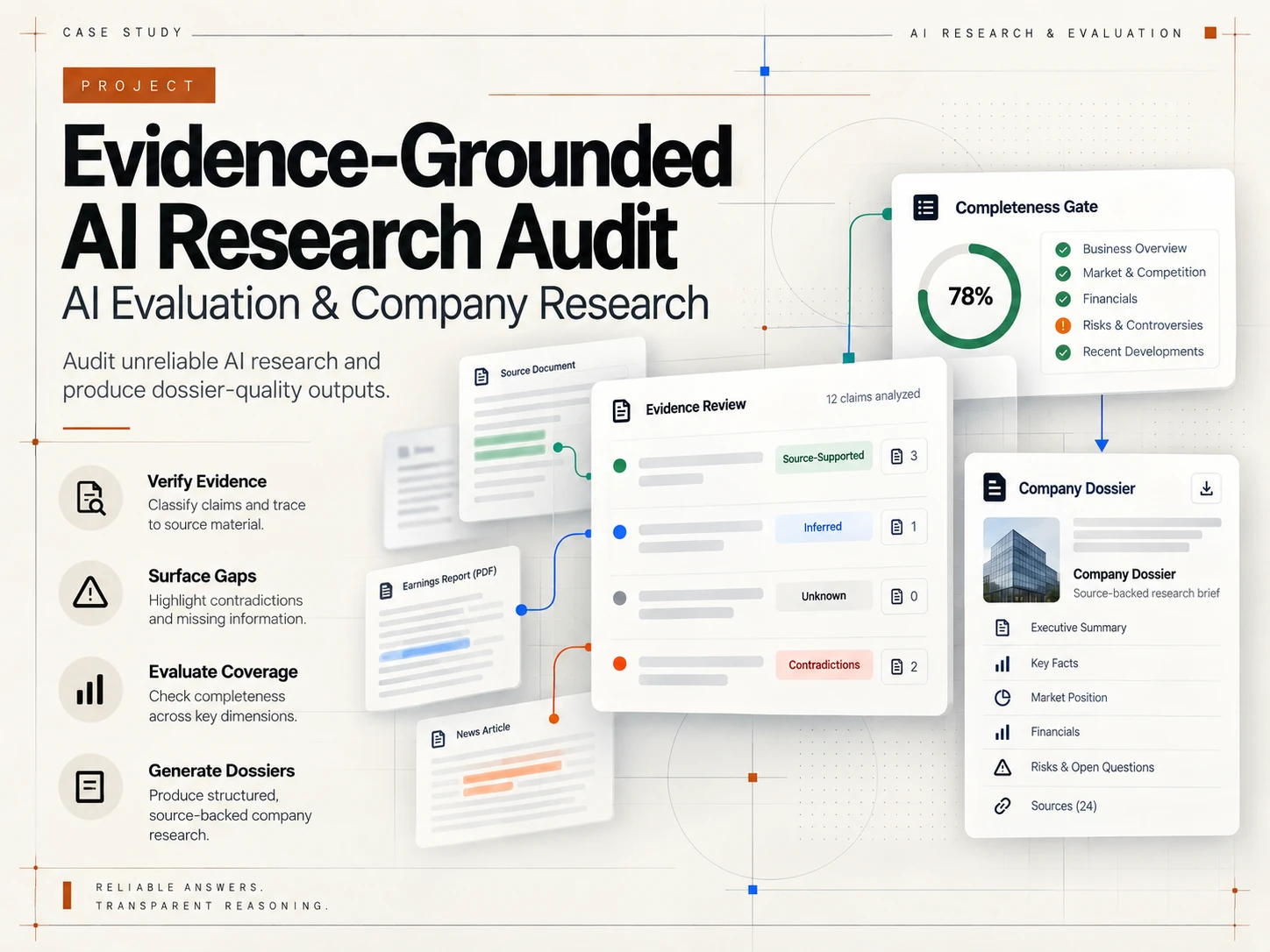
An evidence-grounded audit system designed to detect AI that sounds researched without actually researching:
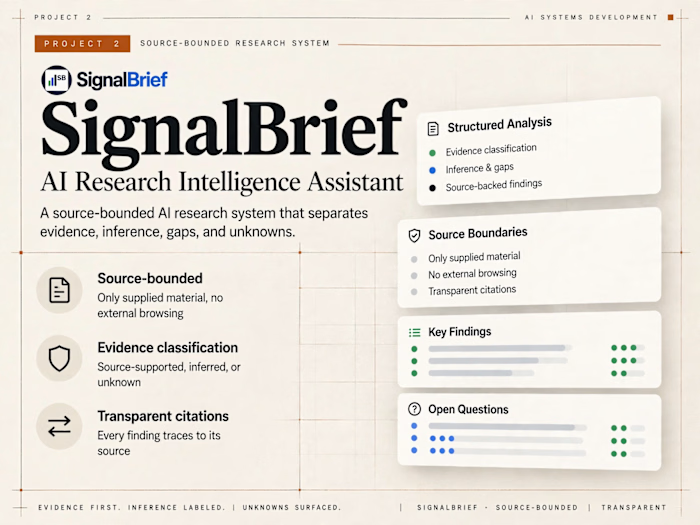
Provenance controls — key claims must trace to an actual source
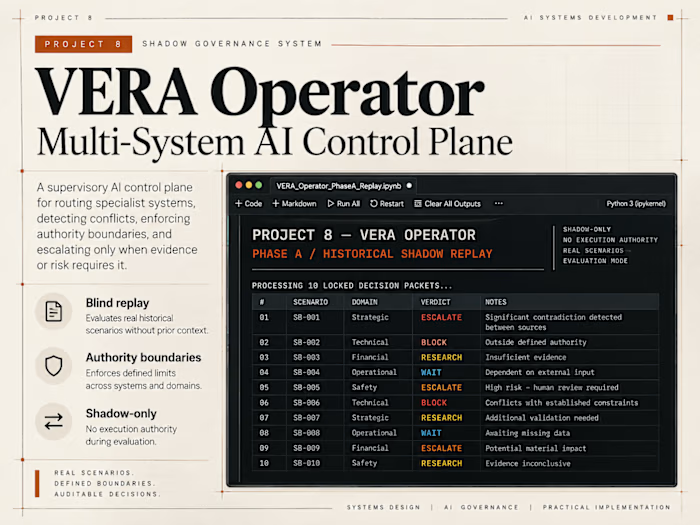
A decision-critical unknown gate — if something that would change the decision is unknown, the system must say so instead of filling the gap
Functional-role classification and real substitutability checks
Disconfirming search — actively looking for evidence against the leading conclusion
Prior-correction regression tests — once an error is caught, the system is retested so it doesn't quietly come back
What I built — the fix, as a reusable skill: VERA Company Dossier
I turned the audit principles into a production skill — vera-company-dossier — built to produce a company overview you can trust as if you'd researched it from first principles yourself:
13 mandatory research passes, from entity/freshness lock and identity reconstruction through revenue engine, competitive landscape, valuation, and a mandatory blind-spot expansion sweep
Legacy label vs. current operating identity — every dossier must compare what the market calls the company with what it actually is today
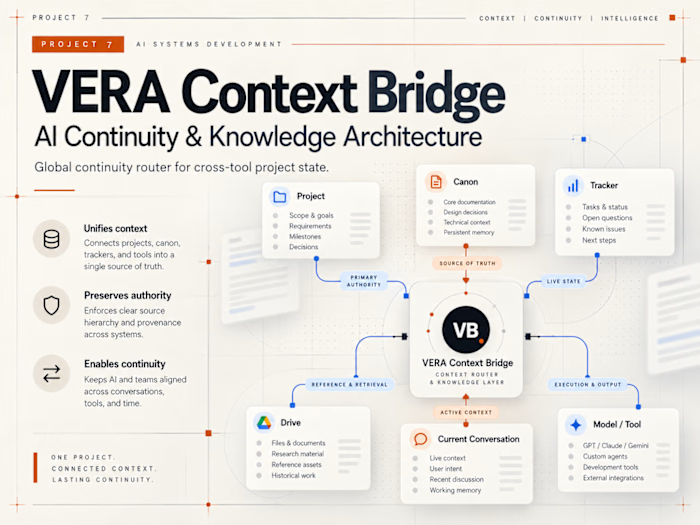
A 3-tier source ladder — primary evidence (SEC filings, earnings, official product docs, government records) outranks independent reporting; analyst posts and search snippets are discovery leads only
An 8-state evidence vocabulary for every material claim — Verified Current, Reported, Announced / Not Yet Proven, Historical, Inferred, Disputed, or Unknown. An announced roadmap item is never upgraded to shipped revenue
A contradiction gate and a 15-domain completeness matrix — a dossier may only report DOSSIER COMPLETE when no decisive domain is Unknown and no material contradiction is hidden. Otherwise it must output DOSSIER INCOMPLETE with the exact gaps
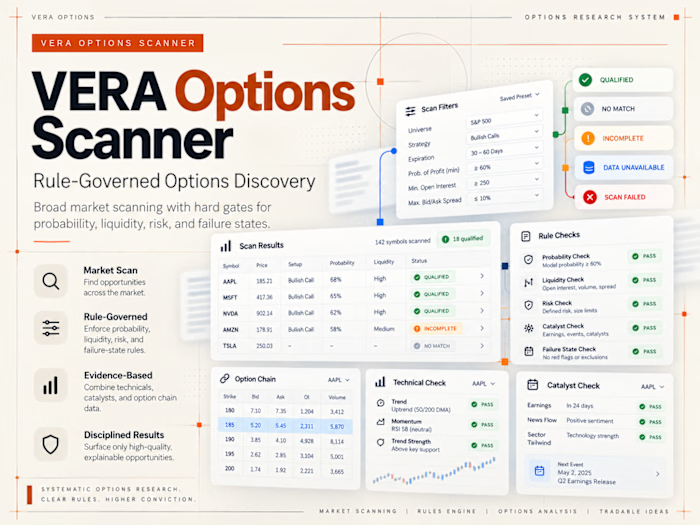
The dossier researches and verifies the company; it does not authorize a trade or a decision. Research authority and decision authority stay separate.
What I can do for a client
Run a structured reliability audit of your AI assistant, research tool, or agent workflow
Build a company dossier / deep-dive research package — for investment diligence, partnership evaluation, competitive research, or pre-decision company understanding
Build a reusable dossier/research skill for your own team, with the completeness gates baked in
Build an evaluation / test harness for your AI: test cases, failure taxonomy, scoring, and regression checks
Diagnose why your AI is hallucinating or over-claiming — which layer is actually failing (sources, reasoning, instructions, retrieval, or interface)
Attribution: Phillip Wells owns problem framing, system/workflow design, constraints, evaluation standards, failure diagnosis, revision decisions, and documentation. AI platforms provided implementation and analytical assistance under that direction.
Like this project
Posted Oct 5, 2026
I test whether your AI actually did the research — then I build the reusable skill that fixes the errors it keeps making.
Likes
0
Views
0