DropHog — AI Activation Diagnostic

Oshingbesan Ademola


DropHog - AI Activation Diagnostic
AI-powered onboarding diagnostic for African digital products; no analytics setup required.
Overview
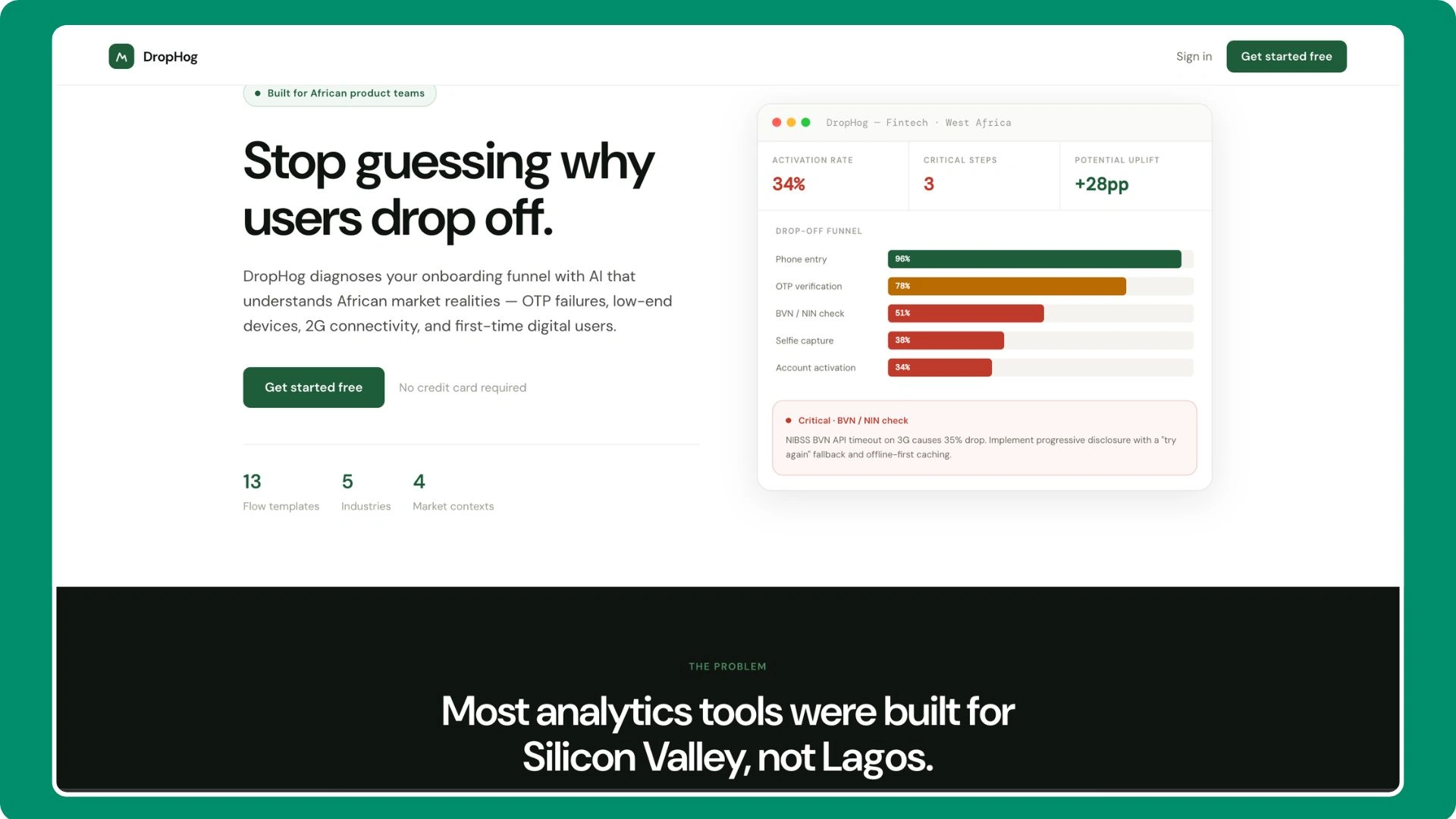
What if your analytics tool understood that a BVN timeout on 3G is a different problem from a confusing UI? DropHog does.
DropHog is an AI-powered onboarding funnel diagnostic tool built exclusively for product managers, growth teams, and UX designers at African digital companies. It diagnoses why users drop off during onboarding and prescribes specific, market-aware UX fixes — without requiring existing analytics instrumentation to get started.
Activation rates across African digital products average 30–50%, compared to 70–85% in Western equivalents. The gap is largely explained by market-specific friction that generic tools simply cannot diagnose: infrastructure latency, low-end device constraints, connectivity drop-offs, and first-time digital user behaviour. DropHog was built to close that gap.
The Problem
Generic analytics tools were built for Western markets. African product teams are using them to solve a fundamentally different problem.
Most analytics tools like Mixpanel, Amplitude, and FullStory were designed for fast internet, modern devices, and digitally native users. When African product teams run these tools, they get generic UX advice that ignores the actual constraints of their markets.
A fintech PM in Lagos knows their BVN verification step loses 35% of users. Mixpanel tells them that. What it doesn't tell them is that the NIBSS API times out on 3G connections, that first-time digital users abandon when they don't understand what BVN is, and that the specific fix is progressive disclosure with an offline retry mechanism, not a redesign.
"The closest workflow teams use today is Mixpanel + a prompt in ChatGPT — manually exporting data, writing context, and hoping for relevant advice. DropHog replaces that entire workflow in one tool."
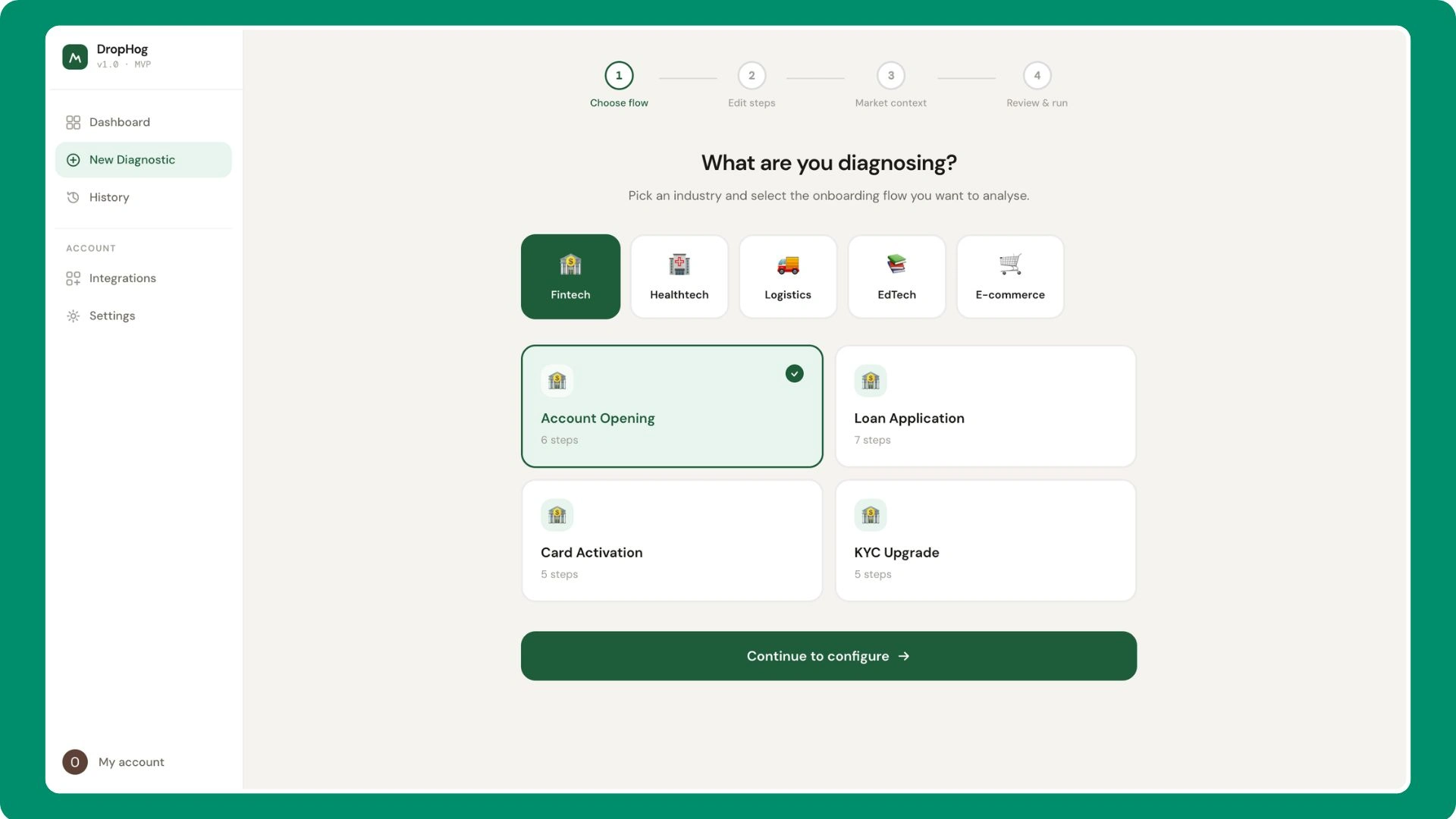
Choose a flow template
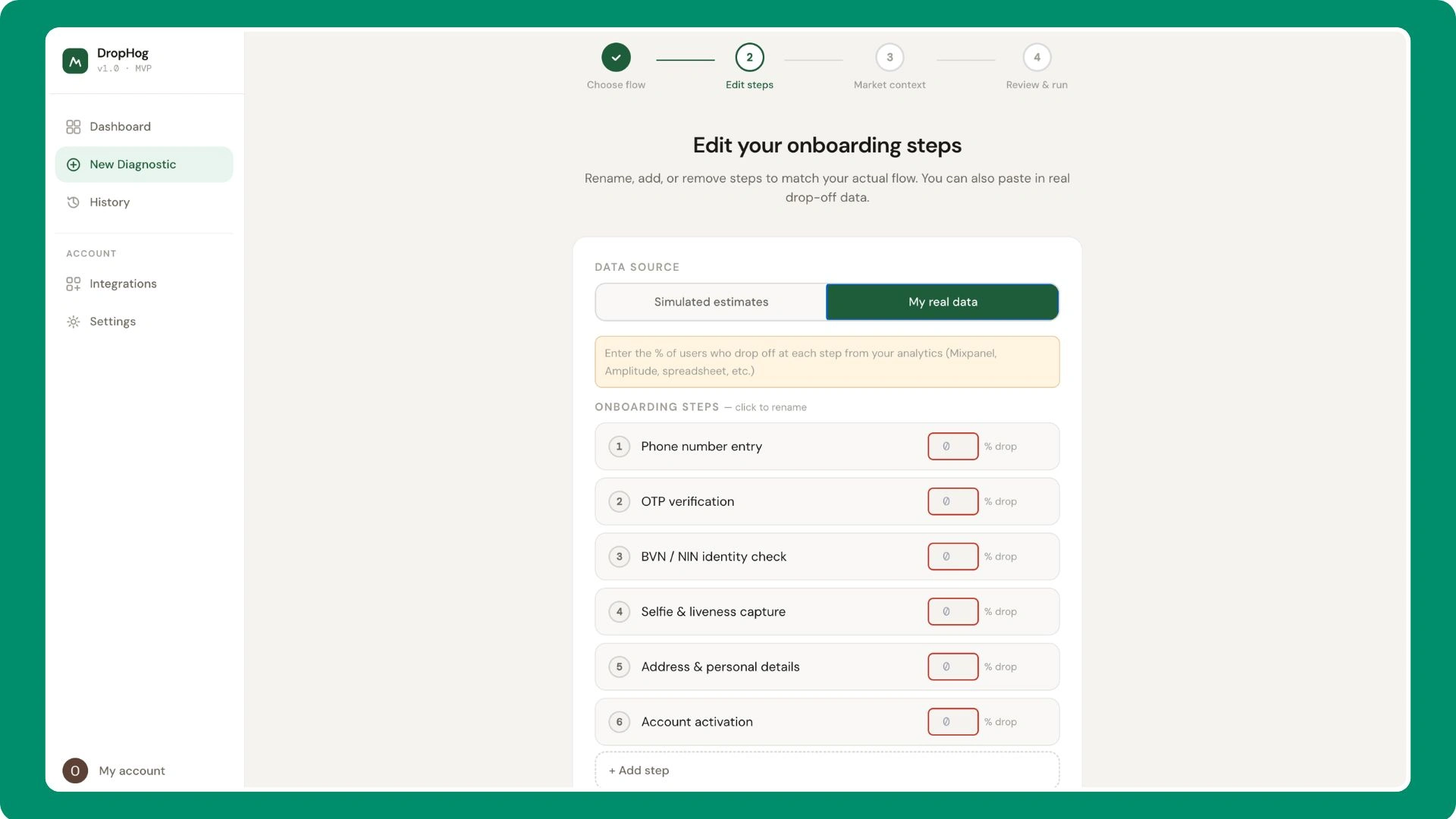
Edit onboarding steps with drop-off rates
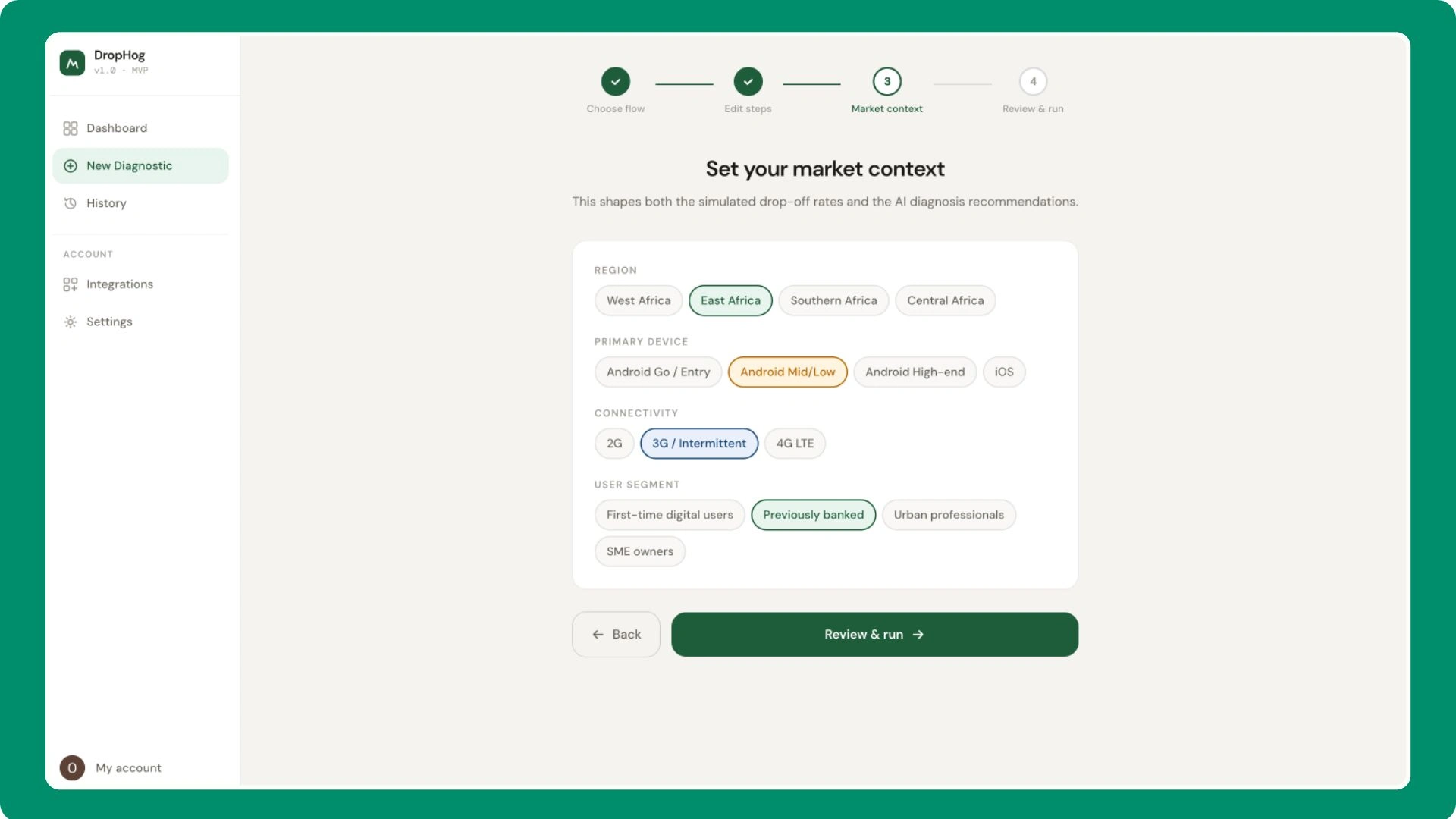
Set African market context: country, connectivity, device type, user profile
What I Built
A four-step diagnostic wizard that combines market-specific simulation with AI that understands African digital infrastructure realities.
DropHog's product flow is structured around four steps: choose a flow template, edit onboarding steps with drop-off data, set market context, and receive an AI-generated diagnosis with ranked, actionable recommendations. The most important design decision was making simulation the default, not the fallback. Most tools assume instrumentation is already in place. DropHog was built specifically for teams who haven't yet set up Mixpanel or Amplitude and for those who have but can't get contextually relevant answers from it.
The AI prompt engineering required significant iteration to produce consistently structured, Africa-context-aware output. Anchoring the prompt with specific infrastructure terms like NIBSS, BVN, MTN OTP, and Safaricom M-Pesa produced noticeably more relevant recommendations than generic fintech framing. The result is diagnostic output that reads less like a ChatGPT response and more like advice from a PM who has shipped products in Lagos, Nairobi, and Accra.
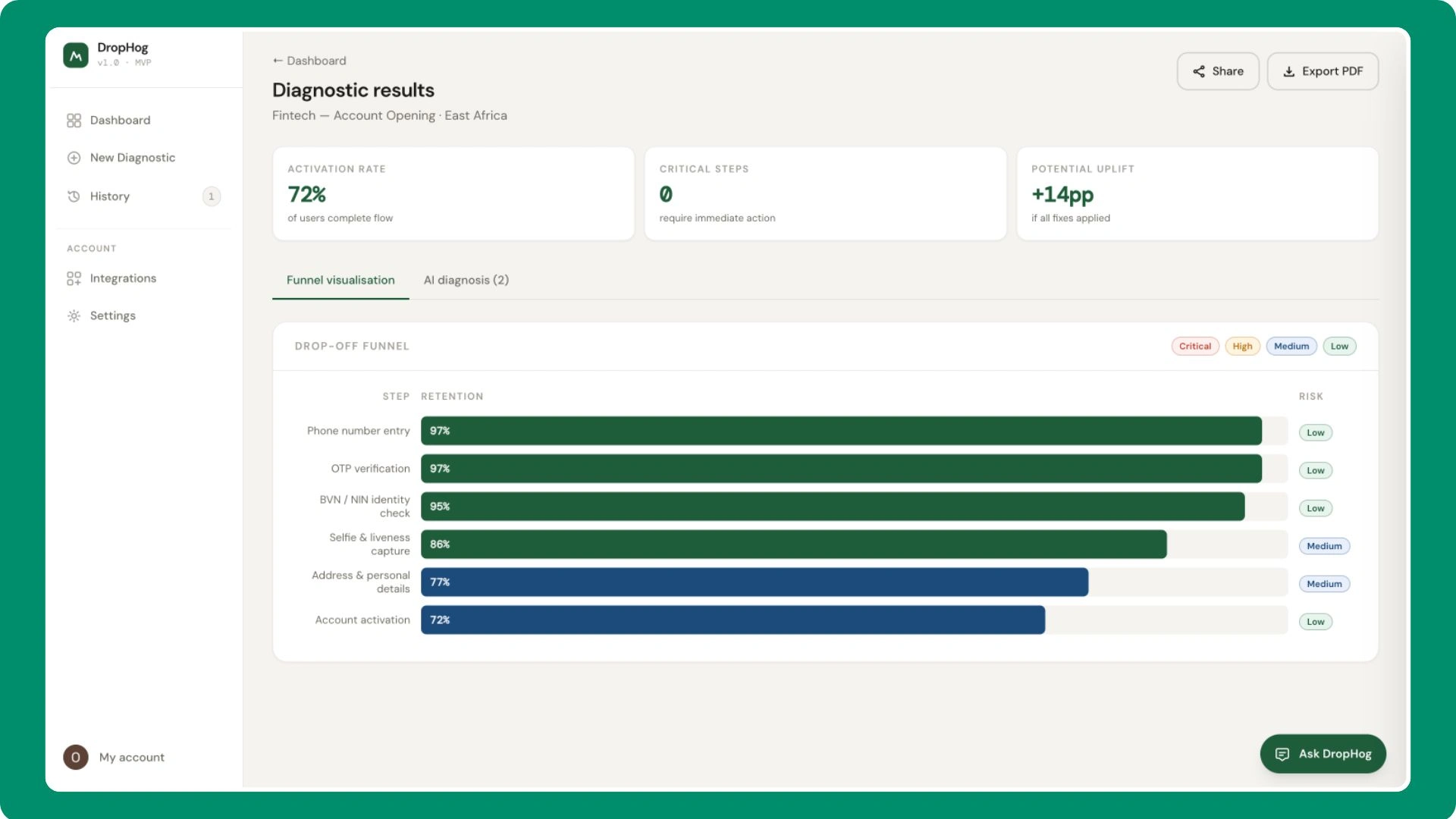
The diagnostic output ranked recommendations with projected activation uplift, built for African product contexts
Product architecture
Serverless AI with persistent diagnostic history — secure, fast, and built to deploy without infrastructure overhead.
All AI API calls route through Vercel serverless functions; the Groq API key is never exposed to the browser bundle. Clerk handles authentication with email and Google OAuth. Diagnostic history is persisted per user in Supabase, with queries filtered by Clerk user ID. The architecture was intentionally lean: no backend server to manage, no infrastructure overhead, and a deployment model that scales automatically.
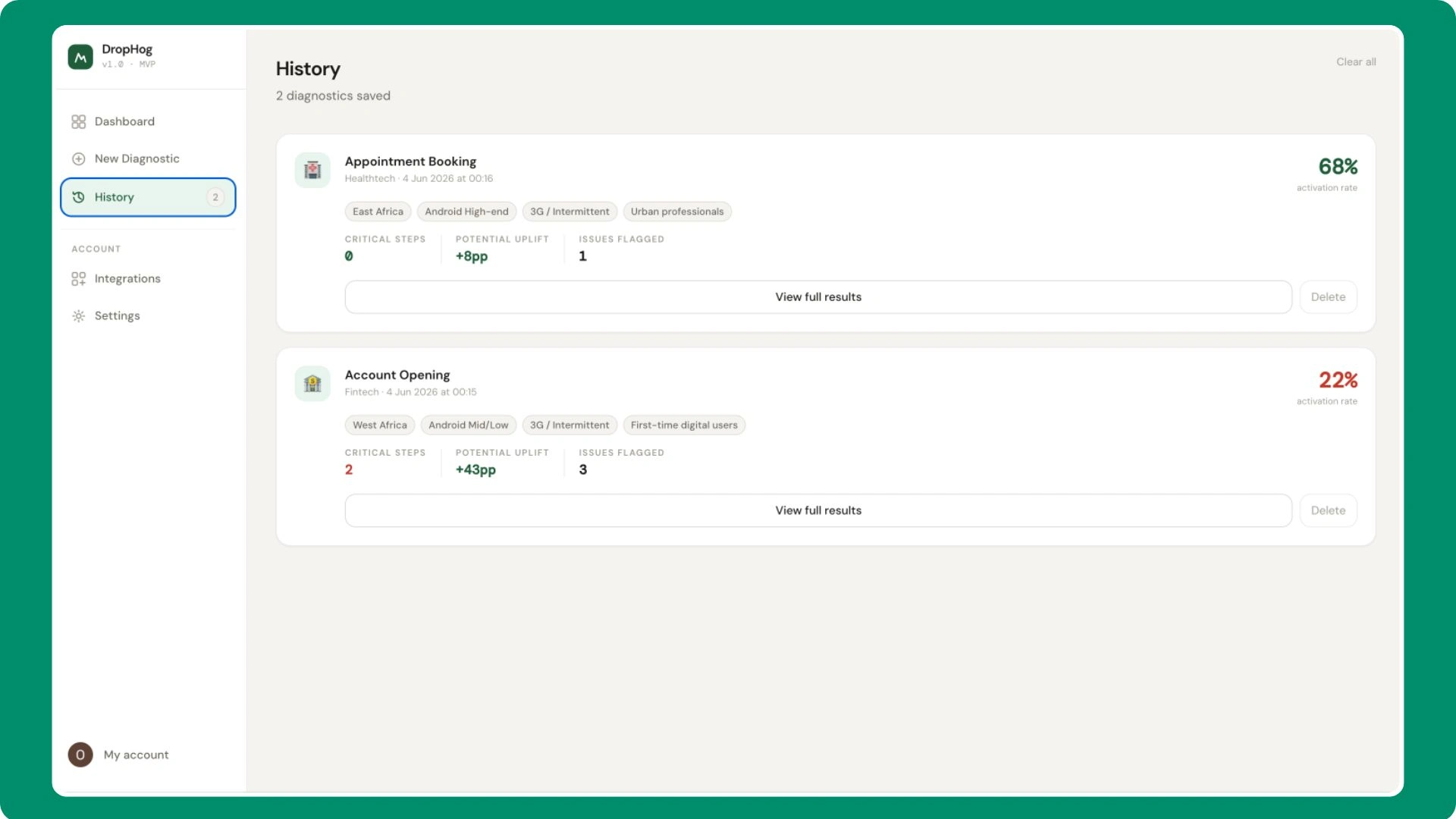
Diagnostic history view — saved past reports per user with re-access and sharing
Outcomes
v1.0 Live: Full MVP deployed and accessible on Vercel
No instrumentation required: Works without any prior analytics setup
Africa-first: Only diagnostic tool built around African digital infrastructure realities
Skills: AI Product Design · Prompt Engineering · UX Design · Groq API · Supabase · Clerk Auth · Vercel · Fintech
LIVE :
Like this project
Posted Jun 3, 2026
Built an AI diagnostic tool that identifies onboarding drop-off causes for African fintechs and prescribes market-aware UX fixes — no analytics setup required.
Likes
0
Views
4
Timeline
May 12, 2026 - May 14, 2026