LadX Crowd-Shipping Marketplace Development

Oshingbesan Ademola

LadX - Building a crowd-shipping marketplace from scratch
Overview
Turning informal coordination into a structured peer-to-peer logistics network; no playbook, no prior designer.
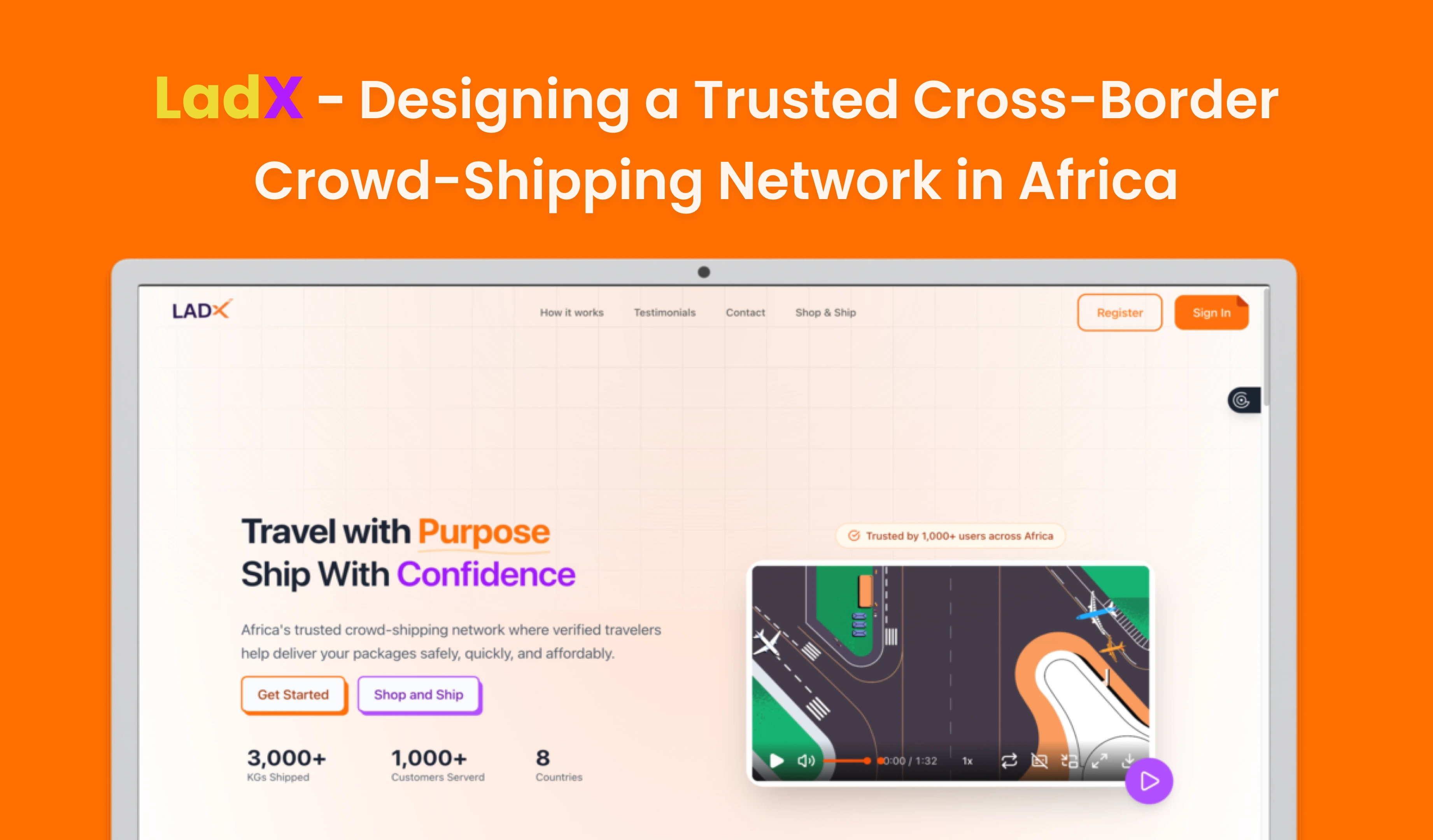
LadX is an early-stage startup building a trusted crowd-shipping network across Africa, connecting travelers with spare luggage capacity to senders who need to move packages across borders quickly and affordably. Think Airbnb for luggage space; formalising a behaviour that already existed in informal networks.
I joined as the first and only product designer, responsible for taking LadX from a mix of WhatsApp threads and Google Form submissions to a fully deployed web application that could support real marketplace interactions at scale.
The problem
Manual coordination across disconnected tools was preventing LadX from operating as a real marketplace.
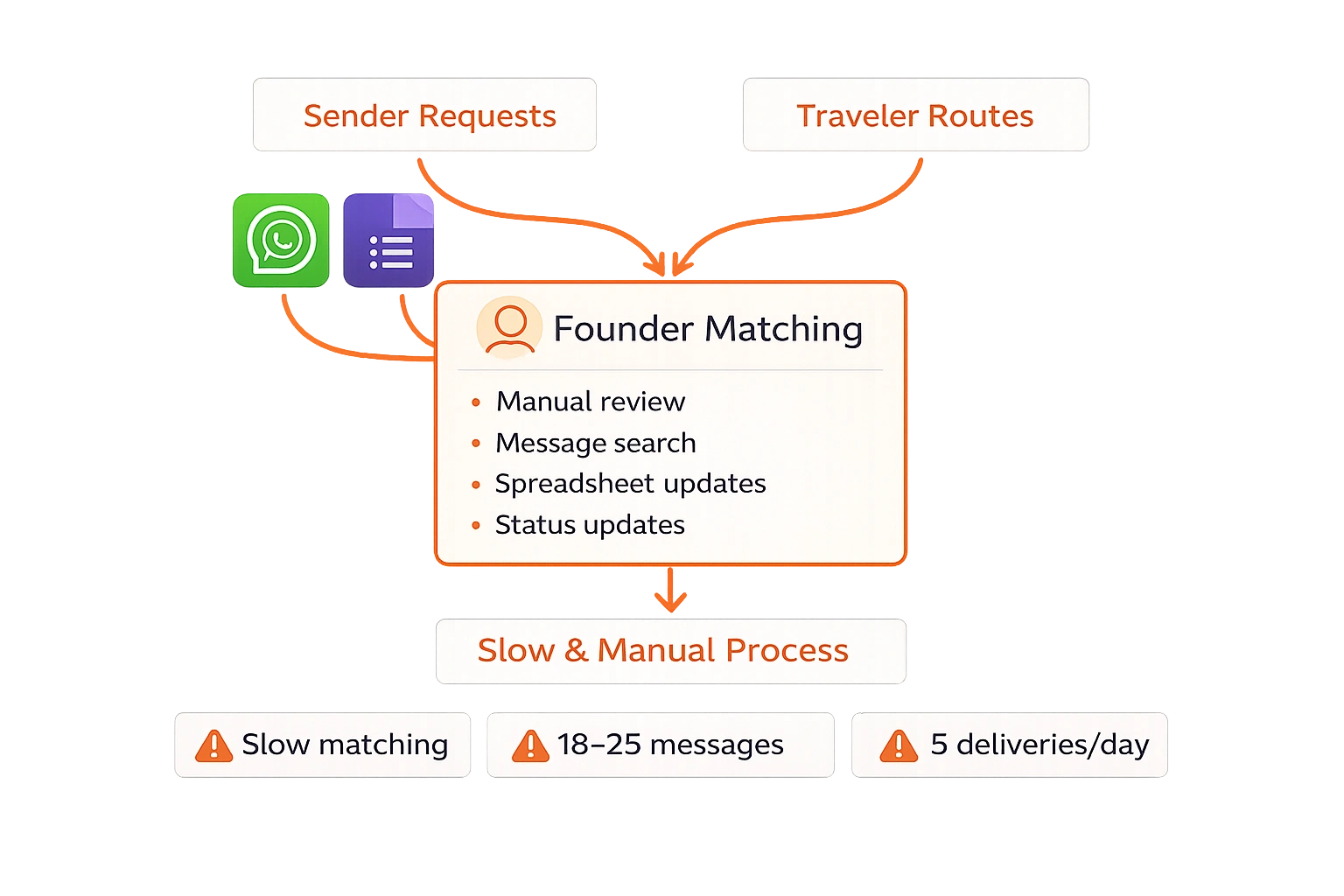
Before the MVP, every transaction required the founders to manually review Google Form submissions, search WhatsApp message histories for available travelers, and reconnect both parties through repeated back-and-forth conversations. Without a live system, matching relied on memory rather than data.
The result: a hard ceiling on daily capacity, unreliable records, and an inconsistent user experience that made it impossible to learn from activity or scale. What existed was a semi-structured process — not yet a marketplace.
"Instead of reducing effort, the tools created duplicate work across systems. The founders were the bottleneck in every single transaction."
The solution
A three-role marketplace MVP that transformed static submissions into live, structured supply and demand.
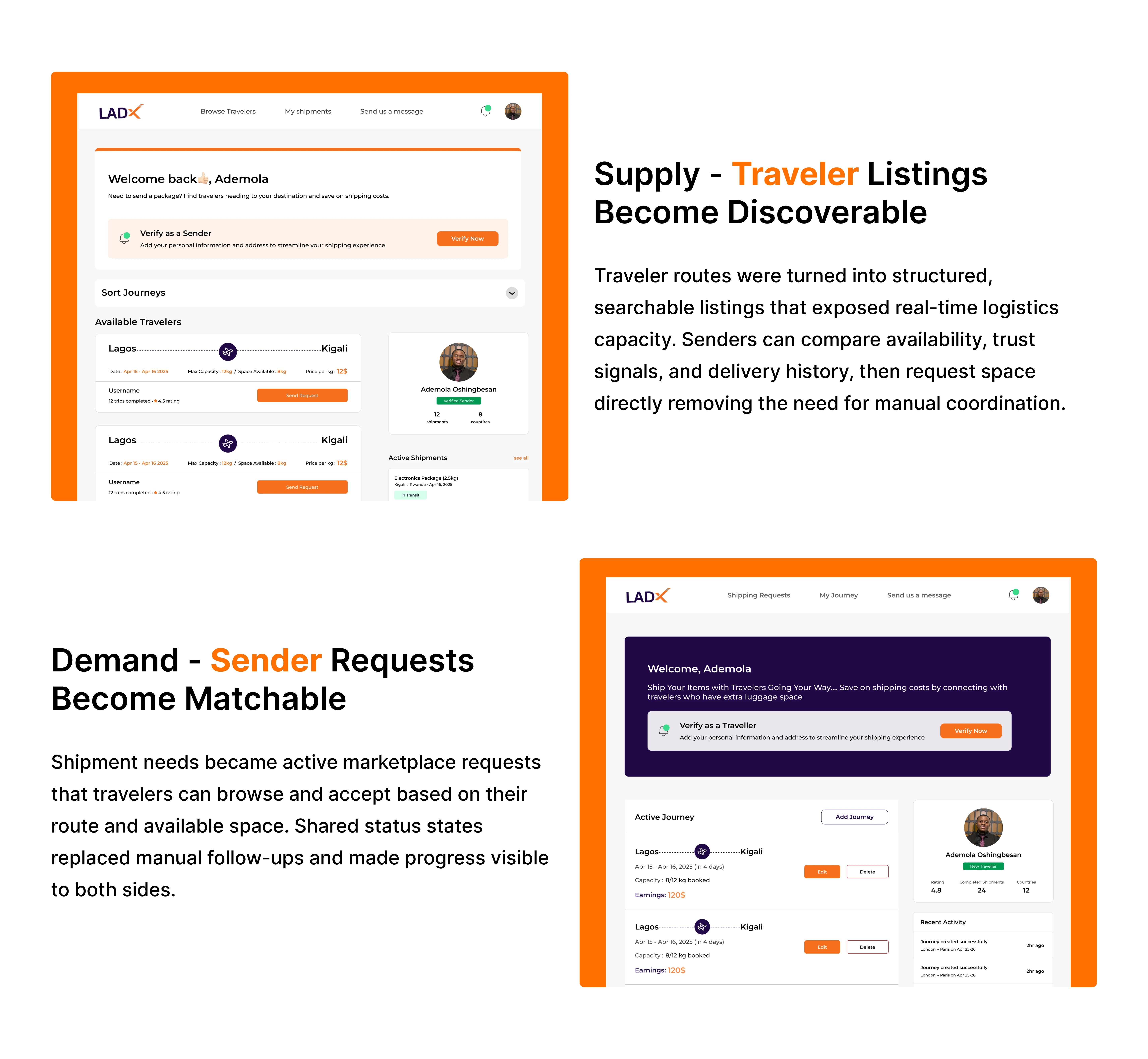
The goal was not simply to replace WhatsApp and Google Forms ; it was to remove the founders entirely from the critical path of every transaction. The product strategy was to turn isolated requests into structured, discoverable listings that users could find and match with directly.
The platform was designed around three interconnected roles: Travelers publish their routes and available luggage space, creating verifiable logistics capacity. Senders create shipment requests that generate demand. Admins oversee verification, dispute resolution, and operational trust. Separating the platform into these roles allowed the marketplace to scale without increasing coordination overhead.
Key decisions
Building trust through the product, not through the founders.
In the manual workflow, trust depended entirely on the founders being present; they reassured both parties, confirmed details, and provided real-time updates. In the MVP, that responsibility shifted to the product itself. Trust was embedded through clear delivery status updates, verified traveler profiles, and consistent transaction records that both sides could reference at any time.
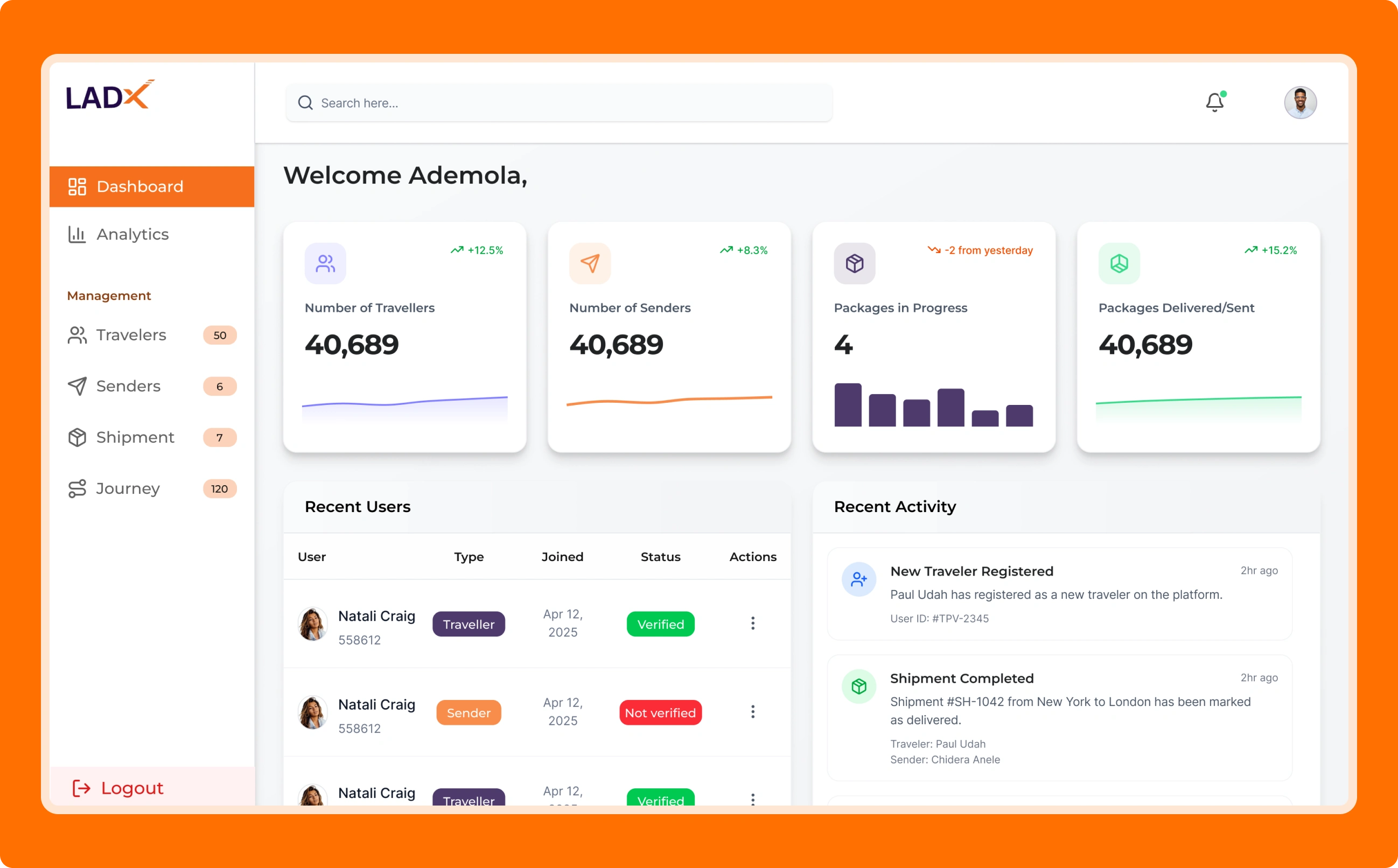
The admin layer was equally important. Rather than a manual coordination tool, it became a lightweight control system giving the team real-time operational visibility into routes, shipment demand, and delivery activity as the marketplace grew.
Outcomes
0 → 1: Full marketplace MVP shipped and live on
Self-serve: Founders removed from every transaction
3 roles: Traveler, Sender, Admin — each with a distinct product flow
Skills: Product Strategy · UX Design · Information Architecture · Two-sided Marketplace · MVP Delivery
FULL CASE STUDY:HERE
Like this project
Posted Jun 3, 2026
Designed the end-to-end experience for a crowd-shipping platform connecting travelers with senders moving packages across borders quickly and affordably.
Likes
0
Views
6
Timeline
May 1, 2025 - Aug 3, 2025