Built with FlutterFlow
Celering Mobile App Development and Modernization

Team FlutterLab


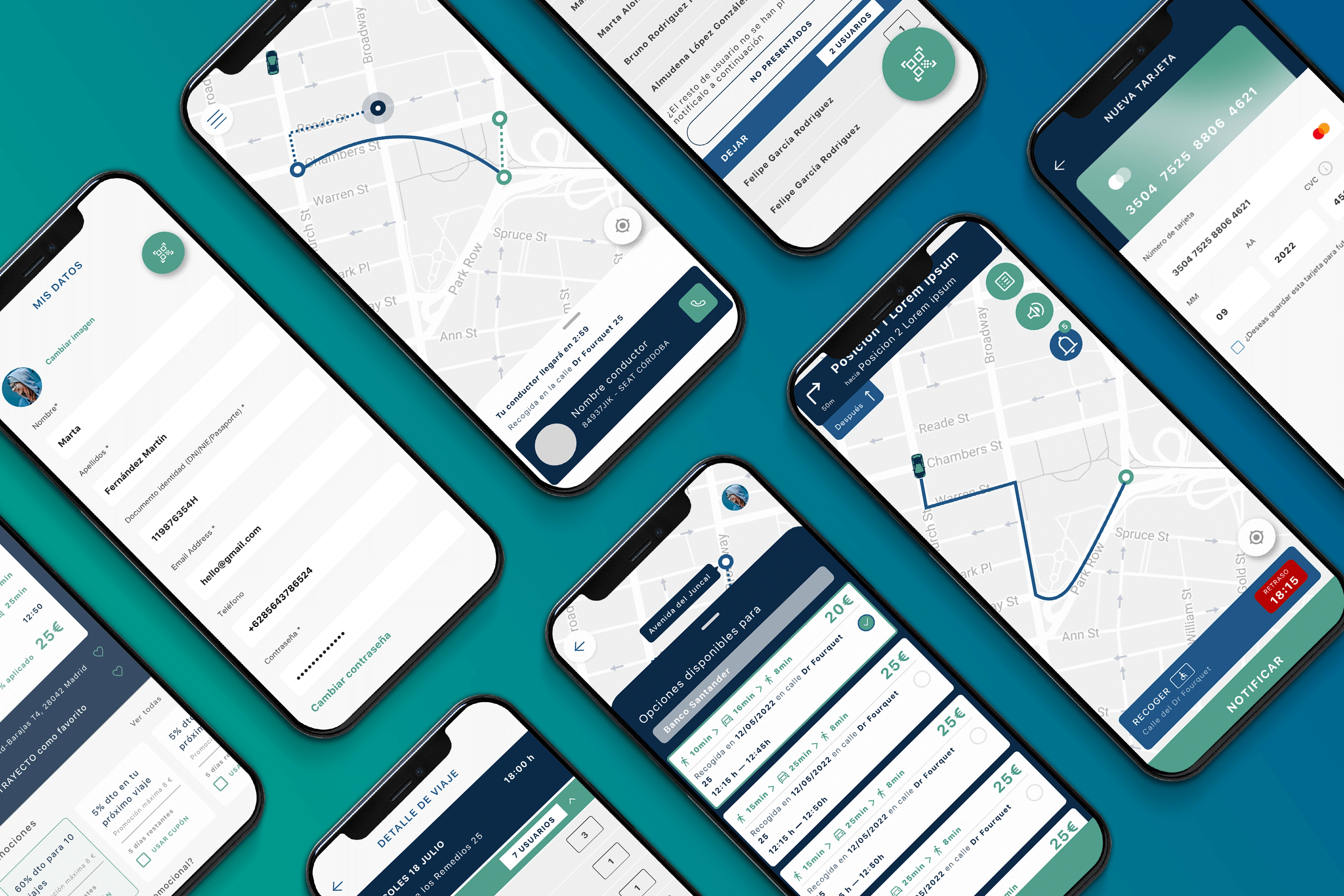
Celering – Smart Urban Transportation Platform
🧩 Overview
Celering is an intelligent mobility solution designed to make city transportation faster, cleaner, and more efficient.
It offers a ride-sharing system that matches users and drivers dynamically, providing the comfort of a private car with the cost-efficiency of public transport — while reducing urban pollution and traffic congestion.
Celering consists of two mobile applications — one for passengers and one for drivers — that integrate navigation and smart routing technologies to optimize daily travel within cities.
⚙️ Challenge
Urban mobility was facing increasing inefficiency: long commute times, underused vehicles, and high CO₂ emissions.
Celering’s founders envisioned a data-driven platform that could complement public transportation by filling the gap between taxis and buses.
The main challenges included:
Designing a dual-app ecosystem (user + driver).
Integrating real-time navigation and route optimization.
Building a scalable backend for live trip tracking.
Achieving a smooth, app-like experience with minimal latency.
🚀 Solution
FlutterLab took full responsibility for the product architecture, UX/UI design, and app development.
We implemented the platform using Flutter for multi-platform deployment (iOS & Android) and Firebase for real-time data synchronization.
Key solutions delivered:
Driver & Passenger Apps: Seamless pairing and trip management through real-time communication.
Smart Navigation Integration: GPS tracking, route optimization, and ETA calculation.
Modern UI Design: Clean and intuitive interface for both user roles, focused on clarity and usability.
Enterprise Scalability: Modular backend architecture ready for fleet expansion.
The result is a robust mobility platform that improves transport efficiency without requiring new infrastructure investment.
💡 Impact
Celering demonstrated that smarter coordination can significantly improve urban transport efficiency.
It allowed users to reach destinations up to 30% faster compared to traditional routes, while reducing operational costs and emissions.
The solution proved adaptable for cities aiming to modernize public mobility through technology rather than infrastructure expansion.
🧠 Services Provided
UX/UI Design
Custom Software Development
Mobile App Development
Application Testing
Enterprise App Modernization
Like this project
Posted May 13, 2025
Dual-app ride-sharing platform optimizing city travel with smart navigation, faster routes, and lower emissions for sustainable mobility.
Likes
3
Views
107
Timeline
May 13, 2022 - Jun 13, 2023
Clients
Celering