Wardrobe: Hackathon Case Study (4th place)

Gábor Balogh
Verified


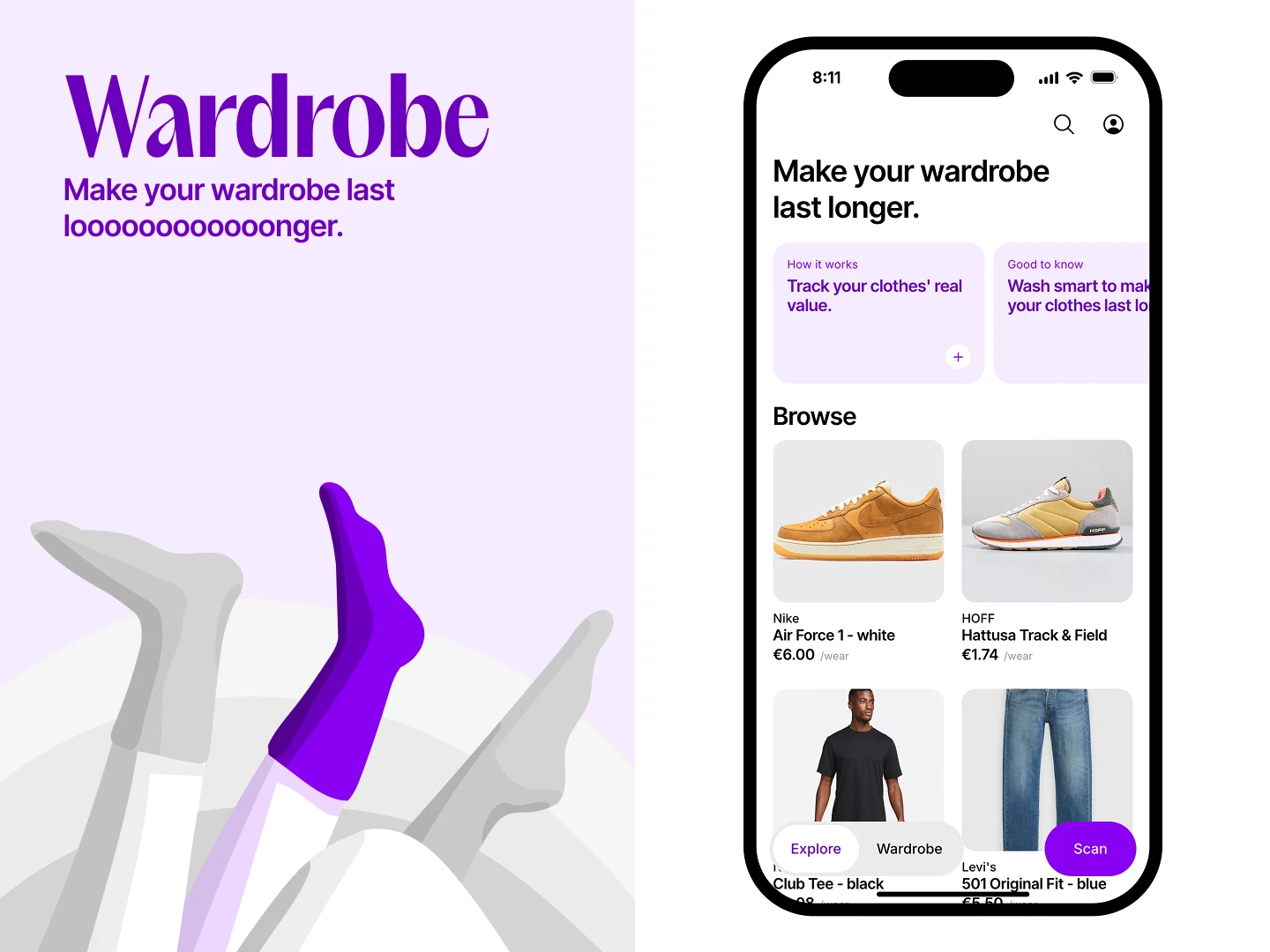
Wardrobe is a concept app created for the Anything Challenge hackathon. The idea was simple: help people understand the real value of their clothes by showing how often they wear them. The execution turned into a design-driven sprint that mixed product thinking, AI-assisted development, and a few chaotic surprises along the way.
The Problem
I’ve always been annoyed by clothes that fall apart after only a few wears. Paying for something that loses its shape or tears within weeks feels wasteful, not just financially but environmentally too.
What if there was a platform that made it easy to discover long-lasting pieces? And what if real user data nudged fashion brands toward durability and better manufacturing?
To compare durability across any brand or item, I needed one universal metric: cost per wear.
The calculation is simple but powerful: Price you paid ÷ Number of times you wore it = cost per wear.
For example: A pair of jeans that cost €50 and was worn 10 times has a €5 cost per wear. Wear it 50 times and the number drops to €1. Suddenly durability becomes visible.
Wardrobe helps you see the real value of your clothes. Scan what you wear, track every use, and understand how each piece performs over time. Low friction, no manual input, instant insights. A smarter wardrobe starts with knowing what you actually wear.
Key Features
Track true value
See the real cost per wear of every piece in your wardrobe.
Scan, don’t type
Add new items or log outfits in seconds with a smooth camera flow.
Your wardrobe, organised
Browse your items, spot what you use most, and identify what just takes up space.
Care that lasts
Get simple washing and care tips to keep your favourite pieces in good shape.
Discover what lasts
Explore new pieces based on real user wear data and cost per wear performance.
Close the loop
Donate, recycle, or give your unwanted pieces a second life through upcoming options.
Builder preview: Explore new pieces
Builder preview: Browse your items, spot what you use most
Designing the Experience
Data-based apps like spending trackers or habit trackers often fail because daily input is tedious. If Wardrobe wanted to feel effortless, the scanning flow had to be exceptionally smooth.
I focused on minimising friction and designing around user intent:
Rear camera suggests outfit logging
Front camera suggests adding a new piece
Hints guide users through showing the item, its fabric, the tag, then the care label
Working app screen record: Scan new item flow
The scanning flow had to feel continuous, not step based. Logging an outfit should only take a few seconds, about as long as walking through an airport security gate. Users also shouldn’t have to take manual photos, since that slows everything down.
Working app screen record: Log outfit flow
Initially, I explored sending a live video stream to the recognition service, but the technical and financial cost was too high. Instead, I extract well framed images directly from the camera feed. This approach allows early detection and instant feedback on the scan screen, which dramatically improves the experience.
Due to an unexpected issue, the database connection was deleted, and I couldn’t restore it in time. Because of this, I couldn’t test the full backend recognition flow live. Still, the prototype successfully demonstrates how an MVP-ready flow would work.
Process
With limited time left in the challenge, I focused on essentials. Smooth UX over pixel perfection. No complex design system, no heavy animations, just a clear structure.
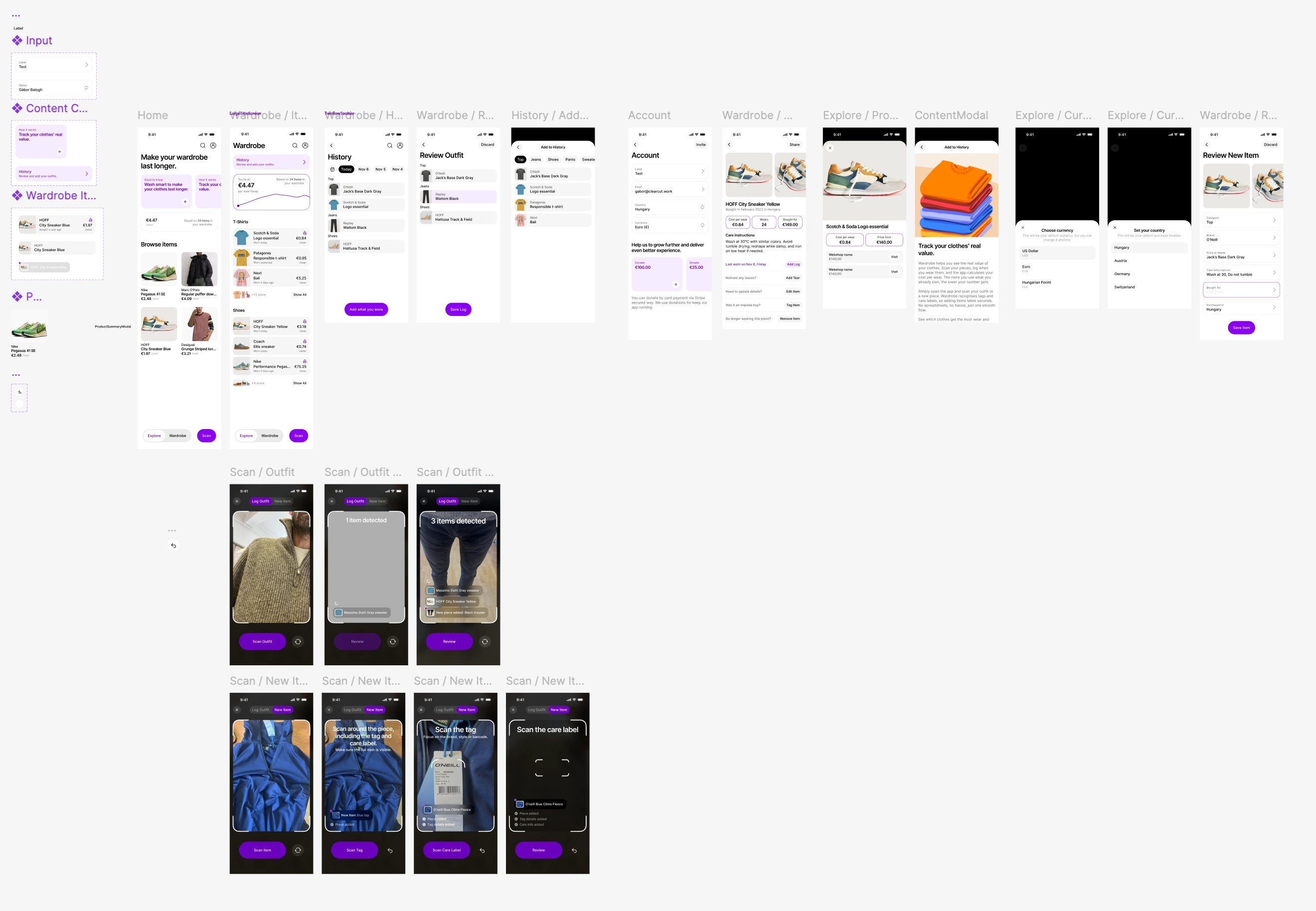
Screen designs in Figma
I designed key screens in Figma, then built the app systematically in the Anything Builder:
establish global styles early
create reusable components
build screen by screen
Progress was mixed: sometimes fast, sometimes slowed by debugging quirks. But the component-based setup paid off, and development became quicker day by day.
When I realized the backend wouldn’t be functional before the deadline, I adopted a “fake it until you make it” mindset. This allowed me to complete nearly every key screen and even integrate a few micro-interactions.
Learnings
I still love this concept and how well the prototype communicates it, but it’s too complex for a short hackathon. The challenge also proved that AI development under time pressure is not exactly peaceful. You balance prompting, debugging, credit usage, and the clock, often all at once.
There’s also a conceptual limitation: cost per wear only becomes reliable after months or years of real use. By then, many items are no longer available in stores, which makes recommendations difficult. This part of the core concept needs rethinking.
Still, Wardrobe showed me how far clear intent and a focused UX approach can push an idea, even under tight constraints.
What do you think about the concept? If it sparked something or you’d like to talk through the idea, I’m always open to a conversation.
Like this project
Posted Nov 25, 2025
A concept app built for the Anything Challenge to show the real value of your clothes by tracking how often you wear them in a fast, design driven way.
Likes
0
Views
10
Timeline
Nov 19, 2025 - Nov 20, 2025
Clients
Contra