Illustration as a Meditation | Far East

Bohdan Andriyushchenko


Illustration as a Meditation | Far East
A chapter of my long-term illustration practice devoted to East Asian visual philosophy — Japanese and Chinese traditions where restraint is not a style but a discipline.
Each piece pairs a cultural concept with a technical constraint:
Ikebana — a single gold line on black, drawn the way the art itself is practiced: one continuous attention, nothing extra.
Yatagarasu, the three-legged crow of Japanese mythology — a body built entirely from brush-stroke fragments, so the bird reads as movement, not anatomy.
Kintsugi — an inversion: instead of golden seams, only the cracks are drawn. The repair exists in what's missing.
The tiger of Chinese tradition — sumi-e logic in vector form: no outline holds the body, the stripes alone define it.
The exercise running through the series: take a concept loaded with centuries of meaning and find the minimum visual form at which it still speaks. This is the same operation behind my brand work — KUURACORP's packaging, built on Japanese Suminagashi marbling, grew directly out of this research. When I say I design for culture-driven businesses, this is the culture work behind it.
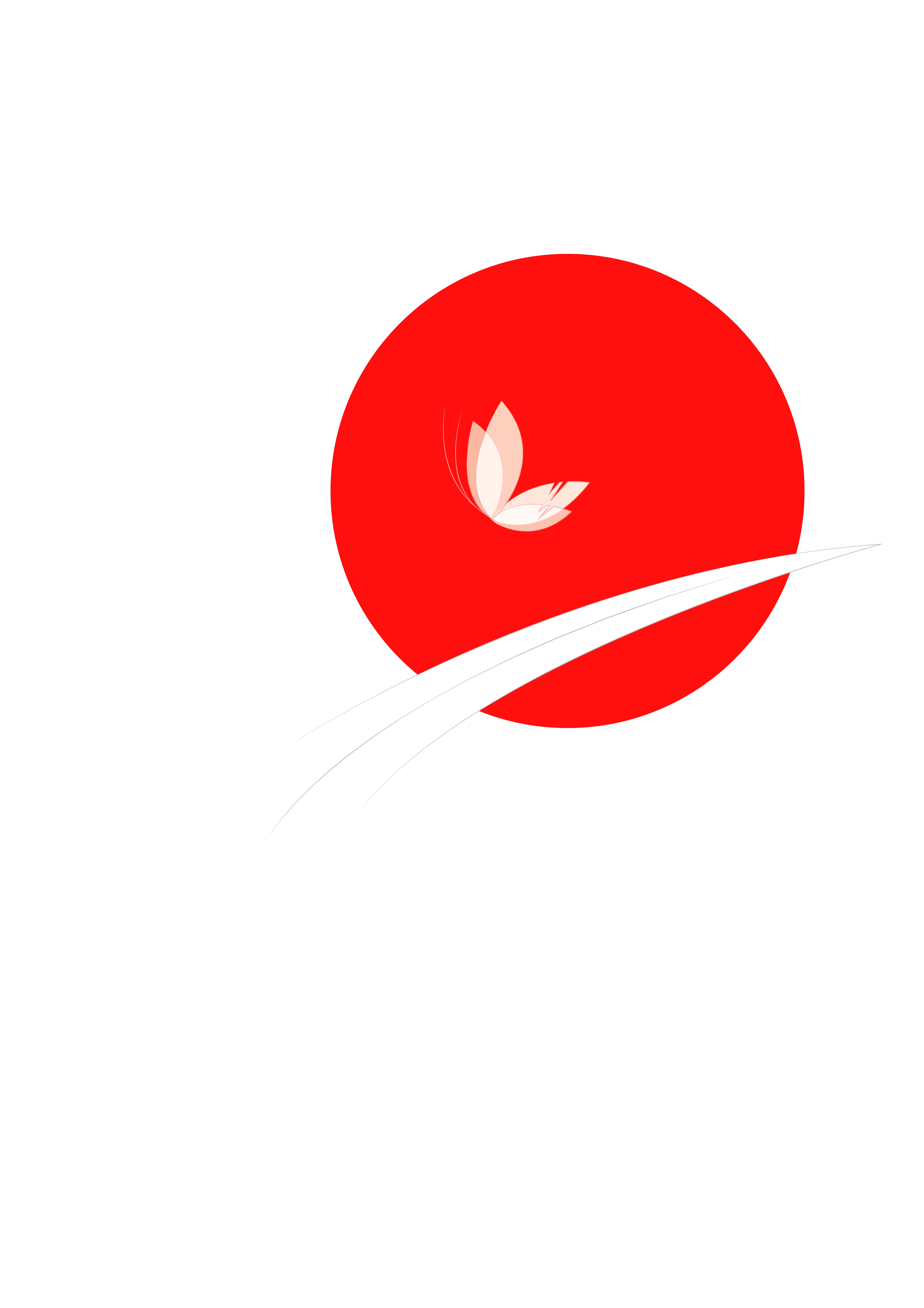
Zhuangzi's butterfly dream, reduced to its essential elements: the red circle as the boundary between dream and waking, the butterfly caught mid-transformation, two crossing lines — two realities, neither confirmed. The whole paradox in three shapes.
Once Zhuang Zhou dreamed he was a butterfly, a butterfly flitting and fluttering around, happy with himself and doing as he pleased. He didn’t know he was Zhuang Zhou. Suddenly he woke up, and there he was, solid and unmistakable Zhuang Zhou. But he didn’t know if he were Zhuang Zhou who had dreamed he was a butterfly or a butterfly dreaming he was Zhuang Zhou.
Zhuangzi
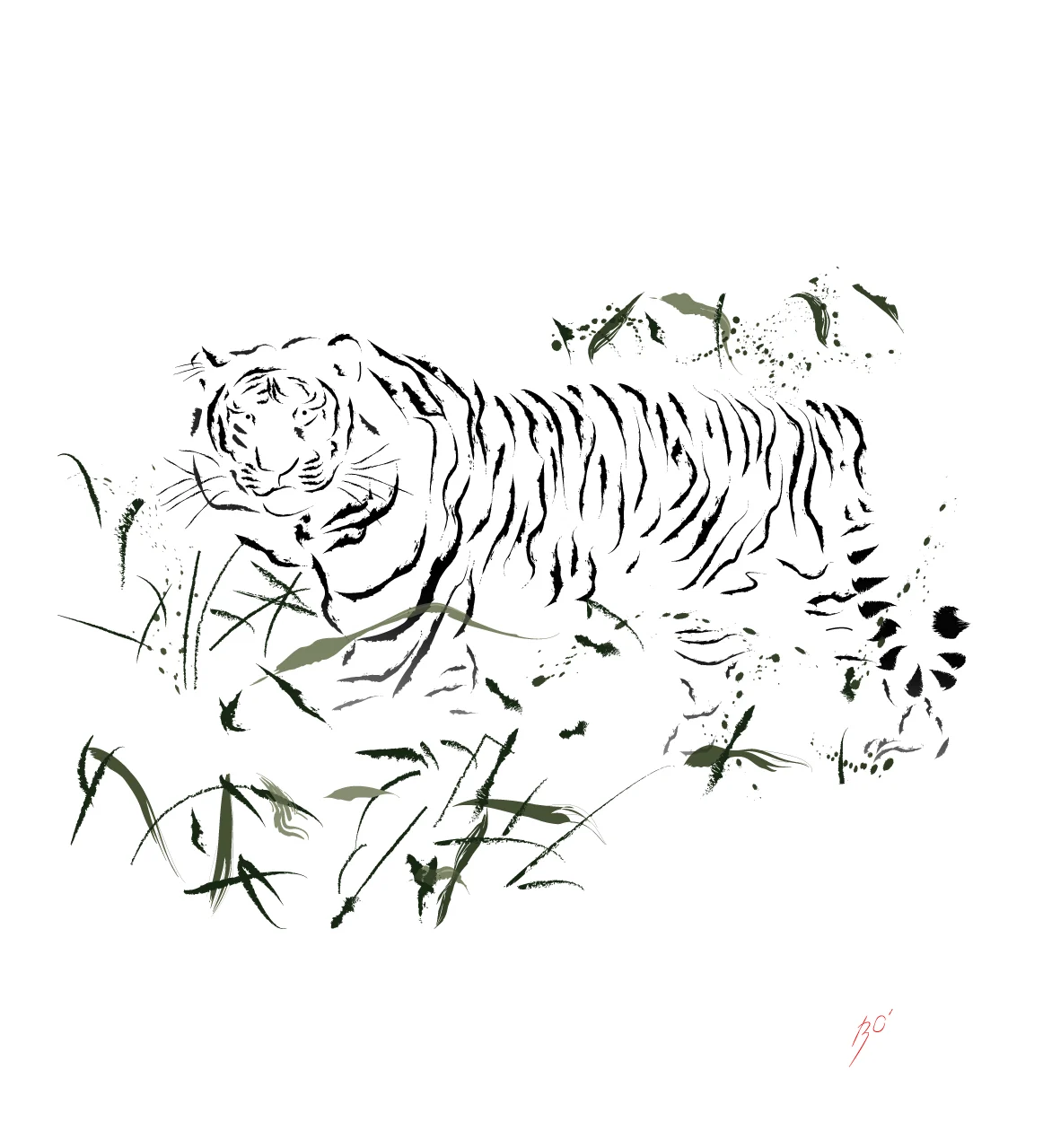
Sumi-e logic in vector form: the tiger exists only where the stripes are — no outline holds the body together, your eye completes it. Muted green grass keeps the ink-painting palette while giving the composition ground to stand on.
In Chinese tradition Tiger representing the balance between Ying and Yang forces. As a spirit animal, the meaning for the tiger is said to be willpower, courage, and personal strength. The tiger also has other representations such as protections against evil spirits, wind, disease, and bad luck. It is believed that Chinese tiger bears on it's forehead the chinese character "wang", which means "the king".
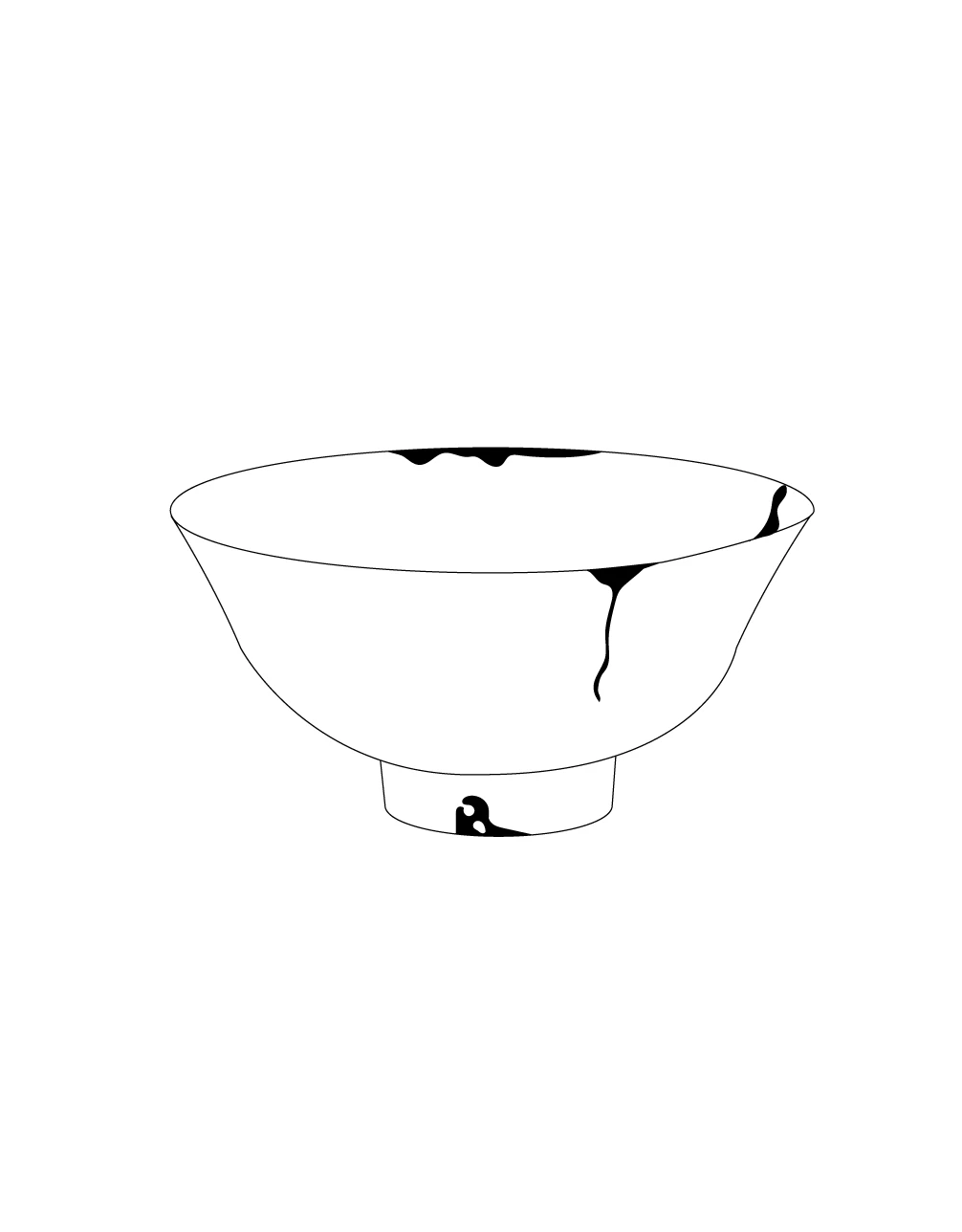
An inversion of the technique itself: instead of drawing the golden seams, I drew only the breaks — black cracks on a white vessel defined by a single contour. The repair is implied by what's missing. Restraint as the subject, not just the style.
Kintsugi 金継ぎ golden joinery, also known as kinsukuroi 金繕い, golden repair is the Japanese art of repairing broken pottery by mending the areas of breakage with lacquer dusted or mixed with powdered gold, silver, or platinum, a method similar to the maki-e technique. As a philosophy, it treats breakage and repair as part of the history of an object, rather than something to disguise.
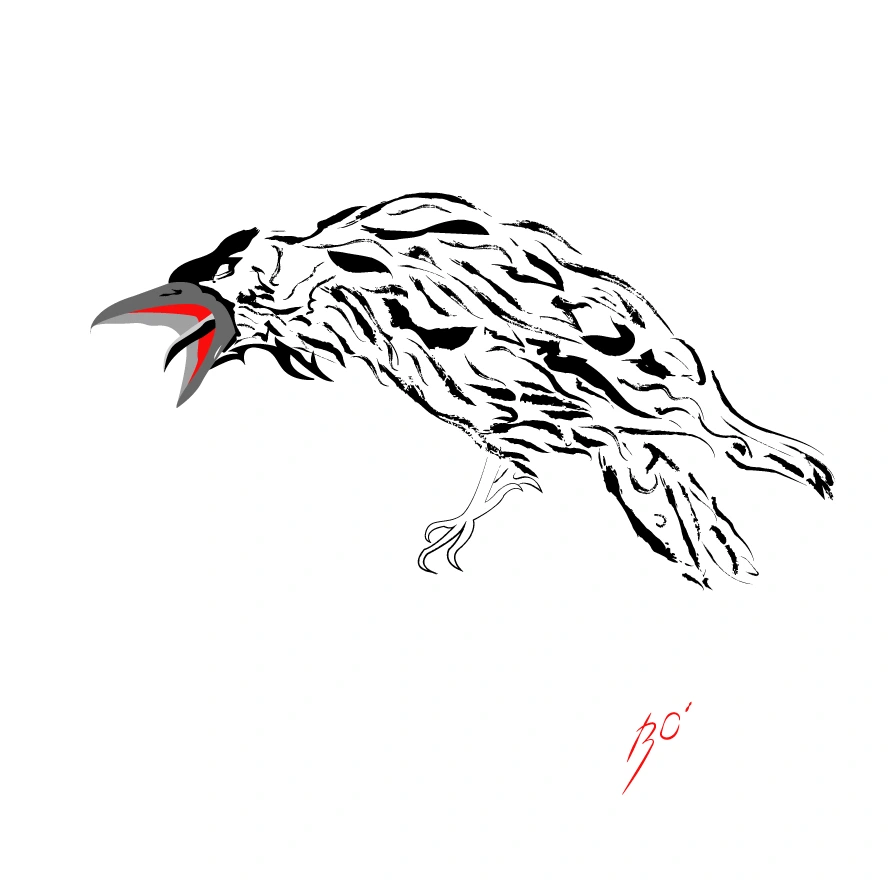
The crow is built from brush-stroke fragments — solid black broken into feather-shaped gestures, so the bird reads as movement rather than anatomy. One red accent at the beak: the only point of heat in a monochrome body.
In Japanese mythology, this flying creature is a raven or a jungle crow called Yatagarasu (八咫烏, "eight-span crow") and the appearance of the great bird is construed as evidence of the will of Heaven or divine intervention in human affairs.
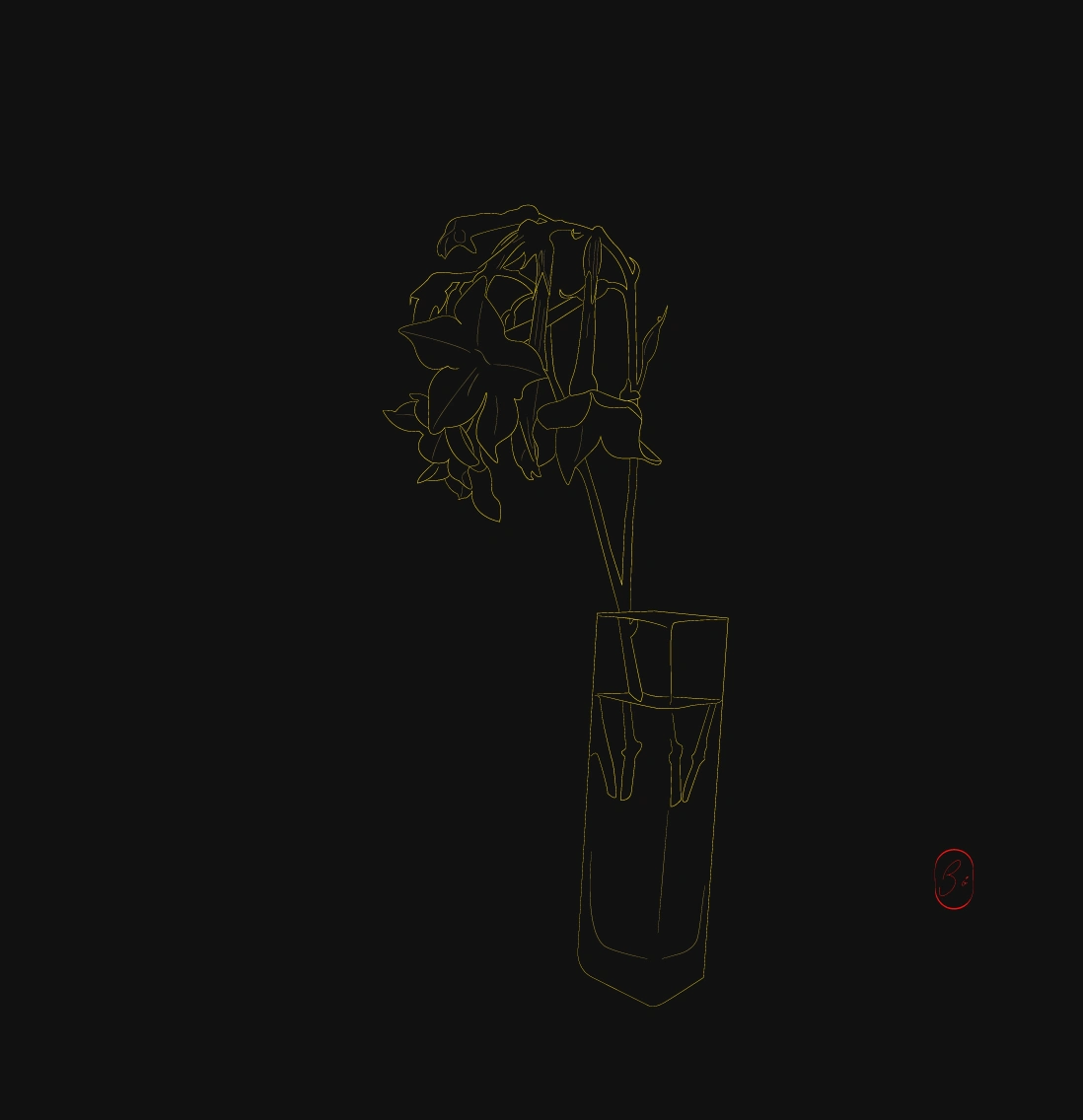
Drawn as ikebana is practiced: one continuous attention, nothing extra. Gold line on black — the arrangement emerges from darkness the way it does in a tokonoma alcove. The red seal is my signature, placed where a master would stamp the work.
Ikebana 生け花, 活け花, arranging flowers or making flowers alive is theJapanese art of flower arrangement. It is also known as Kado 華道, way of flowers.
This research is where projects like KUURACORP begin — if you're building a brand rooted in culture, let's talk.
Like this project
Posted May 9, 2026
Japanese & Chinese visual philosophy — ikebana, kintsugi, sumi-e — each drawn under one constraint: minimum form, full meaning.
Likes
0
Views
8