InCase: Designing Trust for Life’s Most Important Documents
Some documents are too important to lose.
Birth certificates. Wills. Legal agreements. Personal notes. Private videos.
Yet most people store them everywhere, email threads, phone storage, cloud drives, or worse, nowhere they can confidently find again. When something urgent happens, searching for these files becomes stressful, risky, and time-consuming.
That was the problem InCase set out to solve.
The Challenge
The core challenge wasn’t just building another storage app.
It was designing trust.
InCase needed to help users feel confident storing their most sensitive information digitally while also supporting paid features like subscriptions and document notarization, without making the experience feel intimidating or transactional too early.
On top of that, the platform included:
Multiple content types (documents, notes, videos)
Security-first features
A legal notarization flow
An admin system running quietly in the background
All of this had to feel simple.
Understanding the Problem
As I reviewed the product requirements, one thing became clear:
this app would only succeed if users felt safe before they felt sold to.
People don’t hand over their private documents easily. The design had to communicate:
Control
Transparency
Protection
Every decision needed to answer one silent user question:
“Can I trust this?”
The Approach
I approached the design as a guided journey rather than a feature list.
Instead of forcing users to pay during onboarding, the experience allows them to:
Create an account
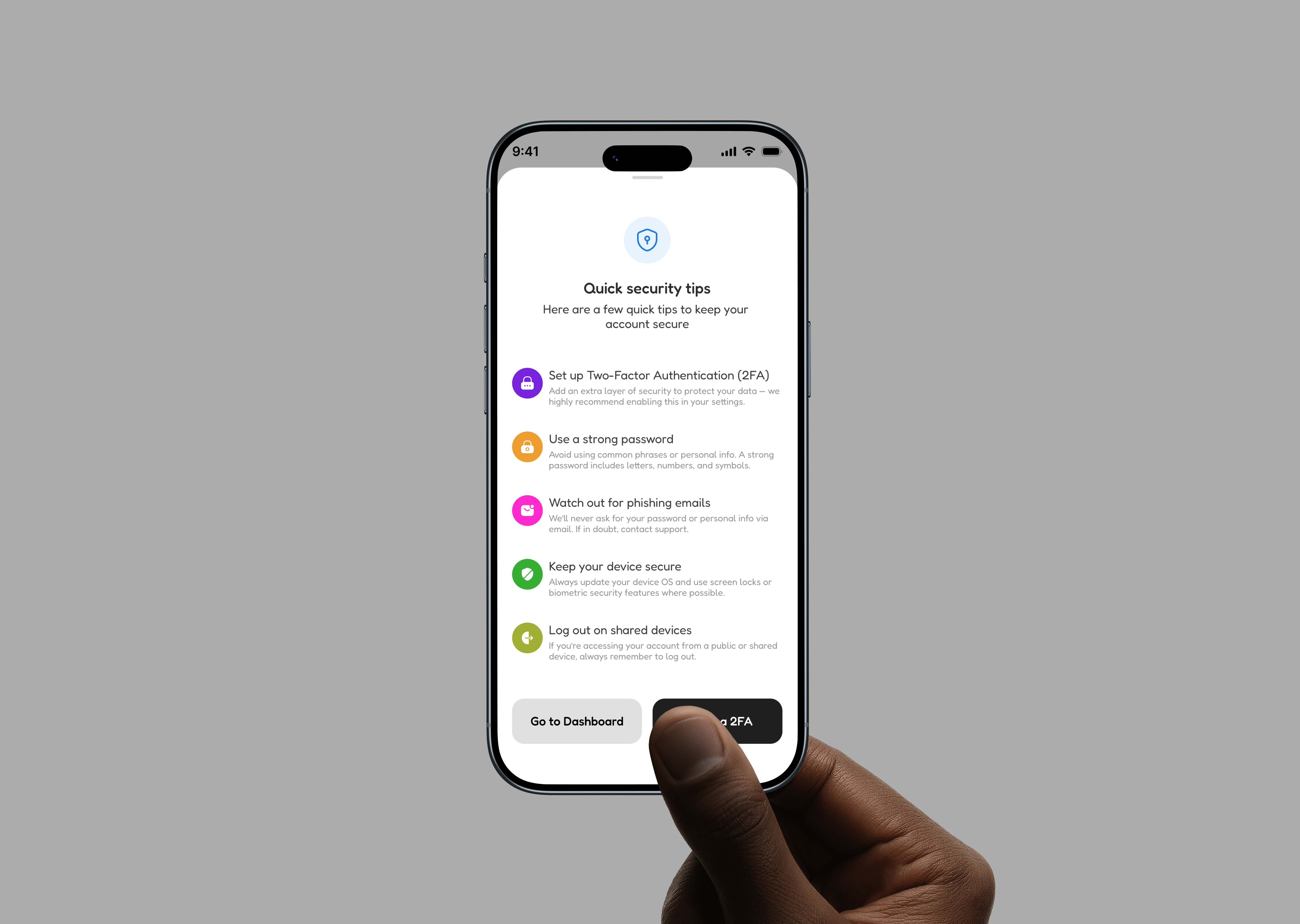
Set up security (passwords, 2FA, biometrics)
Explore the app calmly
Only when users attempt meaningful actions, like uploading content or notarizing a document are they introduced to payment. This keeps the focus on value first, not friction.
View full website here:
Designing the Experience
The product was structured around clarity and reassurance.
Users can:
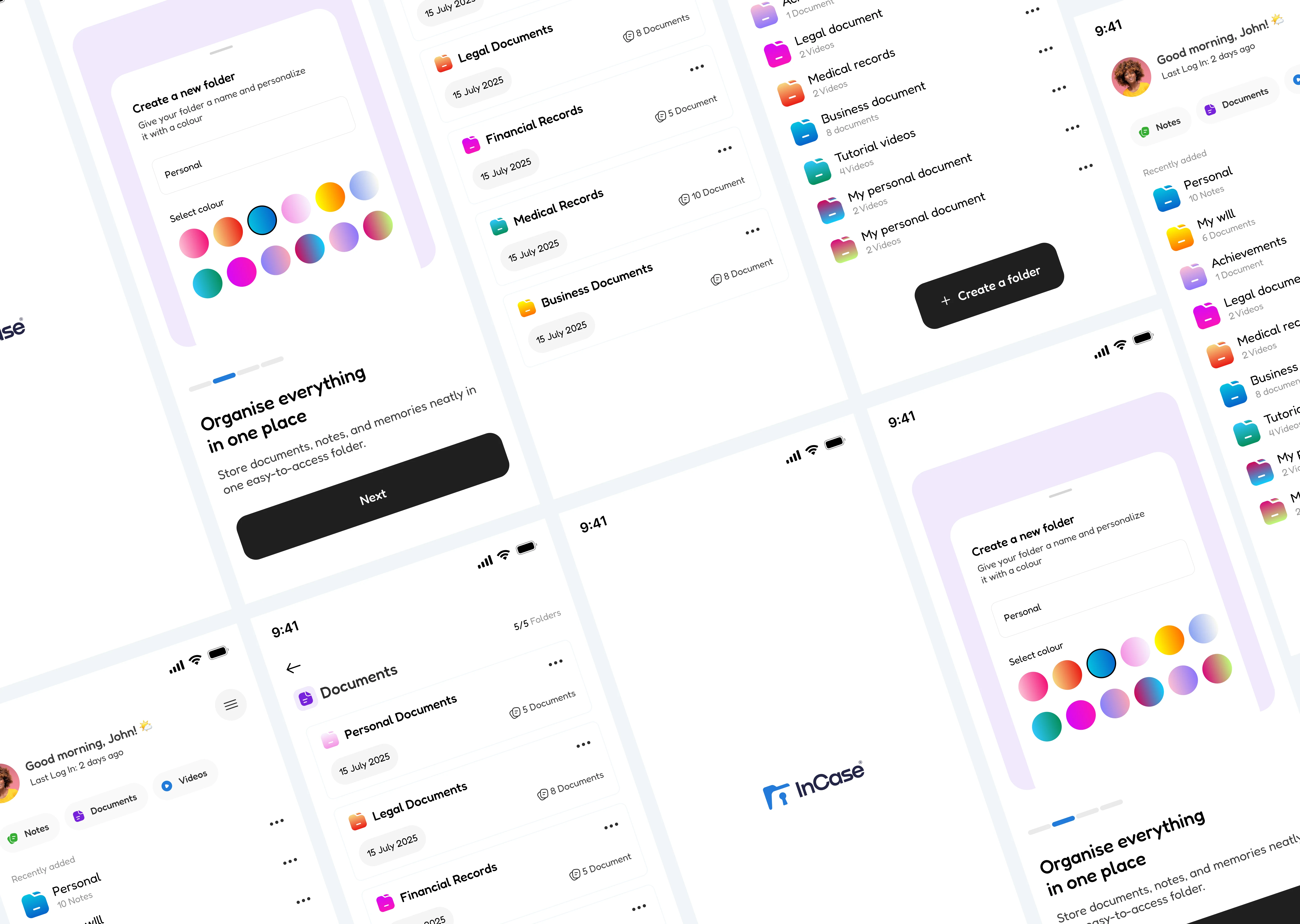
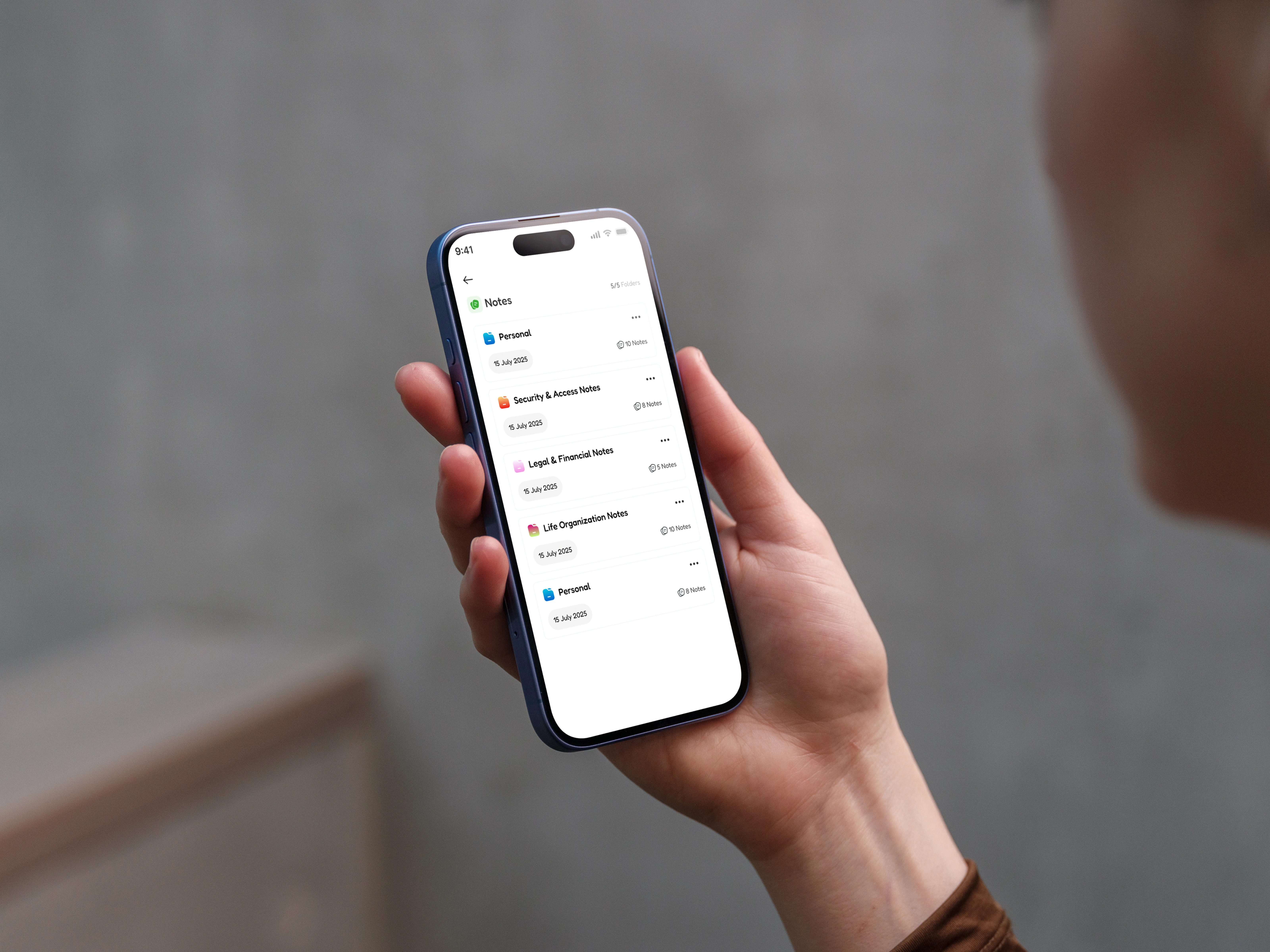
Create folders to organize their vault
Upload documents, videos, or write notes
Clearly see the status of notarized documents (pending, in progress, completed)
Understand exactly when and why they’re being asked to subscribe or pay
Visual design choices were intentional:
Minimal layouts to reduce anxiety
Calm color tones to reinforce safety
Clear copy that avoids legal or technical jargon
Security isn’t hidden, it’s gently communicated throughout the experience.
Beyond the User App
To support the product at scale, I also designed an admin platform that allows:
Monitoring subscriptions and storage usage
Managing notarization queues
Tracking document statuses without exposing content
Handling system health and feedback
This ensured the system worked smoothly behind the scenes while users experienced a clean, simple interface.
The Outcome
The final design presents InCase as more than a storage app.
It feels like a private digital safe, one that respects the weight of what users are storing.
The experience balances:
Security without fear
Monetization without pressure
Complexity without confusion
What I Learned
This project reinforced a key lesson for me as a designer:
When users are dealing with sensitive information, trust is the product.
I learned how small UX decisions; timing, wording, flow, can completely change how safe a product feels. I also deepened my understanding of designing payment flows, legal processes, and admin tools without overwhelming users.